Useful Microbes 
Microbes can be beneficial to us?!?
Useful Microbes 
There are billions of microbes and lots more we 
haven’t discovered yet 
Most of these microbes are either 
• Necessary for our survival 
• Good for us 
• Can be used for our benefit in industry
In Nature 
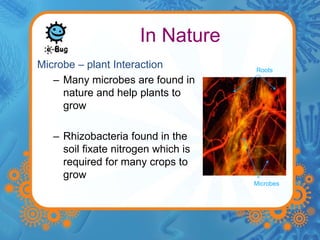
Microbe – plant Interaction 
– Many microbes are found in 
nature and help plants to 
grow 
– Rhizobacteria found in the 
soil fixate nitrogen which is 
required for many crops to 
grow 
Roots 
Microbes
In Nature 
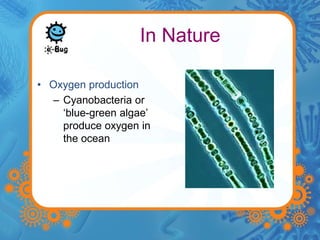
• Oxygen production 
– Cyanobacteria or 
‘blue-green algae’ 
produce oxygen in 
the ocean
In Nature 
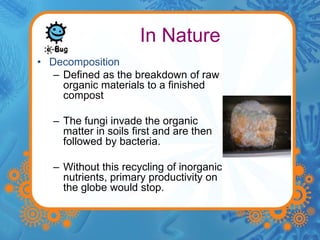
• Decomposition 
– Defined as the breakdown of raw 
organic materials to a finished 
compost 
– The fungi invade the organic 
matter in soils first and are then 
followed by bacteria. 
– Without this recycling of inorganic 
nutrients, primary productivity on 
the globe would stop.
In the Food Industry 
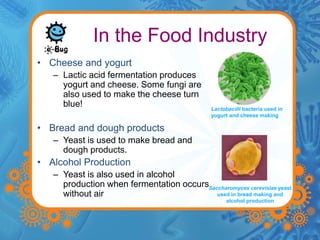
• Cheese and yogurt 
– Lactic acid fermentation produces 
yogurt and cheese. Some fungi are 
also used to make the cheese turn 
blue! 
• Bread and dough products 
– Yeast is used to make bread and 
dough products. 
• Alcohol Production 
– Yeast is also used in alcohol 
production when fermentation occurs 
without air 
Lactobacilli bacteria used in 
yogurt and cheese making 
Saccharomyces cerevisiae yeast 
used in bread making and 
alcohol production
In the Food Industry 
• Fermentation 
– A process during which the bacteria break 
down the complex sugars into simple 
compounds like carbon dioxide and alcohol. 
– Fermentation changes the product from one 
food to another.
In Medicine 
• Penicillin 
– Discovered by Alexander 
Flemming in 1928 
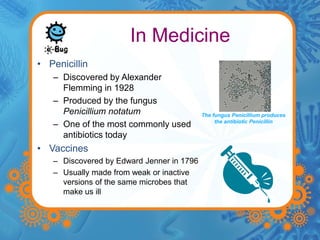
– Produced by the fungus 
Penicillium notatum 
– One of the most commonly used 
antibiotics today 
• Vaccines 
– Discovered by Edward Jenner in 1796 
– Usually made from weak or inactive 
versions of the same microbes that 
make us ill 
The fungus Penicillium produces 
the antibiotic Penicillin
Probiotics 
• What are they? 
– Live microorganisms which when 
administered in adequate amount 
confer a health benefit on the 
host 
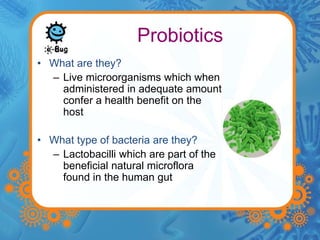
• What type of bacteria are they? 
– Lactobacilli which are part of the 
beneficial natural microflora 
found in the human gut
Probiotics 
How do they work? 
– Interacting directly with the disease-causing microbes, 
making it harder for them to cause disease 
– Reinforce the natural barrier of the digestive tract 
protecting against pathogenic microbes 
– "Competitive exclusion" in which beneficial microbes 
directly compete with disease-causing microbes for food 
and other resources, eventually crowding them out 
– Interacting with and strengthening the immune system

Useful microbes presentation

  • 1.
    Useful Microbes Microbescan be beneficial to us?!?
  • 2.
    Useful Microbes Thereare billions of microbes and lots more we haven’t discovered yet Most of these microbes are either • Necessary for our survival • Good for us • Can be used for our benefit in industry
  • 3.
    In Nature Microbe– plant Interaction – Many microbes are found in nature and help plants to grow – Rhizobacteria found in the soil fixate nitrogen which is required for many crops to grow Roots Microbes
  • 4.
    In Nature •Oxygen production – Cyanobacteria or ‘blue-green algae’ produce oxygen in the ocean
  • 5.
    In Nature •Decomposition – Defined as the breakdown of raw organic materials to a finished compost – The fungi invade the organic matter in soils first and are then followed by bacteria. – Without this recycling of inorganic nutrients, primary productivity on the globe would stop.
  • 6.
    In the FoodIndustry • Cheese and yogurt – Lactic acid fermentation produces yogurt and cheese. Some fungi are also used to make the cheese turn blue! • Bread and dough products – Yeast is used to make bread and dough products. • Alcohol Production – Yeast is also used in alcohol production when fermentation occurs without air Lactobacilli bacteria used in yogurt and cheese making Saccharomyces cerevisiae yeast used in bread making and alcohol production
  • 7.
    In the FoodIndustry • Fermentation – A process during which the bacteria break down the complex sugars into simple compounds like carbon dioxide and alcohol. – Fermentation changes the product from one food to another.
  • 8.
    In Medicine •Penicillin – Discovered by Alexander Flemming in 1928 – Produced by the fungus Penicillium notatum – One of the most commonly used antibiotics today • Vaccines – Discovered by Edward Jenner in 1796 – Usually made from weak or inactive versions of the same microbes that make us ill The fungus Penicillium produces the antibiotic Penicillin
  • 9.
    Probiotics • Whatare they? – Live microorganisms which when administered in adequate amount confer a health benefit on the host • What type of bacteria are they? – Lactobacilli which are part of the beneficial natural microflora found in the human gut
  • 10.
    Probiotics How dothey work? – Interacting directly with the disease-causing microbes, making it harder for them to cause disease – Reinforce the natural barrier of the digestive tract protecting against pathogenic microbes – "Competitive exclusion" in which beneficial microbes directly compete with disease-causing microbes for food and other resources, eventually crowding them out – Interacting with and strengthening the immune system