VIVEKANANDHA ARTS AND SCIENCE COLLEGE FOR WOMEN ,
VEERACHIPALAYAM,SANKAGIRI, SALEM.
DEPARTMENT OF MICROBIOLOGY
Title: DEGRADATION OF ORGANIC MATTER –
LIGNIN, CELLULOSE, HEMICELLULOSE,PECTIN
Presented by ,
C.SUJITHRA
II-MSc., Microbiology
Vivekanandha Arts and Science
College for women,Sankagiri.
SUBJECT INCHARGE,
Dr.R.Dineshkumar,
Assistant professor,
Department of Microbiology,
Vivekanadha Arts and Science
College for women, Sankagiri.
Subject: SOIL AND ENVIRONMENTAL MICROBIOLOGY
CONTENT
• INTRODUCTION ABOUT DEGRADATION OF ORGANIC MATTER
• LIGNIN DEGRADATION
• CELLULOSE DEGRADATION
• HEMICELLULOSE DEGRADATION
• PECTIN DEGRADATION
• PROCESS OF DEGRADATION OF ORGANIC MATTER
• ADVANTAGES OF ORGANIC MATTER DEGRADATION
• DISADVANTAGES OF ORGANIC MATTER DEGRADATION
• APPLICATION OF ORGANIC MATTER DEGRADATION
DEGRADATION OF ORGANIC MATTER
The degradation of organic matter is a natural process through which complex
organic materials are broken down into simpler substances by microorganisms such
as bacteria and fungi. This process is critical for nutrient cycling in ecosystems and
can occur aerobically (with oxygen) or anaerobically (without oxygen).
Aerobic Degradation of Organic Matter:
Aerobic degradation, also known as aerobic decomposition, is a process in which
organic matter is broken down in the presence of oxygen. This process is carried out
by aerobic microorganisms such as bacteria, fungi, and actinomycetes. Aerobic
degradation is crucial for recycling nutrients in ecosystems and is widely used in
composting and other waste management practices.
Mechanisms of Aerobic Degradation
Enzymatic Breakdown:
• Aerobic microorganisms secrete enzymes that break down complex organic compounds
into simpler molecules. Enzymes: Amylases (carbohydrates), proteases (proteins), lipases
(lipids).
Microbial Metabolism :
• The simpler molecules produced by enzymatic breakdown are taken up by
microorganisms and further metabolized. Through cellular respiration, microorganisms
convert organic matter into carbon dioxide (CO₂), water (H₂O), and energy.
Carbon Cycle:
• Carbon from organic matter is released as CO₂, which is utilized by plants during
photosynthesis, completing the carbon cycle.
Composting:
• Controlled aerobic degradation of organic waste to produce compost.
Reduces landfill waste, produces nutrient-rich soil amendment, and lowers
greenhouse gas emissions
Wastewater Treatment:
• Activated sludge process uses aerobic bacteria to degrade organic pollutants in
wastewater.
• Efficient removal of organic contaminants, improved water quality.
Bioremediation:
• Use of aerobic microorganisms to degrade pollutants in soil and water. Cleans up
contaminated sites, restoring environmental health.
APPLICATIONS
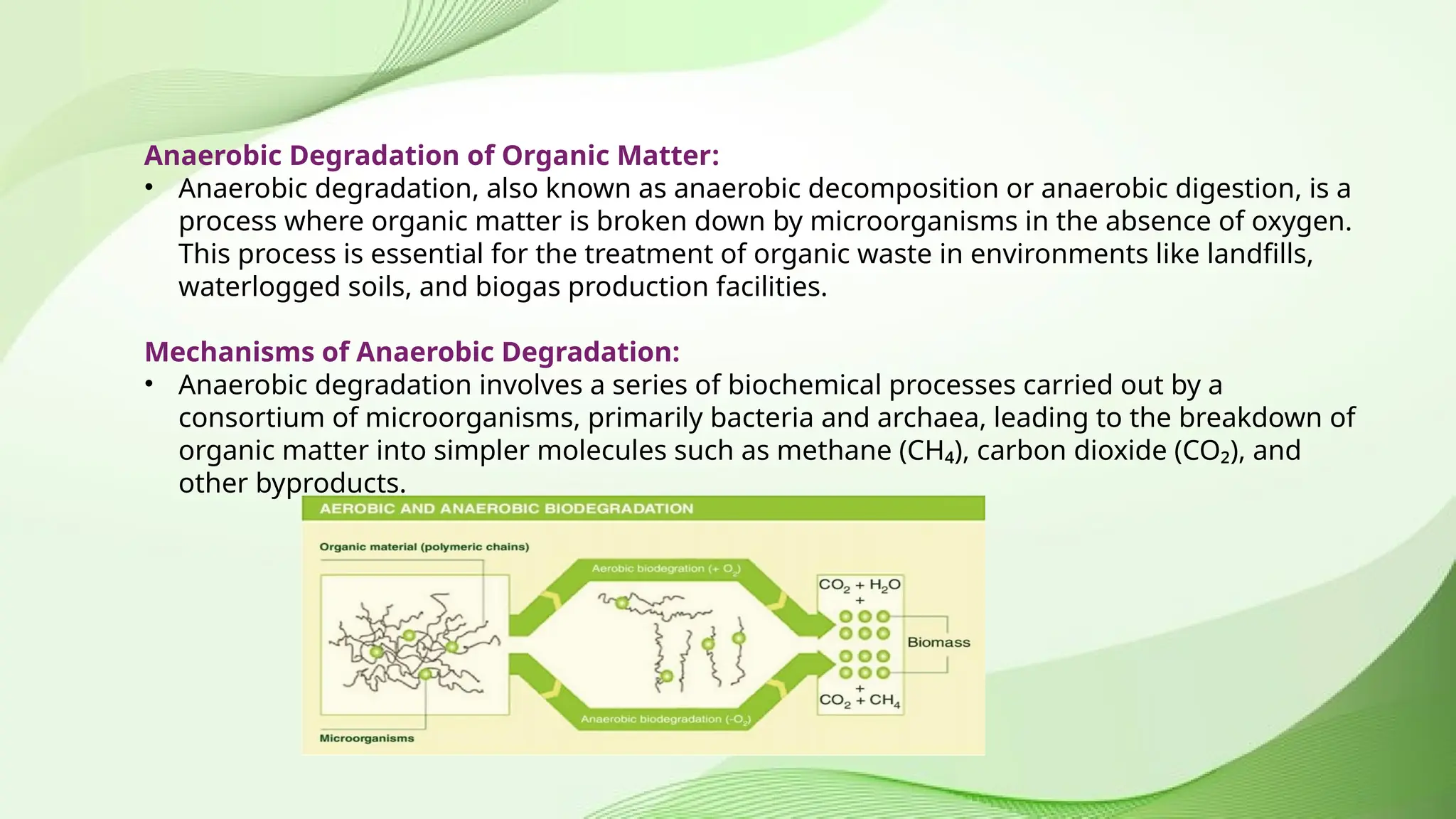
Anaerobic Degradation of Organic Matter:
• Anaerobic degradation, also known as anaerobic decomposition or anaerobic digestion, is a
process where organic matter is broken down by microorganisms in the absence of oxygen.
This process is essential for the treatment of organic waste in environments like landfills,
waterlogged soils, and biogas production facilities.
Mechanisms of Anaerobic Degradation:
• Anaerobic degradation involves a series of biochemical processes carried out by a
consortium of microorganisms, primarily bacteria and archaea, leading to the breakdown of
organic matter into simpler molecules such as methane (CH₄), carbon dioxide (CO₂), and
other byproducts.
APPLICATIONS
Biogas Production:
• Organic waste is digested anaerobically to produce biogas (mainly methane and CO₂) and
digestate.
Renewable energy source, reduces greenhouse gas emissions, produces nutrient-rich
digestate for agriculture.
Landfill Management:
• Natural anaerobic degradation of organic waste in landfills produces landfill gas (methane
and carbon dioxide). Potential for energy recovery through landfill gas capture and
utilization.
Wastewater Treatment:
• Anaerobic digesters treat organic pollutants in wastewater, reducing the organic load and
producing biogas. Efficient removal of organic contaminants, energy recovery, reduced
sludge production.
Agricultural Waste Management:
• Anaerobic digestion of manure and crop residues.
Reduces odors, produces biogas, and results in digestate that can be used as fertilizer.
DEGRADATION OF LIGNIN
• Lignin is a complex, aromatic polymer found in the cell walls of plants, providing rigidity and
resistance to degradation. Its complex structure makes it one of the most resistant
components of plant biomass to degradation. However, certain microorganisms, primarily
fungi and some bacteria, have evolved mechanisms to break down lignin.
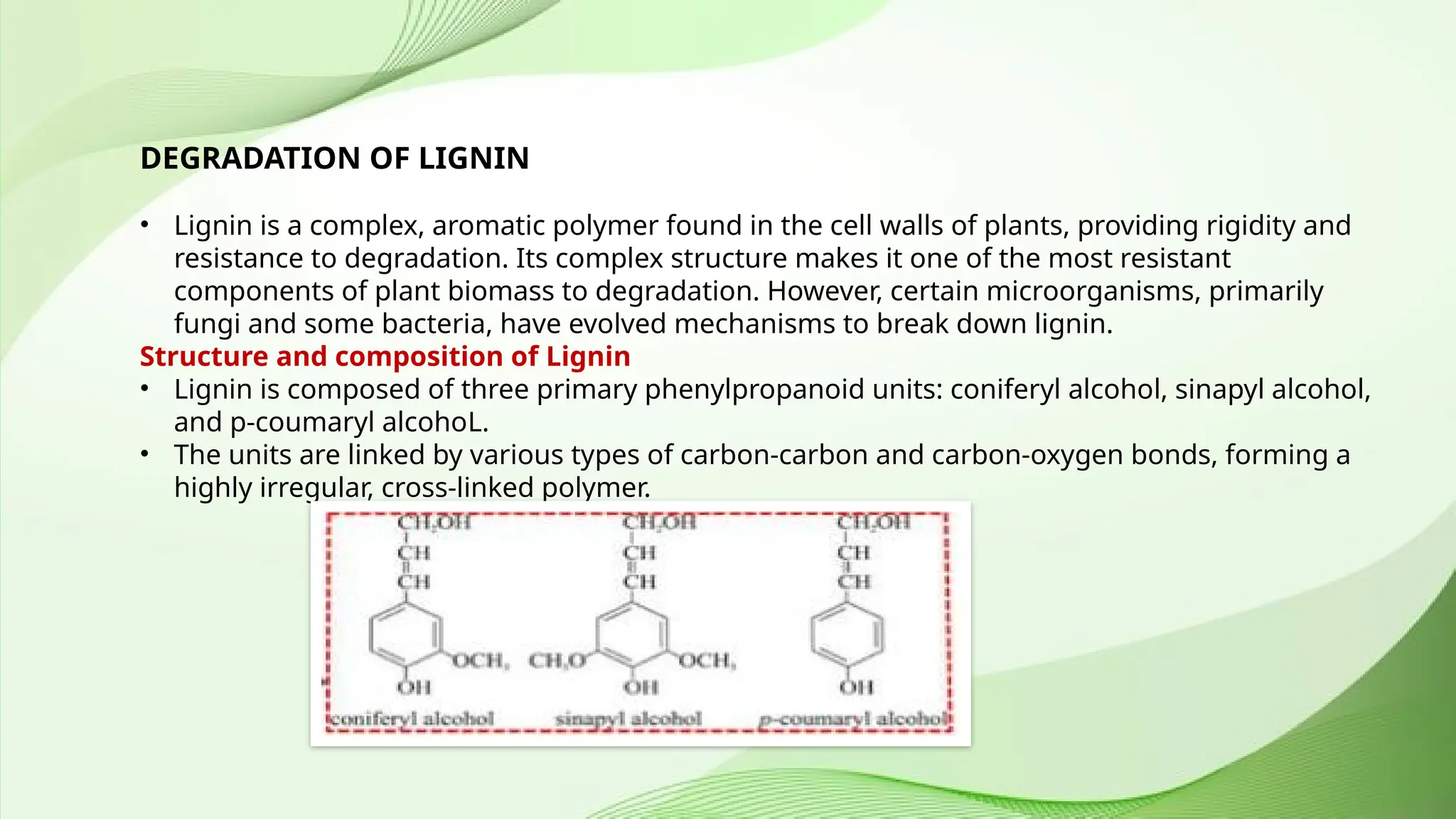
Structure and composition of Lignin
• Lignin is composed of three primary phenylpropanoid units: coniferyl alcohol, sinapyl alcohol,
and p-coumaryl alcohoL.
• The units are linked by various types of carbon-carbon and carbon-oxygen bonds, forming a
highly irregular, cross-linked polymer.
Enzymes Involved in Lignin Degradation
1) Lignin Peroxidase (LiP):Catalyzes the oxidative breakdown of lignin by using hydrogen
peroxide (H₂O₂) to oxidize the phenolic structures.
• Action: Cleaves carbon-carbon and carbon-oxygen bonds, producing phenoxy radicals that
lead to lignin depolymerization.
2) Manganese Peroxidase (MnP): Uses manganese ions (Mn²⁺) as mediators to oxidize phenolic
structures in lignin.
• Action: Produces Mn³⁺, which oxidizes phenolic compounds, facilitating lignin breakdown.
3) Laccase: Oxidizes phenolic and non-phenolic lignin structures using molecular oxygen.
• Action: Produces phenoxy radicals that destabilize the lignin structure, leading to its
breakdown.
4) Versatile Peroxidase (VP): Combines the activities of LiP and MnP, capable of oxidizing both
phenolic and non-phenolic lignin compounds.
• Action: Provides a broad range of oxidative capabilities, contributing to the efficient
degradation of lignin.
Microorganisms Involved in Lignin Degradation
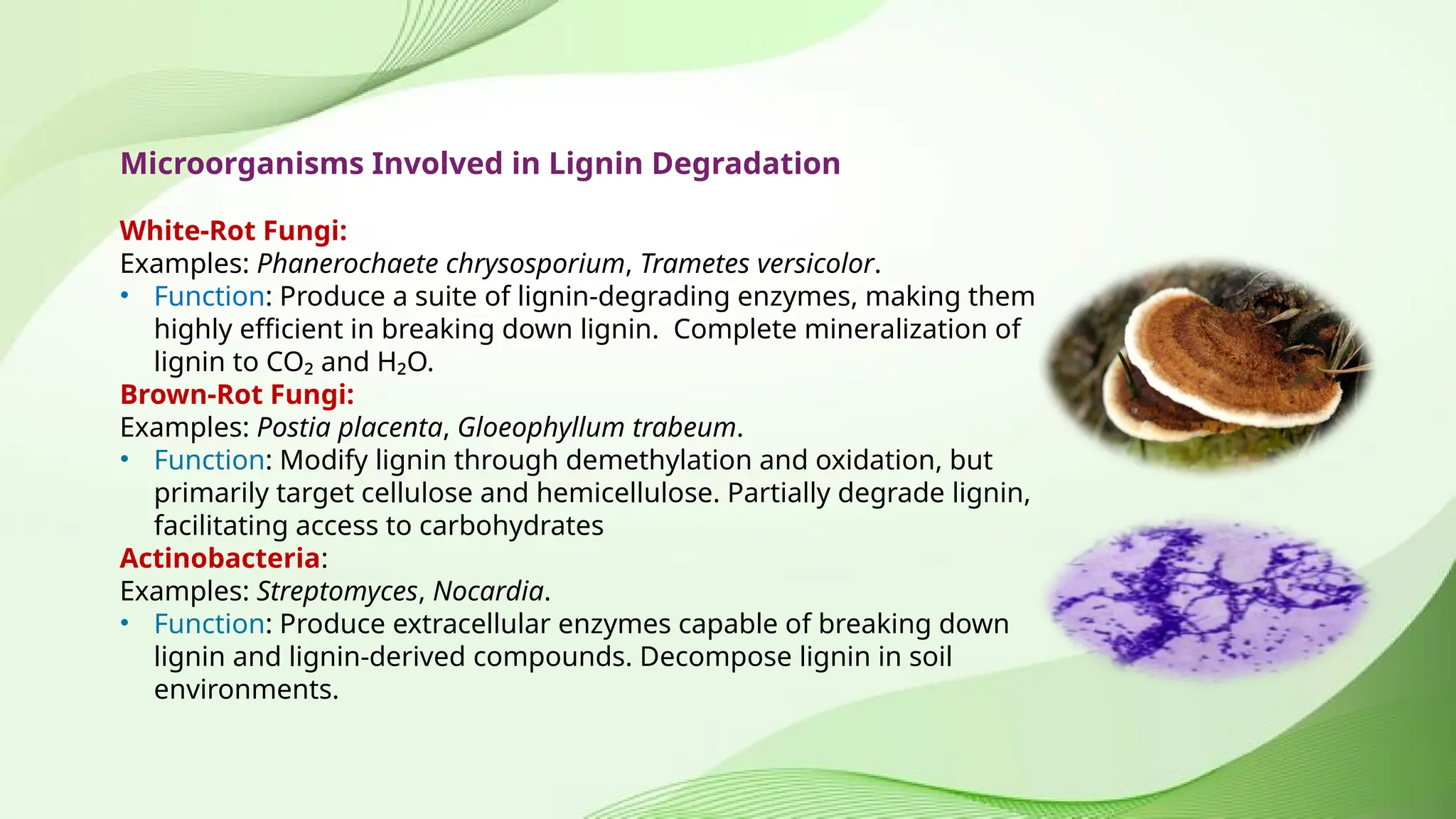
White-Rot Fungi:
Examples: Phanerochaete chrysosporium, Trametes versicolor.
• Function: Produce a suite of lignin-degrading enzymes, making them
highly efficient in breaking down lignin. Complete mineralization of
lignin to CO₂ and H₂O.
Brown-Rot Fungi:
Examples: Postia placenta, Gloeophyllum trabeum.
• Function: Modify lignin through demethylation and oxidation, but
primarily target cellulose and hemicellulose. Partially degrade lignin,
facilitating access to carbohydrates
Actinobacteria:
Examples: Streptomyces, Nocardia.
• Function: Produce extracellular enzymes capable of breaking down
lignin and lignin-derived compounds. Decompose lignin in soil
environments.
Process of Lignin Degradation
Initial Oxidation:
• Action: Lignin peroxidase, manganese peroxidase, and laccase initiate the breakdown of
lignin by oxidizing phenolic structures and creating unstable radicals.
• Formation of phenoxy radicals and cleavage of carbon-carbon and carbon-oxygen bonds.
Depolymerization:
• Action: Continued oxidative attacks lead to the breakdown of lignin into smaller phenolic
compounds, such as vanillin, syringaldehyde, and p-coumaric .
• Production of low-molecular-weight aromatic compounds.
Breakdown and Mineralization:
• Action: Smaller phenolic compounds are further degraded by other microbial enzymes into
simpler molecules like CO₂ and H₂O
• It leads to complete mineralization of lignin, contributing to nutrient cycling.
Applications of Lignin Degradation
Bioremediation:
• Use of lignin-degrading microorganisms to break down environmental pollutants, such as
polycyclic aromatic hydrocarbons (PAHs) and synthetic dyes.
• Cleans up contaminated soils and water bodies, reducing environmental toxicity.
Pulp and Paper Industry:
• Biopulping and biobleaching use lignin-degrading enzymes to reduce the need for harsh
chemicals.Environmentally friendly processing, reduced chemical usage, and improved pulp
quality.
Biofuel Production:
• Pretreatment of lignocellulose biomass to enhance the accessibility of cellulose and
hemicellulose for biofuel proproduction . Increases efficiency of biofuel production from
plant biomass.
Importance of Lignin Degradation
• Facilitates the recycling of carbon and other nutrients in ecosystems, supporting plant
growth and soil health.
• Contributes to the formation of humus, enhancing soil structure and fertility.
• Reduces the accumulation of plant debris and promotes the sustainable management of
organic waste.
CELLULOSE DEGRADATION
• Cellulose is a major component of plant cell walls and one of the most abundant organic
polymers on Earth. Its degradation is crucial for the recycling of organic matter in ecosystems
and has significant industrial applications, particularly in biofuel production and waste
management.
Structure and Composition of cellulose: Cellulose is a linear polysaccharide consisting of β-
1,4-linked glucose units. It forms microfibrils through hydrogen bonding, providing rigidity and
strength to plant cell walls.
Enzymes Involved In Cellulose Degradation:
• Endoglucanases: Cleave internal β-1,4-glycosidic bonds in cellulose, producing shorter
cellulose chains and exposing new chain ends. Randomly hydrolyzes the internal bonds
within the cellulose polymer.
• Exoglycanases (Cellobiohydrolases):Cleave β-1,4-glycosidic bonds from the ends of the
cellulose chains, releasing cellobiose (a disaccharide of glucose).Processively hydrolyzes
cellulose from either the reducing or non-reducing ends.
• β-Glucosidases:Hydrolyze cellobiose and other short cellodextrins into glucose. Completes
the hydrolysis process by breaking down cellobiose into glucose molecules.
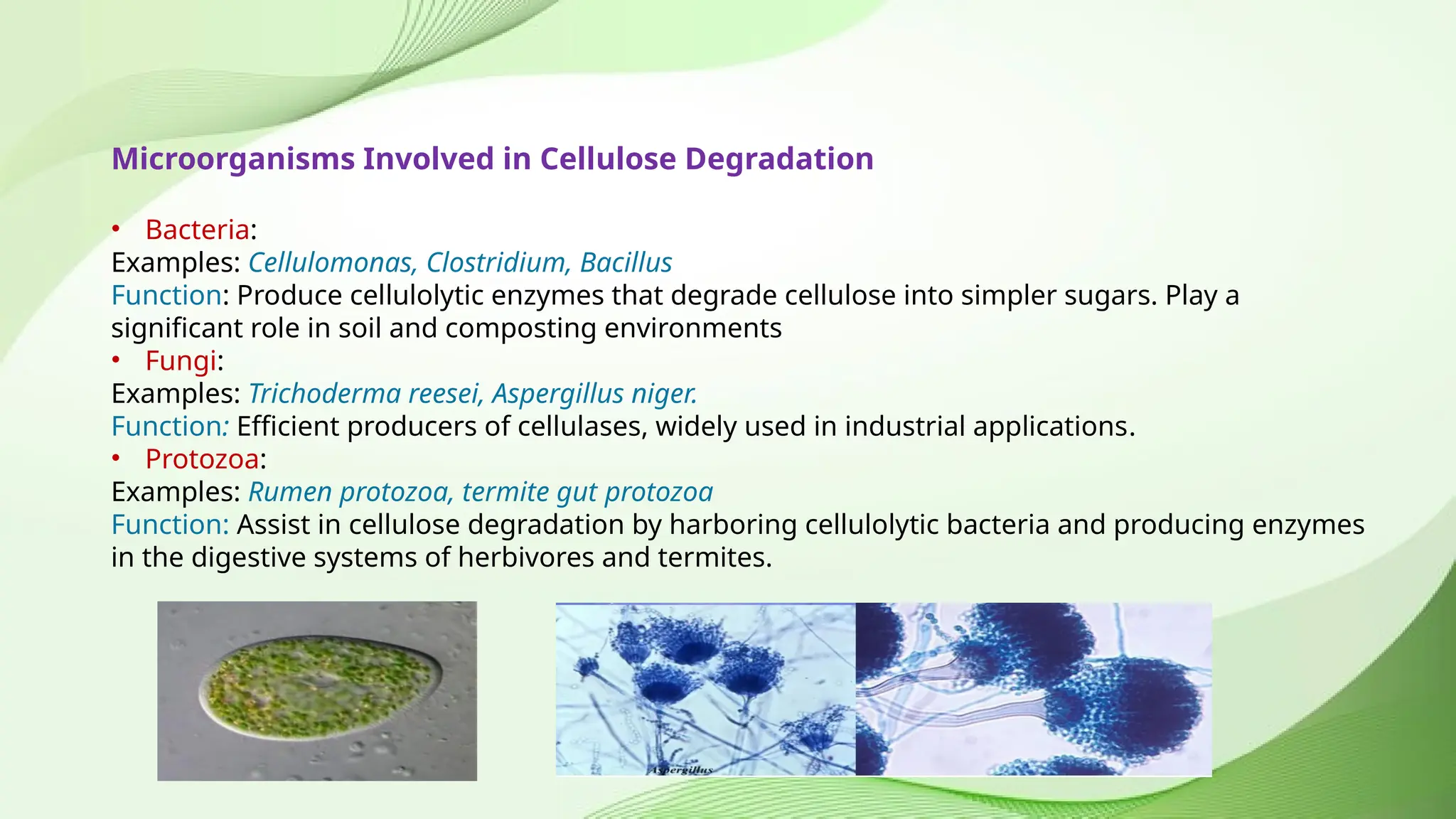
Microorganisms Involved in Cellulose Degradation
• Bacteria:
Examples: Cellulomonas, Clostridium, Bacillus
Function: Produce cellulolytic enzymes that degrade cellulose into simpler sugars. Play a
significant role in soil and composting environments
• Fungi:
Examples: Trichoderma reesei, Aspergillus niger.
Function: Efficient producers of cellulases, widely used in industrial applications.
• Protozoa:
Examples: Rumen protozoa, termite gut protozoa
Function: Assist in cellulose degradation by harboring cellulolytic bacteria and producing enzymes
in the digestive systems of herbivores and termites.
Chemical Degradation:
Enzymatic Hydrolysis:
Enzymes such as endoglucanases, exoglucanases, and β-glucosidases catalyze the hydrolysis of
β-1,4-glycosidic bonds in cellulose.The enzymatic breakdown produces cellobiose and eventually
glucose. Pretreatment Methods:
• Acid Hydrolysis: Uses dilute or concentrated acids to break down cellulose, making it more
accessible to enzymatic action.
• Alkaline Pretreatment: Employs alkaline solutions (e.g., NaOH) to remove lignin and
hemicellulose, increasing cellulose accessibility.
• Steam Explosion: Involves high-pressure steam to disrupt the cellulose structure, enhancing
enzyme penetration.
Chemical Modifiers:
• Chelating Agents: Chemicals like EDTA can enhance enzyme activity by binding inhibitory
metal ions.
• Surfactants: Reduce the non-productive binding of enzymes to lignin, improving cellulose
hydrolysis efficiency.
Applications of Cellulose Degradation
• Biofuel Production: Conversion of lignocellulosic biomass into fermentable
sugars for ethanol and other biofuels. Provides a renewable energy source and
reduces reliance on fossil fuels
• Composting: Degradation of plant material in compost piles to produce nutrient-
rich compost. Enhances soil fertility and structure, promoting sustainable
agriculture.
• Paper and Pulp Industry: Use of cellulases to improve the pulping process and
enhance paper quality.Reduces the need for harsh chemicals and energy
consumption in paper production.
• Animal Feed: Addition of cellulases to animal feed to improve digestibility and
nutrient availability. Enhances the nutritional value of feed and promotes better
animal growth and health.
• Textile Industry: Use of cellulases in fabric processing, such as bio-polishing and
denim finishing. Provides a softer feel, reduces pilling, and improves the
appearance of textiles.
Importance of Cellulose Degradation
Nutrient Cycling:
• Facilitates the breakdown and recycling of plant biomass in ecosystems,
contributing to soil fertility and plant growth
Environmental Conservation:
• Promotes the sustainable management of organic waste, reducing landfill use and
greenhouse gas emissions
Industrial Processes:
• Enhances the efficiency and sustainability of various industrial applications,
including biofuel production, waste management, and manufacturing.
Degradation of Hemicellulose
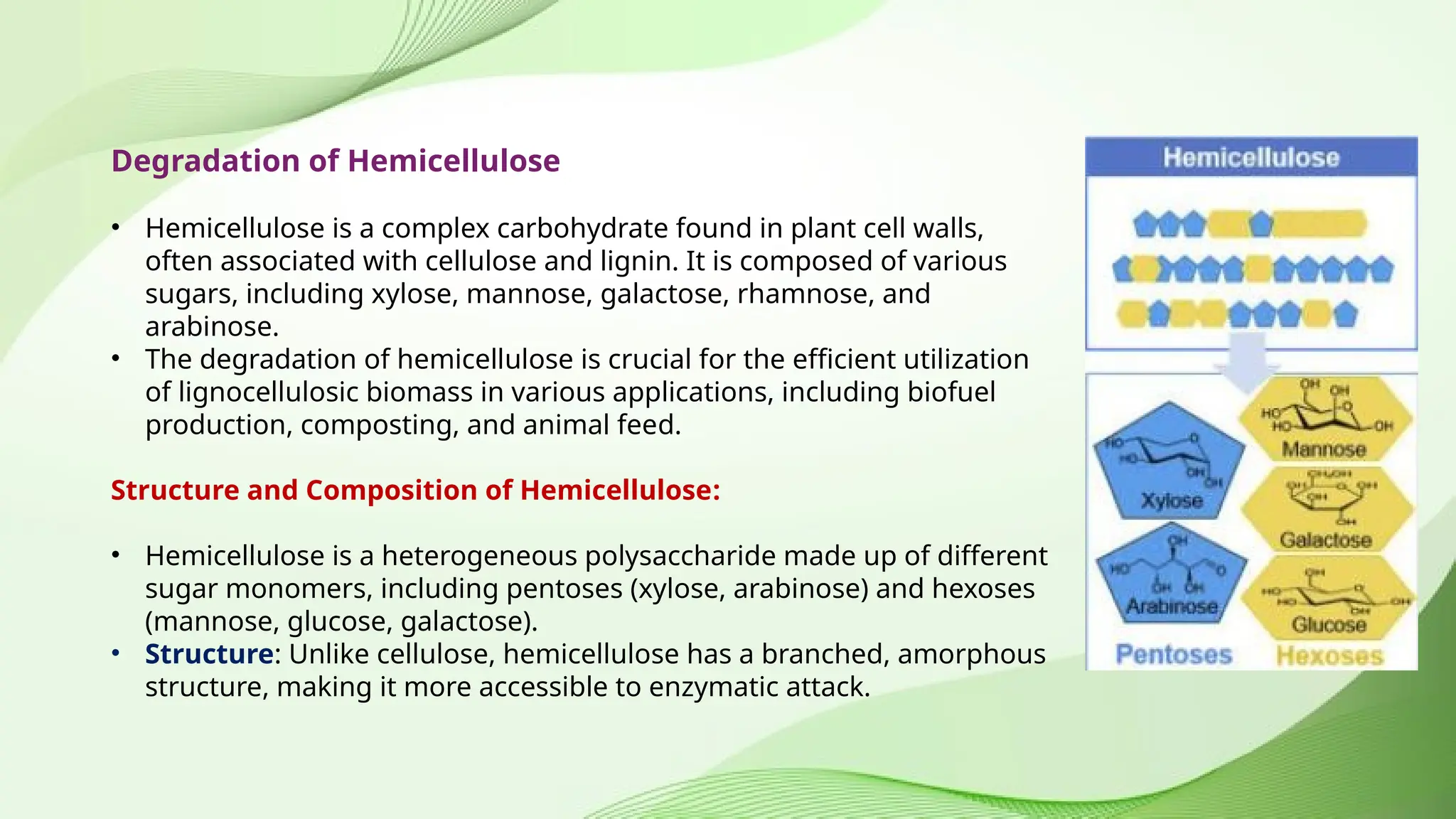
• Hemicellulose is a complex carbohydrate found in plant cell walls,
often associated with cellulose and lignin. It is composed of various
sugars, including xylose, mannose, galactose, rhamnose, and
arabinose.
• The degradation of hemicellulose is crucial for the efficient utilization
of lignocellulosic biomass in various applications, including biofuel
production, composting, and animal feed.
Structure and Composition of Hemicellulose:
• Hemicellulose is a heterogeneous polysaccharide made up of different
sugar monomers, including pentoses (xylose, arabinose) and hexoses
(mannose, glucose, galactose).
• Structure: Unlike cellulose, hemicellulose has a branched, amorphous
structure, making it more accessible to enzymatic attack.
Enzymes Involved in Hemicellulose Degradation
Endo-β-1,4-xylanases:
• Function: Hydrolyze the internal β-1,4-glycosidic bonds in the xylan backbone of
hemicellulose.
• Produce shorter xylo-oligosaccharides, increasing the accessibility of the substrate.
β-Xylosidases:
• Function: Hydrolyze xylo-oligosaccharides into xylose.Complete the degradation of xylan
into its monomeric units.
Mannanases:
• Function: Hydrolyze the β-1,4-glycosidic bonds in mannan, a major component of
hemicellulose. Produce mannose and mannooligosaccharides.
Arabinofuranosidases:
• Function: Remove arabinose side chains from arabinoxylan, a type of hemicellulose.
Increase the accessibility of the xylan backbone to other enzymes.
Galactases:
• Function: Hydrolyze the β-1,4-glycosidic bonds in galactan.Produce galactose and
galactooligosaccharides.
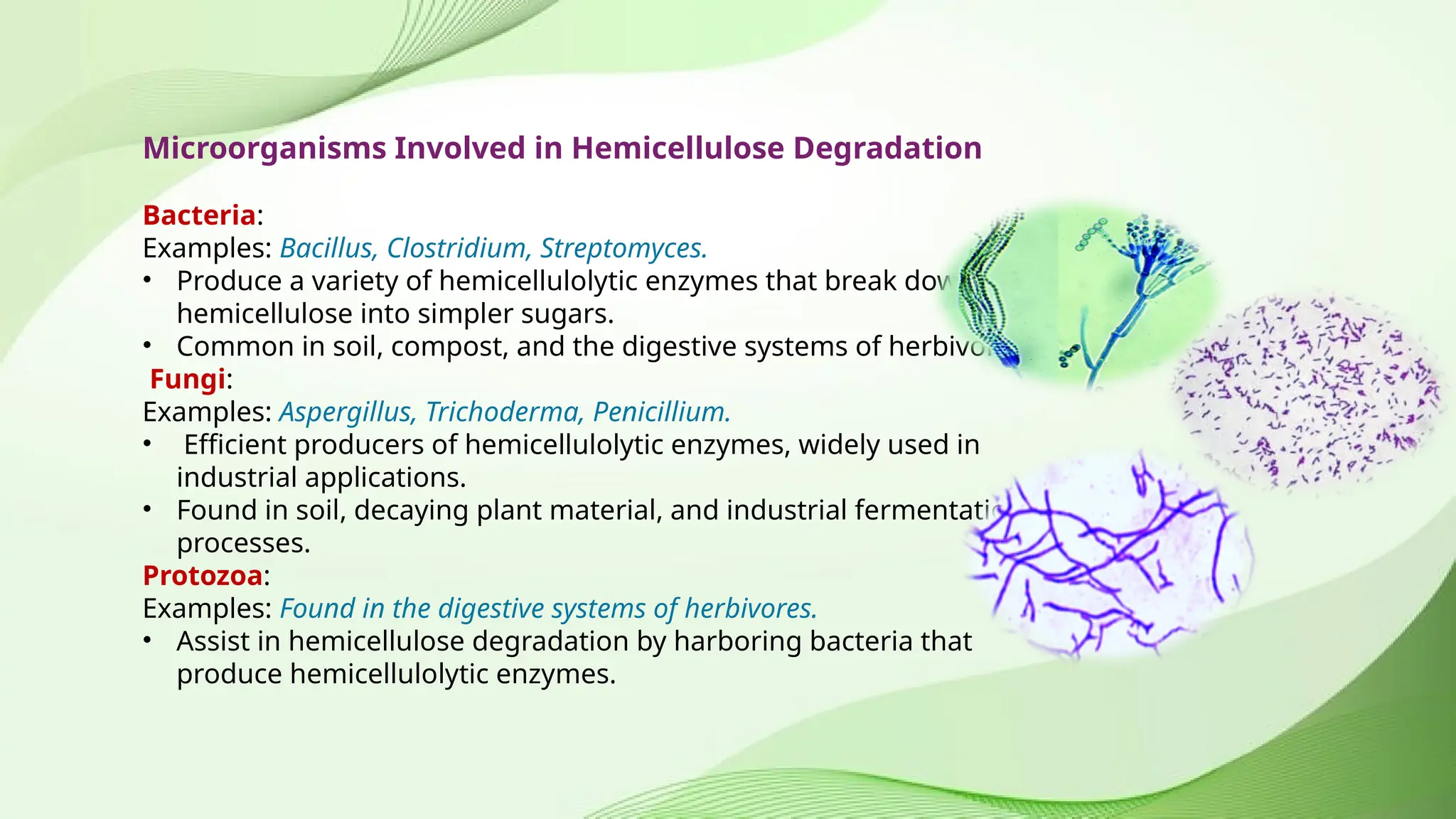
Microorganisms Involved in Hemicellulose Degradation
Bacteria:
Examples: Bacillus, Clostridium, Streptomyces.
• Produce a variety of hemicellulolytic enzymes that break down
hemicellulose into simpler sugars.
• Common in soil, compost, and the digestive systems of herbivores.
Fungi:
Examples: Aspergillus, Trichoderma, Penicillium.
• Efficient producers of hemicellulolytic enzymes, widely used in
industrial applications.
• Found in soil, decaying plant material, and industrial fermentation
processes.
Protozoa:
Examples: Found in the digestive systems of herbivores.
• Assist in hemicellulose degradation by harboring bacteria that
produce hemicellulolytic enzymes.
Process involved in hemicellulose degradation
• Fermentation: Once a hemicellulose broken down into Monosaccharides,these sugars are
fermentated by microorganisms into various products such as organic acids,Alcohol and
gases
• Hydrolysis: hydrolysis involves a series of enzymatic reactions that break down the complex
polysaccharides into simpler sugars. Hydrolysis breaks down hemicellulose into fermentable
sugars.
• Anaerobic digestion:
• Acidogenesis ferments these sugars into VFAs and gases.
• Acetogenesis further converts VFAs into acetic acid, hydrogen, and carbon dioxide.
• Methanogenesis finalizes the digestion by producing methane and carbon dioxide from
acetic acid and hydrogen.
• This anaerobic digestion process efficiently degrades hemicellulose and other organic
materials, producing biogas (a renewable energy source) and digestate (a nutrient-rich by-
product).
• Oxidation: oxidation process in hemicellulose degradation involves the chemical alteration of
hemicellulose components through oxidative reactions, which can occur both biologically and
chemically. This process breaks down hemicellulose into smaller molecules, enhancing its
digestibility and facilitating further degradation.
Applications of Hemicellulose Degradation
Biofuel Production:
• Conversion of hemi cellulosic biomass into fermentable sugars for ethanol and otherbiofuels.
Provides a renewable energy source and reduces reliance on fossil fuels.
Composting:
• Degradation of plant material in compost piles to produce nutrient-rich compost.Enhances
soil fertility and structure, promoting sustainable agriculture.
Animal Feed:
• Addition of hemicelluloses' to animal feed to improve digestibility and nutrient availability.
Importance of Hemicellulose Degradation
• Facilitates the breakdown and recycling of plant biomass in ecosystems, contributing to soil
fertility and plant growth.
• Promotes the sustainable management of organic waste, reducing landfill use and
greenhouse gas emissions.
• Enhances the efficiency and sustainability of various industrial applications, including biofuel
production, waste management, and manufacturing.
Degradation of organic matter-Pectin
• Pectin degradation is a crucial process in the breakdown of plant cell walls, especially in
fruits and vegetables. Pectin, a complex polysaccharide, provides structural integrity
and rigidity to plant cell walls.
• The degradation of pectin involves enzymatic hydrolysis, primarily facilitated by a
group of enzymes known as pectinases.
Structure and Composition of pectin:
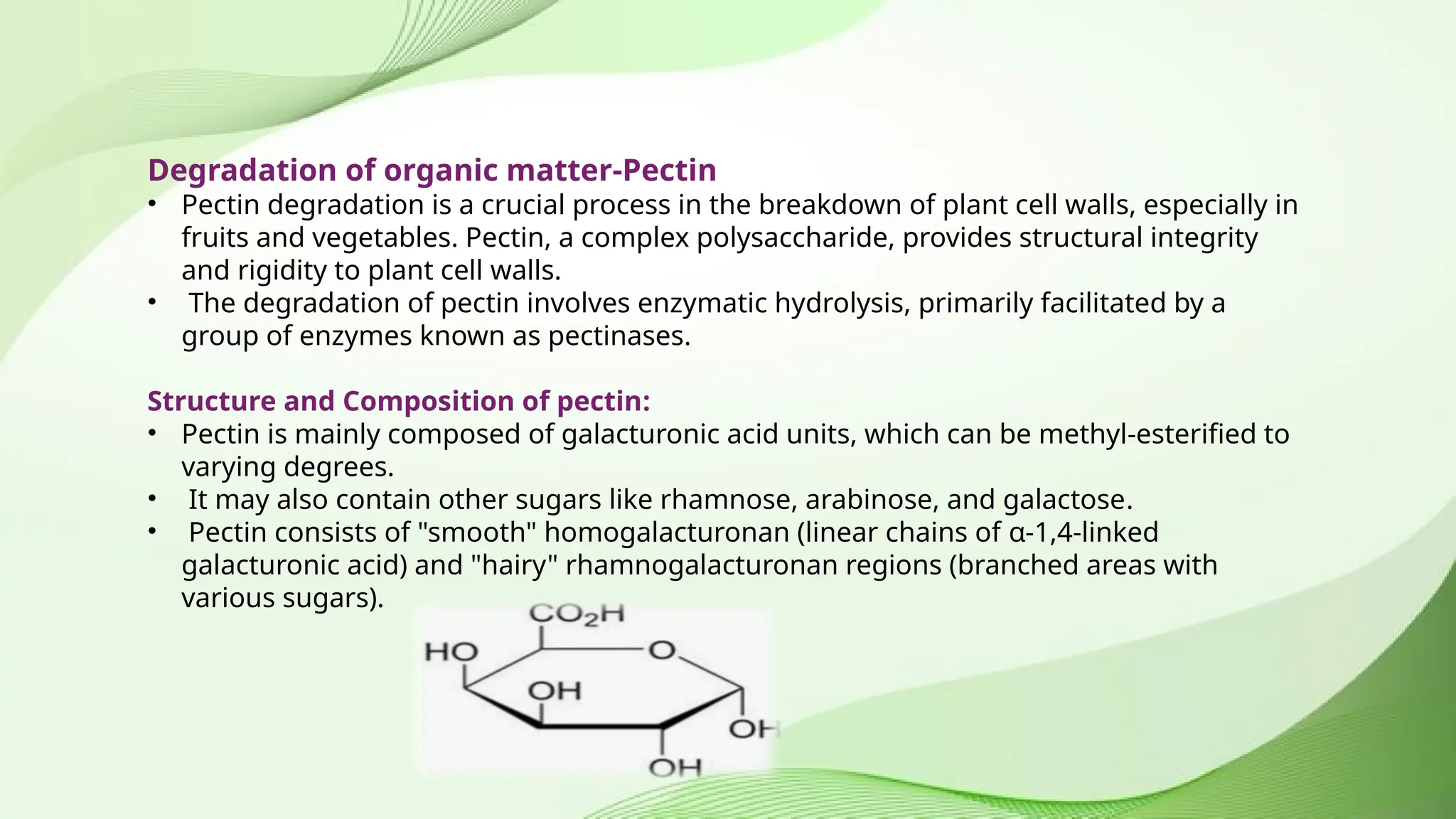
• Pectin is mainly composed of galacturonic acid units, which can be methyl-esterified to
varying degrees.
• It may also contain other sugars like rhamnose, arabinose, and galactose.
• Pectin consists of "smooth" homogalacturonan (linear chains of α-1,4-linked
galacturonic acid) and "hairy" rhamnogalacturonan regions (branched areas with
various sugars).
Enzymes Involved in Pectin Degradation
Polygalacturonases (PGs):
• Function: Hydrolyze the α-1,4-glycosidic bonds between galacturonic acid units in
homogalacturonan.
Endo-polygalacturonases (cleave internal bonds) and exo-polygalacturonases (remove
terminal residues).
Pectin Lyases (PLs):
• Function: Cleave the α-1,4-glycosidic bonds in a β-elimination manner, producing
unsaturated galacturonic acid oligomers.
• Preferentially act on methyl-esterified pectin.
Pectin Esterases (PEs):
• Function: De-esterify pectin by removing methyl groups from galacturonic acid
residues, converting them to free carboxyl group.Make pectin more accessible to
other pectinases like polygalacturonases.
Microorganisms Involved in Pectin Degradation
Bacteria:
Examples: Erwinia spp., Bacillus spp.
• Function: Produce pectinases that break down pectin during plant infection or in
composting processes.
Fungi:
Examples: Aspergillus spp., Penicillium spp
• Function: Produce a wide range of pectinases used in industrial applications like fruit juice
clarification and extraction.
Process involved in pectin degradation
Hydrolysis: Pectin esterases de-esterify pectin, making it more susceptible to further
hydrolysis. : Release of methanol and conversion of esterified galacturonic acid to free
galacturonic acids.Polygalacturonases and pectin lyases break down the pectin backbone into
smaller oligomers and monomers.Production of galacturonic acid and unsaturated oligomers.
Complete breakdown into simple sugars and acids.
Physical degradation primarily involves mechanical methods, such as grinding or milling,
which physically disrupt the pectin structure and increase its surface area, making it more
accessible to chemical and enzymatic actions.
Chemical degradation :
• Acid hydrolysis uses acids to cleave the glycosidic bonds in pectin, breaking it down into
smaller oligosaccharides and monosaccharides.
• Alkaline treatment can also degrade pectin, particularly in the presence of bases like
sodium hydroxide, which can break the ester linkages in pectin molecules, leading to
depolymerization.
• oxidative degradation involves oxidizing agents, such as hydrogen peroxide or ozone,
which introduce oxygen into the pectin structure, breaking it down into smaller fragments.
Applications of Pectin Degradation
• Fruit Juice Industry: Pectinases are used to break down pectin, clarifying the juice and
increasing yield. Enhances juice extraction from fruit pulp.
• Wine Production: Pectinases help in clarifying wine by breaking down pectin, which
can cause haziness.
• Textile Industry: Used in retting of plant fibers (e.g., flax) to separate fibers from the
pectin-rich matrix.
• Animal Feed: Improves the digestibility of plant-based animal feeds by breaking down
pectin
• Composting: Pectin degradation contributes to the composting process by breaking
down plant materials.
Importance of Pectin Degradation
• Facilitates the recycling of carbon and other nutrients in ecosystems.
• Enhances soil structure and fertility by breaking down plant residues.
• Improves the efficiency and quality of products in food and textile industries.
Advantages of Degradation of organic matter:
• Releases essential nutrients back into the soil.
• Enhances soil structure and water retention.
• Contributes to the carbon cycle
• Provides energy for microorganisms and other organisms.
• Breaks down pollutants into less harmful substances.
Disadvantages of Degradation of organic matter:
• Can harbor and spread pathogens if not properly managed.
• Rapid degradation can lead to the loss of nutrients through leaching.
• Decomposing matter can attract pests and scavengers.
• Improper management can lead to water and air pollution.
Conclusion
The degradation of organic matter is a vital process in natural ecosystems and
various industrial applications, underpinning nutrient cycling, soil fertility, waste
management, and renewable energy production. This multifaceted process
involves biological, chemical, and physical mechanisms that break down complex
organic compounds such as cellulose, hemicellulose, pectin, and lignin into
simpler, more manageable molecules.
Degradation of organic matter is fundamental to nutrient cycling, waste
management, and bioenergy production.
It supports ecological balance, aids in environmental sustainability, and
contributes to industrial processes by converting organic residues into useful
products.
Understanding and optimizing these degradation processes are essential for
advancing sustainable practices in agriculture, waste management, and energy
production.
Thank you

Degradation of Organic Matter -Lignin, Cellulose, Pectin,Hemicellulose

  • 1.
    VIVEKANANDHA ARTS ANDSCIENCE COLLEGE FOR WOMEN , VEERACHIPALAYAM,SANKAGIRI, SALEM. DEPARTMENT OF MICROBIOLOGY Title: DEGRADATION OF ORGANIC MATTER – LIGNIN, CELLULOSE, HEMICELLULOSE,PECTIN Presented by , C.SUJITHRA II-MSc., Microbiology Vivekanandha Arts and Science College for women,Sankagiri. SUBJECT INCHARGE, Dr.R.Dineshkumar, Assistant professor, Department of Microbiology, Vivekanadha Arts and Science College for women, Sankagiri. Subject: SOIL AND ENVIRONMENTAL MICROBIOLOGY
  • 2.
    CONTENT • INTRODUCTION ABOUTDEGRADATION OF ORGANIC MATTER • LIGNIN DEGRADATION • CELLULOSE DEGRADATION • HEMICELLULOSE DEGRADATION • PECTIN DEGRADATION • PROCESS OF DEGRADATION OF ORGANIC MATTER • ADVANTAGES OF ORGANIC MATTER DEGRADATION • DISADVANTAGES OF ORGANIC MATTER DEGRADATION • APPLICATION OF ORGANIC MATTER DEGRADATION
  • 3.
    DEGRADATION OF ORGANICMATTER The degradation of organic matter is a natural process through which complex organic materials are broken down into simpler substances by microorganisms such as bacteria and fungi. This process is critical for nutrient cycling in ecosystems and can occur aerobically (with oxygen) or anaerobically (without oxygen). Aerobic Degradation of Organic Matter: Aerobic degradation, also known as aerobic decomposition, is a process in which organic matter is broken down in the presence of oxygen. This process is carried out by aerobic microorganisms such as bacteria, fungi, and actinomycetes. Aerobic degradation is crucial for recycling nutrients in ecosystems and is widely used in composting and other waste management practices.
  • 4.
    Mechanisms of AerobicDegradation Enzymatic Breakdown: • Aerobic microorganisms secrete enzymes that break down complex organic compounds into simpler molecules. Enzymes: Amylases (carbohydrates), proteases (proteins), lipases (lipids). Microbial Metabolism : • The simpler molecules produced by enzymatic breakdown are taken up by microorganisms and further metabolized. Through cellular respiration, microorganisms convert organic matter into carbon dioxide (CO₂), water (H₂O), and energy. Carbon Cycle: • Carbon from organic matter is released as CO₂, which is utilized by plants during photosynthesis, completing the carbon cycle.
  • 5.
    Composting: • Controlled aerobicdegradation of organic waste to produce compost. Reduces landfill waste, produces nutrient-rich soil amendment, and lowers greenhouse gas emissions Wastewater Treatment: • Activated sludge process uses aerobic bacteria to degrade organic pollutants in wastewater. • Efficient removal of organic contaminants, improved water quality. Bioremediation: • Use of aerobic microorganisms to degrade pollutants in soil and water. Cleans up contaminated sites, restoring environmental health. APPLICATIONS
  • 6.
    Anaerobic Degradation ofOrganic Matter: • Anaerobic degradation, also known as anaerobic decomposition or anaerobic digestion, is a process where organic matter is broken down by microorganisms in the absence of oxygen. This process is essential for the treatment of organic waste in environments like landfills, waterlogged soils, and biogas production facilities. Mechanisms of Anaerobic Degradation: • Anaerobic degradation involves a series of biochemical processes carried out by a consortium of microorganisms, primarily bacteria and archaea, leading to the breakdown of organic matter into simpler molecules such as methane (CH₄), carbon dioxide (CO₂), and other byproducts.
  • 7.
    APPLICATIONS Biogas Production: • Organicwaste is digested anaerobically to produce biogas (mainly methane and CO₂) and digestate. Renewable energy source, reduces greenhouse gas emissions, produces nutrient-rich digestate for agriculture. Landfill Management: • Natural anaerobic degradation of organic waste in landfills produces landfill gas (methane and carbon dioxide). Potential for energy recovery through landfill gas capture and utilization. Wastewater Treatment: • Anaerobic digesters treat organic pollutants in wastewater, reducing the organic load and producing biogas. Efficient removal of organic contaminants, energy recovery, reduced sludge production. Agricultural Waste Management: • Anaerobic digestion of manure and crop residues. Reduces odors, produces biogas, and results in digestate that can be used as fertilizer.
  • 8.
    DEGRADATION OF LIGNIN •Lignin is a complex, aromatic polymer found in the cell walls of plants, providing rigidity and resistance to degradation. Its complex structure makes it one of the most resistant components of plant biomass to degradation. However, certain microorganisms, primarily fungi and some bacteria, have evolved mechanisms to break down lignin. Structure and composition of Lignin • Lignin is composed of three primary phenylpropanoid units: coniferyl alcohol, sinapyl alcohol, and p-coumaryl alcohoL. • The units are linked by various types of carbon-carbon and carbon-oxygen bonds, forming a highly irregular, cross-linked polymer.
  • 9.
    Enzymes Involved inLignin Degradation 1) Lignin Peroxidase (LiP):Catalyzes the oxidative breakdown of lignin by using hydrogen peroxide (H₂O₂) to oxidize the phenolic structures. • Action: Cleaves carbon-carbon and carbon-oxygen bonds, producing phenoxy radicals that lead to lignin depolymerization. 2) Manganese Peroxidase (MnP): Uses manganese ions (Mn²⁺) as mediators to oxidize phenolic structures in lignin. • Action: Produces Mn³⁺, which oxidizes phenolic compounds, facilitating lignin breakdown. 3) Laccase: Oxidizes phenolic and non-phenolic lignin structures using molecular oxygen. • Action: Produces phenoxy radicals that destabilize the lignin structure, leading to its breakdown. 4) Versatile Peroxidase (VP): Combines the activities of LiP and MnP, capable of oxidizing both phenolic and non-phenolic lignin compounds. • Action: Provides a broad range of oxidative capabilities, contributing to the efficient degradation of lignin.
  • 10.
    Microorganisms Involved inLignin Degradation White-Rot Fungi: Examples: Phanerochaete chrysosporium, Trametes versicolor. • Function: Produce a suite of lignin-degrading enzymes, making them highly efficient in breaking down lignin. Complete mineralization of lignin to CO₂ and H₂O. Brown-Rot Fungi: Examples: Postia placenta, Gloeophyllum trabeum. • Function: Modify lignin through demethylation and oxidation, but primarily target cellulose and hemicellulose. Partially degrade lignin, facilitating access to carbohydrates Actinobacteria: Examples: Streptomyces, Nocardia. • Function: Produce extracellular enzymes capable of breaking down lignin and lignin-derived compounds. Decompose lignin in soil environments.
  • 11.
    Process of LigninDegradation Initial Oxidation: • Action: Lignin peroxidase, manganese peroxidase, and laccase initiate the breakdown of lignin by oxidizing phenolic structures and creating unstable radicals. • Formation of phenoxy radicals and cleavage of carbon-carbon and carbon-oxygen bonds. Depolymerization: • Action: Continued oxidative attacks lead to the breakdown of lignin into smaller phenolic compounds, such as vanillin, syringaldehyde, and p-coumaric . • Production of low-molecular-weight aromatic compounds. Breakdown and Mineralization: • Action: Smaller phenolic compounds are further degraded by other microbial enzymes into simpler molecules like CO₂ and H₂O • It leads to complete mineralization of lignin, contributing to nutrient cycling.
  • 12.
    Applications of LigninDegradation Bioremediation: • Use of lignin-degrading microorganisms to break down environmental pollutants, such as polycyclic aromatic hydrocarbons (PAHs) and synthetic dyes. • Cleans up contaminated soils and water bodies, reducing environmental toxicity. Pulp and Paper Industry: • Biopulping and biobleaching use lignin-degrading enzymes to reduce the need for harsh chemicals.Environmentally friendly processing, reduced chemical usage, and improved pulp quality. Biofuel Production: • Pretreatment of lignocellulose biomass to enhance the accessibility of cellulose and hemicellulose for biofuel proproduction . Increases efficiency of biofuel production from plant biomass. Importance of Lignin Degradation • Facilitates the recycling of carbon and other nutrients in ecosystems, supporting plant growth and soil health. • Contributes to the formation of humus, enhancing soil structure and fertility. • Reduces the accumulation of plant debris and promotes the sustainable management of organic waste.
  • 13.
    CELLULOSE DEGRADATION • Celluloseis a major component of plant cell walls and one of the most abundant organic polymers on Earth. Its degradation is crucial for the recycling of organic matter in ecosystems and has significant industrial applications, particularly in biofuel production and waste management. Structure and Composition of cellulose: Cellulose is a linear polysaccharide consisting of β- 1,4-linked glucose units. It forms microfibrils through hydrogen bonding, providing rigidity and strength to plant cell walls. Enzymes Involved In Cellulose Degradation: • Endoglucanases: Cleave internal β-1,4-glycosidic bonds in cellulose, producing shorter cellulose chains and exposing new chain ends. Randomly hydrolyzes the internal bonds within the cellulose polymer. • Exoglycanases (Cellobiohydrolases):Cleave β-1,4-glycosidic bonds from the ends of the cellulose chains, releasing cellobiose (a disaccharide of glucose).Processively hydrolyzes cellulose from either the reducing or non-reducing ends. • β-Glucosidases:Hydrolyze cellobiose and other short cellodextrins into glucose. Completes the hydrolysis process by breaking down cellobiose into glucose molecules.
  • 14.
    Microorganisms Involved inCellulose Degradation • Bacteria: Examples: Cellulomonas, Clostridium, Bacillus Function: Produce cellulolytic enzymes that degrade cellulose into simpler sugars. Play a significant role in soil and composting environments • Fungi: Examples: Trichoderma reesei, Aspergillus niger. Function: Efficient producers of cellulases, widely used in industrial applications. • Protozoa: Examples: Rumen protozoa, termite gut protozoa Function: Assist in cellulose degradation by harboring cellulolytic bacteria and producing enzymes in the digestive systems of herbivores and termites.
  • 15.
    Chemical Degradation: Enzymatic Hydrolysis: Enzymessuch as endoglucanases, exoglucanases, and β-glucosidases catalyze the hydrolysis of β-1,4-glycosidic bonds in cellulose.The enzymatic breakdown produces cellobiose and eventually glucose. Pretreatment Methods: • Acid Hydrolysis: Uses dilute or concentrated acids to break down cellulose, making it more accessible to enzymatic action. • Alkaline Pretreatment: Employs alkaline solutions (e.g., NaOH) to remove lignin and hemicellulose, increasing cellulose accessibility. • Steam Explosion: Involves high-pressure steam to disrupt the cellulose structure, enhancing enzyme penetration. Chemical Modifiers: • Chelating Agents: Chemicals like EDTA can enhance enzyme activity by binding inhibitory metal ions. • Surfactants: Reduce the non-productive binding of enzymes to lignin, improving cellulose hydrolysis efficiency.
  • 16.
    Applications of CelluloseDegradation • Biofuel Production: Conversion of lignocellulosic biomass into fermentable sugars for ethanol and other biofuels. Provides a renewable energy source and reduces reliance on fossil fuels • Composting: Degradation of plant material in compost piles to produce nutrient- rich compost. Enhances soil fertility and structure, promoting sustainable agriculture. • Paper and Pulp Industry: Use of cellulases to improve the pulping process and enhance paper quality.Reduces the need for harsh chemicals and energy consumption in paper production. • Animal Feed: Addition of cellulases to animal feed to improve digestibility and nutrient availability. Enhances the nutritional value of feed and promotes better animal growth and health. • Textile Industry: Use of cellulases in fabric processing, such as bio-polishing and denim finishing. Provides a softer feel, reduces pilling, and improves the appearance of textiles.
  • 17.
    Importance of CelluloseDegradation Nutrient Cycling: • Facilitates the breakdown and recycling of plant biomass in ecosystems, contributing to soil fertility and plant growth Environmental Conservation: • Promotes the sustainable management of organic waste, reducing landfill use and greenhouse gas emissions Industrial Processes: • Enhances the efficiency and sustainability of various industrial applications, including biofuel production, waste management, and manufacturing.
  • 18.
    Degradation of Hemicellulose •Hemicellulose is a complex carbohydrate found in plant cell walls, often associated with cellulose and lignin. It is composed of various sugars, including xylose, mannose, galactose, rhamnose, and arabinose. • The degradation of hemicellulose is crucial for the efficient utilization of lignocellulosic biomass in various applications, including biofuel production, composting, and animal feed. Structure and Composition of Hemicellulose: • Hemicellulose is a heterogeneous polysaccharide made up of different sugar monomers, including pentoses (xylose, arabinose) and hexoses (mannose, glucose, galactose). • Structure: Unlike cellulose, hemicellulose has a branched, amorphous structure, making it more accessible to enzymatic attack.
  • 19.
    Enzymes Involved inHemicellulose Degradation Endo-β-1,4-xylanases: • Function: Hydrolyze the internal β-1,4-glycosidic bonds in the xylan backbone of hemicellulose. • Produce shorter xylo-oligosaccharides, increasing the accessibility of the substrate. β-Xylosidases: • Function: Hydrolyze xylo-oligosaccharides into xylose.Complete the degradation of xylan into its monomeric units. Mannanases: • Function: Hydrolyze the β-1,4-glycosidic bonds in mannan, a major component of hemicellulose. Produce mannose and mannooligosaccharides. Arabinofuranosidases: • Function: Remove arabinose side chains from arabinoxylan, a type of hemicellulose. Increase the accessibility of the xylan backbone to other enzymes. Galactases: • Function: Hydrolyze the β-1,4-glycosidic bonds in galactan.Produce galactose and galactooligosaccharides.
  • 20.
    Microorganisms Involved inHemicellulose Degradation Bacteria: Examples: Bacillus, Clostridium, Streptomyces. • Produce a variety of hemicellulolytic enzymes that break down hemicellulose into simpler sugars. • Common in soil, compost, and the digestive systems of herbivores. Fungi: Examples: Aspergillus, Trichoderma, Penicillium. • Efficient producers of hemicellulolytic enzymes, widely used in industrial applications. • Found in soil, decaying plant material, and industrial fermentation processes. Protozoa: Examples: Found in the digestive systems of herbivores. • Assist in hemicellulose degradation by harboring bacteria that produce hemicellulolytic enzymes.
  • 21.
    Process involved inhemicellulose degradation • Fermentation: Once a hemicellulose broken down into Monosaccharides,these sugars are fermentated by microorganisms into various products such as organic acids,Alcohol and gases • Hydrolysis: hydrolysis involves a series of enzymatic reactions that break down the complex polysaccharides into simpler sugars. Hydrolysis breaks down hemicellulose into fermentable sugars. • Anaerobic digestion: • Acidogenesis ferments these sugars into VFAs and gases. • Acetogenesis further converts VFAs into acetic acid, hydrogen, and carbon dioxide. • Methanogenesis finalizes the digestion by producing methane and carbon dioxide from acetic acid and hydrogen. • This anaerobic digestion process efficiently degrades hemicellulose and other organic materials, producing biogas (a renewable energy source) and digestate (a nutrient-rich by- product). • Oxidation: oxidation process in hemicellulose degradation involves the chemical alteration of hemicellulose components through oxidative reactions, which can occur both biologically and chemically. This process breaks down hemicellulose into smaller molecules, enhancing its digestibility and facilitating further degradation.
  • 22.
    Applications of HemicelluloseDegradation Biofuel Production: • Conversion of hemi cellulosic biomass into fermentable sugars for ethanol and otherbiofuels. Provides a renewable energy source and reduces reliance on fossil fuels. Composting: • Degradation of plant material in compost piles to produce nutrient-rich compost.Enhances soil fertility and structure, promoting sustainable agriculture. Animal Feed: • Addition of hemicelluloses' to animal feed to improve digestibility and nutrient availability. Importance of Hemicellulose Degradation • Facilitates the breakdown and recycling of plant biomass in ecosystems, contributing to soil fertility and plant growth. • Promotes the sustainable management of organic waste, reducing landfill use and greenhouse gas emissions. • Enhances the efficiency and sustainability of various industrial applications, including biofuel production, waste management, and manufacturing.
  • 23.
    Degradation of organicmatter-Pectin • Pectin degradation is a crucial process in the breakdown of plant cell walls, especially in fruits and vegetables. Pectin, a complex polysaccharide, provides structural integrity and rigidity to plant cell walls. • The degradation of pectin involves enzymatic hydrolysis, primarily facilitated by a group of enzymes known as pectinases. Structure and Composition of pectin: • Pectin is mainly composed of galacturonic acid units, which can be methyl-esterified to varying degrees. • It may also contain other sugars like rhamnose, arabinose, and galactose. • Pectin consists of "smooth" homogalacturonan (linear chains of α-1,4-linked galacturonic acid) and "hairy" rhamnogalacturonan regions (branched areas with various sugars).
  • 24.
    Enzymes Involved inPectin Degradation Polygalacturonases (PGs): • Function: Hydrolyze the α-1,4-glycosidic bonds between galacturonic acid units in homogalacturonan. Endo-polygalacturonases (cleave internal bonds) and exo-polygalacturonases (remove terminal residues). Pectin Lyases (PLs): • Function: Cleave the α-1,4-glycosidic bonds in a β-elimination manner, producing unsaturated galacturonic acid oligomers. • Preferentially act on methyl-esterified pectin. Pectin Esterases (PEs): • Function: De-esterify pectin by removing methyl groups from galacturonic acid residues, converting them to free carboxyl group.Make pectin more accessible to other pectinases like polygalacturonases.
  • 25.
    Microorganisms Involved inPectin Degradation Bacteria: Examples: Erwinia spp., Bacillus spp. • Function: Produce pectinases that break down pectin during plant infection or in composting processes. Fungi: Examples: Aspergillus spp., Penicillium spp • Function: Produce a wide range of pectinases used in industrial applications like fruit juice clarification and extraction.
  • 26.
    Process involved inpectin degradation Hydrolysis: Pectin esterases de-esterify pectin, making it more susceptible to further hydrolysis. : Release of methanol and conversion of esterified galacturonic acid to free galacturonic acids.Polygalacturonases and pectin lyases break down the pectin backbone into smaller oligomers and monomers.Production of galacturonic acid and unsaturated oligomers. Complete breakdown into simple sugars and acids. Physical degradation primarily involves mechanical methods, such as grinding or milling, which physically disrupt the pectin structure and increase its surface area, making it more accessible to chemical and enzymatic actions. Chemical degradation : • Acid hydrolysis uses acids to cleave the glycosidic bonds in pectin, breaking it down into smaller oligosaccharides and monosaccharides. • Alkaline treatment can also degrade pectin, particularly in the presence of bases like sodium hydroxide, which can break the ester linkages in pectin molecules, leading to depolymerization. • oxidative degradation involves oxidizing agents, such as hydrogen peroxide or ozone, which introduce oxygen into the pectin structure, breaking it down into smaller fragments.
  • 27.
    Applications of PectinDegradation • Fruit Juice Industry: Pectinases are used to break down pectin, clarifying the juice and increasing yield. Enhances juice extraction from fruit pulp. • Wine Production: Pectinases help in clarifying wine by breaking down pectin, which can cause haziness. • Textile Industry: Used in retting of plant fibers (e.g., flax) to separate fibers from the pectin-rich matrix. • Animal Feed: Improves the digestibility of plant-based animal feeds by breaking down pectin • Composting: Pectin degradation contributes to the composting process by breaking down plant materials.
  • 28.
    Importance of PectinDegradation • Facilitates the recycling of carbon and other nutrients in ecosystems. • Enhances soil structure and fertility by breaking down plant residues. • Improves the efficiency and quality of products in food and textile industries. Advantages of Degradation of organic matter: • Releases essential nutrients back into the soil. • Enhances soil structure and water retention. • Contributes to the carbon cycle • Provides energy for microorganisms and other organisms. • Breaks down pollutants into less harmful substances. Disadvantages of Degradation of organic matter: • Can harbor and spread pathogens if not properly managed. • Rapid degradation can lead to the loss of nutrients through leaching. • Decomposing matter can attract pests and scavengers. • Improper management can lead to water and air pollution.
  • 29.
    Conclusion The degradation oforganic matter is a vital process in natural ecosystems and various industrial applications, underpinning nutrient cycling, soil fertility, waste management, and renewable energy production. This multifaceted process involves biological, chemical, and physical mechanisms that break down complex organic compounds such as cellulose, hemicellulose, pectin, and lignin into simpler, more manageable molecules. Degradation of organic matter is fundamental to nutrient cycling, waste management, and bioenergy production. It supports ecological balance, aids in environmental sustainability, and contributes to industrial processes by converting organic residues into useful products. Understanding and optimizing these degradation processes are essential for advancing sustainable practices in agriculture, waste management, and energy production.
  • 30.