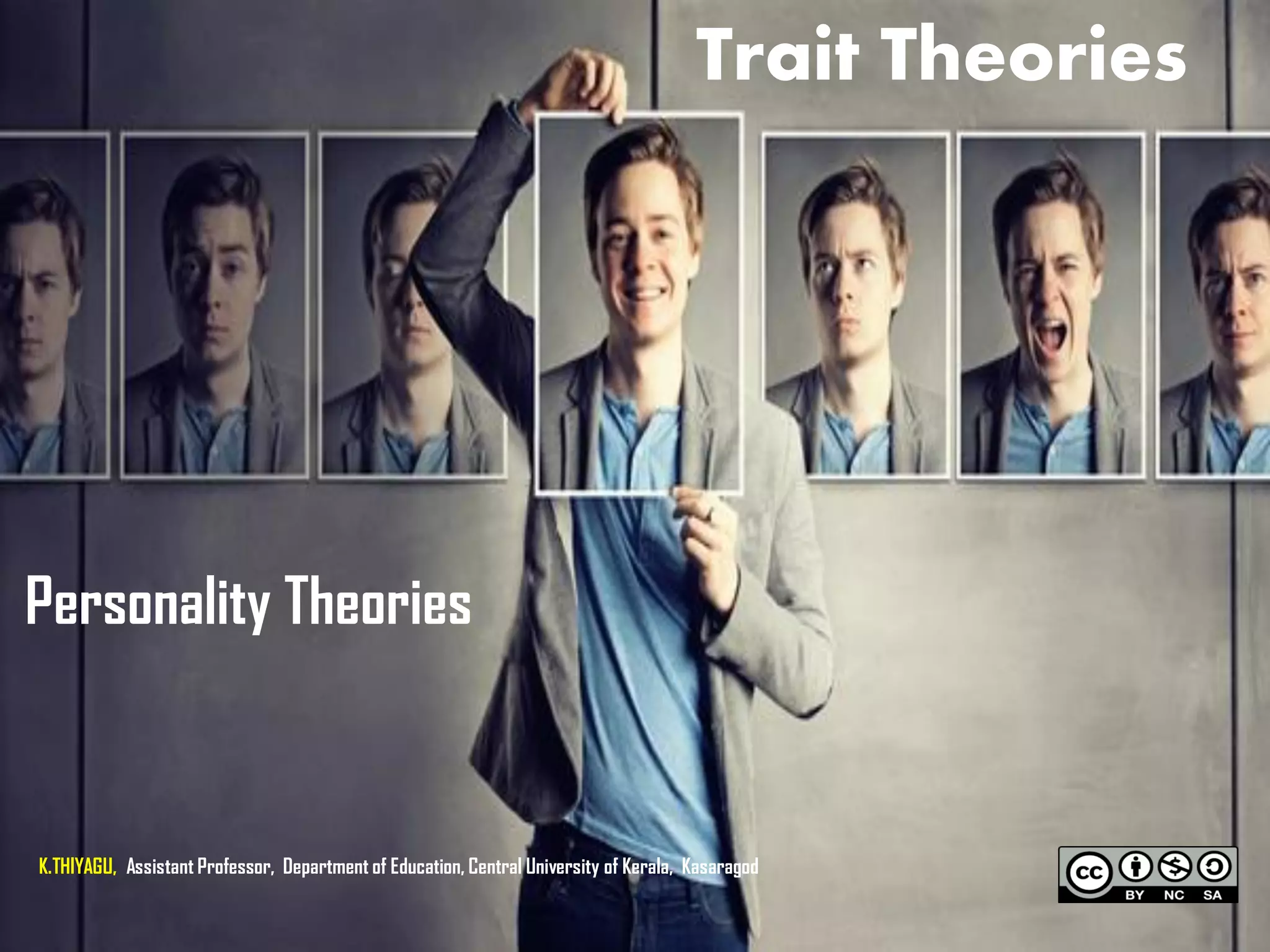

Trait Theories
Personality Theories
K.THIYAGU, Assistant Professor, Department of Education, Central University of Kerala, Kasaragod
Types Vs Traits
Personality type refers to
the psychological
classification of different
types of people
Personality trait refers to
psychological
classification of different
levels or degrees
For example, according to type theories, there are two
types of people, introverts and extroverts. According to
trait theories, introversion and extroversion are part of
a continuous dimension, with many people in the middle.
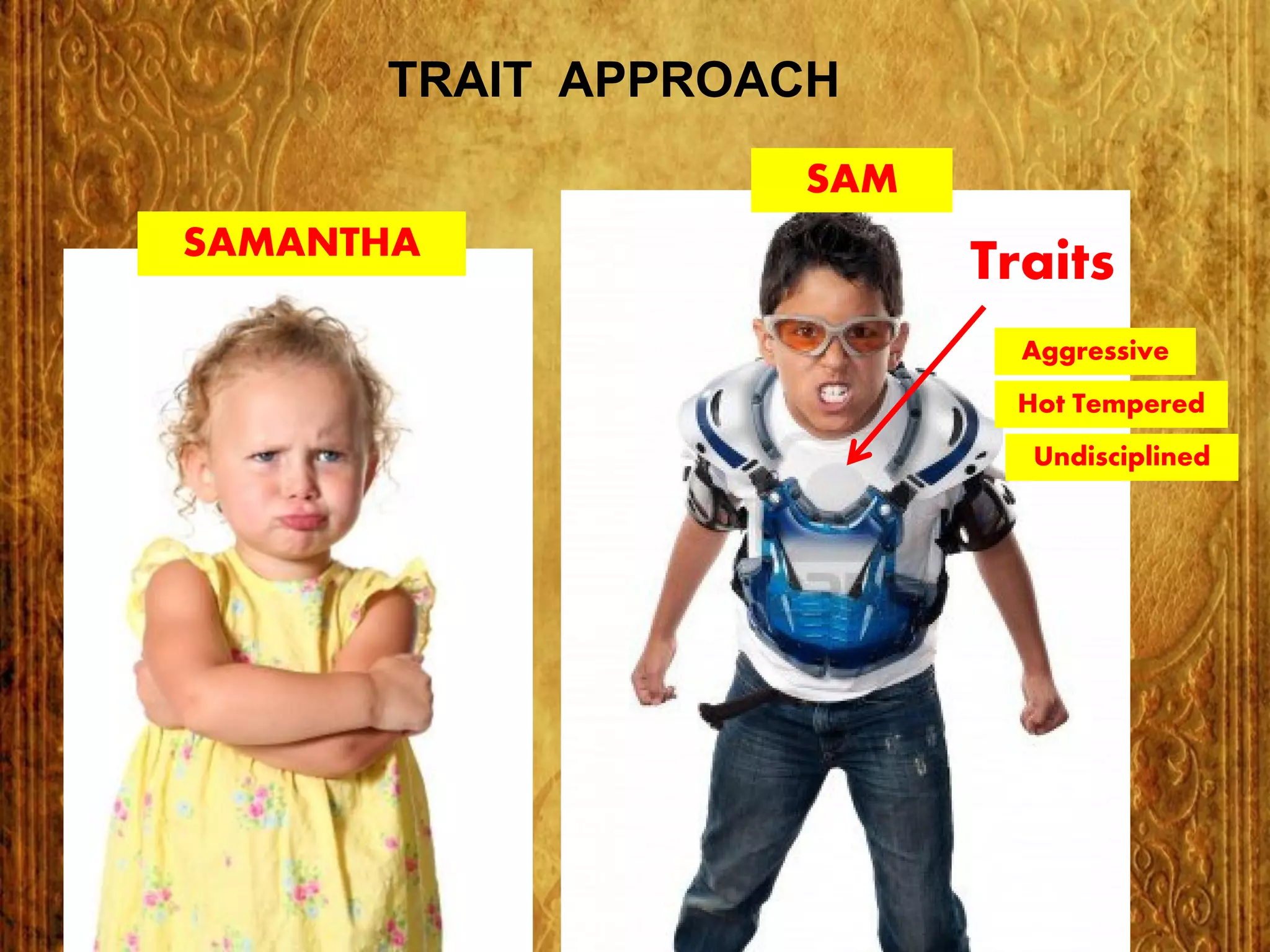
On the play ground, 6 year old Sam
pushes little Samantha off her
tricycle and rides away on it.
Why?
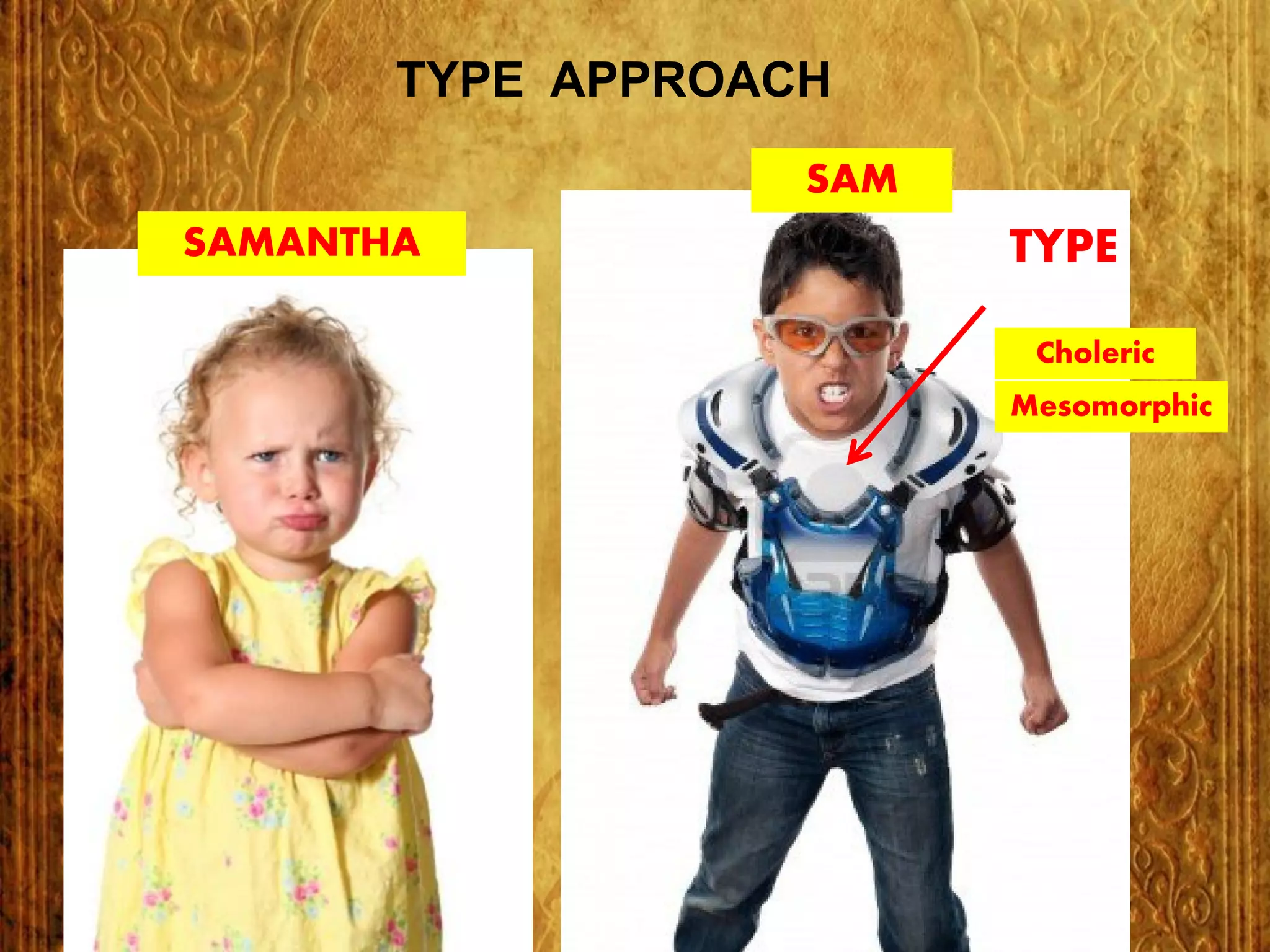
SAM
SAMANTHA TYPE
Choleric
Mesomorphic
TYPE APPROACH
SAM
SAMANTHA
Traits
Aggressive
Hot Tempered
Undisciplined
TRAIT APPROACH
personality traits are "enduring patterns of
perceiving, relating to, and thinking about
the environment and oneself that are
exhibited in a wide range of social and
personal contexts."
A trait is what we call a characteristic way in
which an individual perceives, feels, believes, or
acts.
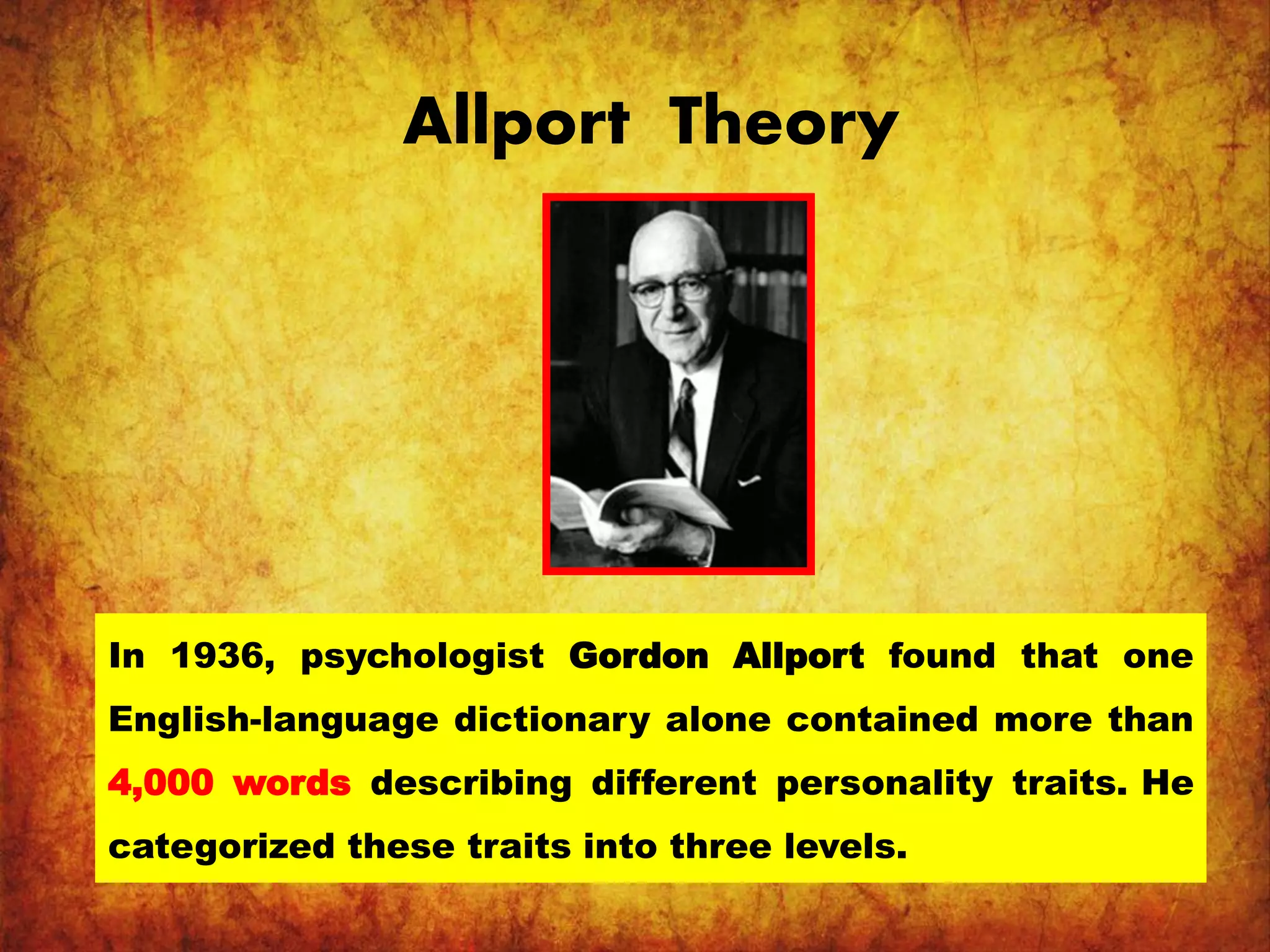
Allport Theory
In 1936, psychologist Gordon Allport found that one
English-language dictionary alone contained more than
4,000 words describing different personality traits. He
categorized these traits into three levels.
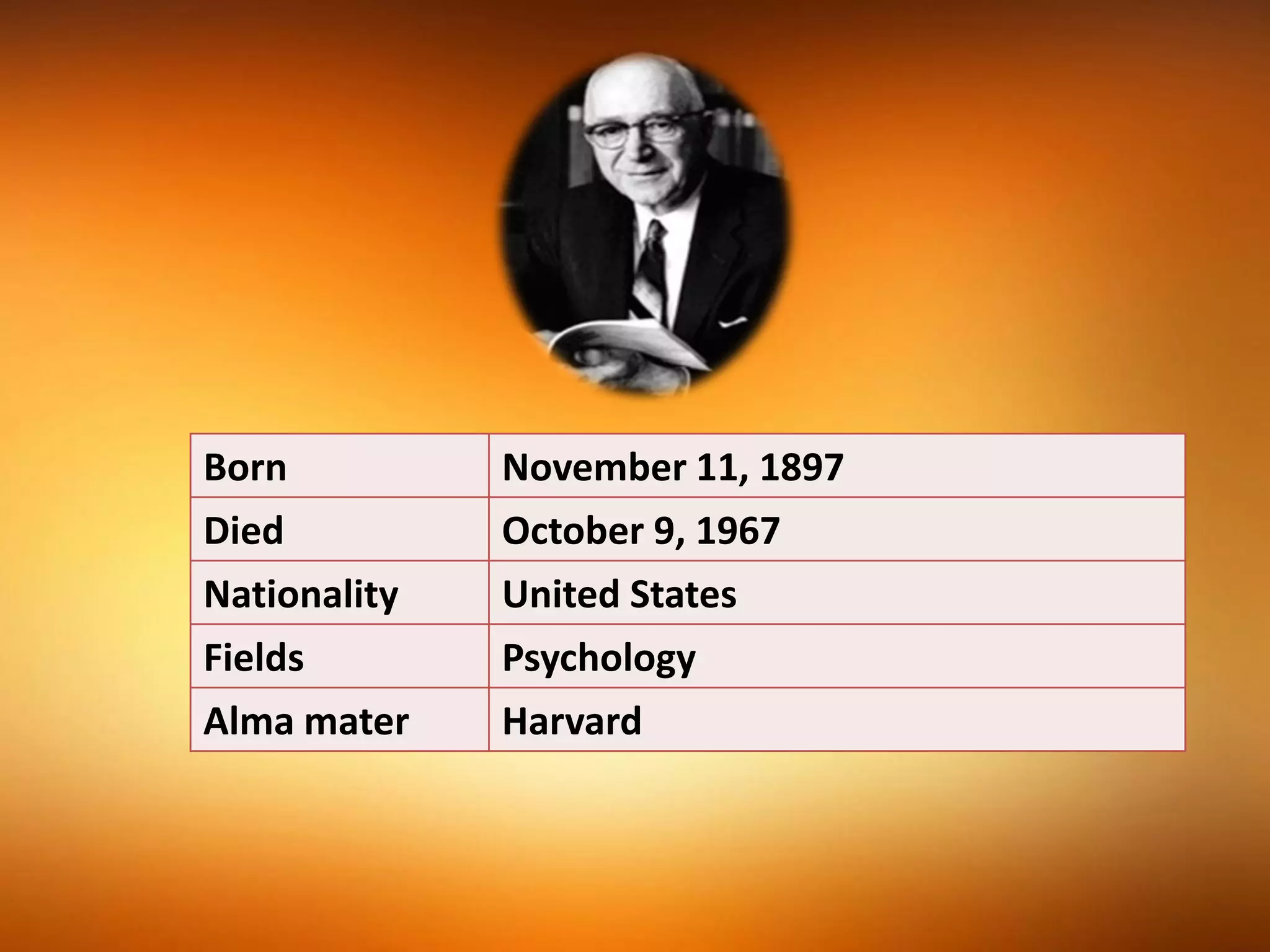
Born November 11, 1897
Died October 9, 1967
Nationality United States
Fields Psychology
Alma mater Harvard
Allport Theory /
Three trait theory
1. Cardinal Traits
2. Central Traits
3. Secondary Traits
Cardinal Traits
Primary traits
Dominate an individual’s whole life
Shapes of a person's
Eg: Administrator, Humor Sense
Central Traits
General characteristics that form the basic
foundations of personality.
General characteristic found in some
degree in every person
People come to expect from you on a
daily basis.
Eg: Terms such as cordial relation,
intelligent, honest, shy and anxious are
considered central traits.
Secondary Traits
Related to attitudes or preferences and often appear
only in certain situations or under specific
circumstances.
Secondary traits are seen only in specific situations.
Eg: would be getting anxious when speaking to a
group or impatient while waiting in line.
anger
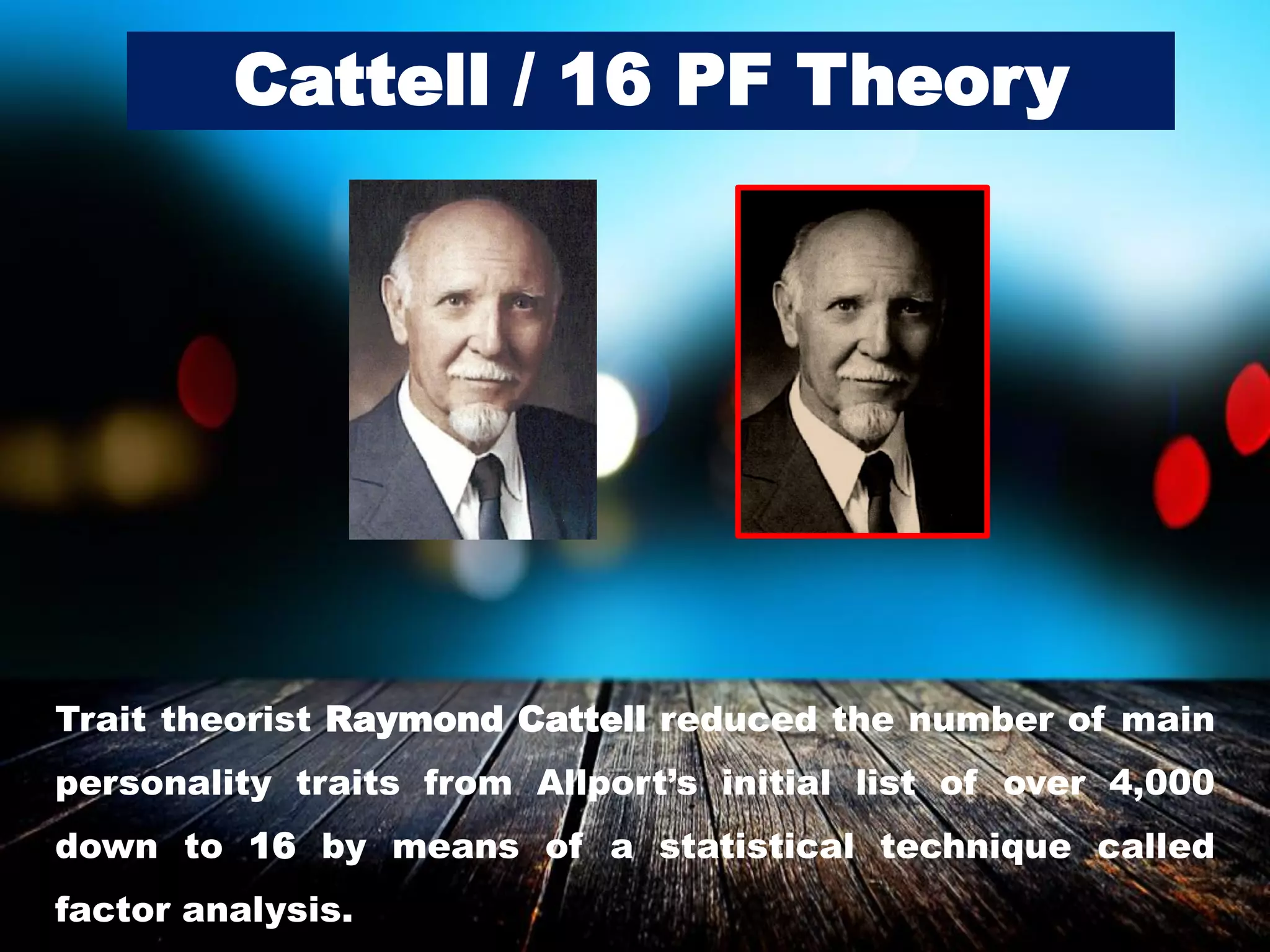
Cattell / 16 PF Theory
Trait theorist Raymond Cattell reduced the number of main
personality traits from Allport’s initial list of over 4,000
down to 16 by means of a statistical technique called
factor analysis.
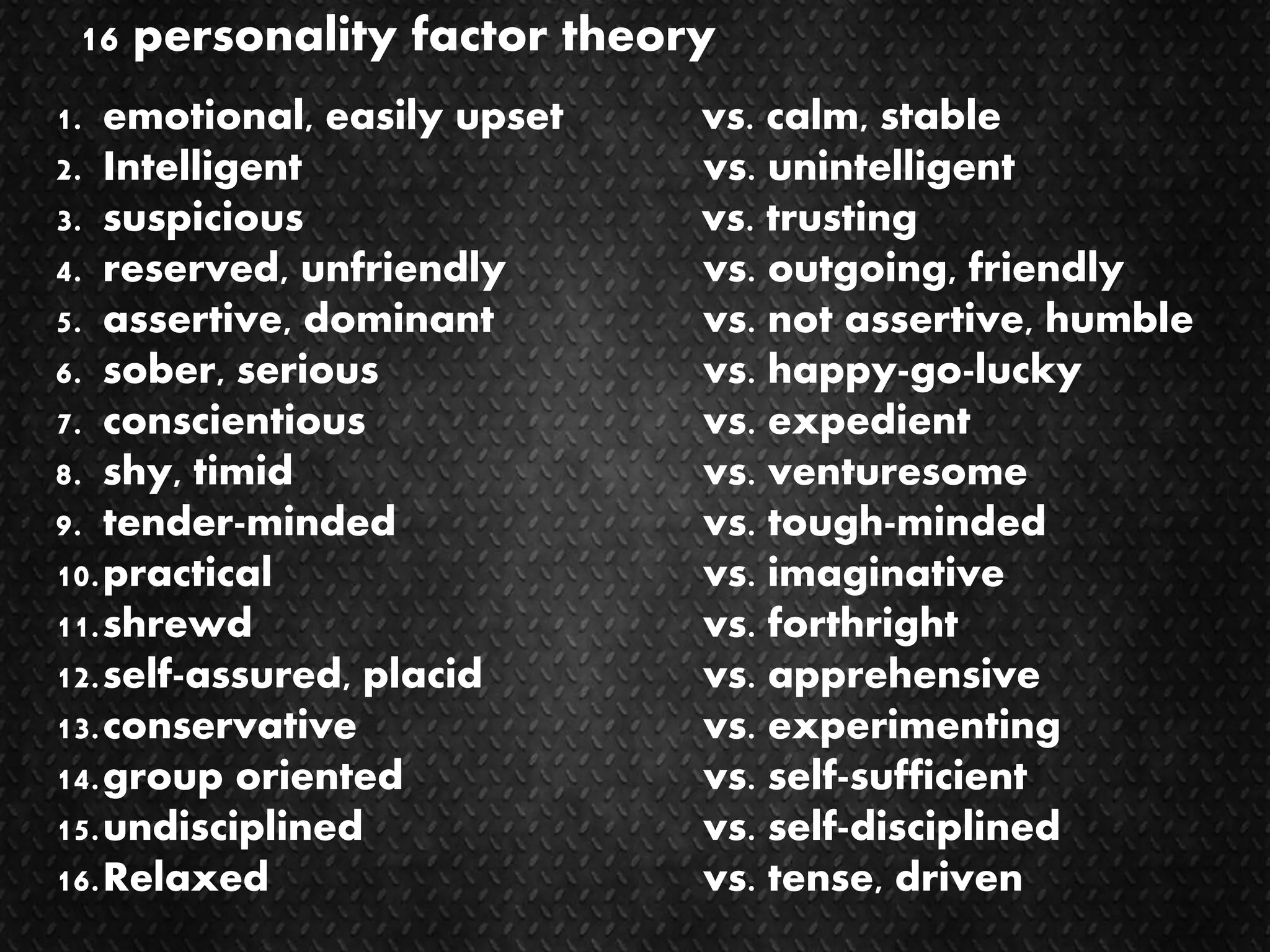
16 personality factor theory
1. emotional, easily upset vs. calm, stable
2. Intelligent vs. unintelligent
3. suspicious vs. trusting
4. reserved, unfriendly vs. outgoing, friendly
5. assertive, dominant vs. not assertive, humble
6. sober, serious vs. happy-go-lucky
7. conscientious vs. expedient
8. shy, timid vs. venturesome
9. tender-minded vs. tough-minded
10.practical vs. imaginative
11.shrewd vs. forthright
12.self-assured, placid vs. apprehensive
13.conservative vs. experimenting
14.group oriented vs. self-sufficient
15.undisciplined vs. self-disciplined
16.Relaxed vs. tense, driven
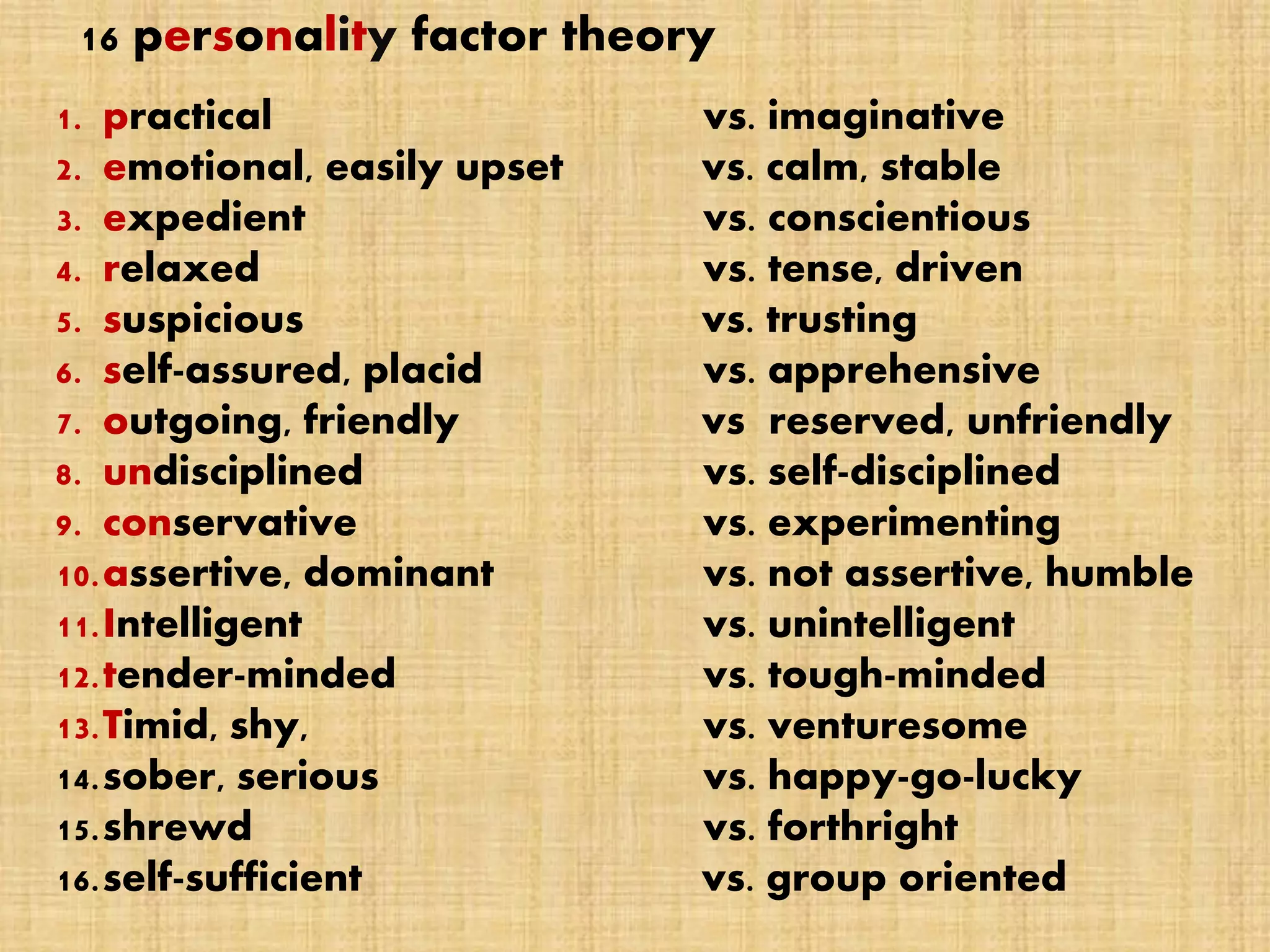
16 personality factor theory
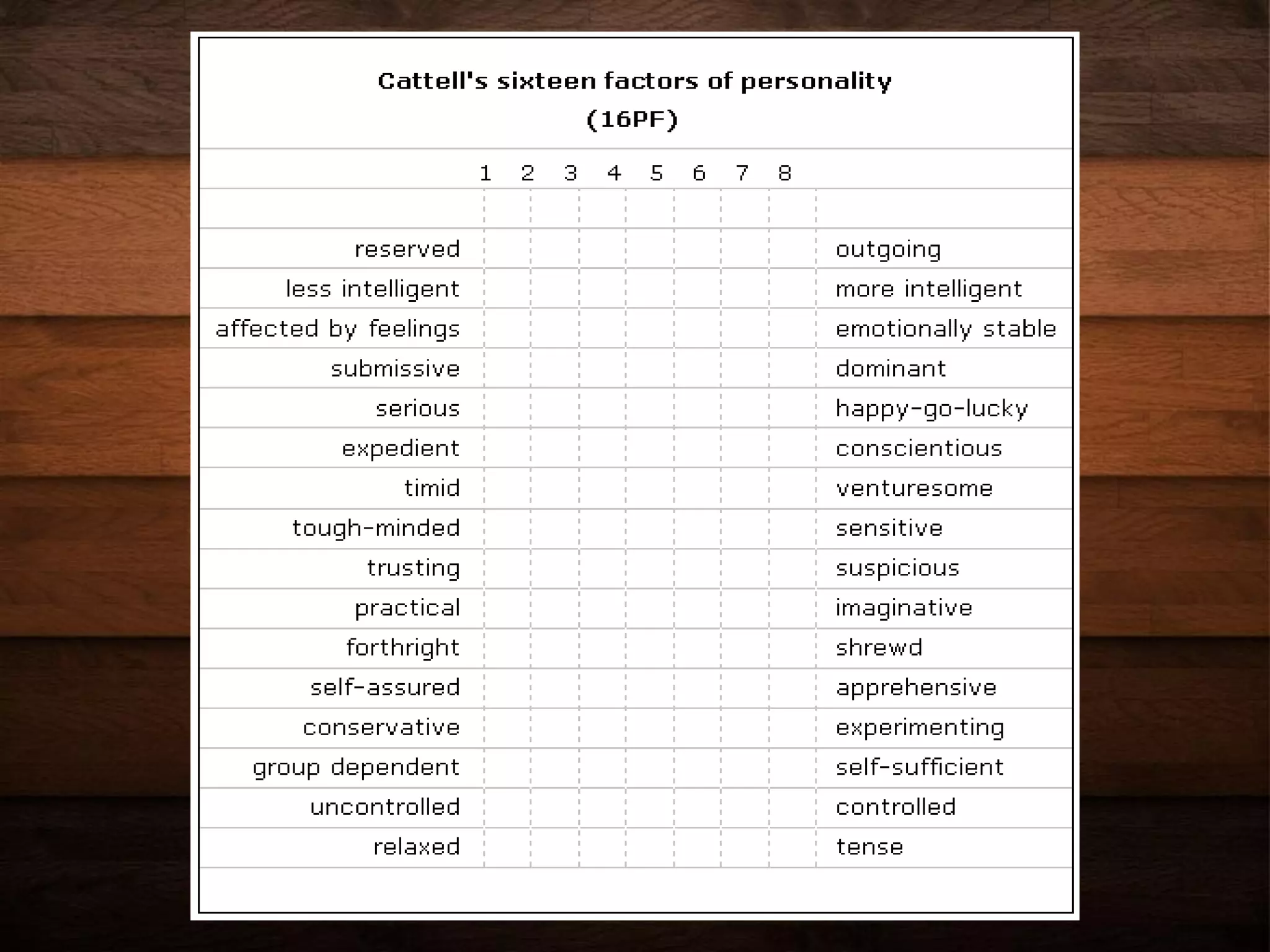
1. practical vs. imaginative
2. emotional, easily upset vs. calm, stable
3. expedient vs. conscientious
4. relaxed vs. tense, driven
5. suspicious vs. trusting
6. self-assured, placid vs. apprehensive
7. outgoing, friendly vs reserved, unfriendly
8. undisciplined vs. self-disciplined
9. conservative vs. experimenting
10.assertive, dominant vs. not assertive, humble
11.Intelligent vs. unintelligent
12.tender-minded vs. tough-minded
13.Timid, shy, vs. venturesome
14.sober, serious vs. happy-go-lucky
15.shrewd vs. forthright
16.self-sufficient vs. group oriented
Four types of traits
• Common Traits
• Unique Traits
• Surface Traits
• Source Traits
Common Traits
• Found widely distributed in general
population
• Honesty
• Aggression
• Co-operation
Unique Traits
• Are unique to a person
• Temperamental traits
• Emotional reactions
Surface traits
• Recognized by manifestation of
behaviour
• Curiosity
• Dependability
• Tactfulness
Source Traits
• Are underlying sources that
determine behaviour
• Dominance
• Emotionality
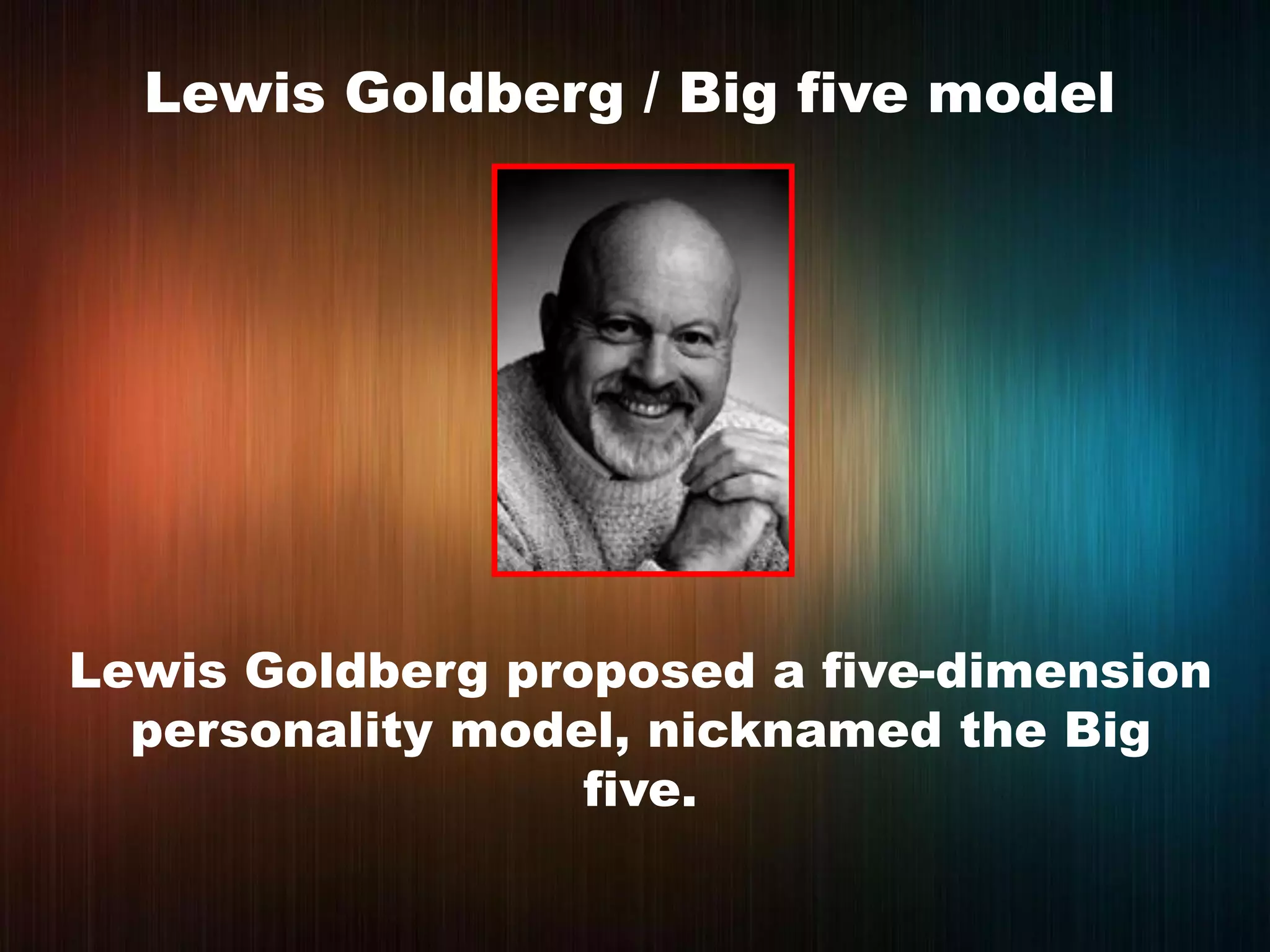
Lewis Goldberg / Big five model
Lewis Goldberg proposed a five-dimension
personality model, nicknamed the Big
five.
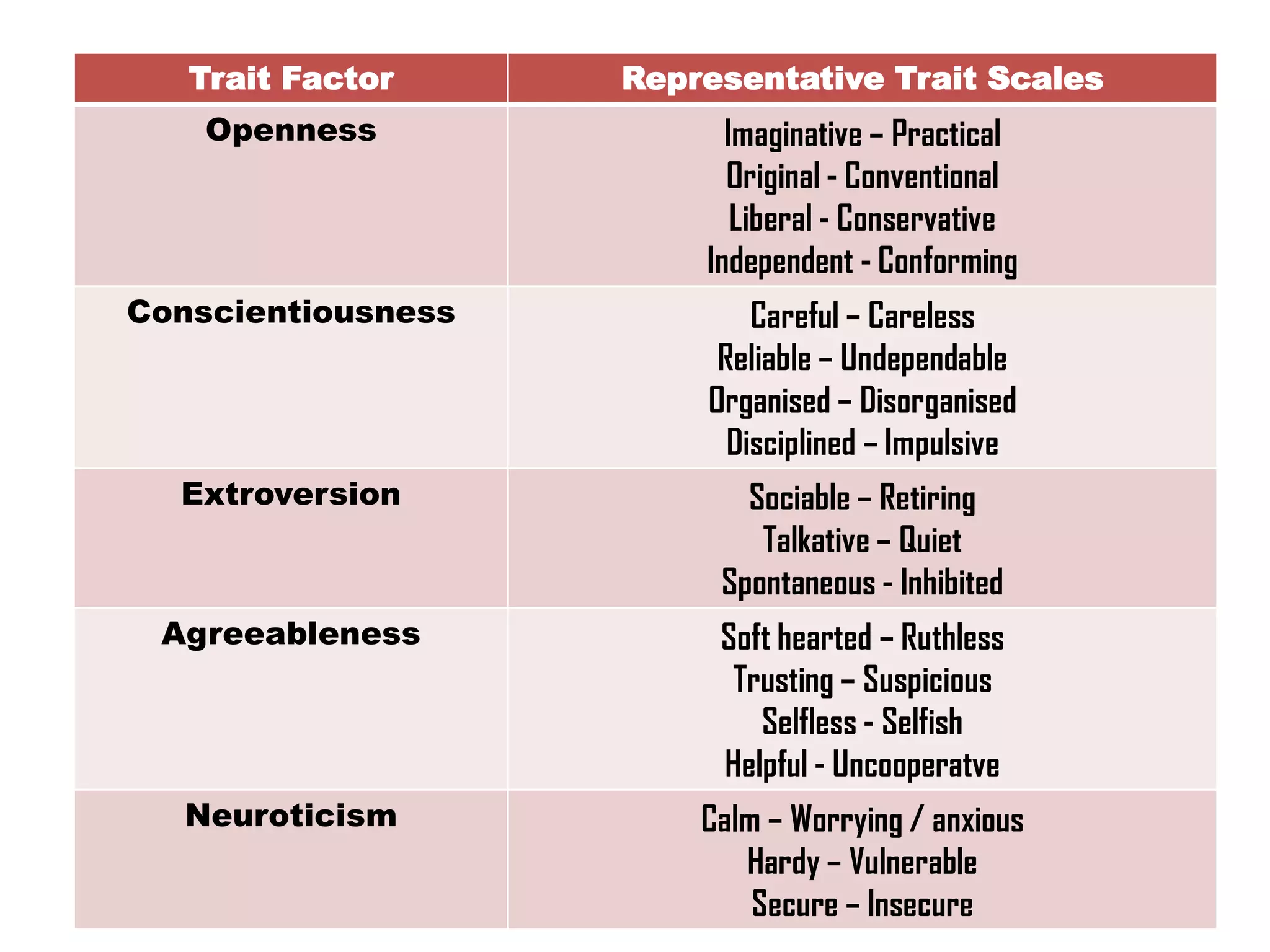
Trait Factor Representative Trait Scales
Openness Imaginative – Practical
Original - Conventional
Liberal - Conservative
Independent - Conforming
Conscientiousness Careful – Careless
Reliable – Undependable
Organised – Disorganised
Disciplined – Impulsive
Extroversion Sociable – Retiring
Talkative – Quiet
Spontaneous - Inhibited
Agreeableness Soft hearted – Ruthless
Trusting – Suspicious
Selfless - Selfish
Helpful - Uncooperatve
Neuroticism Calm – Worrying / anxious
Hardy – Vulnerable
Secure – Insecure
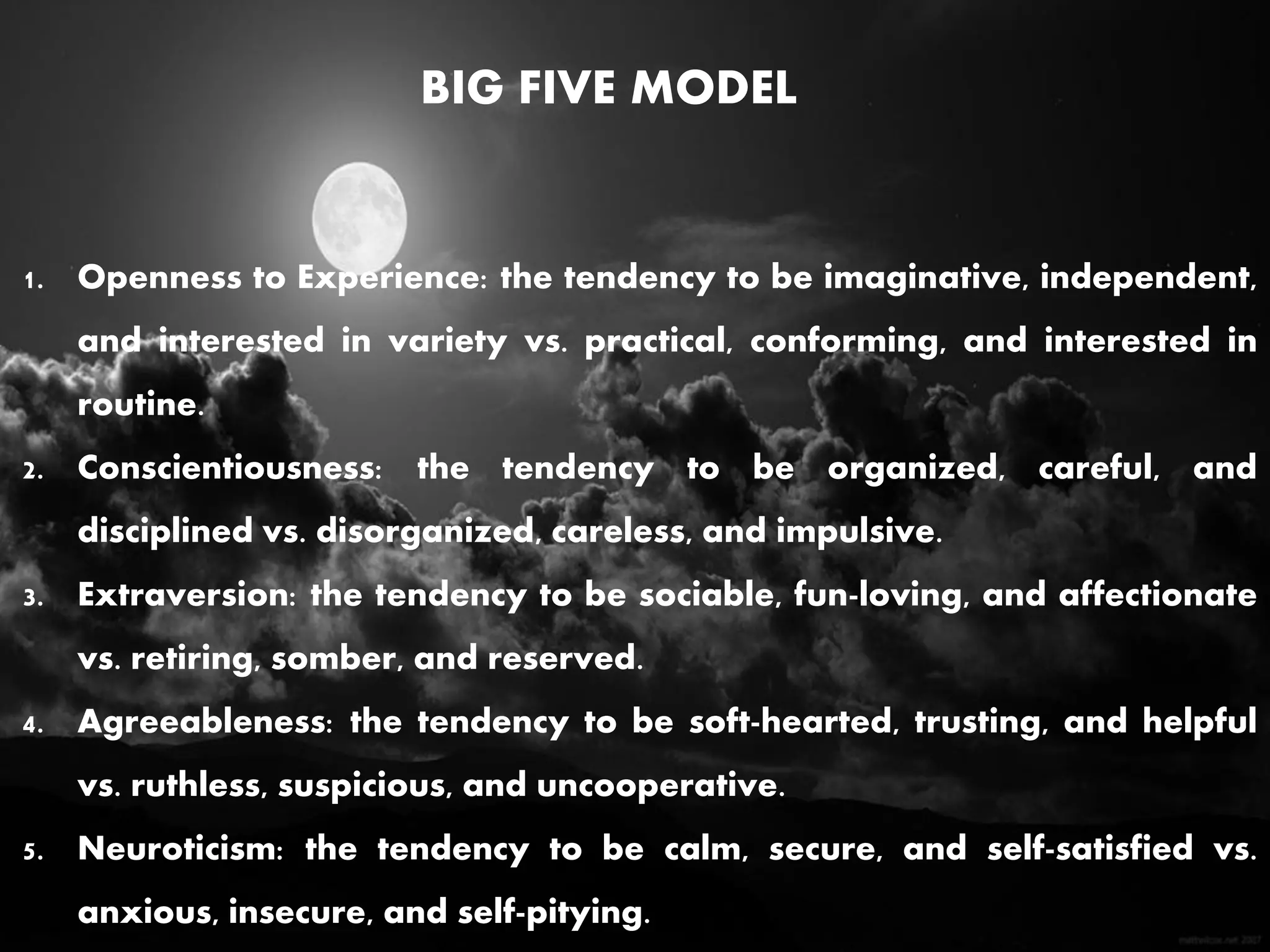
BIG FIVE MODEL
1. Openness to Experience: the tendency to be imaginative, independent,
and interested in variety vs. practical, conforming, and interested in
routine.
2. Conscientiousness: the tendency to be organized, careful, and
disciplined vs. disorganized, careless, and impulsive.
3. Extraversion: the tendency to be sociable, fun-loving, and affectionate
vs. retiring, somber, and reserved.
4. Agreeableness: the tendency to be soft-hearted, trusting, and helpful
vs. ruthless, suspicious, and uncooperative.
5. Neuroticism: the tendency to be calm, secure, and self-satisfied vs.
anxious, insecure, and self-pitying.
Criticisms of trait theories
1. being purely descriptive and offering little explanation of the
underlying causes of personality
2. Lead some people to accept oversimplified classifications
3. Underestimate the effect of specific situations on people's behavior.
4. Poor predictors of behavior.
THANK YOU
• JAI BHARAT!

Trait theories - thiyagusuri

  • 1.
    Trait Theories Personality Theories K.THIYAGU,Assistant Professor, Department of Education, Central University of Kerala, Kasaragod
  • 2.
    Types Vs Traits Personalitytype refers to the psychological classification of different types of people Personality trait refers to psychological classification of different levels or degrees For example, according to type theories, there are two types of people, introverts and extroverts. According to trait theories, introversion and extroversion are part of a continuous dimension, with many people in the middle.
  • 3.
    On the playground, 6 year old Sam pushes little Samantha off her tricycle and rides away on it. Why?
  • 4.
  • 5.
  • 6.
    personality traits are"enduring patterns of perceiving, relating to, and thinking about the environment and oneself that are exhibited in a wide range of social and personal contexts." A trait is what we call a characteristic way in which an individual perceives, feels, believes, or acts.
  • 8.
    Allport Theory In 1936,psychologist Gordon Allport found that one English-language dictionary alone contained more than 4,000 words describing different personality traits. He categorized these traits into three levels.
  • 9.
    Born November 11,1897 Died October 9, 1967 Nationality United States Fields Psychology Alma mater Harvard
  • 10.
    Allport Theory / Threetrait theory 1. Cardinal Traits 2. Central Traits 3. Secondary Traits
  • 11.
    Cardinal Traits Primary traits Dominatean individual’s whole life Shapes of a person's Eg: Administrator, Humor Sense
  • 12.
    Central Traits General characteristicsthat form the basic foundations of personality. General characteristic found in some degree in every person People come to expect from you on a daily basis. Eg: Terms such as cordial relation, intelligent, honest, shy and anxious are considered central traits.
  • 13.
    Secondary Traits Related toattitudes or preferences and often appear only in certain situations or under specific circumstances. Secondary traits are seen only in specific situations. Eg: would be getting anxious when speaking to a group or impatient while waiting in line. anger
  • 14.
    Cattell / 16PF Theory Trait theorist Raymond Cattell reduced the number of main personality traits from Allport’s initial list of over 4,000 down to 16 by means of a statistical technique called factor analysis.
  • 16.
    16 personality factortheory 1. emotional, easily upset vs. calm, stable 2. Intelligent vs. unintelligent 3. suspicious vs. trusting 4. reserved, unfriendly vs. outgoing, friendly 5. assertive, dominant vs. not assertive, humble 6. sober, serious vs. happy-go-lucky 7. conscientious vs. expedient 8. shy, timid vs. venturesome 9. tender-minded vs. tough-minded 10.practical vs. imaginative 11.shrewd vs. forthright 12.self-assured, placid vs. apprehensive 13.conservative vs. experimenting 14.group oriented vs. self-sufficient 15.undisciplined vs. self-disciplined 16.Relaxed vs. tense, driven
  • 17.
    16 personality factortheory 1. practical vs. imaginative 2. emotional, easily upset vs. calm, stable 3. expedient vs. conscientious 4. relaxed vs. tense, driven 5. suspicious vs. trusting 6. self-assured, placid vs. apprehensive 7. outgoing, friendly vs reserved, unfriendly 8. undisciplined vs. self-disciplined 9. conservative vs. experimenting 10.assertive, dominant vs. not assertive, humble 11.Intelligent vs. unintelligent 12.tender-minded vs. tough-minded 13.Timid, shy, vs. venturesome 14.sober, serious vs. happy-go-lucky 15.shrewd vs. forthright 16.self-sufficient vs. group oriented
  • 18.
    Four types oftraits • Common Traits • Unique Traits • Surface Traits • Source Traits
  • 19.
    Common Traits • Foundwidely distributed in general population • Honesty • Aggression • Co-operation
  • 20.
    Unique Traits • Areunique to a person • Temperamental traits • Emotional reactions
  • 21.
    Surface traits • Recognizedby manifestation of behaviour • Curiosity • Dependability • Tactfulness
  • 22.
    Source Traits • Areunderlying sources that determine behaviour • Dominance • Emotionality
  • 23.
    Lewis Goldberg /Big five model Lewis Goldberg proposed a five-dimension personality model, nicknamed the Big five.
  • 24.
    Trait Factor RepresentativeTrait Scales Openness Imaginative – Practical Original - Conventional Liberal - Conservative Independent - Conforming Conscientiousness Careful – Careless Reliable – Undependable Organised – Disorganised Disciplined – Impulsive Extroversion Sociable – Retiring Talkative – Quiet Spontaneous - Inhibited Agreeableness Soft hearted – Ruthless Trusting – Suspicious Selfless - Selfish Helpful - Uncooperatve Neuroticism Calm – Worrying / anxious Hardy – Vulnerable Secure – Insecure
  • 25.
    BIG FIVE MODEL 1.Openness to Experience: the tendency to be imaginative, independent, and interested in variety vs. practical, conforming, and interested in routine. 2. Conscientiousness: the tendency to be organized, careful, and disciplined vs. disorganized, careless, and impulsive. 3. Extraversion: the tendency to be sociable, fun-loving, and affectionate vs. retiring, somber, and reserved. 4. Agreeableness: the tendency to be soft-hearted, trusting, and helpful vs. ruthless, suspicious, and uncooperative. 5. Neuroticism: the tendency to be calm, secure, and self-satisfied vs. anxious, insecure, and self-pitying.
  • 26.
    Criticisms of traittheories 1. being purely descriptive and offering little explanation of the underlying causes of personality 2. Lead some people to accept oversimplified classifications 3. Underestimate the effect of specific situations on people's behavior. 4. Poor predictors of behavior.
  • 27.