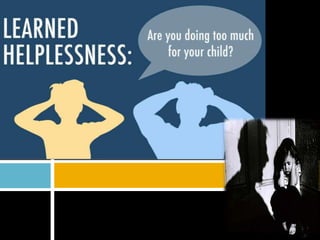
LEARNED
HELPLESSNES
S
ILNU, Ahmedabad, India
 Adimesh Lochan
 Aditya Shukla
 Prafull Bhardwaj
 Prateek Shrivastava
 Sumit Singh Bhadauriya
 Utkarsh Jain
9726672361 9726672341
9726659836 9726665323
“IF YOU ARE IN A BAD SITUATION YOU WILL
DO WHATEVER YOU CAN DO TO ESCAPE IT”
“IF YOU FEEL LIKE YOU AREN’T IN CONTROL
OF YOUR SITUATION , YOU WILL GIVE UP
AND ACCEPT WHATEVER SITUATION YOU
ARE IN”
INFORMAL DEFINITION
 Giving up .
 Expectations of future non contigency
outcomes no longer depends on actions.
 BELIEVING it wont matter what I do.
 BELIEVING I have no control over the
outcome.
 The belief that your actions are futile.
 BELIEVING you are incompetent.
Negative Reinforcement
Negative reinforcement occur
when something already
present is removed ( or taken
away ) as a result of person’s
behavior, thereby creating
favourable outcome for that
person in future.
EXPERIMENTAL
EVIDENCES OF
LEARNED
HELPLESSNESSCLASSIC EXPERIMENT ON DOGS BY MARINE(1969)
EXPLANATORY STYLES
Explanatory style is a psychological attribute that indicates how people
explain to themselves why they experience a particular event, either
positive or negative.
Three components in explanatory style:
1. Pervasive (global vs. specific)
This involves how one explains the extent of the effects.
2. Permanent (stable vs. unstable)
This involves how one explains the extent of the cause.
2. Personal (internal vs. external)
This involves how one explains the cause of an event.
BERNARD WEINER'S ATTRIBUTION THEORY
(1985-86)
This attribution theory includes the dimensions of
1. GLOBALITY: Cause of a negative event is consistent across
different contexts.
SPECIFICITY: Cause of a negative event is unique to a
particular situation.
2. STABILITY: Cause is consistent across time.
INSTABILITY: Cause is specific to one point in time.
3. INTERNALITY: An external attribution assigns causality to
situational or external factors
EXTERNALITY: An internal attribution assigns causality to
factors within the person.
People who generally
 tend to blame themselves for negative events,
 believe that such events will continue indefinitely, and
 let such events affect many aspects of their lives
display what is called a pessimistic explanatory
style.
Conversely, people who generally
 tend to blame others for negative events,
 believe that such events will end soon, and
 do not let such events affect too many aspects of their
lives display what is called an optimistic explanatory
style.
 Attributing outcomes to controllable causes
such as effort, an internal unstable attribution,
would then lead to an active task approach.
 Attributing outcomes to uncontrollable
situations such as lack of ability, in contrast,
would lead to the undesirable causes of
learned helplessness (Dweck, 1975).
HEALTH
IMPLICATIONS
SYMPTOMS
 DECREASE IN APPETITE
 INSOMNIA OR HYPERINSOMNIA
 LACK OF ENERGY
 SUICIDAL THOUGHTS
 FEELING OF WORTHLESSNESS AND
GUILT
SELIGMAN’S OBSERVATION
CHARACTERISTIC SYMPTOMS OF
DEPRESSION
1. Emotional disturbance- sadness and hopeless
outlook towards life.
2. Reluctant to initiate action-characteristics of
severe depression
3. Cognitive deficient- difficulty in solving
problems or learning learnable things
SOCIAL
IMPACT
LEARNED HELPLESSNESS IN
SOCIETY
 IN THE CLASSROOM-
Students who repeatedly fail may conclude that they are
incapable of improving their performance, and this
attribution keeps them from trying to succeed, which
results in increased helplessness, continued failure, loss
of self esteem and other social consequences.
 IN CHILDREN AND YOUNG ADULTS-
It may be a factor in the development of a victim
mentality in a Child or young adult. By being repeatedly
exposed to uncomfortable or painful situations, such as
bullying or abuse by their peers, the person may stop
trying to cope with painful social situations. This can
lead to continued stress, feelings of self-hatred, and
maladaptive behaviors such as avoiding all social
interactions.
 Those who are extremely shy or anxious in social
situations may become passive due to feelings of
helplessness. Gotlib and Beatty (1985) found that
people who cite helplessness in social settings may
be viewed poorly by others, which tends to reinforce
the passivity.
 IN AGING INDIVIDUALS-
They may respond with helplessness to the deaths
of friends and family members, the loss of jobs
and income, and the development of age-related
health problems. This may cause them to neglect
their medical care, financial affairs, and other
WAYS TO OVERCOME LEARNED
HELPLESSNESS
 BY THE PERSON HIMSELF
 BY PSYCHIATRISTS
SELF HELP (BY BRINGING IN
THEIR PERONALITY/ATTITUTE)
1. CHANGE IS POSSIBLE
2. THINK BIG
3. GET PERSPECTIVE
4. SET GOALS
5. ACHIEVING SUCCESS
6. CONSIDER DIFFERENT POINTVIEW
PROFESSIONALS/PSYCHIATRIS
T
1. USING METAPHORS
2. VIVE LE DIFFERENCE (
DIFFERENCE RULE)
3. ENCOURAGING ACTIVE PROBLEM
SOLVING
Thank you

Learned Helplessness

  • 1.
  • 2.
    ILNU, Ahmedabad, India Adimesh Lochan  Aditya Shukla  Prafull Bhardwaj  Prateek Shrivastava  Sumit Singh Bhadauriya  Utkarsh Jain 9726672361 9726672341 9726659836 9726665323
  • 4.
    “IF YOU AREIN A BAD SITUATION YOU WILL DO WHATEVER YOU CAN DO TO ESCAPE IT” “IF YOU FEEL LIKE YOU AREN’T IN CONTROL OF YOUR SITUATION , YOU WILL GIVE UP AND ACCEPT WHATEVER SITUATION YOU ARE IN”
  • 5.
    INFORMAL DEFINITION  Givingup .  Expectations of future non contigency outcomes no longer depends on actions.  BELIEVING it wont matter what I do.  BELIEVING I have no control over the outcome.  The belief that your actions are futile.  BELIEVING you are incompetent.
  • 6.
    Negative Reinforcement Negative reinforcementoccur when something already present is removed ( or taken away ) as a result of person’s behavior, thereby creating favourable outcome for that person in future.
  • 7.
  • 8.
    EXPLANATORY STYLES Explanatory styleis a psychological attribute that indicates how people explain to themselves why they experience a particular event, either positive or negative. Three components in explanatory style: 1. Pervasive (global vs. specific) This involves how one explains the extent of the effects. 2. Permanent (stable vs. unstable) This involves how one explains the extent of the cause. 2. Personal (internal vs. external) This involves how one explains the cause of an event.
  • 9.
    BERNARD WEINER'S ATTRIBUTIONTHEORY (1985-86) This attribution theory includes the dimensions of 1. GLOBALITY: Cause of a negative event is consistent across different contexts. SPECIFICITY: Cause of a negative event is unique to a particular situation. 2. STABILITY: Cause is consistent across time. INSTABILITY: Cause is specific to one point in time. 3. INTERNALITY: An external attribution assigns causality to situational or external factors EXTERNALITY: An internal attribution assigns causality to factors within the person.
  • 10.
    People who generally tend to blame themselves for negative events,  believe that such events will continue indefinitely, and  let such events affect many aspects of their lives display what is called a pessimistic explanatory style.
  • 11.
    Conversely, people whogenerally  tend to blame others for negative events,  believe that such events will end soon, and  do not let such events affect too many aspects of their lives display what is called an optimistic explanatory style.
  • 12.
     Attributing outcomesto controllable causes such as effort, an internal unstable attribution, would then lead to an active task approach.  Attributing outcomes to uncontrollable situations such as lack of ability, in contrast, would lead to the undesirable causes of learned helplessness (Dweck, 1975).
  • 14.
  • 16.
    SYMPTOMS  DECREASE INAPPETITE  INSOMNIA OR HYPERINSOMNIA  LACK OF ENERGY  SUICIDAL THOUGHTS  FEELING OF WORTHLESSNESS AND GUILT
  • 17.
    SELIGMAN’S OBSERVATION CHARACTERISTIC SYMPTOMSOF DEPRESSION 1. Emotional disturbance- sadness and hopeless outlook towards life. 2. Reluctant to initiate action-characteristics of severe depression 3. Cognitive deficient- difficulty in solving problems or learning learnable things
  • 18.
  • 19.
    LEARNED HELPLESSNESS IN SOCIETY IN THE CLASSROOM- Students who repeatedly fail may conclude that they are incapable of improving their performance, and this attribution keeps them from trying to succeed, which results in increased helplessness, continued failure, loss of self esteem and other social consequences.  IN CHILDREN AND YOUNG ADULTS- It may be a factor in the development of a victim mentality in a Child or young adult. By being repeatedly exposed to uncomfortable or painful situations, such as bullying or abuse by their peers, the person may stop trying to cope with painful social situations. This can lead to continued stress, feelings of self-hatred, and maladaptive behaviors such as avoiding all social interactions.
  • 20.
     Those whoare extremely shy or anxious in social situations may become passive due to feelings of helplessness. Gotlib and Beatty (1985) found that people who cite helplessness in social settings may be viewed poorly by others, which tends to reinforce the passivity.  IN AGING INDIVIDUALS- They may respond with helplessness to the deaths of friends and family members, the loss of jobs and income, and the development of age-related health problems. This may cause them to neglect their medical care, financial affairs, and other
  • 21.
    WAYS TO OVERCOMELEARNED HELPLESSNESS  BY THE PERSON HIMSELF  BY PSYCHIATRISTS
  • 22.
    SELF HELP (BYBRINGING IN THEIR PERONALITY/ATTITUTE) 1. CHANGE IS POSSIBLE 2. THINK BIG 3. GET PERSPECTIVE 4. SET GOALS 5. ACHIEVING SUCCESS 6. CONSIDER DIFFERENT POINTVIEW
  • 23.
    PROFESSIONALS/PSYCHIATRIS T 1. USING METAPHORS 2.VIVE LE DIFFERENCE ( DIFFERENCE RULE) 3. ENCOURAGING ACTIVE PROBLEM SOLVING
  • 24.

Editor's Notes

  • #20 Learned helplessness can be a factor in a wide range of social situations. The following are examples.