Downloaded 456 times


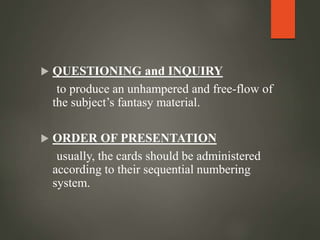
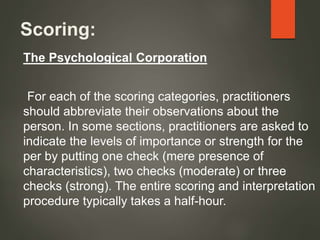
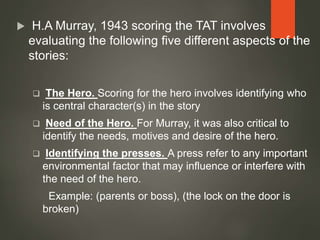
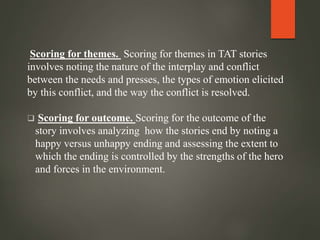
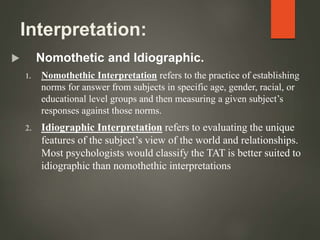
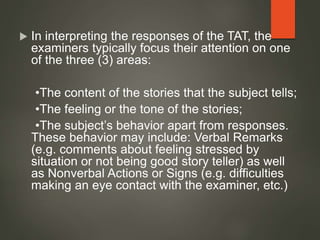
![ The 3 Levels of Interpretations suggest by
Bellak & Abram, 1997 are:
•Descriptive Level- it is the mere repeat of
the story
•Interpretative Level- It extends the
descriptive level by an alteration of it [if one
does the X, then the outcome will be Y.].
•Diagnostic Level- It is the further extension
that an interference is made about the client.](https://image.slidesharecdn.com/thematicapperceptiontest-190609163148/85/Thematic-apperception-test-20-320.jpg)

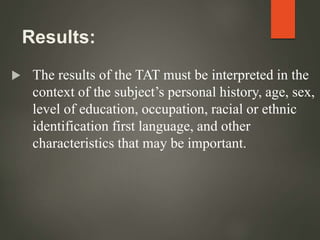
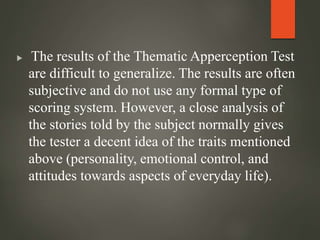
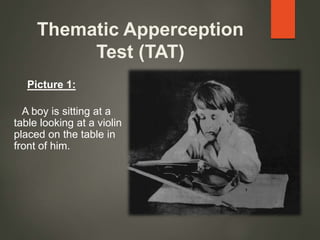


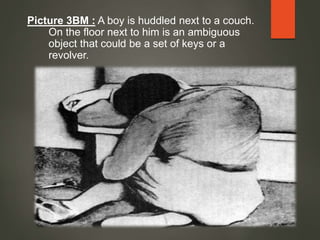






























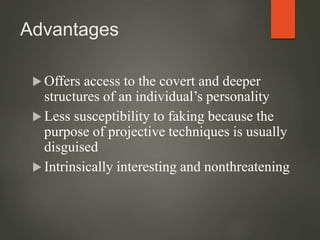
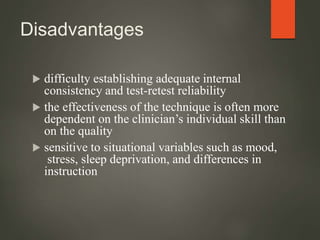

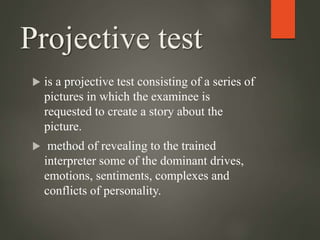
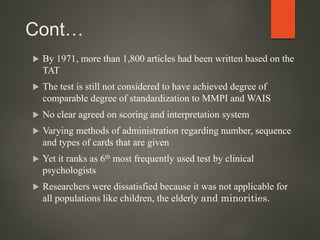
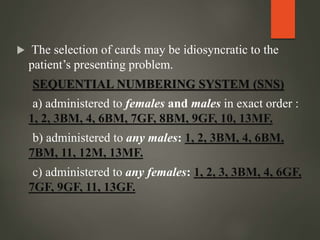
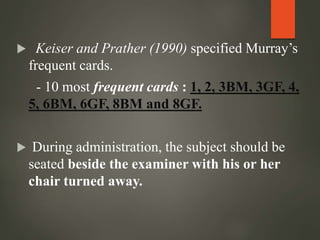
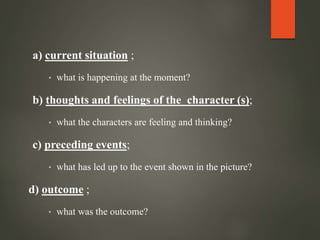
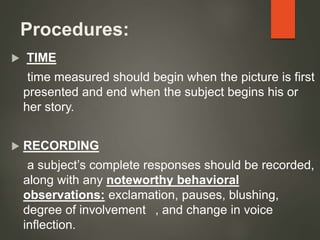
The Thematic Apperception Test (TAT) is a projective psychological test developed in the 1930s using ambiguous picture cards. Subjects are shown cards and asked to tell stories about what is happening in each picture. Their responses are analyzed to understand their inner drives, emotions, and personality conflicts. While widely used, the TAT lacks a standardized scoring and interpretation system. Different researchers have developed various scoring methods and card sets, but reliability and validity can vary depending on the system used. The TAT provides insights into a person's unconscious motivations but results depend heavily on the clinician's skill in administration and analysis.


