Personal Communication Skills


   A man is seldom better than his
            conversation
How do you go about Establishing
Rapport?:
1. You need Self-Confidence

2. You must Understand People

3. You must be Enthusiastic

4. You must make Eye Contact

5. You must be Interested in them
Communication Skills Overview
•Effective communication skills are a
critical element in your career and
personal lives.

•We all must use a variety of
communication techniques to both
understand and be understood.
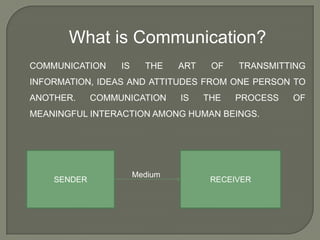
What is Communication?
COMMUNICATION     IS     THE    ART    OF   TRANSMITTING
INFORMATION, IDEAS AND ATTITUDES FROM ONE PERSON TO
ANOTHER.     COMMUNICATION      IS    THE   PROCESS   OF
MEANINGFUL INTERACTION AMONG HUMAN BEINGS.


                       Medium
    SENDER                             RECEIVER
Why Communication ?
 To express our emotions

 Achieve joint understanding

 To get things done

 Pass on and obtain information

 Reach decisions

 Develop relationships
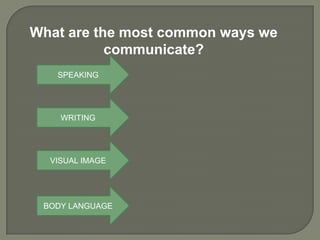
What are the most common ways we
           communicate?
   SPEAKING


    WRITING


  VISUAL IMAGE


 BODY LANGUAGE
Communication Goals

1. To change behaviour
2. To get action
3. To ensure understanding
4. To persuade
5. To get and give Information
Why is communication important?

1. Inspires confidence

2. Builds respect in business and social life

3. Helps make friends

4. Develops a distinct personality

5. Reveals your ability to others
Essentials of good communication
1. Knowledge
    Spontaneity in conversation
    Level of conversation

2. Organising your thoughts

3.   Participating in discussions

4. Body Language

5.   Being a good listener
Levels of Communication:
1. VERBAL
     Intra verbal: intonation of word and sound
     Extra verbal : implication of words and phrases,
                    semantics

2. NON-VERBAL
     Gestures
     Postures
     Movements

3. SYMBOLIC
Barriers in Communication (that have to
do with the COMMUNICATOR)
1. Unwillingness to say things differently

2. Unwillingness to relate to others differently

3. Unwillingness to learn new approaches

4. Lack of Self-Confidence

5. Lack of Enthusiasm

6. Voice quality

7. Prejudice
While Speaking….

 Take initiative

 Be polite

 Be pleasant (smile, jokes)

 Be clear and concise
(tone, accent, emphasis, pronunciation)

 Cite negative opinions honestly, but in a
positive manner Seek Feedback
While Writing…

 Plan what you want to say in your letter/ report

 Reread the letter when you have finished

 Check spelling & punctuation, then send

 Use simple language – avoid ambiguous
words
While Listening…

 Avoid distractions

 Do not interrupt unnecessarily

 Be active (show interest)

 Paraphrase what you’ve heard

 Throw an echo
Objectives of Listening is…

To receive information

To understand effectively

To enhance clarity

To empathize
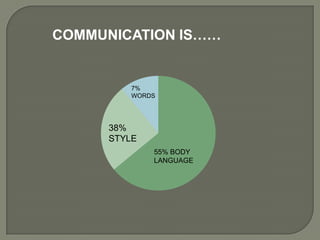
COMMUNICATION IS……


          7%
          WORDS


      38%
      STYLE
              55% BODY
              LANGUAGE
THANK YOU

Personal communication skills

  • 1.
    Personal Communication Skills A man is seldom better than his conversation
  • 2.
    How do yougo about Establishing Rapport?: 1. You need Self-Confidence 2. You must Understand People 3. You must be Enthusiastic 4. You must make Eye Contact 5. You must be Interested in them
  • 3.
    Communication Skills Overview •Effectivecommunication skills are a critical element in your career and personal lives. •We all must use a variety of communication techniques to both understand and be understood.
  • 4.
    What is Communication? COMMUNICATION IS THE ART OF TRANSMITTING INFORMATION, IDEAS AND ATTITUDES FROM ONE PERSON TO ANOTHER. COMMUNICATION IS THE PROCESS OF MEANINGFUL INTERACTION AMONG HUMAN BEINGS. Medium SENDER RECEIVER
  • 5.
    Why Communication ? To express our emotions  Achieve joint understanding  To get things done  Pass on and obtain information  Reach decisions  Develop relationships
  • 6.
    What are themost common ways we communicate? SPEAKING WRITING VISUAL IMAGE BODY LANGUAGE
  • 7.
    Communication Goals 1. Tochange behaviour 2. To get action 3. To ensure understanding 4. To persuade 5. To get and give Information
  • 8.
    Why is communicationimportant? 1. Inspires confidence 2. Builds respect in business and social life 3. Helps make friends 4. Develops a distinct personality 5. Reveals your ability to others
  • 9.
    Essentials of goodcommunication 1. Knowledge  Spontaneity in conversation  Level of conversation 2. Organising your thoughts 3. Participating in discussions 4. Body Language 5. Being a good listener
  • 10.
    Levels of Communication: 1.VERBAL Intra verbal: intonation of word and sound Extra verbal : implication of words and phrases, semantics 2. NON-VERBAL Gestures Postures Movements 3. SYMBOLIC
  • 11.
    Barriers in Communication(that have to do with the COMMUNICATOR) 1. Unwillingness to say things differently 2. Unwillingness to relate to others differently 3. Unwillingness to learn new approaches 4. Lack of Self-Confidence 5. Lack of Enthusiasm 6. Voice quality 7. Prejudice
  • 12.
    While Speaking….  Takeinitiative  Be polite  Be pleasant (smile, jokes)  Be clear and concise (tone, accent, emphasis, pronunciation)  Cite negative opinions honestly, but in a positive manner Seek Feedback
  • 13.
    While Writing…  Planwhat you want to say in your letter/ report  Reread the letter when you have finished  Check spelling & punctuation, then send  Use simple language – avoid ambiguous words
  • 14.
    While Listening…  Avoiddistractions  Do not interrupt unnecessarily  Be active (show interest)  Paraphrase what you’ve heard  Throw an echo
  • 15.
    Objectives of Listeningis… To receive information To understand effectively To enhance clarity To empathize
  • 16.
    COMMUNICATION IS…… 7% WORDS 38% STYLE 55% BODY LANGUAGE
  • 17.