HOW TO MASTER DIFFICULT
CONVERSATIONS AT WORK
As a leader,
think about
your overall
role and
responsibilities.
What do you
think is your
hardest task?
What are you
most reluctant
to do?
What do you
think is the most
challenging
situation when
it comes to your
team members?
For us it’s
having difficult
conversations
with employees.
And although
confronting
someone about
their performance
or behavior is not
a piece of cake...
Handling these
conversations
well is a crucial
part of helping
your employees
and company
grow.
So, where do you start?
We propose this acronym:
G R O W
for
goalsG
Start every difficult conversation by
stating its purpose.
Reassure your
employee that
they are not
losing their job
and that you
are genuinely
there to help
them improve.
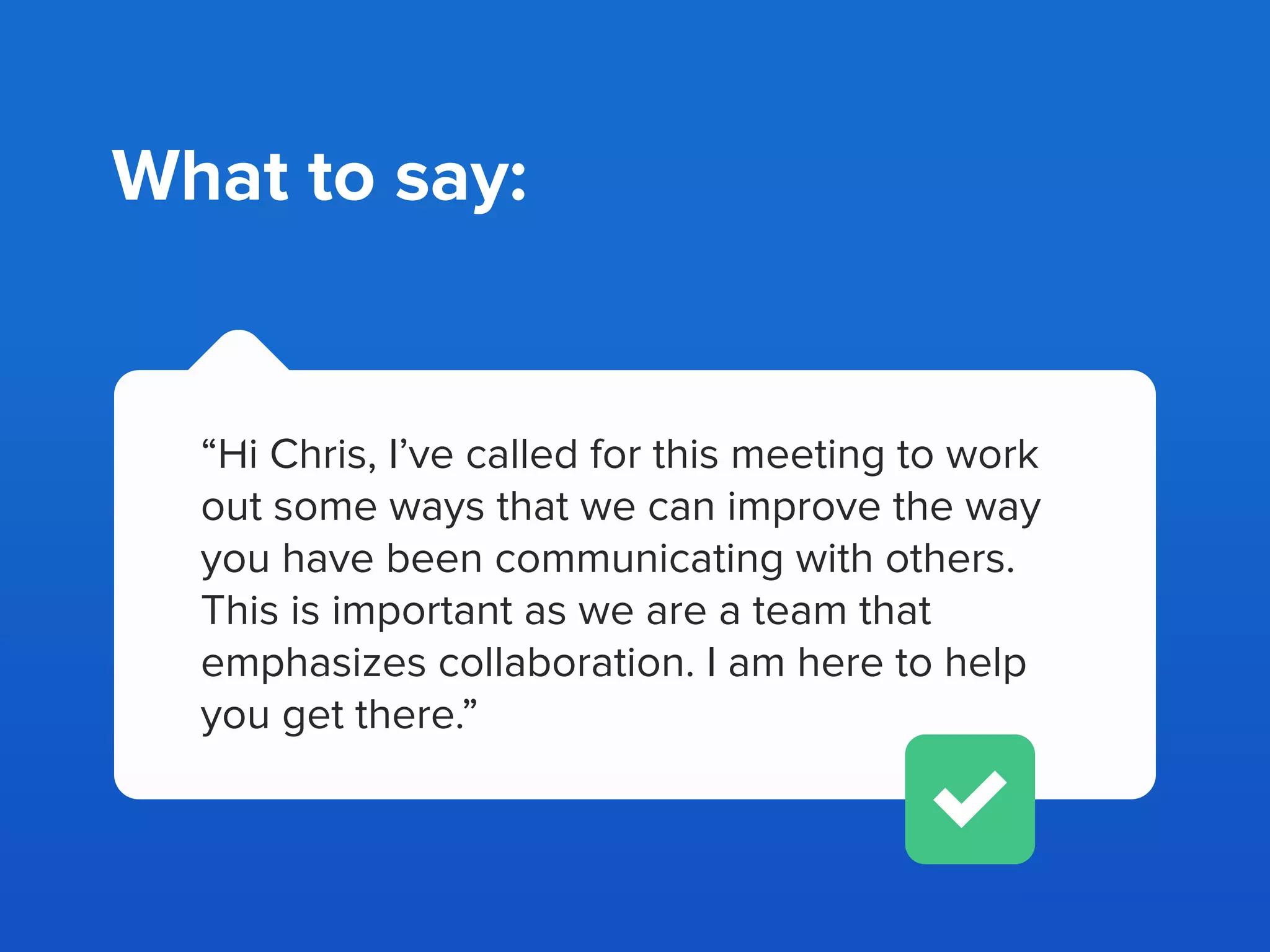
“Hi Chris, I’ve called for this meeting to work
out some ways that we can improve the way
you have been communicating with others.
This is important as we are a team that
emphasizes collaboration. I am here to help
you get there.”
What to say:
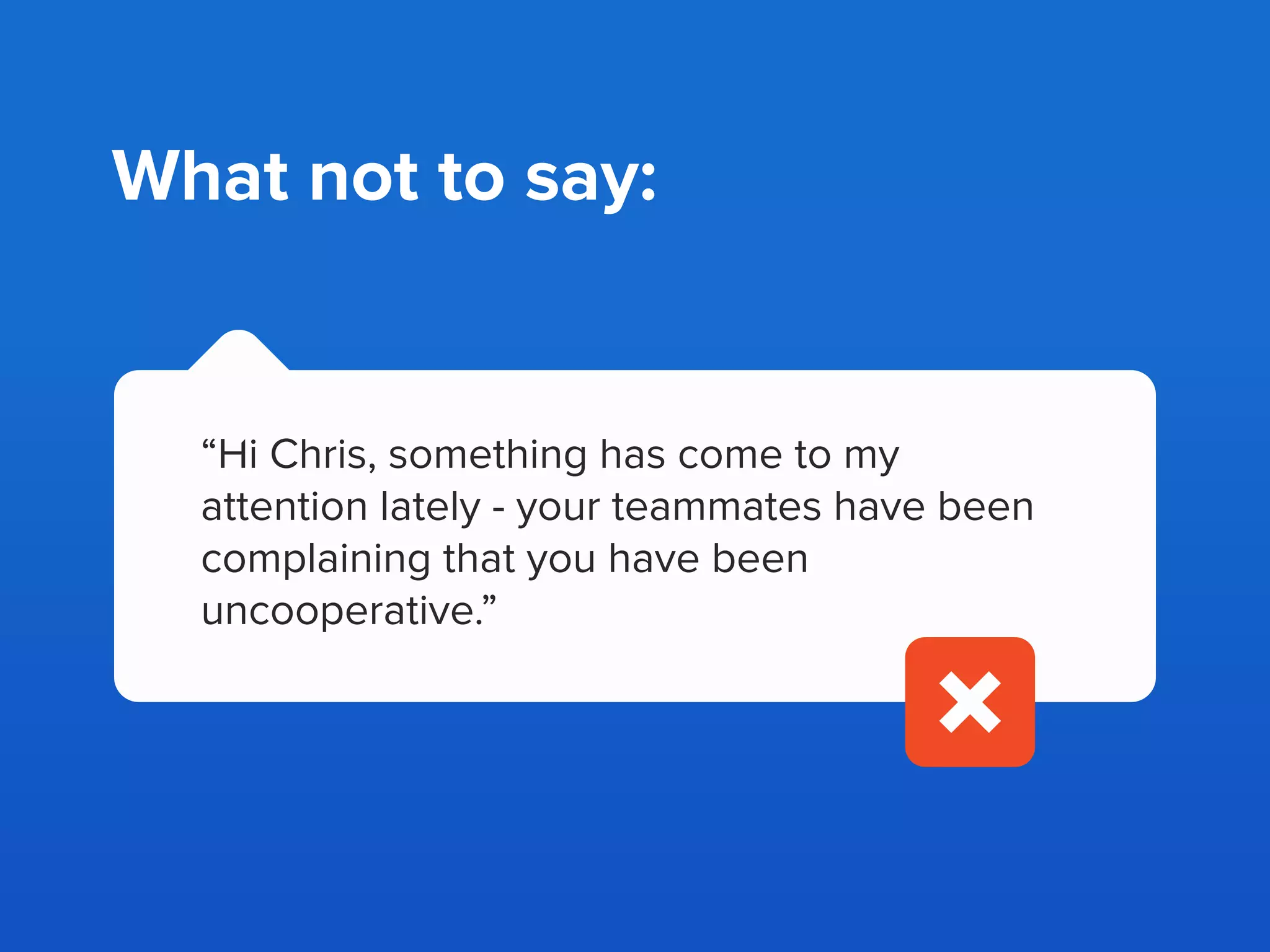
“Hi Chris, something has come to my
attention lately - your teammates have been
complaining that you have been
uncooperative.”
What not to say:
for
reality
State the facts about person’s behavior
or performance.
R
Be truthful without
demeaning the
person or
personalizing
the feedback.
Give a general
area that can be
improved with
specific examples.
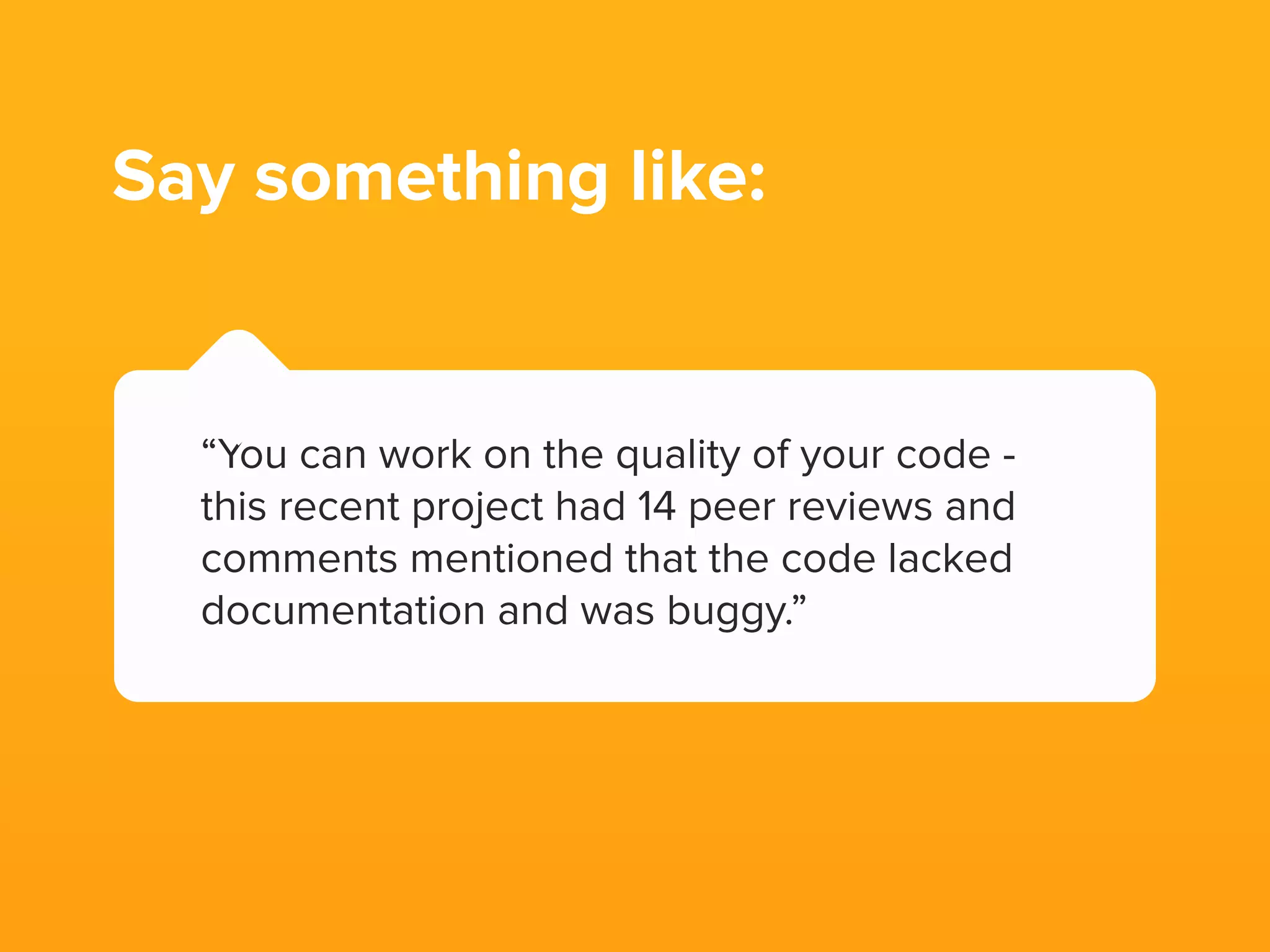
Say something like:
“You can work on the quality of your code -
this recent project had 14 peer reviews and
comments mentioned that the code lacked
documentation and was buggy.”
Be specific about
their shortcomings
and set expectations
for improvement.
O
for
options
Lay out a few options for the person to
improve.
Think of a
few different
ways that a
person can
improve their
performance
or behavior.
Focusing on and
discussing possible
solutions rather
than a problem is
key here!
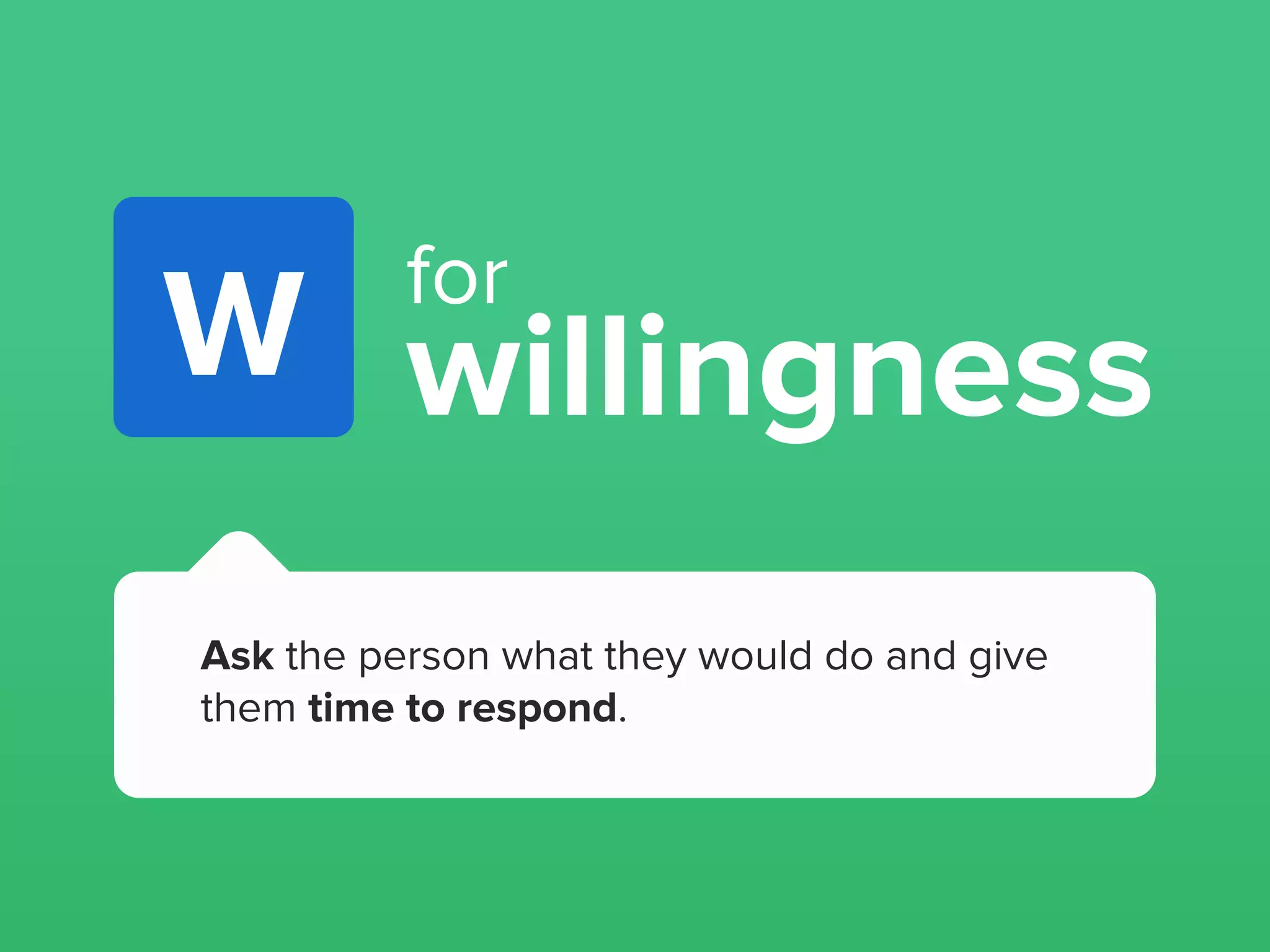
for
willingnessW
Ask the person what they would do and give
them time to respond.
This is the most
important part!
Ask the person
what would he
or she would be
willing to do.
Let them think -
don’t force a
decision.
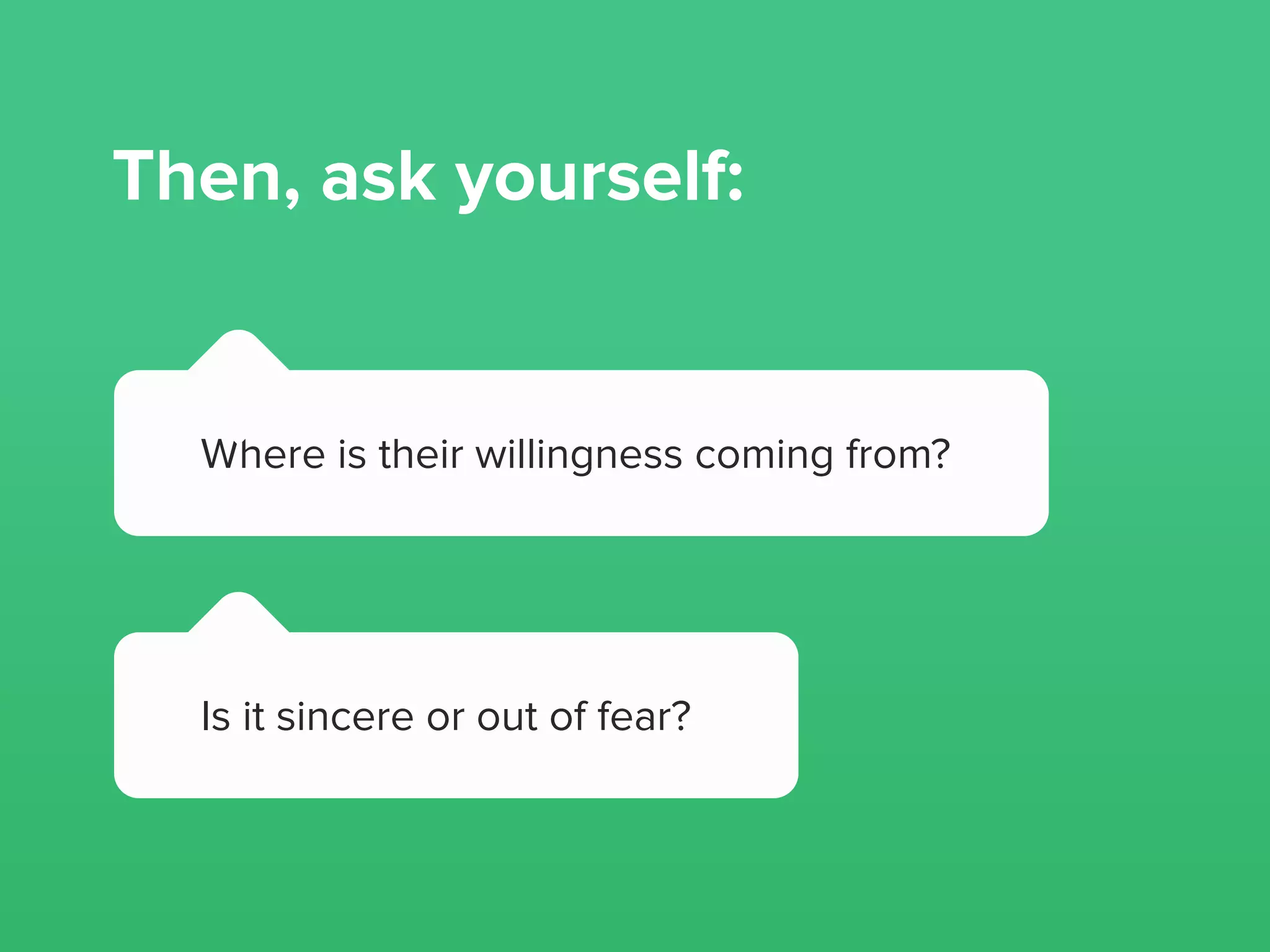
Then, ask yourself:
Where is their willingness coming from?
Is it sincere or out of fear?
Next, follow up
with the agreement.
Don’t leave things
hanging.
Practice these
steps when having
your difficult work
conversations.
Also, keep
these things in
mind when the
time comes:
Don’t be afraid to
tell the truth!
courage
Think about
your fears
about this
difficult
situation.
Move past
them and be
courageous!
it's possible to speak
the truth while still
considering the other
person’s feelings.
care
Look at every
individual’s past
and characteristics,
their weaknesses
and strengths, what
is happening outside
of work, and accept
them for who they are.
Learn to forgive
yourself.
forgive
We may not
always make
the right decision,
even if it is the
best decision.
Take this path
of loving leadership.
Lead by caring for others
while continuing to make
the right decisions for
the company’s success.
It takes more time and effort,
but this journey will be worth it.
Let us know what are your
tips for having challenging
conversations at work!
Read the full article here:
https://piktochart.com/blog/mas-
ter-difficult-conversations
How to Master Difficult Conversations at Work – Leader’s Guide

How to Master Difficult Conversations at Work – Leader’s Guide