Soft Skills and Effective
Communication Skills
Workshop Contents
1. Introduction to ‘Soft Skills’
2. Effective Communication Skills.
Workshop Objectives
What do companies look for in candidates?
What do recruiters look for in a
candidate?
 Technical Skills
 Soft Skills
What are Technical Skills?
Technical Skills
Technical skills teach one how to meet
the expectations of the job.
It is not possible to survive in a job
without sound technical skills.
What are ‘Soft Skills’?
Soft Skills
‘Soft Skills’ are essentially people skills -the
non-technical, intangible, personality-
specific skills.
‘Hard skills’, on the other hand, are more
along the lines of what might appear on
your resume - your education, experience
and level of expertise.
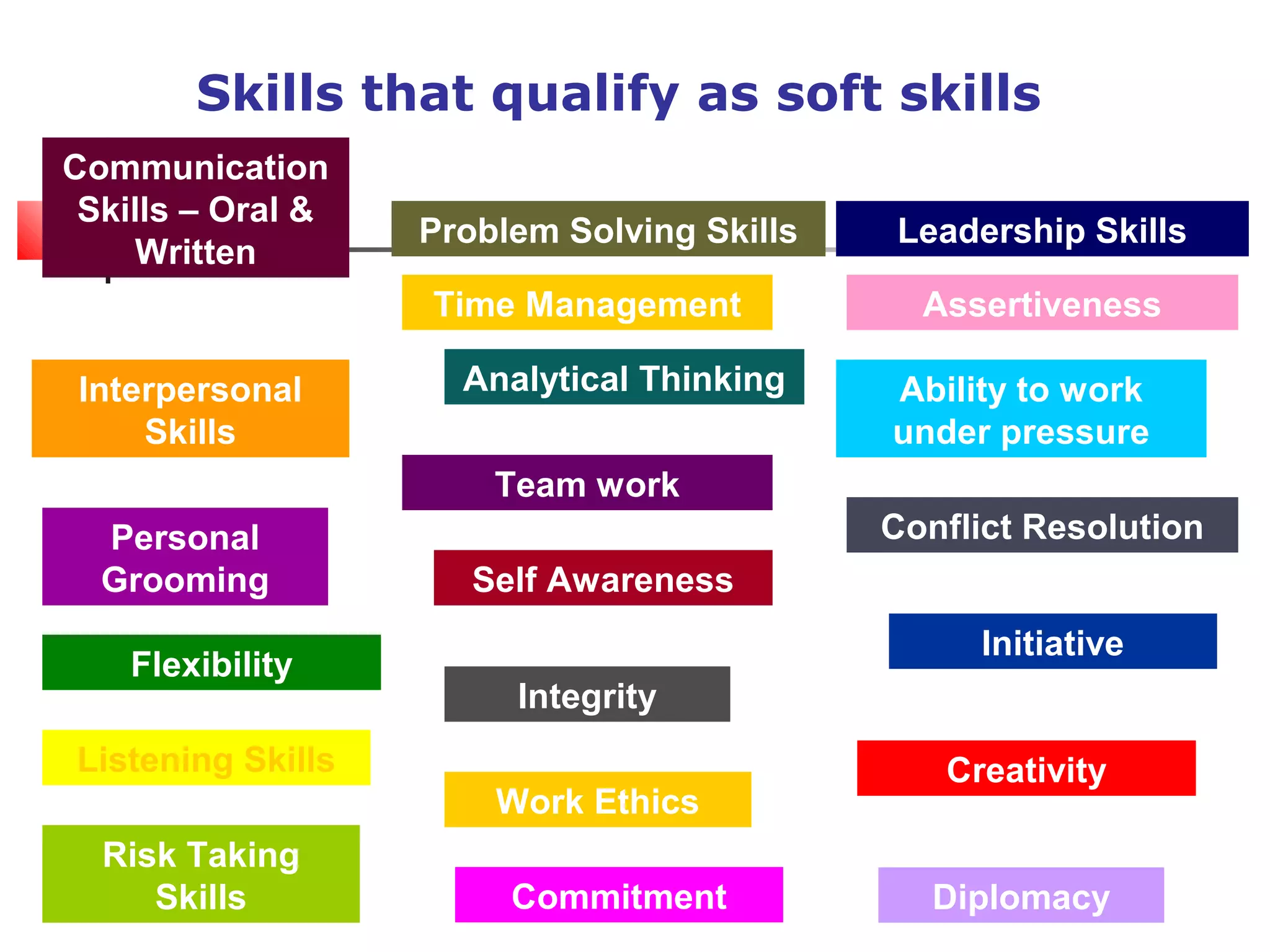
What skills qualify as ‘Soft
Skills’?
Skills that qualify as soft skills
Communication
Skills – Oral &
Written
Analytical Thinking
Problem Solving Skills Leadership Skills
Team work
Interpersonal
Skills
Personal
Grooming
Initiative
Self Awareness
Conflict Resolution
Integrity
Creativity
Flexibility
Listening Skills
Diplomacy
Risk Taking
Skills
Ability to work
under pressure
Work Ethics
Commitment
AssertivenessTime Management
Soft skills are
The hardest to acquire
Impossible to practice
Unless these become habits
Importance of Soft Skills
Importance of soft skills
When it comes to skills other than technical,
the unanimous response from the industry is
communication skills and good
personality
(Manpower requirement findings)
Soft Skills Vs. Technical Skills
Which is more important?
Technical skills Vs. Soft Skills
Both technical and soft skills complement
each other and the balance between these
two is what makes a complete professional
Now let’s look at one of the most
important soft skill……
Effective Communication Skills
You can have brilliant ideas, but if you
can’t get them across, your ideas won’t
get you anywhere
Lee
Iacocca
Definition of Communication
Communication
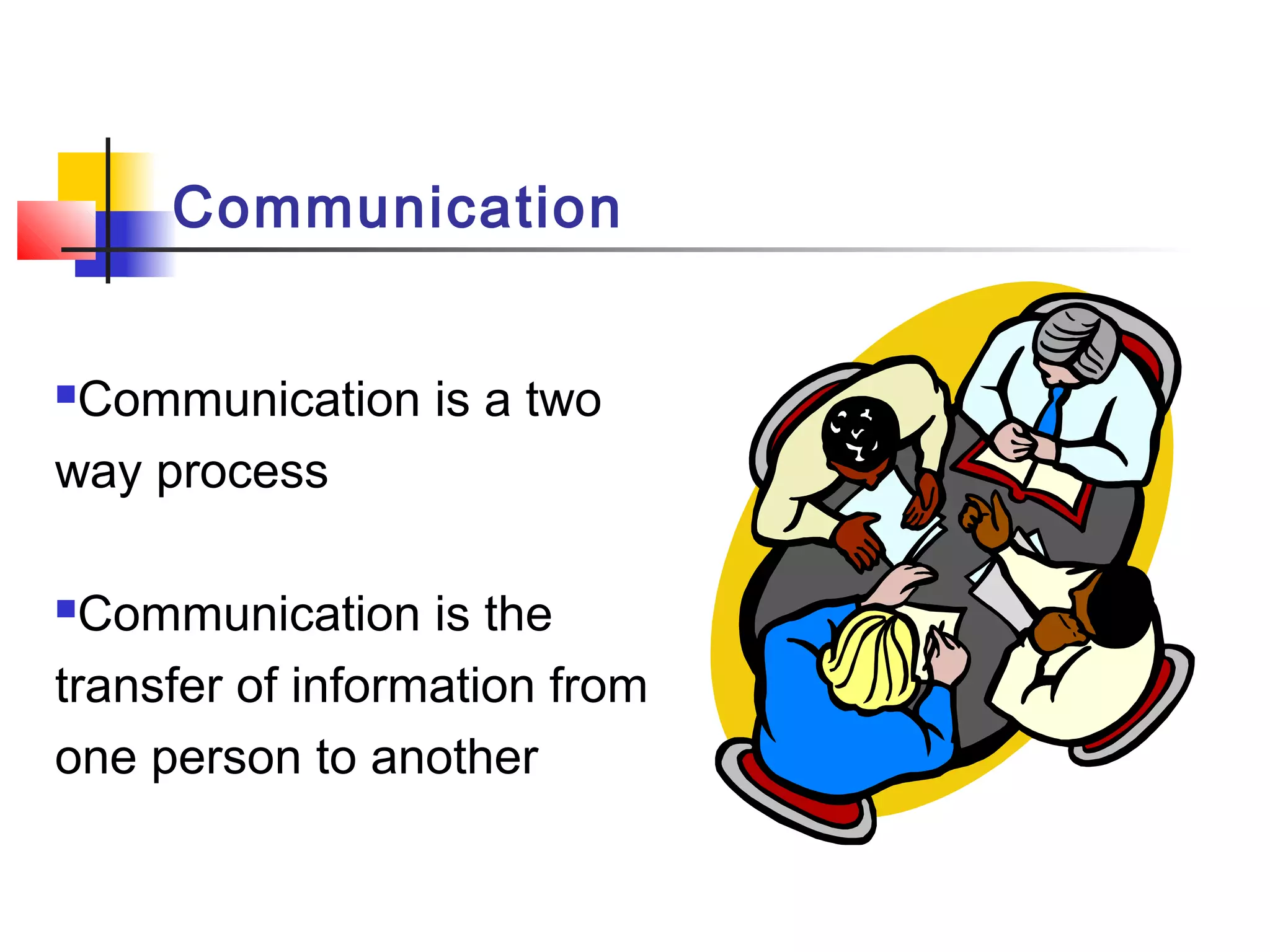
Communication is a two
way process
Communication is the
transfer of information from
one person to another
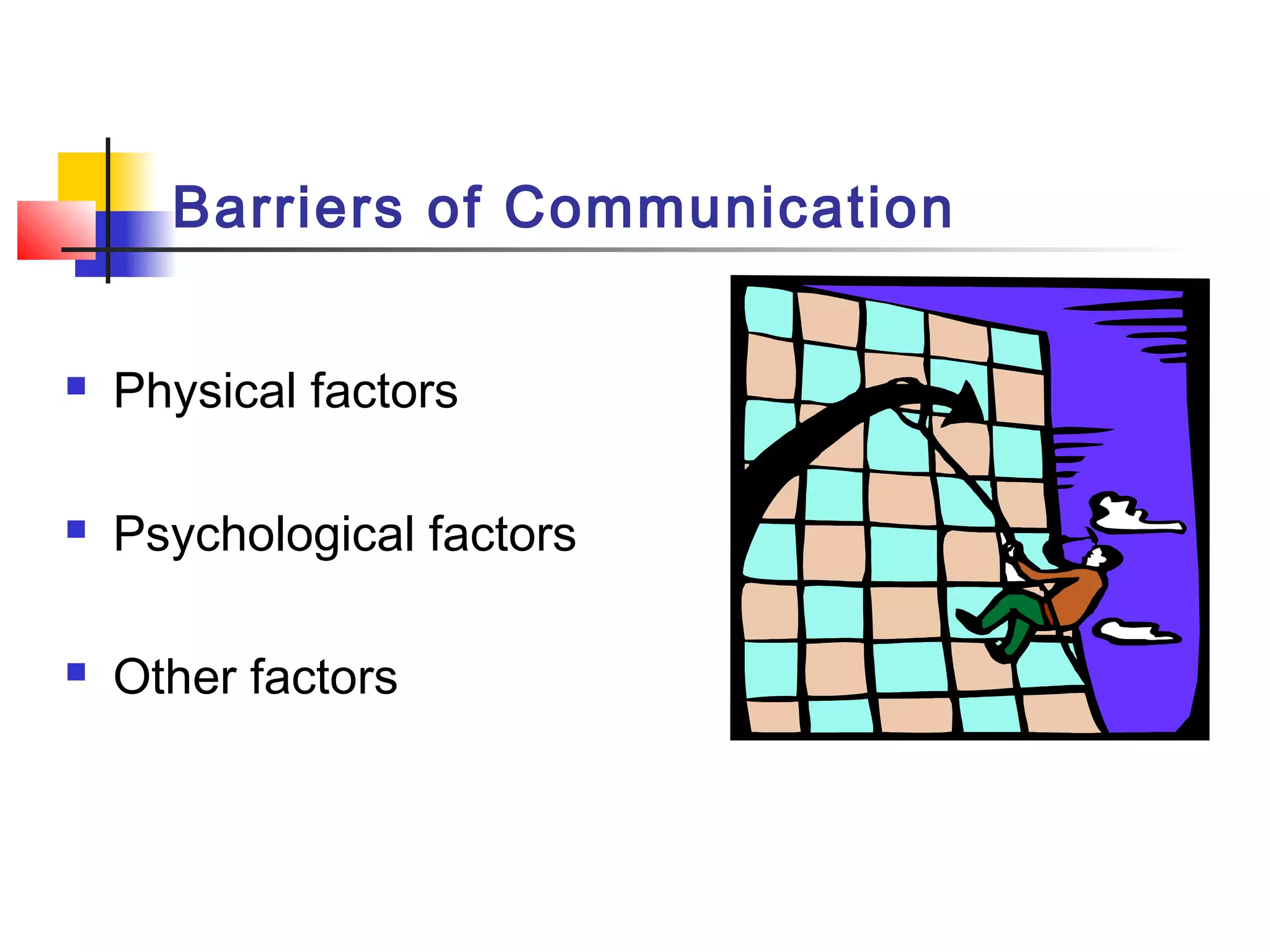
Barriers of Communication
 Physical factors
 Psychological factors
 Other factors
3 rules of
Effective Communication
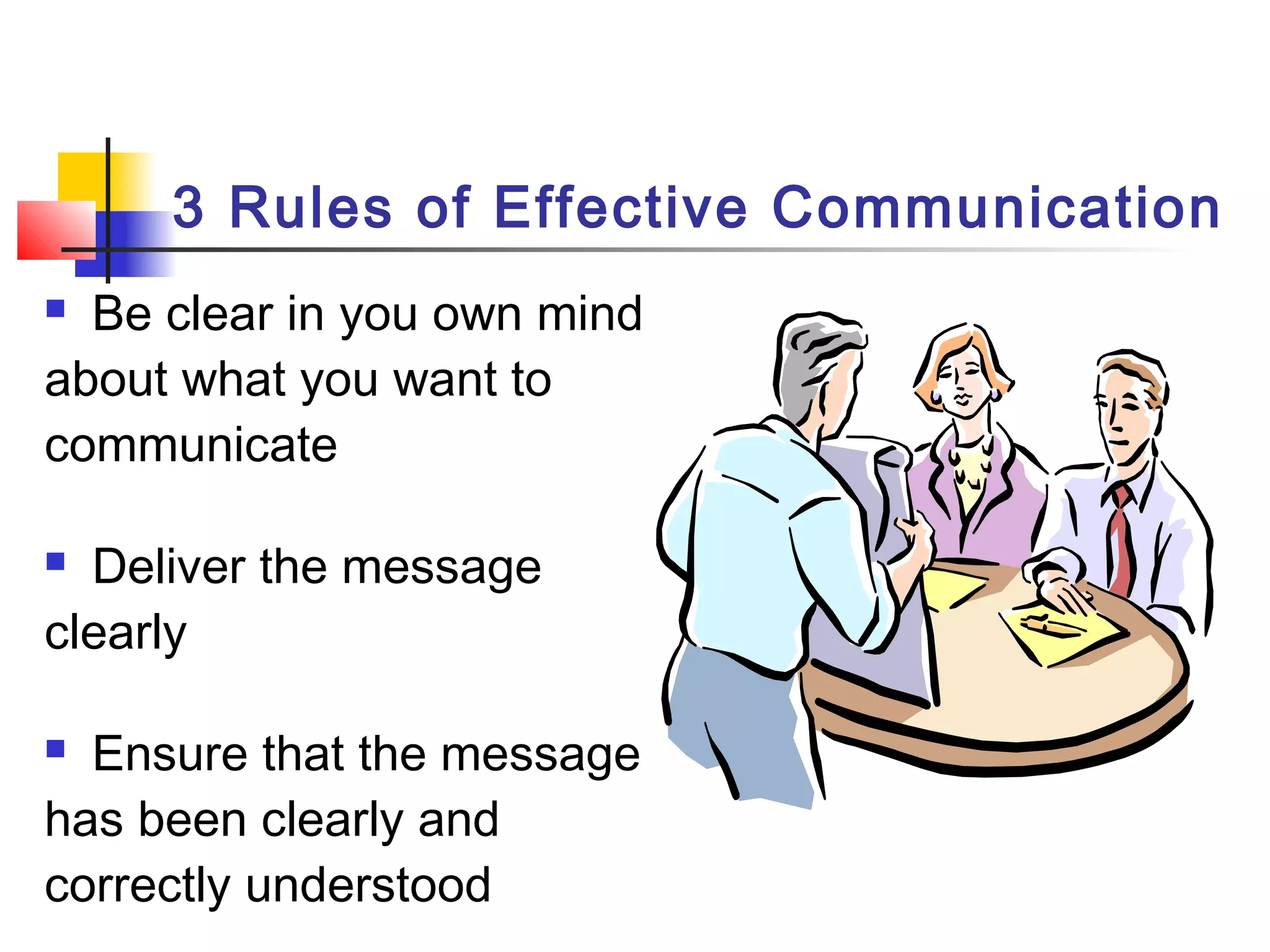
3 Rules of Effective Communication
 Be clear in you own mind
about what you want to
communicate
 Deliver the message
clearly
 Ensure that the message
has been clearly and
correctly understood
Types of
Communication
Types of Communication
1) Verbal
2) Non-verbal
Golden rules of verbal communication
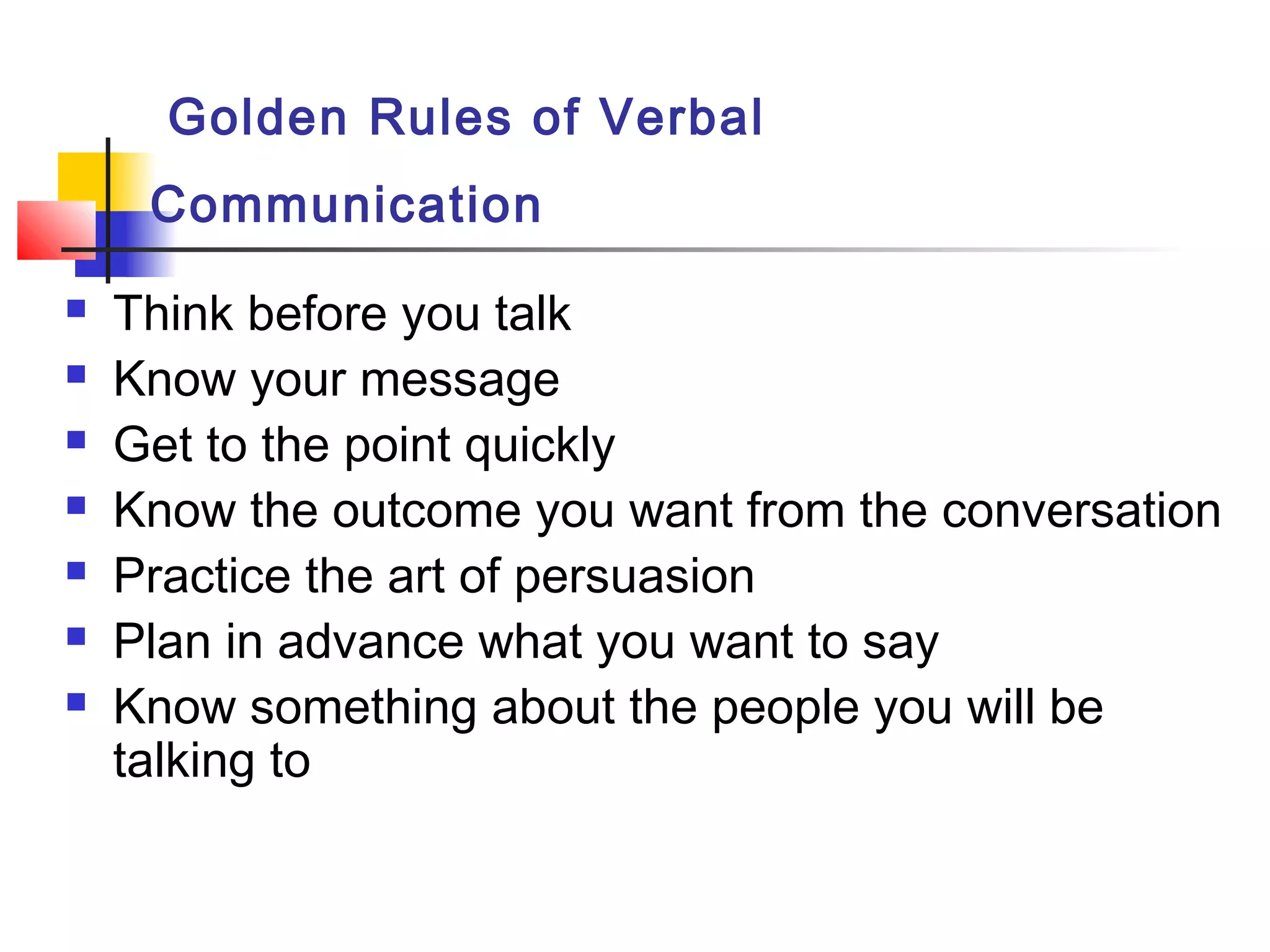
Golden Rules of Verbal
Communication
 Think before you talk
 Know your message
 Get to the point quickly
 Know the outcome you want from the conversation
 Practice the art of persuasion
 Plan in advance what you want to say
 Know something about the people you will be
talking to
How to communicate effectively?
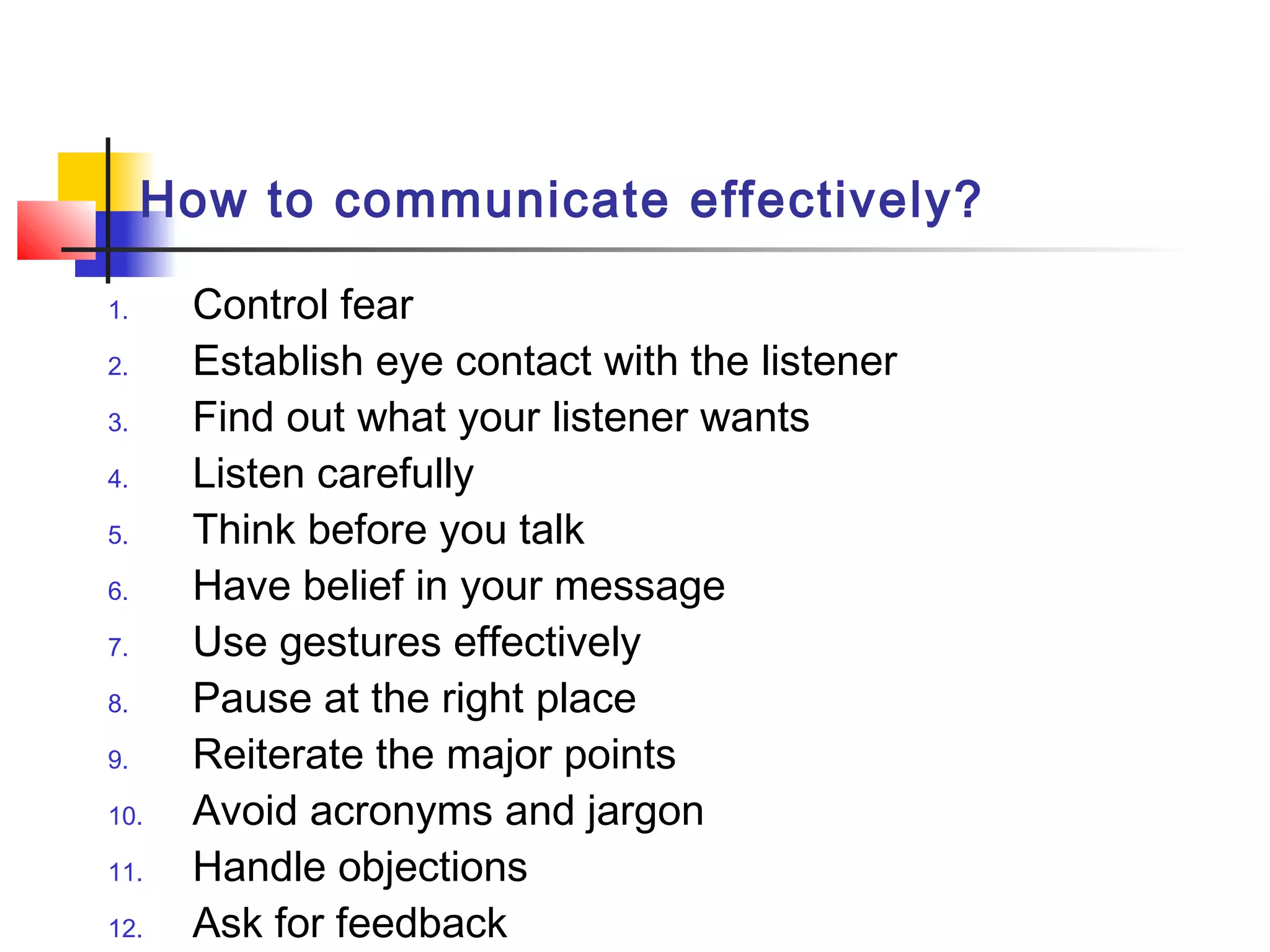
1. Control fear
2. Establish eye contact with the listener
3. Find out what your listener wants
4. Listen carefully
5. Think before you talk
6. Have belief in your message
7. Use gestures effectively
8. Pause at the right place
9. Reiterate the major points
10. Avoid acronyms and jargon
11. Handle objections
12. Ask for feedback
Now let’s look at each one of
them in detail….
How to control fear
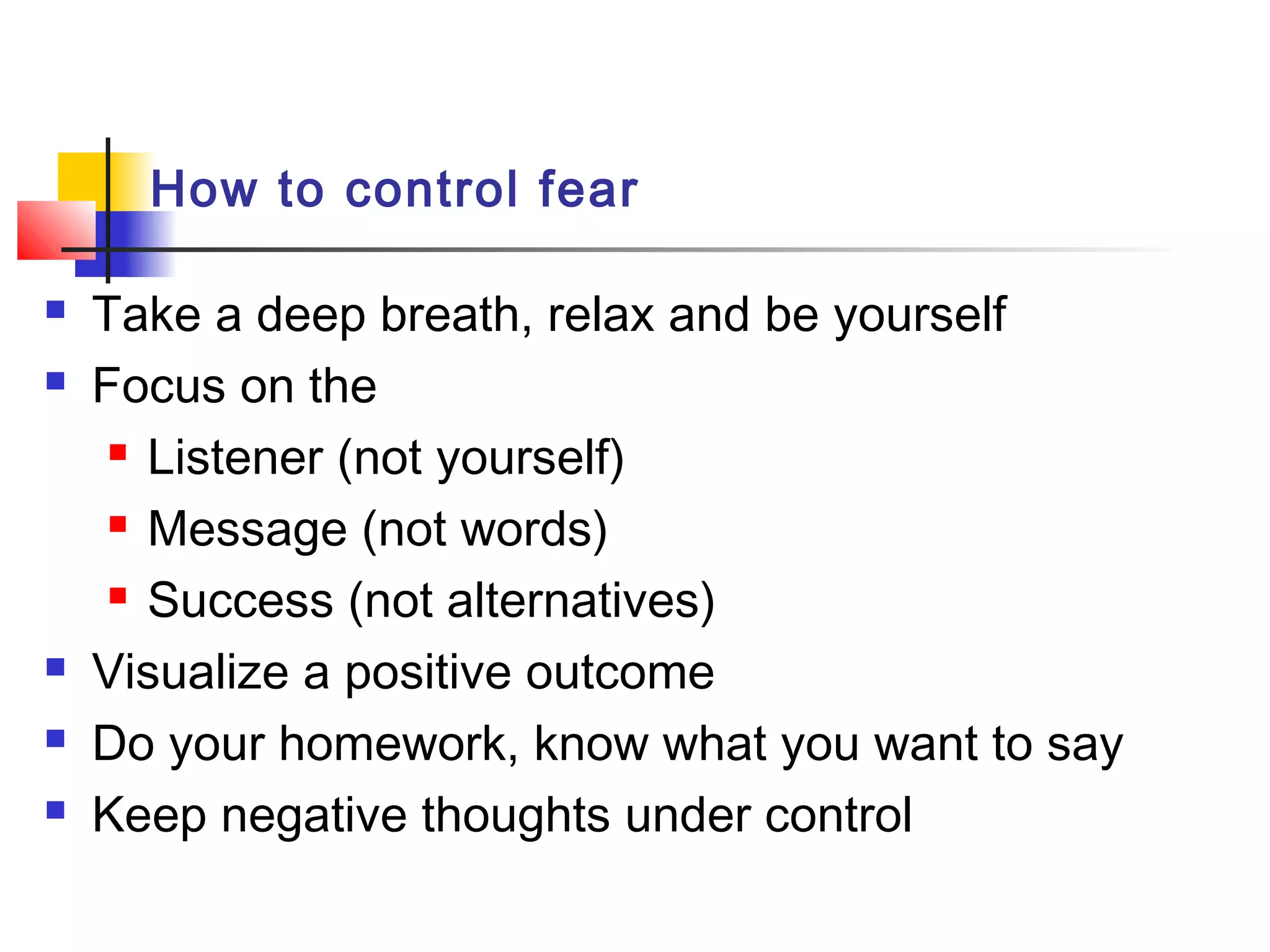
 Take a deep breath, relax and be yourself
 Focus on the
 Listener (not yourself)
 Message (not words)
 Success (not alternatives)
 Visualize a positive outcome
 Do your homework, know what you want to say
 Keep negative thoughts under control
Establish eye contact with the listener
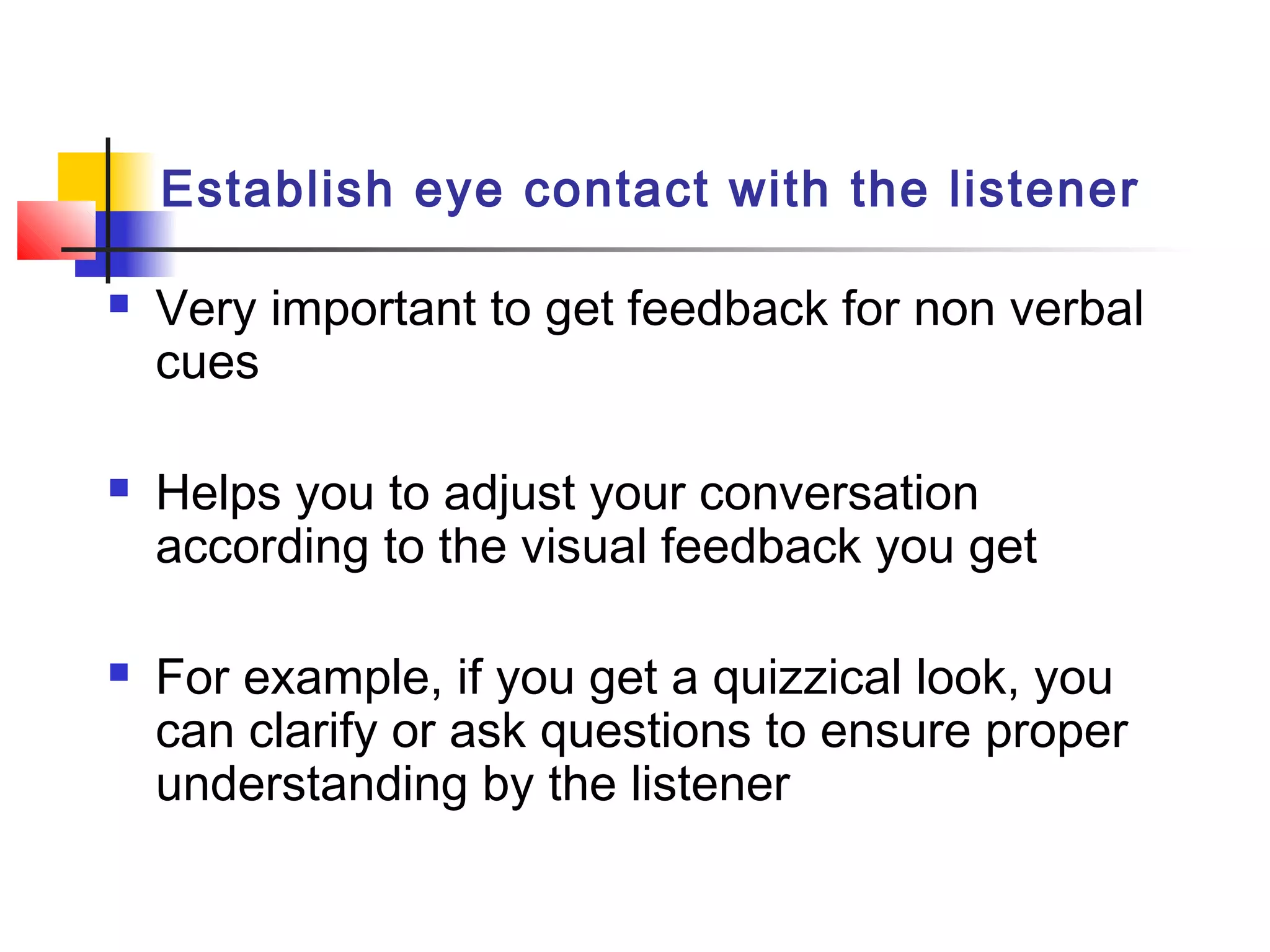
 Very important to get feedback for non verbal
cues
 Helps you to adjust your conversation
according to the visual feedback you get
 For example, if you get a quizzical look, you
can clarify or ask questions to ensure proper
understanding by the listener
Find out what your listener wants
 Ask questions and listen to the responses
 Use open-ended questions
 Rephrase questions to ensure better
understanding
 Offer suggestions/alternatives for the listener to
evaluate
 Define terms to avoid misunderstanding
How to listen effectively
 The real art of verbal communication is
talking while listening
 Allow the other person to speak
 Respect the other person’s point of view
 Listen actively instead of only hearing
Think before you talk
 Improves the chance of persuading the other
person to your point of view
 Pause, think and consider what you want to say
 Choose appropriate words to communicate the
meaning clearly
 Decide the tone of your voice
 Decide the outcome of the conversation
 If possible, learn about your audience in advance
Have belief in your message
 The crux of successful communication
 Speak with conviction and passion
 Be as natural as you can be with your feelings,
body language and tone
 Show enthusiasm
 Avoid faking or putting on an act
Use gestures effectively
 Gestures are facial expressions, hand and
body movements used in communication
 They make the communication process
livelier
 They can be used to support or emphazie a
point
Reiterate major points
 Reinforces your main points and enables
information retention by the listener
 Know what you want to emphazise
 Reiterate it during the conversation in different
ways
 Ask the listener for feedback tactfully
 Frame questions to ensure that the listener has
understood your main points
Avoid acronyms and jargon
 Use acronyms sparingly as they might not be
understood by everybody
 If it has to be used, then define it and proceed
 Avoid jargon to ensure that you don’t exclude your
listener from the communication process
 If you have to use jargon, slow down speech and
look for visual feedback to ensure understanding
 Be sensitive to your listener’s ability to understand
your message
Handle objections
 To avoid future barriers in the communication
process
 Avoid quick judgements. Put yourself in the
other’s shoes.
 Be fair in handling objections.
 Understand that objections are not personal
attacks and are against a point being made
 Do not get emotional
 You can pre-empt an objection and support it with
your points
Ask for feedback
 To ensure that there is no confusion
 Ask general questions like “Am I making myself
clear?”
 Ask specific questions like “From what I
understand from our conversation….is that
right?”
 Give further explanation if there is any
misunderstanding
Implementing Effective
Communication
Implementing Effective Communication
 Choosing the right environment
 Using language appropriate to your audience
 Being balanced in your thinking
 Curtailing excessive use of humour
 Avoiding the usage of controversial language
Implementing Effective Communication
(Contd…)
 Being empathetic
 Being a good listener
 Not indulging in cross conversation
 Not arguing
 Not letting ego come in the way
How to be a better
communicator?
What you can do to be a better
communicator
 Increase your vocabulary
 Read – no shortcuts here
 Keep up-to-date with current events
 Read inspirational books
 Avoid audible pauses like “ah”, “er”, “um”
 Practice pronouncing words properly
 Speak neither too slowly nor too fast
 Watch the tone of your voice
What you can do to be a better
communicator (Contd…)
 Adjust the volume of your voice according
to the situation
 Get to the point quickly
 Use gender neutral language
 Illustrate with personal examples
 Be concise and simple
Simple tips that you can follow….
Simple tips to improve your English
communication skills
 Watch an English news channel everyday –
NDTV, Headlines Today, etc
 Pay attention to the way words are pronounced
 Helps to increase your general knowledge indirectly
 Read an English newspaper everyday
 if possible read loudly by locking yourself in a room
 Helps you to hear and understand how you pronounce
words
 Make it a point to speak to your friends/siblings
in English at home/college.
 Begin reading light fiction if you do not have the
habit of reading books.
Any Questions???
Thank You!

Soft skills & effective communication skills

  • 1.
    Soft Skills andEffective Communication Skills
  • 2.
    Workshop Contents 1. Introductionto ‘Soft Skills’ 2. Effective Communication Skills. Workshop Objectives
  • 3.
    What do companieslook for in candidates?
  • 4.
    What do recruiterslook for in a candidate?  Technical Skills  Soft Skills
  • 5.
  • 6.
    Technical Skills Technical skillsteach one how to meet the expectations of the job. It is not possible to survive in a job without sound technical skills.
  • 7.
    What are ‘SoftSkills’?
  • 8.
    Soft Skills ‘Soft Skills’are essentially people skills -the non-technical, intangible, personality- specific skills. ‘Hard skills’, on the other hand, are more along the lines of what might appear on your resume - your education, experience and level of expertise.
  • 9.
    What skills qualifyas ‘Soft Skills’?
  • 10.
    Skills that qualifyas soft skills Communication Skills – Oral & Written Analytical Thinking Problem Solving Skills Leadership Skills Team work Interpersonal Skills Personal Grooming Initiative Self Awareness Conflict Resolution Integrity Creativity Flexibility Listening Skills Diplomacy Risk Taking Skills Ability to work under pressure Work Ethics Commitment AssertivenessTime Management
  • 11.
    Soft skills are Thehardest to acquire Impossible to practice Unless these become habits
  • 12.
  • 13.
    Importance of softskills When it comes to skills other than technical, the unanimous response from the industry is communication skills and good personality (Manpower requirement findings)
  • 14.
    Soft Skills Vs.Technical Skills Which is more important?
  • 15.
    Technical skills Vs.Soft Skills Both technical and soft skills complement each other and the balance between these two is what makes a complete professional
  • 16.
    Now let’s lookat one of the most important soft skill……
  • 17.
  • 18.
    You can havebrilliant ideas, but if you can’t get them across, your ideas won’t get you anywhere Lee Iacocca
  • 19.
  • 20.
    Communication Communication is atwo way process Communication is the transfer of information from one person to another
  • 21.
  • 22.
    Barriers of Communication Physical factors  Psychological factors  Other factors
  • 23.
    3 rules of EffectiveCommunication
  • 24.
    3 Rules ofEffective Communication  Be clear in you own mind about what you want to communicate  Deliver the message clearly  Ensure that the message has been clearly and correctly understood
  • 25.
  • 26.
    Types of Communication 1)Verbal 2) Non-verbal
  • 27.
    Golden rules ofverbal communication
  • 28.
    Golden Rules ofVerbal Communication  Think before you talk  Know your message  Get to the point quickly  Know the outcome you want from the conversation  Practice the art of persuasion  Plan in advance what you want to say  Know something about the people you will be talking to
  • 29.
    How to communicateeffectively?
  • 30.
    How to communicateeffectively? 1. Control fear 2. Establish eye contact with the listener 3. Find out what your listener wants 4. Listen carefully 5. Think before you talk 6. Have belief in your message 7. Use gestures effectively 8. Pause at the right place 9. Reiterate the major points 10. Avoid acronyms and jargon 11. Handle objections 12. Ask for feedback
  • 31.
    Now let’s lookat each one of them in detail….
  • 32.
    How to controlfear  Take a deep breath, relax and be yourself  Focus on the  Listener (not yourself)  Message (not words)  Success (not alternatives)  Visualize a positive outcome  Do your homework, know what you want to say  Keep negative thoughts under control
  • 33.
    Establish eye contactwith the listener  Very important to get feedback for non verbal cues  Helps you to adjust your conversation according to the visual feedback you get  For example, if you get a quizzical look, you can clarify or ask questions to ensure proper understanding by the listener
  • 34.
    Find out whatyour listener wants  Ask questions and listen to the responses  Use open-ended questions  Rephrase questions to ensure better understanding  Offer suggestions/alternatives for the listener to evaluate  Define terms to avoid misunderstanding
  • 35.
    How to listeneffectively  The real art of verbal communication is talking while listening  Allow the other person to speak  Respect the other person’s point of view  Listen actively instead of only hearing
  • 36.
    Think before youtalk  Improves the chance of persuading the other person to your point of view  Pause, think and consider what you want to say  Choose appropriate words to communicate the meaning clearly  Decide the tone of your voice  Decide the outcome of the conversation  If possible, learn about your audience in advance
  • 37.
    Have belief inyour message  The crux of successful communication  Speak with conviction and passion  Be as natural as you can be with your feelings, body language and tone  Show enthusiasm  Avoid faking or putting on an act
  • 38.
    Use gestures effectively Gestures are facial expressions, hand and body movements used in communication  They make the communication process livelier  They can be used to support or emphazie a point
  • 39.
    Reiterate major points Reinforces your main points and enables information retention by the listener  Know what you want to emphazise  Reiterate it during the conversation in different ways  Ask the listener for feedback tactfully  Frame questions to ensure that the listener has understood your main points
  • 40.
    Avoid acronyms andjargon  Use acronyms sparingly as they might not be understood by everybody  If it has to be used, then define it and proceed  Avoid jargon to ensure that you don’t exclude your listener from the communication process  If you have to use jargon, slow down speech and look for visual feedback to ensure understanding  Be sensitive to your listener’s ability to understand your message
  • 41.
    Handle objections  Toavoid future barriers in the communication process  Avoid quick judgements. Put yourself in the other’s shoes.  Be fair in handling objections.  Understand that objections are not personal attacks and are against a point being made  Do not get emotional  You can pre-empt an objection and support it with your points
  • 42.
    Ask for feedback To ensure that there is no confusion  Ask general questions like “Am I making myself clear?”  Ask specific questions like “From what I understand from our conversation….is that right?”  Give further explanation if there is any misunderstanding
  • 43.
  • 44.
    Implementing Effective Communication Choosing the right environment  Using language appropriate to your audience  Being balanced in your thinking  Curtailing excessive use of humour  Avoiding the usage of controversial language
  • 45.
    Implementing Effective Communication (Contd…) Being empathetic  Being a good listener  Not indulging in cross conversation  Not arguing  Not letting ego come in the way
  • 46.
    How to bea better communicator?
  • 47.
    What you cando to be a better communicator  Increase your vocabulary  Read – no shortcuts here  Keep up-to-date with current events  Read inspirational books  Avoid audible pauses like “ah”, “er”, “um”  Practice pronouncing words properly  Speak neither too slowly nor too fast  Watch the tone of your voice
  • 48.
    What you cando to be a better communicator (Contd…)  Adjust the volume of your voice according to the situation  Get to the point quickly  Use gender neutral language  Illustrate with personal examples  Be concise and simple
  • 49.
    Simple tips thatyou can follow….
  • 50.
    Simple tips toimprove your English communication skills  Watch an English news channel everyday – NDTV, Headlines Today, etc  Pay attention to the way words are pronounced  Helps to increase your general knowledge indirectly  Read an English newspaper everyday  if possible read loudly by locking yourself in a room  Helps you to hear and understand how you pronounce words  Make it a point to speak to your friends/siblings in English at home/college.  Begin reading light fiction if you do not have the habit of reading books.
  • 51.
  • 52.