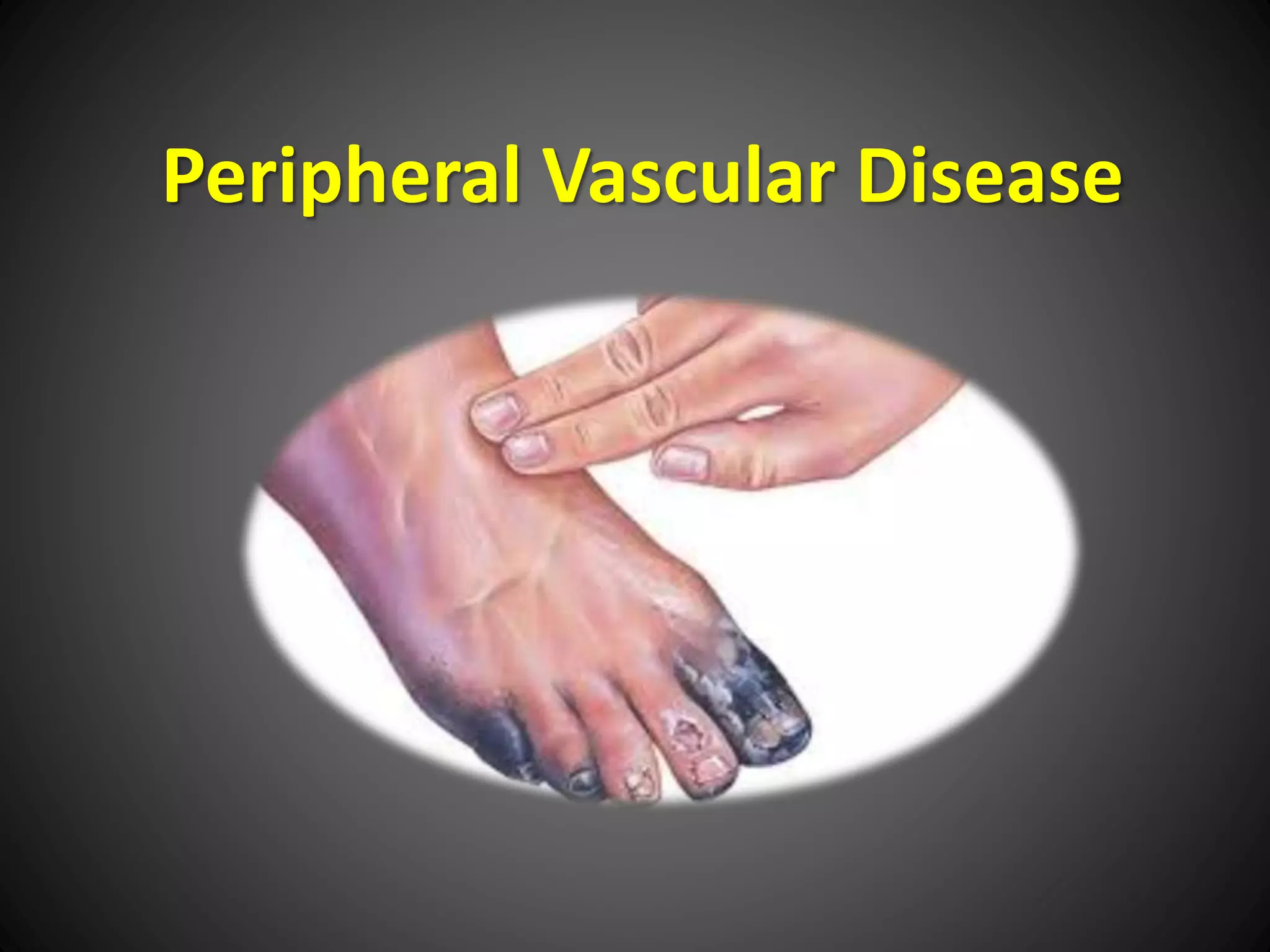
Peripheral Vascular Disease
Definition
• Peripheral vascular disease (PVD) is a blood
circulation disorder that causes the
blood vessels to narrow, block, or
spasm outside the heart and brain.
• This can happen in arteries or veins
• Commonly used referring to peripheral arterial
disease (PAD)
What Is The Peripheral Vascular
System?
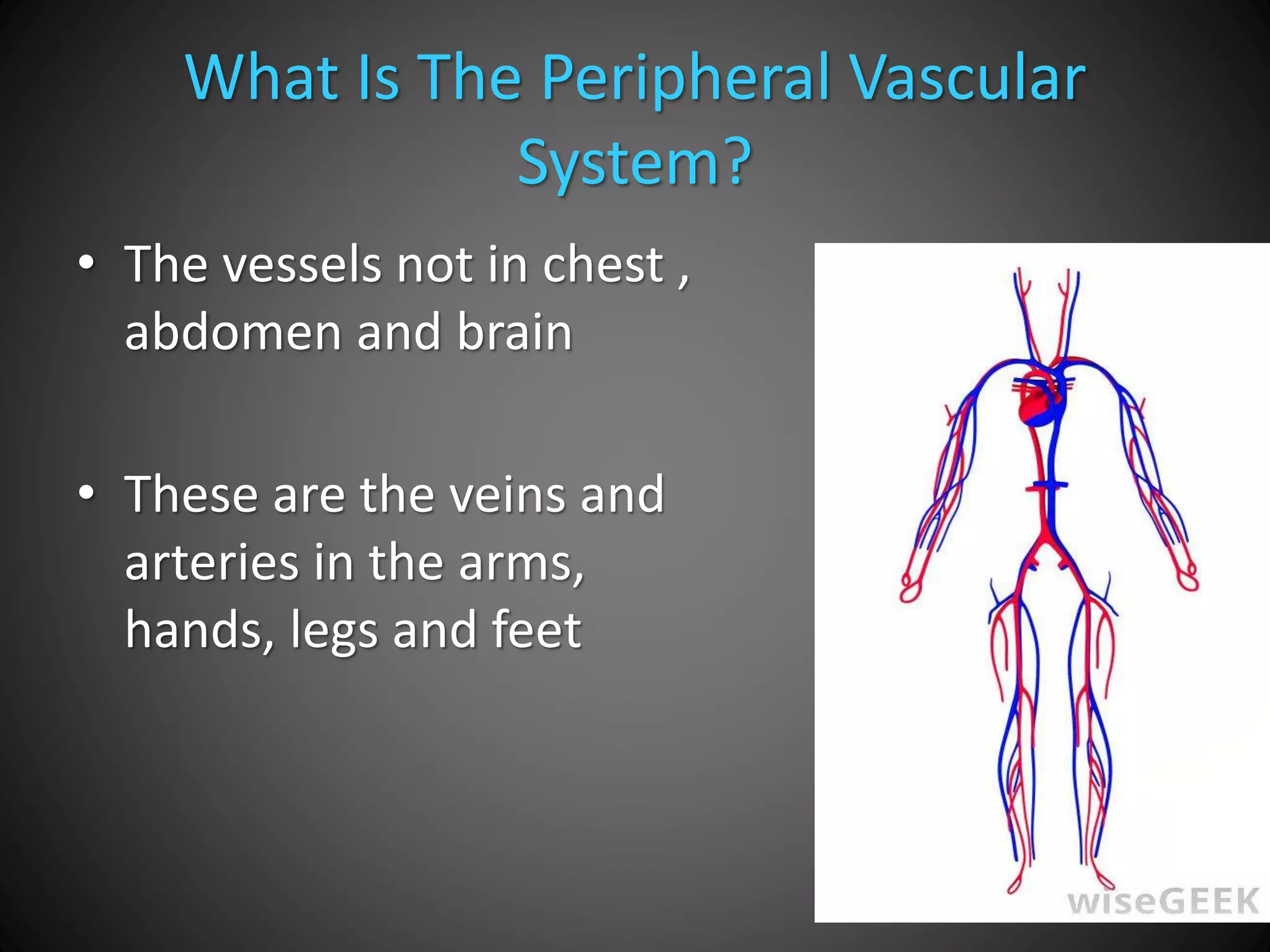
• The vessels not in chest ,
abdomen and brain
• These are the veins and
arteries in the arms,
hands, legs and feet
Difference Between PVD And PAD
• Peripheral Vascular Disease (PVD)
– There are problems altering the blood flow
through both the arteries and veins.
• Peripheral Artery Disease (PAD)
– is a type of PVD
– have problems only with arterial blood flow
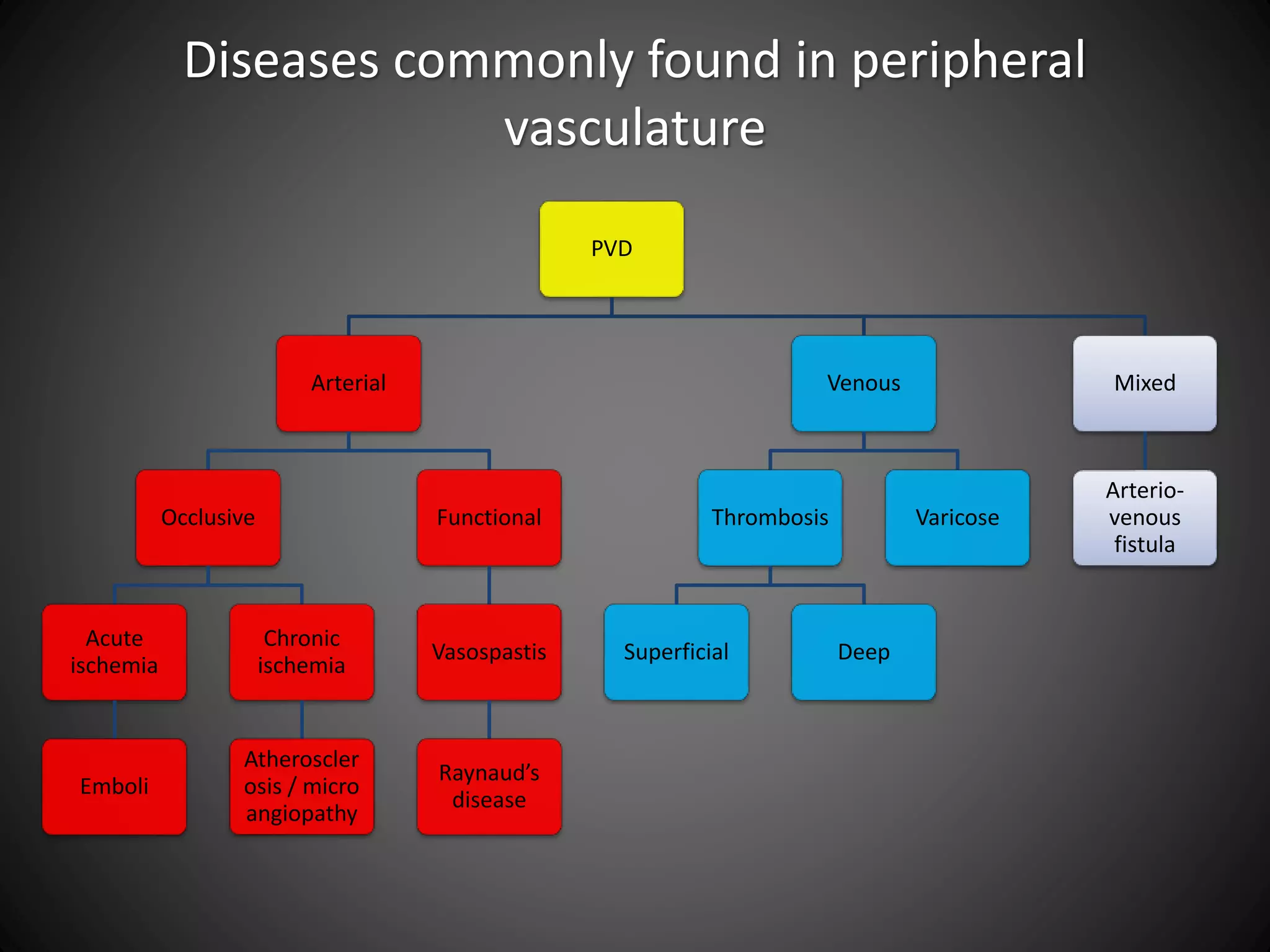
Diseases commonly found in peripheral
vasculature
PVD
Arterial
Occlusive
Acute
ischemia
Emboli
Chronic
ischemia
Atheroscler
osis / micro
angiopathy
Functional
Vasospastis
Raynaud’s
disease
Venous
Thrombosis
Superficial Deep
Varicose
Mixed
Arterio-
venous
fistula
Atheroma
• Accumulation of
degenerative materials in
inner layer of arterial wall
• Materials: macrophage
cell debris, containing
lipid, Ca++ & connective
tissue
• What happened: intrude
into lumen
• Where found: in
atherosclerosis
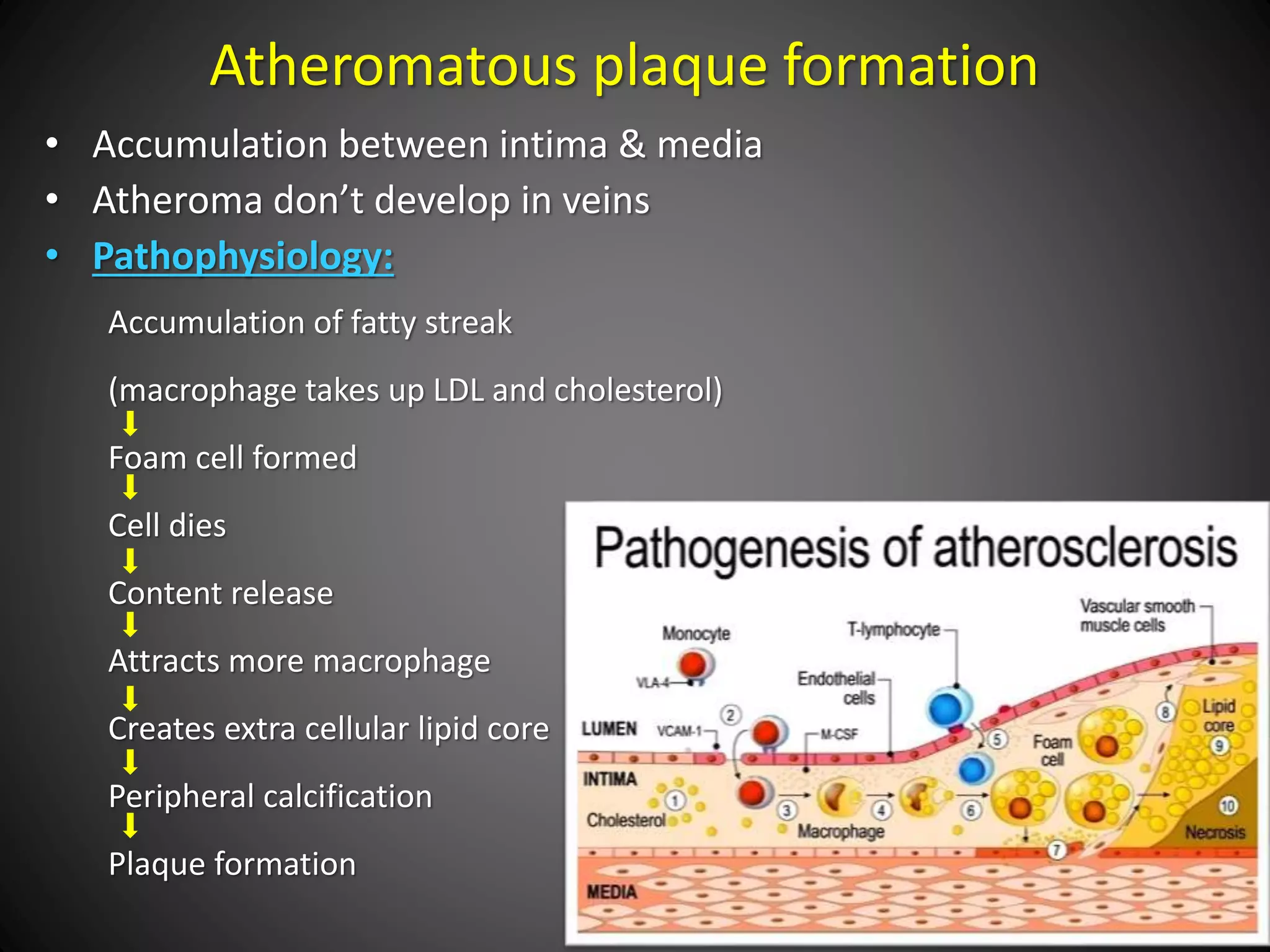
Atheromatous plaque formation
• Accumulation between intima & media
• Atheroma don’t develop in veins
• Pathophysiology:
Accumulation of fatty streak
(macrophage takes up LDL and cholesterol)
Foam cell formed
Cell dies
Content release
Attracts more macrophage
Creates extra cellular lipid core
Peripheral calcification
Plaque formation
Arterial stenosis and occlusion
• Cause:
– Atheroma
– Emboli
– Trauma
• Type:
– Acute
– Chronic
RISK FACTORS
• Positive family history of premature heart attacks
or strokes
• Older than 50 years
• Male sex
• Overweight or obesity
• Inactive (sedentary) lifestyle
• Smoking
• Diabetes
• High blood pressure
• High cholesterol or LDL (the "bad cholesterol"), plus
high triglycerides and low HDL
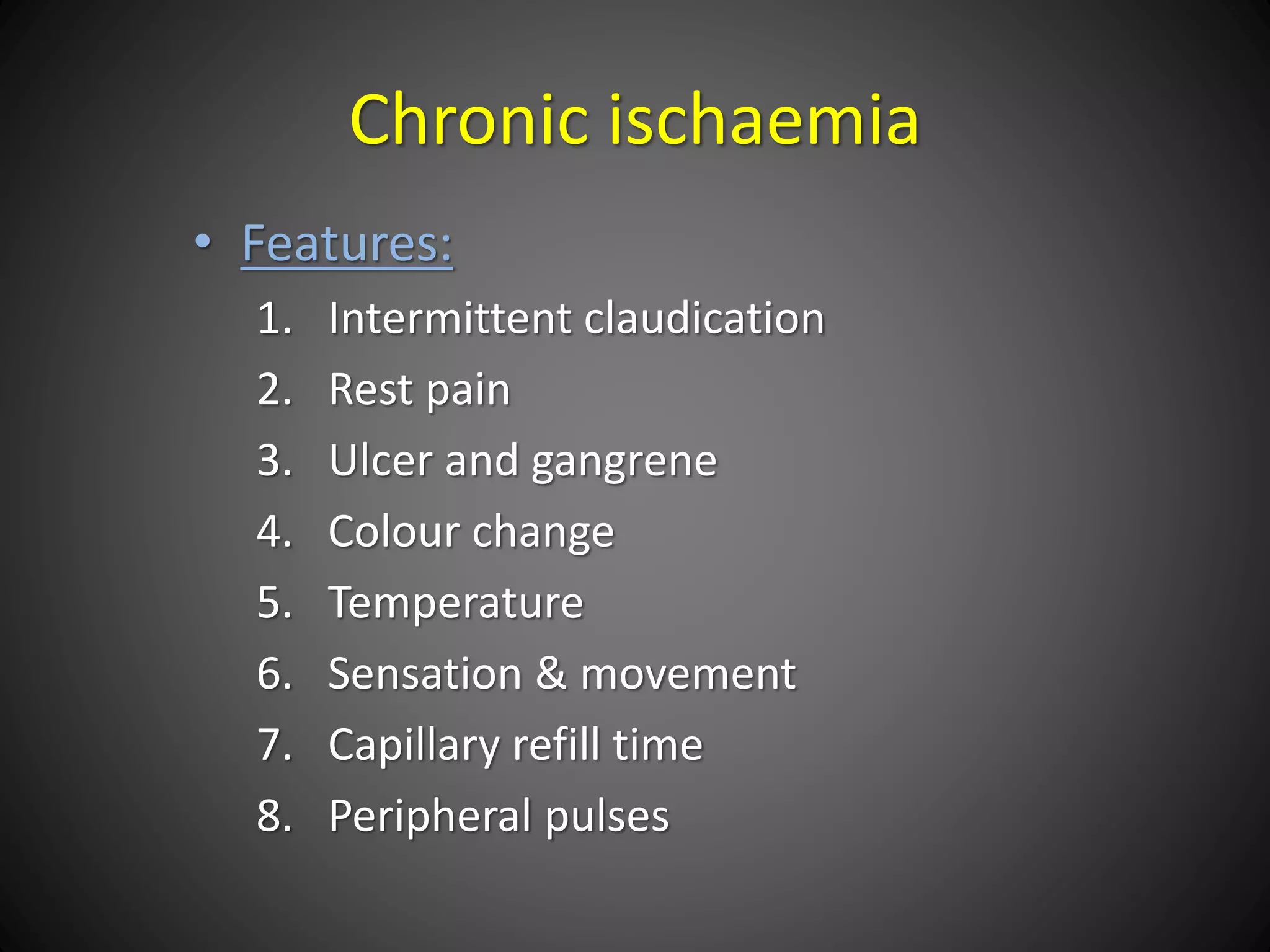
Chronic ischaemia
• Features:
1. Intermittent claudication
2. Rest pain
3. Ulcer and gangrene
4. Colour change
5. Temperature
6. Sensation & movement
7. Capillary refill time
8. Peripheral pulses
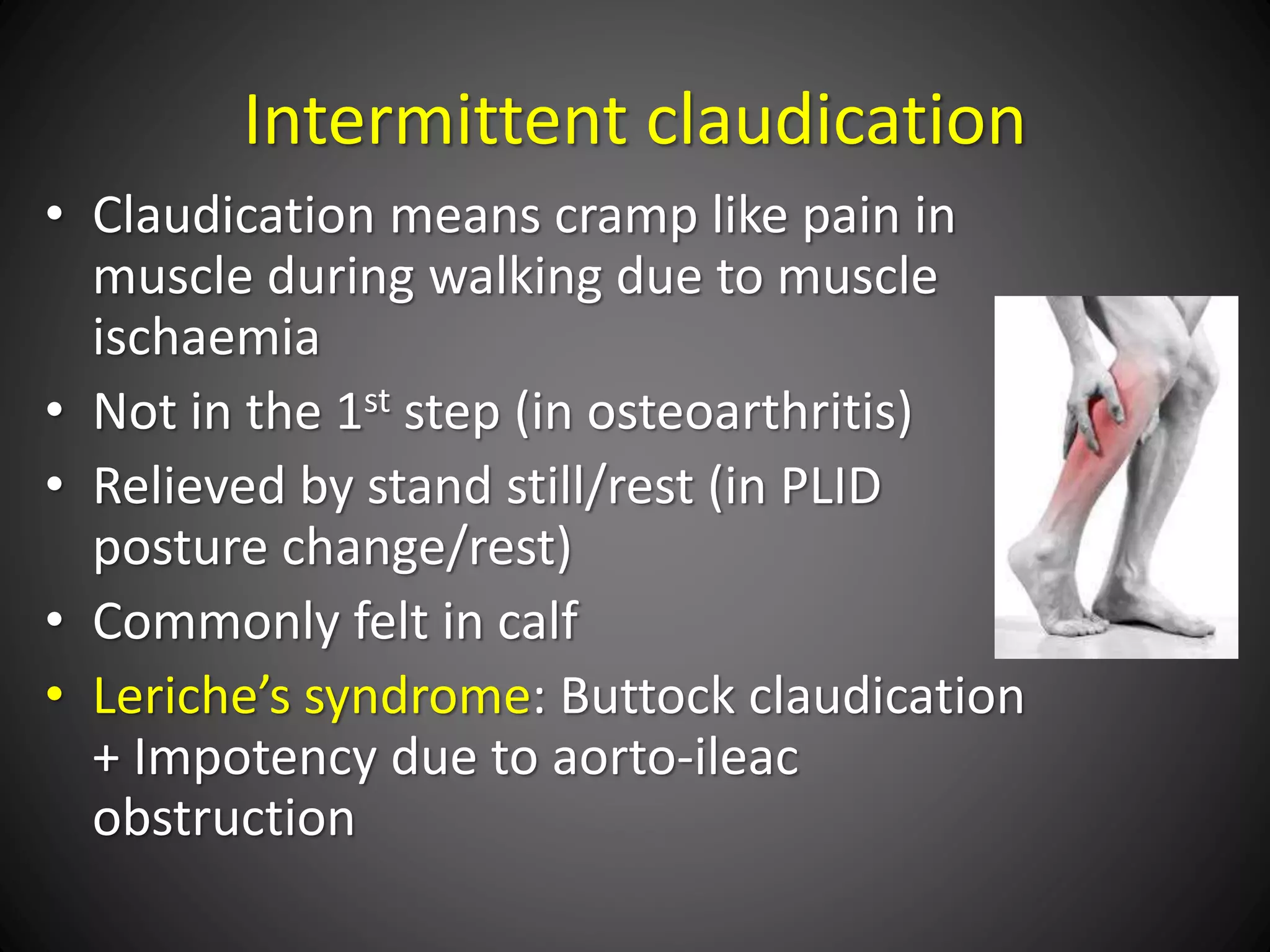
Intermittent claudication
• Claudication means cramp like pain in
muscle during walking due to muscle
ischaemia
• Not in the 1st step (in osteoarthritis)
• Relieved by stand still/rest (in PLID
posture change/rest)
• Commonly felt in calf
• Leriche’s syndrome: Buttock claudication
+ Impotency due to aorto-ileac
obstruction
Grading of Intermittent claudication
• Grade 1:
– Pain goes away & patient continue walking (pain
producing substances washed away by collaterals)
• Grade 2
– Pain starts after some distance & can walk with pain
• Grade 3
– When pain starts patient can't walk without taking
rest
Rest pain
• Continuous pain occurs at rest
throughout day and night due
to severe ischaemia & felt in
foot
• exacerbate by lying down or
foot elevation
• Worse @ night due to
decreased heart rate.
• Comfort by hanging the foot
• This pain is due to ischaemia of
nerve (crying of dying nerve)
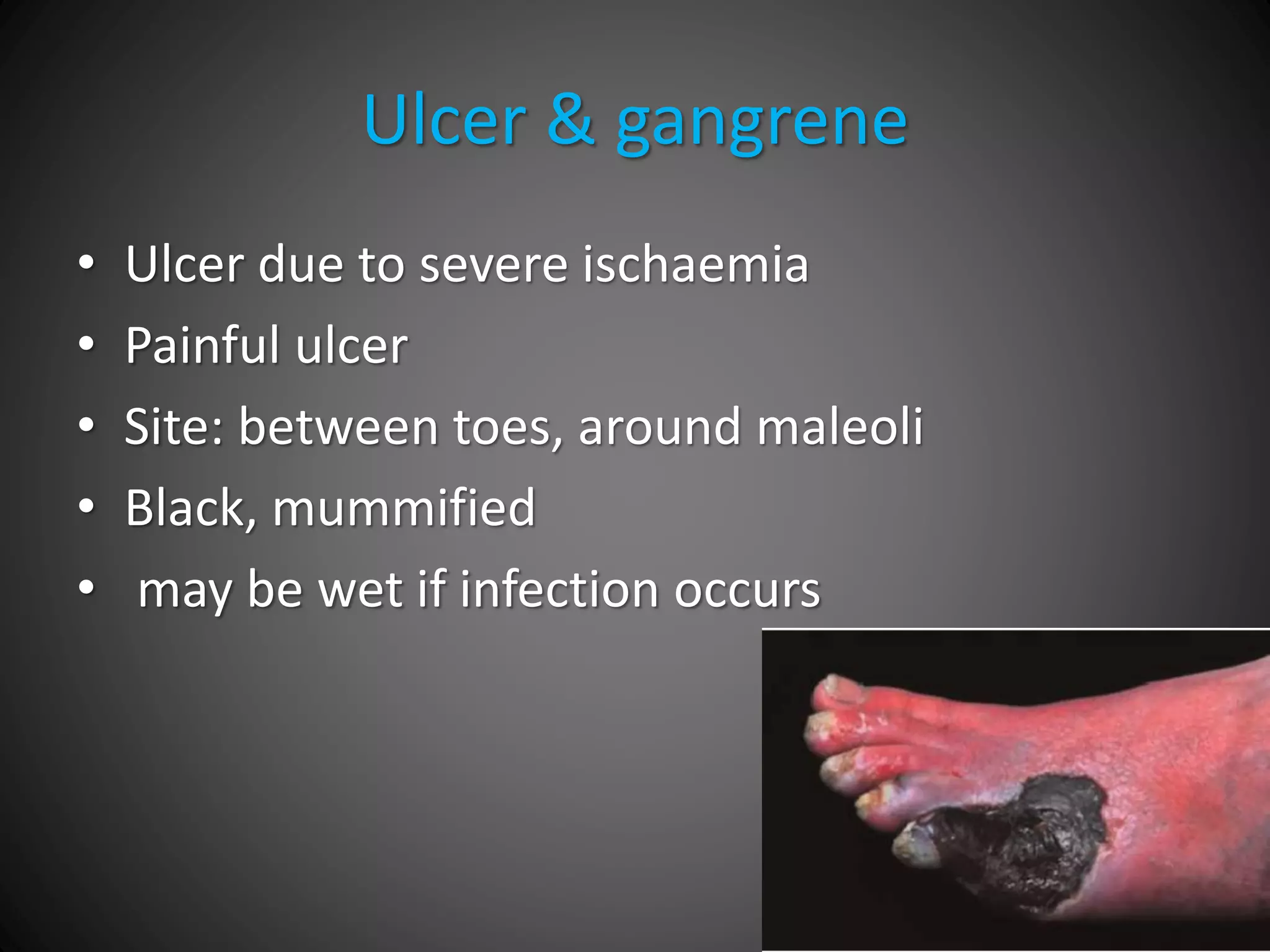
Ulcer & gangrene
• Ulcer due to severe ischaemia
• Painful ulcer
• Site: between toes, around maleoli
• Black, mummified
• may be wet if infection occurs
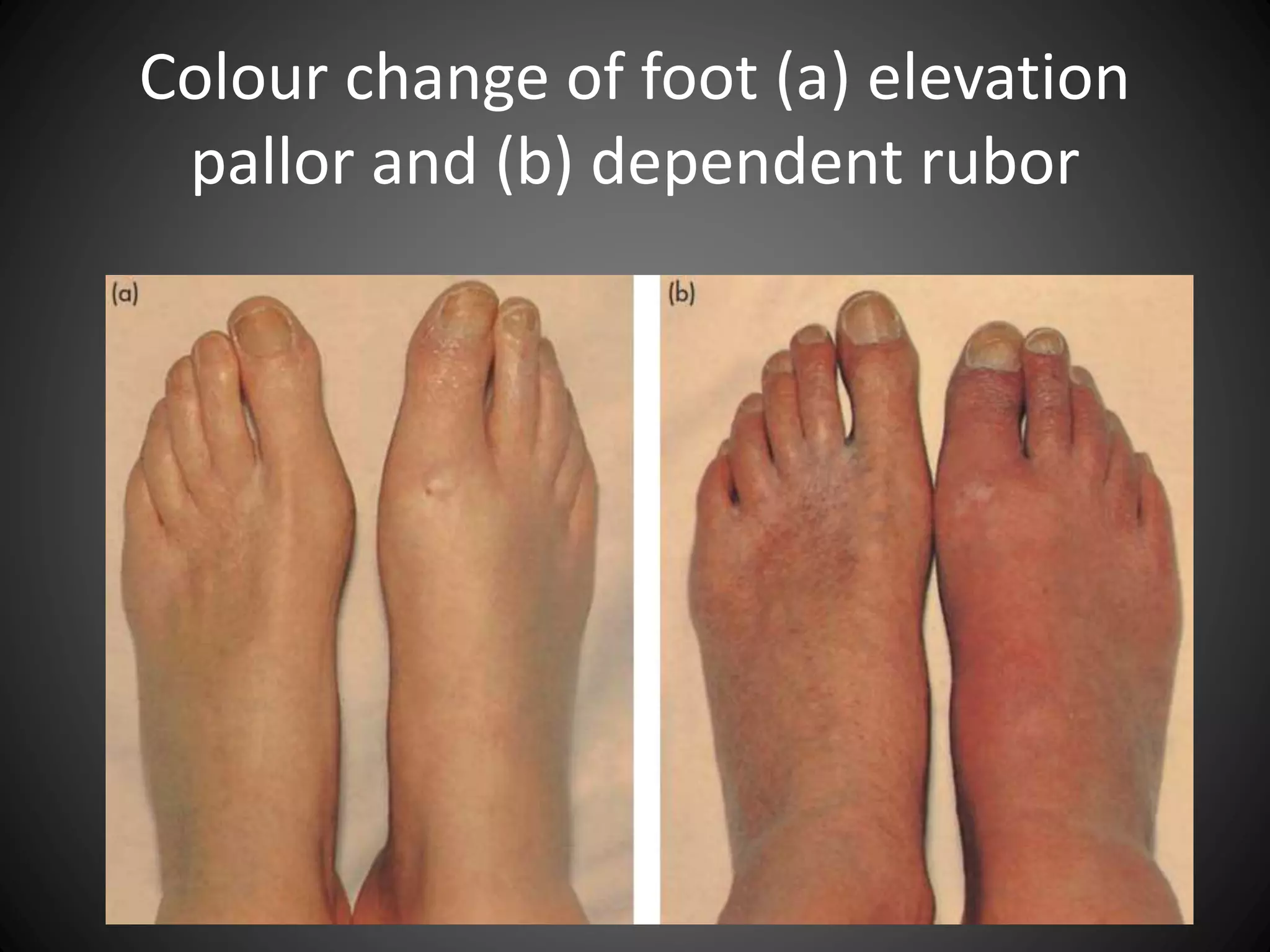
Colour change of foot (a) elevation
pallor and (b) dependent rubor
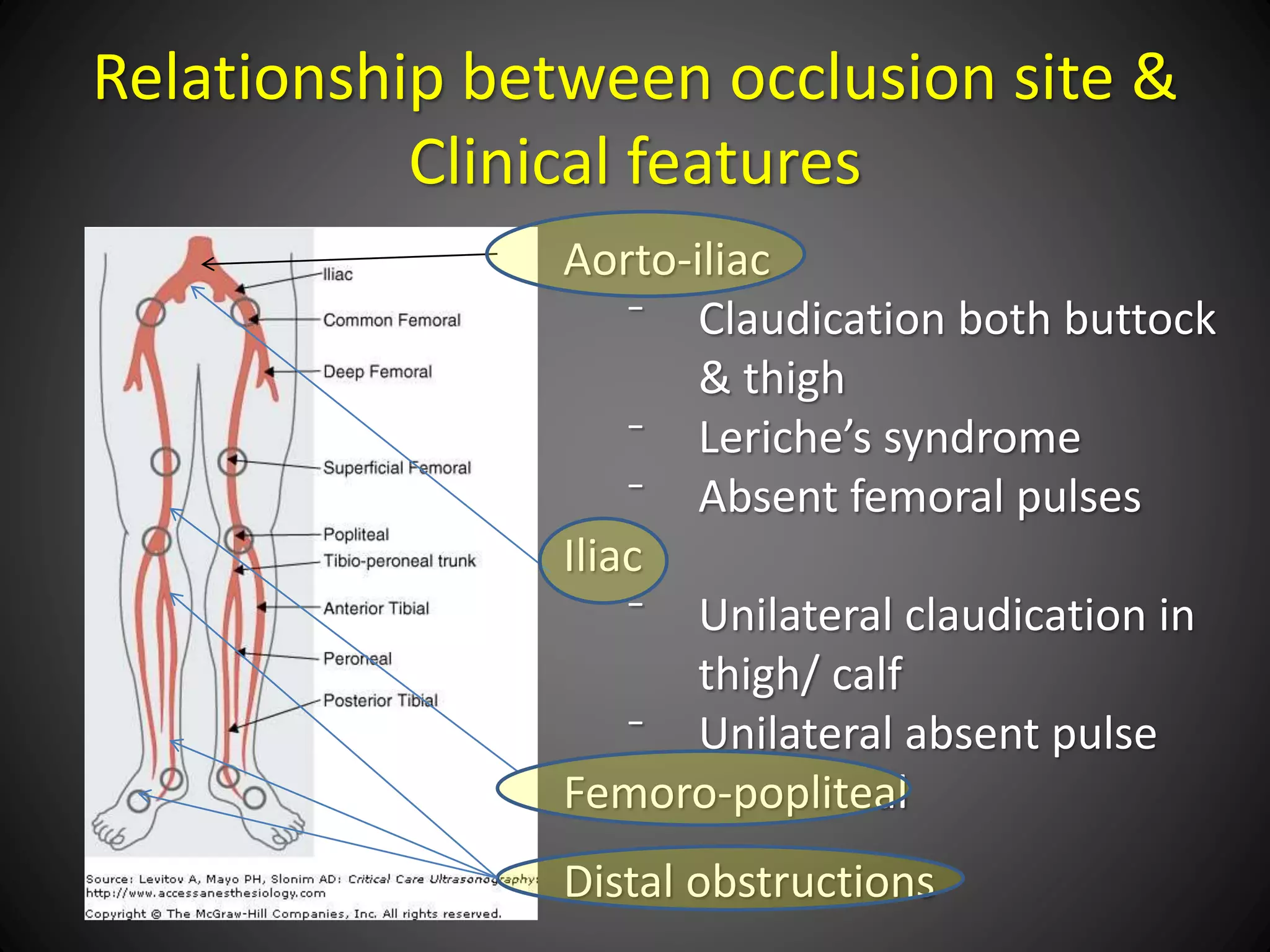
Relationship between occlusion site &
Clinical features
Aorto-iliac
⁻ Claudication both buttock
& thigh
⁻ Leriche’s syndrome
⁻ Absent femoral pulses
Iliac
⁻ Unilateral claudication in
thigh/ calf
⁻ Unilateral absent pulse
Femoro-popliteal
Distal obstructions
Stage of limb ischaemia: Fontainer’s staging
• Stage I: asymptomatic
• Stage II: Intermittent claudication
• Stage III: Rest pain
–IIIa: Rest pain + ABPI > 50 mm of Hg
–IIIb: Rest pain + ABPI < 50 mm of Hg
• Stage VI: Ulcer / Gangrene
Investigations
For diagnosis
Doppler USG
Duplex scanning
Angiography
CT angiography
MR
angiography
DSA
For assessment
CBC
S. Lipid profile
S. Creatinine
Blood sugar
S. Electrolite
ECG
CXR
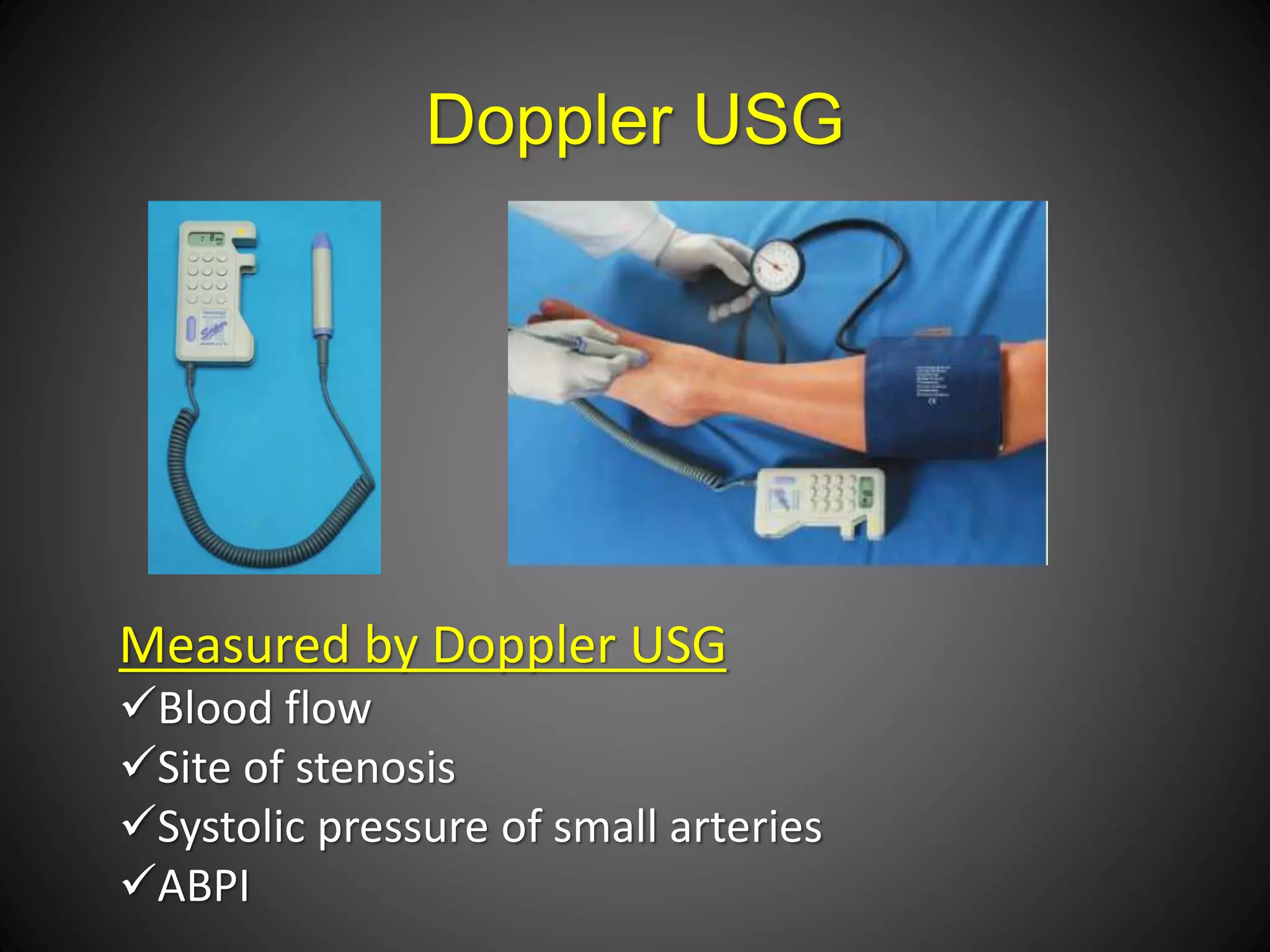
Doppler USG
Measured by Doppler USG
Blood flow
Site of stenosis
Systolic pressure of small arteries
ABPI
ABPI
• Ratio of systolic pressure @ ankle to arm
• Measured by Doppler USG
• Measured artery: dorsalis pedis, ant. tibial, &
post. Tibial
• Value:
– Normal= 1
– Claudication = < 0.9
– Rest pain = < 0.5
– Imminent necrosis = <0.3
– Calcification = > 1
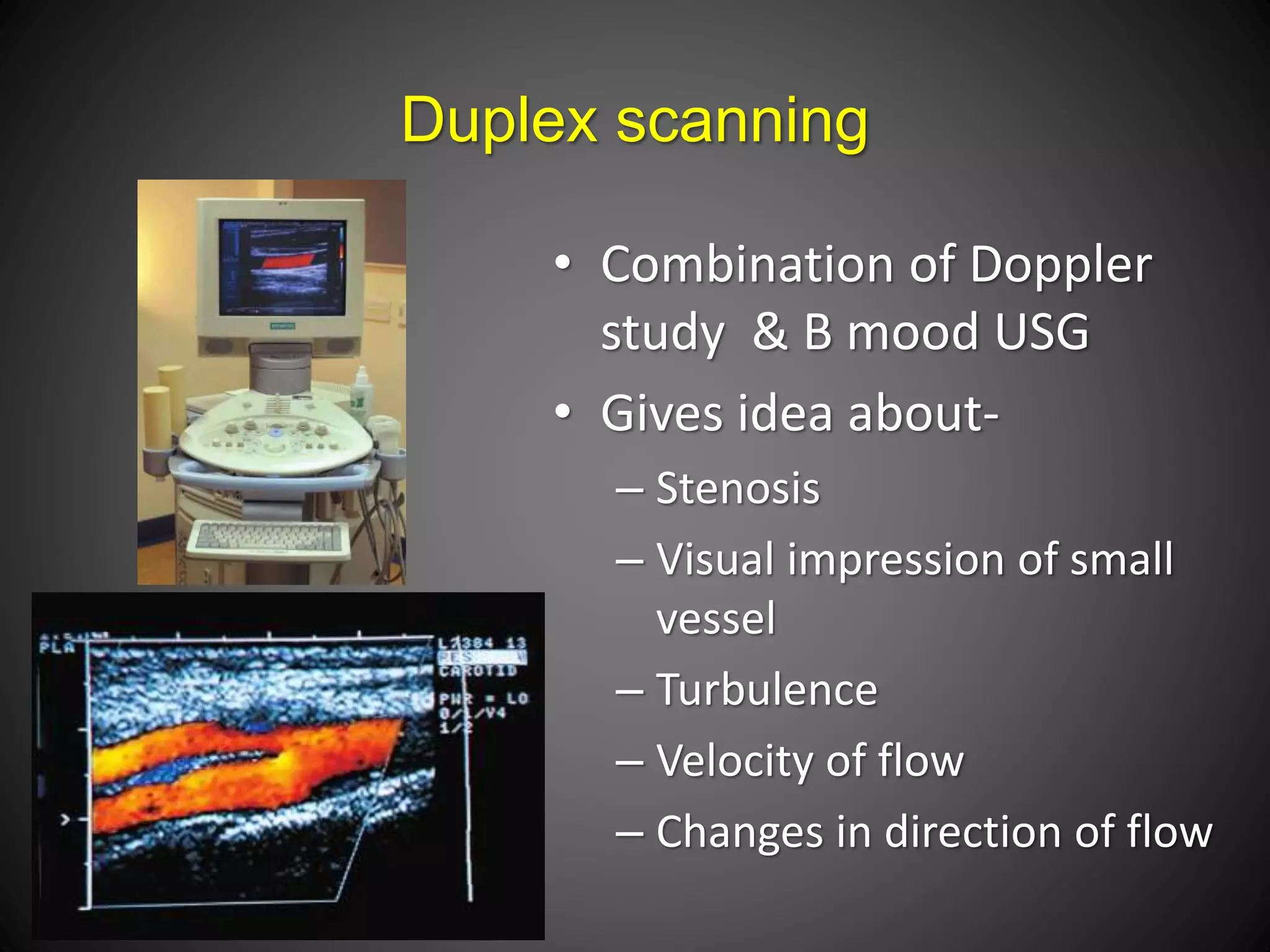
Duplex scanning
• Combination of Doppler
study & B mood USG
• Gives idea about-
– Stenosis
– Visual impression of small
vessel
– Turbulence
– Velocity of flow
– Changes in direction of flow
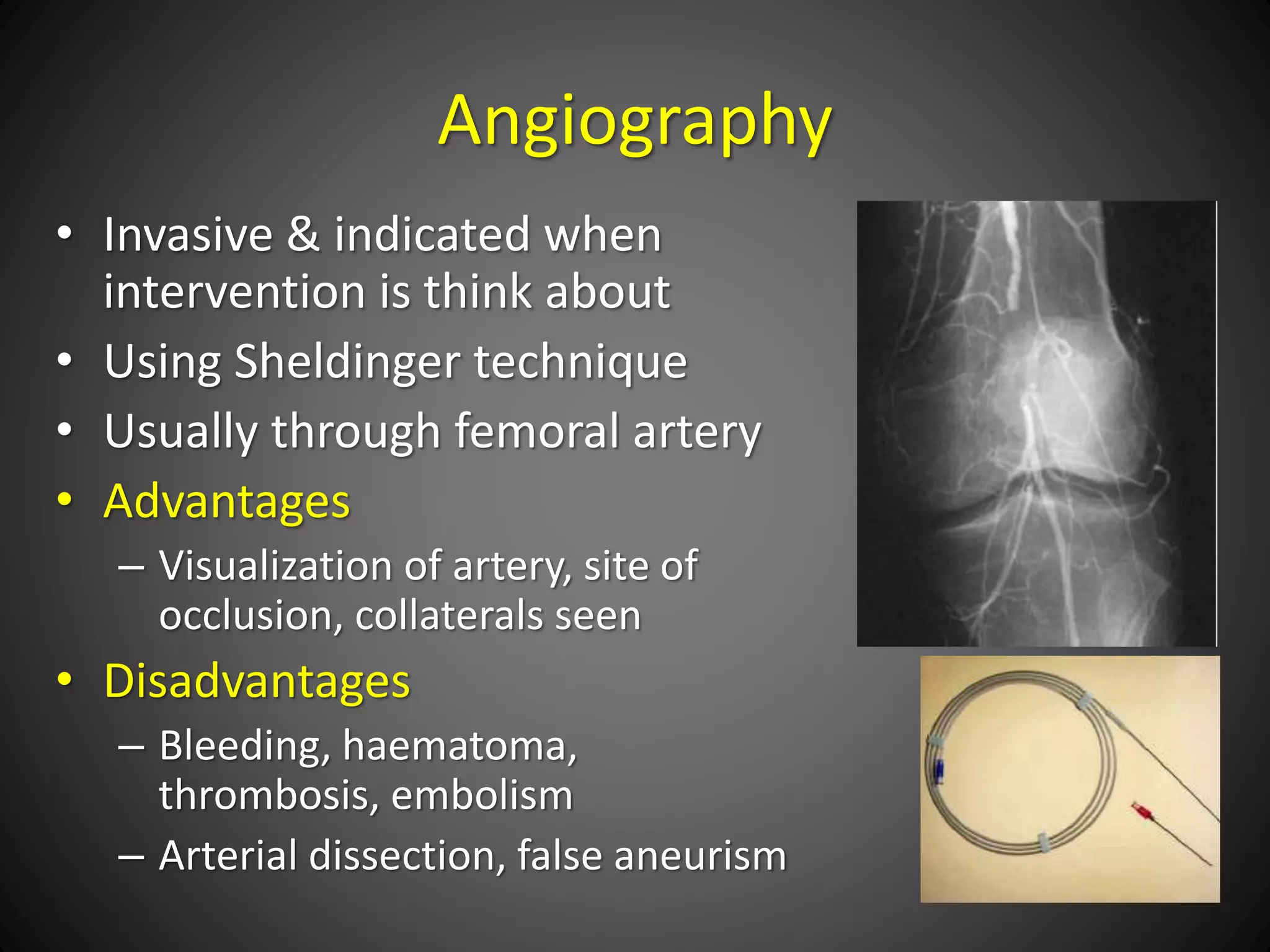
Angiography
• Invasive & indicated when
intervention is think about
• Using Sheldinger technique
• Usually through femoral artery
• Advantages
– Visualization of artery, site of
occlusion, collaterals seen
• Disadvantages
– Bleeding, haematoma,
thrombosis, embolism
– Arterial dissection, false aneurism
Angiography
• CT Angiography • MR Angiography
DSA (Digital subtraction angiography)
Treatment
• Nonsurgical
– General
– Drugs
• Interventional
• Surgical
Non surgical treatment
• General
1. Stop smoking
2. Walk within limit of disability
3. Dietary advice to loss weight
4. Care of ischaemic foot, avoid trauma
Non surgical treatment
• Drugs
1. Pentoxiphylin ↓blood viscosity , improve
circulation; 400 mg bd.
2. Cilostazole  inhibit platelet aggregation; 100mg bd
3. Analgesic
4. Low dose aspirin
5. Clopidogrel
6. Anti HTN
7. Anti DM
8. Statin  lipid lowering
9. Antibiotics
Anti platelet; 75 mg daily
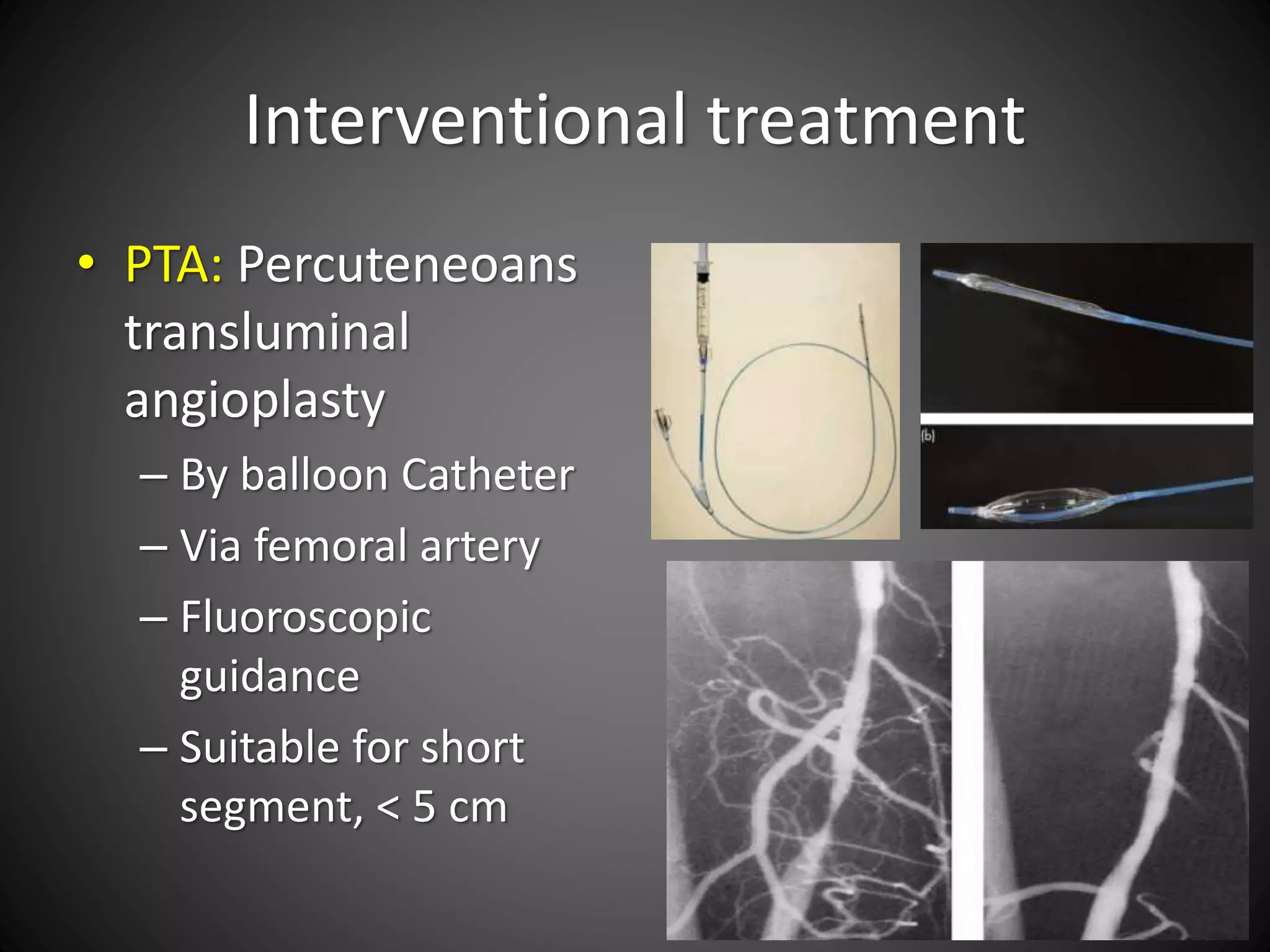
Interventional treatment
• PTA: Percuteneoans
transluminal
angioplasty
– By balloon Catheter
– Via femoral artery
– Fluoroscopic
guidance
– Suitable for short
segment, < 5 cm
Transluminal stenting
• Self expanding metallic
stent
• Suitable for long
segment; > 5 cm
• PTA failure
Surgical treatment
Indication:
– Severe symptom
– Angioplasty failed/not possible
Option:
1. Bypass graft
– Natural
• Saphanous (long/short) graft
• Arm vein graft
– Synthetic
• Dacron
• PTFE
2. End arterectomy
3. Lumber sympathetectomy
4. Amputation
Surgical treatment
Natural Graft Synthetic graft
End arterectomy
Lumber sympathetectomy
Amputation
Critical Limb Ischaemia
Def:
Critical limb ischaemia is a late sign of progressive
limb ischaemia, characterized by-
—Rest pain; requiring regular analgesic >2 weeks
—Ulcer due to arterial insufficiency
—Gangrene
—Systolic pressure of limb < 50 mm of Hg
• Management: same as chronic limb
ischaemia
Acute occlusive condition
• Causes
– Emboli
– Thrombi
– Trauma
Embolus
An embolus is a body that is foreign to the blood stream & which
may lodge into blood vessel & cause obstruction.
Type
• Thrombo-embolic
• Lt. atrium  fibrillation/MI/ endocarditis
• Aneurism
• Atherosclerotic plaque
• Fat
• Air
• Infective
• Parasitic
• Malignant
Site of acute arterial occlusion
Limbs
Brain - middle cerebral artery
Retina – central retinal
artery Amourosis fugux
Gut
Kidney
Symptoms
• Sudden, severe onset of constant
pain/numbness
• May have H/O cardiac disease
• May have H/O trauma/ arterial catheterization
• May have H/O arterial graft
Signs
5P
• Pain, pallor, paralysis, pulselessness &
parasthesia
• Limb is cold, tender, swollen
• Toe cannot be moved
• If occlusion is > 6 hours  irreversible damage
occurs & line of demarcation may present
Immediate management
• It is a surgical emergency, so if a patient have
a H/O cardiac disease with acute limb
ischaemic features immediate management
should be done
• So the Mx is:
1. 5000 U of heparin I/V
• To reduce extension of thrombi
• To maintain patency of vessel
2. Analgesic
Investigation
• In treating acute limb ischaemia (ALI) TIME is
everything
• in worst case ALI may progress to critical limb
ischaemia
So the choice of INV. Is
Colour Doppler study
Evaluates lesion into 3 categories
1. Viable
2. Threatened
3. Irreversible
Surgical management
1. Embolectomy
– Rx of choice
– Under LA
– By Fogarty balloon catheter
2. Intra arterial
thrombolysis
– With tissue plasminogen
activator
– Or streptokinase/ urokinase
Intra arterial thrombolysis….cont.
• Injected into clot via catheter
• Success achieved within 24 hours
• Regular angiogram should be done
• Contraindication
– Recent stroke
– Bleeding diathesis
– Pregnancy
– Age> 80
After managing ALI total evaluation of the cause
should be attempted & managed accordingly
peripheral vascular disease

peripheral vascular disease

  • 1.
  • 2.
    Definition • Peripheral vasculardisease (PVD) is a blood circulation disorder that causes the blood vessels to narrow, block, or spasm outside the heart and brain. • This can happen in arteries or veins • Commonly used referring to peripheral arterial disease (PAD)
  • 3.
    What Is ThePeripheral Vascular System? • The vessels not in chest , abdomen and brain • These are the veins and arteries in the arms, hands, legs and feet
  • 4.
    Difference Between PVDAnd PAD • Peripheral Vascular Disease (PVD) – There are problems altering the blood flow through both the arteries and veins. • Peripheral Artery Disease (PAD) – is a type of PVD – have problems only with arterial blood flow
  • 5.
    Diseases commonly foundin peripheral vasculature PVD Arterial Occlusive Acute ischemia Emboli Chronic ischemia Atheroscler osis / micro angiopathy Functional Vasospastis Raynaud’s disease Venous Thrombosis Superficial Deep Varicose Mixed Arterio- venous fistula
  • 6.
    Atheroma • Accumulation of degenerativematerials in inner layer of arterial wall • Materials: macrophage cell debris, containing lipid, Ca++ & connective tissue • What happened: intrude into lumen • Where found: in atherosclerosis
  • 7.
    Atheromatous plaque formation •Accumulation between intima & media • Atheroma don’t develop in veins • Pathophysiology: Accumulation of fatty streak (macrophage takes up LDL and cholesterol) Foam cell formed Cell dies Content release Attracts more macrophage Creates extra cellular lipid core Peripheral calcification Plaque formation
  • 8.
    Arterial stenosis andocclusion • Cause: – Atheroma – Emboli – Trauma • Type: – Acute – Chronic
  • 9.
    RISK FACTORS • Positivefamily history of premature heart attacks or strokes • Older than 50 years • Male sex • Overweight or obesity • Inactive (sedentary) lifestyle • Smoking • Diabetes • High blood pressure • High cholesterol or LDL (the "bad cholesterol"), plus high triglycerides and low HDL
  • 10.
    Chronic ischaemia • Features: 1.Intermittent claudication 2. Rest pain 3. Ulcer and gangrene 4. Colour change 5. Temperature 6. Sensation & movement 7. Capillary refill time 8. Peripheral pulses
  • 11.
    Intermittent claudication • Claudicationmeans cramp like pain in muscle during walking due to muscle ischaemia • Not in the 1st step (in osteoarthritis) • Relieved by stand still/rest (in PLID posture change/rest) • Commonly felt in calf • Leriche’s syndrome: Buttock claudication + Impotency due to aorto-ileac obstruction
  • 12.
    Grading of Intermittentclaudication • Grade 1: – Pain goes away & patient continue walking (pain producing substances washed away by collaterals) • Grade 2 – Pain starts after some distance & can walk with pain • Grade 3 – When pain starts patient can't walk without taking rest
  • 13.
    Rest pain • Continuouspain occurs at rest throughout day and night due to severe ischaemia & felt in foot • exacerbate by lying down or foot elevation • Worse @ night due to decreased heart rate. • Comfort by hanging the foot • This pain is due to ischaemia of nerve (crying of dying nerve)
  • 14.
    Ulcer & gangrene •Ulcer due to severe ischaemia • Painful ulcer • Site: between toes, around maleoli • Black, mummified • may be wet if infection occurs
  • 15.
    Colour change offoot (a) elevation pallor and (b) dependent rubor
  • 16.
    Relationship between occlusionsite & Clinical features Aorto-iliac ⁻ Claudication both buttock & thigh ⁻ Leriche’s syndrome ⁻ Absent femoral pulses Iliac ⁻ Unilateral claudication in thigh/ calf ⁻ Unilateral absent pulse Femoro-popliteal Distal obstructions
  • 17.
    Stage of limbischaemia: Fontainer’s staging • Stage I: asymptomatic • Stage II: Intermittent claudication • Stage III: Rest pain –IIIa: Rest pain + ABPI > 50 mm of Hg –IIIb: Rest pain + ABPI < 50 mm of Hg • Stage VI: Ulcer / Gangrene
  • 18.
    Investigations For diagnosis Doppler USG Duplexscanning Angiography CT angiography MR angiography DSA For assessment CBC S. Lipid profile S. Creatinine Blood sugar S. Electrolite ECG CXR
  • 19.
    Doppler USG Measured byDoppler USG Blood flow Site of stenosis Systolic pressure of small arteries ABPI
  • 20.
    ABPI • Ratio ofsystolic pressure @ ankle to arm • Measured by Doppler USG • Measured artery: dorsalis pedis, ant. tibial, & post. Tibial • Value: – Normal= 1 – Claudication = < 0.9 – Rest pain = < 0.5 – Imminent necrosis = <0.3 – Calcification = > 1
  • 21.
    Duplex scanning • Combinationof Doppler study & B mood USG • Gives idea about- – Stenosis – Visual impression of small vessel – Turbulence – Velocity of flow – Changes in direction of flow
  • 22.
    Angiography • Invasive &indicated when intervention is think about • Using Sheldinger technique • Usually through femoral artery • Advantages – Visualization of artery, site of occlusion, collaterals seen • Disadvantages – Bleeding, haematoma, thrombosis, embolism – Arterial dissection, false aneurism
  • 23.
  • 24.
  • 25.
    Treatment • Nonsurgical – General –Drugs • Interventional • Surgical
  • 26.
    Non surgical treatment •General 1. Stop smoking 2. Walk within limit of disability 3. Dietary advice to loss weight 4. Care of ischaemic foot, avoid trauma
  • 27.
    Non surgical treatment •Drugs 1. Pentoxiphylin ↓blood viscosity , improve circulation; 400 mg bd. 2. Cilostazole  inhibit platelet aggregation; 100mg bd 3. Analgesic 4. Low dose aspirin 5. Clopidogrel 6. Anti HTN 7. Anti DM 8. Statin  lipid lowering 9. Antibiotics Anti platelet; 75 mg daily
  • 28.
    Interventional treatment • PTA:Percuteneoans transluminal angioplasty – By balloon Catheter – Via femoral artery – Fluoroscopic guidance – Suitable for short segment, < 5 cm
  • 29.
    Transluminal stenting • Selfexpanding metallic stent • Suitable for long segment; > 5 cm • PTA failure
  • 30.
    Surgical treatment Indication: – Severesymptom – Angioplasty failed/not possible Option: 1. Bypass graft – Natural • Saphanous (long/short) graft • Arm vein graft – Synthetic • Dacron • PTFE 2. End arterectomy 3. Lumber sympathetectomy 4. Amputation
  • 31.
  • 32.
  • 33.
  • 34.
  • 35.
    Critical Limb Ischaemia Def: Criticallimb ischaemia is a late sign of progressive limb ischaemia, characterized by- —Rest pain; requiring regular analgesic >2 weeks —Ulcer due to arterial insufficiency —Gangrene —Systolic pressure of limb < 50 mm of Hg • Management: same as chronic limb ischaemia
  • 36.
    Acute occlusive condition •Causes – Emboli – Thrombi – Trauma
  • 37.
    Embolus An embolus isa body that is foreign to the blood stream & which may lodge into blood vessel & cause obstruction. Type • Thrombo-embolic • Lt. atrium  fibrillation/MI/ endocarditis • Aneurism • Atherosclerotic plaque • Fat • Air • Infective • Parasitic • Malignant
  • 38.
    Site of acutearterial occlusion Limbs Brain - middle cerebral artery Retina – central retinal artery Amourosis fugux Gut Kidney
  • 39.
    Symptoms • Sudden, severeonset of constant pain/numbness • May have H/O cardiac disease • May have H/O trauma/ arterial catheterization • May have H/O arterial graft
  • 40.
    Signs 5P • Pain, pallor,paralysis, pulselessness & parasthesia • Limb is cold, tender, swollen • Toe cannot be moved • If occlusion is > 6 hours  irreversible damage occurs & line of demarcation may present
  • 41.
    Immediate management • Itis a surgical emergency, so if a patient have a H/O cardiac disease with acute limb ischaemic features immediate management should be done • So the Mx is: 1. 5000 U of heparin I/V • To reduce extension of thrombi • To maintain patency of vessel 2. Analgesic
  • 42.
    Investigation • In treatingacute limb ischaemia (ALI) TIME is everything • in worst case ALI may progress to critical limb ischaemia So the choice of INV. Is Colour Doppler study Evaluates lesion into 3 categories 1. Viable 2. Threatened 3. Irreversible
  • 43.
    Surgical management 1. Embolectomy –Rx of choice – Under LA – By Fogarty balloon catheter 2. Intra arterial thrombolysis – With tissue plasminogen activator – Or streptokinase/ urokinase
  • 44.
    Intra arterial thrombolysis….cont. •Injected into clot via catheter • Success achieved within 24 hours • Regular angiogram should be done • Contraindication – Recent stroke – Bleeding diathesis – Pregnancy – Age> 80 After managing ALI total evaluation of the cause should be attempted & managed accordingly