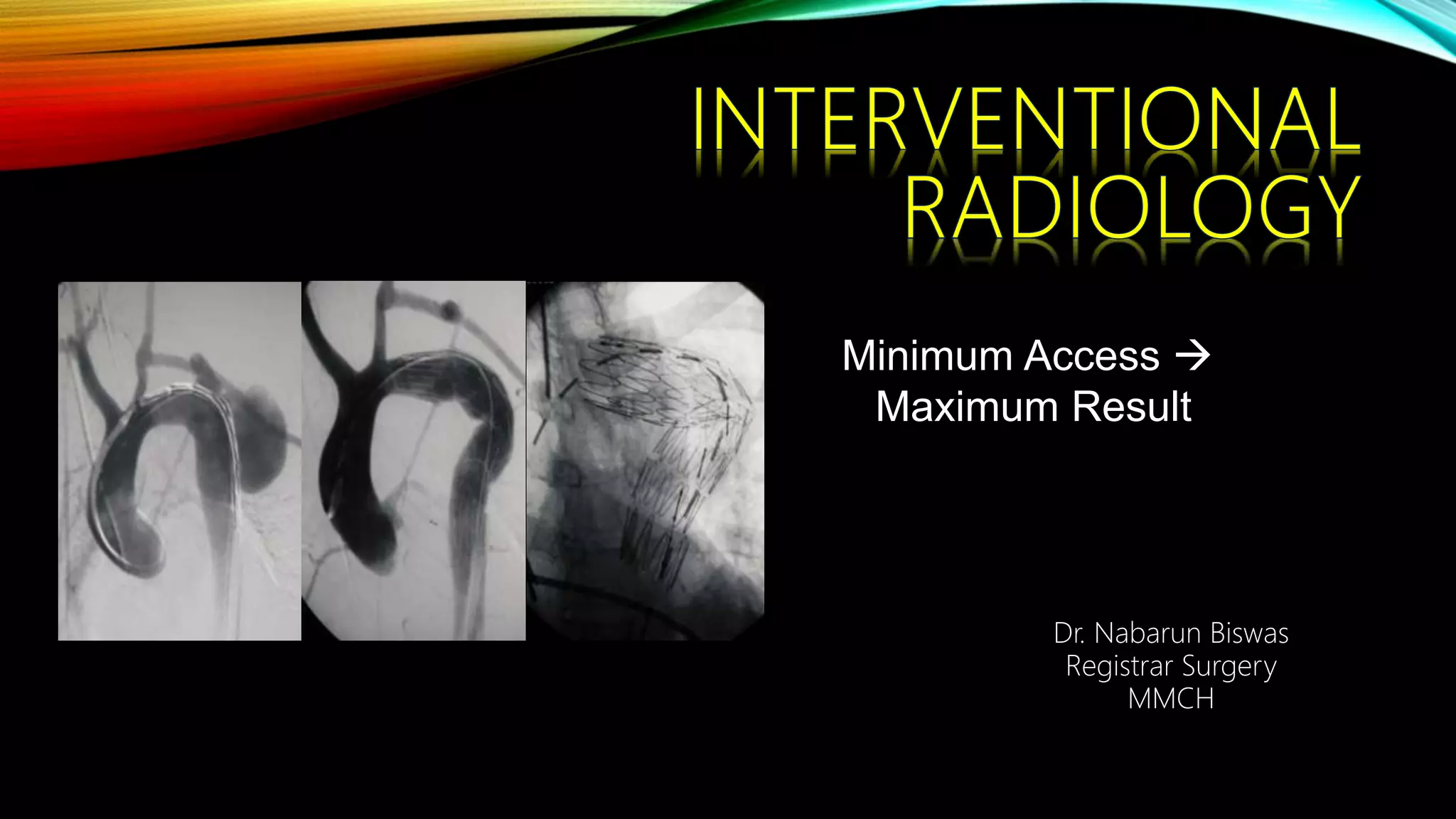
Minimum Access 
Maximum Result
Dr. Nabarun Biswas
Registrar Surgery
MMCH
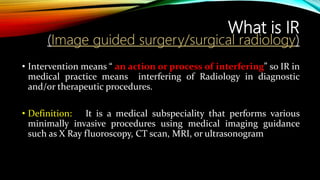
What is IR
(Image guided surgery/surgical radiology)
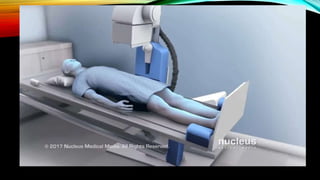
• Intervention means “ an action or process of interfering” so IR in
medical practice means interfering of Radiology in diagnostic
and/or therapeutic procedures.
• Definition: It is a medical subspeciality that performs various
minimally invasive procedures using medical imaging guidance
such as X Ray fluoroscopy, CT scan, MRI, or ultrasonogram
History of IR
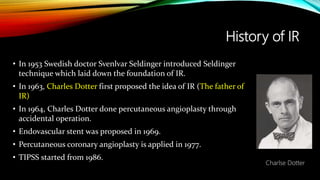
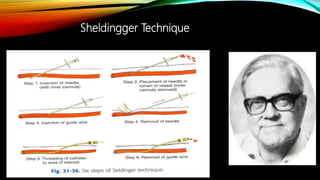
• In 1953 Swedish doctor Svenlvar Seldinger introduced Seldinger
technique which laid down the foundation of IR.
• In 1963, Charles Dotter first proposed the idea of IR (The father of
IR)
• In 1964, Charles Dotter done percutaneous angioplasty through
accidental operation.
• Endovascular stent was proposed in 1969.
• Percutaneous coronary angioplasty is applied in 1977.
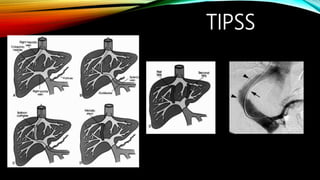
• TIPSS started from 1986.
Charlse Dotter
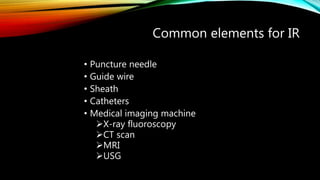
Common elements for IR
• Puncture needle
• Guide wire
• Sheath
• Catheters
• Medical imaging machine
X-ray fluoroscopy
CT scan
MRI
USG
Prerequisite
• Informed consent
• Investigations
Platelet > 60,000/cm
INR < 1.5
Renal function test
• Fasting: fasting for 2 hours
• IV access & hydration
• Parenteral Antibiotics
Types of IR
1. Diagnostic
2. Therapeutic
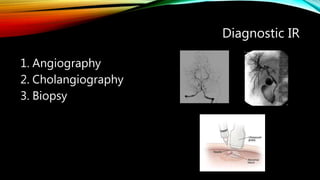
Diagnostic IR
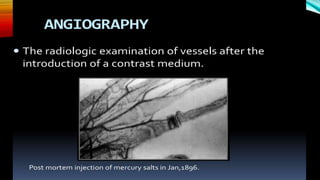
1. Angiography
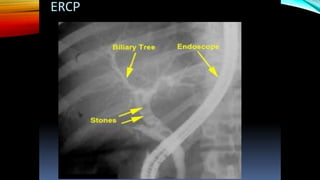
2. Cholangiography
3. Biopsy
Therapeutic IR
1. Vascular
2. Biliary intervention
3. Cather placement
4. Ablative
5. Genitourinary
6. Pain management
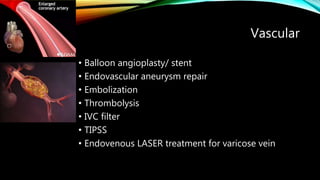
Vascular
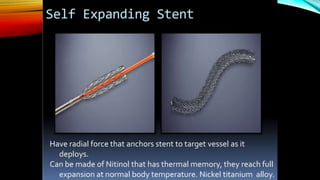
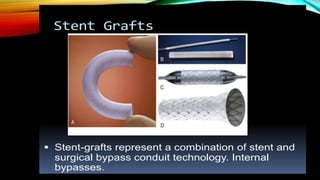
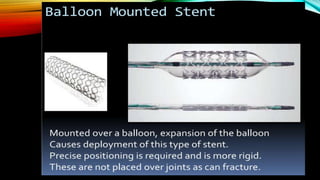
• Balloon angioplasty/ stent
• Endovascular aneurysm repair
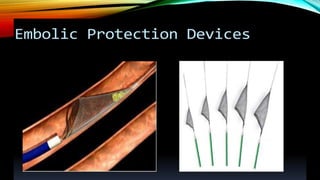
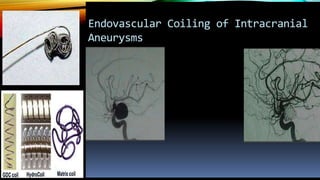
• Embolization
• Thrombolysis
• IVC filter
• TIPSS
• Endovenous LASER treatment for varicose vein
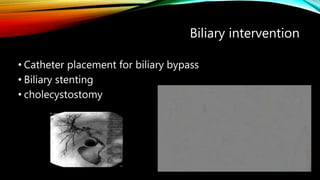
Biliary intervention
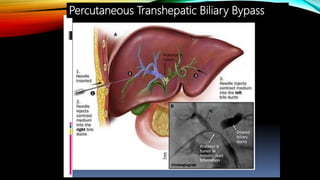
• Catheter placement for biliary bypass
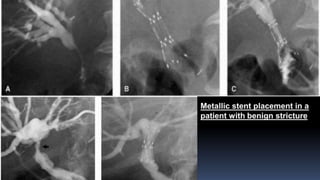
• Biliary stenting
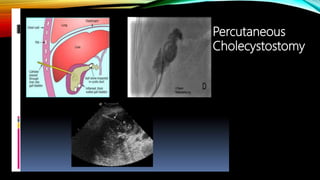
• cholecystostomy
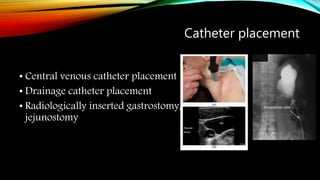
Catheter placement
• Central venous catheter placement
• Drainage catheter placement
• Radiologically inserted gastrostomy/
jejunostomy
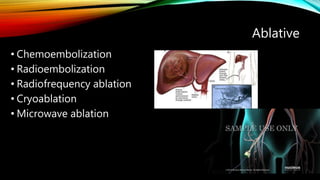
Ablative
• Chemoembolization
• Radioembolization
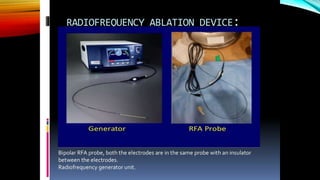
• Radiofrequency ablation
• Cryoablation
• Microwave ablation
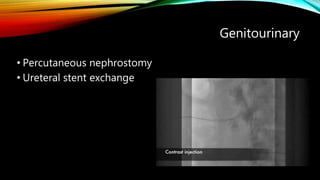
Genitourinary
• Percutaneous nephrostomy
• Ureteral stent exchange
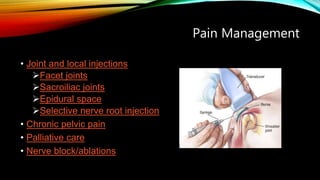
Pain Management
• Joint and local injections
Facet joints
Sacroiliac joints
Epidural space
Selective nerve root injection
• Chronic pelvic pain
• Palliative care
• Nerve block/ablations
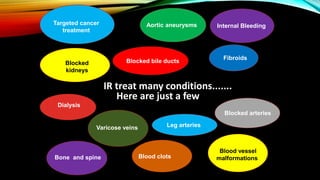
Bone and spine
Leg arteries
Blocked arteries
Internal Bleeding
Targeted cancer
treatment
Dialysis
Blocked bile ducts
Aortic aneurysms
Blood clots
Blood vessel
malformations
Fibroids
Varicose veins
Blocked
kidneys
IR treat many conditions.......
Here are just a few
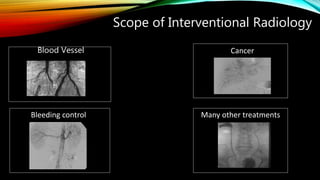
Scope of Interventional Radiology
Blood Vessel
Bleeding control Many other treatments
Cancer
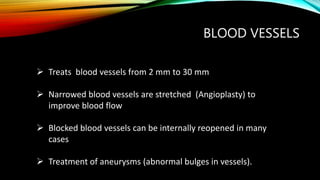
BLOOD VESSELS
 Treats blood vessels from 2 mm to 30 mm
 Narrowed blood vessels are stretched (Angioplasty) to
improve blood flow
 Blocked blood vessels can be internally reopened in many
cases
 Treatment of aneurysms (abnormal bulges in vessels).
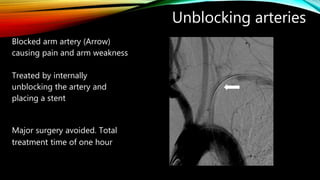
Unblocking arteries
Blocked arm artery (Arrow)
causing pain and arm weakness
Treated by internally
unblocking the artery and
placing a stent
Major surgery avoided. Total
treatment time of one hour
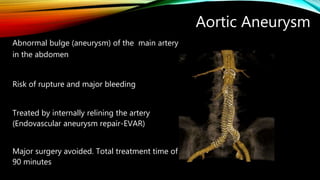
Aortic Aneurysm
Abnormal bulge (aneurysm) of the main artery
in the abdomen
Risk of rupture and major bleeding
Treated by internally relining the artery
(Endovascular aneurysm repair-EVAR)
Major surgery avoided. Total treatment time of
90 minutes
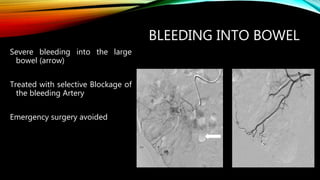
BLEEDING INTO BOWEL
Severe bleeding into the large
bowel (arrow)
Treated with selective Blockage of
the bleeding Artery
Emergency surgery avoided
CANCER
Treatment
• Thermal destruction of small
cancers using image guided
needles
• Targeted chemotherapy into
blood vessels supplying the
tumour
Symptom relief
• Stent insertion into the bowel for relief
of obstruction
• Insertion of lines for delivery of
chemotherapy and nutrition
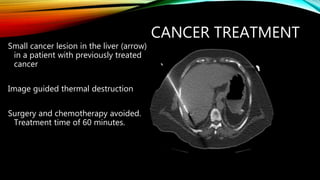
CANCER TREATMENT
Small cancer lesion in the liver (arrow)
in a patient with previously treated
cancer
Image guided thermal destruction
Surgery and chemotherapy avoided.
Treatment time of 60 minutes.
COMPLICATIONS
• Bacteremia
• Septicemia
• Haemorrhage
• Pancreatitis
• Pneumothorax
• Tumor seedling
BENEFITS
8 out of 10 procedures use skin incisions
smaller than 5 millimetres
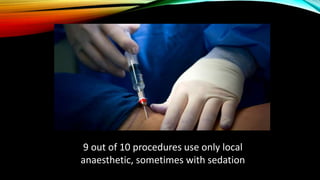
9 out of 10 procedures use only local
anaesthetic, sometimes with sedation
And it’s often a less invasive option than
traditional surgical procedures
Up to 8 out of 10 patients go home
the same day
Some Pictorials
of
interventional
Radiology
Sheldingger Technique
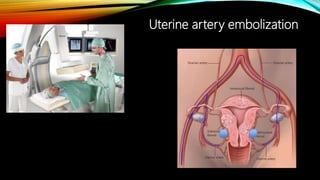
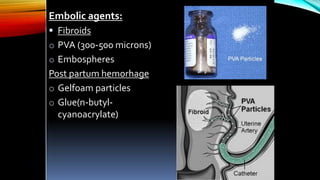
Uterine artery embolization
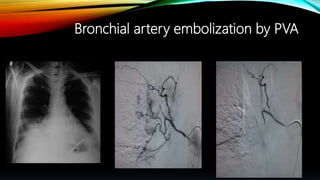
Bronchial artery embolization by PVA
Percutaneous Transhepatic Biliary Bypass
Percutaneous
Cholecystostomy
TIPSS
Stereotactic Biopsy
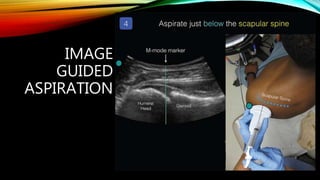
IMAGE
GUIDED
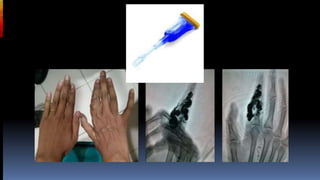
ASPIRATION
Take home
massage
(Points to write in
SAQ)
• What is IR
• History
• Types of IR
• Common elements
• Scope of IR
• Prerequisite
• Complications
• Benefits
• Conclusion
TOO MANY PROCEDURES...
…..TOO LITTLE SPACE
Thank You

Interventional radiology

Editor's Notes

  • #20 Add endovascular scope statement convert to case story
  • #22 GI bleeding title
  • #27 8 Out of 10
  • #28 9 out of 10
  • #30 Use second image and 9 out of 10 proceudres in a day