

Presented by
Saravanan.S
M.Pharm (Pharmaceutics)
Sri Ramachandra College Of Pharmacy
saravanan71093@gmail.com
Introduction
Definition:
Topical delivery is an attractive route for local
and systemic treatment. The delivery of drugs onto the skin is
recognized as an effective means of therapy for local
dermatologic diseases. It can penetrate deeper into skin and
hence give better absorption.
Topical delivery includes two basic types of product:
1. External topicals that are spread, sprayed, or
otherwise dispersed on to cutaneous tissues to cover the
affected area.
2. Internal topicals that are applied to the mucous
membrane orally, vaginally or on anorectal tissues for local
activity.
2
ADVANTAGES OF TOPICAL DRUG DELIVERY SYSTEMS
 Avoidance of first pass metabolism.
 Convenient and easy to apply.
 Avoidance of the risks and inconveniences of intravenous
therapy and of the varied conditions of absorption, like pH
changes, presence of enzymes, gastric emptying time etc.
 Achievement of efficacy with lower total daily dosage of
drug by continuous drug input.
 Avoids fluctuation in drug levels, inter- and intrapatient
variations.
 Provide suitability for self-medication.
3
Ability to easily terminate the medications, when
needed.
A relatively large area of application in comparison
with buccal or nasal cavity
Ability to deliver drug more selectively to a specific site.
Avoidance of gastro-intestinal incompatibility.
Providing utilization of drugs with short biological half-
life, narrow therapeutic window.
Improving physiological and pharmacological response.
Improve patient compliance.
ADVANTAGES OF TOPICAL DRUG DELIVERY SYSTEMS
4
Disadvantages of Topical Drug Delivery Systems
 Skin irritation of contact dermatitis may occur due
to the drug and/or excipients.
 Poor permeability of some drugs through the skin.
 Possibility of allergenic reactions.
 Can be used only for drugs which require very small
plasma concentration for action
 Enzyme in epidermis may denature the drugs
 Drugs of larger particle size not easy
to absorb through the skin
5
6
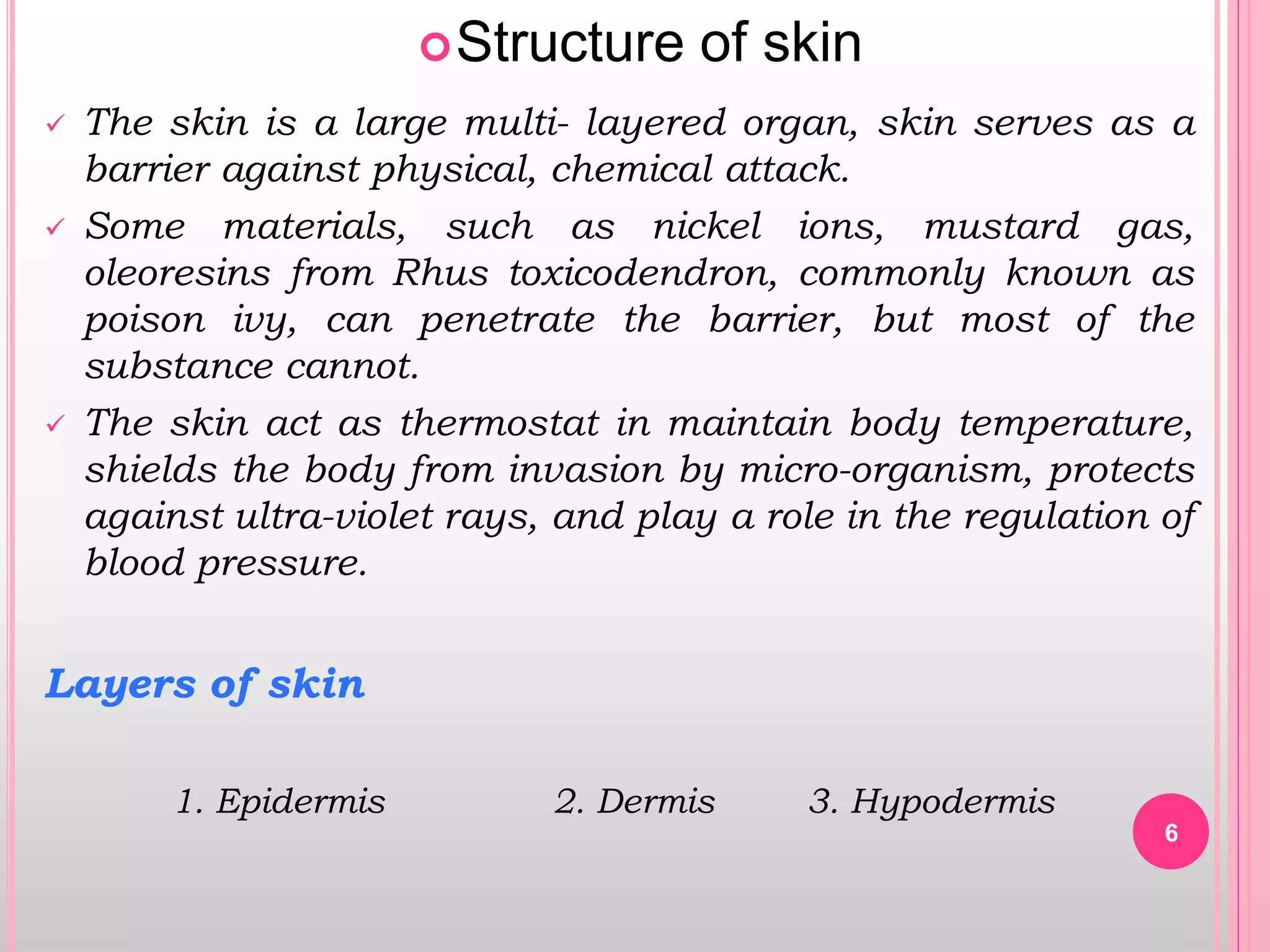
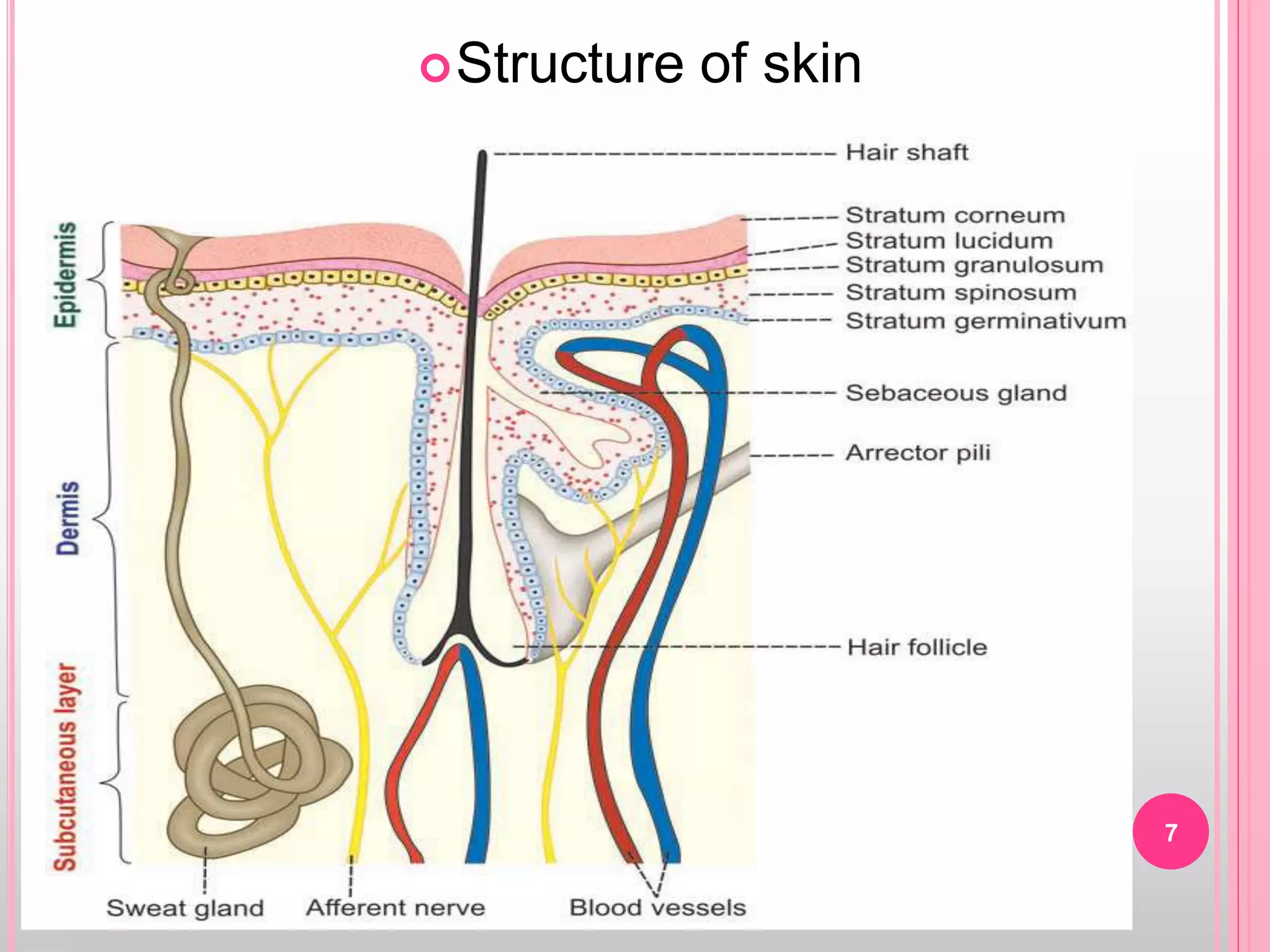
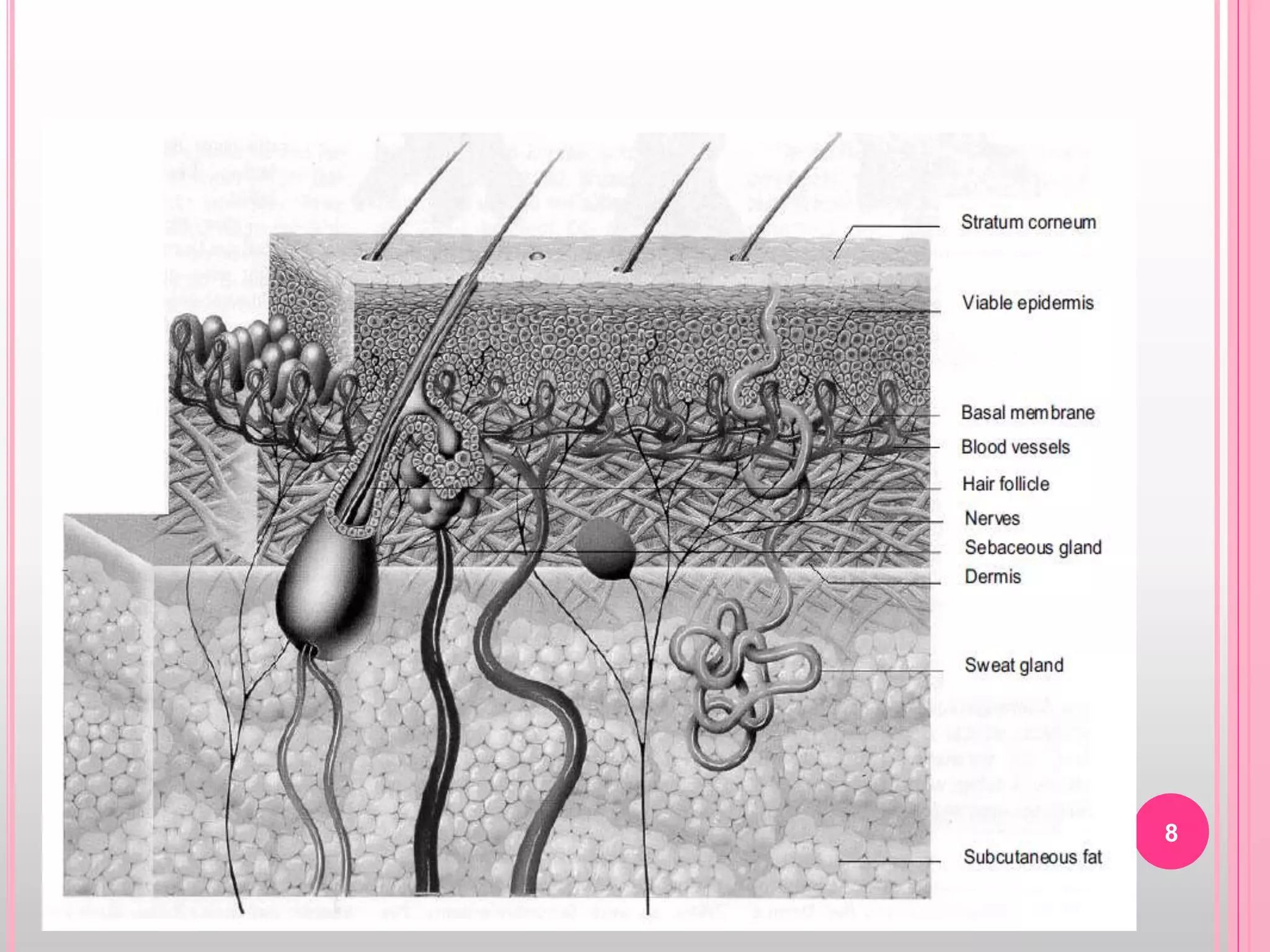
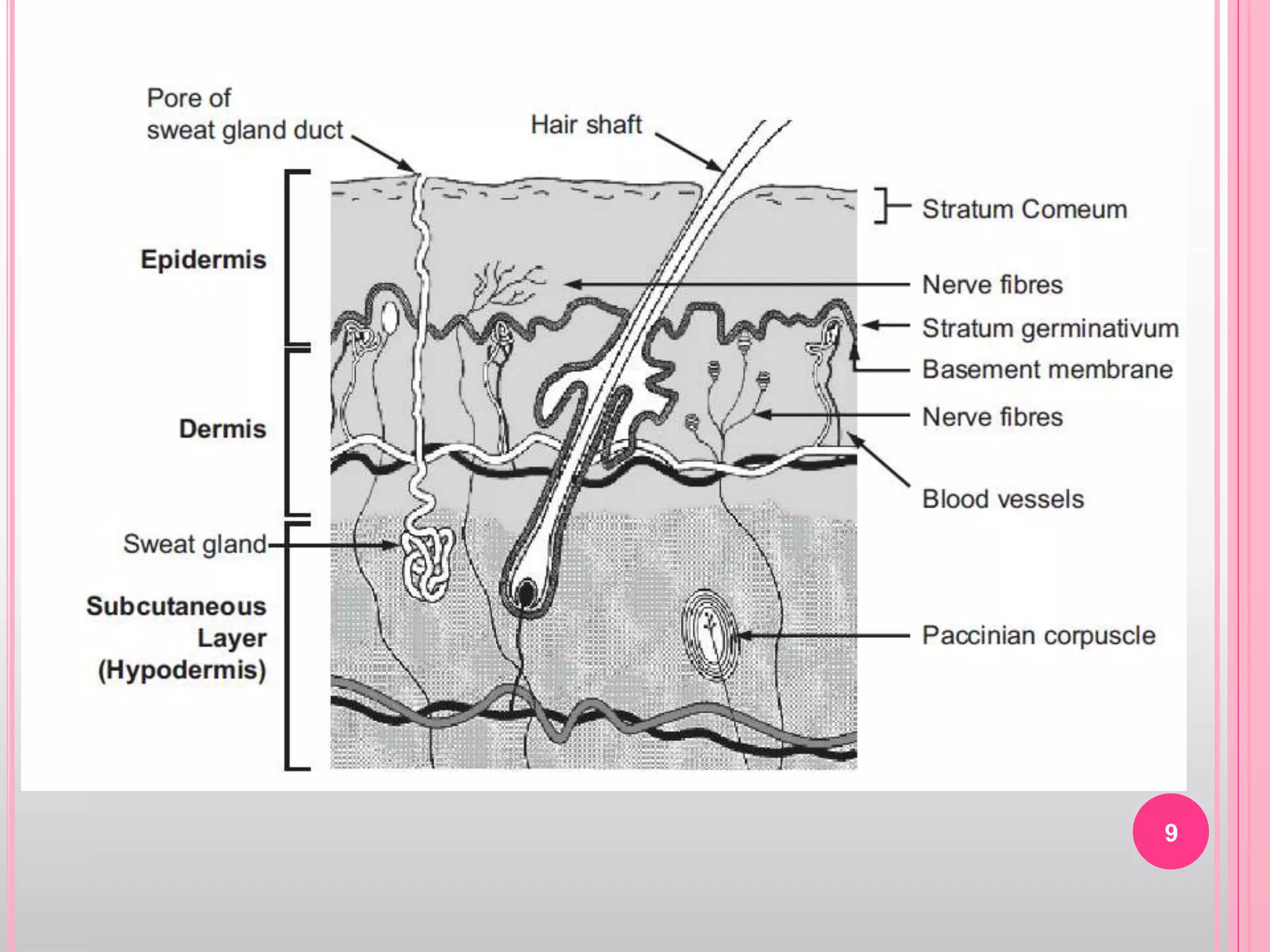
Structure of skin
 The skin is a large multi- layered organ, skin serves as a
barrier against physical, chemical attack.
 Some materials, such as nickel ions, mustard gas,
oleoresins from Rhus toxicodendron, commonly known as
poison ivy, can penetrate the barrier, but most of the
substance cannot.
 The skin act as thermostat in maintain body temperature,
shields the body from invasion by micro-organism, protects
against ultra-violet rays, and play a role in the regulation of
blood pressure.
Layers of skin
1. Epidermis 2. Dermis 3. Hypodermis
Structure of skin
7
8
9
10
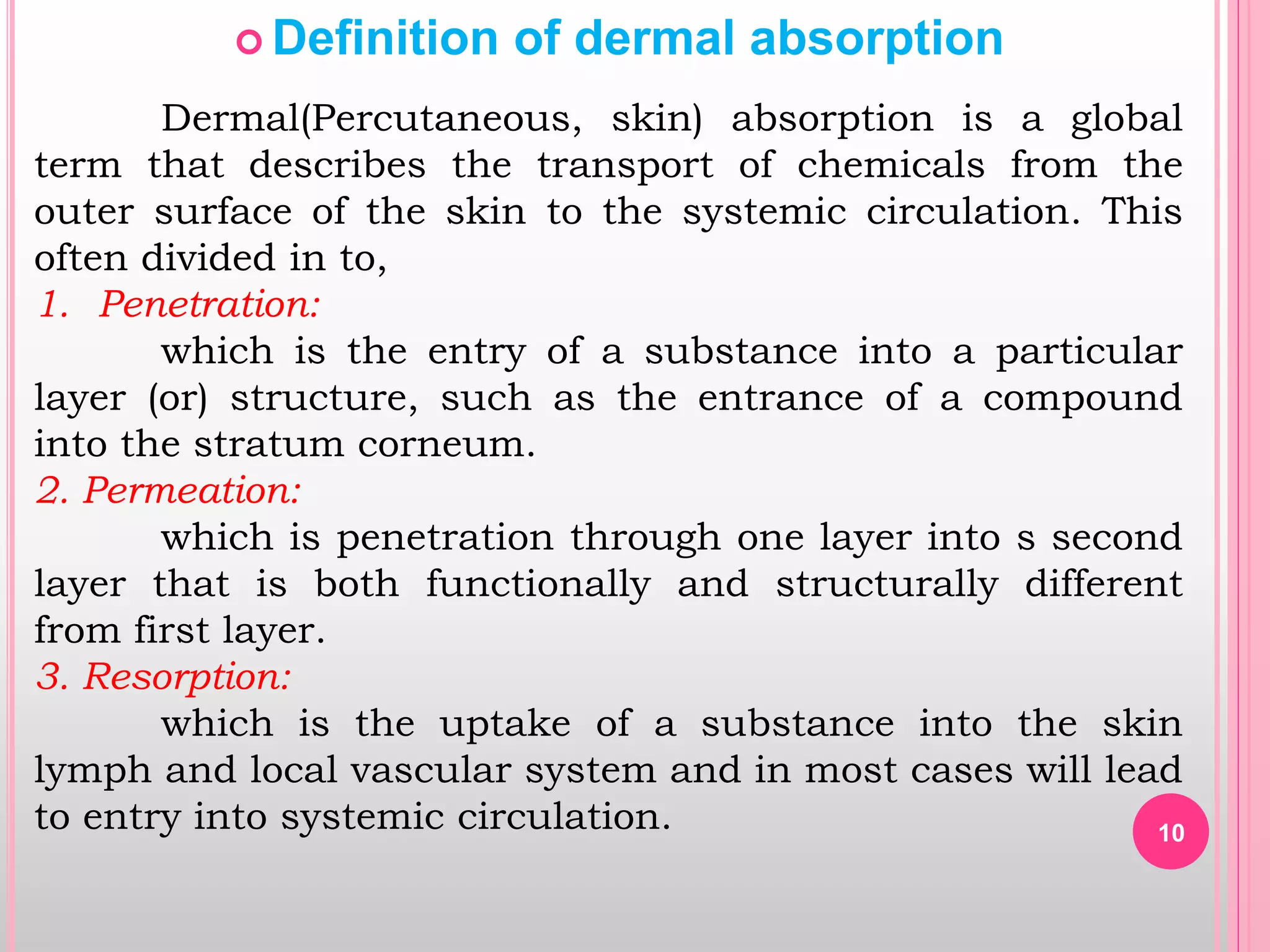
 Definition of dermal absorption
Dermal(Percutaneous, skin) absorption is a global
term that describes the transport of chemicals from the
outer surface of the skin to the systemic circulation. This
often divided in to,
1. Penetration:
which is the entry of a substance into a particular
layer (or) structure, such as the entrance of a compound
into the stratum corneum.
2. Permeation:
which is penetration through one layer into s second
layer that is both functionally and structurally different
from first layer.
3. Resorption:
which is the uptake of a substance into the skin
lymph and local vascular system and in most cases will lead
to entry into systemic circulation.
11
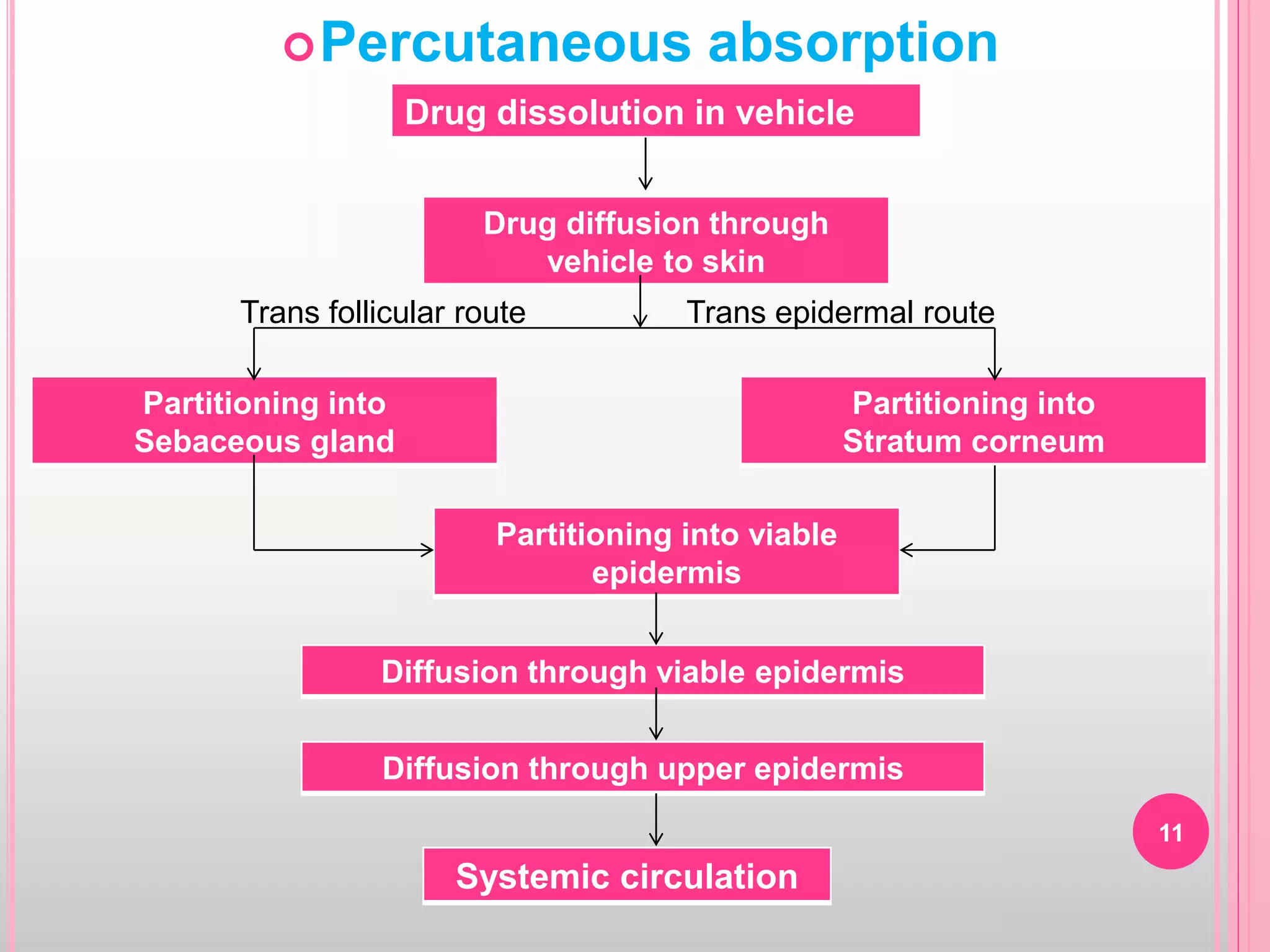
Percutaneous absorption
Drug dissolution in vehicle
Drug diffusion through
vehicle to skin
Partitioning into
Stratum corneum
Partitioning into
Sebaceous gland
Partitioning into viable
epidermis
Diffusion through viable epidermis
Diffusion through upper epidermis
Systemic circulation
Trans follicular route Trans epidermal route
12
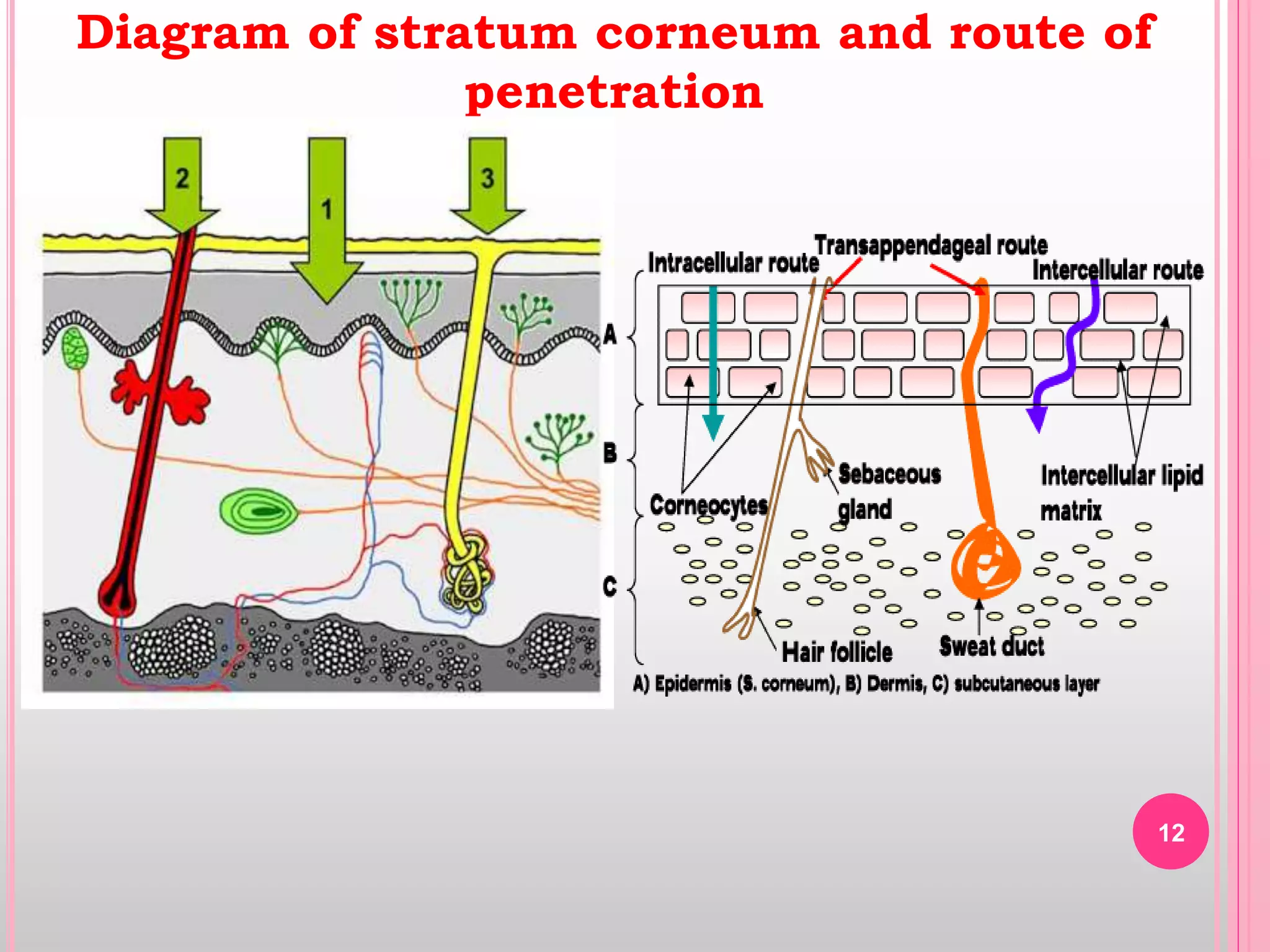
Diagram of stratum corneum and route of
penetration
13
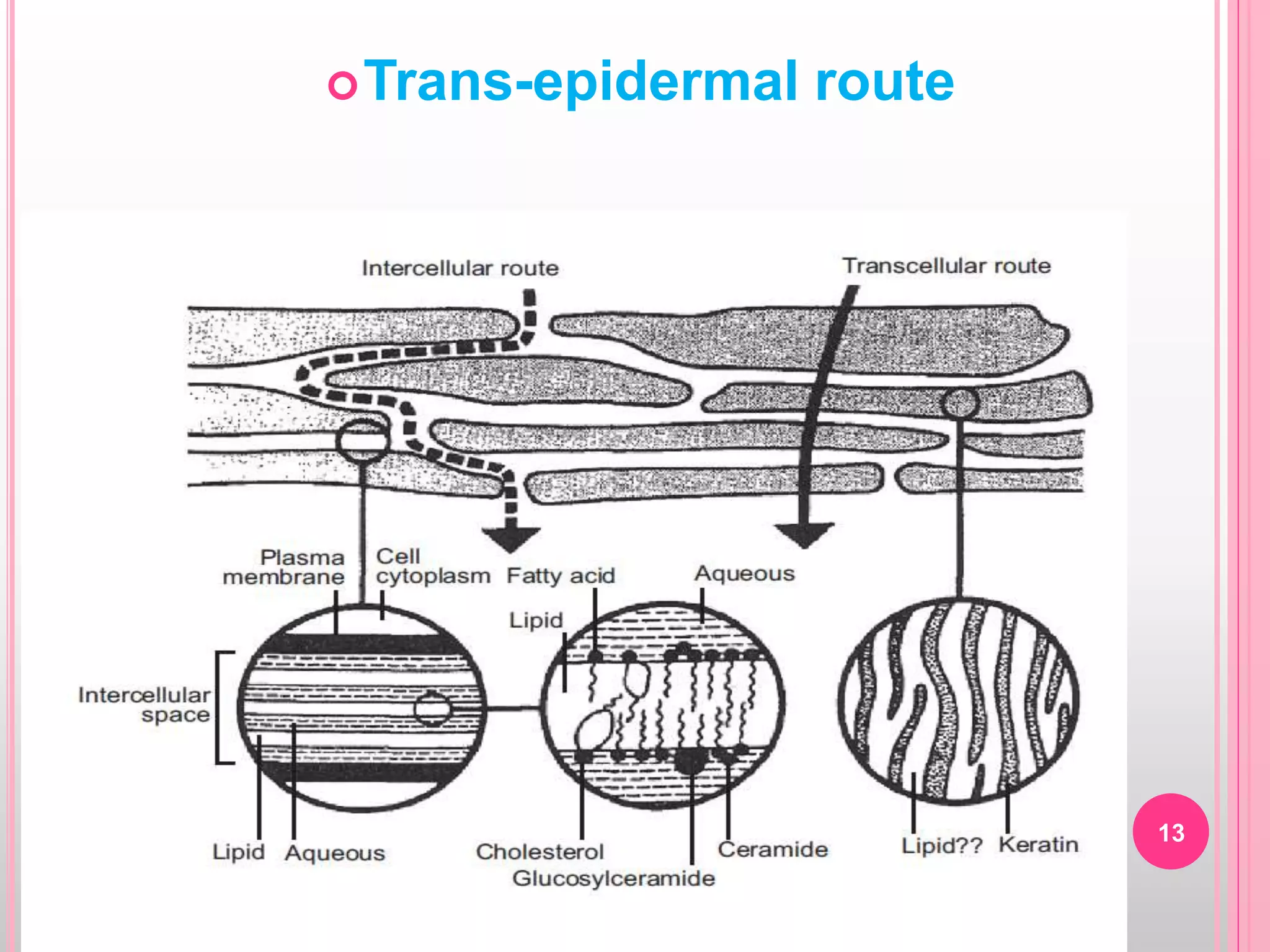
Trans-epidermal route
14
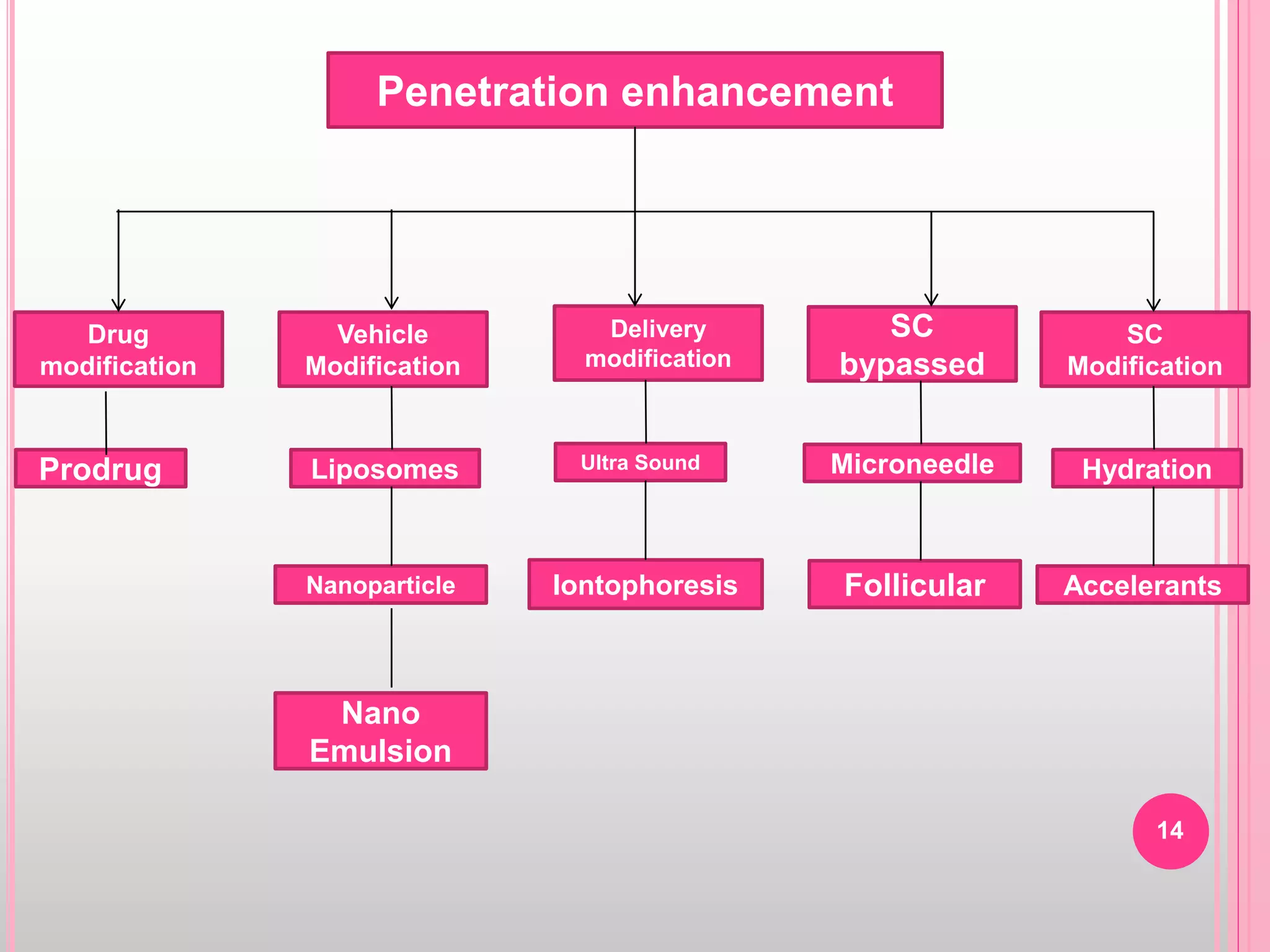
Penetration enhancement
Prodrug
Drug
modification
Liposomes
Nanoparticle
Nano
Emulsion
Vehicle
Modification
Hydration
Accelerants
SC
Modification
Microneedle
Follicular
SC
bypassed
Ultra Sound
Iontophoresis
Delivery
modification
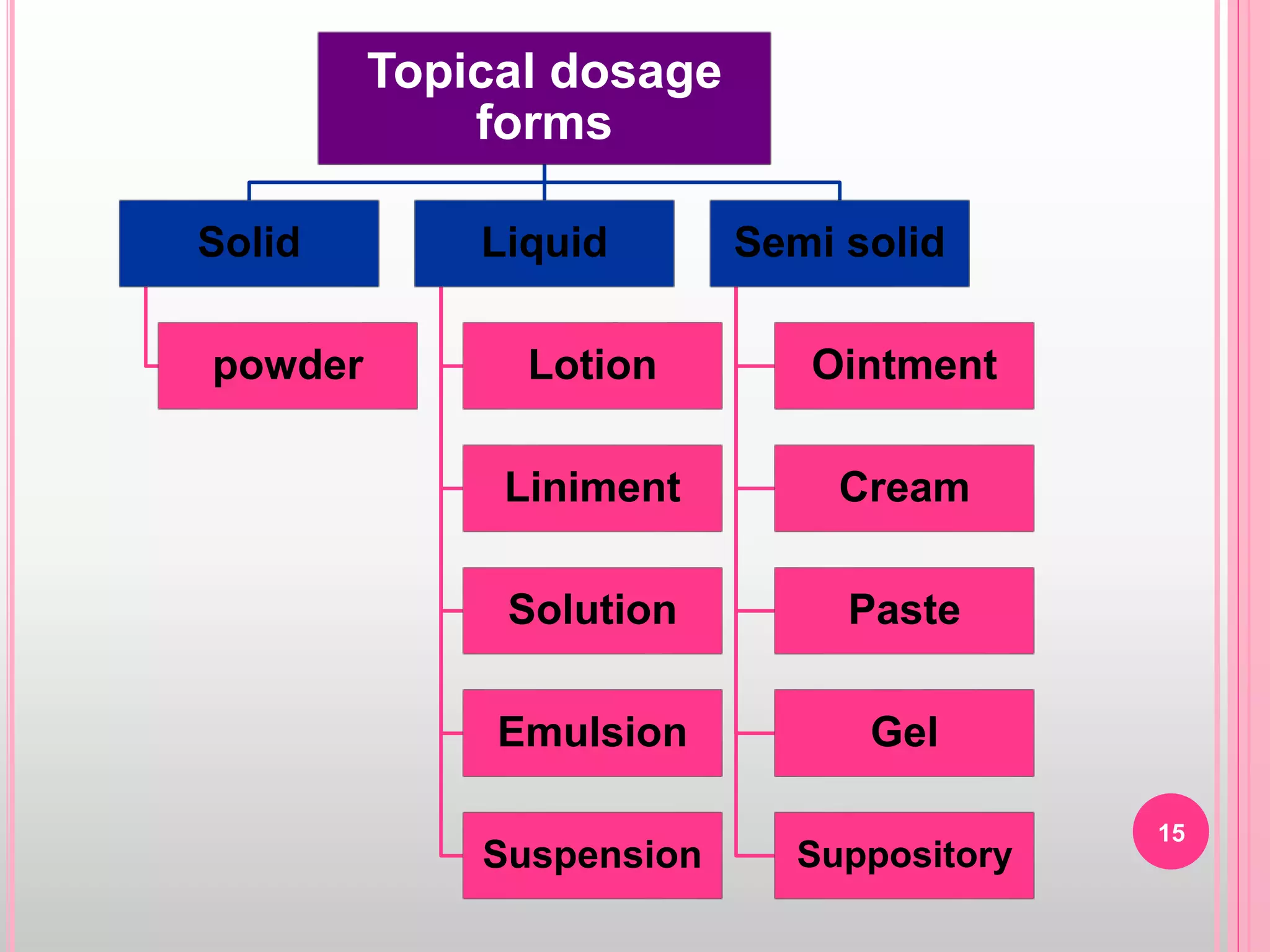
Topical dosage
forms
Solid
powder
Liquid
Lotion
Liniment
Solution
Emulsion
Suspension
Semi solid
Ointment
Cream
Paste
Gel
Suppository
15
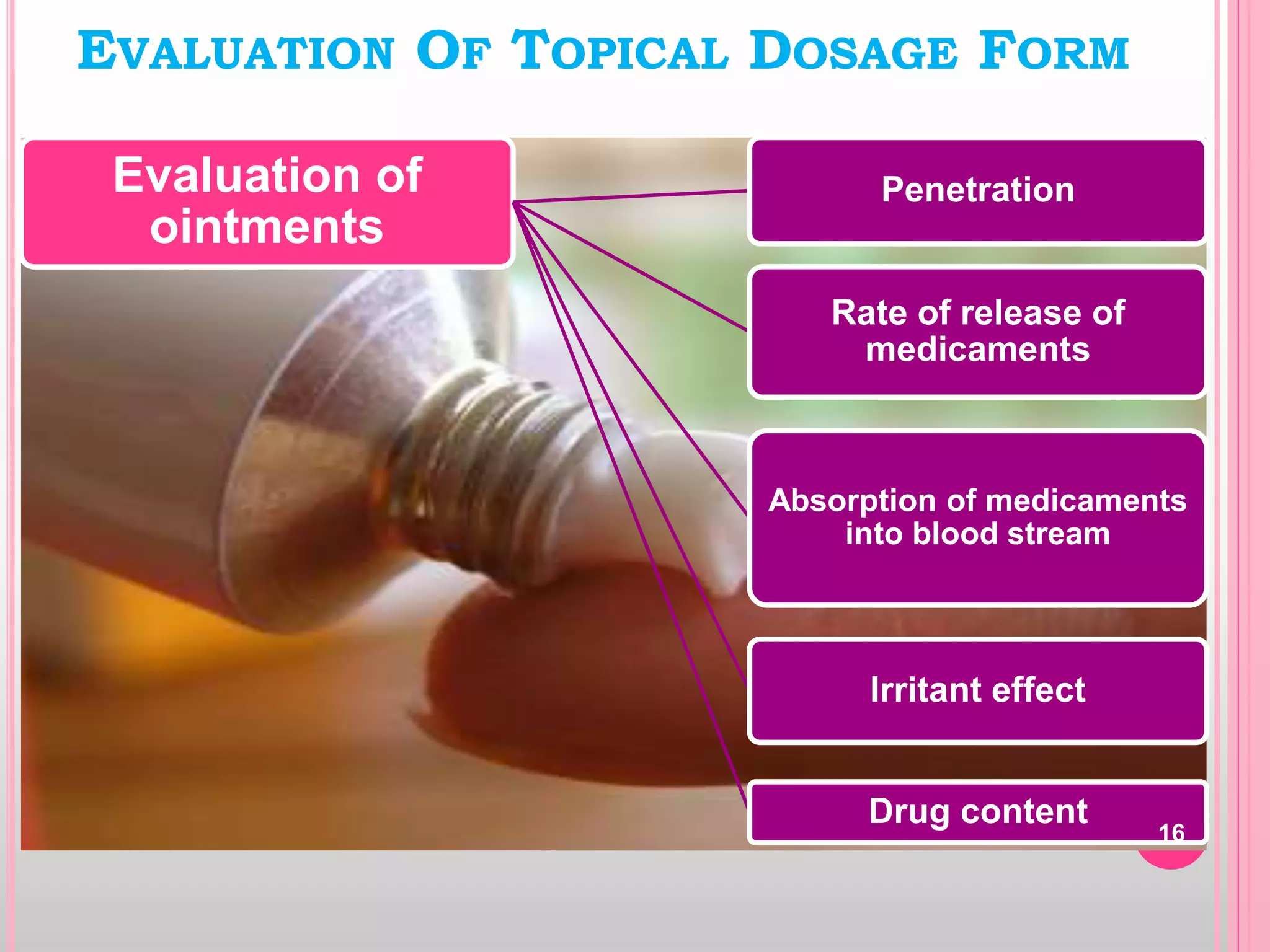
Evaluation of
ointments
Drug content
Penetration
Rate of release of
medicaments
Absorption of medicaments
into blood stream
Irritant effect
EVALUATION OF TOPICAL DOSAGE FORM
16
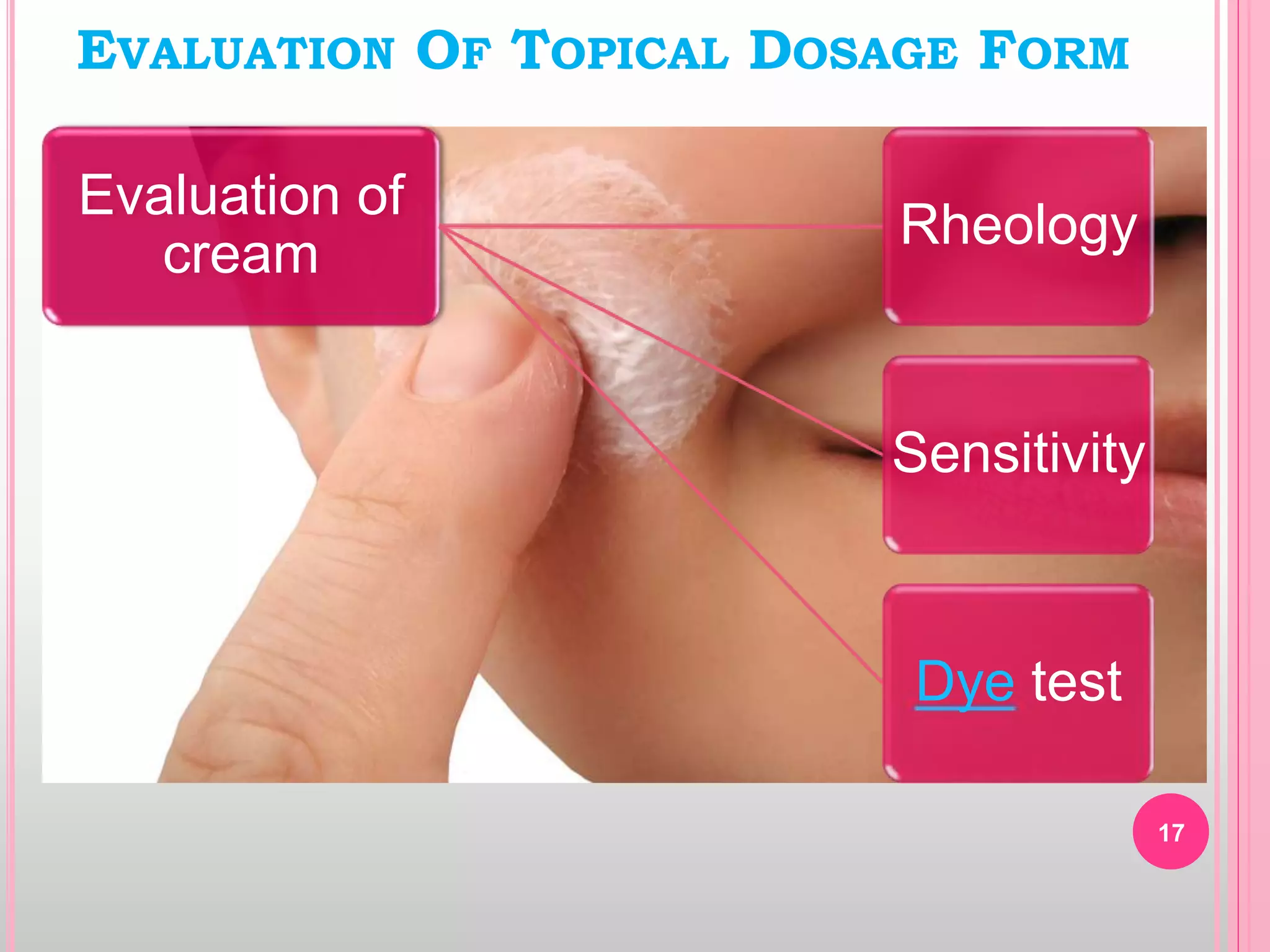
Evaluation of
cream
Rheology
Sensitivity
Dye test
EVALUATION OF TOPICAL DOSAGE FORM
17
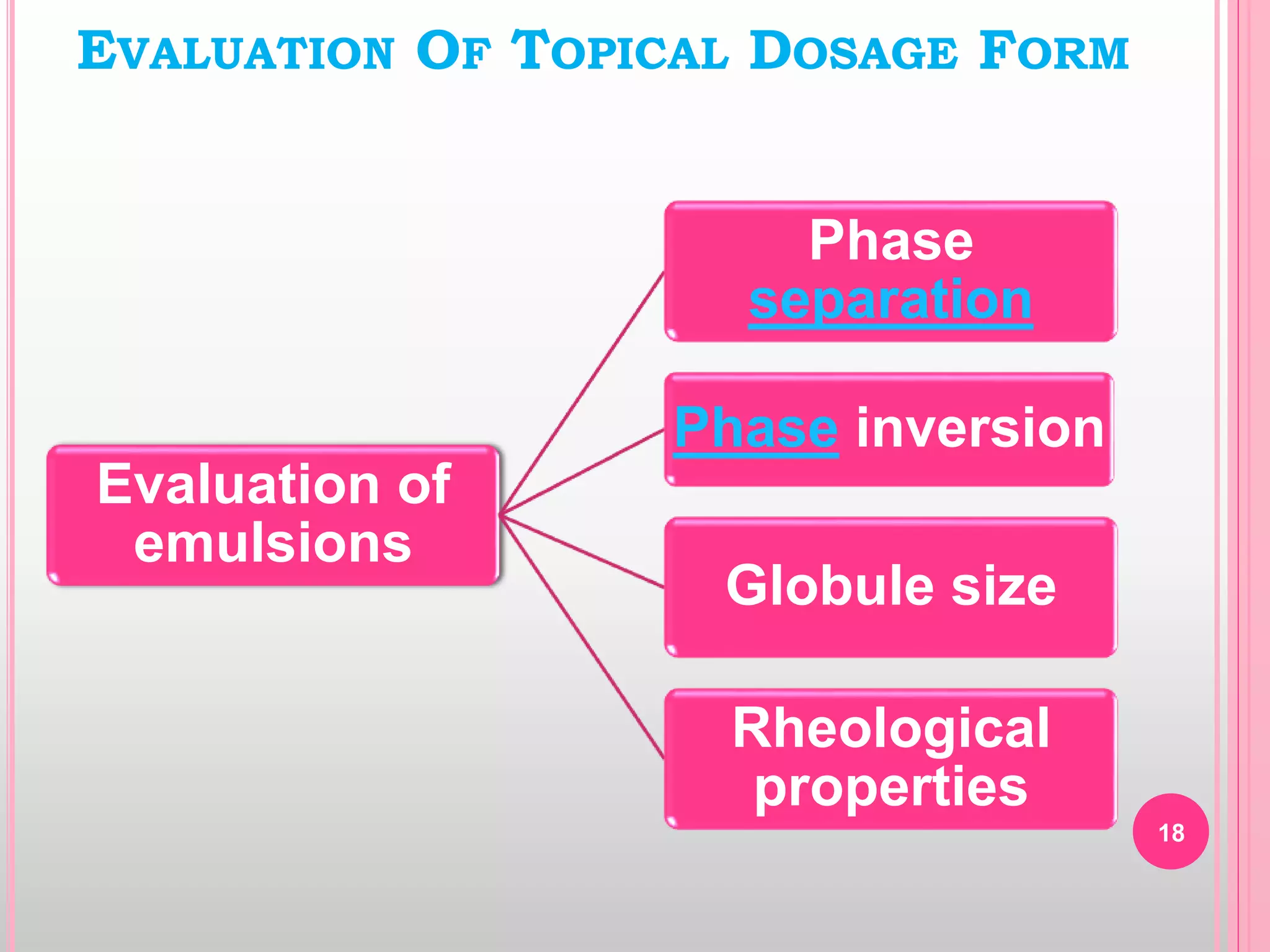
Evaluation of
emulsions
Phase
separation
Phase inversion
Globule size
Rheological
properties
EVALUATION OF TOPICAL DOSAGE FORM
18
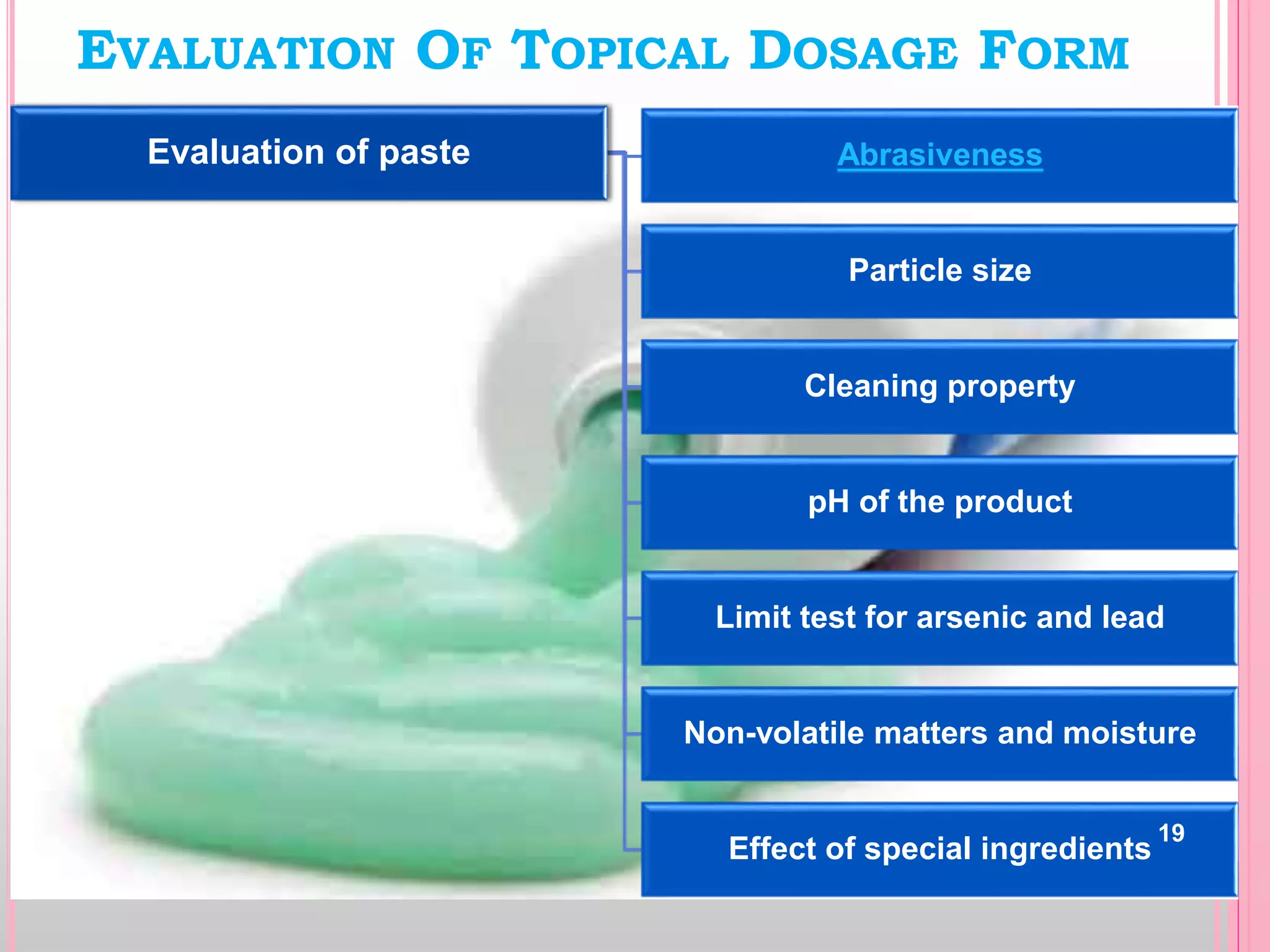
Evaluation of paste Abrasiveness
Particle size
Cleaning property
pH of the product
Limit test for arsenic and lead
Non-volatile matters and moisture
Effect of special ingredients
EVALUATION OF TOPICAL DOSAGE FORM
19
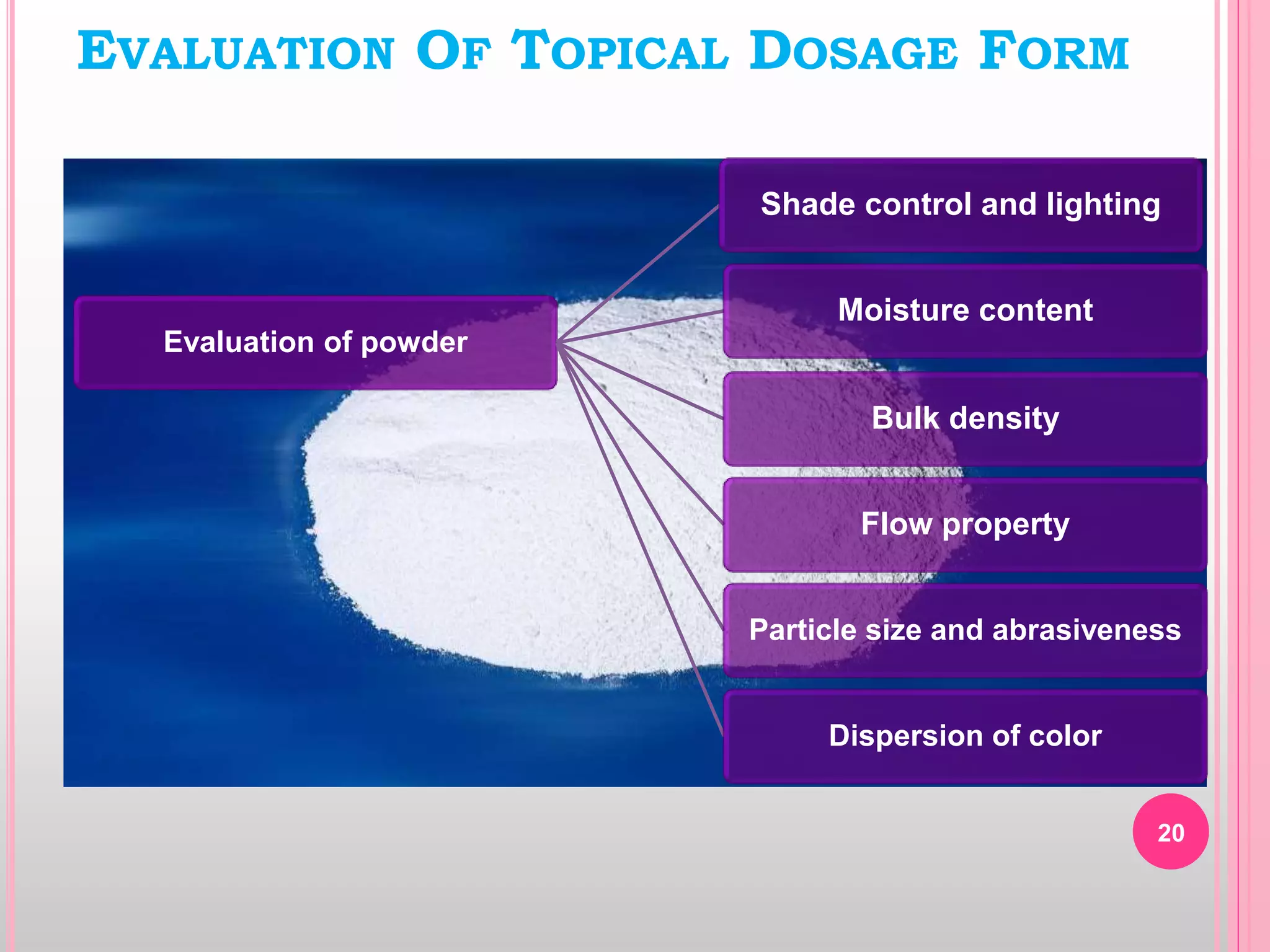
Evaluation of powder
Shade control and lighting
Moisture content
Bulk density
Flow property
Particle size and abrasiveness
Dispersion of color
EVALUATION OF TOPICAL DOSAGE FORM
20
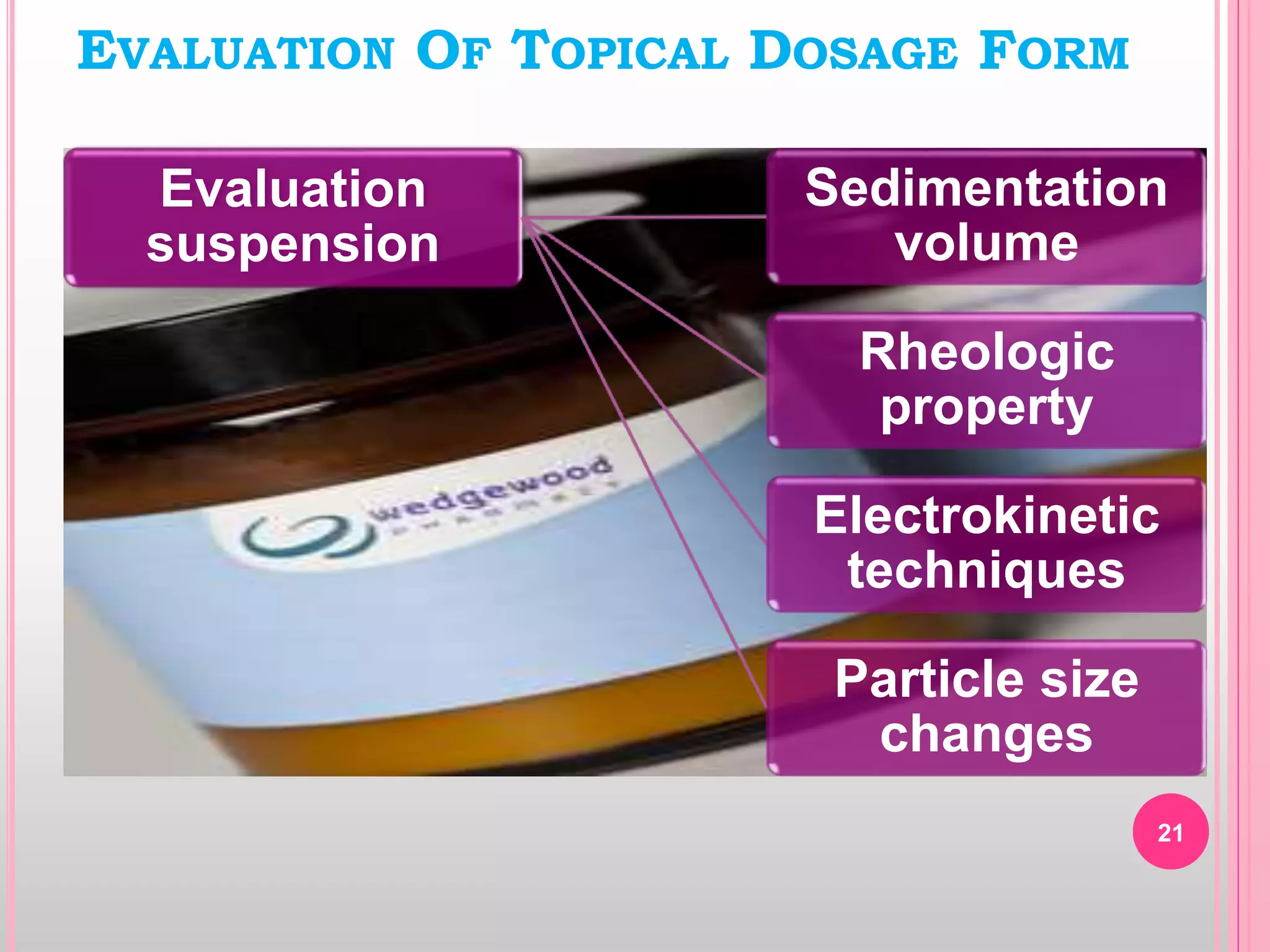
Evaluation
suspension
Sedimentation
volume
Rheologic
property
Electrokinetic
techniques
Particle size
changes
EVALUATION OF TOPICAL DOSAGE FORM
21
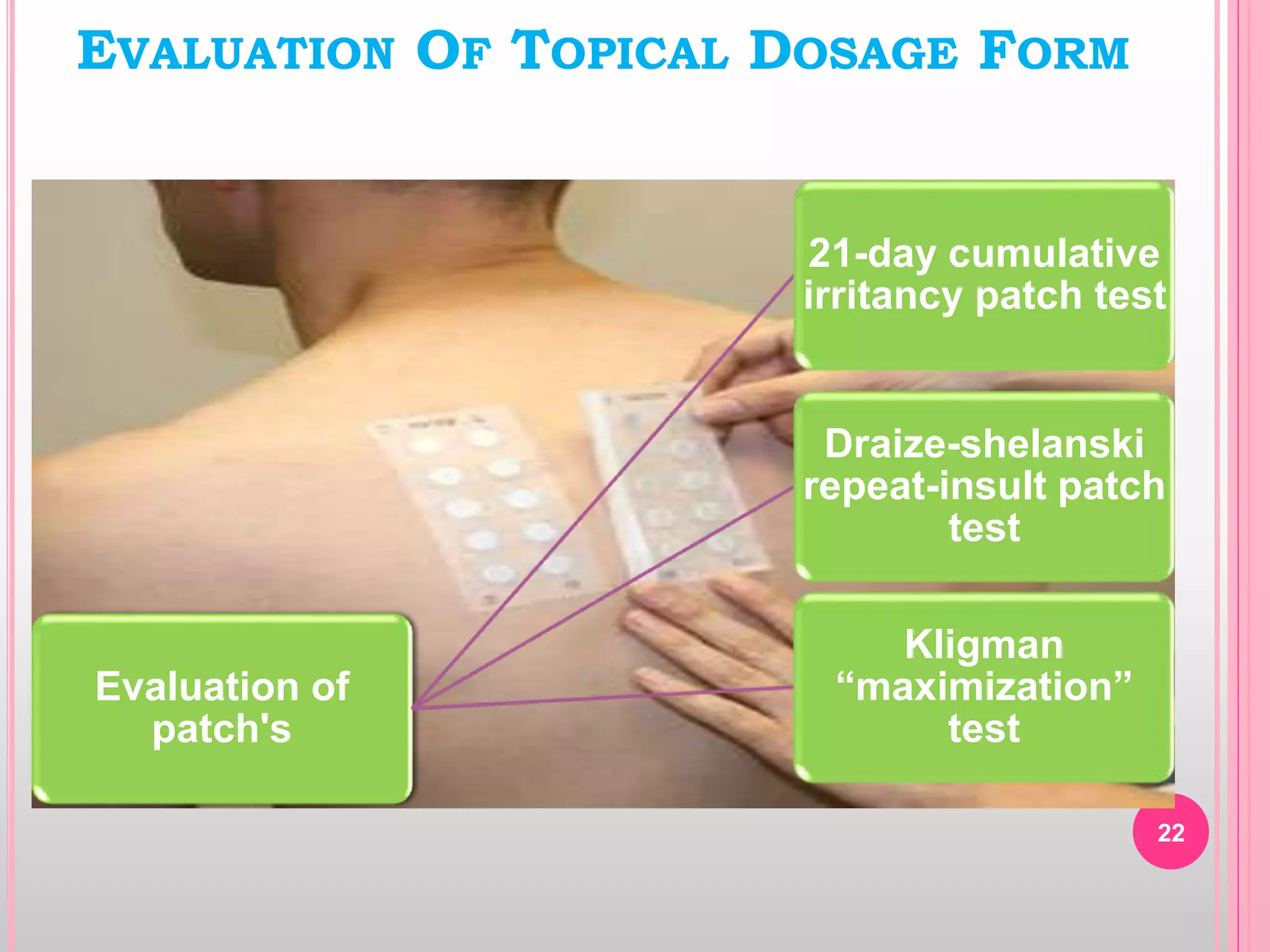
EVALUATION OF TOPICAL DOSAGE FORM
Evaluation of
patch's
21-day cumulative
irritancy patch test
Kligman
“maximization”
test
Draize-shelanski
repeat-insult patch
test
22
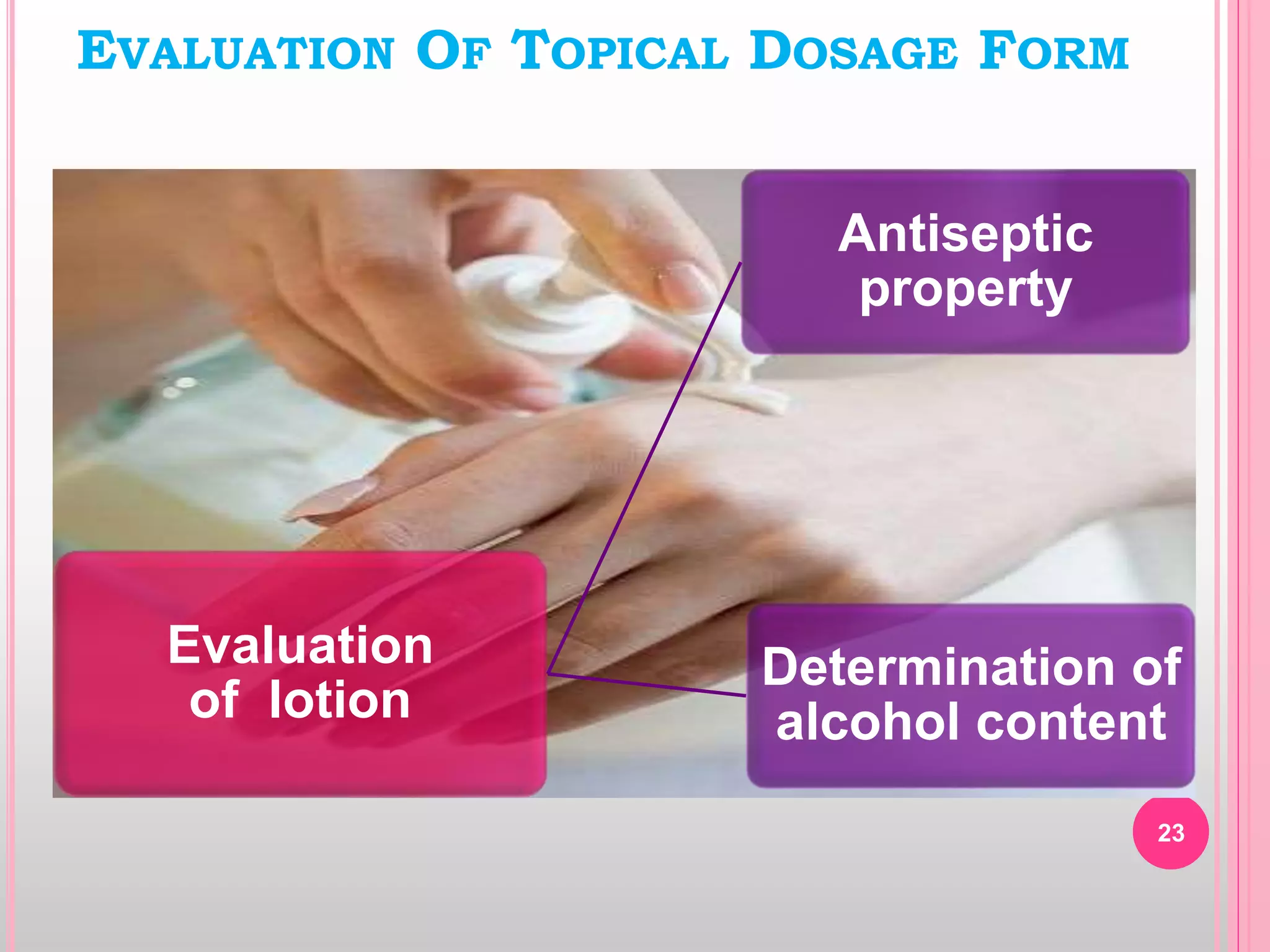
Evaluation
of lotion
Antiseptic
property
Determination of
alcohol content
EVALUATION OF TOPICAL DOSAGE FORM
23
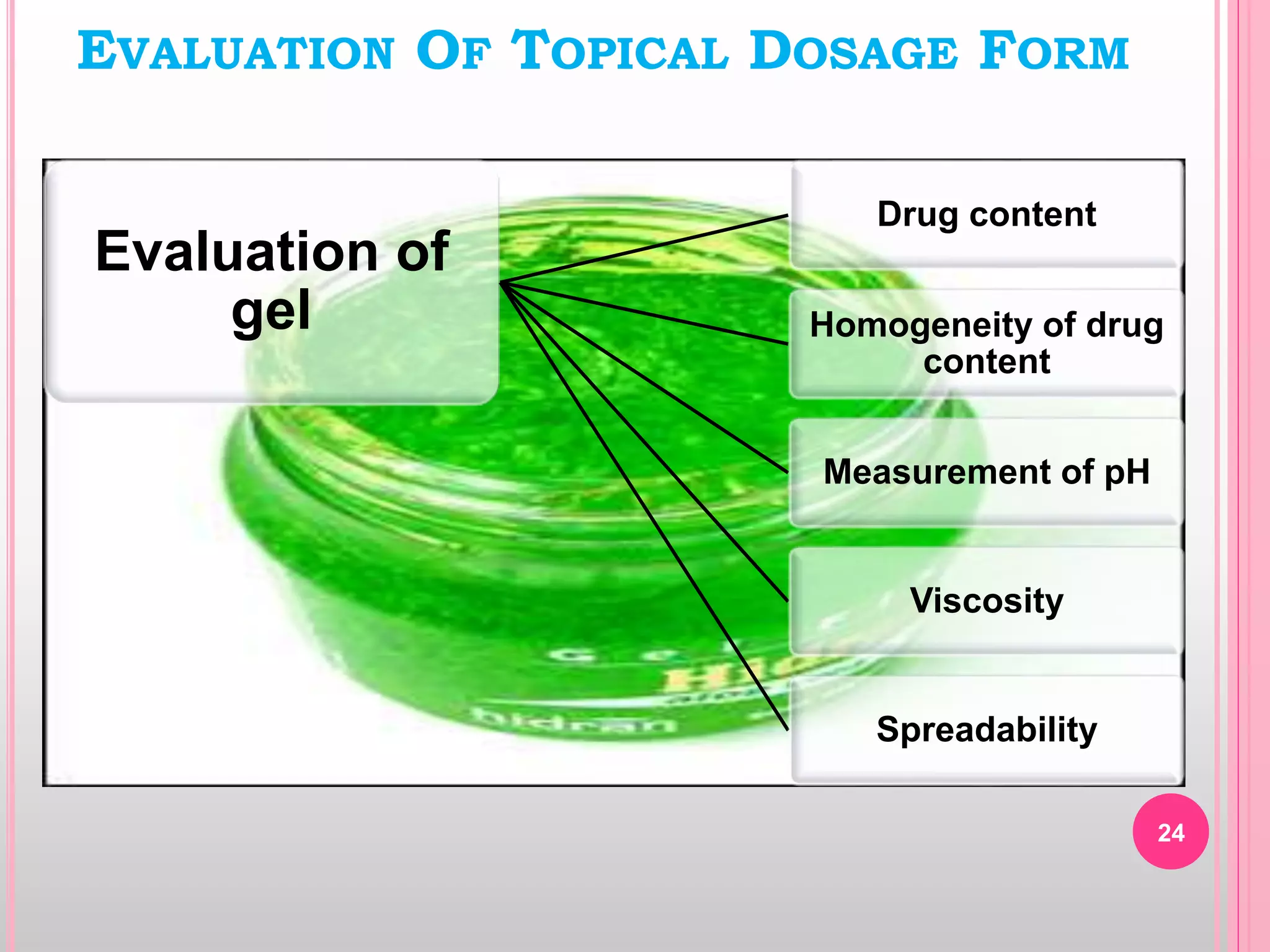
Evaluation of
gel
Drug content
Homogeneity of drug
content
Measurement of pH
Viscosity
Spreadability
EVALUATION OF TOPICAL DOSAGE FORM
24
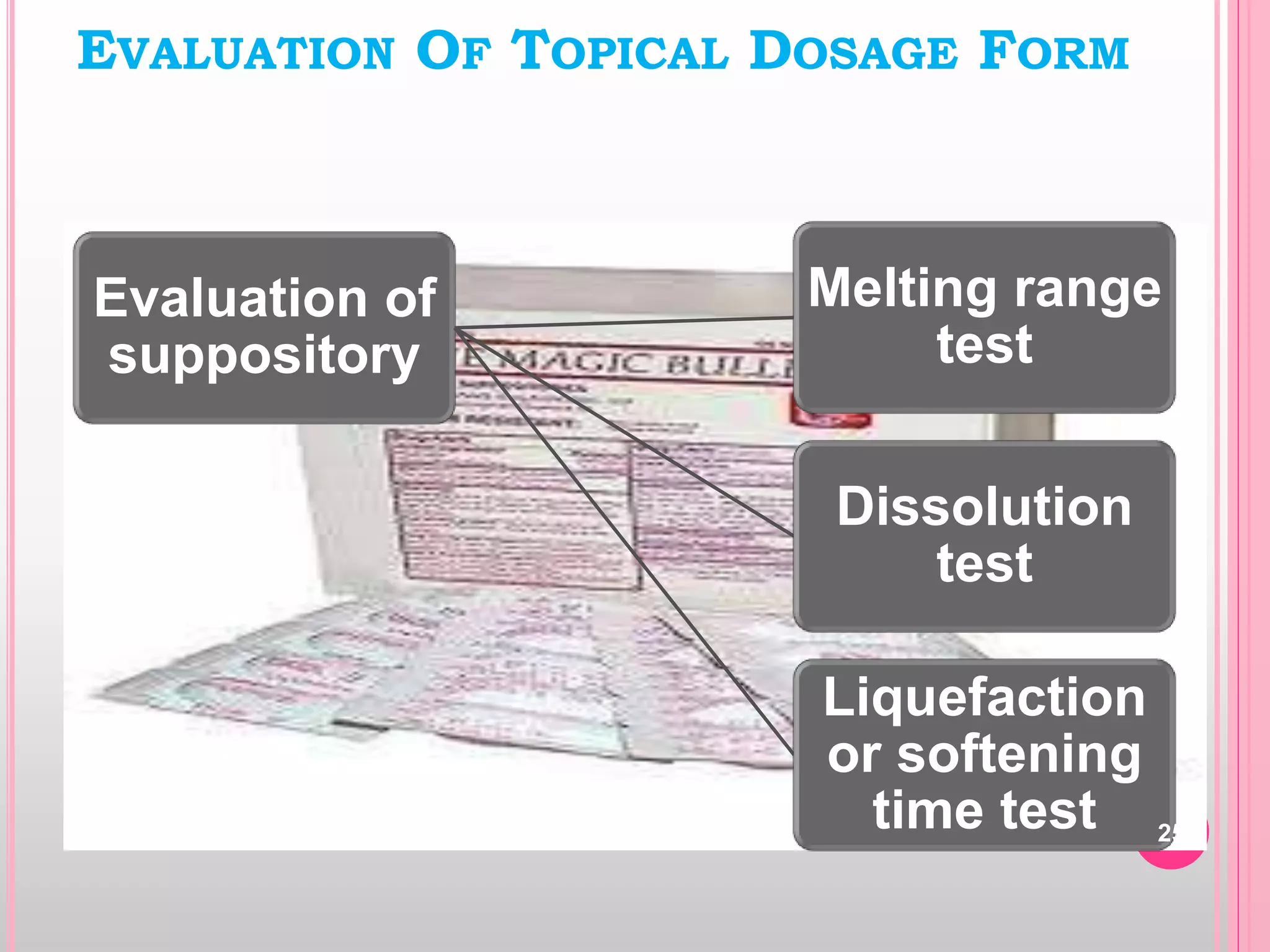
Evaluation of
suppository
Melting range
test
Dissolution
test
Liquefaction
or softening
time test
EVALUATION OF TOPICAL DOSAGE FORM
25
26
Reference
1. Industrial Pharmacy, lachman / liberman’s, Fourth
edition. 714-756.
2. http://pharmaceuticalintelligence.com/tag/transcellular
-pathway/
3. https://en.wikipedia.org/wiki/Transdermal
4. http://www.ncbi.nlm.nih.gov/pmc/articles
5. http://www.pharmainfo.net/evaluation-ointments
6. The Principle and Practice of Modern Cosmetics: 45-48
7. Remington: The Science and Practice of Pharmacy
8. Pharmaceutical dosage form and drug delivery system.
Ansel’s.
27

Performance criteria, evaluation criteria of topical preparation