Objectives of The Chapter
To Understand :
 Meaning of Perception
 Perception process
 sensation Vs perception
 Perception Errors
 conclusion
INTRODUCTION TO
PSYCHOLOGY
Perception
MEANING OF PERCEPTION
 The Process by which we come to know

the world around us…An individual’s
window to the world.
 Perception may be defined as the process
by which an individual selects, organizes and
interprets stimuli into a meaningful and

coherent picture of the environment in which
he lives.
“ WE DON’T SEE THINGS
AS THEY ARE,
WE SEE THINGS AS WE
ARE.”
Any movement you see is an illusion!
The Perceptual Process
1. Sensation
 An individual’s ability to

detect stimuli in the
immediate environment.
2. Selection
 The process a person
uses to eliminate some of
the stimuli that have
been sensed and to
retain others for further
processing.

3. Organization


The process of placing
selected perceptual
stimuli into a framework
for “storage.”

4. Translation


The stage of the
perceptual process at
which stimuli are
interpreted and given
meaning.
Perceptual process

Selecting Stimuli
External factors : Nature,

Receiving Stimuli

Location , Size , contrast,
Movement , repetition , similarity
Internal factors : Learning,
Needs , age , Interest,

(External & Internal)

Interpreting
Attribution ,Stereotyping,
Halo Effect, Projection

Organizing
Figure Background ,
Perceptual Grouping
( similarity, proximity,
closure, continuity)

Response
Covert: Attitudes ,
Motivation,
Feeling
Overt: Behavior
SENSATION
AND
PERCEPTION
SENSATION
 It is the activity of the senses.
 A state of emotional excitement.

TWO FACTORS IN ORDER FOR SENSATION
TO OCCUR:
1. There must be a stimulus.
2. There must be receptors that are
sensitive to the stimulus.
All five
senses
are……………….

 Sight
 Smell
 Hearing
 Feeling
 Taste
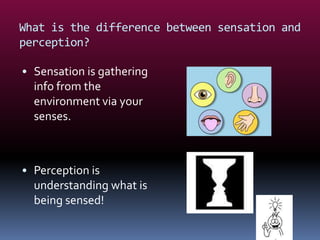
What is the difference between sensation and
perception?
• Sensation is gathering
info from the

environment via your
senses.

• Perception is
understanding what is
being sensed!
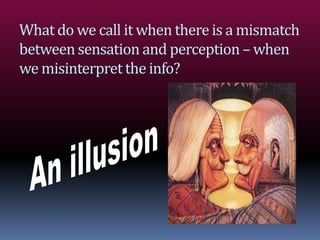
What do we call it when there is a mismatch
between sensation and perception – when
we misinterpret the info?
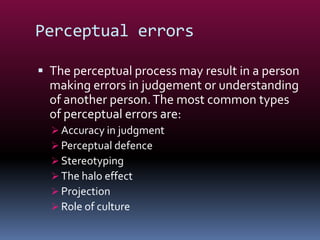
Perceptual errors
 The perceptual process may result in a person

making errors in judgement or understanding
of another person. The most common types
of perceptual errors are:
 Accuracy in judgment
 Perceptual defence
 Stereotyping
 The halo effect
 Projection
 Role of culture
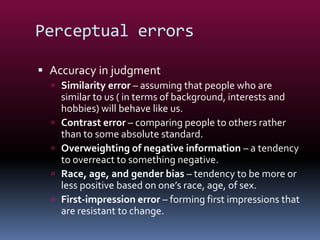
Perceptual errors
 Accuracy in judgment
 Similarity error – assuming that people who are






similar to us ( in terms of background, interests and
hobbies) will behave like us.
Contrast error – comparing people to others rather
than to some absolute standard.
Overweighting of negative information – a tendency
to overreact to something negative.
Race, age, and gender bias – tendency to be more or
less positive based on one’s race, age, of sex.
First-impression error – forming first impressions that
are resistant to change.
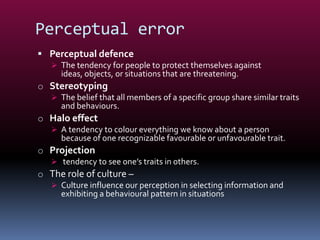
Perceptual error
 Perceptual defence
 The tendency for people to protect themselves against

ideas, objects, or situations that are threatening.

o Stereotyping
 The belief that all members of a specific group share similar traits

and behaviours.

o Halo effect
 A tendency to colour everything we know about a person

because of one recognizable favourable or unfavourable trait.

o Projection
 tendency to see one’s traits in others.

o The role of culture –
 Culture influence our perception in selecting information and

exhibiting a behavioural pattern in situations
CONCLUSION
The Inferential System has its mysteries,
but we can also know a lot about it. This
chapter discussed how it works
automatically (does not need prompting or
direction from conscious) and how it
combines evidence from all of the sensory
modalities. There was also ample evidence
for the idea that we are conscious of just
the conclusions from the Inferential System
and cannot introspect into its processing.
THANK YOU

ANY QUESTION ??

Perception

  • 2.
    Objectives of TheChapter To Understand :  Meaning of Perception  Perception process  sensation Vs perception  Perception Errors  conclusion
  • 3.
  • 4.
    MEANING OF PERCEPTION The Process by which we come to know the world around us…An individual’s window to the world.  Perception may be defined as the process by which an individual selects, organizes and interprets stimuli into a meaningful and coherent picture of the environment in which he lives.
  • 5.
    “ WE DON’TSEE THINGS AS THEY ARE, WE SEE THINGS AS WE ARE.”
  • 8.
    Any movement yousee is an illusion!
  • 9.
    The Perceptual Process 1.Sensation  An individual’s ability to detect stimuli in the immediate environment. 2. Selection  The process a person uses to eliminate some of the stimuli that have been sensed and to retain others for further processing. 3. Organization  The process of placing selected perceptual stimuli into a framework for “storage.” 4. Translation  The stage of the perceptual process at which stimuli are interpreted and given meaning.
  • 10.
    Perceptual process Selecting Stimuli Externalfactors : Nature, Receiving Stimuli Location , Size , contrast, Movement , repetition , similarity Internal factors : Learning, Needs , age , Interest, (External & Internal) Interpreting Attribution ,Stereotyping, Halo Effect, Projection Organizing Figure Background , Perceptual Grouping ( similarity, proximity, closure, continuity) Response Covert: Attitudes , Motivation, Feeling Overt: Behavior
  • 11.
  • 13.
    SENSATION  It isthe activity of the senses.  A state of emotional excitement. TWO FACTORS IN ORDER FOR SENSATION TO OCCUR: 1. There must be a stimulus. 2. There must be receptors that are sensitive to the stimulus.
  • 14.
    All five senses are……………….  Sight Smell  Hearing  Feeling  Taste
  • 15.
    What is thedifference between sensation and perception? • Sensation is gathering info from the environment via your senses. • Perception is understanding what is being sensed!
  • 16.
    What do wecall it when there is a mismatch between sensation and perception – when we misinterpret the info?
  • 17.
    Perceptual errors  Theperceptual process may result in a person making errors in judgement or understanding of another person. The most common types of perceptual errors are:  Accuracy in judgment  Perceptual defence  Stereotyping  The halo effect  Projection  Role of culture
  • 18.
    Perceptual errors  Accuracyin judgment  Similarity error – assuming that people who are     similar to us ( in terms of background, interests and hobbies) will behave like us. Contrast error – comparing people to others rather than to some absolute standard. Overweighting of negative information – a tendency to overreact to something negative. Race, age, and gender bias – tendency to be more or less positive based on one’s race, age, of sex. First-impression error – forming first impressions that are resistant to change.
  • 19.
    Perceptual error  Perceptualdefence  The tendency for people to protect themselves against ideas, objects, or situations that are threatening. o Stereotyping  The belief that all members of a specific group share similar traits and behaviours. o Halo effect  A tendency to colour everything we know about a person because of one recognizable favourable or unfavourable trait. o Projection  tendency to see one’s traits in others. o The role of culture –  Culture influence our perception in selecting information and exhibiting a behavioural pattern in situations
  • 20.
    CONCLUSION The Inferential Systemhas its mysteries, but we can also know a lot about it. This chapter discussed how it works automatically (does not need prompting or direction from conscious) and how it combines evidence from all of the sensory modalities. There was also ample evidence for the idea that we are conscious of just the conclusions from the Inferential System and cannot introspect into its processing.
  • 21.