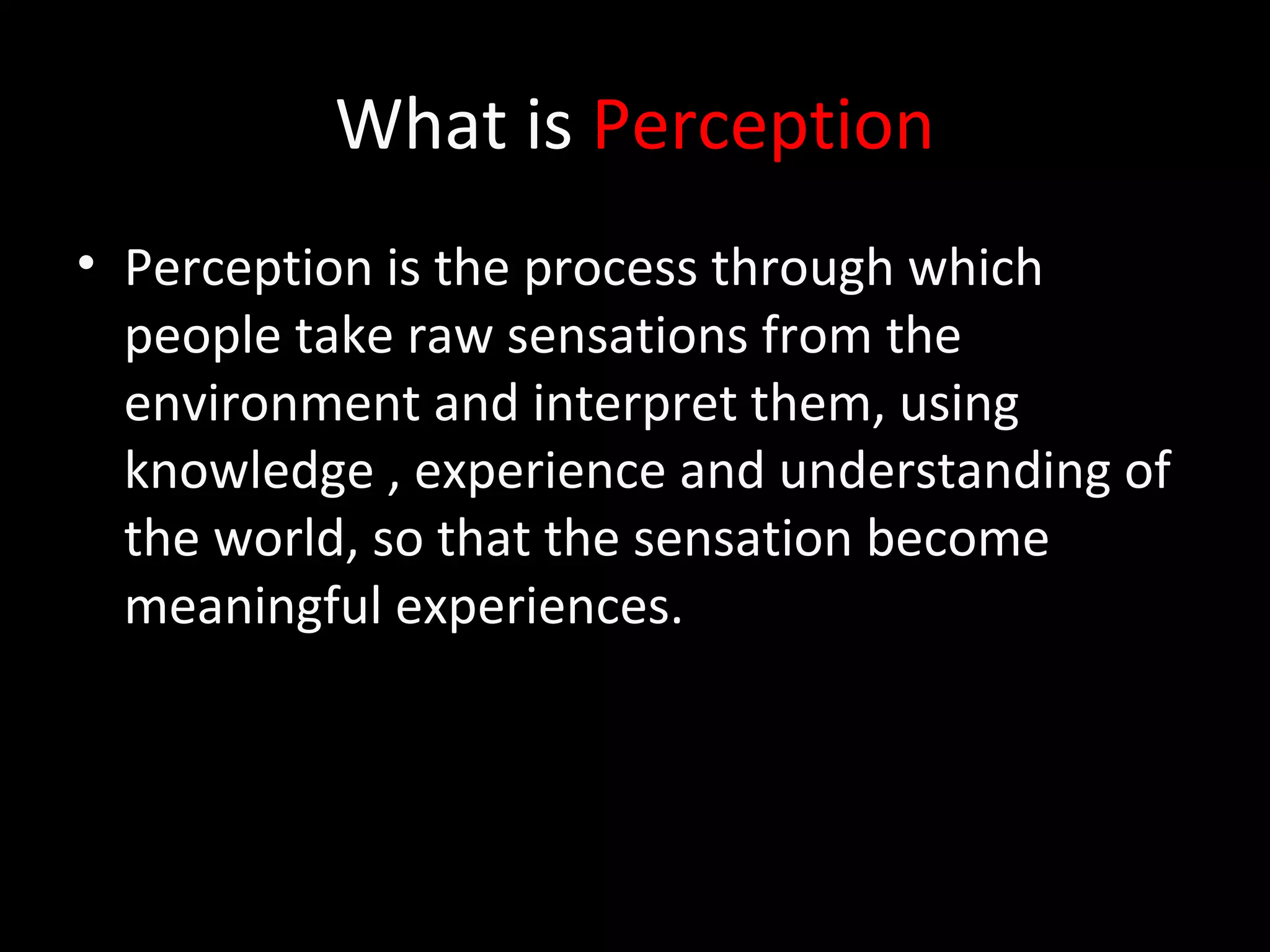
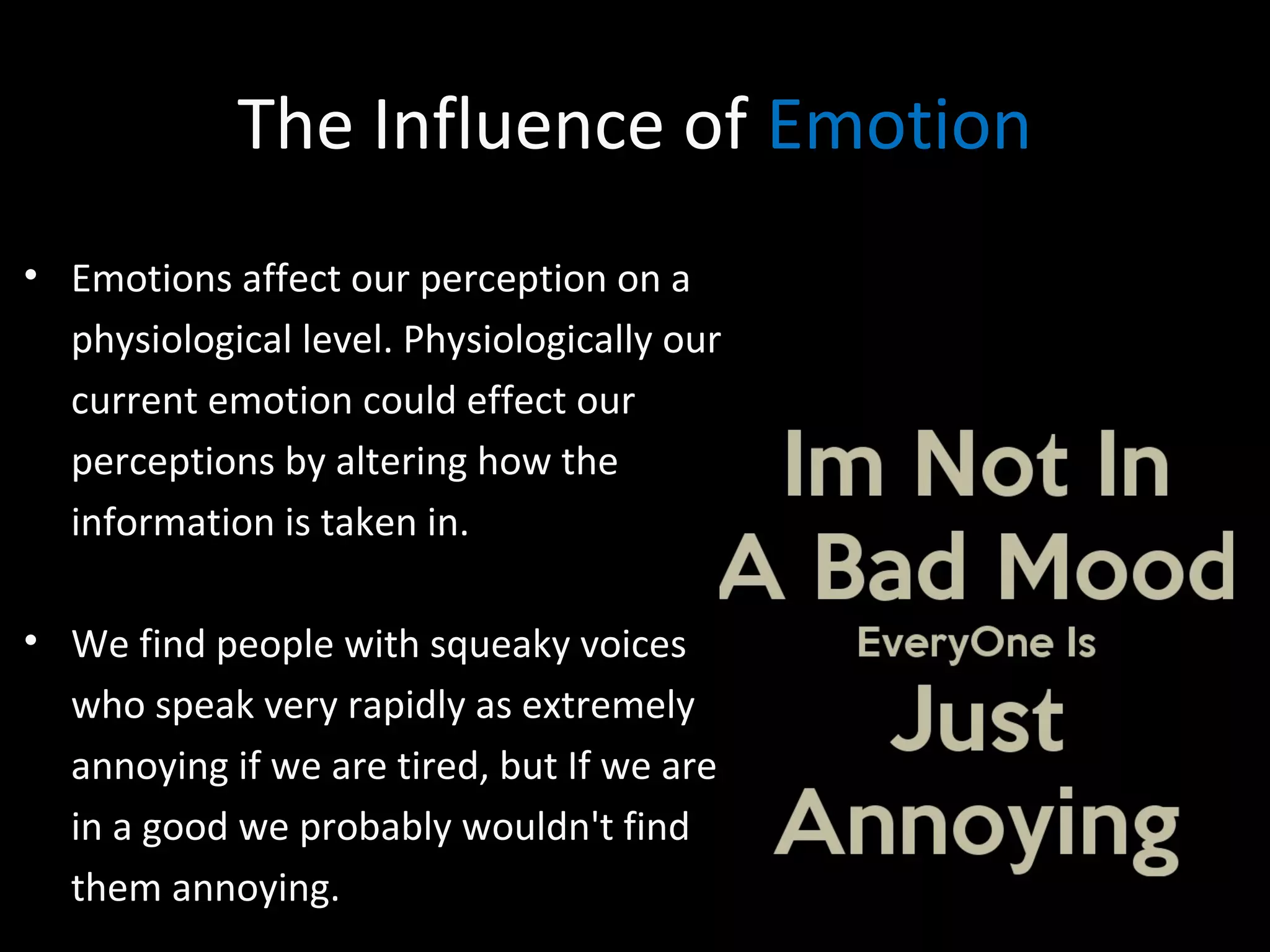
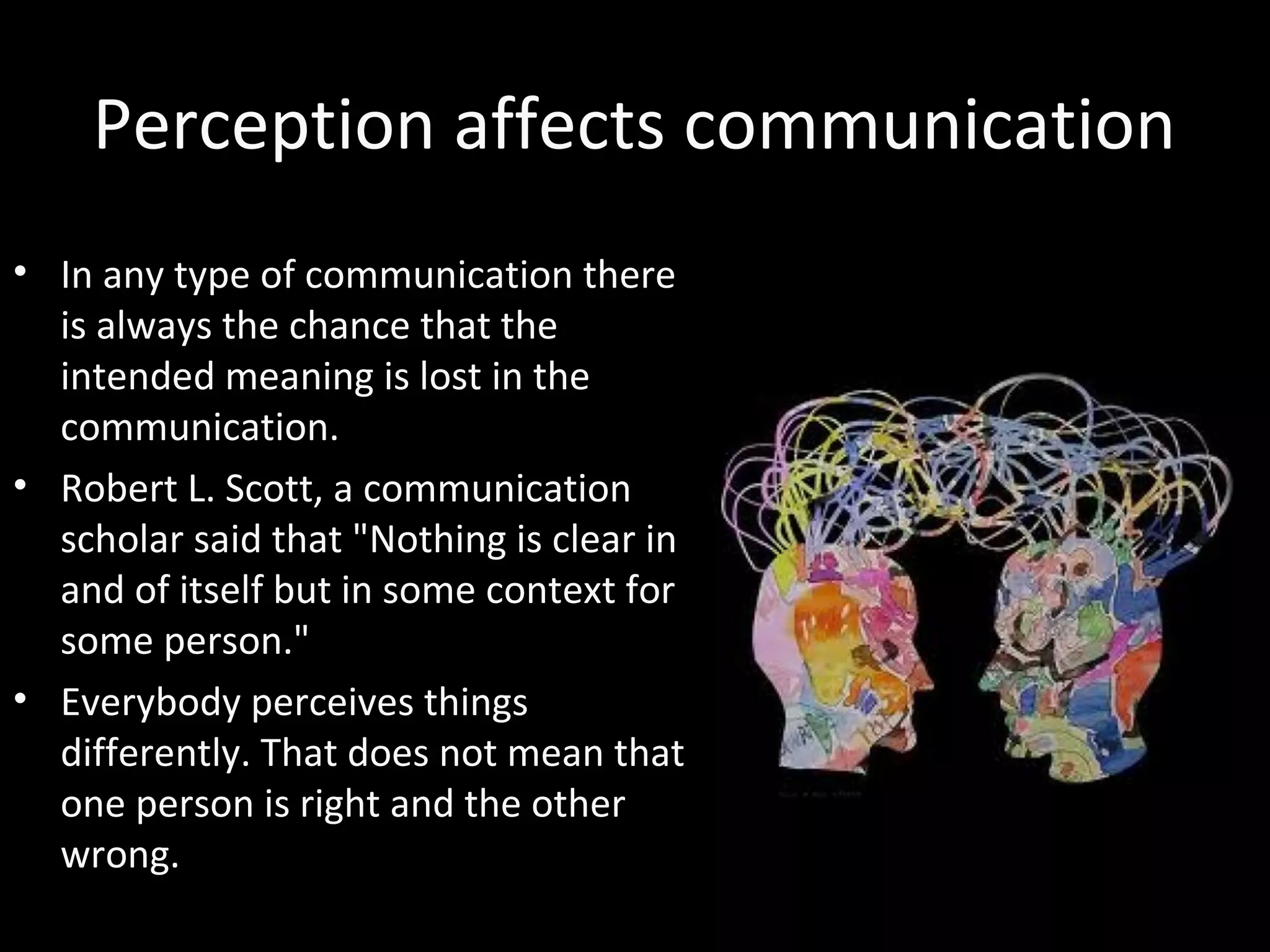
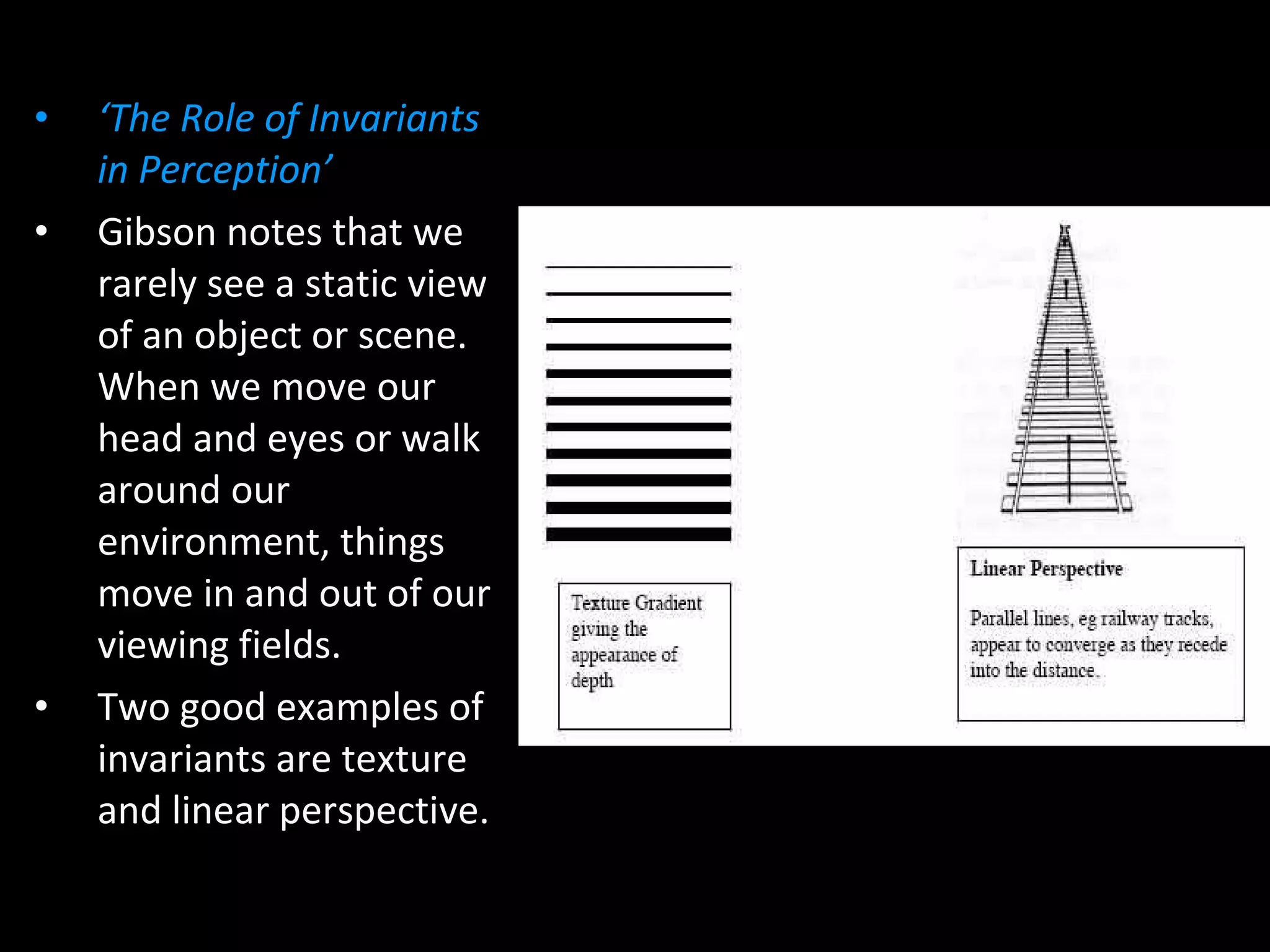
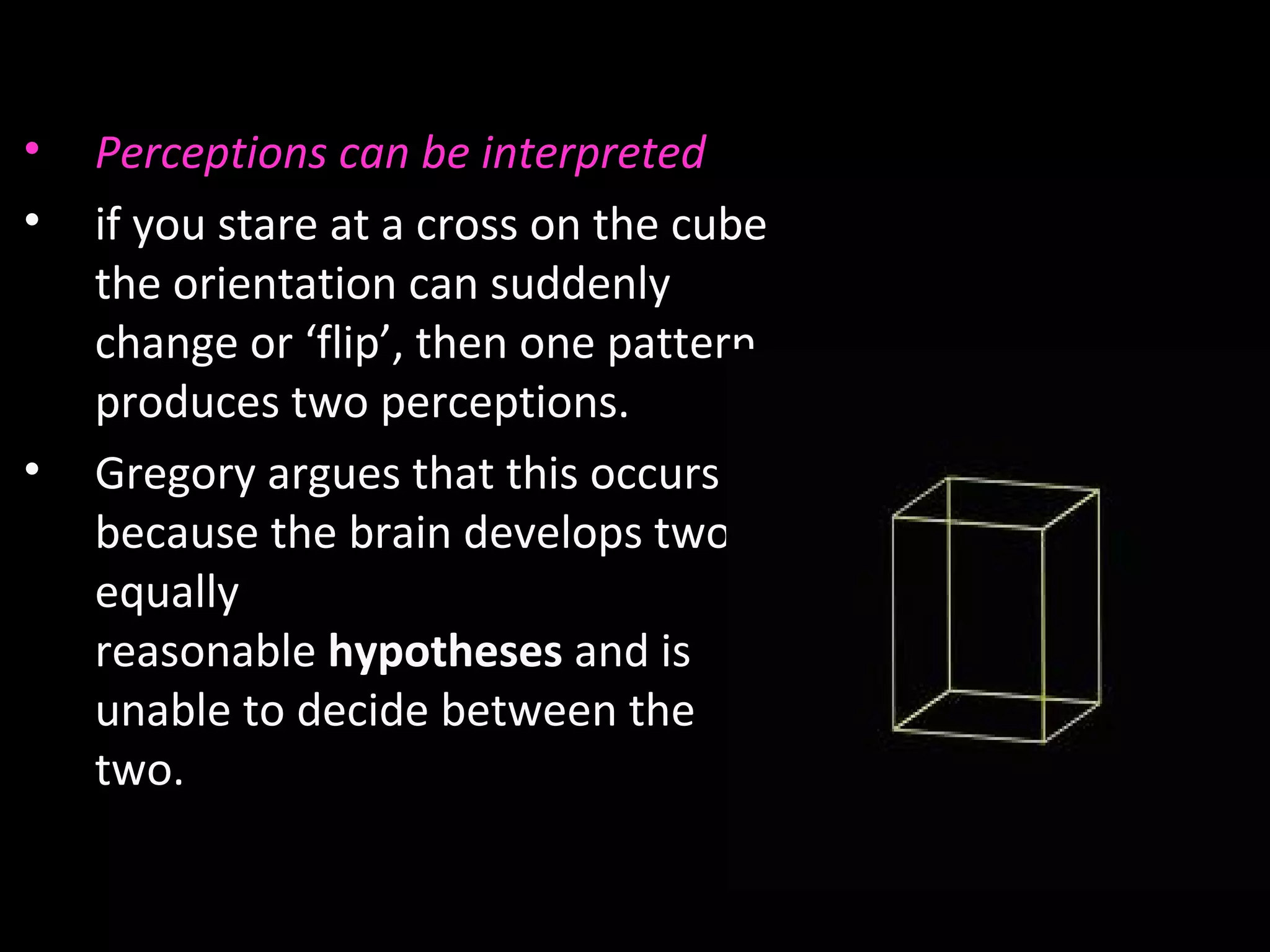
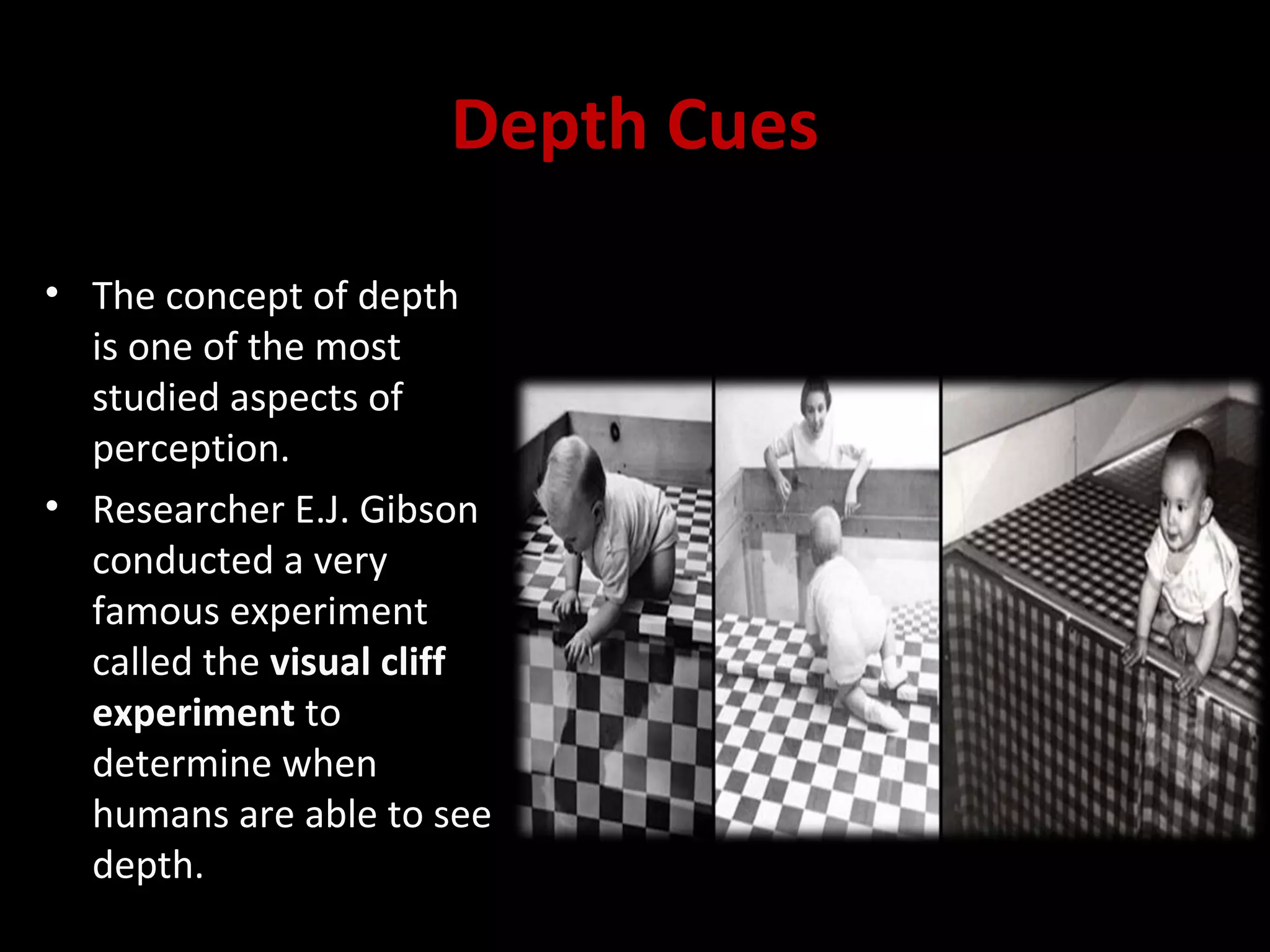
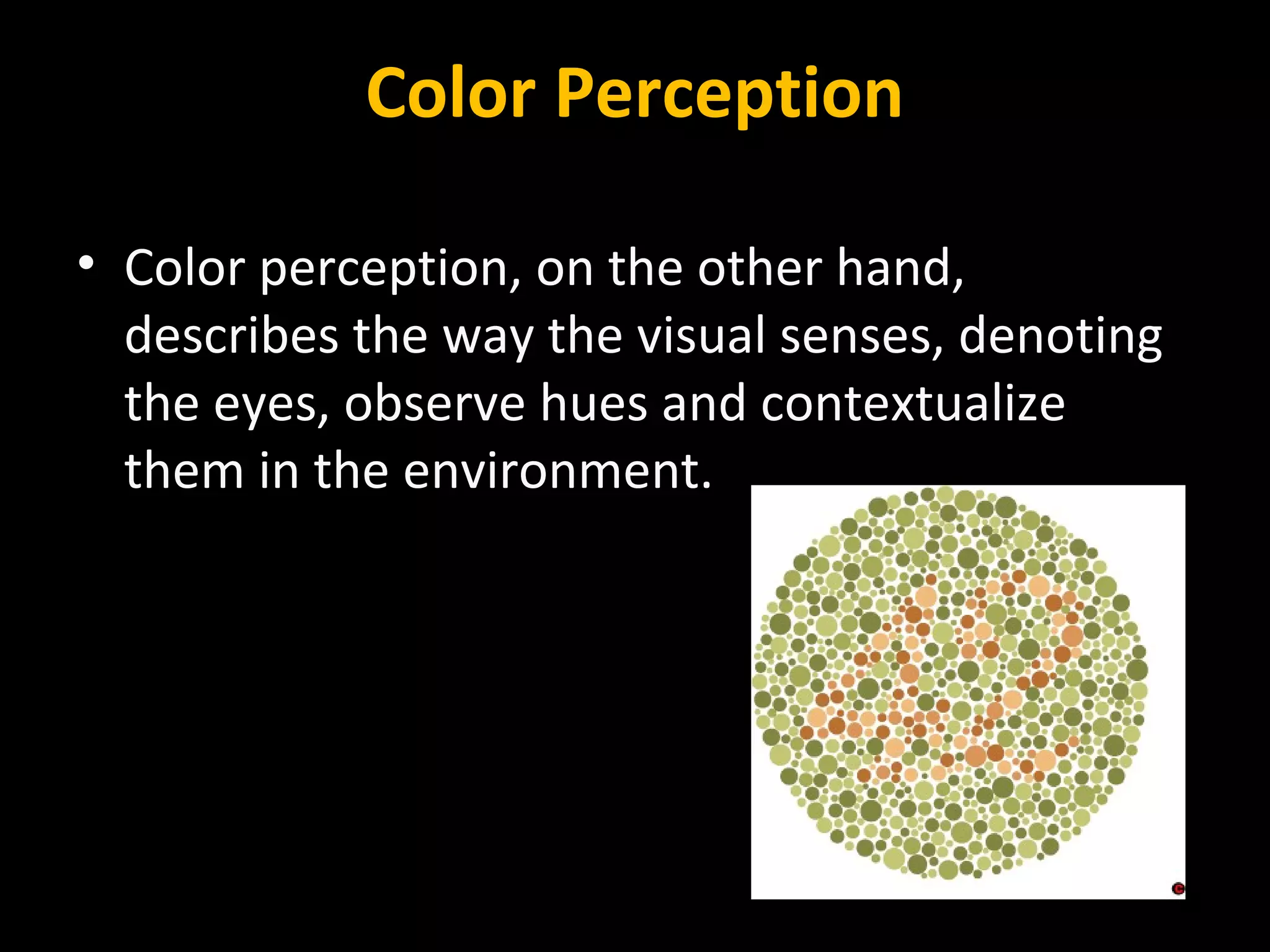
Perception is the process by which people interpret and make sense of sensations from the environment using knowledge and experience. Several factors can influence perception, including motivation, expectations, emotions, culture, and past experiences. Gregory's top-down theory of perception suggests that we construct perceptions based on hypotheses informed by prior knowledge and experiences, which can sometimes lead to illusions or misperceptions. Gibson's bottom-up theory argues that there is enough raw information in our environment to directly perceive it. Signal detection theory examines how outside influences can affect if and what we perceive. Different types of perception studied in psychology include color, speech, depth, and amodal perception.