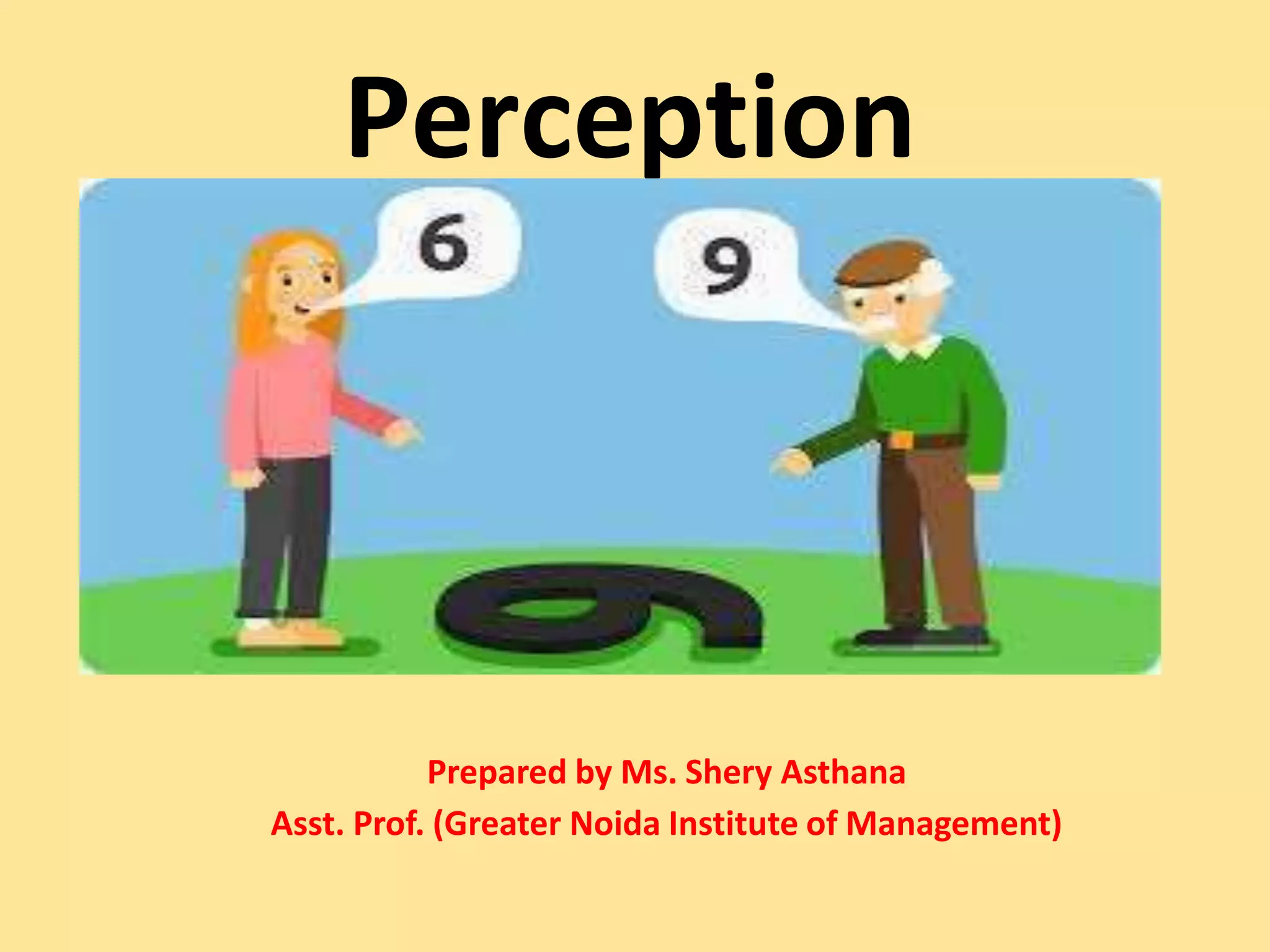
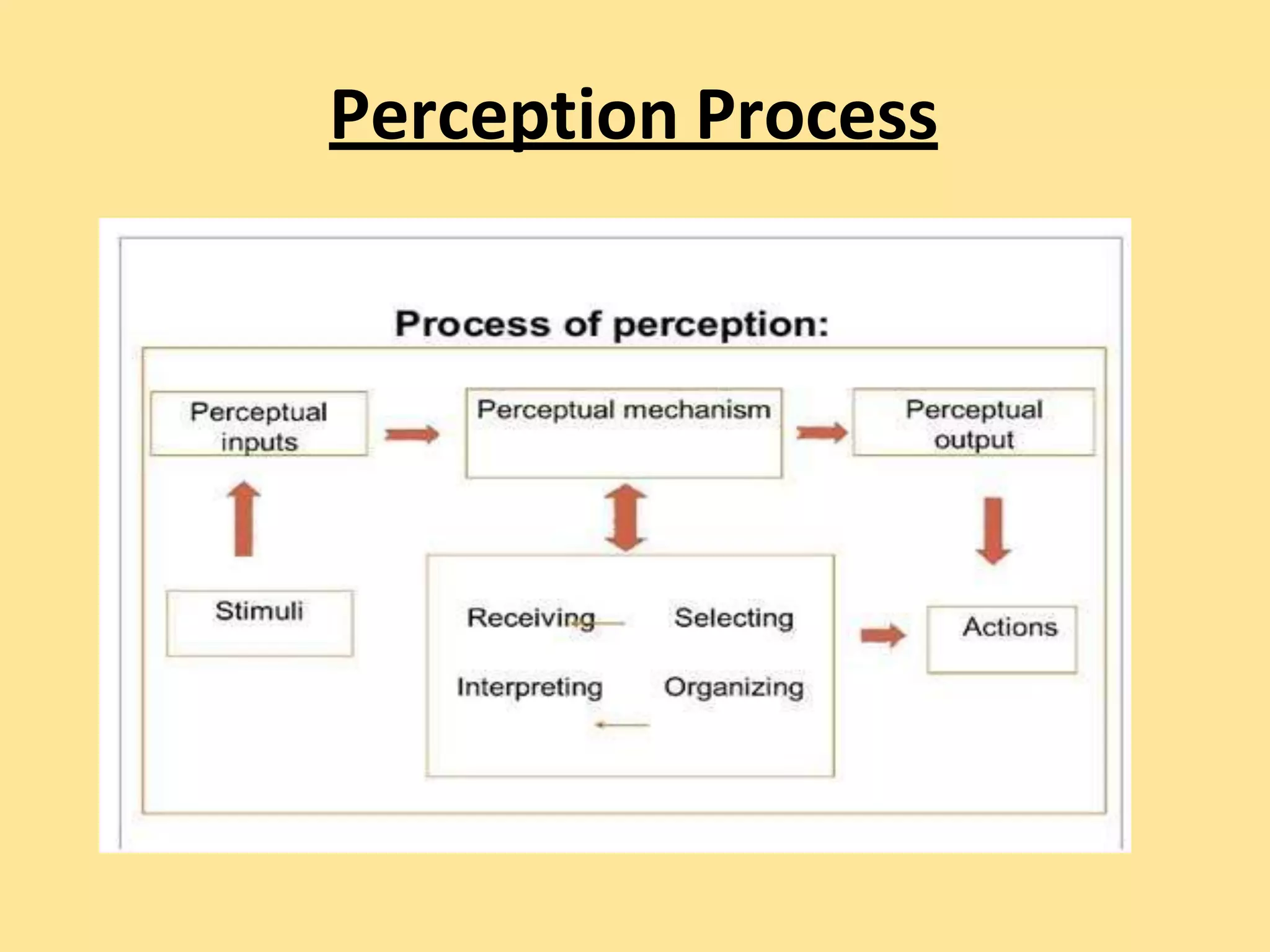
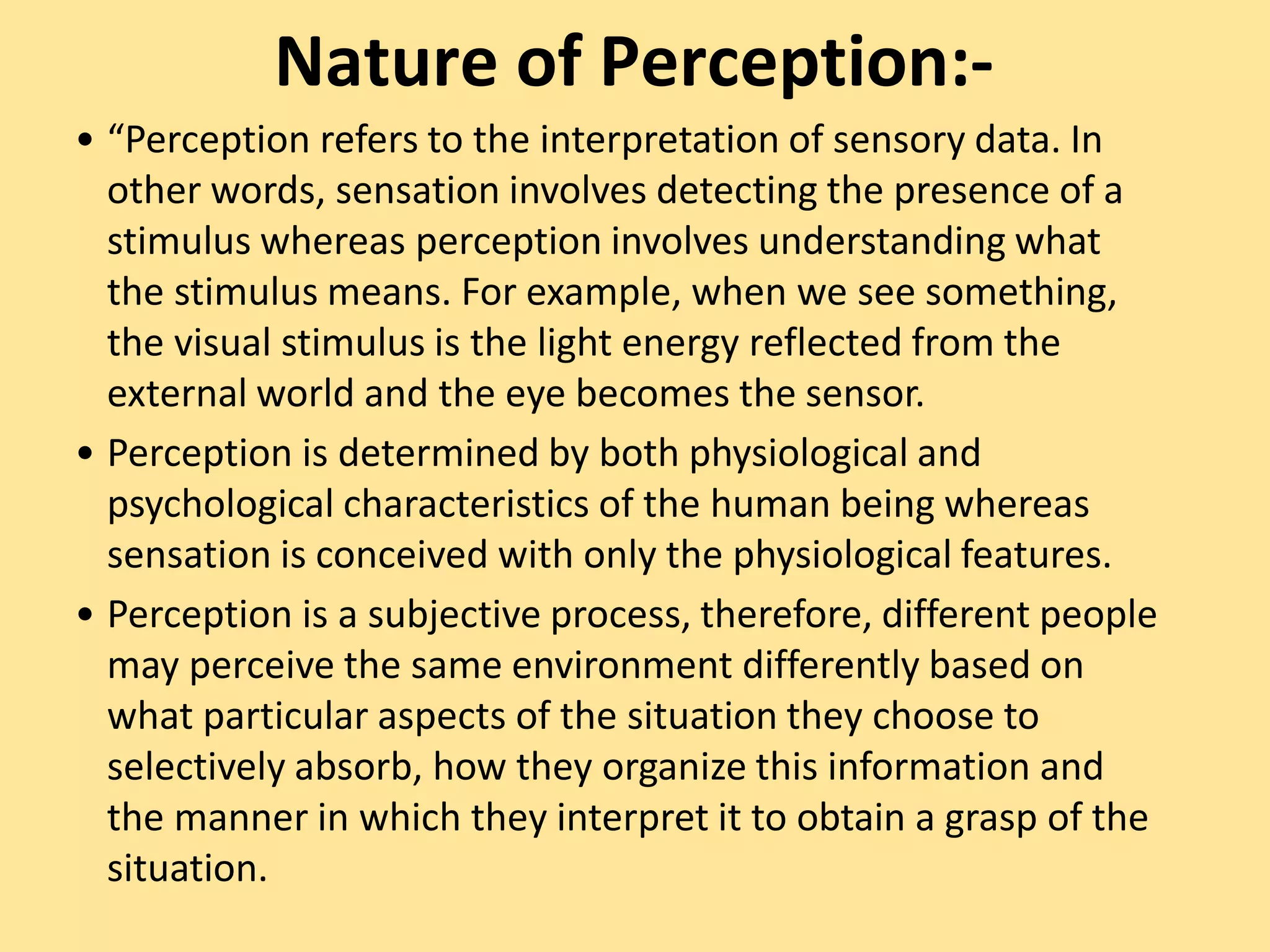
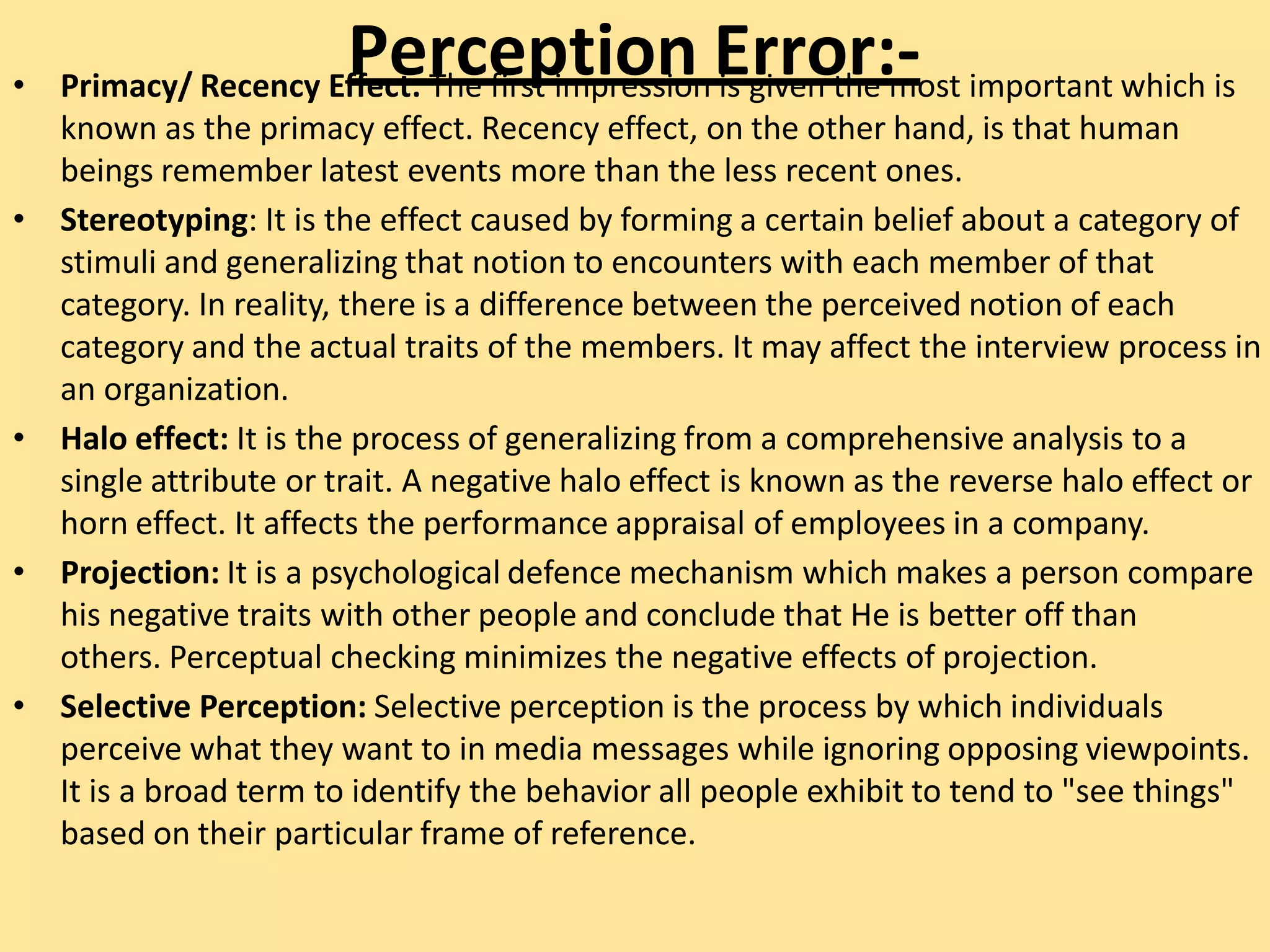
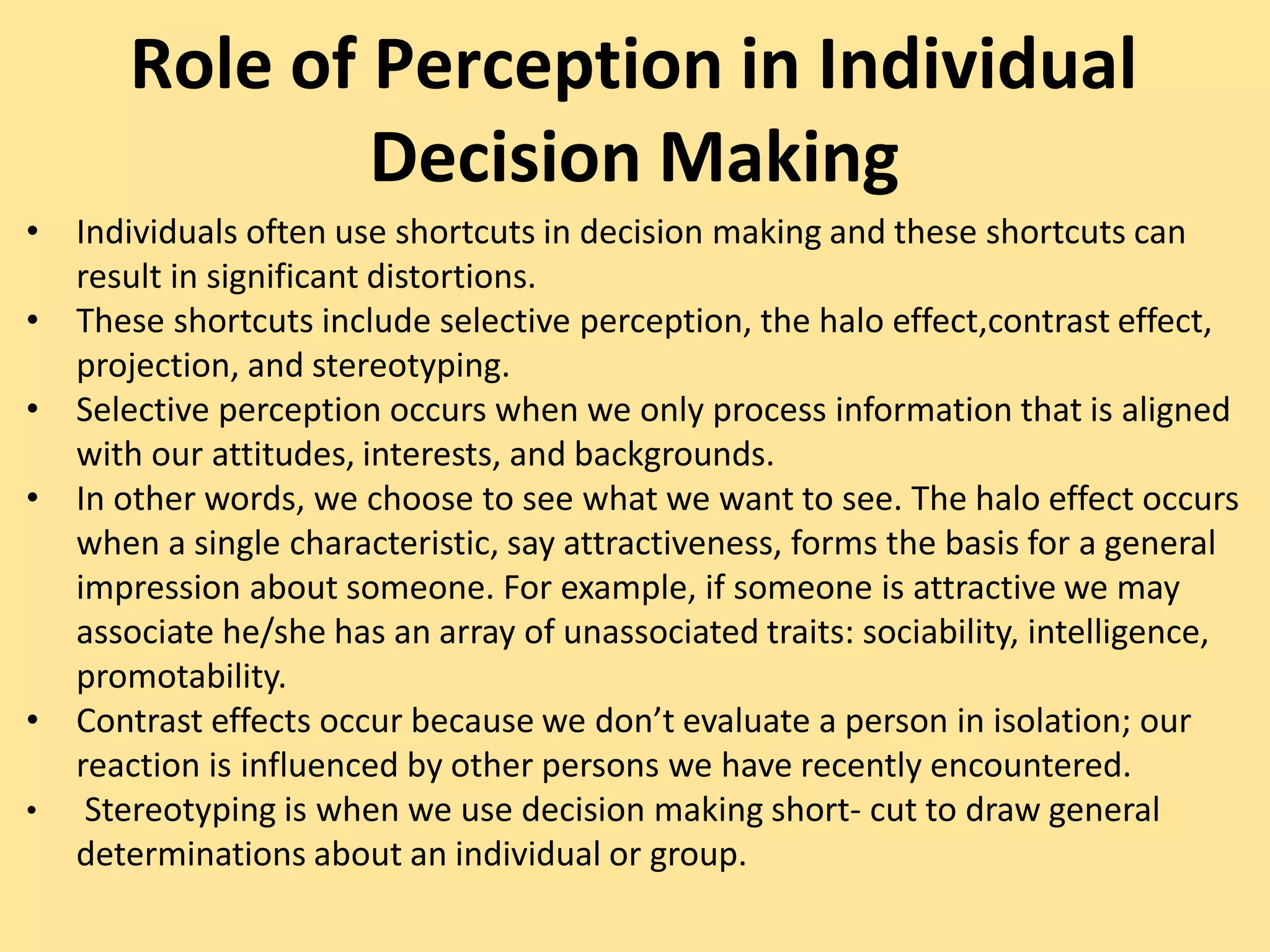
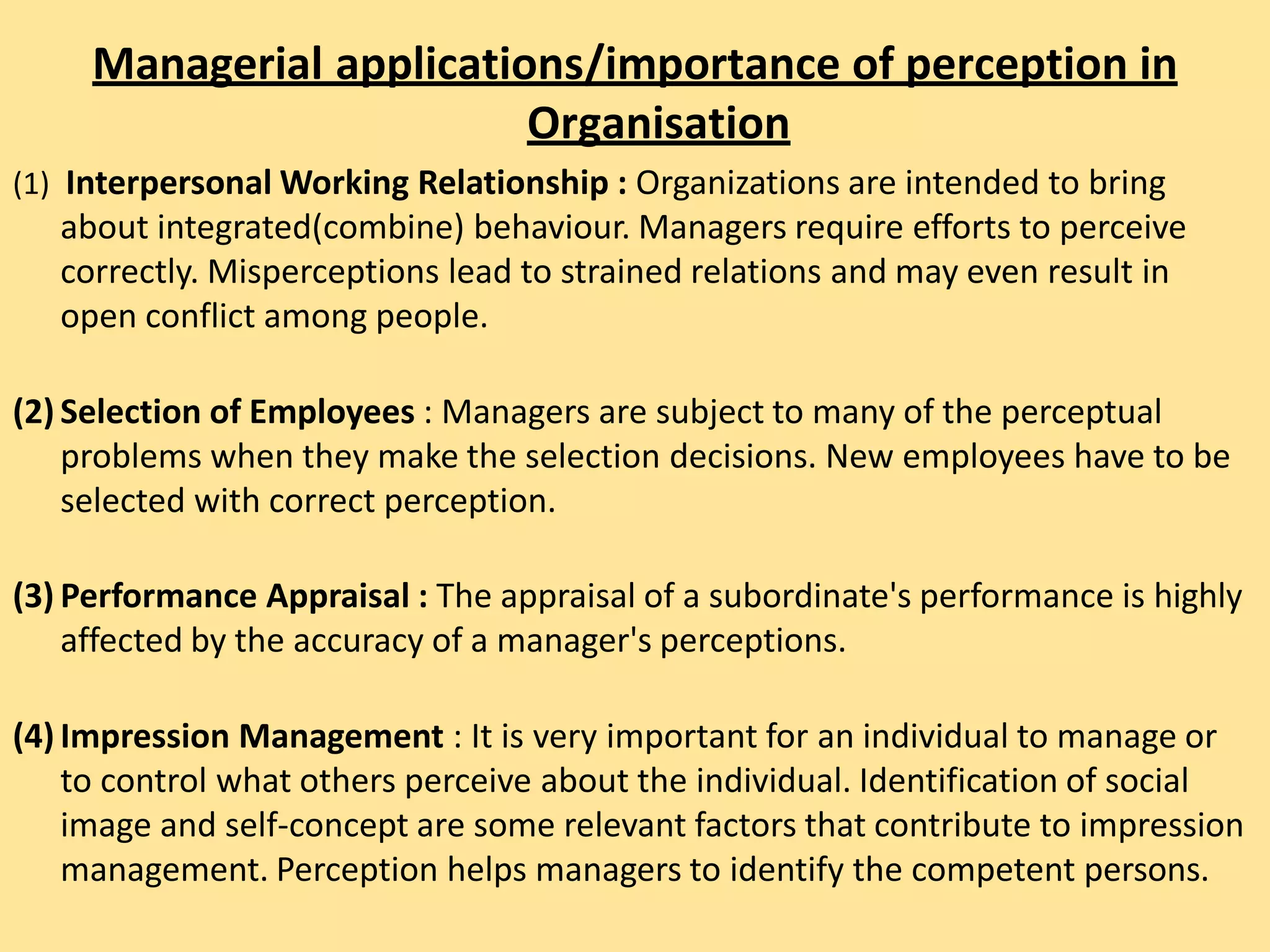
Jerome Bruner developed a model of perception as a process that transforms sensory stimuli into meaningful information through organization, identification, and interpretation. Perception involves signals in the nervous system resulting from stimulation of the senses. It is determined by both physiological and psychological characteristics and is subjective, so different people may perceive the same situation differently. Perceptual errors can occur through biases like primacy/recency effects, stereotyping, halo effects, projection, and selective perception. Perception plays an important role in individual decision making and organizational functions like employee selection, performance appraisal, and impression management.


![7_C's_OF_COMMUNIOCATION[1].pptx](https://cdn.slidesharecdn.com/ss_thumbnails/7csofcommuniocation1-230801063320-9af405b3-thumbnail.jpg?width=640&height=640&fit=bounds)


