PERCEPTION:MEANING,
PROCESS AND FACTORS
AFFECTING
PERCEPTION
Perception
Meaning
• The process by which one screens, selects, organizes, and
interprets stimuli to give them meaning. It is a process of
making sense out of the environment in order to make an
appropriate behavioral response.
• Perception does not necessarily lead to an accurate portrait of
the environment, but rather to a unique portrait, influenced by
the needs, desires, values, and disposition of the perceiver.
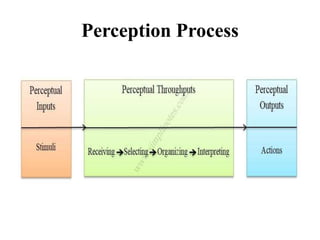
Perception Process
1.Receiving
• Receiving is the first and most important stage in the process
of perception. It is the initial stage in which a person collects
all information and receives the information through the sense
organs.
2.Selecting
• Selecting is the second stage in the process. Here a person
doesn’t receive the data randomly but selectively. A person
selects some information out of all in accordance with his
interest or needs. The selection of data is dominated by various
external and internal factors.
• External factors − The factors that influence the perception of
an individual externally are intensity, size, contrast, movement,
repetition, familiarity, and novelty.
• Internal factors − The factors that influence the perception of
an individual internally are psychological requirements,
learning, background, experience, self-acceptance, and
interest.
3.Organizing
• Keeping things in order or say in a synchronized way is
organizing. In order to make sense of the data received, it is
important to organize them.
• We can organize the data by grouping them on the basis of
their similarity, proximity, closure, continuity.
4.Interpreting
• Interpreting means forming an idea about a particular object
depending upon the need or interest. Interpretation means that
the information we have sensed and organized, is finally given
a meaning by turning it into something that can be categorized.
It includes stereotyping, halo effect etc.
Factors Affecting Perception
Three important factors influencing perception:
(a) Characteristics of the Perceiver
(b) Characteristics of the Perceived
(c) Characteristics of the Situation.
A. Characteristics of the Perceiver:
When a person looks at a target and attempts to interpreter what
he sees, his interpretation is greatly influenced by his personal
characteristics which are discussed as follows:
• Needs and Motives
• Past Experience
• Current Psychological State
• Beliefs
• Expectations
• Cultural Upbringing
B. Characteristics of the Perceived:
• Characteristics of the person who is being observed can affect
what is perceived. Though, it may go against logic and
objectivity, but it cannot be denied that our perceptions about
others are influenced by their physical characteristics such as
appearances, age, gender, manner of communication as well as
personality traits and other forms of behaviour.
• For example, loud people are more likely to be noticed in a
group than are quite ones. So too are extremely attractive or
extremely ugly individuals.
C. Characteristics of the Situation:
• The context in which we see objects or events is very
important. The surrounding environment and the elements
present in it influence our perception while perceiving a
particular situation or event, its physical, social and
organisational setting can also influence the perception.
• For example, if you meet a person for the first time and he is
with a person whom you respect and admire, you will create a
favorable image about him in your mind

OB unit 2 perception.pptx

  • 1.
  • 2.
    Perception Meaning • The processby which one screens, selects, organizes, and interprets stimuli to give them meaning. It is a process of making sense out of the environment in order to make an appropriate behavioral response. • Perception does not necessarily lead to an accurate portrait of the environment, but rather to a unique portrait, influenced by the needs, desires, values, and disposition of the perceiver.
  • 3.
  • 4.
    1.Receiving • Receiving isthe first and most important stage in the process of perception. It is the initial stage in which a person collects all information and receives the information through the sense organs. 2.Selecting • Selecting is the second stage in the process. Here a person doesn’t receive the data randomly but selectively. A person selects some information out of all in accordance with his interest or needs. The selection of data is dominated by various external and internal factors.
  • 5.
    • External factors− The factors that influence the perception of an individual externally are intensity, size, contrast, movement, repetition, familiarity, and novelty. • Internal factors − The factors that influence the perception of an individual internally are psychological requirements, learning, background, experience, self-acceptance, and interest. 3.Organizing • Keeping things in order or say in a synchronized way is organizing. In order to make sense of the data received, it is important to organize them. • We can organize the data by grouping them on the basis of their similarity, proximity, closure, continuity.
  • 6.
    4.Interpreting • Interpreting meansforming an idea about a particular object depending upon the need or interest. Interpretation means that the information we have sensed and organized, is finally given a meaning by turning it into something that can be categorized. It includes stereotyping, halo effect etc.
  • 7.
    Factors Affecting Perception Threeimportant factors influencing perception: (a) Characteristics of the Perceiver (b) Characteristics of the Perceived (c) Characteristics of the Situation. A. Characteristics of the Perceiver: When a person looks at a target and attempts to interpreter what he sees, his interpretation is greatly influenced by his personal characteristics which are discussed as follows: • Needs and Motives
  • 8.
    • Past Experience •Current Psychological State • Beliefs • Expectations • Cultural Upbringing B. Characteristics of the Perceived: • Characteristics of the person who is being observed can affect what is perceived. Though, it may go against logic and objectivity, but it cannot be denied that our perceptions about others are influenced by their physical characteristics such as appearances, age, gender, manner of communication as well as personality traits and other forms of behaviour.
  • 9.
    • For example,loud people are more likely to be noticed in a group than are quite ones. So too are extremely attractive or extremely ugly individuals. C. Characteristics of the Situation: • The context in which we see objects or events is very important. The surrounding environment and the elements present in it influence our perception while perceiving a particular situation or event, its physical, social and organisational setting can also influence the perception. • For example, if you meet a person for the first time and he is with a person whom you respect and admire, you will create a favorable image about him in your mind