Downloaded 425 times



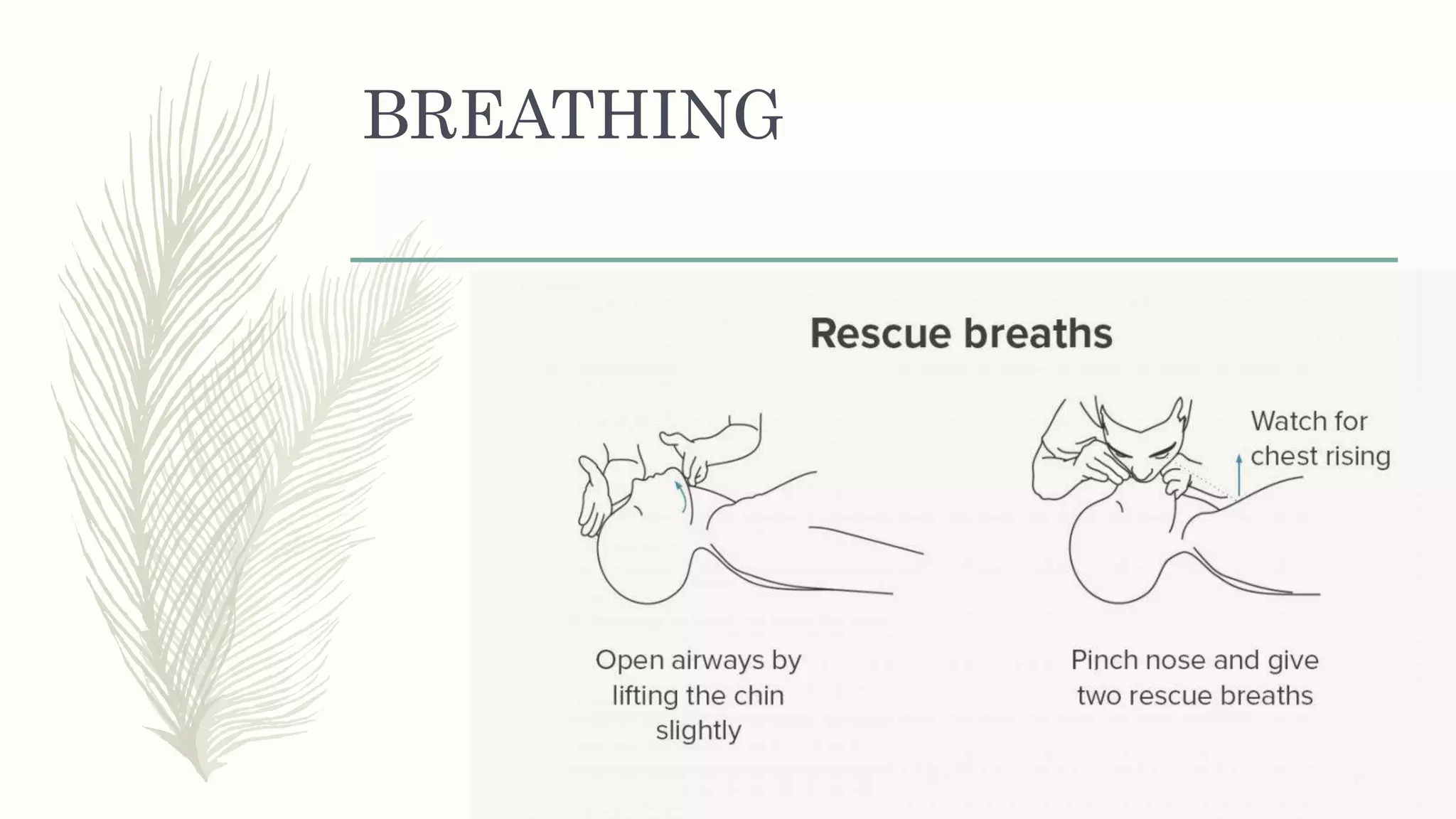
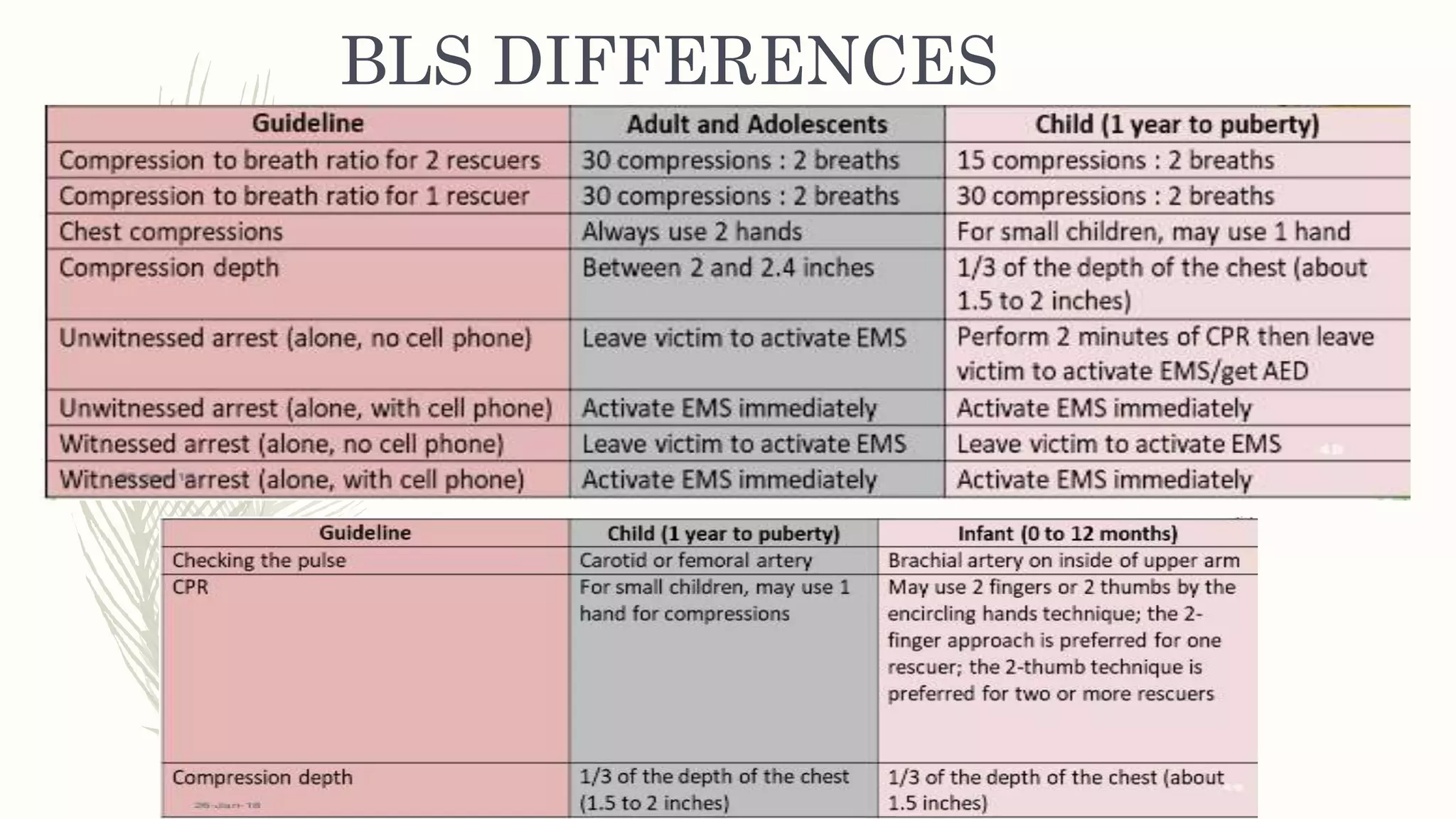
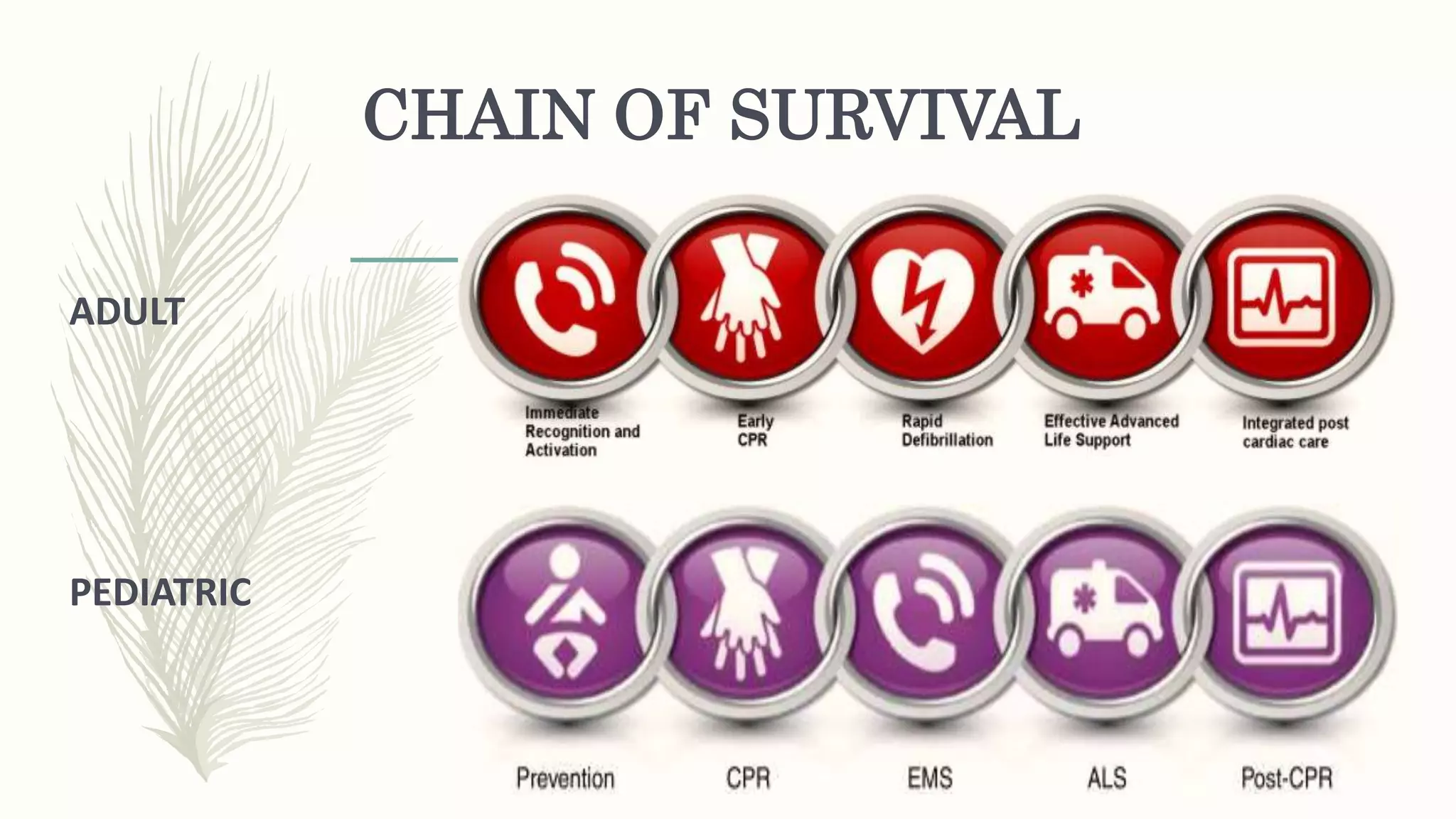



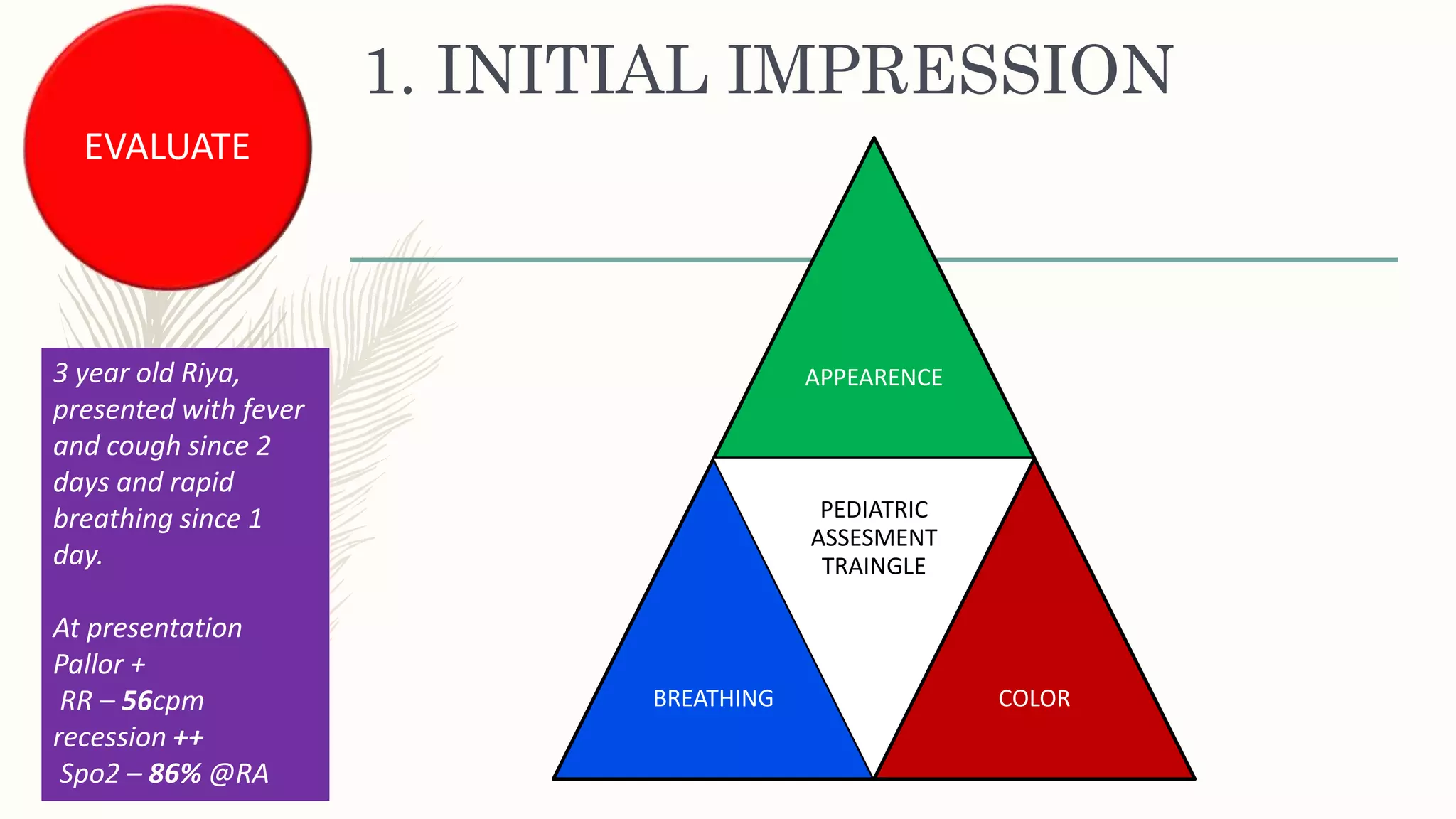
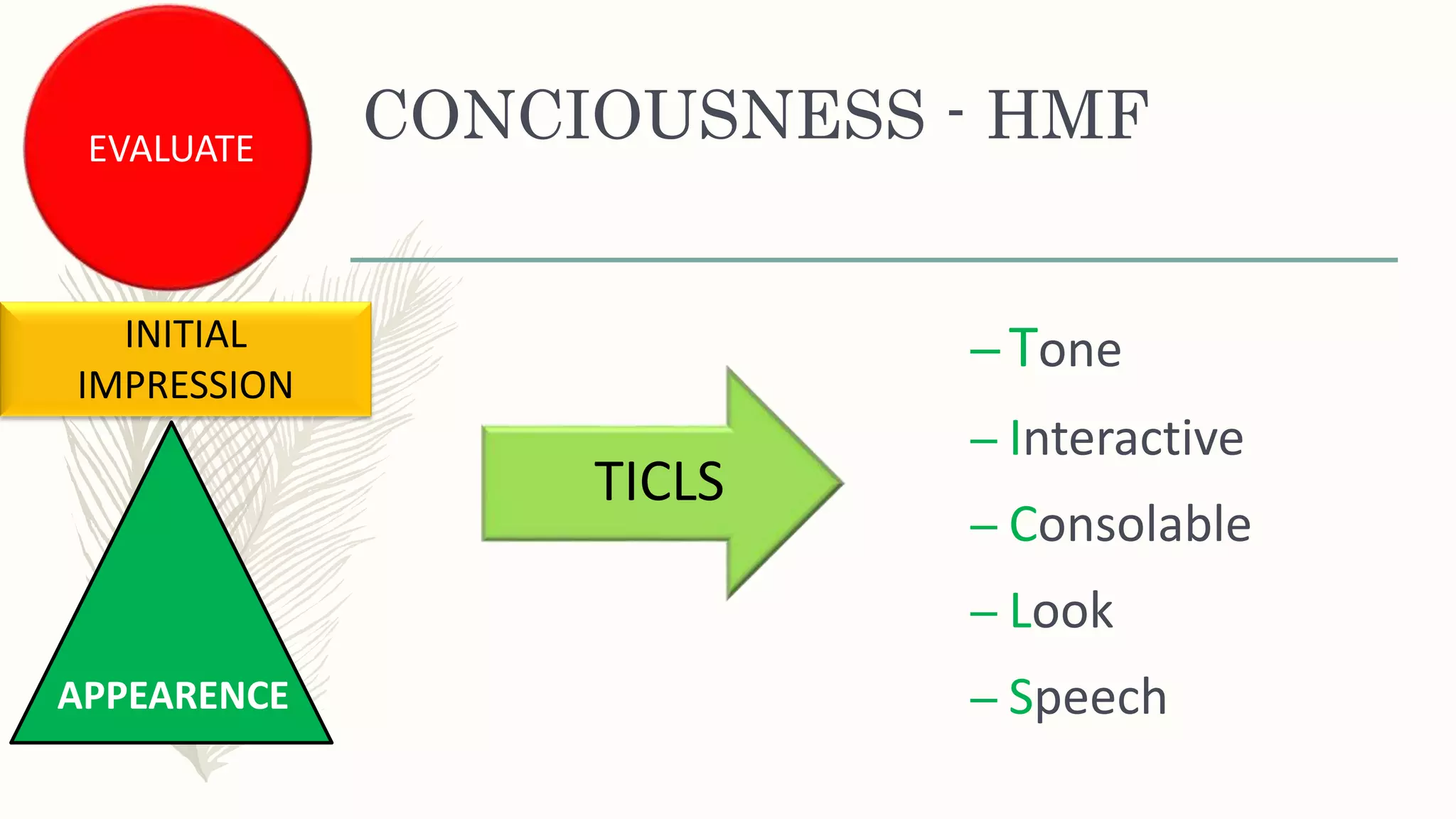

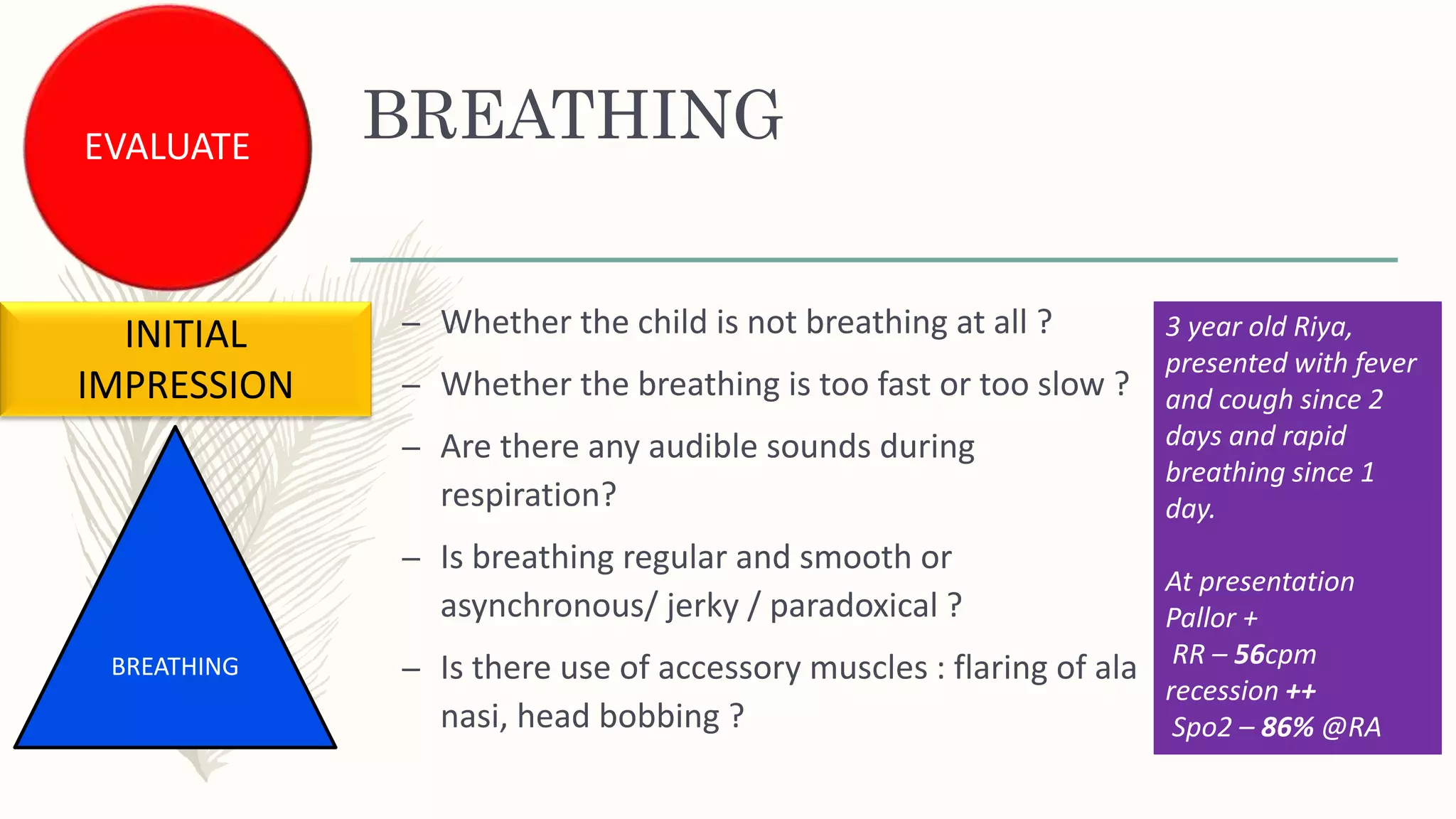

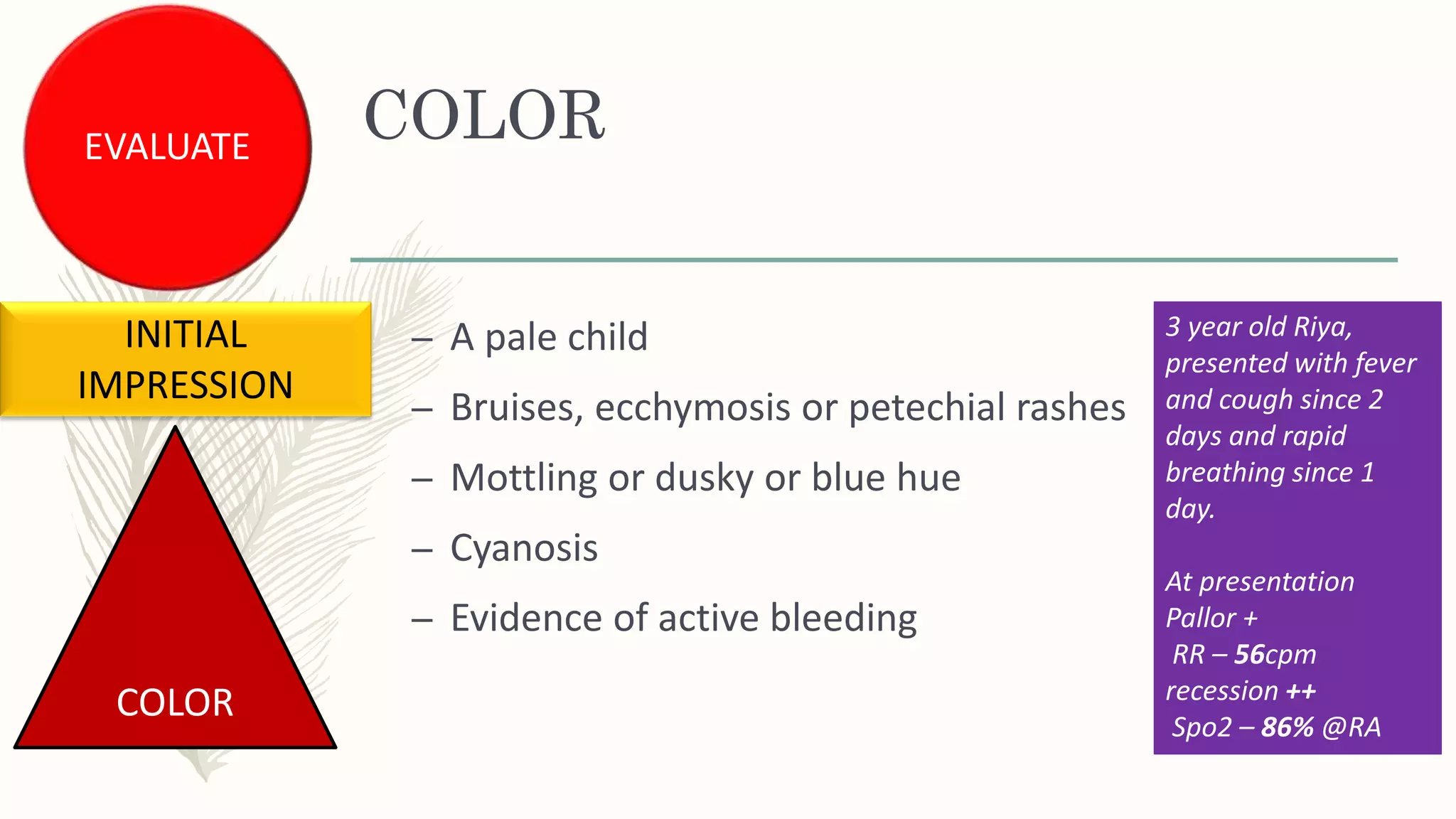


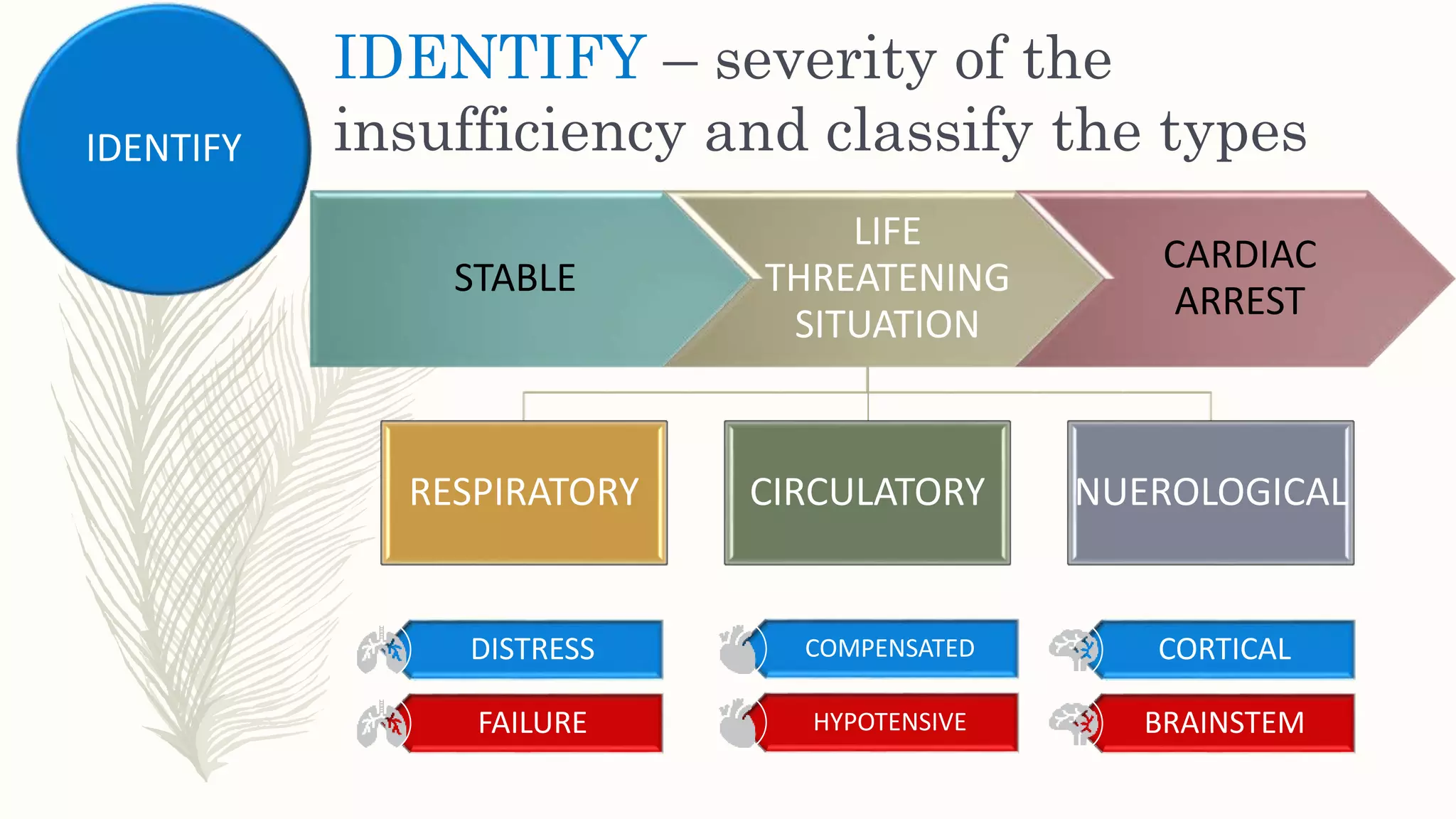


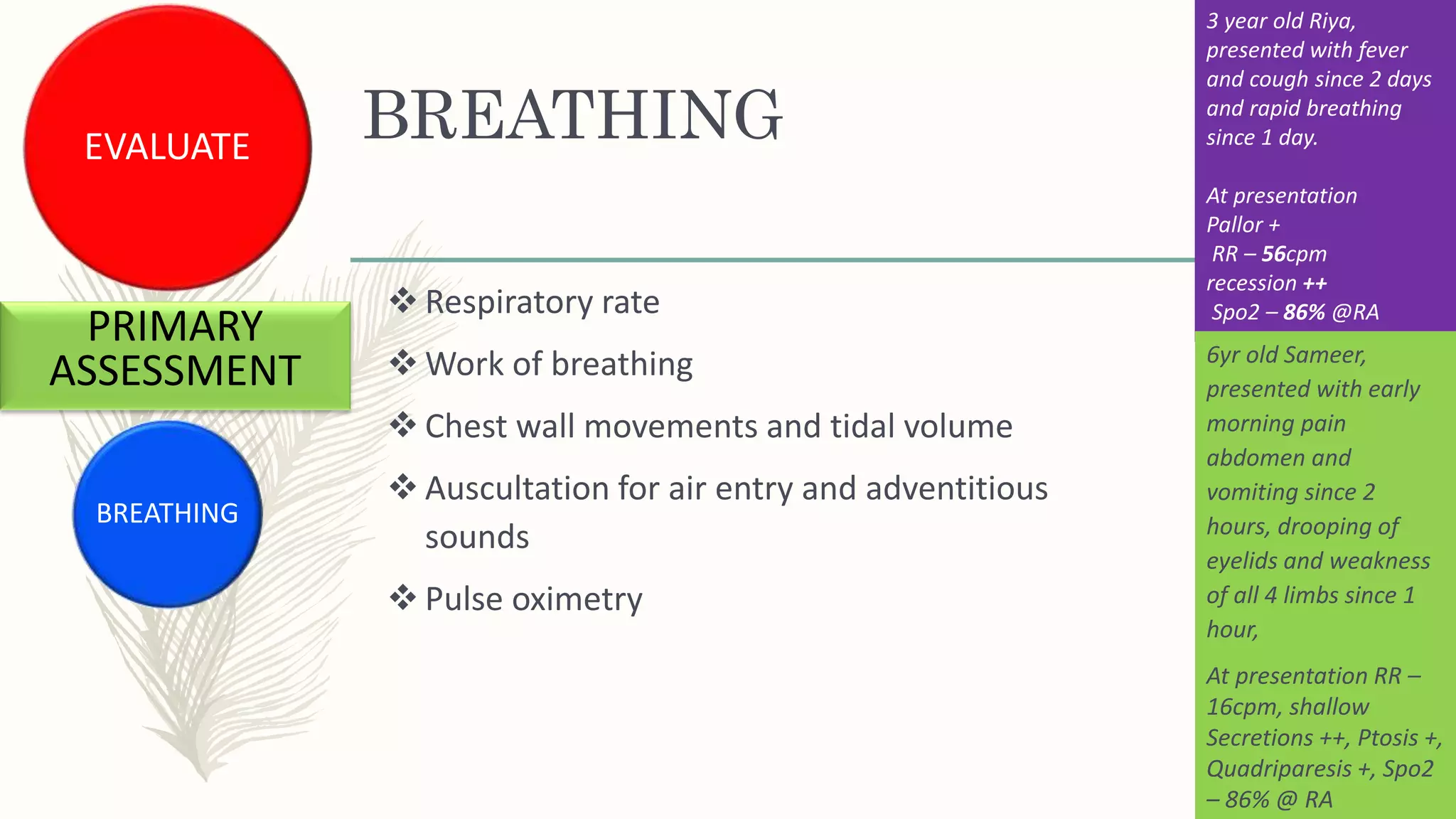
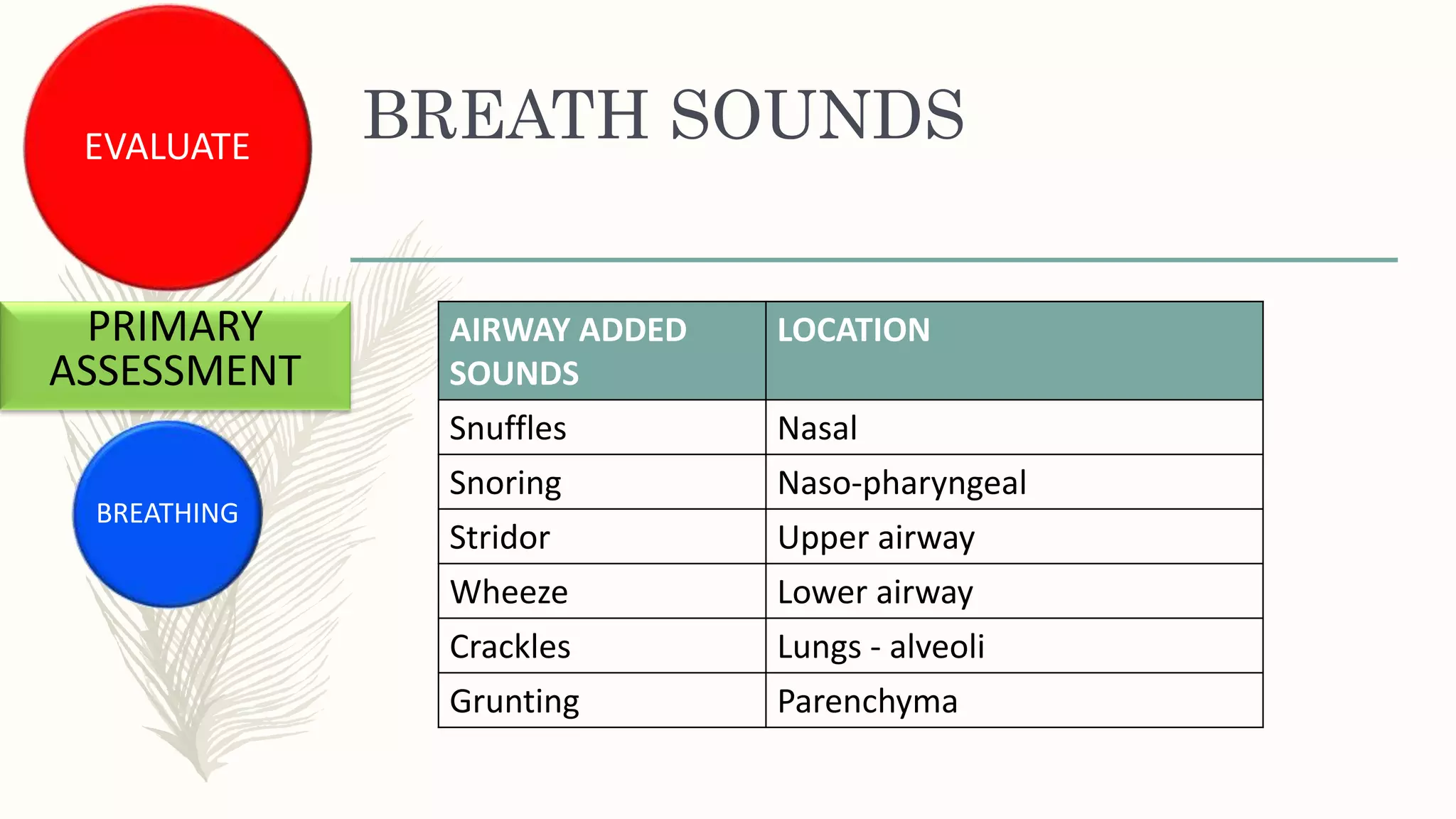


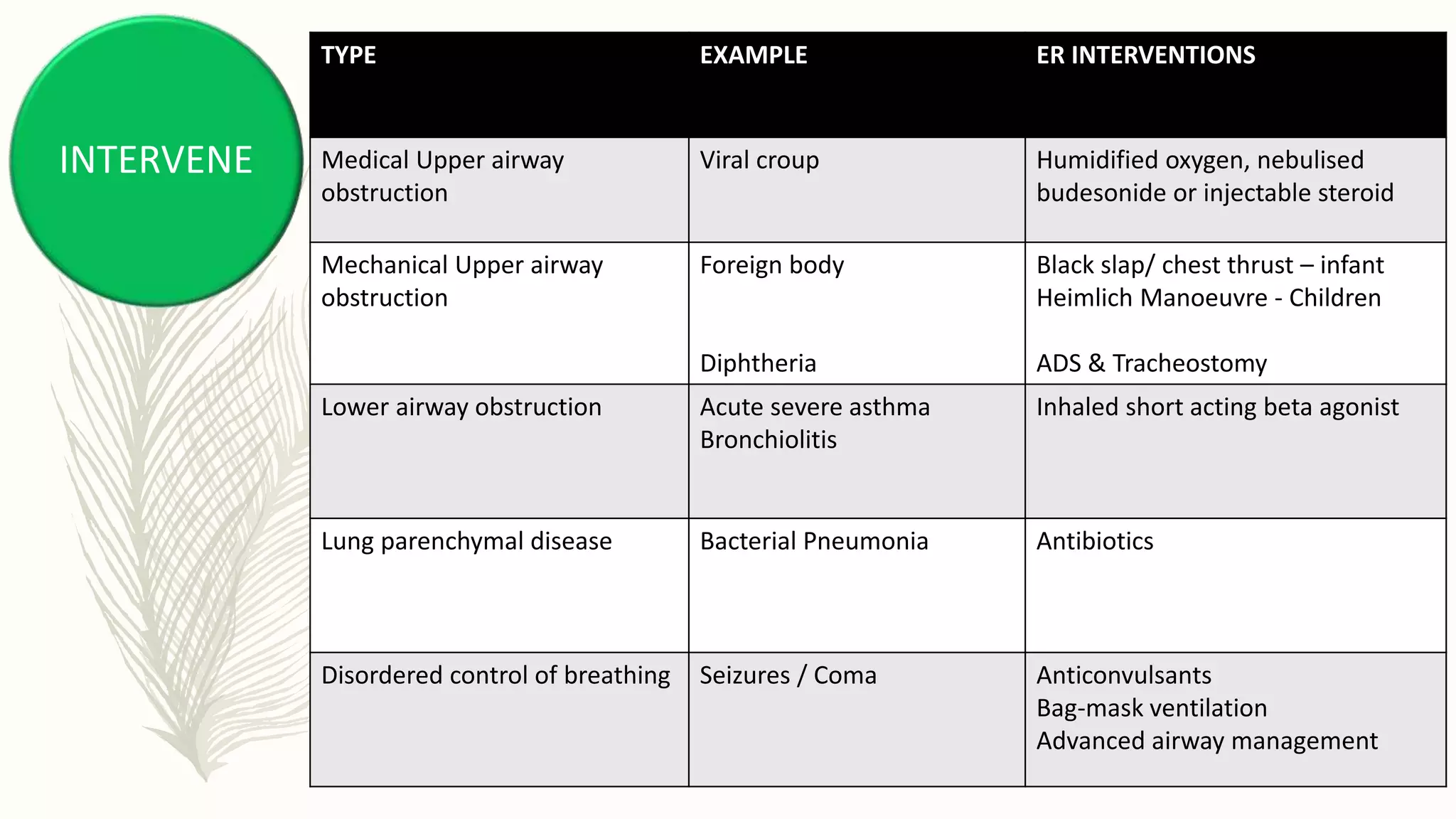

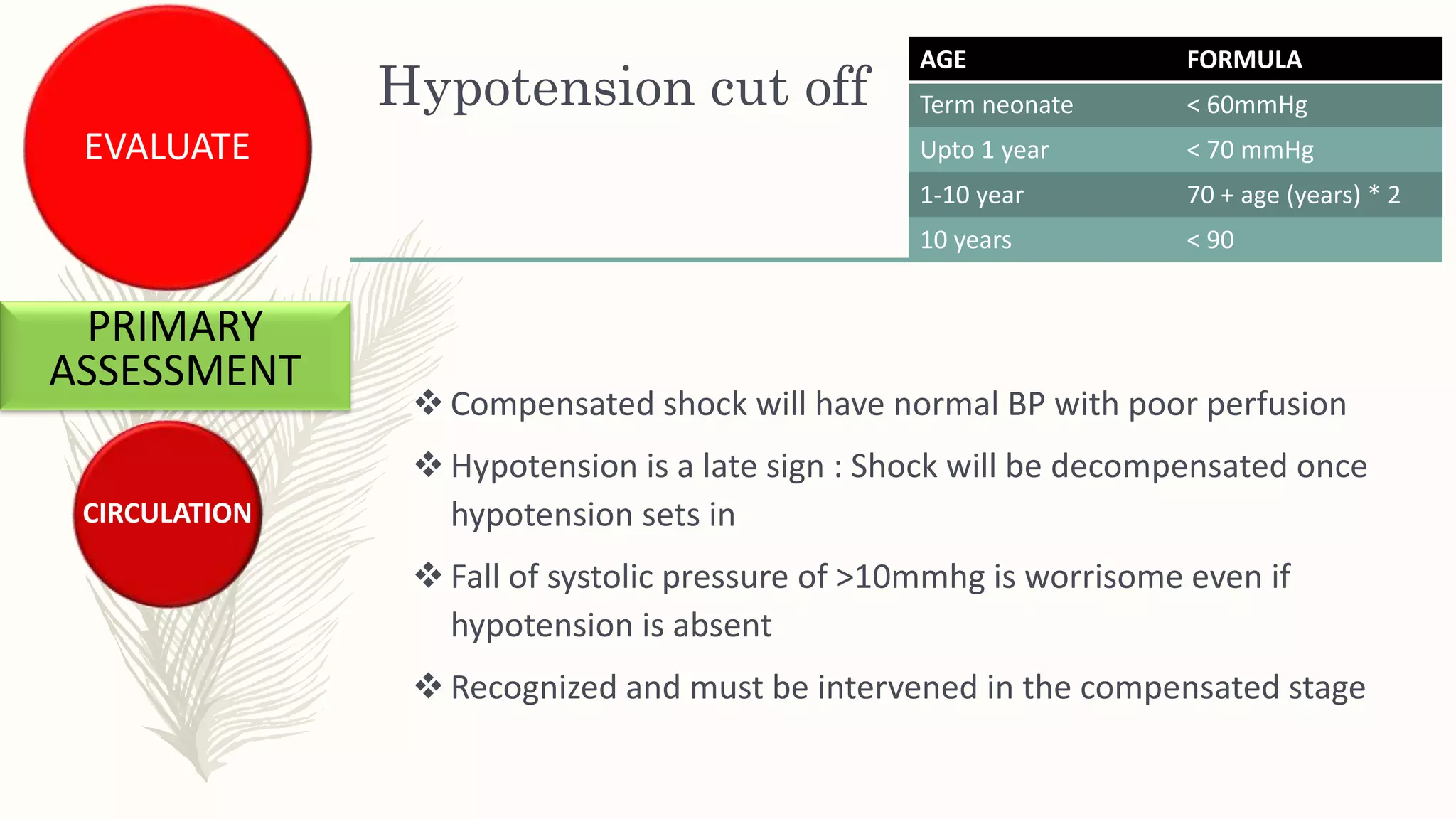


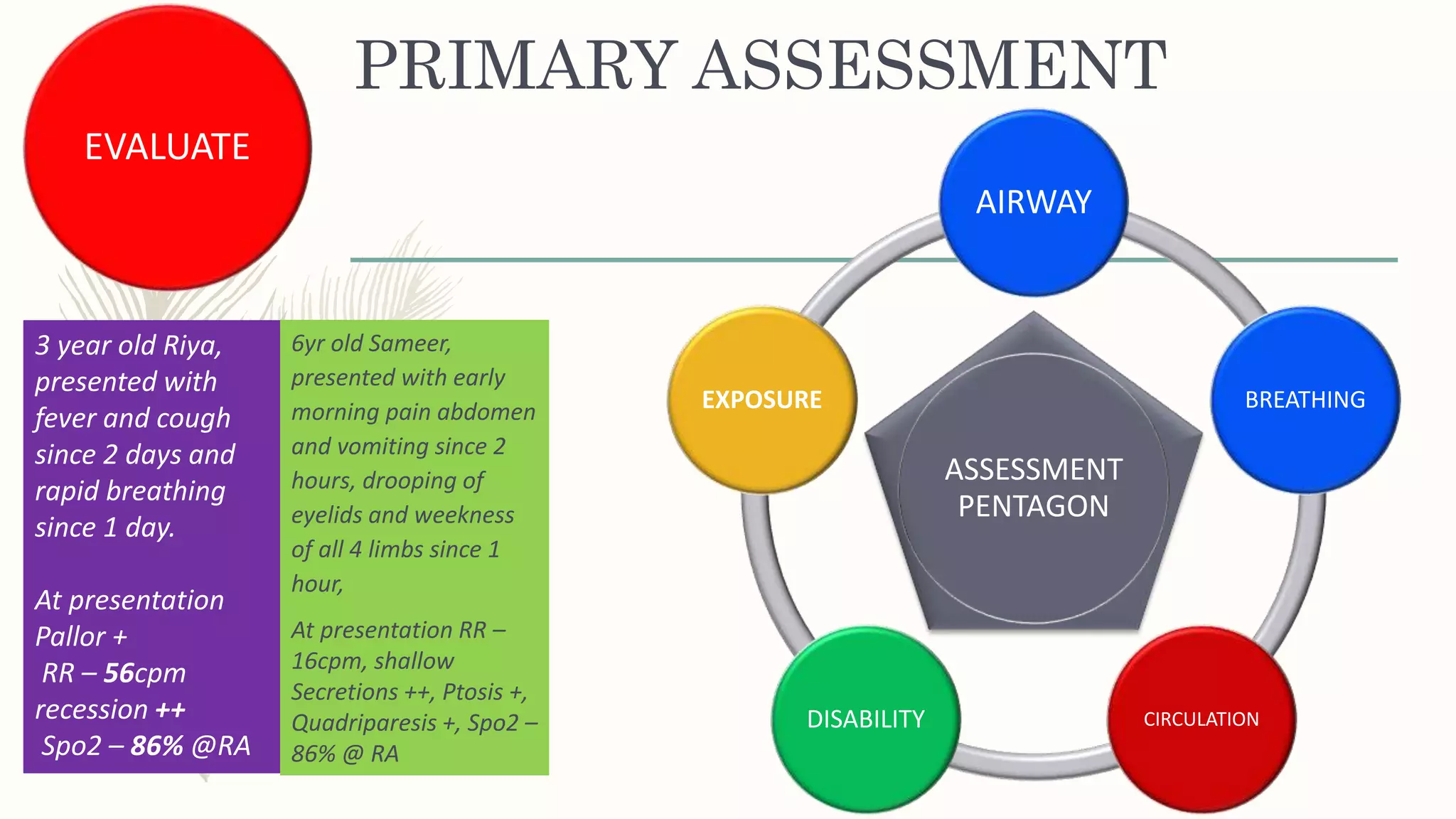


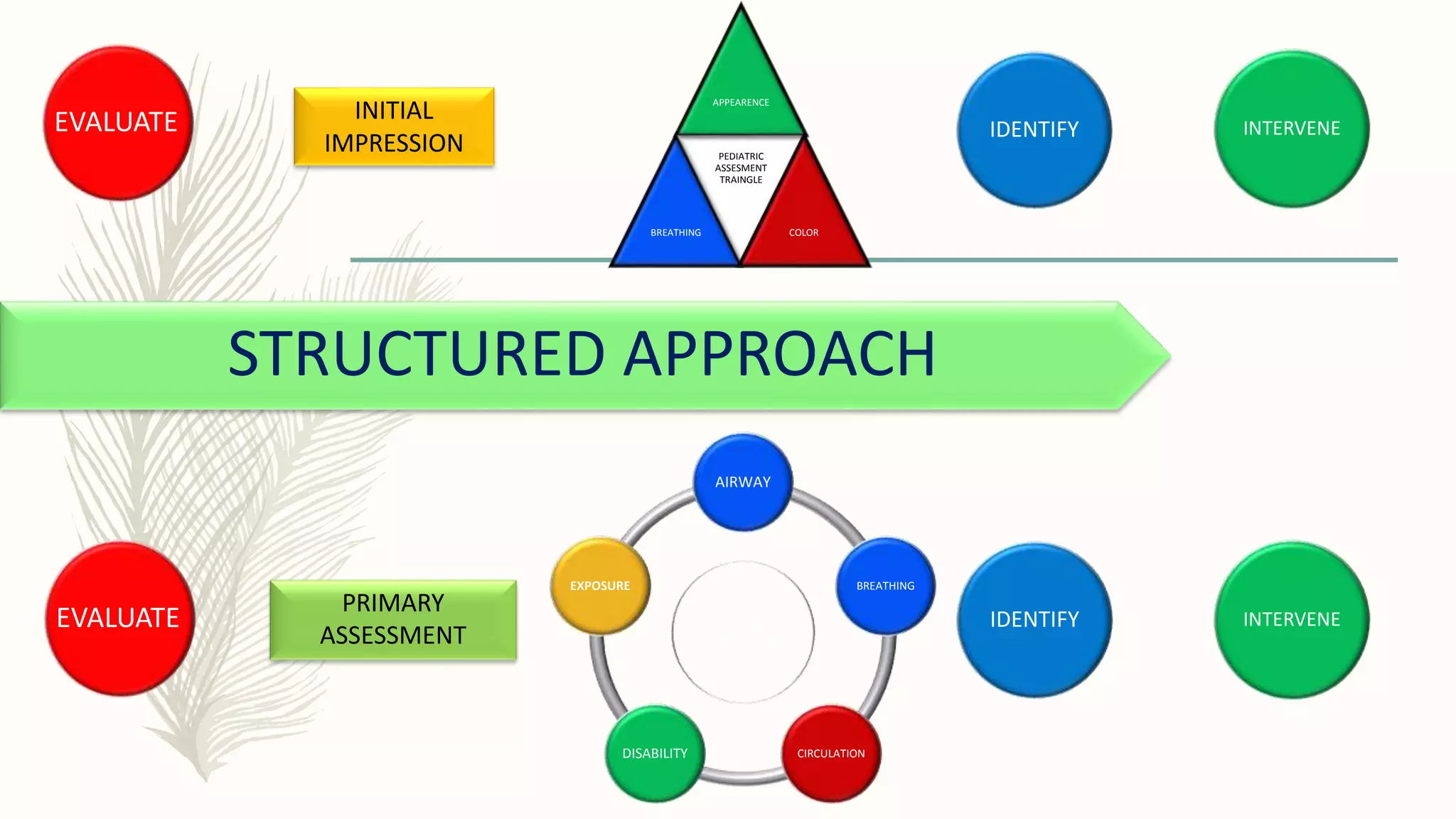


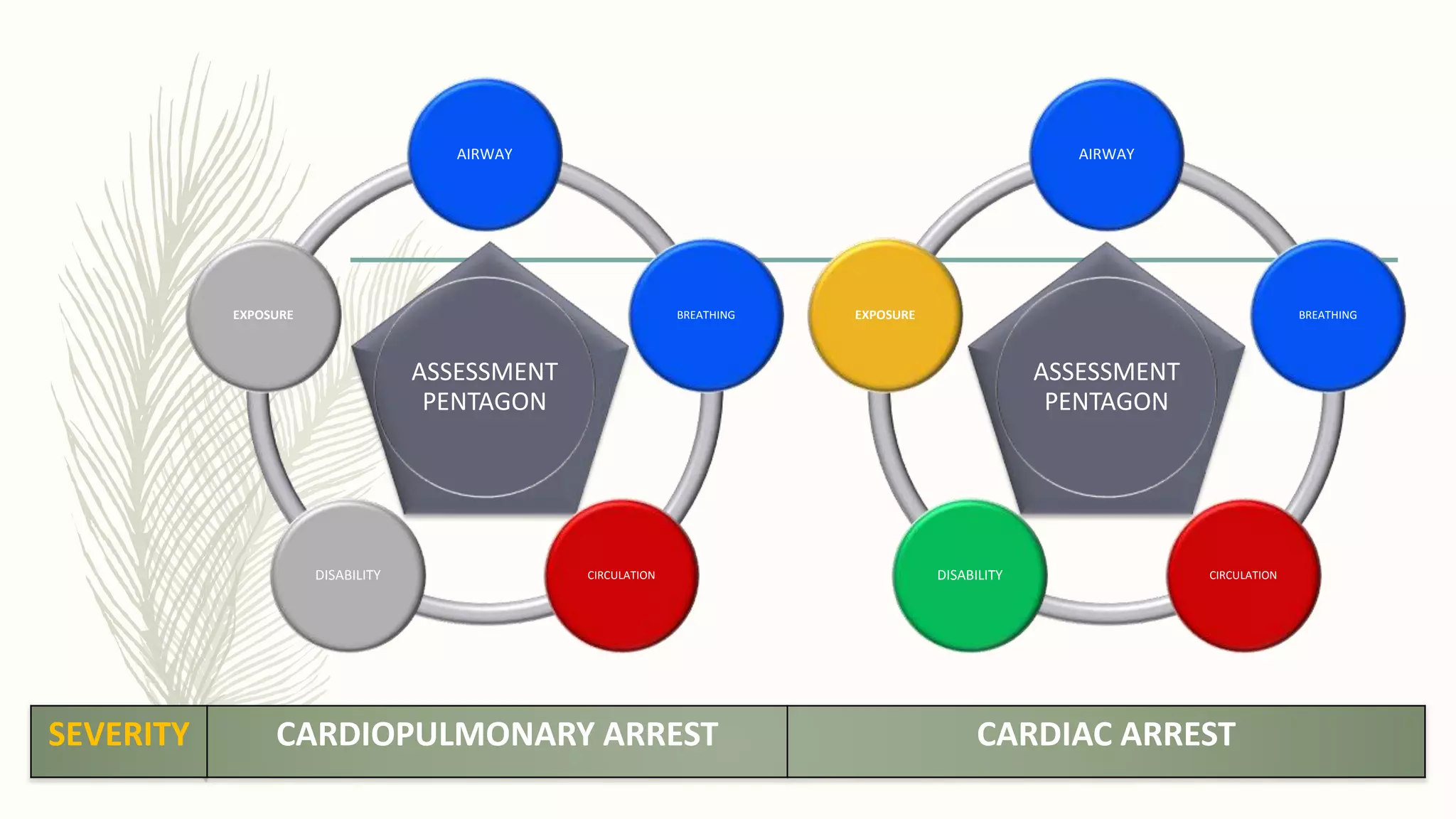

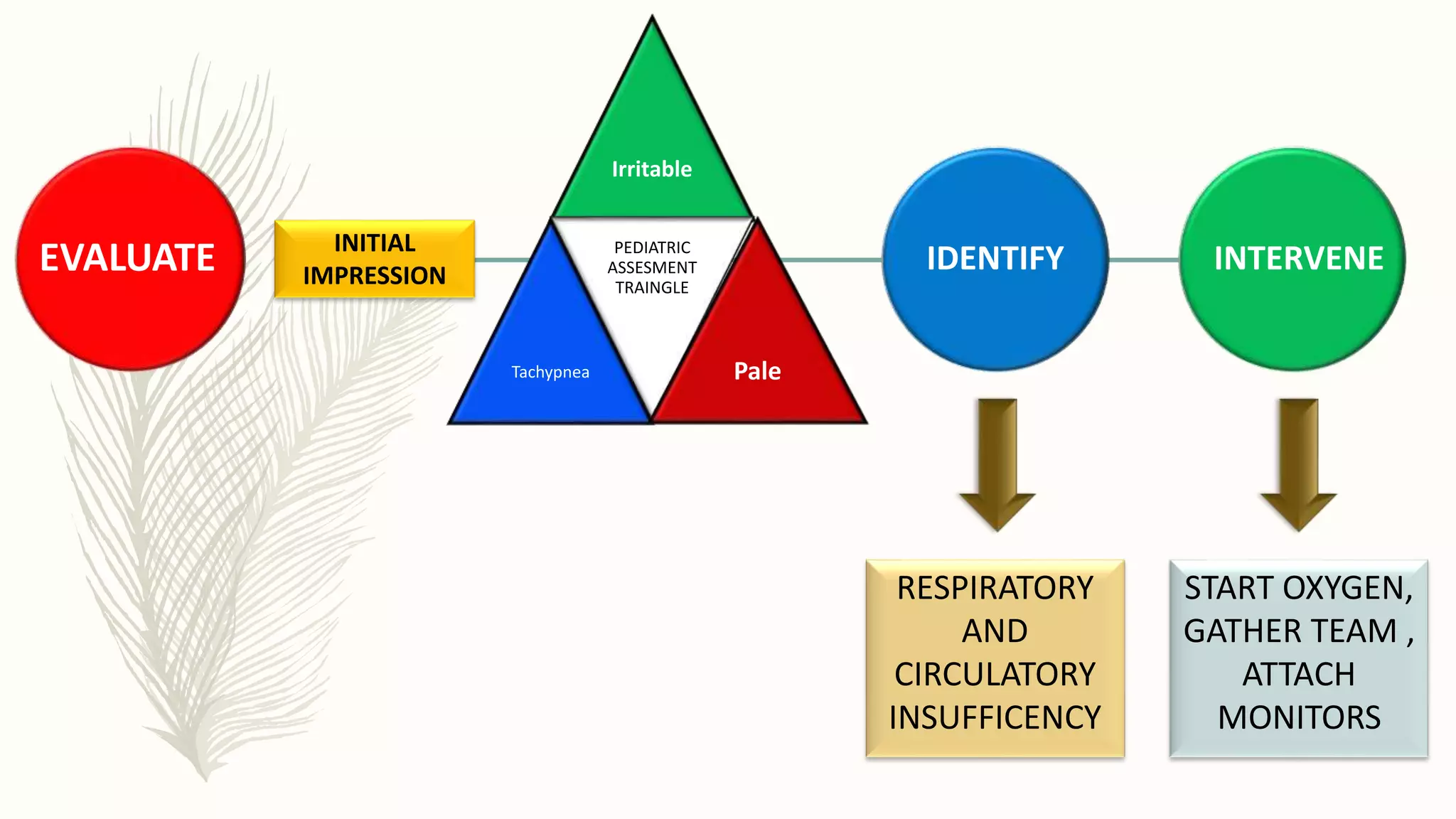


This document provides an overview of pediatric advanced life support (PALS). It discusses the basics of BLS including the ABCs and differences between adult and pediatric BLS. It then introduces PALS, covering principles, recognizing a sick child with a structured approach, and initial and primary patient assessments. The structured approach involves evaluating appearance, breathing, color, identifying severity and type of respiratory/circulatory issues, and intervening. Primary assessment uses the pediatric assessment triangle and pentagon to evaluate airway, breathing, circulation, disability and exposure. Case examples demonstrate use of this approach to identify issues like respiratory failure and compensated shock and guide interventions.


