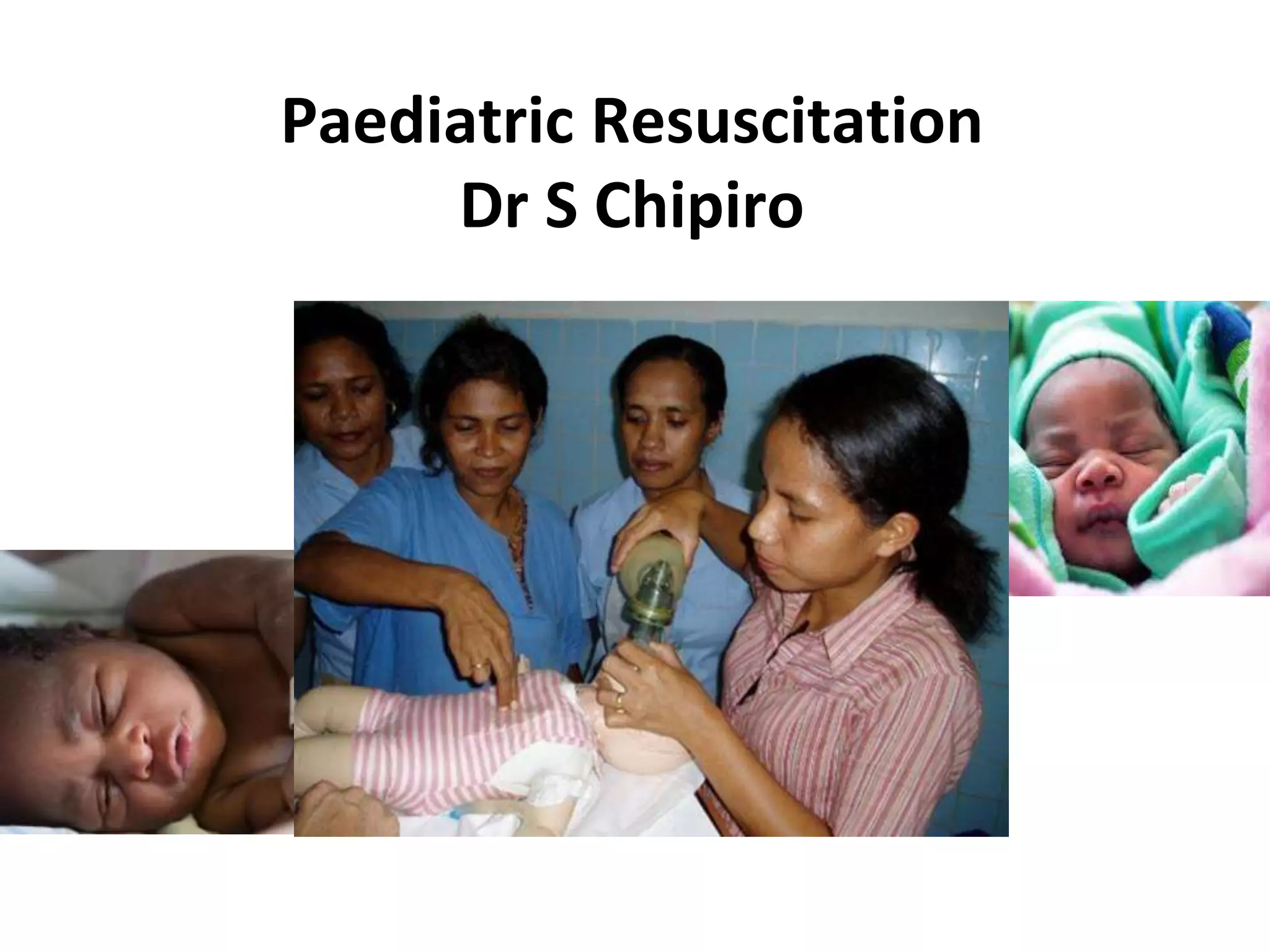
Paediatric Resuscitation
Dr S Chipiro
Session Objectives
–Identify at risk children requiring
resuscitation
–Familiarize with the General Approach
Resuscitation
–Demonstrate skills for paediatric
resuscitation
–Understand the importance of
teamwork and effective
communication during resuscitation
2
Definition
• Resuscitation is a series of
actions which are used to
assist or revivebabies from a
potential or apparent death .
Resuscitation General Approach
Anticipation
Assessment
Airway
Breathing
Circulation
Drugs
Anticipation
• STAY PREPARED FOR RESUSCITATION
• Recognise risk factors
• Communicate during patient transfer
• Sometimes the need for resuscitation can be
predicted, but often it cannot,
REQUIREMENTS
• ,
POLICY
FURNISHED
SPACE
SKILLED
PERSONNEL
EMERGENCY
TROLLEY
POLICY
• Displayed
• Familiarised with
• Criteria for resuscitation
• Duties of team members
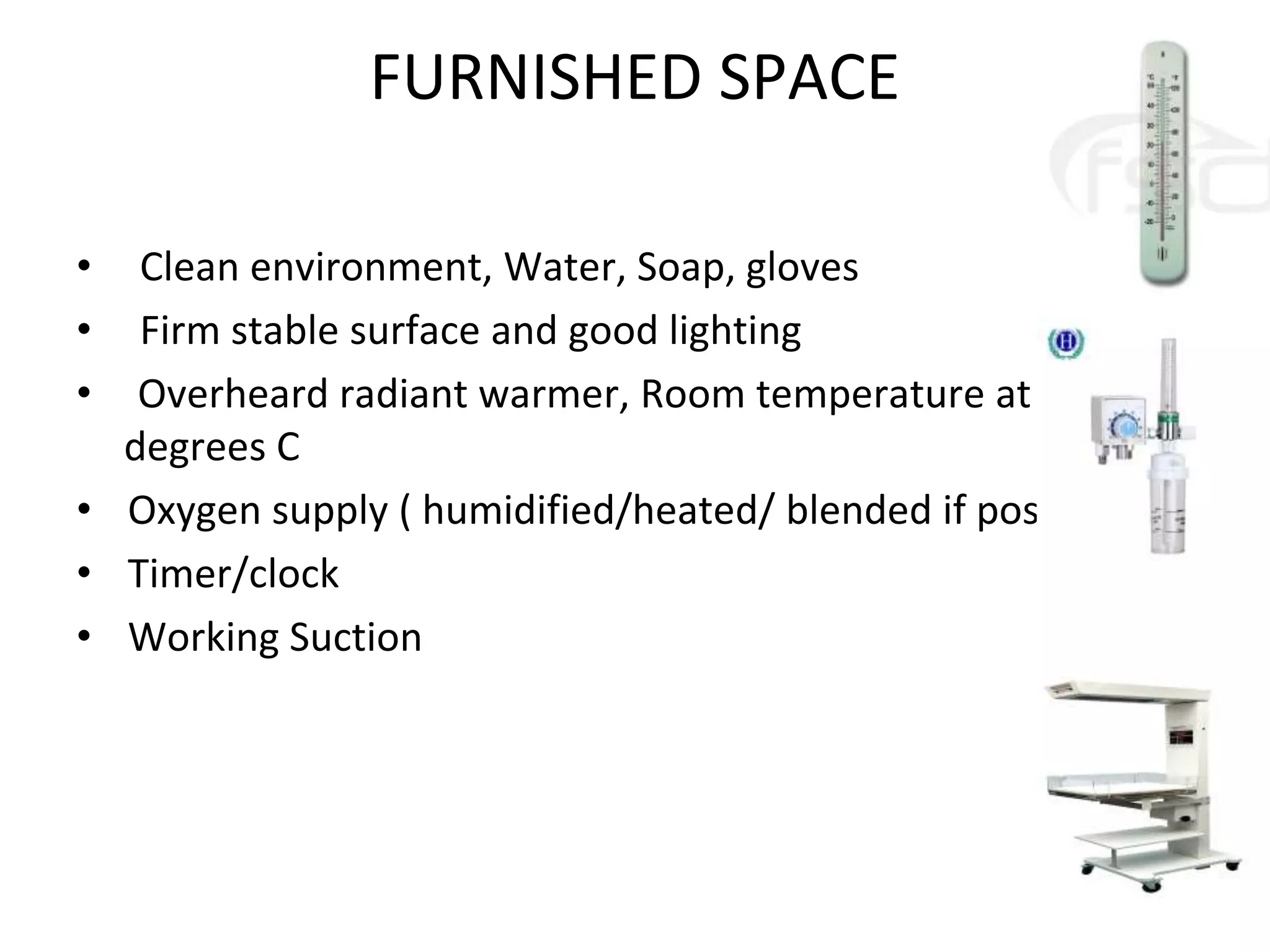
FURNISHED SPACE
• Clean environment, Water, Soap, gloves
• Firm stable surface and good lighting
• Overheard radiant warmer, Room temperature at > 25
degrees C
• Oxygen supply ( humidified/heated/ blended if possible)
• Timer/clock
• Working Suction
SKILLED PERSONNEL
– A multidisciplinary team.
– Trained according to accepted standard of care
– Ongoing training and refresher course
– Available at point of care
– Teamwork
– Communication
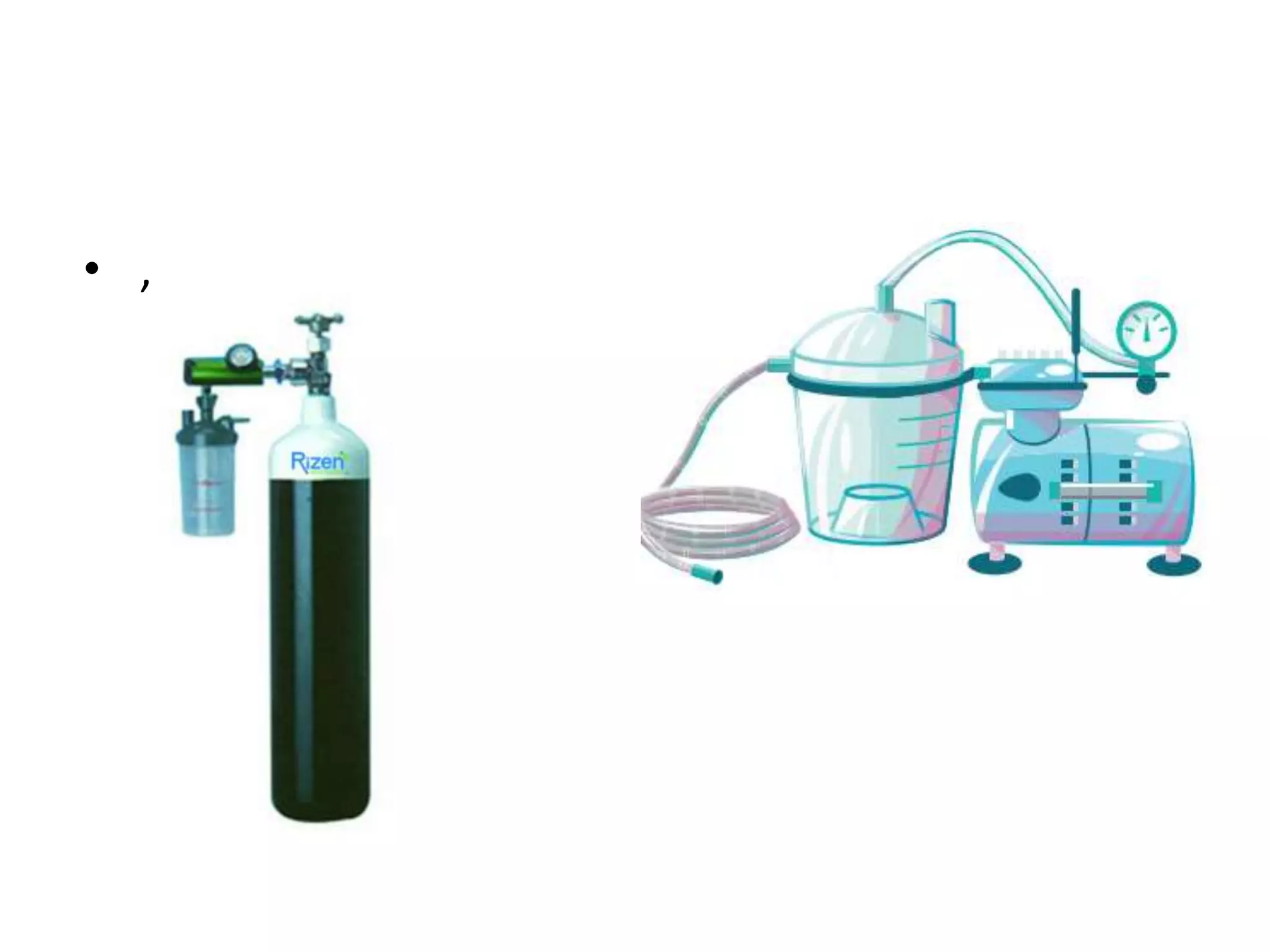
EMERGENCY TROLLEY
• DEFIBRILLATOR
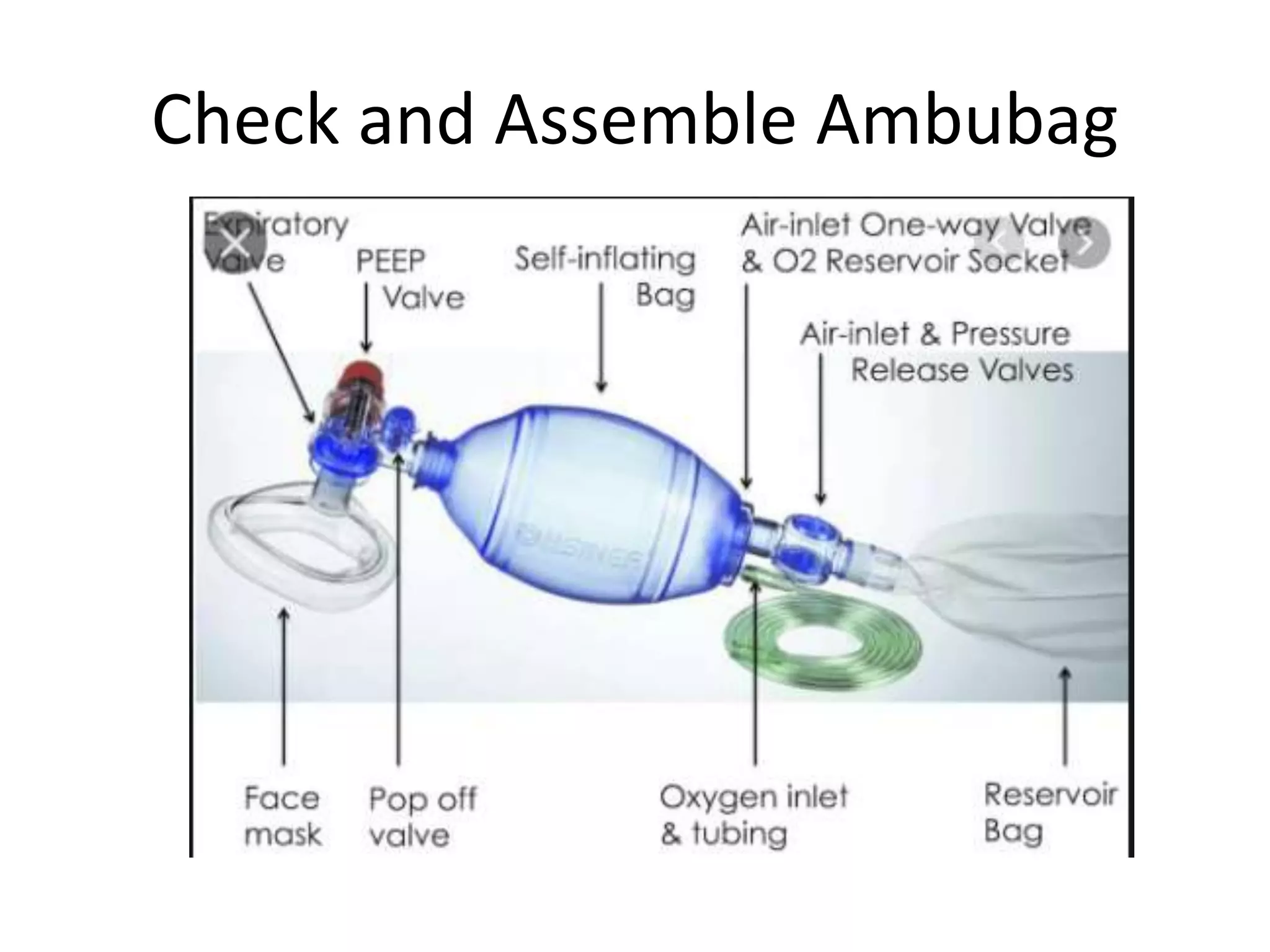
• Bag valve mask device-240-250ml + reservoir bag
• Face masks of different size
• Oropharyngeal
airways
• Portable Oxygen supply
• Stethoscope and a torch
• Pulse oximeter
• Suction devices and catheters
• timer/clock
• ET tubes, laryngeal mask, introducers, Suction devices
Laryngoscope with straight blade, extra batteries
• Drugs, IV fluids,
,
• Check resuscitation trolley every shift and
after each resuscitation
Equipment
• ,
Equipment
Check and Assemble Ambubag
Assessment
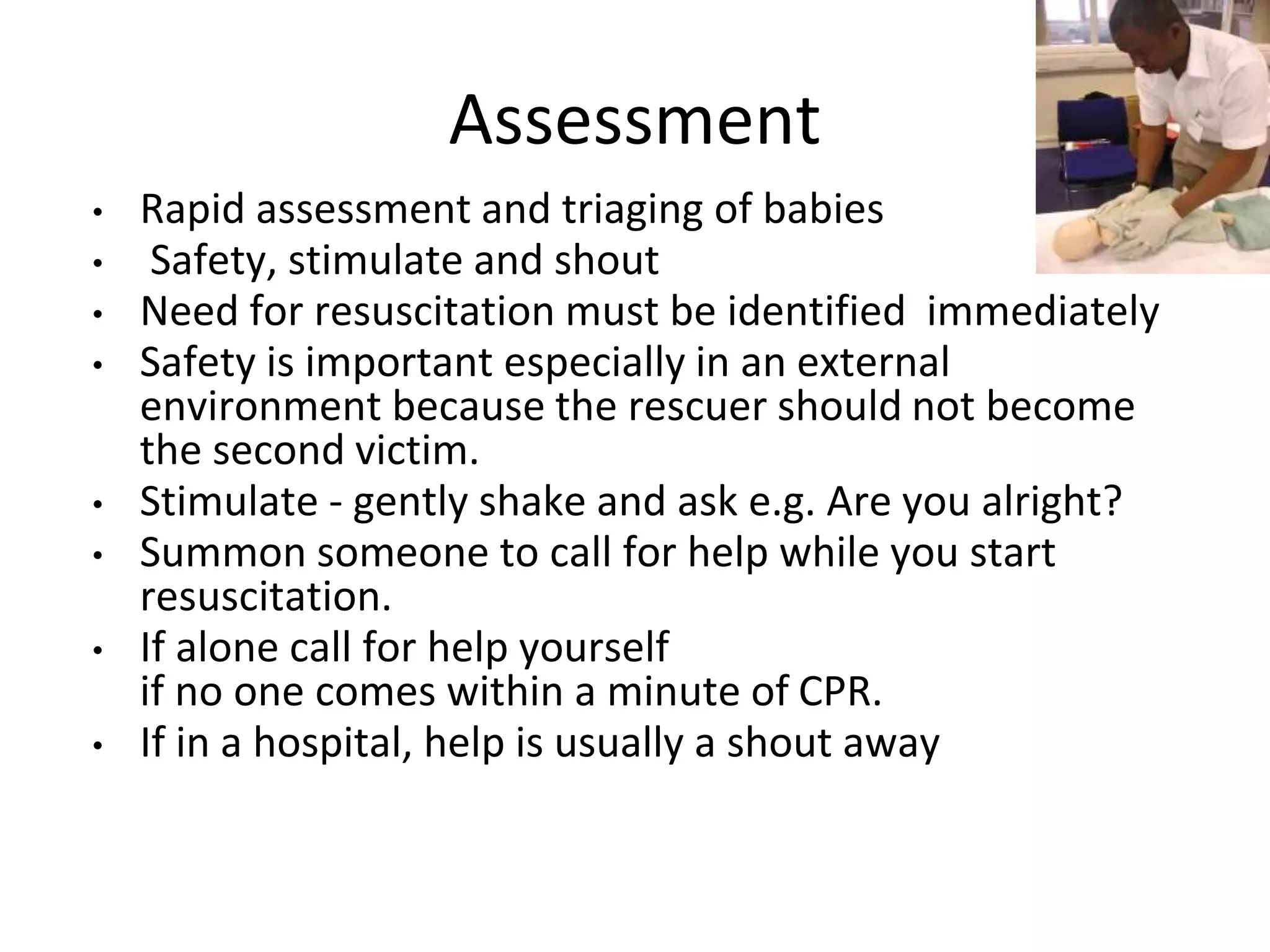
• Rapid assessment and triaging of babies
• Safety, stimulate and shout
• Need for resuscitation must be identified immediately
• Safety is important especially in an external
environment because the rescuer should not become
the second victim.
• Stimulate - gently shake and ask e.g. Are you alright?
• Summon someone to call for help while you start
resuscitation.
• If alone call for help yourself
if no one comes within a minute of CPR.
• If in a hospital, help is usually a shout away
REMEMBER
• As you identify the problems in ABC you
rectify them
Airway
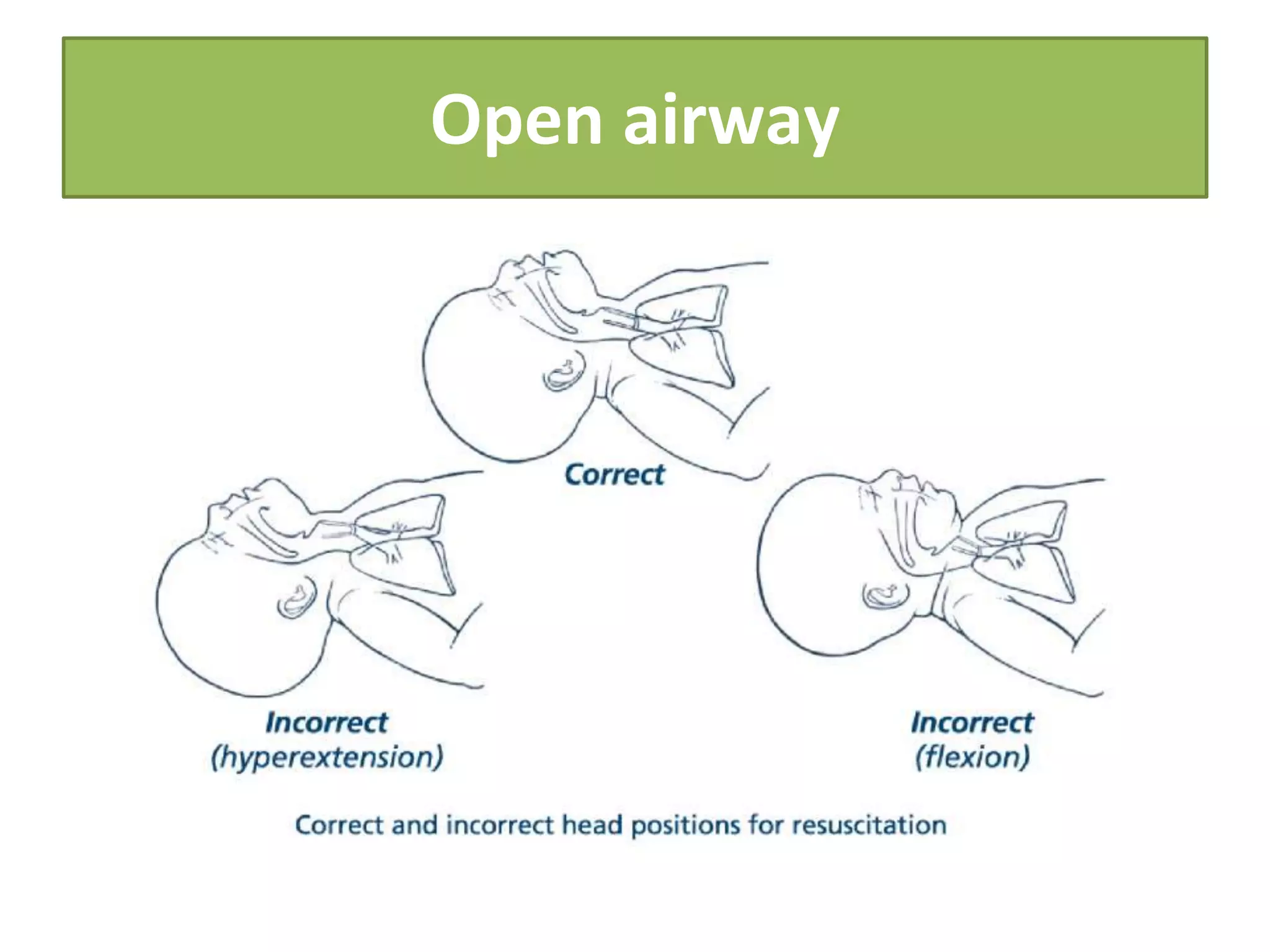
• Open the airway – head tilt/chin lift or jaw thrust
• Neutral position in infants and sniffing position
in children
• Check patency -LOOK, LISTEN and FEEL.
• Look for chest movement
• Listen for breath sounds with ear just above the
nose
• Feel the breath on your cheek above the mouth
• Use Oropharyngeal airways, ETT etc where
required
Open airway
BREATHING
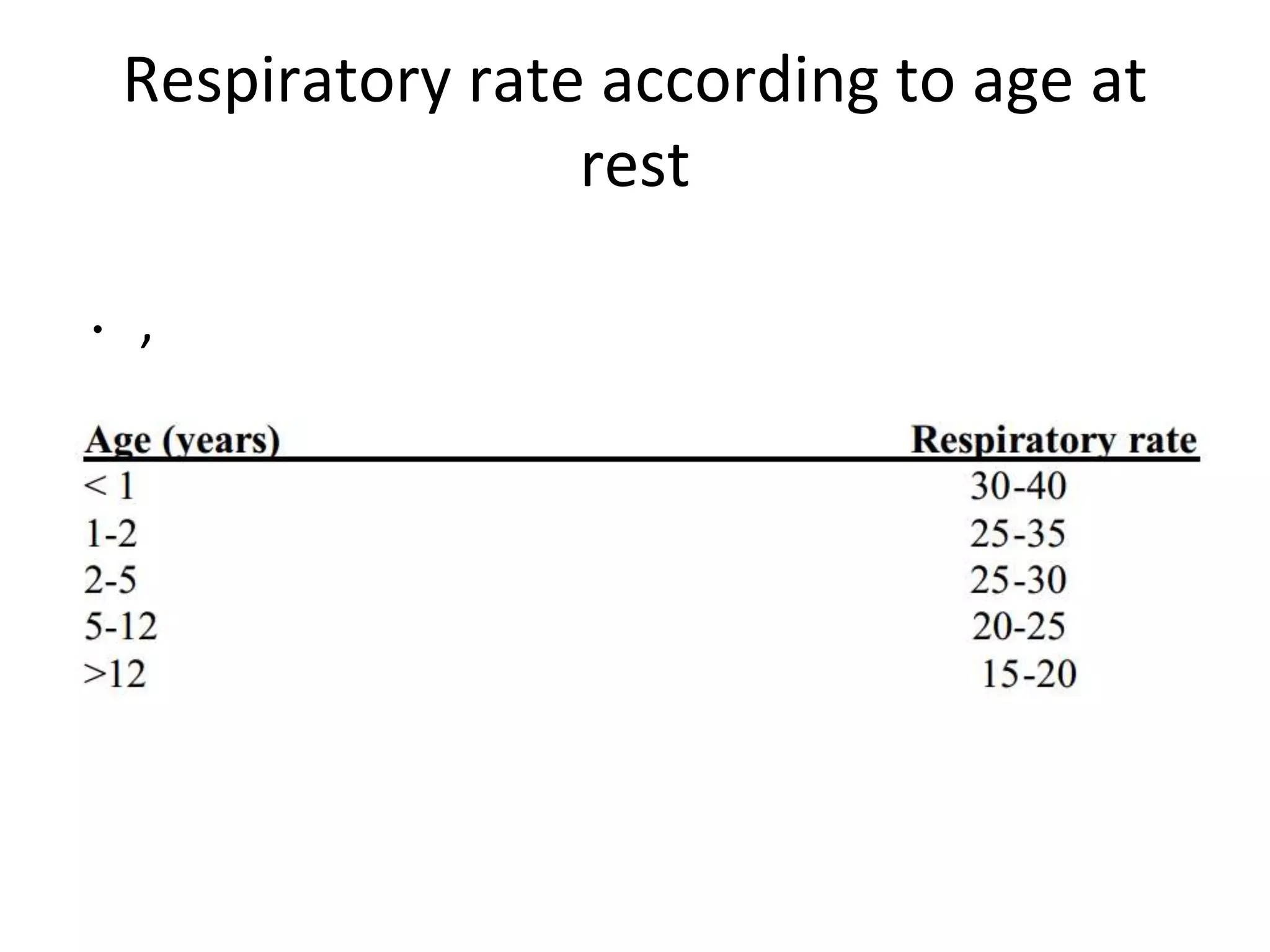
• Assess effort of breathing
• Count the respirations
• Auscultate for breath sounds
• Listen for stridor / wheeze
• Assess skin colour
• Attach a saturation probe
Respiratory rate according to age at
rest
• ,
Breathing
• If patient’s airway is patent and patient
breathing-turn the child to his/her side and
put him/her in recovery position and
maintain the open airway.
• If breathing is still ineffective, start Positive
pressure ventilation
Positive pressure ventilation
Indications
• Apnoeic/gasping
• HR<100b/min
Decision to start PPV should be made within a
minute
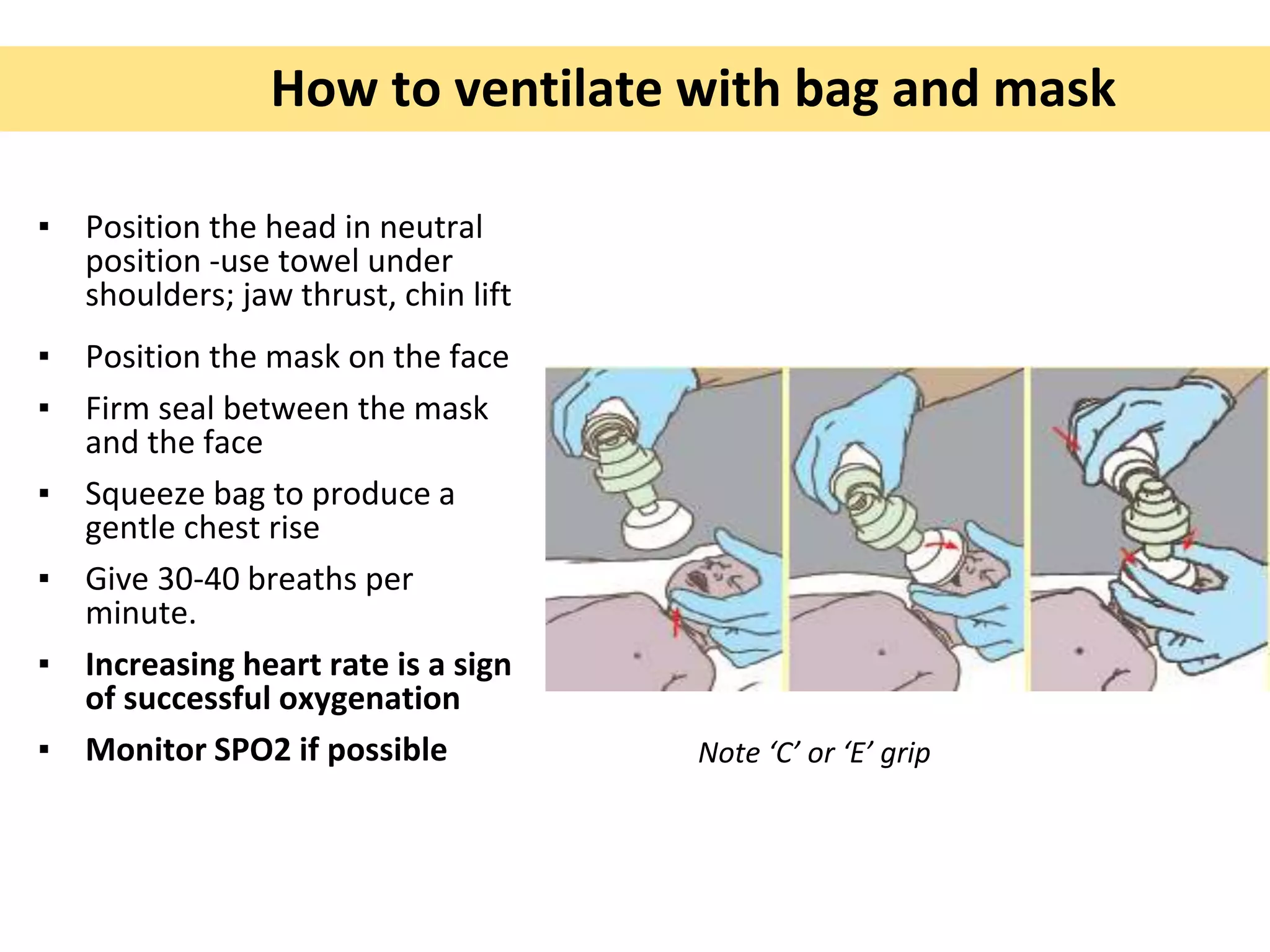
▪ Position the head in neutral
position -use towel under
shoulders; jaw thrust, chin lift
▪ Position the mask on the face
▪ Firm seal between the mask
and the face
▪ Squeeze bag to produce a
gentle chest rise
▪ Give 30-40 breaths per
minute.
▪ Increasing heart rate is a sign
of successful oxygenation
▪ Monitor SPO2 if possible
How to ventilate with bag and mask
Note ‘C’ or ‘E’ grip
Appropriate Face mask size
Use of oxygen
• Start ventilating with room air
• If O2 not available continue ventilating with
room air
• If no improvement in HR, colour connect to
oxygen
• If lone helper do not stop resuscitation to
look for oxygen
• Increase gradually to maintain targeted
saturations
Troubleshooting
• If no response to PPV
-check airway-position,seal
-obstruction>>>suction
-pneumothorax?
-check equipment
Circulation
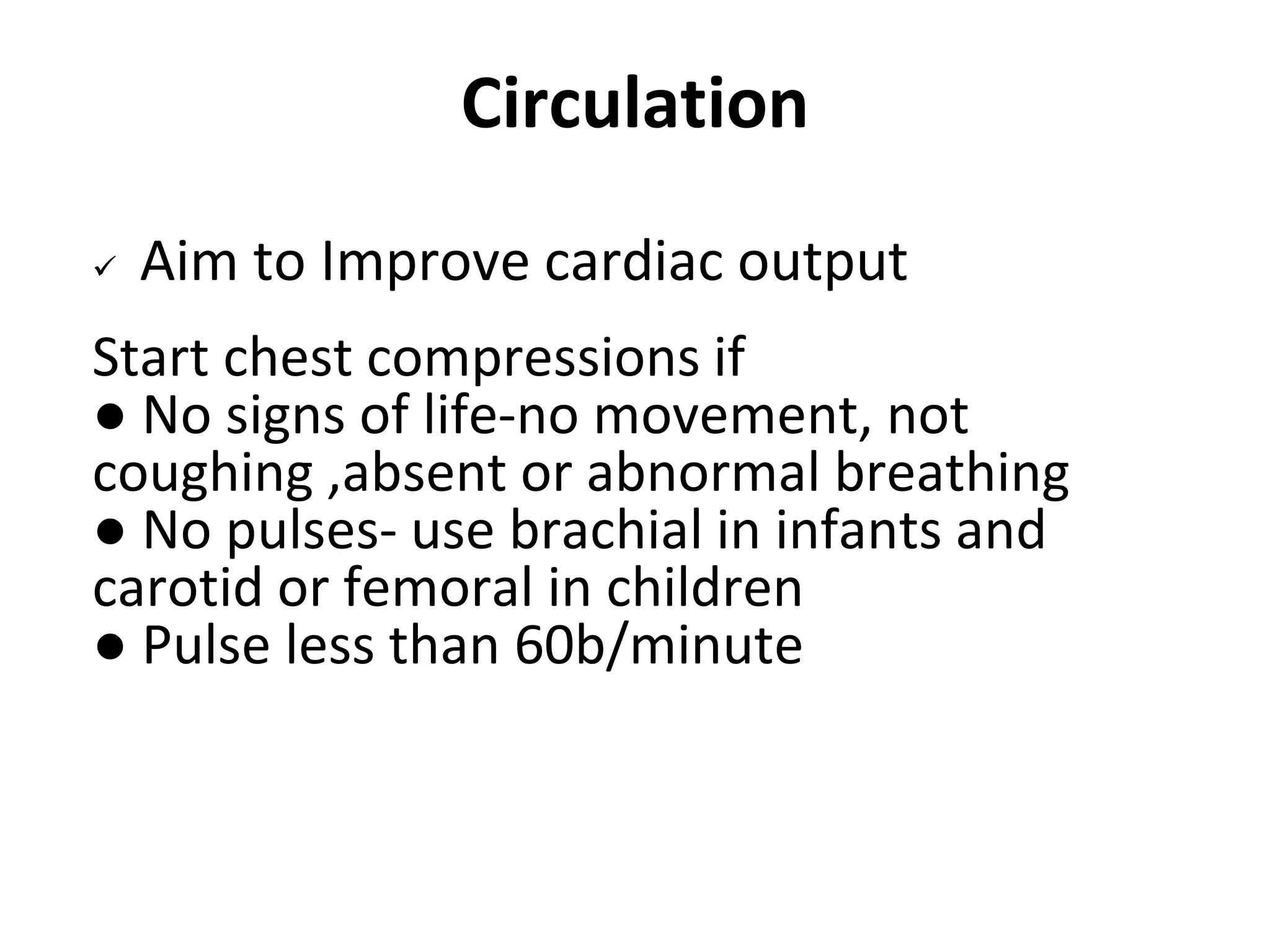
 Aim to Improve cardiac output
Start chest compressions if
● No signs of life-no movement, not
coughing ,absent or abnormal breathing
● No pulses- use brachial in infants and
carotid or femoral in children
● Pulse less than 60b/minute
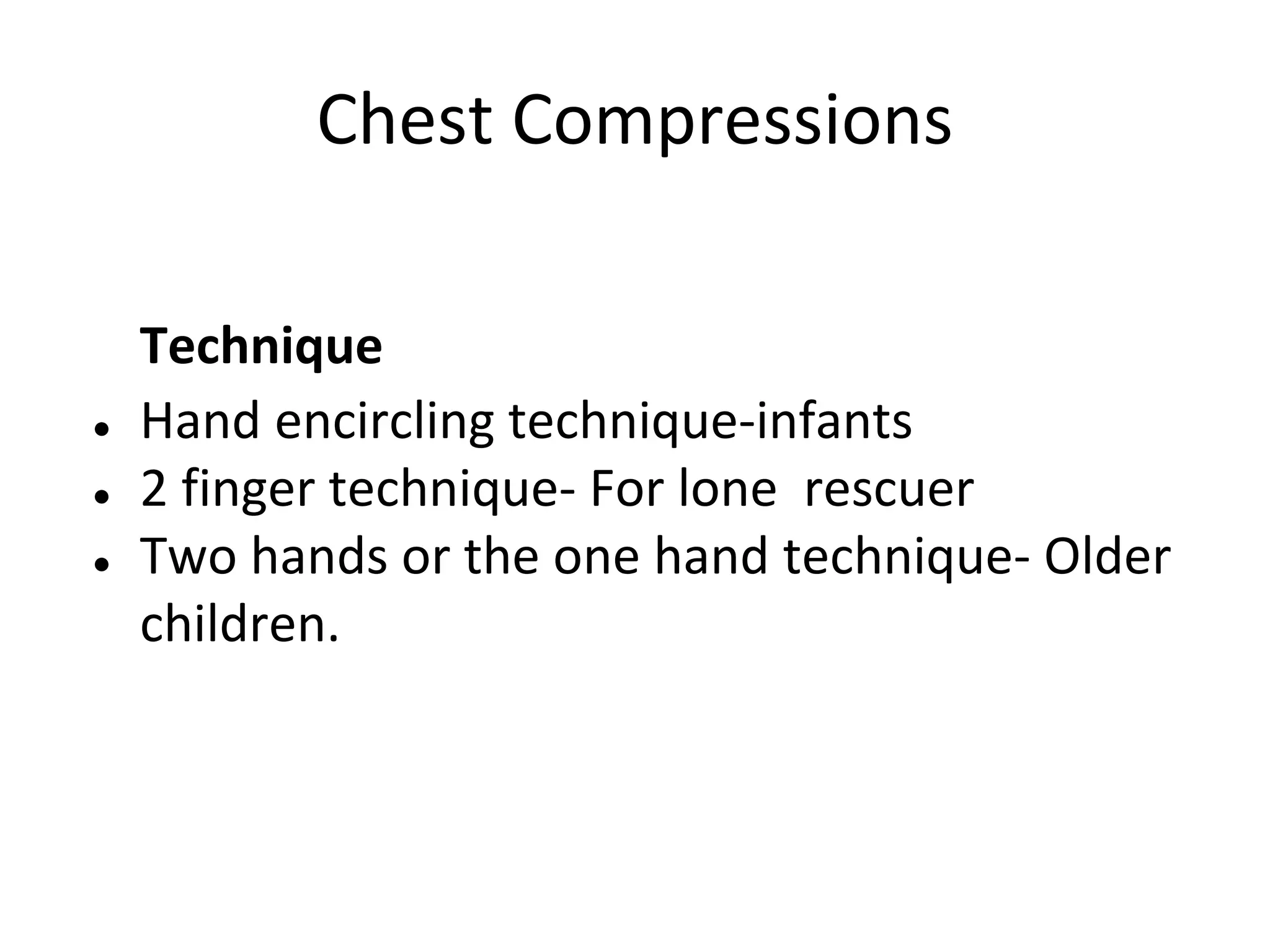
Chest Compressions
Technique
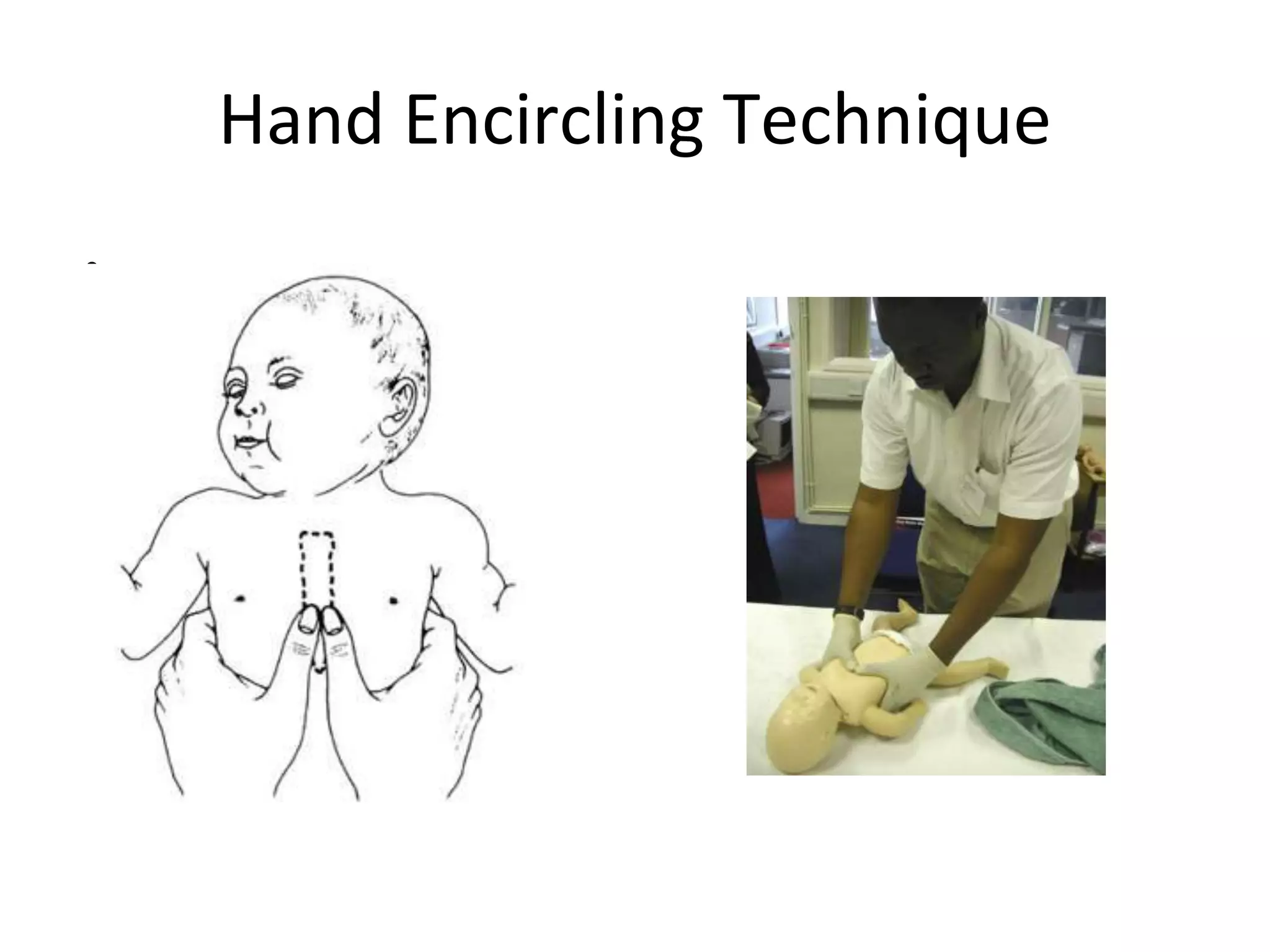
● Hand encircling technique-infants
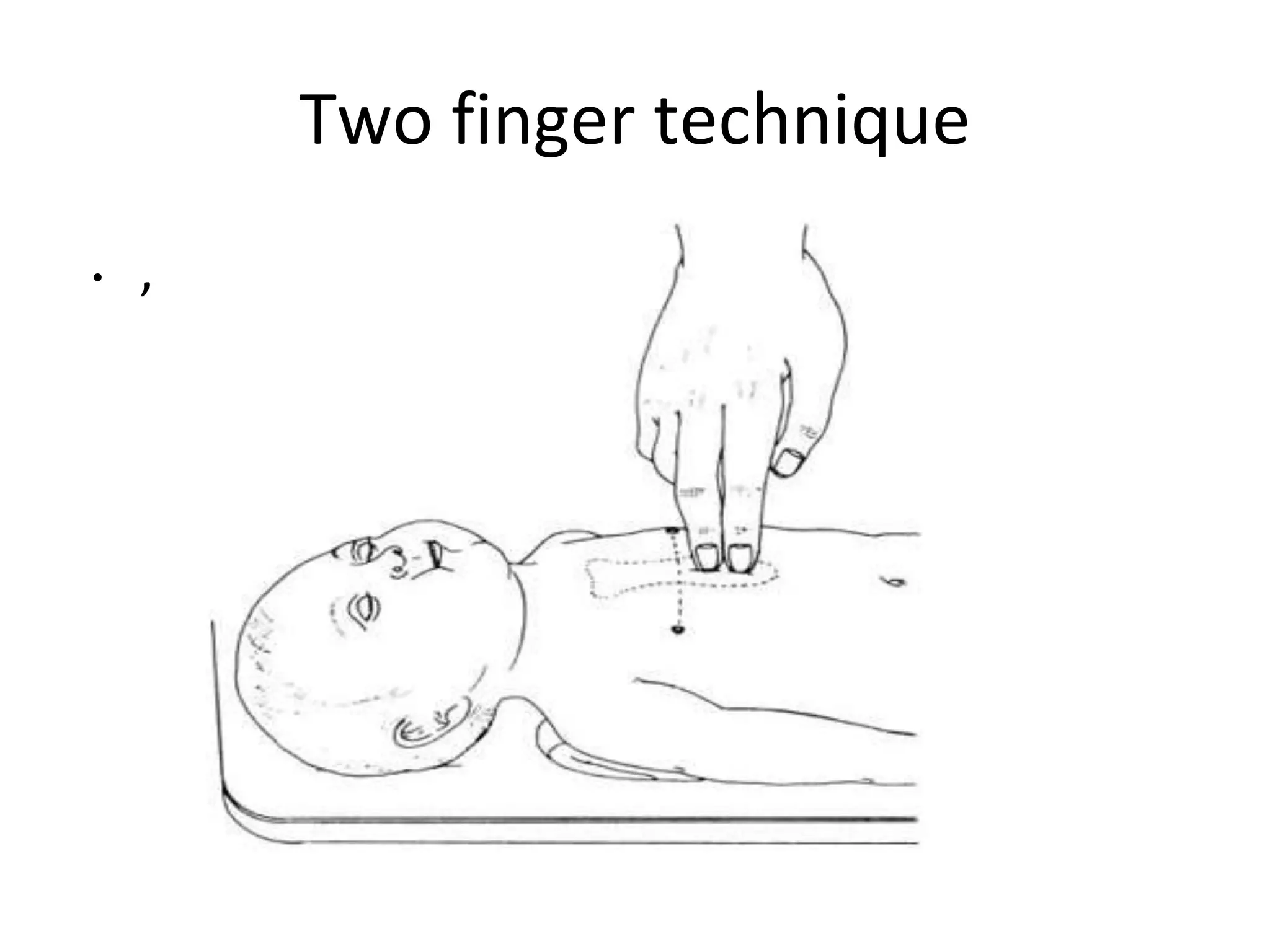
● 2 finger technique- For lone rescuer
● Two hands or the one hand technique- Older
children.
Chest compressions
• Compress the lower half of the sternum to a
depth of at least one third of the chest diameter
• Chest wall should completely recoil before the
next compression.
• Ratio 15: 2 for all age groups
• Compressions should be continuous because
pausing unnecessarily will decrease coronary
perfusion pressure to zero and several
compressions will be required before adequate
coronary perfusion recurs.
• Rate of 100-120beats/minute for all ages
Hand Encircling Technique
• ,
Two finger technique
• ,
Advanced Resuscitation
• Endotracheal Intubation
• Drugs
• Glucometer
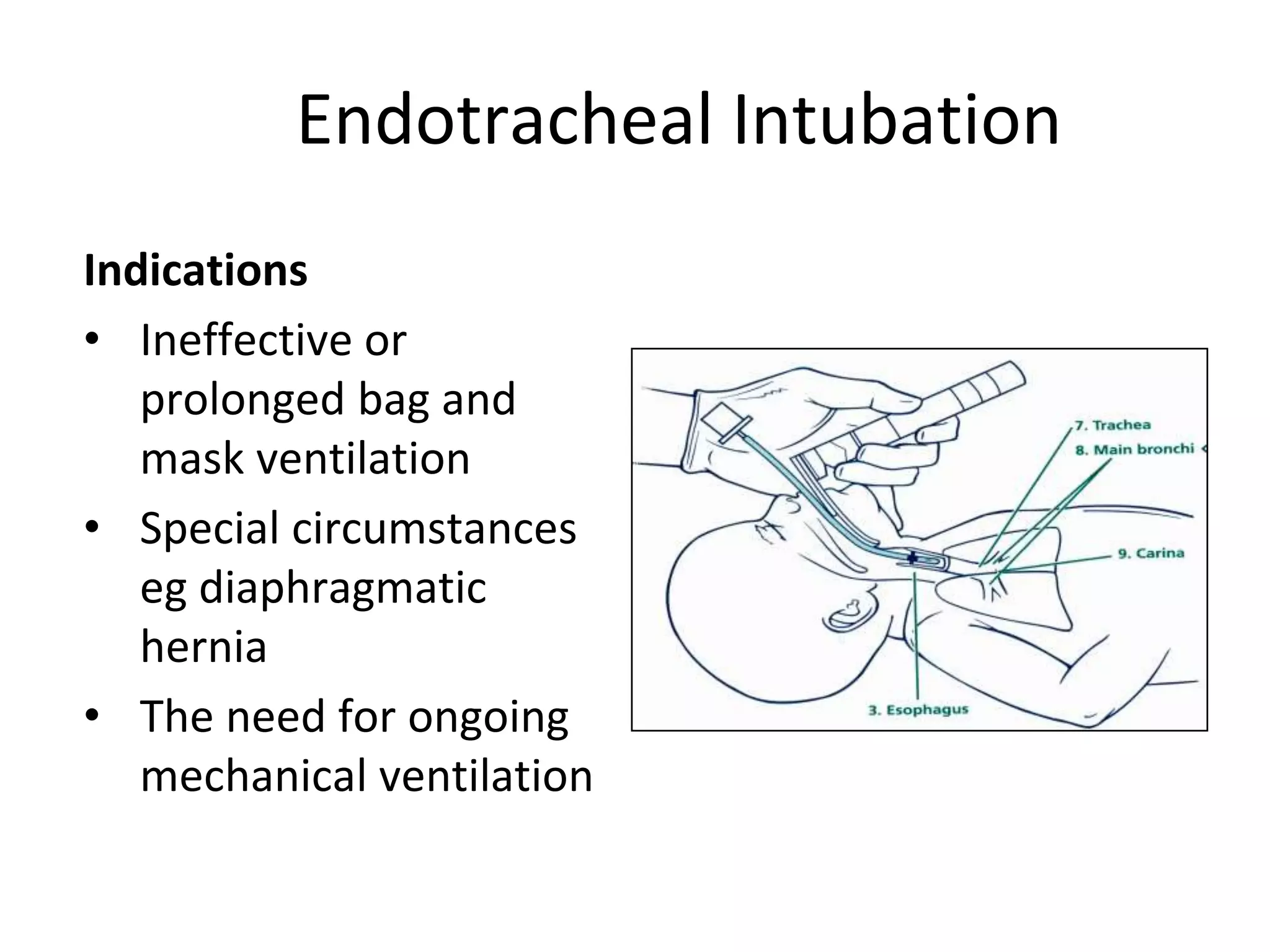
Endotracheal Intubation
Indications
• Ineffective or
prolonged bag and
mask ventilation
• Special circumstances
eg diaphragmatic
hernia
• The need for ongoing
mechanical ventilation
Tube size and level of insertion
Weight Tube size Level
(at the lip)
<1000g 2,5 6,5-7
1000-2000g 3,0 7-8
2000-3000g 3,5 8-9
3000-4000g 3,5-4 9-10,5
Weight (kg) + 6cm = depth (cm)
Drugs
• Adrenaline 1:10 000
-0.1ml/kg iv
-1ml/kg via trachea
• 10% Dextrose-
-2-4mls/kg iv
• Normal saline-if no response to resusc and evidence of
volume loss/shock
-10ml/kg over 30 mins up to 2 boluses, monitor response
• Naloxone-0.1mg/kg( 0.25mls/hr) im/iv
Post Resuscitation Care
• Continue monitoring of vital signs in all babies
• Admit/Refer
• Keep baby warm
• Continue support measures during transportation
• Counsel the parents
• Document
• Review
When to call of resuscitation
Consider stopping if:
• No spontaneous respirations/gasping after 20
mins of effective resuscitation
• No HR or HR <60b/min after 10 mins of
effective resuscitation
When not to resuscitate
Consider not starting when:
● Futile
-dead baby,lethal anomalies
● Poor prognosis
-BW<500g
-trisomy 13/18
Summary
• Resuscitation is a basic life saving skill that we should all
possess and keep perfecting.
• It is an art and science
• Anticipation and preparedness
• Teamwork
• Reviewing
• Keep parents informed
• Ongoing training-simulations/drills
• Don’t miss the demonstration
Acknowledgements
• ,
• Department of Paediatrics SMCH
• Department of Paediatrics Mpilo
Hospital
• MOHCC Family Health Department
• MOHCC Manicaland Province
• Paediatric Association of Zimbabwe
• American Academy of Paediatrics
• Helping Babies Breathe course
• Liverpool School of Tropical
Medicine: Life Saving Skills Course
• UNICEF Zimbabwe

paediatric resuscitation..pptx

  • 1.
  • 2.
    Session Objectives –Identify atrisk children requiring resuscitation –Familiarize with the General Approach Resuscitation –Demonstrate skills for paediatric resuscitation –Understand the importance of teamwork and effective communication during resuscitation 2
  • 3.
    Definition • Resuscitation isa series of actions which are used to assist or revivebabies from a potential or apparent death .
  • 4.
  • 5.
    Anticipation • STAY PREPAREDFOR RESUSCITATION • Recognise risk factors • Communicate during patient transfer • Sometimes the need for resuscitation can be predicted, but often it cannot,
  • 6.
  • 7.
    POLICY • Displayed • Familiarisedwith • Criteria for resuscitation • Duties of team members
  • 8.
    FURNISHED SPACE • Cleanenvironment, Water, Soap, gloves • Firm stable surface and good lighting • Overheard radiant warmer, Room temperature at > 25 degrees C • Oxygen supply ( humidified/heated/ blended if possible) • Timer/clock • Working Suction
  • 9.
    SKILLED PERSONNEL – Amultidisciplinary team. – Trained according to accepted standard of care – Ongoing training and refresher course – Available at point of care – Teamwork – Communication
  • 10.
    EMERGENCY TROLLEY • DEFIBRILLATOR •Bag valve mask device-240-250ml + reservoir bag • Face masks of different size • Oropharyngeal airways • Portable Oxygen supply • Stethoscope and a torch • Pulse oximeter • Suction devices and catheters • timer/clock • ET tubes, laryngeal mask, introducers, Suction devices Laryngoscope with straight blade, extra batteries • Drugs, IV fluids,
  • 11.
    , • Check resuscitationtrolley every shift and after each resuscitation
  • 12.
  • 13.
  • 14.
  • 15.
  • 16.
    Assessment • Rapid assessmentand triaging of babies • Safety, stimulate and shout • Need for resuscitation must be identified immediately • Safety is important especially in an external environment because the rescuer should not become the second victim. • Stimulate - gently shake and ask e.g. Are you alright? • Summon someone to call for help while you start resuscitation. • If alone call for help yourself if no one comes within a minute of CPR. • If in a hospital, help is usually a shout away
  • 17.
    REMEMBER • As youidentify the problems in ABC you rectify them
  • 18.
    Airway • Open theairway – head tilt/chin lift or jaw thrust • Neutral position in infants and sniffing position in children • Check patency -LOOK, LISTEN and FEEL. • Look for chest movement • Listen for breath sounds with ear just above the nose • Feel the breath on your cheek above the mouth • Use Oropharyngeal airways, ETT etc where required
  • 19.
  • 20.
    BREATHING • Assess effortof breathing • Count the respirations • Auscultate for breath sounds • Listen for stridor / wheeze • Assess skin colour • Attach a saturation probe
  • 21.
    Respiratory rate accordingto age at rest • ,
  • 22.
    Breathing • If patient’sairway is patent and patient breathing-turn the child to his/her side and put him/her in recovery position and maintain the open airway. • If breathing is still ineffective, start Positive pressure ventilation
  • 23.
    Positive pressure ventilation Indications •Apnoeic/gasping • HR<100b/min Decision to start PPV should be made within a minute
  • 24.
    ▪ Position thehead in neutral position -use towel under shoulders; jaw thrust, chin lift ▪ Position the mask on the face ▪ Firm seal between the mask and the face ▪ Squeeze bag to produce a gentle chest rise ▪ Give 30-40 breaths per minute. ▪ Increasing heart rate is a sign of successful oxygenation ▪ Monitor SPO2 if possible How to ventilate with bag and mask Note ‘C’ or ‘E’ grip
  • 25.
  • 26.
    Use of oxygen •Start ventilating with room air • If O2 not available continue ventilating with room air • If no improvement in HR, colour connect to oxygen • If lone helper do not stop resuscitation to look for oxygen • Increase gradually to maintain targeted saturations
  • 27.
    Troubleshooting • If noresponse to PPV -check airway-position,seal -obstruction>>>suction -pneumothorax? -check equipment
  • 28.
    Circulation  Aim toImprove cardiac output Start chest compressions if ● No signs of life-no movement, not coughing ,absent or abnormal breathing ● No pulses- use brachial in infants and carotid or femoral in children ● Pulse less than 60b/minute
  • 29.
    Chest Compressions Technique ● Handencircling technique-infants ● 2 finger technique- For lone rescuer ● Two hands or the one hand technique- Older children.
  • 30.
    Chest compressions • Compressthe lower half of the sternum to a depth of at least one third of the chest diameter • Chest wall should completely recoil before the next compression. • Ratio 15: 2 for all age groups • Compressions should be continuous because pausing unnecessarily will decrease coronary perfusion pressure to zero and several compressions will be required before adequate coronary perfusion recurs. • Rate of 100-120beats/minute for all ages
  • 31.
  • 32.
  • 34.
    Advanced Resuscitation • EndotrachealIntubation • Drugs • Glucometer
  • 35.
    Endotracheal Intubation Indications • Ineffectiveor prolonged bag and mask ventilation • Special circumstances eg diaphragmatic hernia • The need for ongoing mechanical ventilation
  • 36.
    Tube size andlevel of insertion Weight Tube size Level (at the lip) <1000g 2,5 6,5-7 1000-2000g 3,0 7-8 2000-3000g 3,5 8-9 3000-4000g 3,5-4 9-10,5 Weight (kg) + 6cm = depth (cm)
  • 37.
    Drugs • Adrenaline 1:10000 -0.1ml/kg iv -1ml/kg via trachea • 10% Dextrose- -2-4mls/kg iv • Normal saline-if no response to resusc and evidence of volume loss/shock -10ml/kg over 30 mins up to 2 boluses, monitor response • Naloxone-0.1mg/kg( 0.25mls/hr) im/iv
  • 38.
    Post Resuscitation Care •Continue monitoring of vital signs in all babies • Admit/Refer • Keep baby warm • Continue support measures during transportation • Counsel the parents • Document • Review
  • 39.
    When to callof resuscitation Consider stopping if: • No spontaneous respirations/gasping after 20 mins of effective resuscitation • No HR or HR <60b/min after 10 mins of effective resuscitation
  • 40.
    When not toresuscitate Consider not starting when: ● Futile -dead baby,lethal anomalies ● Poor prognosis -BW<500g -trisomy 13/18
  • 41.
    Summary • Resuscitation isa basic life saving skill that we should all possess and keep perfecting. • It is an art and science • Anticipation and preparedness • Teamwork • Reviewing • Keep parents informed • Ongoing training-simulations/drills • Don’t miss the demonstration
  • 43.
    Acknowledgements • , • Departmentof Paediatrics SMCH • Department of Paediatrics Mpilo Hospital • MOHCC Family Health Department • MOHCC Manicaland Province • Paediatric Association of Zimbabwe • American Academy of Paediatrics • Helping Babies Breathe course • Liverpool School of Tropical Medicine: Life Saving Skills Course • UNICEF Zimbabwe