Fitango Education
          Health Topics

                       Paragonimiasis


http://www.fitango.com/categories.php?id=216
Overview
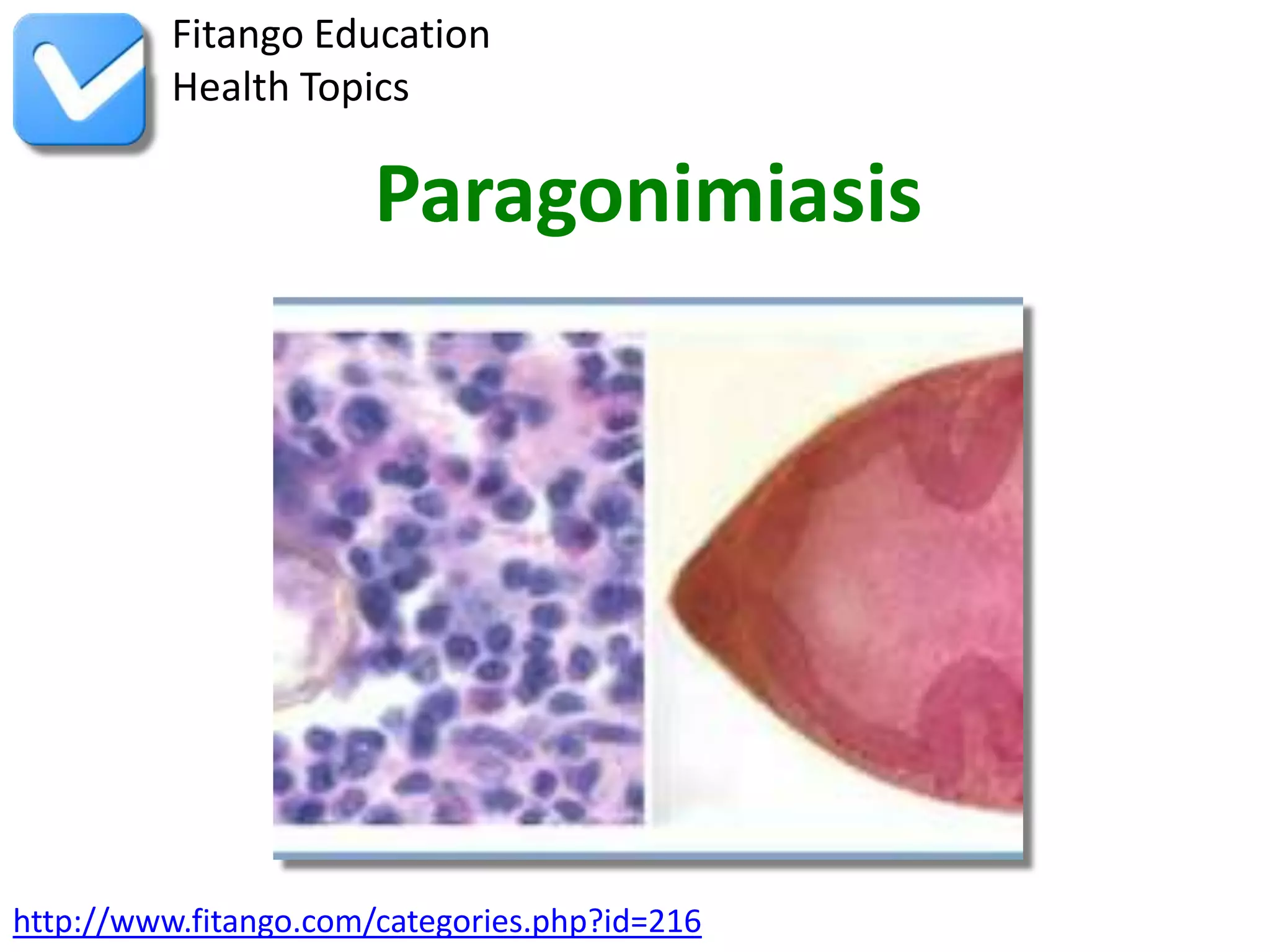
Paragonimus is a lung fluke (flatworm) that infects
the lungs of humans after eating an infected raw or
undercooked crab or crayfish. Less frequent, but
more serious cases of paragonimiasis occur when
the parasite travels to the central nervous system
instead of the lungs.


                                                      1
Overview
Although rare, paragonimiasis has been acquired
in the United States, with multiple cases reported
from the Midwest. Treatment for paragonimiasis is
available from a physician after an accurate
diagnosis is made.


                                                     2
Symptoms
Adult flukes living in the lung cause lung disease
that may never be diagnosed or is thought to be
tuberculosis. After 2-15 days, the initial signs and
symptoms may be diarrhea and abdominal pain.
This may be followed several days later by fever,
chest pain, and fatigue. The symptoms may also
include a dry cough initially, which later often
becomes productive with rusty-colored or blood-
tinged sputum on exertion.


                                                       3
Diagnosis
The infection is usually diagnosed by identification
of Paragonimus eggs in sputum. The eggs are
sometimes found in stool samples (coughed-up
eggs are swallowed). A tissue biopsy is sometimes
performed to look for eggs in a tissue specimen.


                                                       4
Diagnosis
Specific and sensitive antibody tests based on P.
westermani antigens are available through
CDC, and serologic tests using a variety of
techniques are available through commercial
laboratories.


                                                    5
Treatment
Paragonimus infections are treatable by your
health care provider. Prescription medications are
available.


                                                     6
Risks
Several species of Paragonimus cause most
infections; the most important is P. westermani,
which occurs primarily in Asia including China, the
Philippines, Japan, Vietnam, South Korea, Taiwan,
and Thailand. P. africanus causes infection in
Africa, and P. mexicanus in Central and South
America. Specialty dishes in which shellfish are
consumed raw or prepared only in vinegar, brine,
or wine without cooking play a key role in the
transmission of paragonimiasis. Raw crabs or
crayfish are also used i
                                                      7
Risks
Although rare, human paragonimiasis from P.
kellicotti has been acquired in the United States,
with multiple cases from the Midwest. Several
cases have been associated with ingestion of
uncooked crawfish during river raft float trips in
Missouri.


                                                     8
Prevention
Never eat raw freshwater crabs or crayfish. Ensure
crabs and crayfish are cooked properly. Travelers
should be advised to avoid traditional meals
containing undercooked freshwater crustaceans.


                                                     9
Paragonimiasis

Paragonimiasis

  • 1.
    Fitango Education Health Topics Paragonimiasis http://www.fitango.com/categories.php?id=216
  • 2.
    Overview Paragonimus is alung fluke (flatworm) that infects the lungs of humans after eating an infected raw or undercooked crab or crayfish. Less frequent, but more serious cases of paragonimiasis occur when the parasite travels to the central nervous system instead of the lungs. 1
  • 3.
    Overview Although rare, paragonimiasishas been acquired in the United States, with multiple cases reported from the Midwest. Treatment for paragonimiasis is available from a physician after an accurate diagnosis is made. 2
  • 4.
    Symptoms Adult flukes livingin the lung cause lung disease that may never be diagnosed or is thought to be tuberculosis. After 2-15 days, the initial signs and symptoms may be diarrhea and abdominal pain. This may be followed several days later by fever, chest pain, and fatigue. The symptoms may also include a dry cough initially, which later often becomes productive with rusty-colored or blood- tinged sputum on exertion. 3
  • 5.
    Diagnosis The infection isusually diagnosed by identification of Paragonimus eggs in sputum. The eggs are sometimes found in stool samples (coughed-up eggs are swallowed). A tissue biopsy is sometimes performed to look for eggs in a tissue specimen. 4
  • 6.
    Diagnosis Specific and sensitiveantibody tests based on P. westermani antigens are available through CDC, and serologic tests using a variety of techniques are available through commercial laboratories. 5
  • 7.
    Treatment Paragonimus infections aretreatable by your health care provider. Prescription medications are available. 6
  • 8.
    Risks Several species ofParagonimus cause most infections; the most important is P. westermani, which occurs primarily in Asia including China, the Philippines, Japan, Vietnam, South Korea, Taiwan, and Thailand. P. africanus causes infection in Africa, and P. mexicanus in Central and South America. Specialty dishes in which shellfish are consumed raw or prepared only in vinegar, brine, or wine without cooking play a key role in the transmission of paragonimiasis. Raw crabs or crayfish are also used i 7
  • 9.
    Risks Although rare, humanparagonimiasis from P. kellicotti has been acquired in the United States, with multiple cases from the Midwest. Several cases have been associated with ingestion of uncooked crawfish during river raft float trips in Missouri. 8
  • 10.
    Prevention Never eat rawfreshwater crabs or crayfish. Ensure crabs and crayfish are cooked properly. Travelers should be advised to avoid traditional meals containing undercooked freshwater crustaceans. 9