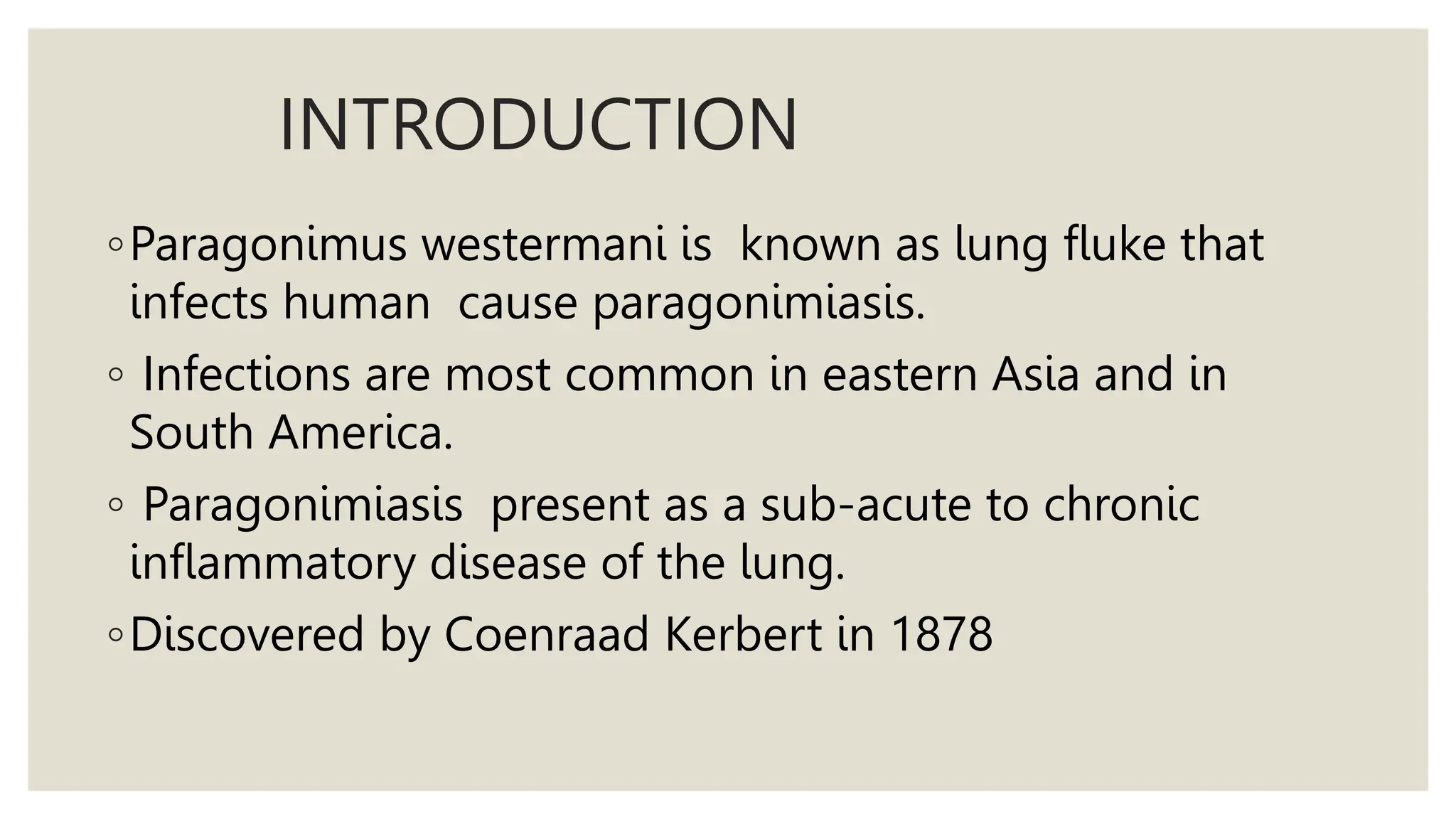
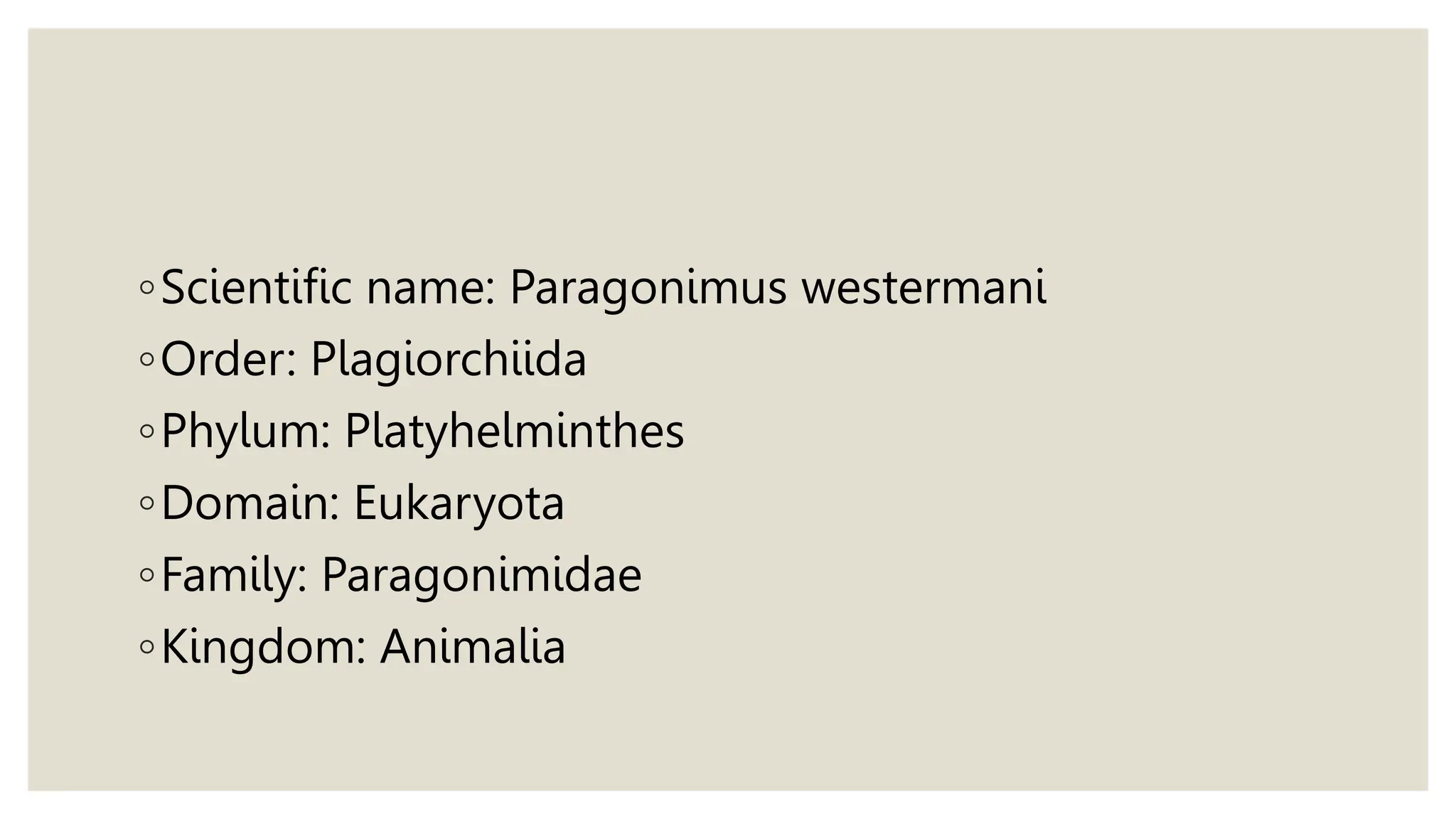
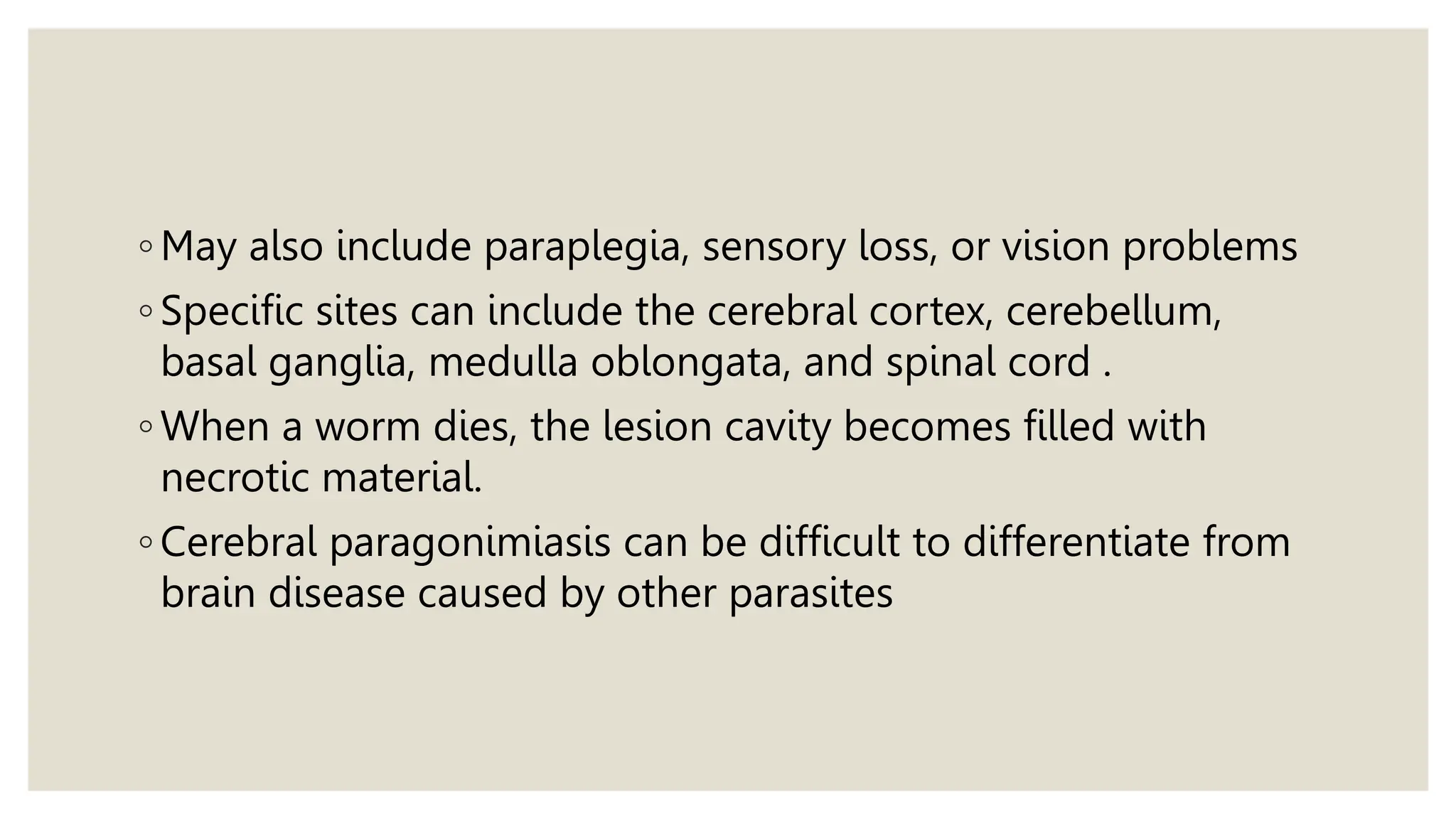
Paragonimus westermani, known as the lung fluke, is a parasitic infection prevalent in eastern Asia and parts of South America, causing a disease known as paragonimiasis. The life cycle involves freshwater snails and crustaceans as intermediate hosts, with humans contracting the infection through consumption of raw or undercooked shellfish. Symptoms can range from chronic cough and hemoptysis to severe neurological effects, and diagnosis often requires laboratory tests such as sputum examination.





![References
◦ 1. Garcia LS. Diagnostic Medical Parasitology. Washington, DC: ASM Ptess; 2019.
◦ 2. Sastry AS, Bhat S, Mishra D, Garcia LS, Sistla S. Essentials of Medical Parasitology.
New Delhi, India: Jaypee Brothers Medical Publishers (P) Ltd; 2019.
◦ 3. CDC - Paragonimiasis [Internet]. Centers for Disease Control and Prevention; 2023
[cited 2023 Nov 23]. Available from:
https://www.cdc.gov/parasites/paragonimus/index.html#:~:text=Paragonimus%20is%
20a%20lung%20fluke,to%20the%20central%20nervous%20system.](https://image.slidesharecdn.com/lungfluke-240107061855-2f0e0f68/75/LUNG-FLUKE-Paragonimus-westermani-lung-fluke-43-2048.jpg)


