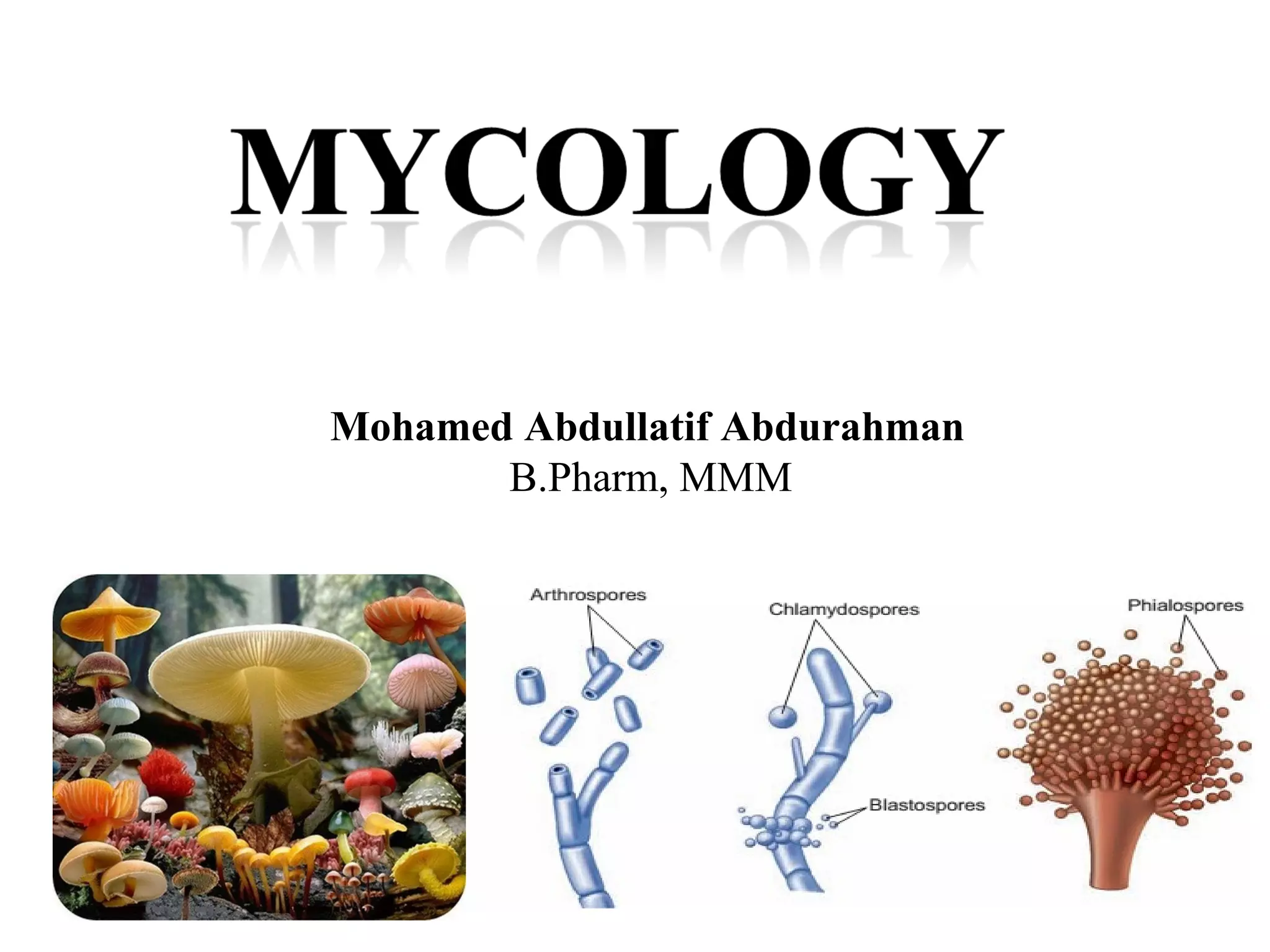
Mohamed Abdullatif Abdurahman
B.Pharm, MMM
2
3
Fungi as Infectious Agents
• Fungi are non-motile eukaryote, widely
distributed in air, dust, fomites and normal flora.
• They have a cell wall composed of complex
carbohydrates such as chitin with glucans and
mannose-proteins.
• Ergosterol is the dominant fungal membrane
sterol.
• Grow as single cells (yeasts) or multi-septate,
branching filamentous cells (hyphae).
• Fungi are relatively nonpathogenic and humans
are relatively resistant.
4
Structure
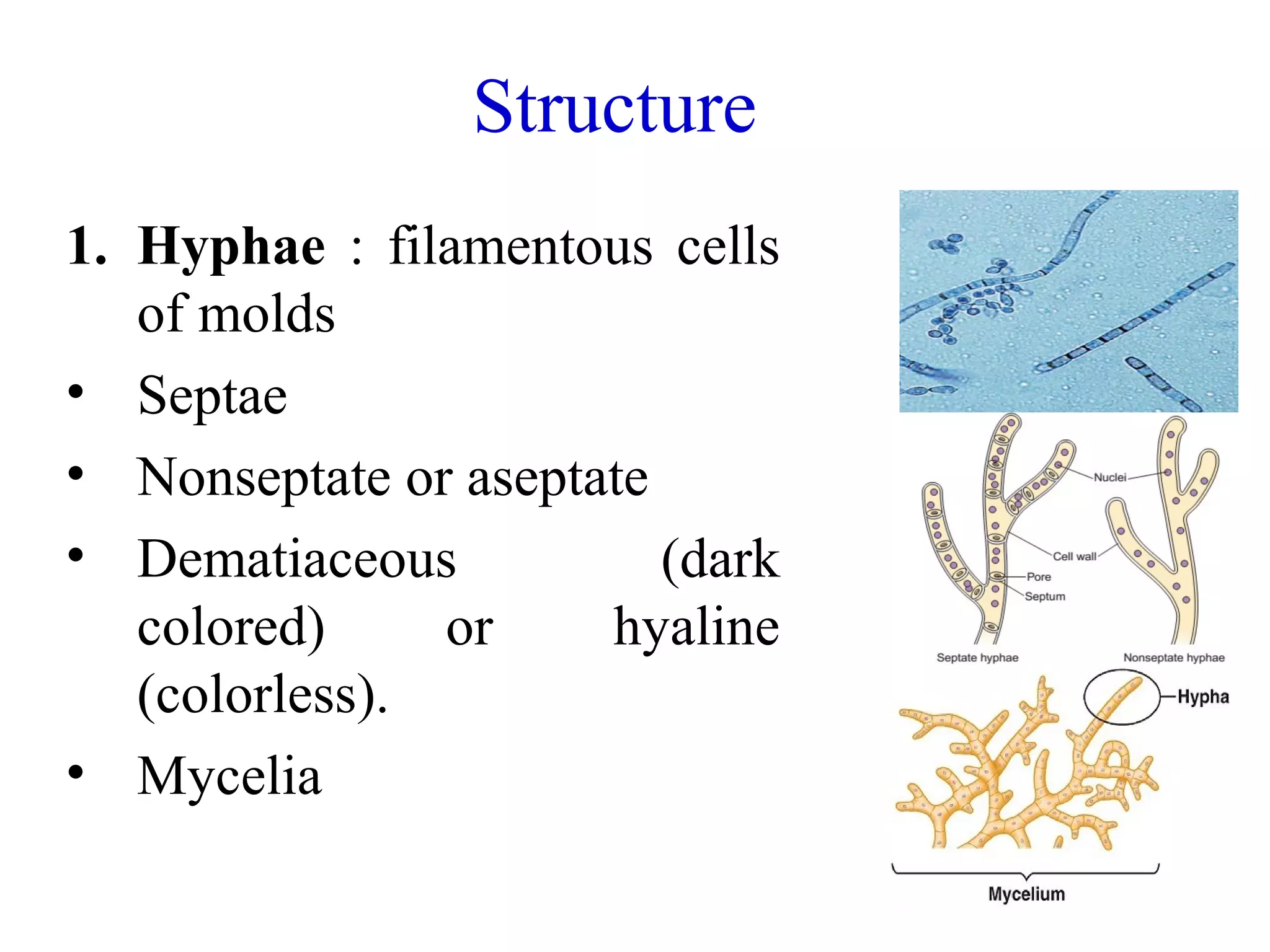
1. Hyphae : filamentous cells
of molds
• Septae
• Nonseptate or aseptate
• Dematiaceous (dark
colored) or hyaline
(colorless).
• Mycelia
5
2. Yeasts
• These are single-celled fungi,
generally round to oval shaped.
• They reproduce by budding
(blastoconidia).
3. Pseudohyphae :
• Hyphae with sausagelike
constrictions at septations.
• Formed by some yeasts when
they elongate but remain attached
to each other (Candida albicans). 6
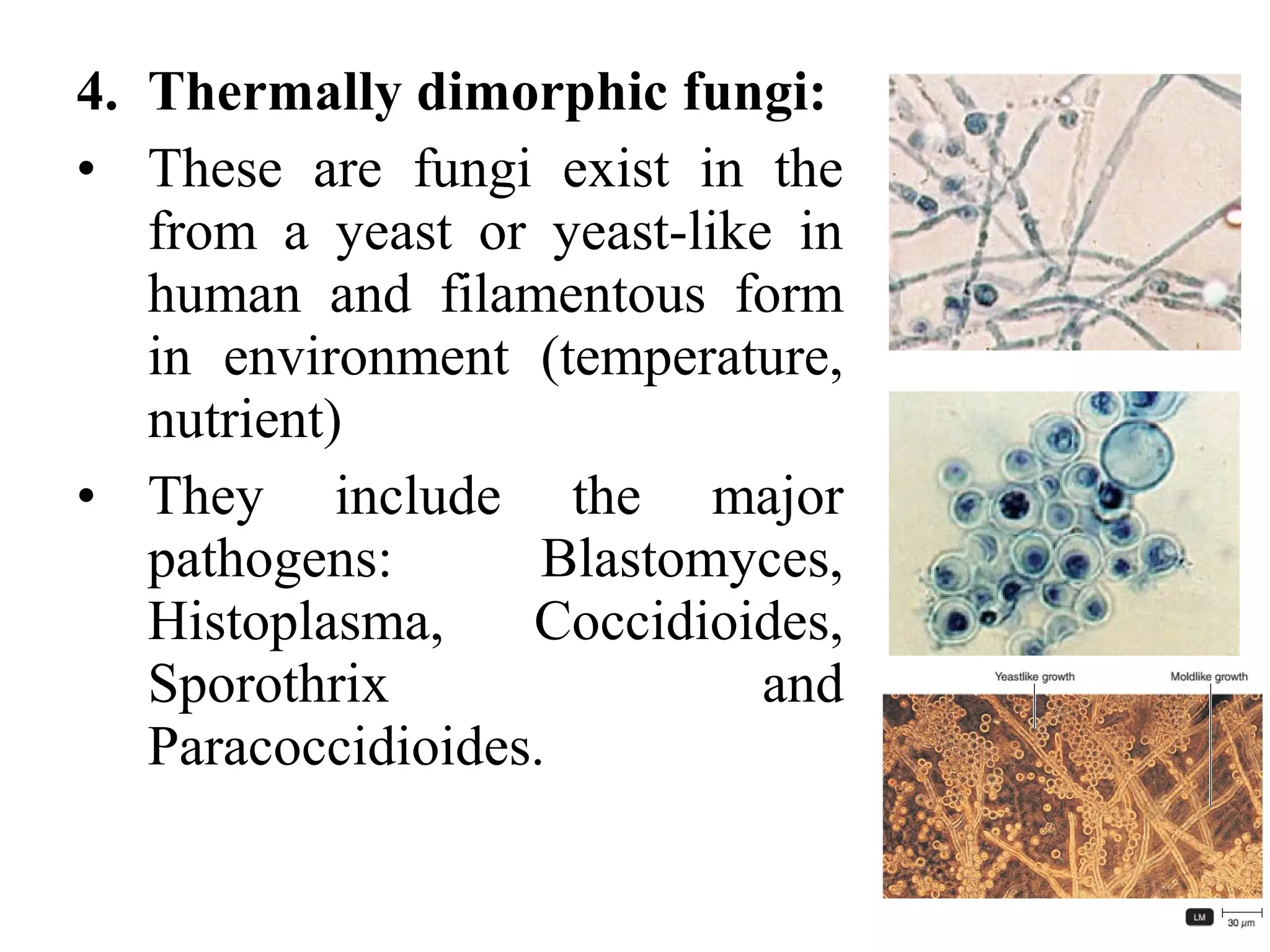
4. Thermally dimorphic fungi:
• These are fungi exist in the
from a yeast or yeast-like in
human and filamentous form
in environment (temperature,
nutrient)
• They include the major
pathogens: Blastomyces,
Histoplasma, Coccidioides,
Sporothrix and
Paracoccidioides.
7
8
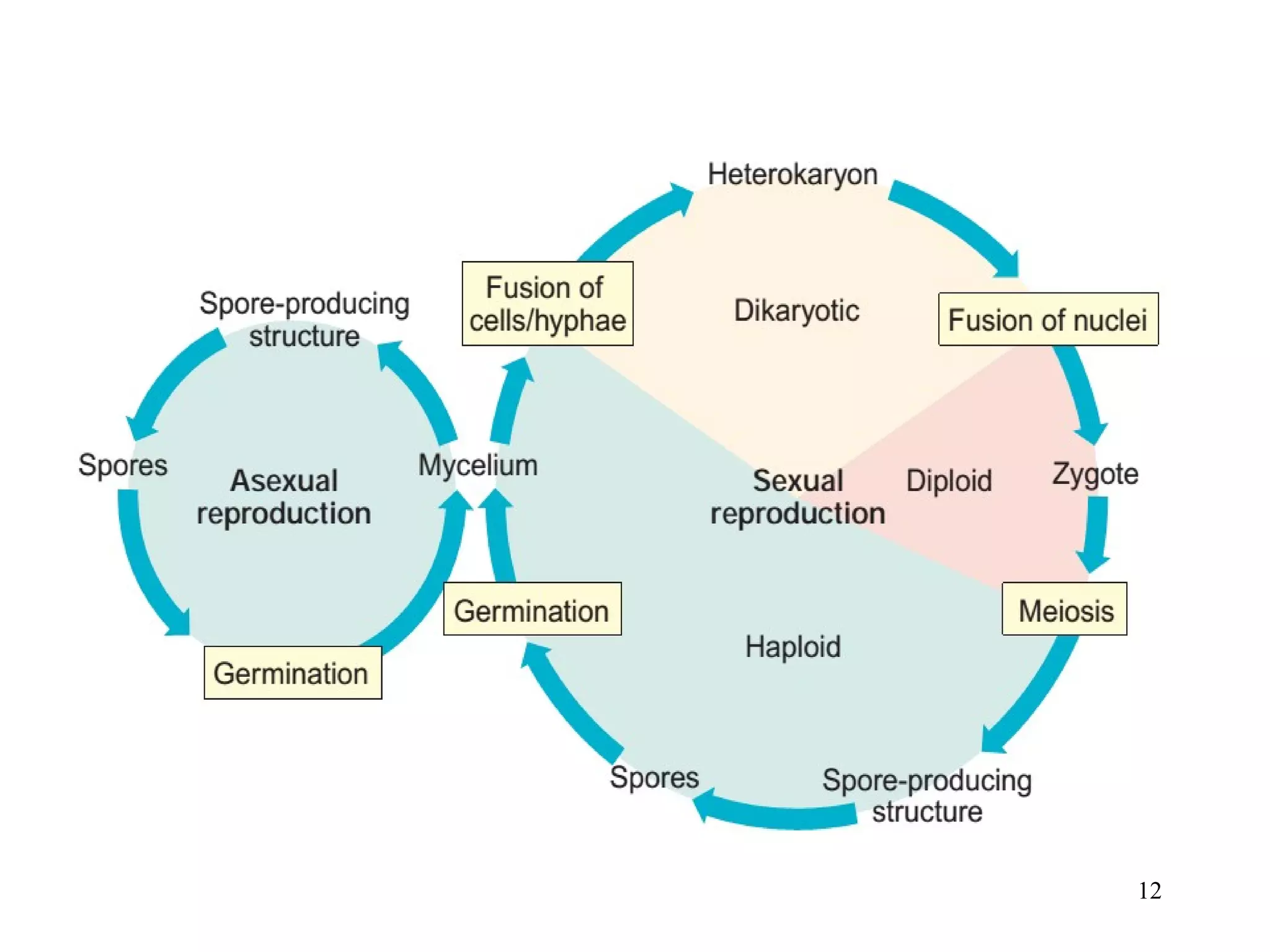
Fungal reproduction
• They reproduce by sexual or asexual
spores.
• Spores morphology may be used in
identification.
Asexual reproduction
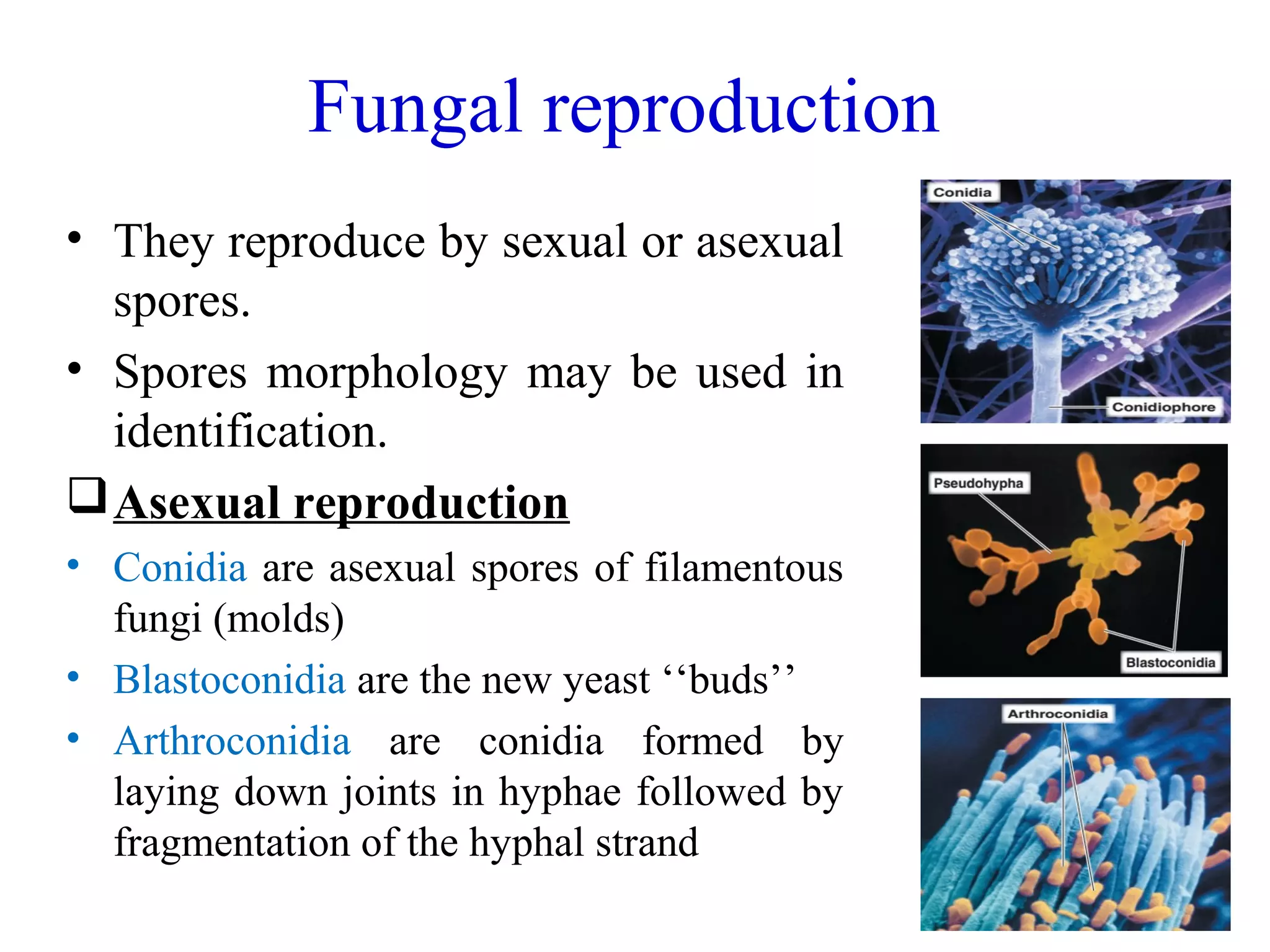
• Conidia are asexual spores of filamentous
fungi (molds)
• Blastoconidia are the new yeast ‘‘buds’’
• Arthroconidia are conidia formed by
laying down joints in hyphae followed by
fragmentation of the hyphal strand
9
• Chlamydoconidium is a thick-
walled spore formed by
rounding and enlargement
within a hyphal segment
• Sporangiospore formed within a
sporangium, or sac, at the end
of an aerial hypha called a
sporangiophore.
10
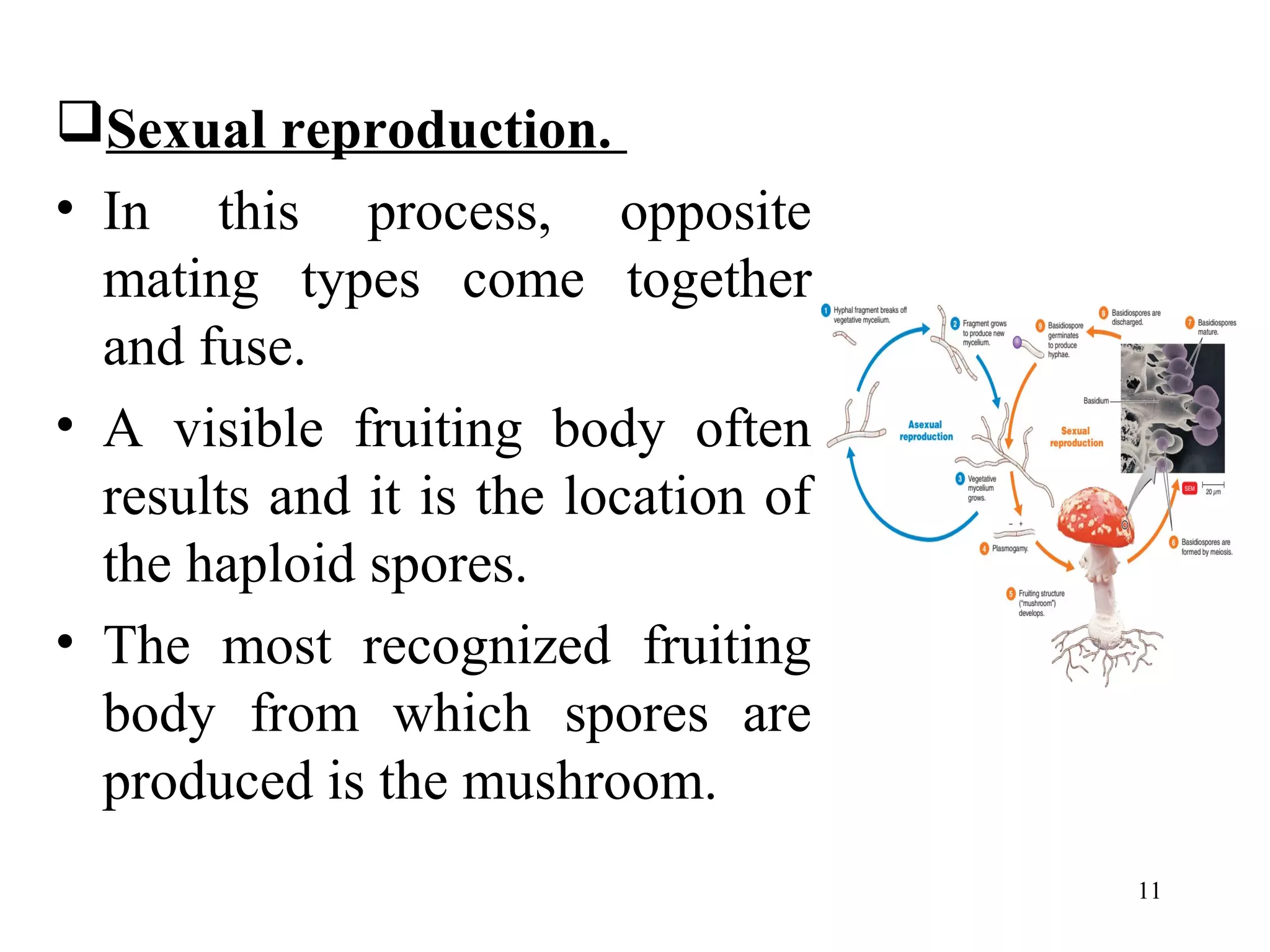
Sexual reproduction.
• In this process, opposite
mating types come together
and fuse.
• A visible fruiting body often
results and it is the location of
the haploid spores.
• The most recognized fruiting
body from which spores are
produced is the mushroom.
11
12
Fungal nutrition
• Fungi usually grow better in an environment with a
pH5.
• Almost all molds are aerobic. Most yeasts are
facultative anaerobes.
• Most fungi are more resistant to osmotic pressure than
bacteria.
• Fungi can grow on substances with a very low
moisture content, generally too low to support the
growth of bacteria.
13
• Fungi require preformed organic compounds derived
from their environment.
1. Saprobes: live on dead organic material. Some are
opportunistic.
2. Commensal colonizers: generally live in harmony on
humans, deriving their nutrition from compounds on
body surfaces. Some are opportunistic.
3. Pathogens: infect the healthy but cause more severe
disease in the compromised hosts. The damage to living
cells provides nutrition. Most of these are also
environmental saprobes.
14
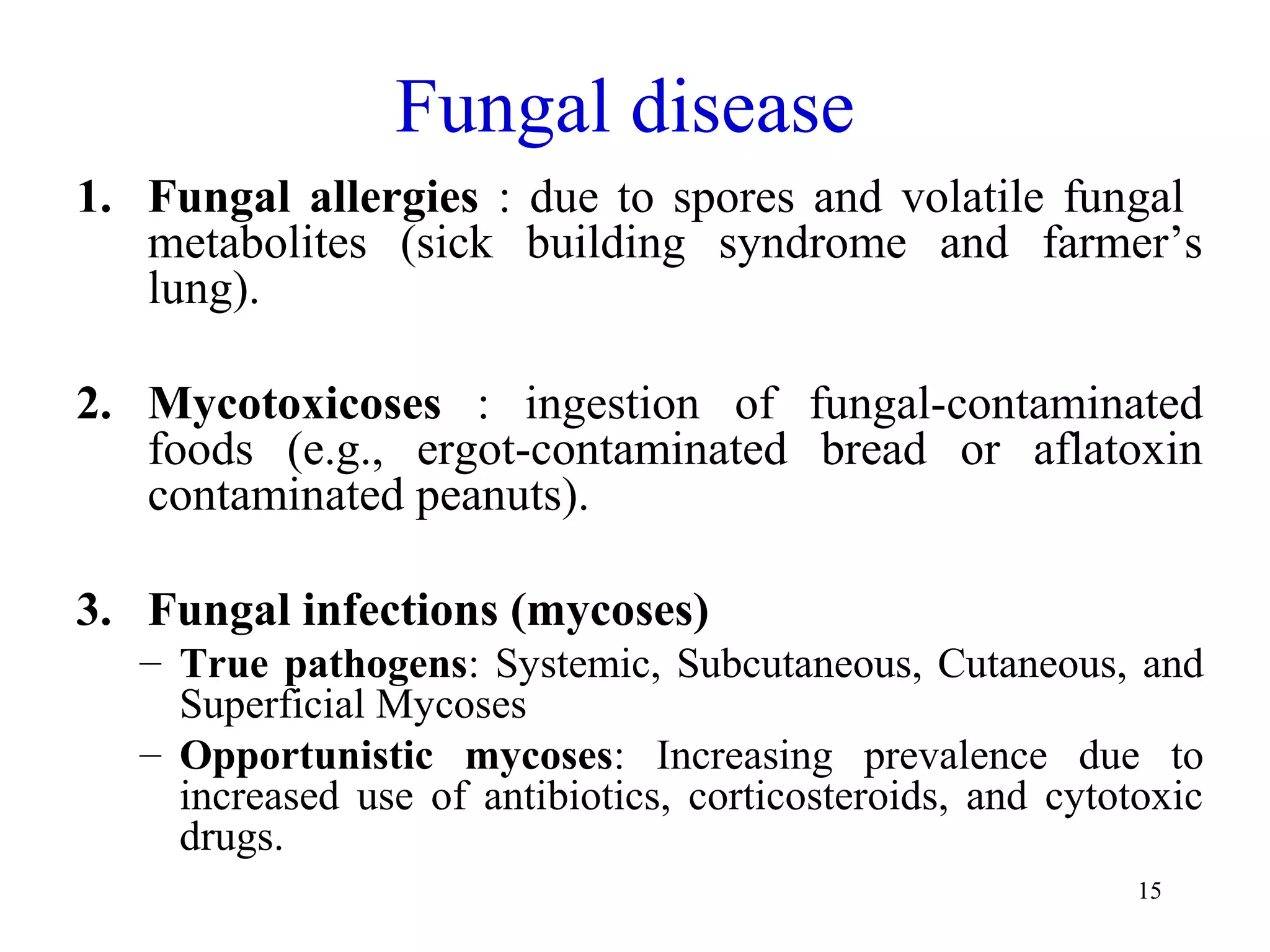
Fungal disease
1. Fungal allergies : due to spores and volatile fungal
metabolites (sick building syndrome and farmer’s
lung).
2. Mycotoxicoses : ingestion of fungal-contaminated
foods (e.g., ergot-contaminated bread or aflatoxin
contaminated peanuts).
3. Fungal infections (mycoses)
– True pathogens: Systemic, Subcutaneous, Cutaneous, and
Superficial Mycoses
– Opportunistic mycoses: Increasing prevalence due to
increased use of antibiotics, corticosteroids, and cytotoxic
drugs.
15
16
17
18
Pathogenesis of the Fungi
• Portal of entry
– Cutaneous and superficial – contamination of skin
surface
– Subcutaneous - inoculated skin; trauma
– Systemic mycoses – respiratory portal; inhaled
spores
• Virulence factors – thermal dimorphism, toxin
production, capsules and adhesion factors,
hydrolytic enzymes, inflammatory stimulants
19
Diagnosis of Mycotic Infections
1. Clinical manifestations
2. Microscopic examination
3. Histologic staining
4. Serologic testing
5. Cultures for fungi
6. Fungal antigen detection
7. DNA probes
20
21
Control of Mycotic Infections
• Immunization is not usually effective.
• Control involves intravenous, oral and
topical antifungal.
• In some cases surgical removal of damaged
tissues
• Prevention limited to masks and protective
clothing to reduce contact with spores
22
Concept question?
• The human infection caused by fungi is
called:
A.Mycotoxicosis
B.Mycoses
C.Fungal allergies
23
Introduction to mycology

Introduction to mycology

  • 1.
  • 2.
  • 3.
    3 Fungi as InfectiousAgents • Fungi are non-motile eukaryote, widely distributed in air, dust, fomites and normal flora. • They have a cell wall composed of complex carbohydrates such as chitin with glucans and mannose-proteins. • Ergosterol is the dominant fungal membrane sterol. • Grow as single cells (yeasts) or multi-septate, branching filamentous cells (hyphae). • Fungi are relatively nonpathogenic and humans are relatively resistant.
  • 4.
  • 5.
    Structure 1. Hyphae :filamentous cells of molds • Septae • Nonseptate or aseptate • Dematiaceous (dark colored) or hyaline (colorless). • Mycelia 5
  • 6.
    2. Yeasts • Theseare single-celled fungi, generally round to oval shaped. • They reproduce by budding (blastoconidia). 3. Pseudohyphae : • Hyphae with sausagelike constrictions at septations. • Formed by some yeasts when they elongate but remain attached to each other (Candida albicans). 6
  • 7.
    4. Thermally dimorphicfungi: • These are fungi exist in the from a yeast or yeast-like in human and filamentous form in environment (temperature, nutrient) • They include the major pathogens: Blastomyces, Histoplasma, Coccidioides, Sporothrix and Paracoccidioides. 7
  • 8.
  • 9.
    Fungal reproduction • Theyreproduce by sexual or asexual spores. • Spores morphology may be used in identification. Asexual reproduction • Conidia are asexual spores of filamentous fungi (molds) • Blastoconidia are the new yeast ‘‘buds’’ • Arthroconidia are conidia formed by laying down joints in hyphae followed by fragmentation of the hyphal strand 9
  • 10.
    • Chlamydoconidium isa thick- walled spore formed by rounding and enlargement within a hyphal segment • Sporangiospore formed within a sporangium, or sac, at the end of an aerial hypha called a sporangiophore. 10
  • 11.
    Sexual reproduction. • Inthis process, opposite mating types come together and fuse. • A visible fruiting body often results and it is the location of the haploid spores. • The most recognized fruiting body from which spores are produced is the mushroom. 11
  • 12.
  • 13.
    Fungal nutrition • Fungiusually grow better in an environment with a pH5. • Almost all molds are aerobic. Most yeasts are facultative anaerobes. • Most fungi are more resistant to osmotic pressure than bacteria. • Fungi can grow on substances with a very low moisture content, generally too low to support the growth of bacteria. 13
  • 14.
    • Fungi requirepreformed organic compounds derived from their environment. 1. Saprobes: live on dead organic material. Some are opportunistic. 2. Commensal colonizers: generally live in harmony on humans, deriving their nutrition from compounds on body surfaces. Some are opportunistic. 3. Pathogens: infect the healthy but cause more severe disease in the compromised hosts. The damage to living cells provides nutrition. Most of these are also environmental saprobes. 14
  • 15.
    Fungal disease 1. Fungalallergies : due to spores and volatile fungal metabolites (sick building syndrome and farmer’s lung). 2. Mycotoxicoses : ingestion of fungal-contaminated foods (e.g., ergot-contaminated bread or aflatoxin contaminated peanuts). 3. Fungal infections (mycoses) – True pathogens: Systemic, Subcutaneous, Cutaneous, and Superficial Mycoses – Opportunistic mycoses: Increasing prevalence due to increased use of antibiotics, corticosteroids, and cytotoxic drugs. 15
  • 16.
  • 17.
  • 18.
    18 Pathogenesis of theFungi • Portal of entry – Cutaneous and superficial – contamination of skin surface – Subcutaneous - inoculated skin; trauma – Systemic mycoses – respiratory portal; inhaled spores • Virulence factors – thermal dimorphism, toxin production, capsules and adhesion factors, hydrolytic enzymes, inflammatory stimulants
  • 19.
    19 Diagnosis of MycoticInfections 1. Clinical manifestations 2. Microscopic examination 3. Histologic staining 4. Serologic testing 5. Cultures for fungi 6. Fungal antigen detection 7. DNA probes
  • 20.
  • 21.
    21 Control of MycoticInfections • Immunization is not usually effective. • Control involves intravenous, oral and topical antifungal. • In some cases surgical removal of damaged tissues • Prevention limited to masks and protective clothing to reduce contact with spores
  • 22.
  • 23.
    Concept question? • Thehuman infection caused by fungi is called: A.Mycotoxicosis B.Mycoses C.Fungal allergies 23

Editor's Notes

  • #8 ‘‘Yeast beasts in body heat; bold mold in the cold.’’
  • #16 The systemic infections are subdivided into those caused by pathogenic or opportunistic fungi.