PARAGONIMIASIS
BY
ELAMUHILAN.P.C
2ND YEAR MBBS
OBJECTIVES
• INTRODUCTION
• EPIDEMIOLOGY
• MORPHOLOGY
• LIFE CYCLE
• PATHOGENESIS AND CLINICAL MANIFESTATION
• LABORATORY DIAGNOSIS
• PREVENTION
• TREATMENT
INTRODUCTION
• Parasitic infection of respiratory tract
• Causative organism: paragonimus westermani
• Trematode
• Oriental lung fluke
• Causes ENDEMIC HEMOPTYSIS (blood in sputum) in Man
EPIDEMIOLOGY
• It is endemic in Northeast states of India
• Many cases are reported from MANIPUR with a prevalence of 6.7%
MORPHOLOGY
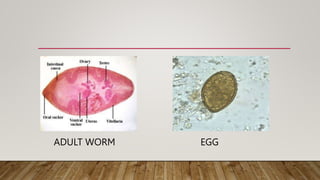
• Trematode ,has 3 forms;
• Adult worm (leaf like)
• operculated eggs
• larvae (5 stages)
ADULT WORM EGG
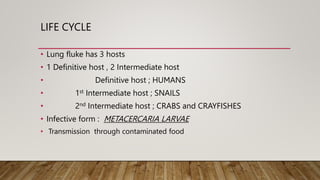
LIFE CYCLE
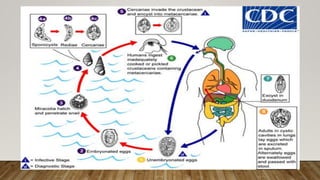
• Lung fluke has 3 hosts
• 1 Definitive host , 2 Intermediate host
• Definitive host ; HUMANS
• 1st Intermediate host ; SNAILS
• 2nd Intermediate host ; CRABS and CRAYFISHES
• Infective form : METACERCARIA LARVAE
• Transmission through contaminated food
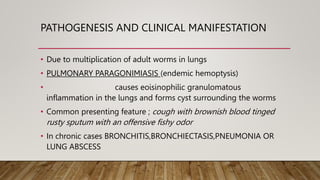
PATHOGENESIS AND CLINICAL MANIFESTATION
• Due to multiplication of adult worms in lungs
• PULMONARY PARAGONIMIASIS (endemic hemoptysis)
• causes eoisinophilic granulomatous
inflammation in the lungs and forms cyst surrounding the worms
• Common presenting feature ; cough with brownish blood tinged
rusty sputum with an offensive fishy odor
• In chronic cases BRONCHITIS,BRONCHIECTASIS,PNEUMONIA OR
LUNG ABSCESS
• EXTRAPULMONARY PARAGONIMIASIS;
• Worms migrate from ruptured cyst to various sites
such as Liver,spleen,abdominal wall and less common in brain
• Extrapulmonary infections are usually associated with
P.heterotremus,P.mexicanus,etc.
• CEREBRAL PARAGONIMIASIS
• CUTANEOUS PARAGONIMIASIS
LABORATARY DIAGNOSIS
• SPUTUM MICROSCOPY
• Sample; early morning ,deeply coughed sputum
• examined for operculated eggs
• sputum can be concentrated by FORMALIN-ETHER
sedimentation technique
• In children,stool microscopy is done
• SEROLOGICAL TESTS
• Antibody detection by
• DIGFA
• ELISA
• WESTERN BLOT
• Antigen detection by
• Dot ELISA format by using monoclonal antibodies
• RADIOLOGICAL TESTS : CT,MRI,X-RAY
PREVENTION
• Sanitary disposal of sputum
• Control of snails
• Treatment of cases
• Health education
TREATMENT
• PRAZIQUANTEL (25mg/kg/dose) TDS * 2days, is the drug of choice
for paragonimiasis
NANDRI VANAKKAM!!!

paragonimiasis.ppt_final.pptx

  • 1.
  • 2.
    OBJECTIVES • INTRODUCTION • EPIDEMIOLOGY •MORPHOLOGY • LIFE CYCLE • PATHOGENESIS AND CLINICAL MANIFESTATION • LABORATORY DIAGNOSIS • PREVENTION • TREATMENT
  • 3.
    INTRODUCTION • Parasitic infectionof respiratory tract • Causative organism: paragonimus westermani • Trematode • Oriental lung fluke • Causes ENDEMIC HEMOPTYSIS (blood in sputum) in Man
  • 4.
    EPIDEMIOLOGY • It isendemic in Northeast states of India • Many cases are reported from MANIPUR with a prevalence of 6.7%
  • 5.
    MORPHOLOGY • Trematode ,has3 forms; • Adult worm (leaf like) • operculated eggs • larvae (5 stages)
  • 6.
  • 7.
    LIFE CYCLE • Lungfluke has 3 hosts • 1 Definitive host , 2 Intermediate host • Definitive host ; HUMANS • 1st Intermediate host ; SNAILS • 2nd Intermediate host ; CRABS and CRAYFISHES • Infective form : METACERCARIA LARVAE • Transmission through contaminated food
  • 9.
    PATHOGENESIS AND CLINICALMANIFESTATION • Due to multiplication of adult worms in lungs • PULMONARY PARAGONIMIASIS (endemic hemoptysis) • causes eoisinophilic granulomatous inflammation in the lungs and forms cyst surrounding the worms • Common presenting feature ; cough with brownish blood tinged rusty sputum with an offensive fishy odor • In chronic cases BRONCHITIS,BRONCHIECTASIS,PNEUMONIA OR LUNG ABSCESS
  • 10.
    • EXTRAPULMONARY PARAGONIMIASIS; •Worms migrate from ruptured cyst to various sites such as Liver,spleen,abdominal wall and less common in brain • Extrapulmonary infections are usually associated with P.heterotremus,P.mexicanus,etc. • CEREBRAL PARAGONIMIASIS • CUTANEOUS PARAGONIMIASIS
  • 11.
    LABORATARY DIAGNOSIS • SPUTUMMICROSCOPY • Sample; early morning ,deeply coughed sputum • examined for operculated eggs • sputum can be concentrated by FORMALIN-ETHER sedimentation technique • In children,stool microscopy is done
  • 12.
    • SEROLOGICAL TESTS •Antibody detection by • DIGFA • ELISA • WESTERN BLOT • Antigen detection by • Dot ELISA format by using monoclonal antibodies • RADIOLOGICAL TESTS : CT,MRI,X-RAY
  • 13.
    PREVENTION • Sanitary disposalof sputum • Control of snails • Treatment of cases • Health education
  • 14.
    TREATMENT • PRAZIQUANTEL (25mg/kg/dose)TDS * 2days, is the drug of choice for paragonimiasis
  • 15.