PAPER
INTRODUCTION
• Paper is a thin material mainly used for writing
upon, printing upon or for packaging.
• It is produced by pressing together moist fibers,
typically cellulose pulp derived from wood, rags
or grasses, and drying them into flexible sheets.
Raw materials
Five different fiber classifications include:
– bast or stem fibers, which are the fibrous
bundles in the inner bark of the plant stem
running the length of the stem;
– leaf fibers, which run the length of leaves;
– seed-hair fibers;
– core, pith or stick fibers,
– Grass and all other plant fibers not included
above
Bast fibers
Examples of bast or stem fibers include;
– jute,
– flax,
– hemp,
– kenaf,
– ramie,
– roselle,
– andurena.
BAST FIBER
•
•
•
•
•
•

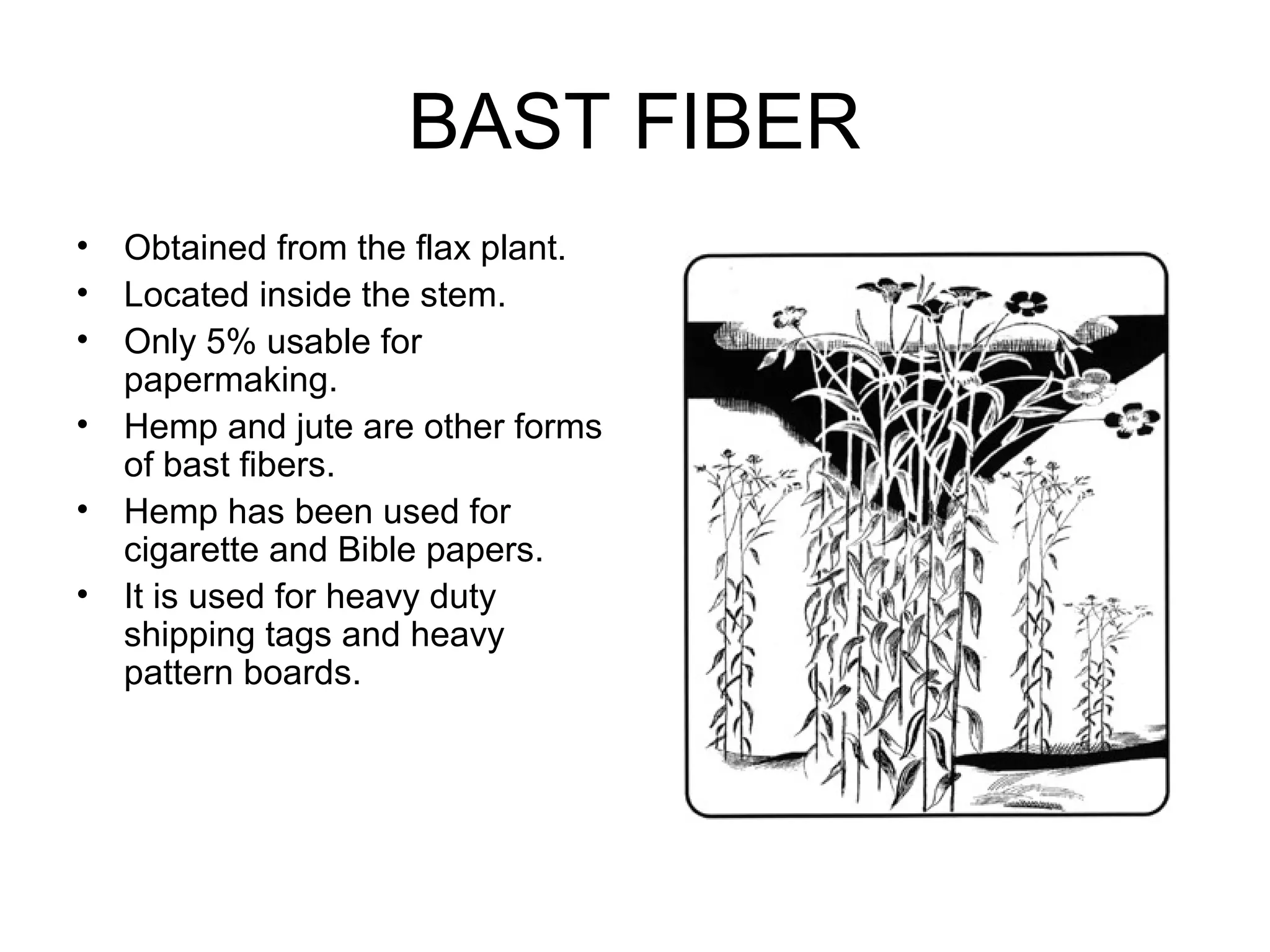
Obtained from the flax plant.
Located inside the stem.
Only 5% usable for
papermaking.
Hemp and jute are other forms
of bast fibers.
Hemp has been used for
cigarette and Bible papers.
It is used for heavy duty
shipping tags and heavy
pattern boards.
Leaf fibers
• Leaf fibers include;
– banana,
– sisal,
– henequen,
– abaca,
– pineapple,
– cantala,
– caroa,
– mauritius, and phormium
Cont…
Seed-hair fibers include;
– coir,
– cotton,
– kapok,
– and milk weed floss.

Center or pith fibers include;
– kenaf
– and jute.
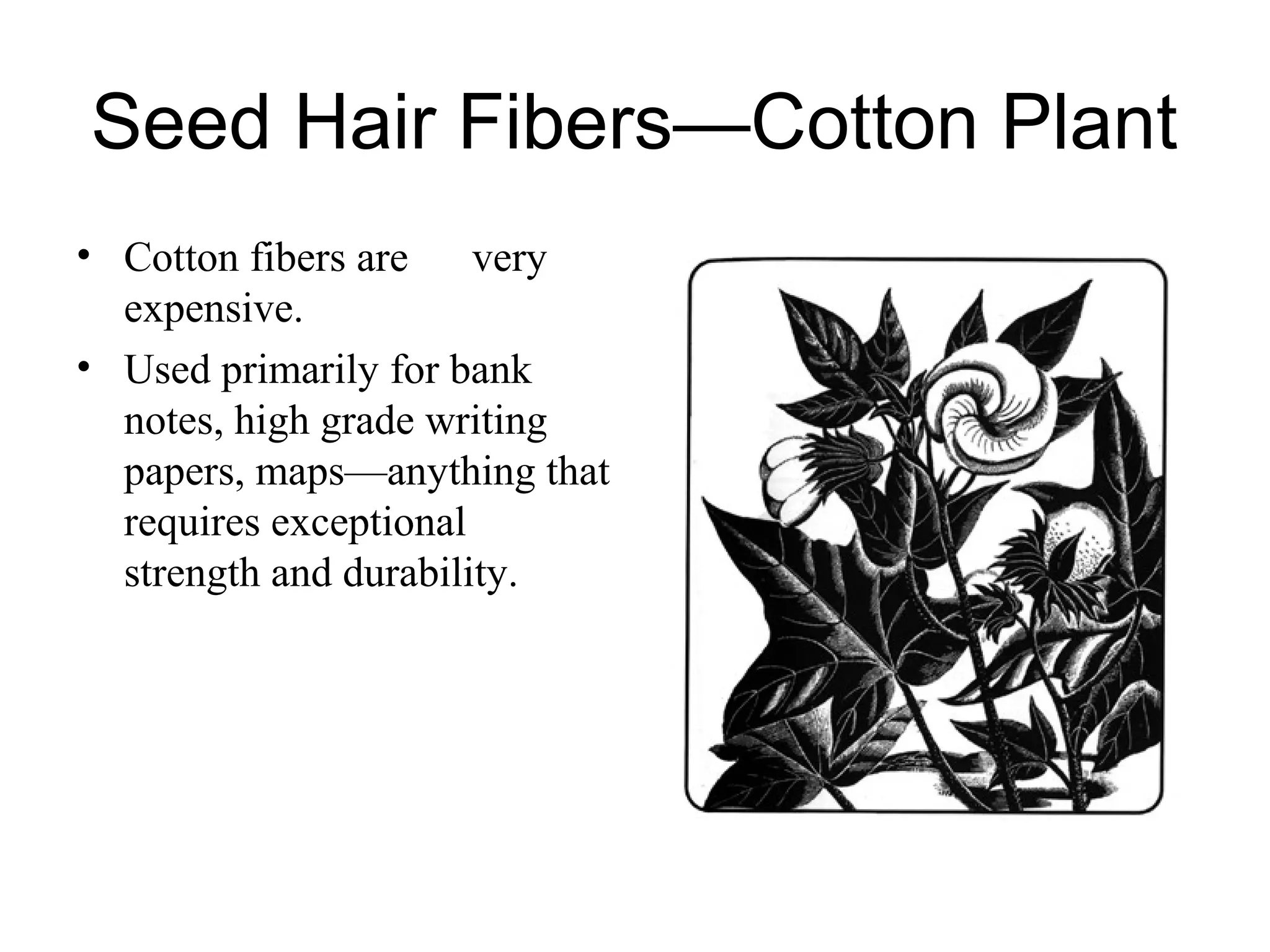
Seed Hair Fibers—Cotton Plant
• Cotton fibers are
very
expensive.
• Used primarily for bank
notes, high grade writing
papers, maps—anything that
requires exceptional
strength and durability.
Grass Fibers
• Wheat Straw
– Absorbs water readily.
– Used to make low grade paper.

• Bagasse fiber
– Made from crushed stalks of sugar cane.
– Used as a source of fuel for Sugar Mills.

• Esparto Plant
– Has very little strength and does not split into fibrils easily.
Grass Fibers
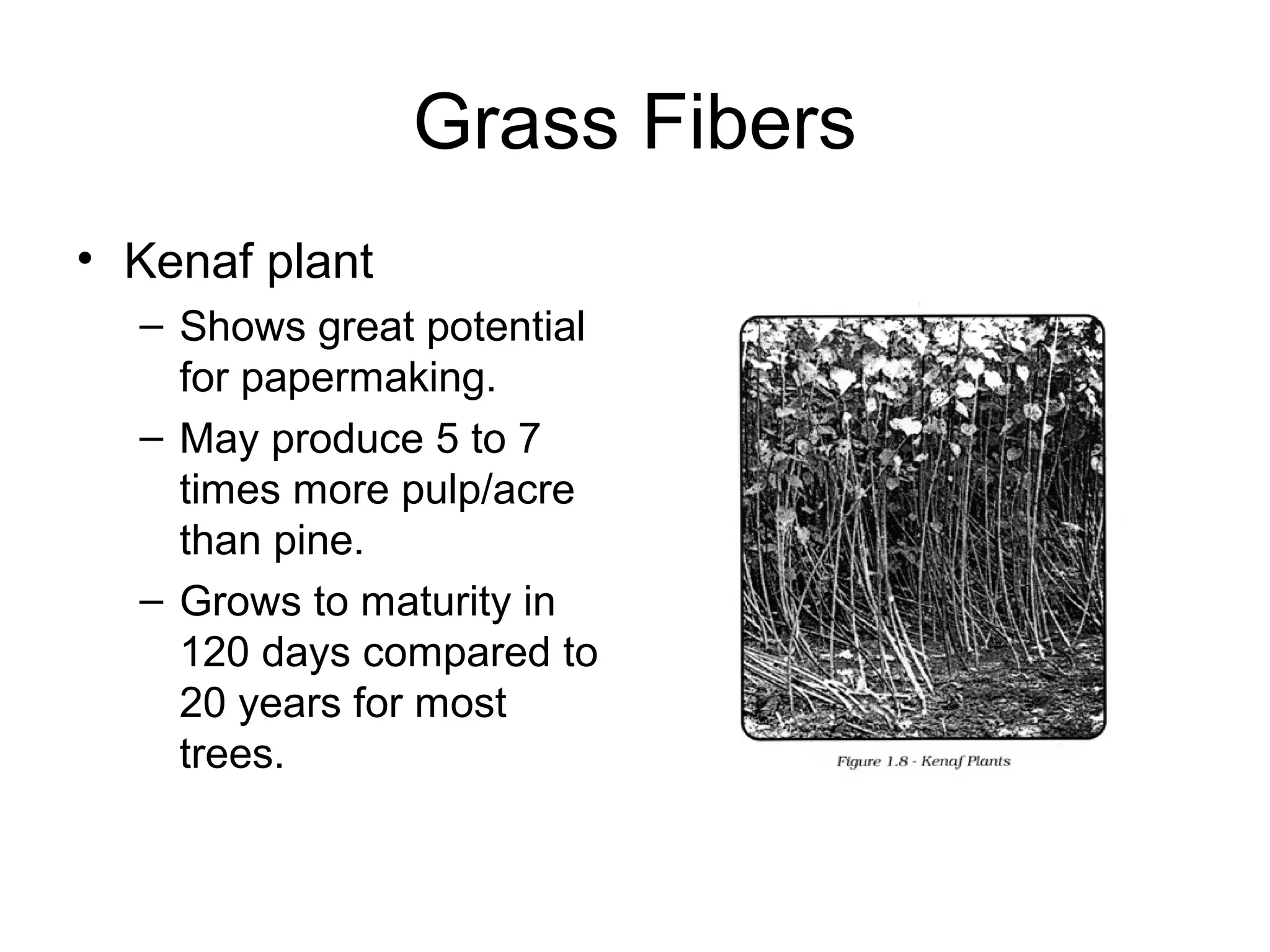
• Kenaf plant
– Shows great potential
for papermaking.
– May produce 5 to 7
times more pulp/acre
than pine.
– Grows to maturity in
120 days compared to
20 years for most
trees.
The remaining fibers include;
•
•
•
•
•

roots,
leaf segments,
flower heads,
seed hulls and
short stem fiber
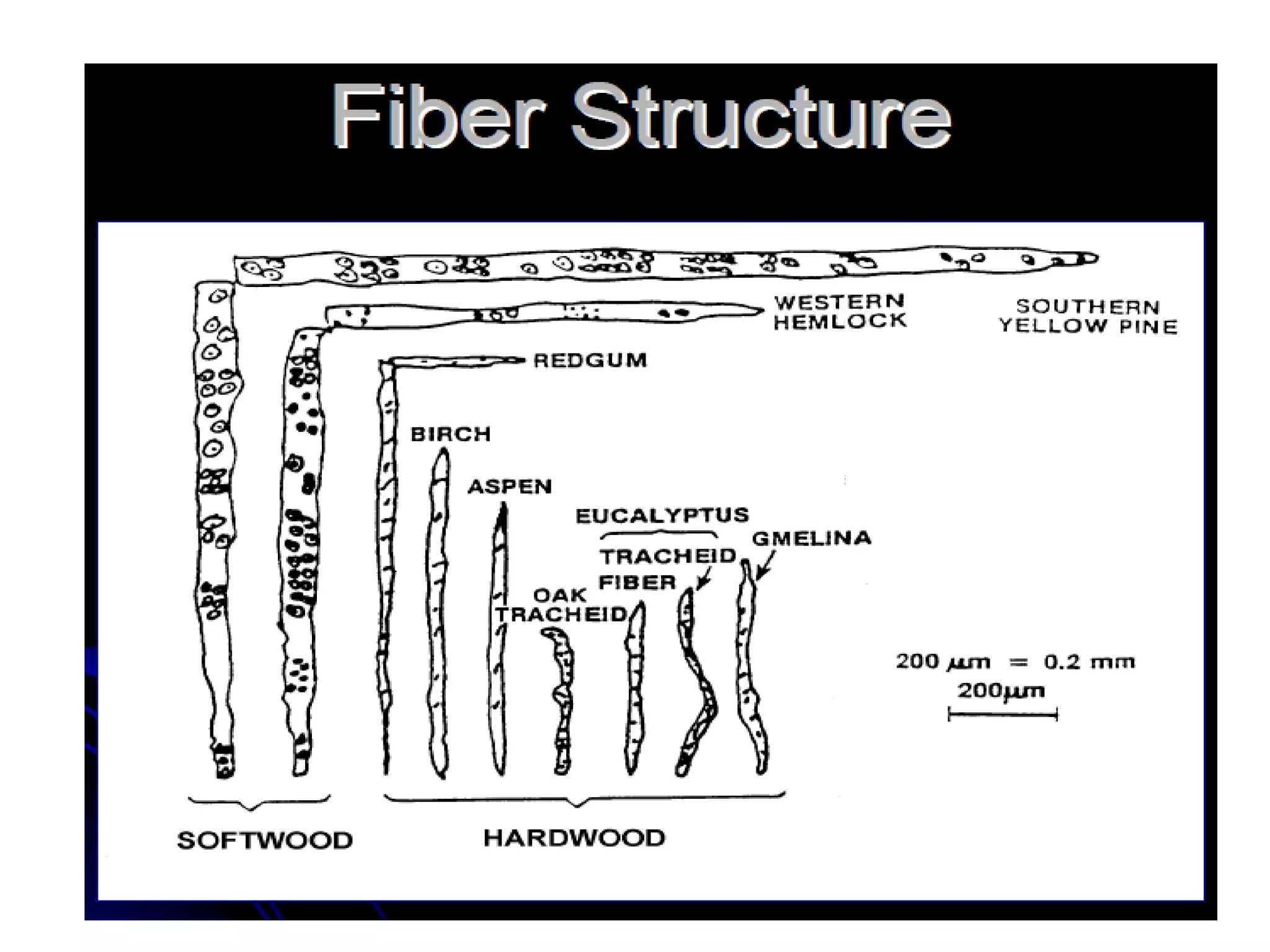
Wood Fibers
• 95% of all paper is made from wood
fibers.
• Deciduous hardwood trees, e.g., Oak,
Gum, Maple, Aspen, etc.
• Coniferous softwood trees, e.g., Pine,
Spruce, Fir, etc. (the softwoods produce a
stronger pulp).
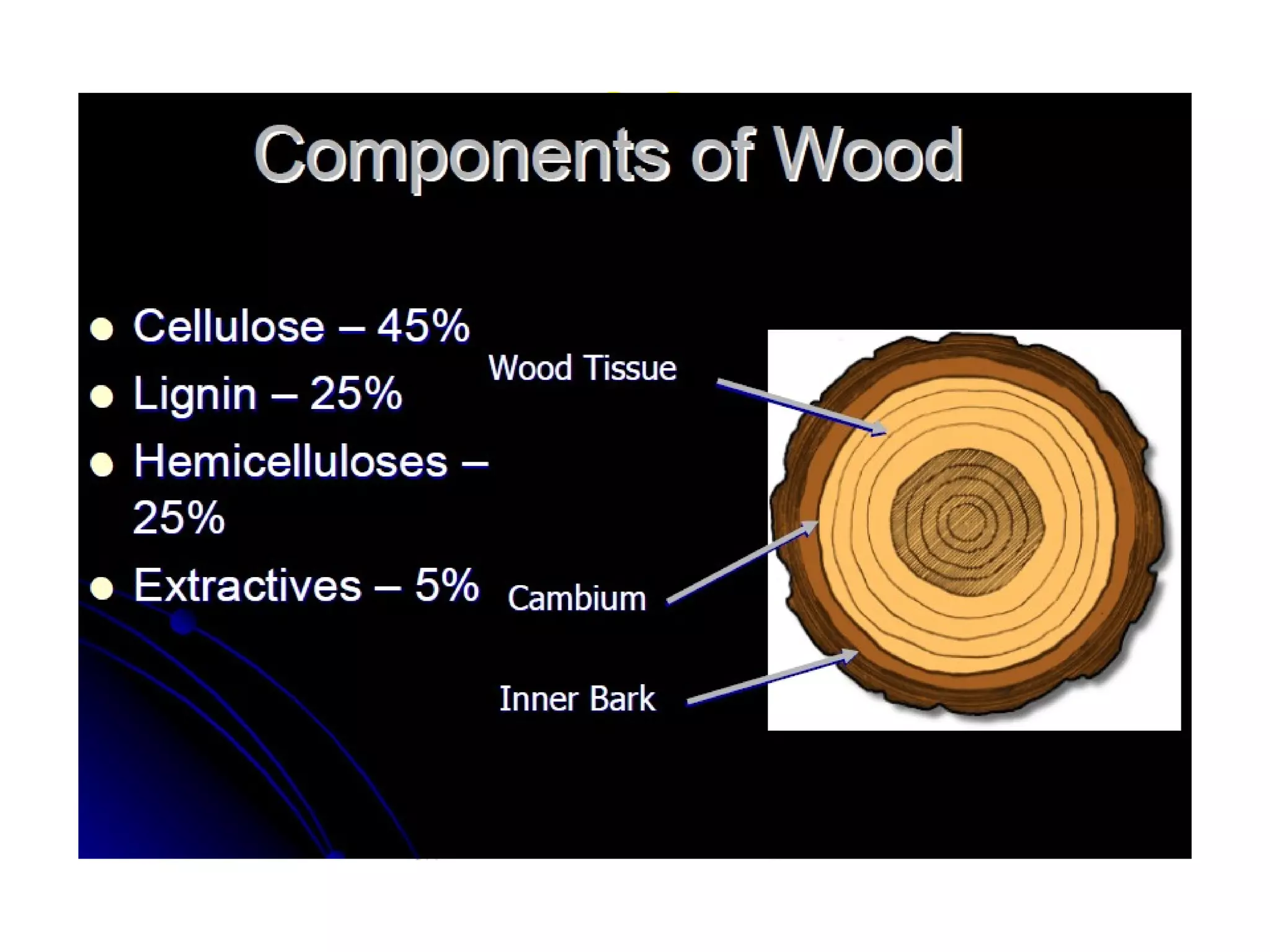
WOOD
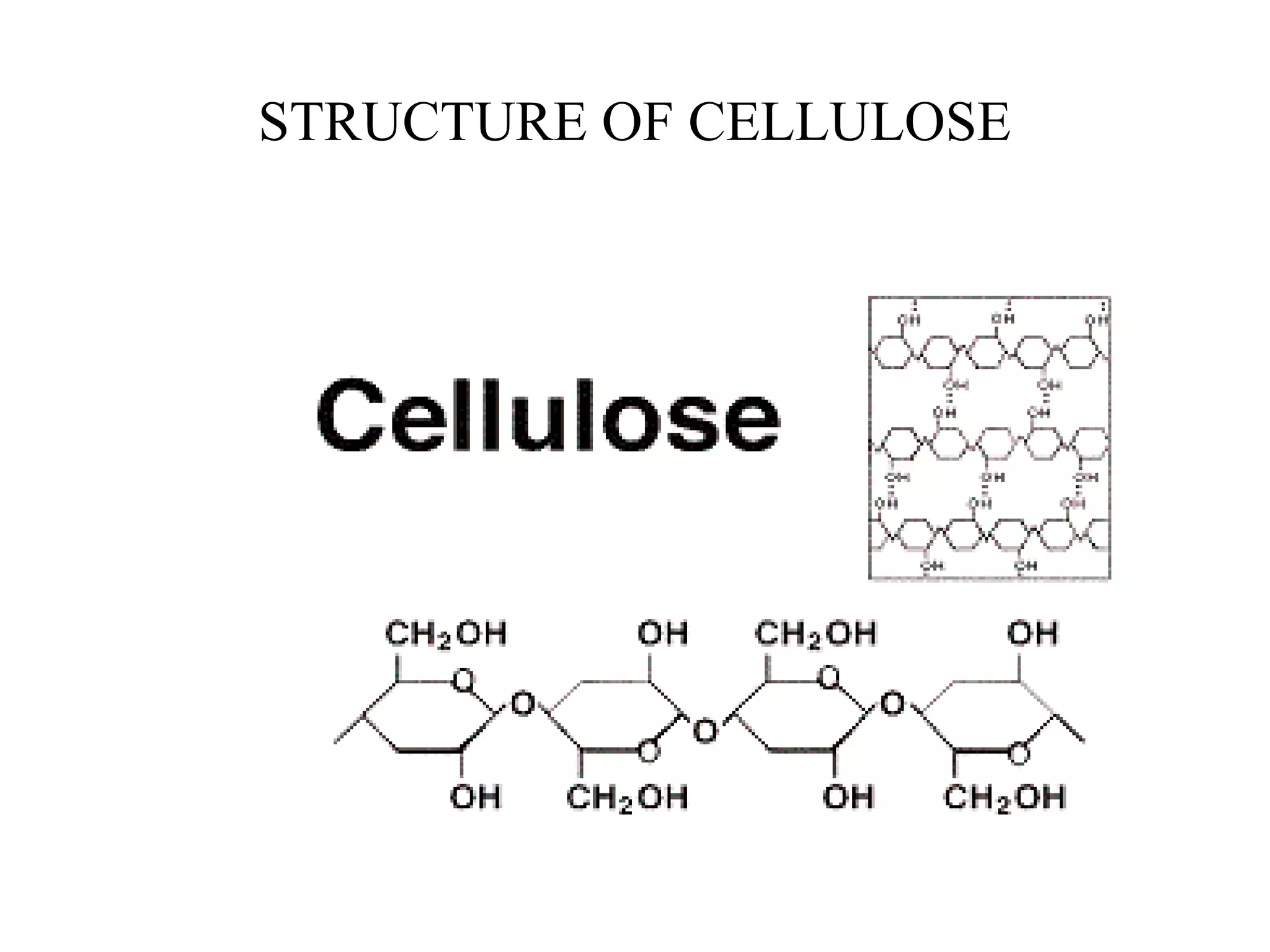
STRUCTURE OF CELLULOSE
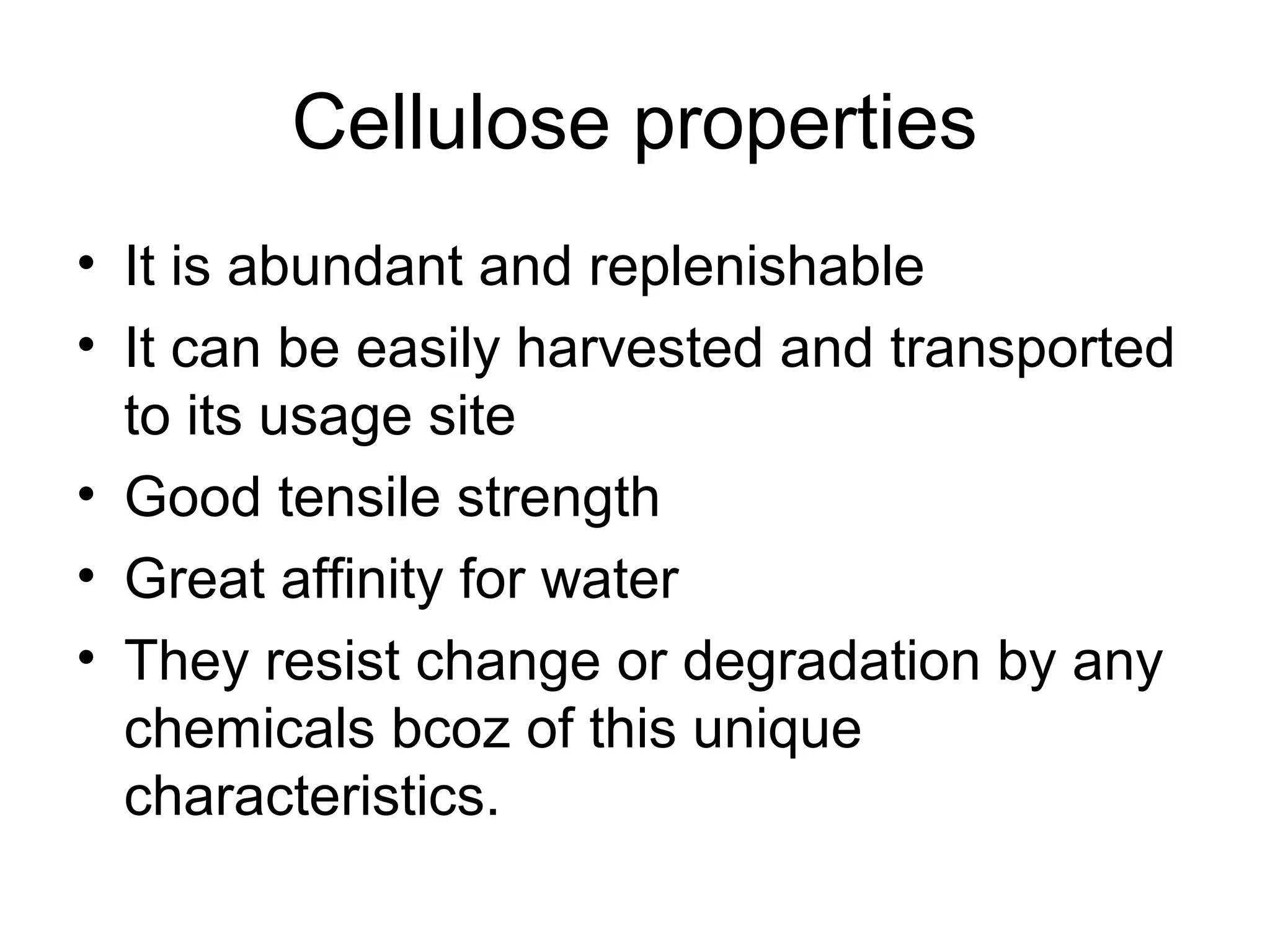
Cellulose properties
• It is abundant and replenishable
• It can be easily harvested and transported
to its usage site
• Good tensile strength
• Great affinity for water
• They resist change or degradation by any
chemicals bcoz of this unique
characteristics.
Pulping
• The objective of pulping is to separate the
wood into individual fibers.
• A pulp mill is a manufacturing facility that
converts wood chips or other plant fiber
source into a thick fiber board which can
be shipped to a paper mill for further
processing.
Pulping methods
Three broad classifications of pulping
methods:
– Mechanical (groundwood)
– Mechanical (refiner)
– Chemical (kraft process)
– Chemical (sulphite process)
– Combination (chemi-mechanical)
– Combination (chemi-thermo mechanical)
Mechanical pulping
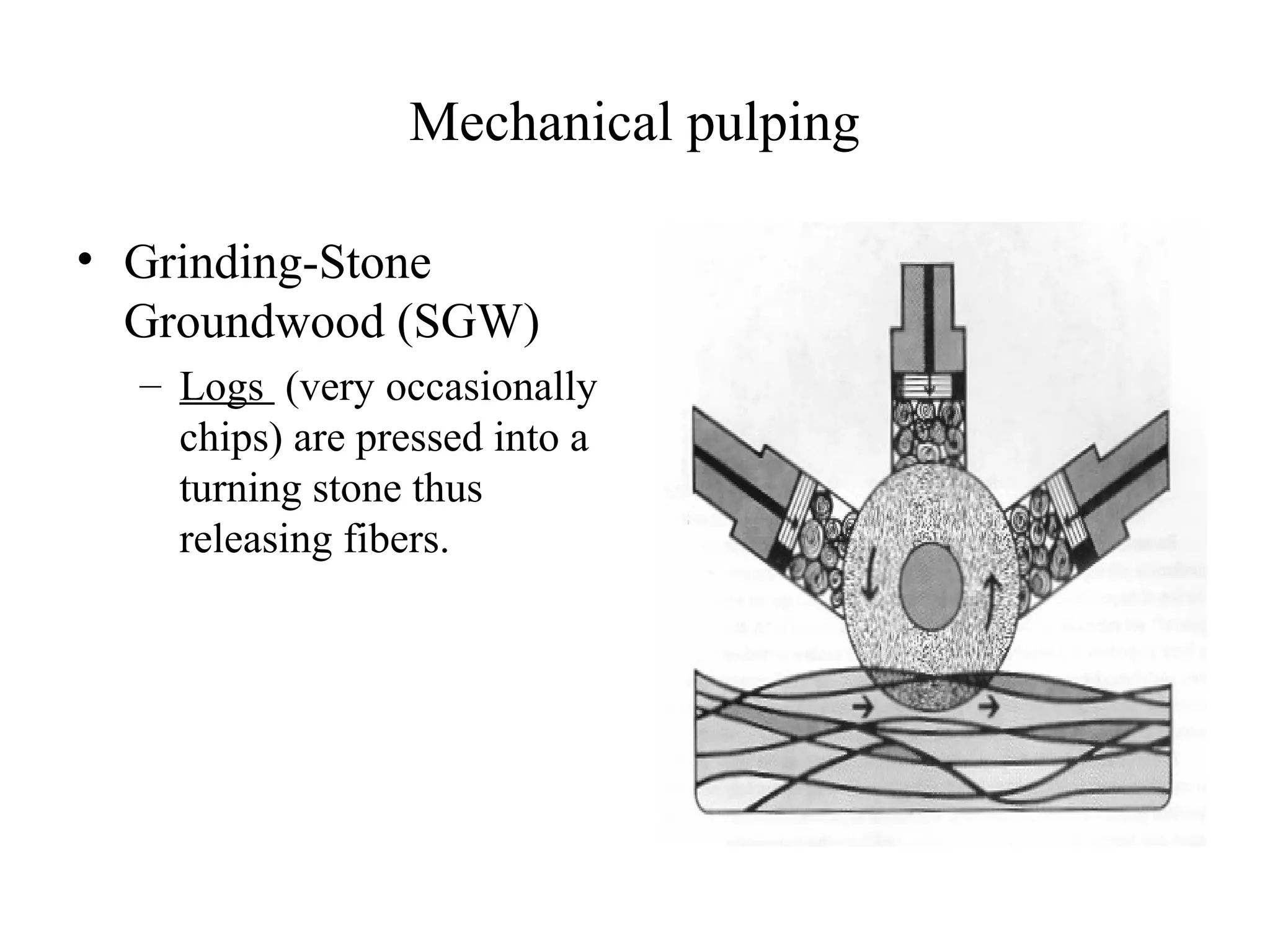
• Grinding-Stone
Groundwood (SGW)
– Logs (very occasionally
chips) are pressed into a
turning stone thus
releasing fibers.
Ground wood
• The bark is removed from the logs.
• Then, the cut logs are forced by hydraulic
or steam pressure against a revolving
grinding stone in the presence of water.
• This treatment converts the wood into a
pulp consisting of minute particles of both
fibrous and non fibrous portions of wood.
• The nonfibrous materials deteriorate when
left for some time in contact with air.
• This type of pulp is not as strong as
chemical pulp.
• Groundwood pulp has to be mixed with
other pulps, e.g., Newsprint—contains
80% groundwood pulp and 20% chemical
pulp.
Advantages
• Low cost and high yield
• This pulp has high bulk and opacity
• Excellent printing, cushioning and ink
absorbency
• Disadvantages;
– Low strength and brightness
Refining pulp
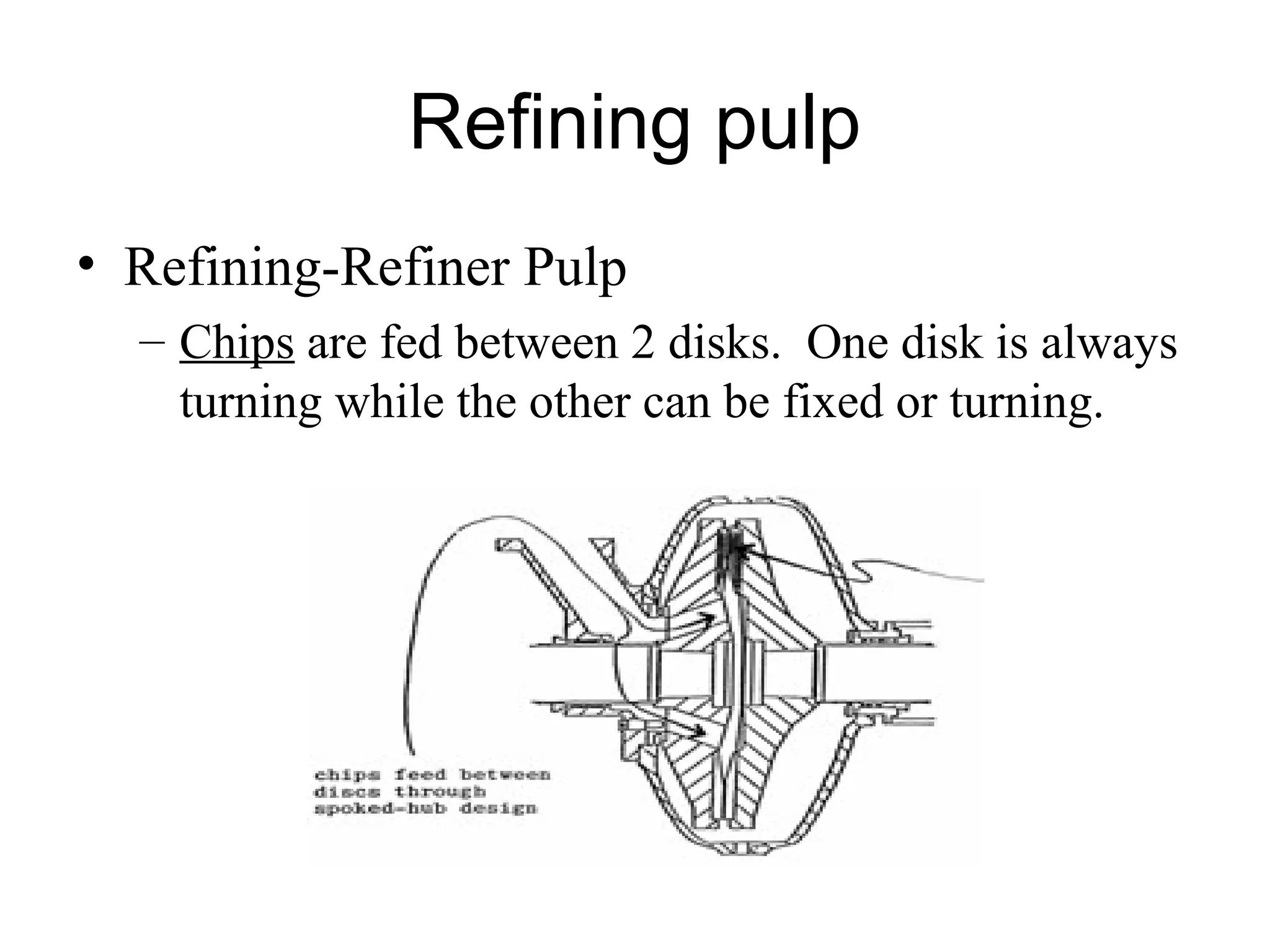
• Refining-Refiner Pulp
– Chips are fed between 2 disks. One disk is always
turning while the other can be fixed or turning.
Cont…
Cont…
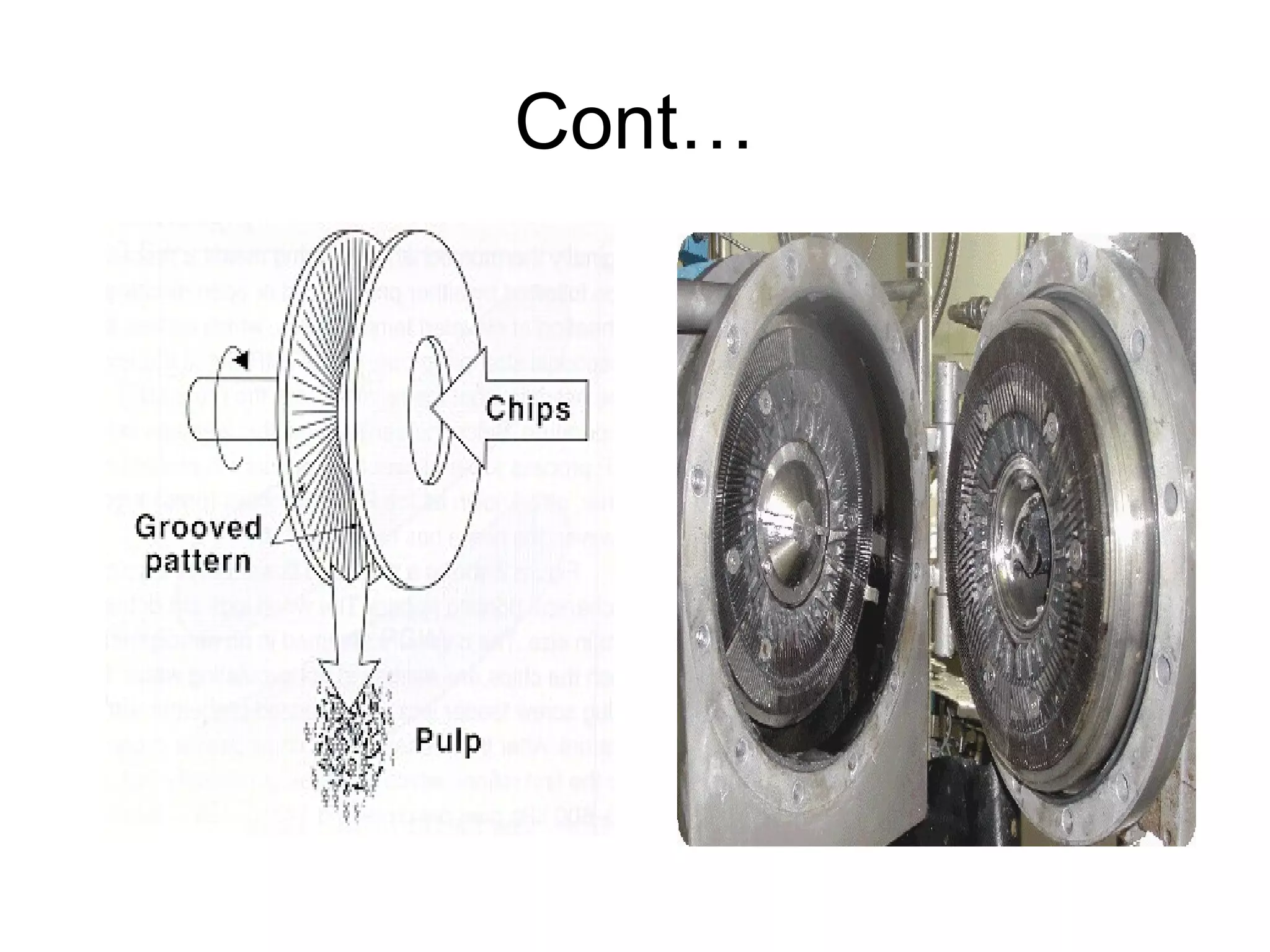
• Small cylinder or wood chip is placed between
two opposite rotating plastic disc
• Chip disintegrates into coarse fibers
• Compression and decompression of rotating
disc
• Heat generated splits the individual fibers.
Advantages
• Refiner mechanical pulp also utilizes
waste chips and low grade wood than
ground wood
• It has the high opacity and yeild
Chemical pulping
• It is used to isolate fibers from wood
compartment is to remove the lignin
• Delignification is done by degrading the
lignin molecules, bringing them into
solution and removing them by washing
• Also a certain amount of carbohydrates
(cellulose and hemicelluloses) is lost in
this process
Sulphate process
• The kraft process (or sulphate process) is
the dominant chemical pulping method
worldwide
• Which involves cooking the chips in a
solution comprising sodium hydroxide
( NaOH) and sodium sulphide (Na2S), with
OH and HS- as the active anions in the
cooking process
• The hydrogen sulphide is the main
delignifying agent and the hydroxide
keeps the lignin fragments in solution
Sulphite process
• The sulphite process involves dissolving
lignin with sulphurous acid (H2SO3) and
hydrogen sulphite ions (HSO3-) as active
anions in the cooking process
• More recently devolped pulping methods
include the use of organic solvents as
ethanol, methanol and peracetic acid
(CH3CO3H) for delignification .
TMP
• To make TMP, wood chips or sawdust are
first softened by steam and then
subjected, under pressure, to the
defibering action of a disk-type refiner.
• This causes the fibers to completely
separate from each other and suffer less
damage than those produced by the
conventional groundwood pulp process.
• TMP is cleaner and stronger when
compared with groundwood pulp.
Advantages
• TMP is stronger than RMP and stone
groundwood and it eliminate more costly
chemical pulps that are blended with
mechanical pulp
• It has high yield and high opacity
• It has better runnability on the presses.
CTMP
• In the chemi-thermo mechanical pulping,
where the wood chips are treated with
mild chemicals prior to the refining
• This mild chemical pretreatment improves
pulp brightness to some extent
Bleaching technique
• All pulp requires bleaching to remove
residual lignin before papermaking
process
• The purpose of bleaching is to remove
stains caused by lignin
• There are many different types of
bleaching process, involving different
chemicals and conditions
Bleaching agents
• Major bleaching agents
– chlorine,
– sodium hypochlorite,
– hydrogen peroxide,
– chlorine-dioxide,
– and oxygen
Cont…
• Chlorine gas is one of the different
bleaching systems that are used to
remove lignin that remains in the pulp.
– Chlorine gas is passed into the pulp-water
mixture.
– The gas reacts with whatever lignin that is left
and becomes chlorinated.
– The chlorinated lignin is then removed when
treated with the caustic soda NaOH (Sodium
Hypochlorite)
Mechanical pulp bleeching
• After the refining process, the resulting fibers
do not have the brightness required for most
paper applications. Bleaching is therefore
required.
• For the mechanical pulp, hydrogen peroxide,
sodium hydrosulphite or formamide sulphuric
acid are used for bleeching
• Chlorine was widely used in the past but few
mills use it today.
Chemical pulp bleeching
• In chemical pulping, the majority of the
lignin has been removed in the pulping
stage
• In general kraft or sulphate process
requires more bleeching than sulphite
• Sodium hypochlorite or hydrogen peroxide
may be used for brightening chemically
pulped fibers
Cont…
• Once the pulp has been screened,
cleaned and bleached it is ready for the
stock preparation
Stock preparation
• It involves many operations, including
stock blending, refining, broke
management, operation of the several
system, and mixing and blending of wetend additives.
• All these are important operations in
determining the quality of paper and paper
machine efficiency.
Cont…
• The pH is controlled and various fillers,
such as whitening agents, size and wet
strength or dry strength are added
• Additional fillers such as clay, calcium
carbonate and titanium dioxide to
increase opacity
Fibers & non fibers
• Fiber - Selected for properties & cost
• Non-fibrous Additives - Selected to
obtain properties not inherent in fiber
– Strengthening Agents (Starch)
– Fillers (Clay, CaCO3, TiO2, etc)
– Internal Sizing Agents (Rosin,etc.)
– Coloring agents
– Other
Process
• Pulp is pumped through a sequence of
tanks that are commonly called chests.
• Chests may be either round or rectangular
made with special ceramic tile faced
reinforced concrete, mild and stainless
steels are also used
• Pulp slurries are kept agitated in these
chests by propeller like agitators near the
pump suction at the chest bottom.
Different levels
• Production level
– To break down the raw material into individual
fibers,
– to separate fibers and contaminants,
– to separate fibers/solids and water,
– to treat the fibers, and
– to treat the residual contaminants.
• Recovery level
– where fibers and other solids, and water are
recovered from the rejects of the separation
processes applied in the production level.
Again fibers and contaminants as well as
solids and water have to be separated.

• Discharge level
– for ecological and economic reasons the
final rejects are separated into wastewater
and residues with high dry content.
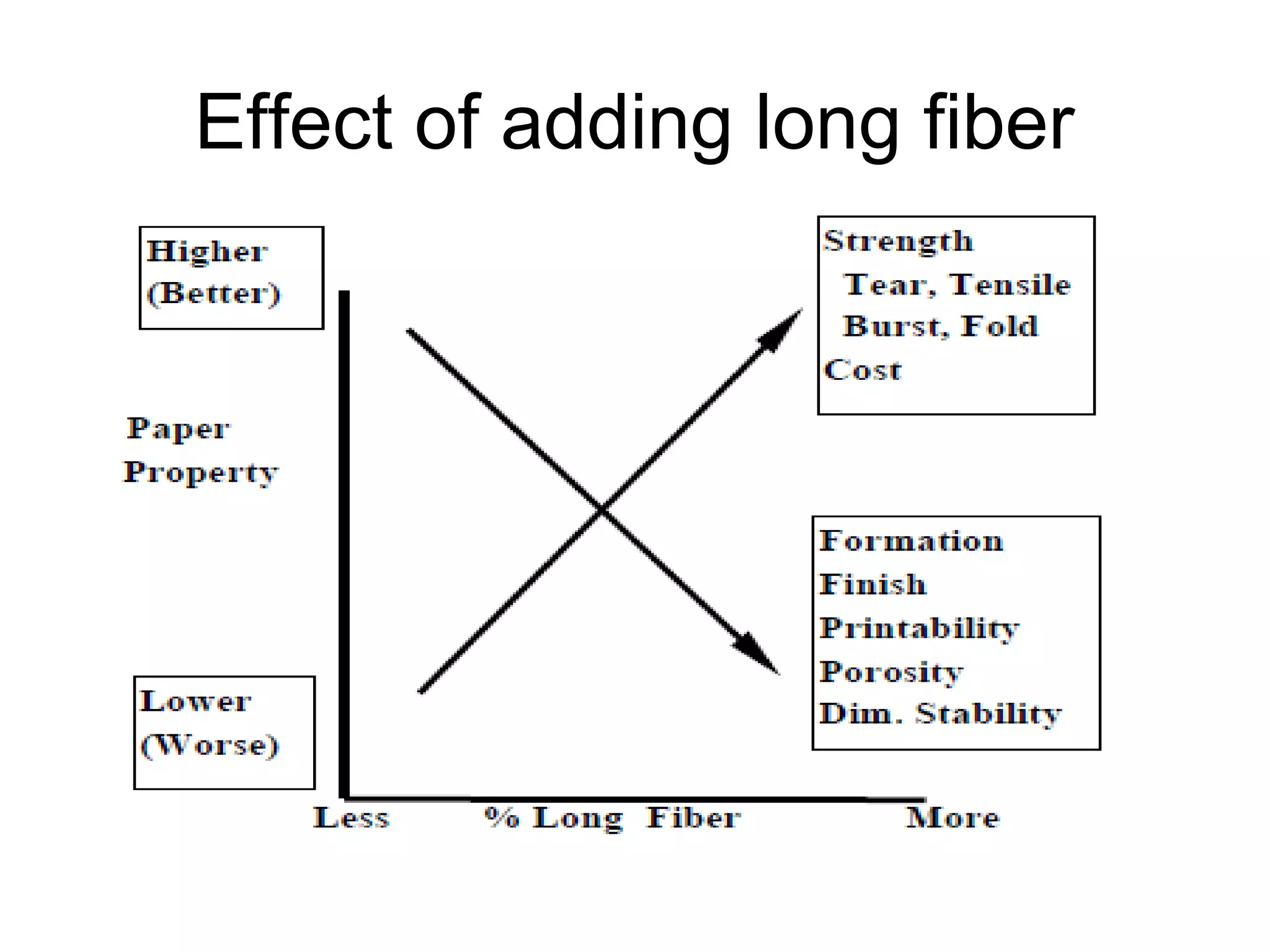
Effect of adding long fiber
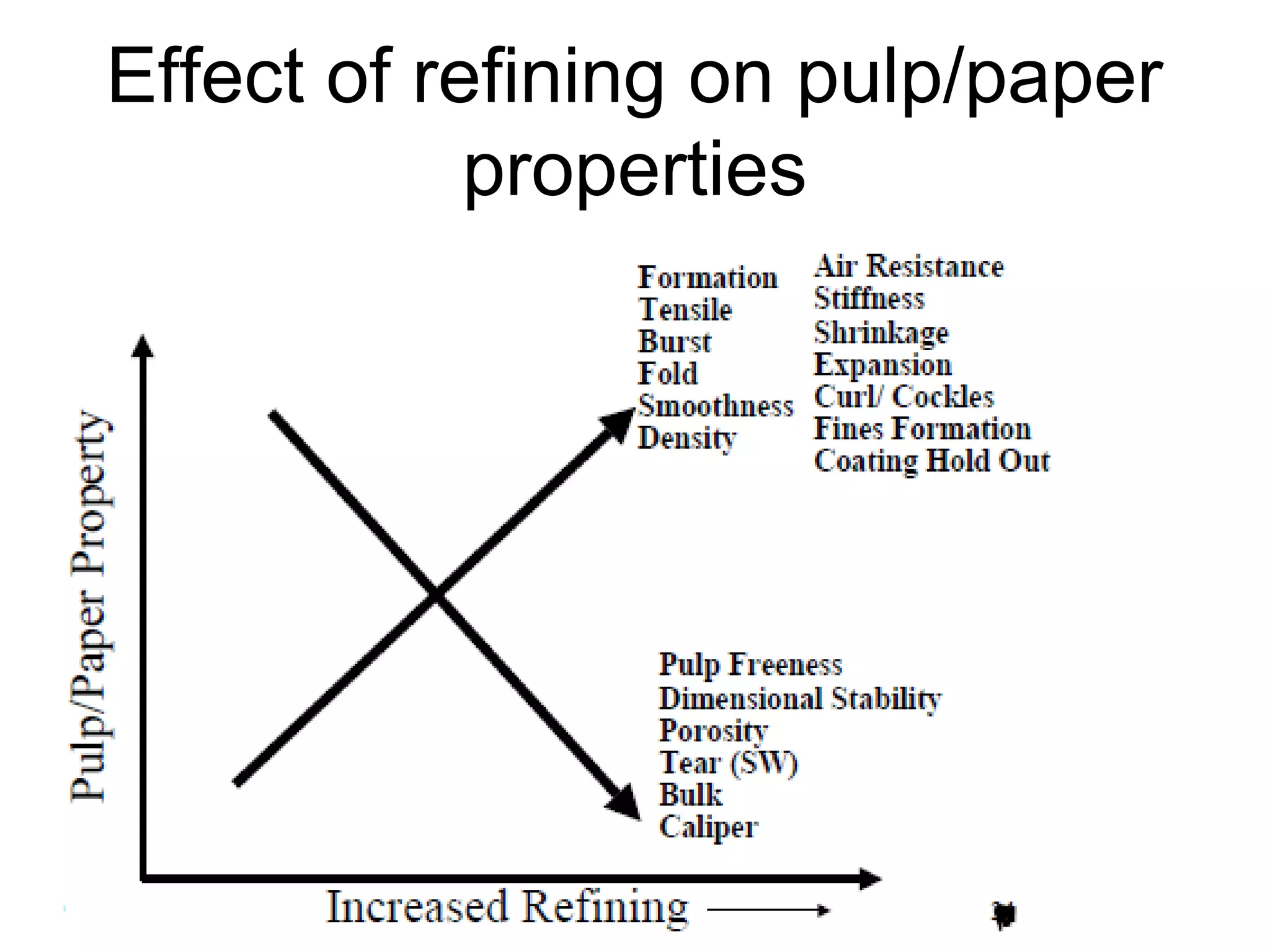
Effect of refining on pulp/paper
properties
Pulp Composition
• High Hemicellulose content - Easy to
refine, strong & dense sheet.
• High Lignin - Difficult to refine, and
inhibits swelling.
• High Carboxylic Acid Content – Causes
fiber swelling, and ease in refining
• pH - Easier at high pH, but difficult to
generalize.
FILLERS
Fillers are applied to the paper mainly;
• To improve the optical properties, such as
brightness and opacity
• To improve the smoothness of the sheet
surface (i. e. decreased roughness,
especially after calendering)
• To improve the sheet formation by filling
the voids between the fiber matrix
Cont…
• To enhance printability in the various
printing processes due to a more uniform
paper surface, higher opacity and better
ink receptivity.
• The latter resulting in reduced printing ink
penetration, wicking and ink strike-through
to the opposite side of the sheet
Cont…
• To improve the dimensional stability of the
paper as most fillers remain inert when
wetted, unlike the natural fibers usually
used in papermaking.
• To improve the permanence of the paper
(alkaline papermaking, calciumcarbonate
(CaCO3) filler)
Sizing
• Sizing makes the fiber hydrophobic and
thus prevents or reduces the penetration
of water or other aqueous liquids into the
paper.
• Sizing prevents the spreading and strike
through of ink or printing colors.
Cont…
• Papermaking fibers have a strong
tendency to interact with water.
• A high absorbency is important for a few
paper grades such as toweling and tissue.
• Also corrugated medium paper must be
“absorbent” to a certain degree to convert
properly in the corrugating process.
Cont…
• On the other hand such properties are
disadvantageous for many paper grades
e. g. liquid packaging, top layer of
corrugated board, writing and printing
papers and most of the specialty papers.
• The water and liquid absorbency can be
reduced by the addition of sizing agents to
the paper stock and/or by their application
to the paper surface.
Process
• Sizing is usually performed in a size press
or a film press.
• In a size press, the web is passed through
a pond of the sizing agent, which is
located above a roll nip.
• As a result of both capillary action in the
pond and the hydraulic pressure in the roll
nip, the paper web absorbs the sizing
liquor.
Cont…
• The amount of size pick-up and the
degree of penetration depend upon the
– the concentration and viscosity of the size,
– the absorption behavior (porosity, moisture
content, temperature, etc.) of the paper web,
– and the nip pressure and nip length.
– Control of the size pick-up is mainly by
variation of the size concentration, but also by
variation of the nip pressure.
Dying
• Stock dying
• Surface dying
• Dip dying
Stock dying
• This process is called internal dyeing and
is the most widely used paper dyeing
process.
• Because of clean working conditions and
the most efficient usage, the dyes are now
mostly added continuously and fully
automatically into the stock flow.
• choice of dye and the fixing and dyeing
conditions largely depend on the raw
materials used in papermaking (recycled
fibers, stone groundwood, TMP, CTMP,
unbleached or bleached chemical pulp,
type and portion of filler) and on its
preparation process
• Eg. higher degree of beating of the pulp
results in a deeper coloring
• Fillers increase the required amount of
dyes because they absorb dyes and, at
the same time, reduce the coloration
Cont…
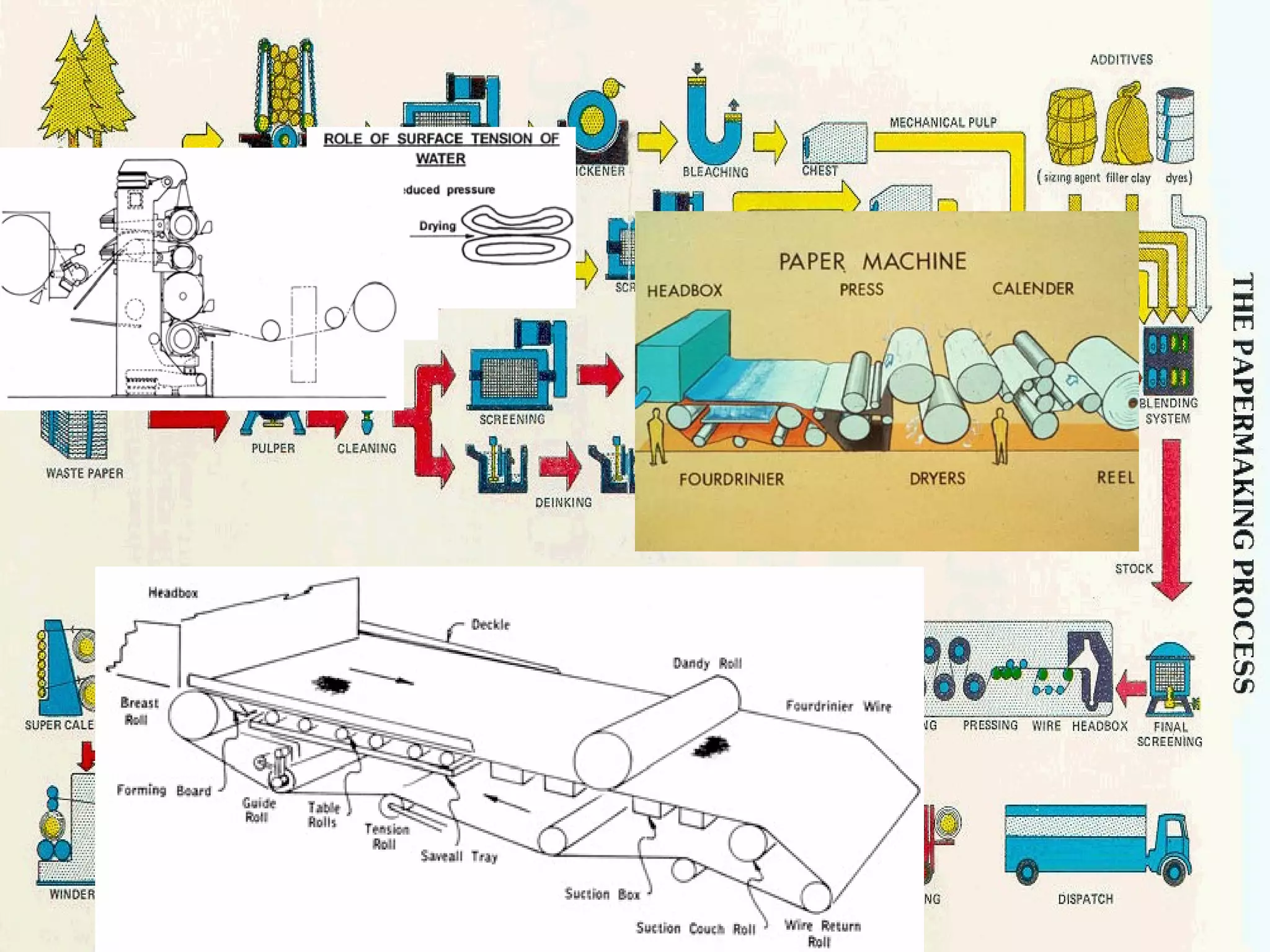
• Addition of dye is determined by a few
factors
e. g. high consistency dyeing at a stock
consistency of 3–4 % (before mixing with
white water ahead of the headbox)
• Alternatively low consistency dyeing at a
stock consistency of 0.5–1.5 % (in front of
the mixing pump or pressure screens).
• The pH conditions are very important.
• The addition of aluminum sulfate usually
promotes the absorption of dyes and
yields less colored waste water and
effluent.
• In general, there is a trend towards paper
production in the neutral or alkaline pH
range. These conditions need dyes with a
very good affinity to the paper stock in a
neutral medium and/or very effective
fixatives and retention aids.
Advantages and disadvantages
• Batch addition has the advantage of
thorough mixing of the additives with the
paper stock and optimal fixation due to
longer contact time between the fiber and
dye.
• The disadvantages are that the time
required for color correction and color
change is relatively long (loss of
productivity).
Paper unit i

Paper unit i

  • 1.
  • 2.
    INTRODUCTION • Paper isa thin material mainly used for writing upon, printing upon or for packaging. • It is produced by pressing together moist fibers, typically cellulose pulp derived from wood, rags or grasses, and drying them into flexible sheets.
  • 3.
    Raw materials Five differentfiber classifications include: – bast or stem fibers, which are the fibrous bundles in the inner bark of the plant stem running the length of the stem; – leaf fibers, which run the length of leaves; – seed-hair fibers; – core, pith or stick fibers, – Grass and all other plant fibers not included above
  • 4.
    Bast fibers Examples ofbast or stem fibers include; – jute, – flax, – hemp, – kenaf, – ramie, – roselle, – andurena.
  • 5.
    BAST FIBER • • • • • • Obtained fromthe flax plant. Located inside the stem. Only 5% usable for papermaking. Hemp and jute are other forms of bast fibers. Hemp has been used for cigarette and Bible papers. It is used for heavy duty shipping tags and heavy pattern boards.
  • 6.
    Leaf fibers • Leaffibers include; – banana, – sisal, – henequen, – abaca, – pineapple, – cantala, – caroa, – mauritius, and phormium
  • 7.
    Cont… Seed-hair fibers include; –coir, – cotton, – kapok, – and milk weed floss. Center or pith fibers include; – kenaf – and jute.
  • 8.
    Seed Hair Fibers—CottonPlant • Cotton fibers are very expensive. • Used primarily for bank notes, high grade writing papers, maps—anything that requires exceptional strength and durability.
  • 9.
    Grass Fibers • WheatStraw – Absorbs water readily. – Used to make low grade paper. • Bagasse fiber – Made from crushed stalks of sugar cane. – Used as a source of fuel for Sugar Mills. • Esparto Plant – Has very little strength and does not split into fibrils easily.
  • 10.
    Grass Fibers • Kenafplant – Shows great potential for papermaking. – May produce 5 to 7 times more pulp/acre than pine. – Grows to maturity in 120 days compared to 20 years for most trees.
  • 11.
    The remaining fibersinclude; • • • • • roots, leaf segments, flower heads, seed hulls and short stem fiber
  • 12.
    Wood Fibers • 95%of all paper is made from wood fibers. • Deciduous hardwood trees, e.g., Oak, Gum, Maple, Aspen, etc. • Coniferous softwood trees, e.g., Pine, Spruce, Fir, etc. (the softwoods produce a stronger pulp).
  • 13.
  • 15.
  • 16.
    Cellulose properties • Itis abundant and replenishable • It can be easily harvested and transported to its usage site • Good tensile strength • Great affinity for water • They resist change or degradation by any chemicals bcoz of this unique characteristics.
  • 17.
    Pulping • The objectiveof pulping is to separate the wood into individual fibers. • A pulp mill is a manufacturing facility that converts wood chips or other plant fiber source into a thick fiber board which can be shipped to a paper mill for further processing.
  • 18.
    Pulping methods Three broadclassifications of pulping methods: – Mechanical (groundwood) – Mechanical (refiner) – Chemical (kraft process) – Chemical (sulphite process) – Combination (chemi-mechanical) – Combination (chemi-thermo mechanical)
  • 19.
    Mechanical pulping • Grinding-Stone Groundwood(SGW) – Logs (very occasionally chips) are pressed into a turning stone thus releasing fibers.
  • 20.
    Ground wood • Thebark is removed from the logs. • Then, the cut logs are forced by hydraulic or steam pressure against a revolving grinding stone in the presence of water. • This treatment converts the wood into a pulp consisting of minute particles of both fibrous and non fibrous portions of wood.
  • 21.
    • The nonfibrousmaterials deteriorate when left for some time in contact with air. • This type of pulp is not as strong as chemical pulp. • Groundwood pulp has to be mixed with other pulps, e.g., Newsprint—contains 80% groundwood pulp and 20% chemical pulp.
  • 22.
    Advantages • Low costand high yield • This pulp has high bulk and opacity • Excellent printing, cushioning and ink absorbency • Disadvantages; – Low strength and brightness
  • 23.
    Refining pulp • Refining-RefinerPulp – Chips are fed between 2 disks. One disk is always turning while the other can be fixed or turning.
  • 24.
  • 25.
    Cont… • Small cylinderor wood chip is placed between two opposite rotating plastic disc • Chip disintegrates into coarse fibers • Compression and decompression of rotating disc • Heat generated splits the individual fibers.
  • 26.
    Advantages • Refiner mechanicalpulp also utilizes waste chips and low grade wood than ground wood • It has the high opacity and yeild
  • 27.
    Chemical pulping • Itis used to isolate fibers from wood compartment is to remove the lignin • Delignification is done by degrading the lignin molecules, bringing them into solution and removing them by washing • Also a certain amount of carbohydrates (cellulose and hemicelluloses) is lost in this process
  • 28.
    Sulphate process • Thekraft process (or sulphate process) is the dominant chemical pulping method worldwide • Which involves cooking the chips in a solution comprising sodium hydroxide ( NaOH) and sodium sulphide (Na2S), with OH and HS- as the active anions in the cooking process • The hydrogen sulphide is the main delignifying agent and the hydroxide keeps the lignin fragments in solution
  • 29.
    Sulphite process • Thesulphite process involves dissolving lignin with sulphurous acid (H2SO3) and hydrogen sulphite ions (HSO3-) as active anions in the cooking process • More recently devolped pulping methods include the use of organic solvents as ethanol, methanol and peracetic acid (CH3CO3H) for delignification .
  • 30.
    TMP • To makeTMP, wood chips or sawdust are first softened by steam and then subjected, under pressure, to the defibering action of a disk-type refiner. • This causes the fibers to completely separate from each other and suffer less damage than those produced by the conventional groundwood pulp process. • TMP is cleaner and stronger when compared with groundwood pulp.
  • 31.
    Advantages • TMP isstronger than RMP and stone groundwood and it eliminate more costly chemical pulps that are blended with mechanical pulp • It has high yield and high opacity • It has better runnability on the presses.
  • 32.
    CTMP • In thechemi-thermo mechanical pulping, where the wood chips are treated with mild chemicals prior to the refining • This mild chemical pretreatment improves pulp brightness to some extent
  • 33.
    Bleaching technique • Allpulp requires bleaching to remove residual lignin before papermaking process • The purpose of bleaching is to remove stains caused by lignin • There are many different types of bleaching process, involving different chemicals and conditions
  • 34.
    Bleaching agents • Majorbleaching agents – chlorine, – sodium hypochlorite, – hydrogen peroxide, – chlorine-dioxide, – and oxygen
  • 35.
    Cont… • Chlorine gasis one of the different bleaching systems that are used to remove lignin that remains in the pulp. – Chlorine gas is passed into the pulp-water mixture. – The gas reacts with whatever lignin that is left and becomes chlorinated. – The chlorinated lignin is then removed when treated with the caustic soda NaOH (Sodium Hypochlorite)
  • 36.
    Mechanical pulp bleeching •After the refining process, the resulting fibers do not have the brightness required for most paper applications. Bleaching is therefore required. • For the mechanical pulp, hydrogen peroxide, sodium hydrosulphite or formamide sulphuric acid are used for bleeching • Chlorine was widely used in the past but few mills use it today.
  • 37.
    Chemical pulp bleeching •In chemical pulping, the majority of the lignin has been removed in the pulping stage • In general kraft or sulphate process requires more bleeching than sulphite • Sodium hypochlorite or hydrogen peroxide may be used for brightening chemically pulped fibers
  • 38.
    Cont… • Once thepulp has been screened, cleaned and bleached it is ready for the stock preparation
  • 39.
    Stock preparation • Itinvolves many operations, including stock blending, refining, broke management, operation of the several system, and mixing and blending of wetend additives. • All these are important operations in determining the quality of paper and paper machine efficiency.
  • 40.
    Cont… • The pHis controlled and various fillers, such as whitening agents, size and wet strength or dry strength are added • Additional fillers such as clay, calcium carbonate and titanium dioxide to increase opacity
  • 41.
    Fibers & nonfibers • Fiber - Selected for properties & cost • Non-fibrous Additives - Selected to obtain properties not inherent in fiber – Strengthening Agents (Starch) – Fillers (Clay, CaCO3, TiO2, etc) – Internal Sizing Agents (Rosin,etc.) – Coloring agents – Other
  • 42.
    Process • Pulp ispumped through a sequence of tanks that are commonly called chests. • Chests may be either round or rectangular made with special ceramic tile faced reinforced concrete, mild and stainless steels are also used • Pulp slurries are kept agitated in these chests by propeller like agitators near the pump suction at the chest bottom.
  • 43.
    Different levels • Productionlevel – To break down the raw material into individual fibers, – to separate fibers and contaminants, – to separate fibers/solids and water, – to treat the fibers, and – to treat the residual contaminants.
  • 44.
    • Recovery level –where fibers and other solids, and water are recovered from the rejects of the separation processes applied in the production level. Again fibers and contaminants as well as solids and water have to be separated. • Discharge level – for ecological and economic reasons the final rejects are separated into wastewater and residues with high dry content.
  • 45.
    Effect of addinglong fiber
  • 46.
    Effect of refiningon pulp/paper properties
  • 47.
    Pulp Composition • HighHemicellulose content - Easy to refine, strong & dense sheet. • High Lignin - Difficult to refine, and inhibits swelling. • High Carboxylic Acid Content – Causes fiber swelling, and ease in refining • pH - Easier at high pH, but difficult to generalize.
  • 48.
    FILLERS Fillers are appliedto the paper mainly; • To improve the optical properties, such as brightness and opacity • To improve the smoothness of the sheet surface (i. e. decreased roughness, especially after calendering) • To improve the sheet formation by filling the voids between the fiber matrix
  • 49.
    Cont… • To enhanceprintability in the various printing processes due to a more uniform paper surface, higher opacity and better ink receptivity. • The latter resulting in reduced printing ink penetration, wicking and ink strike-through to the opposite side of the sheet
  • 50.
    Cont… • To improvethe dimensional stability of the paper as most fillers remain inert when wetted, unlike the natural fibers usually used in papermaking. • To improve the permanence of the paper (alkaline papermaking, calciumcarbonate (CaCO3) filler)
  • 51.
    Sizing • Sizing makesthe fiber hydrophobic and thus prevents or reduces the penetration of water or other aqueous liquids into the paper. • Sizing prevents the spreading and strike through of ink or printing colors.
  • 52.
    Cont… • Papermaking fibershave a strong tendency to interact with water. • A high absorbency is important for a few paper grades such as toweling and tissue. • Also corrugated medium paper must be “absorbent” to a certain degree to convert properly in the corrugating process.
  • 53.
    Cont… • On theother hand such properties are disadvantageous for many paper grades e. g. liquid packaging, top layer of corrugated board, writing and printing papers and most of the specialty papers. • The water and liquid absorbency can be reduced by the addition of sizing agents to the paper stock and/or by their application to the paper surface.
  • 54.
    Process • Sizing isusually performed in a size press or a film press. • In a size press, the web is passed through a pond of the sizing agent, which is located above a roll nip. • As a result of both capillary action in the pond and the hydraulic pressure in the roll nip, the paper web absorbs the sizing liquor.
  • 55.
    Cont… • The amountof size pick-up and the degree of penetration depend upon the – the concentration and viscosity of the size, – the absorption behavior (porosity, moisture content, temperature, etc.) of the paper web, – and the nip pressure and nip length. – Control of the size pick-up is mainly by variation of the size concentration, but also by variation of the nip pressure.
  • 56.
    Dying • Stock dying •Surface dying • Dip dying
  • 57.
    Stock dying • Thisprocess is called internal dyeing and is the most widely used paper dyeing process. • Because of clean working conditions and the most efficient usage, the dyes are now mostly added continuously and fully automatically into the stock flow.
  • 58.
    • choice ofdye and the fixing and dyeing conditions largely depend on the raw materials used in papermaking (recycled fibers, stone groundwood, TMP, CTMP, unbleached or bleached chemical pulp, type and portion of filler) and on its preparation process • Eg. higher degree of beating of the pulp results in a deeper coloring • Fillers increase the required amount of dyes because they absorb dyes and, at the same time, reduce the coloration
  • 59.
    Cont… • Addition ofdye is determined by a few factors e. g. high consistency dyeing at a stock consistency of 3–4 % (before mixing with white water ahead of the headbox) • Alternatively low consistency dyeing at a stock consistency of 0.5–1.5 % (in front of the mixing pump or pressure screens). • The pH conditions are very important.
  • 60.
    • The additionof aluminum sulfate usually promotes the absorption of dyes and yields less colored waste water and effluent. • In general, there is a trend towards paper production in the neutral or alkaline pH range. These conditions need dyes with a very good affinity to the paper stock in a neutral medium and/or very effective fixatives and retention aids.
  • 61.
    Advantages and disadvantages •Batch addition has the advantage of thorough mixing of the additives with the paper stock and optimal fixation due to longer contact time between the fiber and dye. • The disadvantages are that the time required for color correction and color change is relatively long (loss of productivity).