2
BASICS OF BLEACHING CHEMICAL PULPS
Chemical treatment to:
 Increase brightness
 Improve cleanliness
 Improve brightness stability
 Remove hemicellulose
 Remove extractives
3
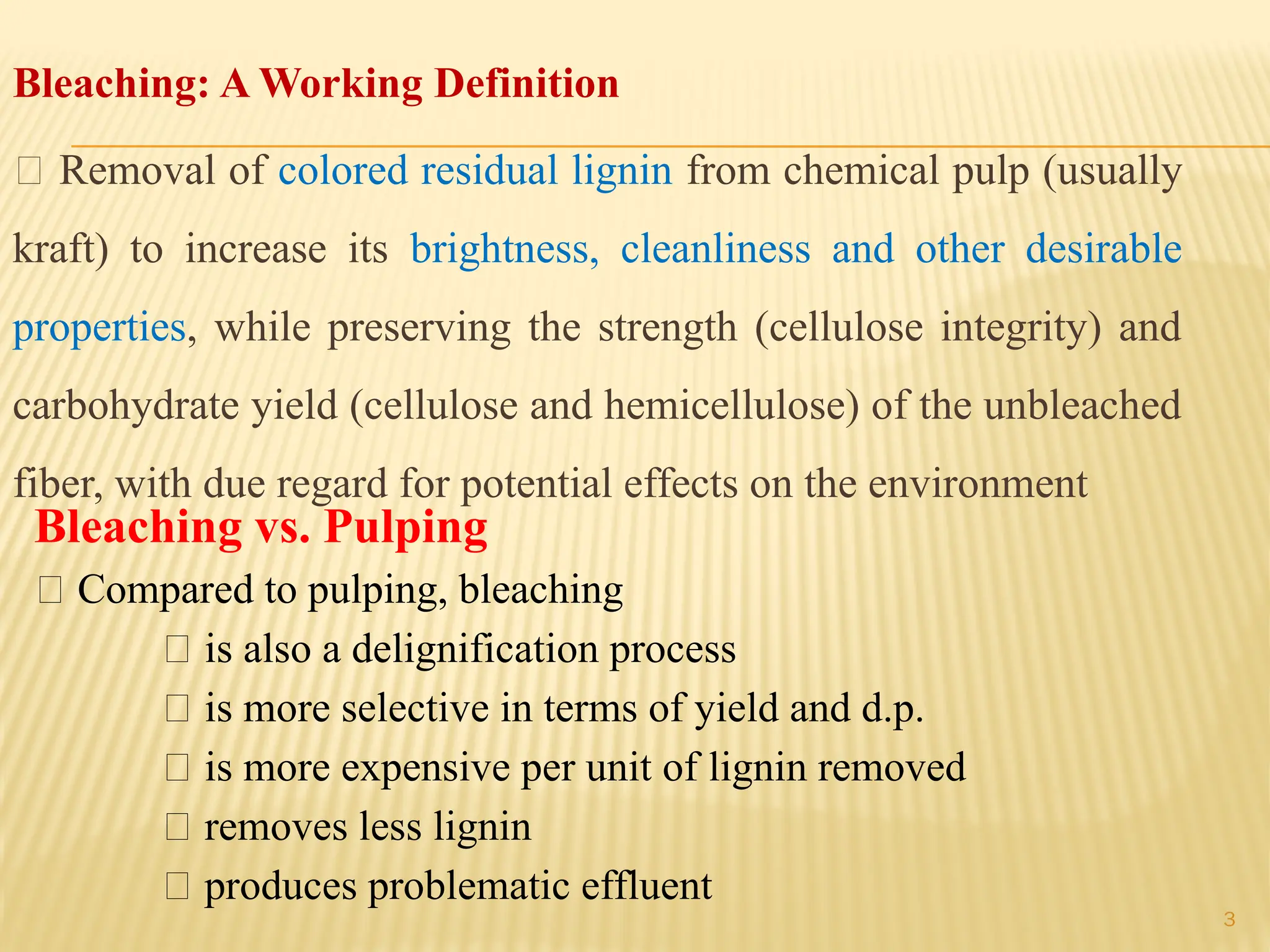
Bleaching: A Working Definition
􀂙 Removal of colored residual lignin from chemical pulp (usually
kraft) to increase its brightness, cleanliness and other desirable
properties, while preserving the strength (cellulose integrity) and
carbohydrate yield (cellulose and hemicellulose) of the unbleached
fiber, with due regard for potential effects on the environment
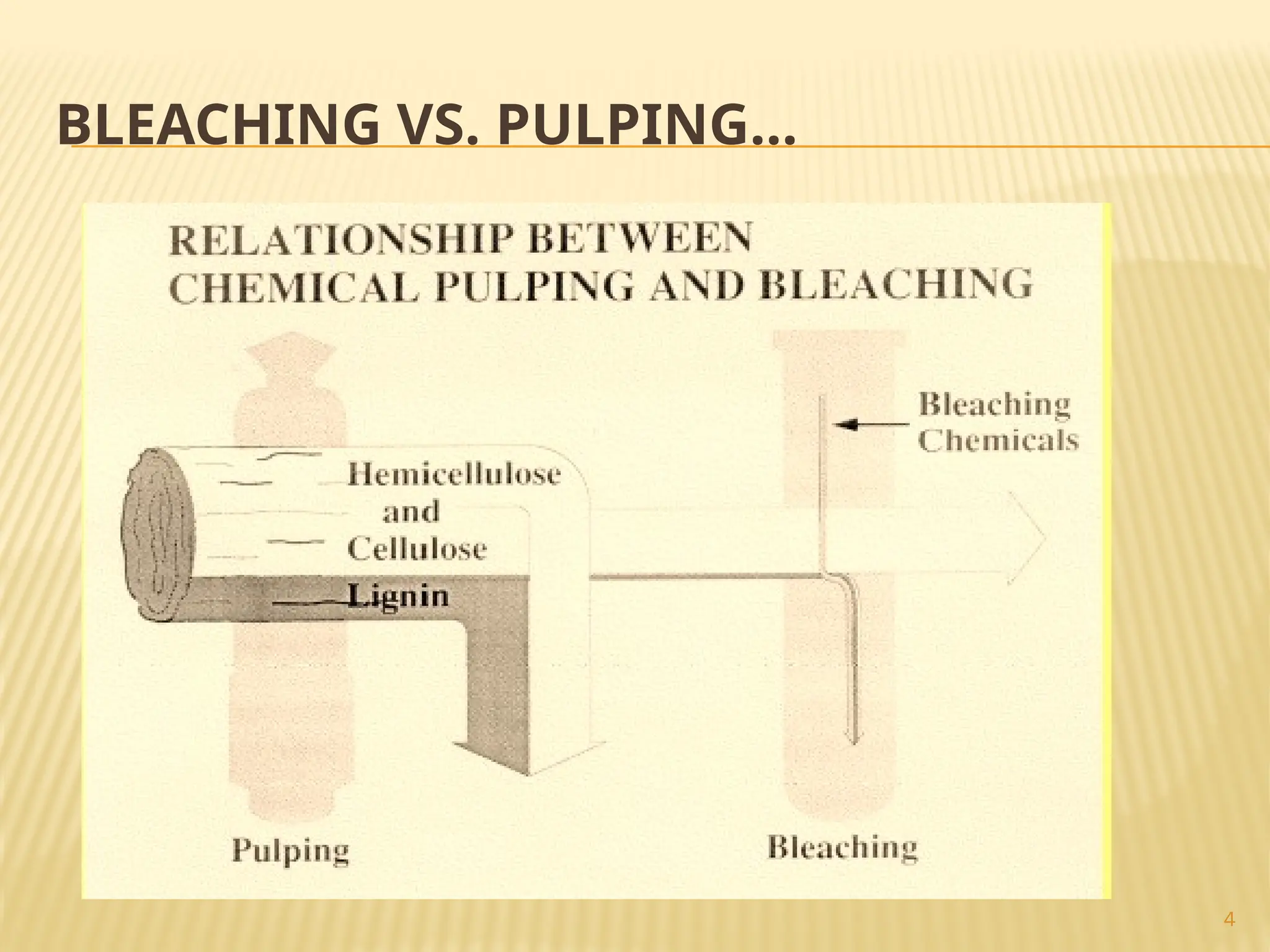
Bleaching vs. Pulping
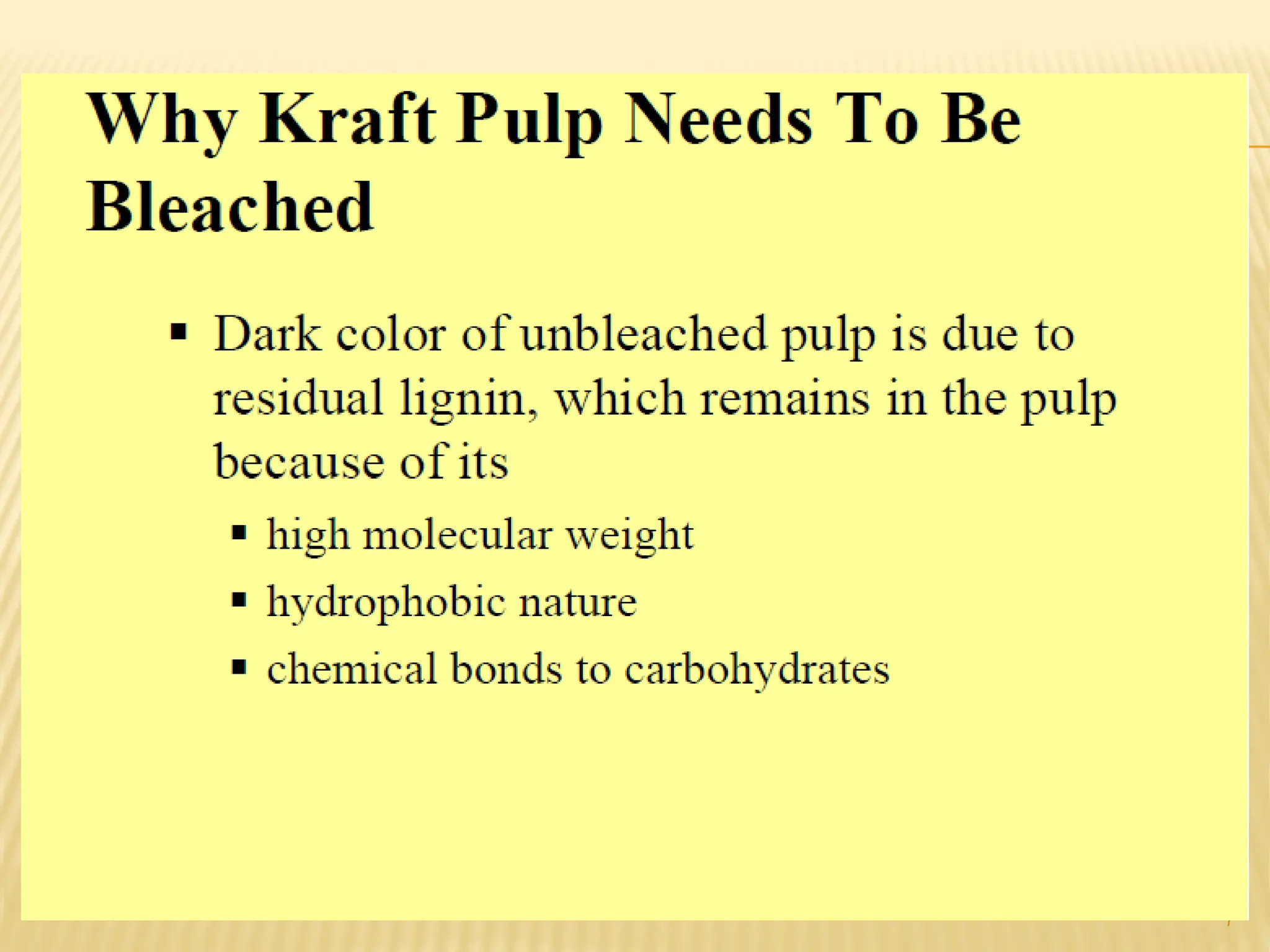
􀂉 Compared to pulping, bleaching
􀂾 is also a delignification process
􀂾 is more selective in terms of yield and d.p.
􀂾 is more expensive per unit of lignin removed
􀂾 removes less lignin
􀂾 produces problematic effluent
4
BLEACHING VS. PULPING…
5
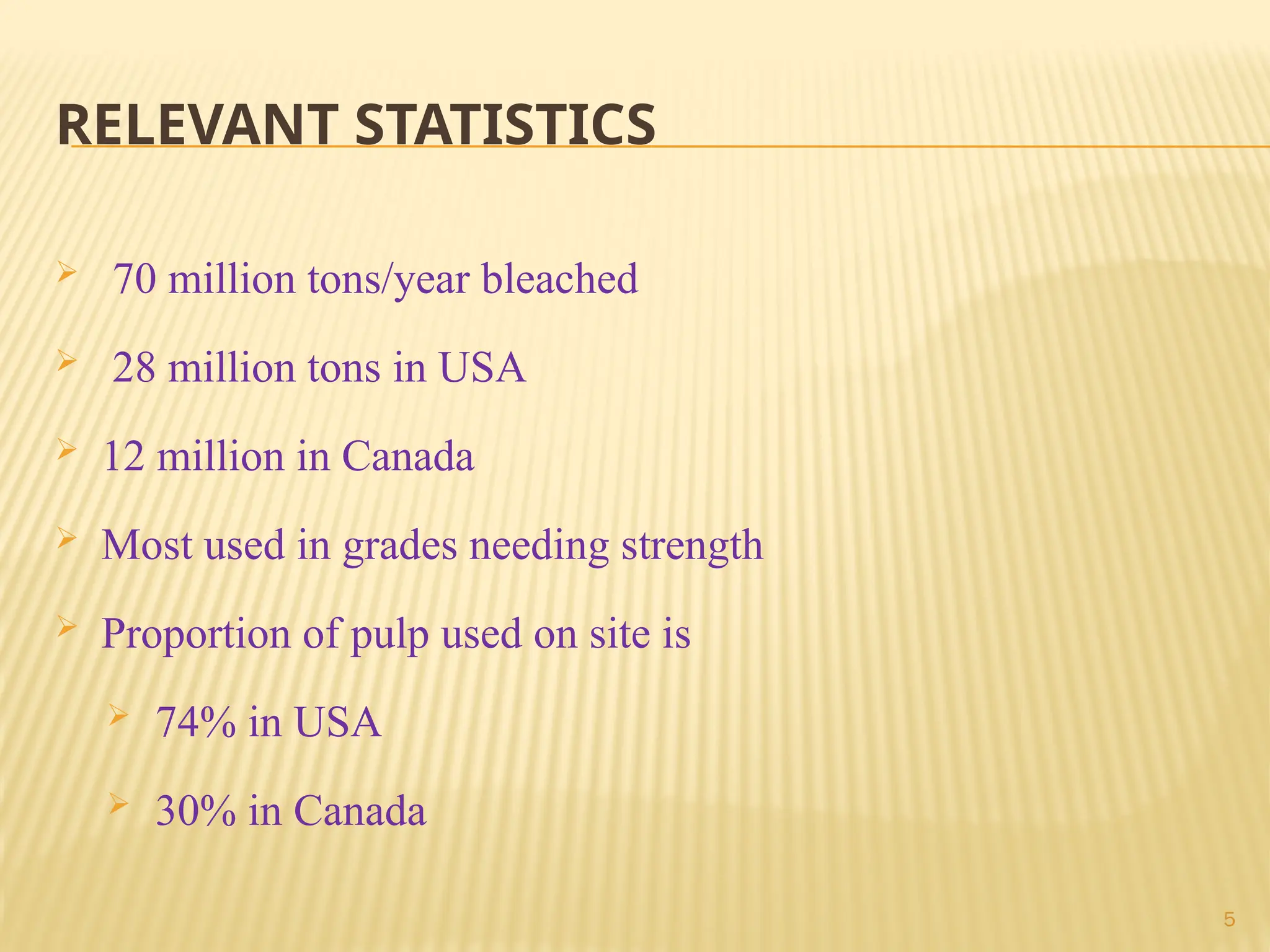
RELEVANT STATISTICS
 70 million tons/year bleached
 28 million tons in USA
 12 million in Canada
 Most used in grades needing strength
 Proportion of pulp used on site is
 74% in USA
 30% in Canada
6
7
8
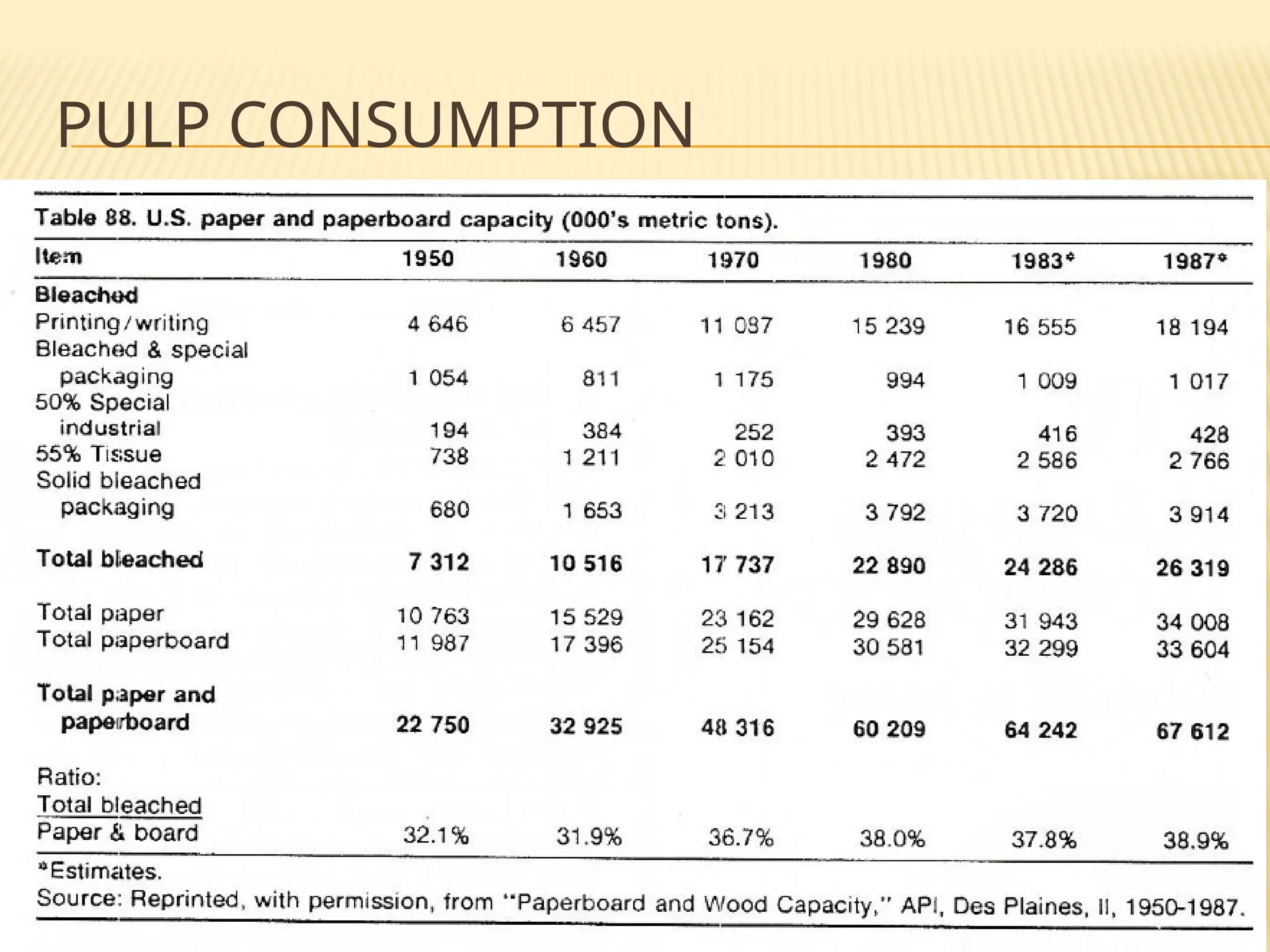
PULP CONSUMPTION
9
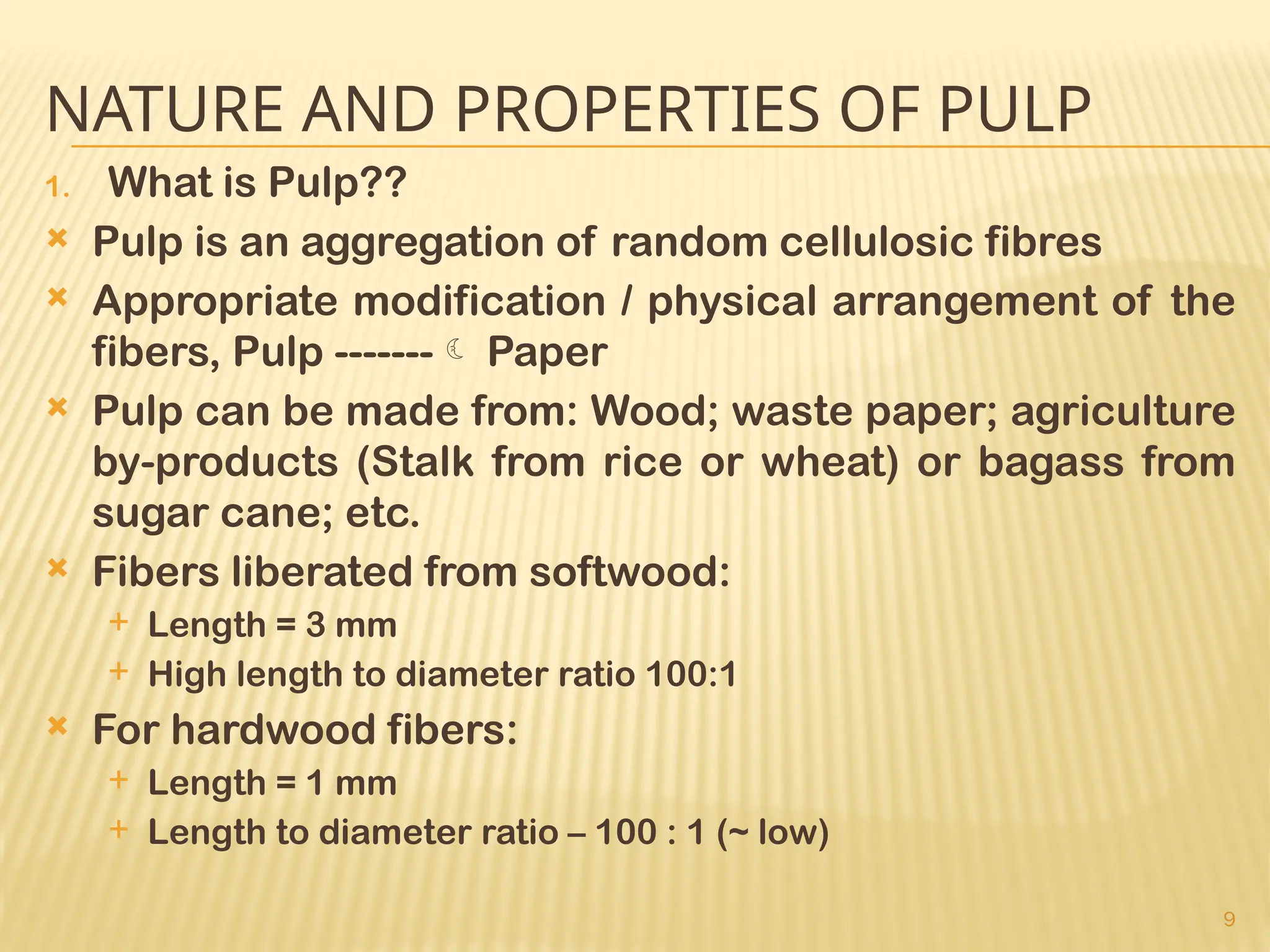
NATURE AND PROPERTIES OF PULP
1. What is Pulp??
 Pulp is an aggregation of random cellulosic fibres
 Appropriate modification / physical arrangement of the
fibers, Pulp ------- Paper
 Pulp can be made from: Wood; waste paper; agriculture
by-products (Stalk from rice or wheat) or bagass from
sugar cane; etc.
 Fibers liberated from softwood:
 Length = 3 mm
 High length to diameter ratio 100:1
 For hardwood fibers:
 Length = 1 mm
 Length to diameter ratio – 100 : 1 (~ low)
10
2. PULP CHEMISTRY
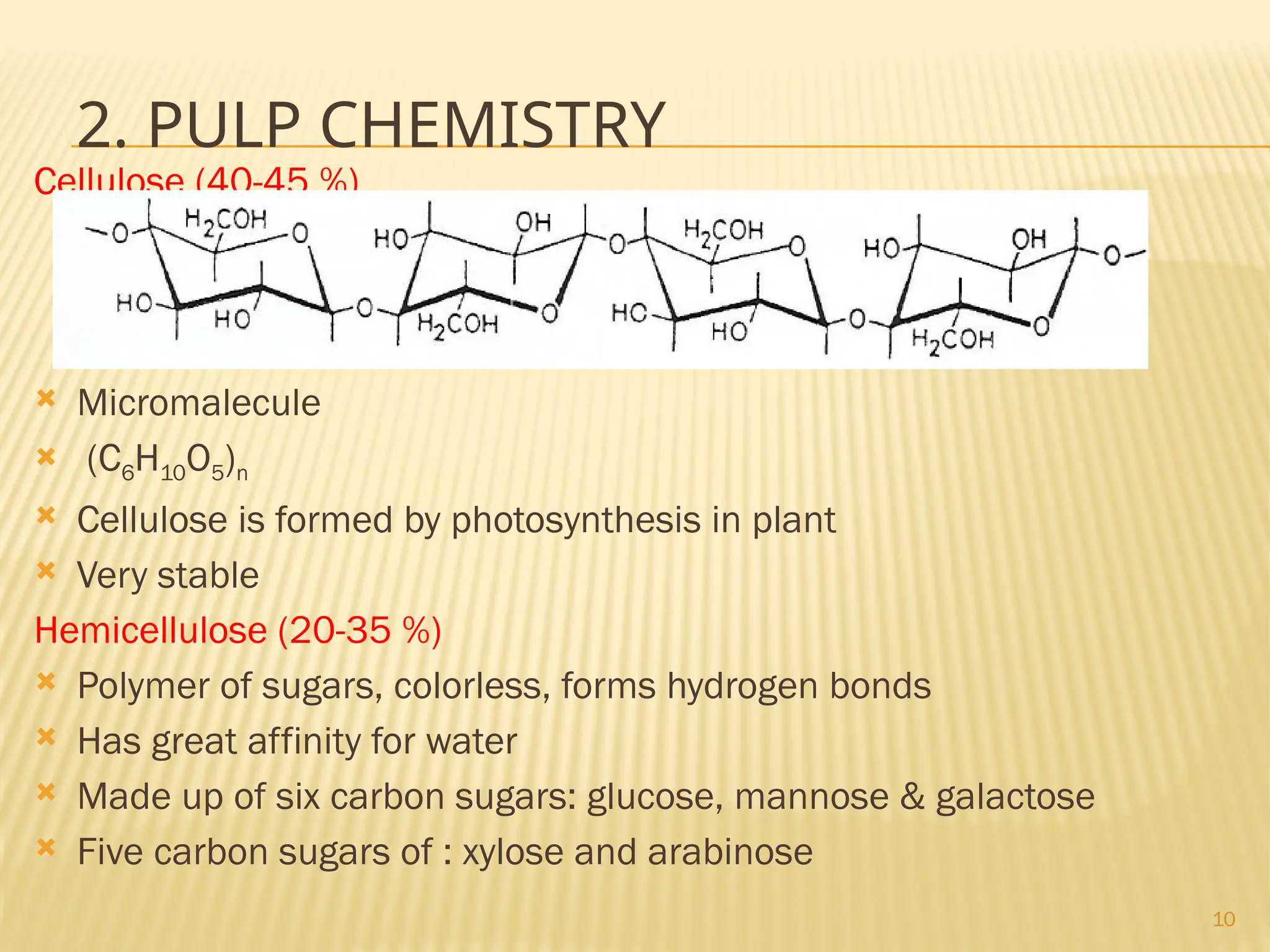
Cellulose (40-45 %)
 Micromalecule
 (C6H10O5)n
 Cellulose is formed by photosynthesis in plant
 Very stable
Hemicellulose (20-35 %)
 Polymer of sugars, colorless, forms hydrogen bonds
 Has great affinity for water
 Made up of six carbon sugars: glucose, mannose & galactose
 Five carbon sugars of : xylose and arabinose
11
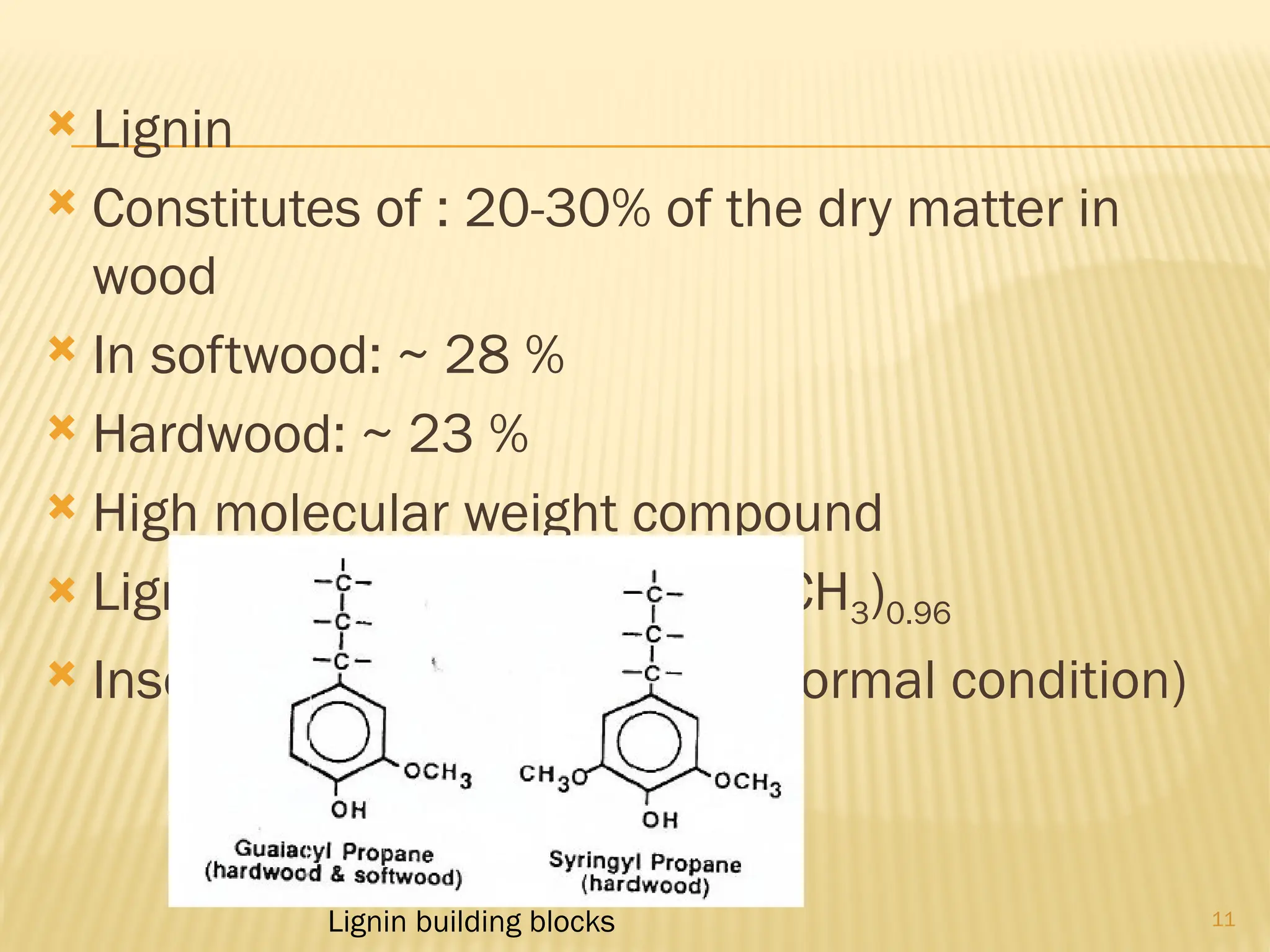
 Lignin
 Constitutes of : 20-30% of the dry matter in
wood
 In softwood: ~ 28 %
 Hardwood: ~ 23 %
 High molecular weight compound
 Lignin formula : C9H8.83O2.23(OCH3)0.96
 Insoluble in water /alkali (at normal condition)
Lignin building blocks
12
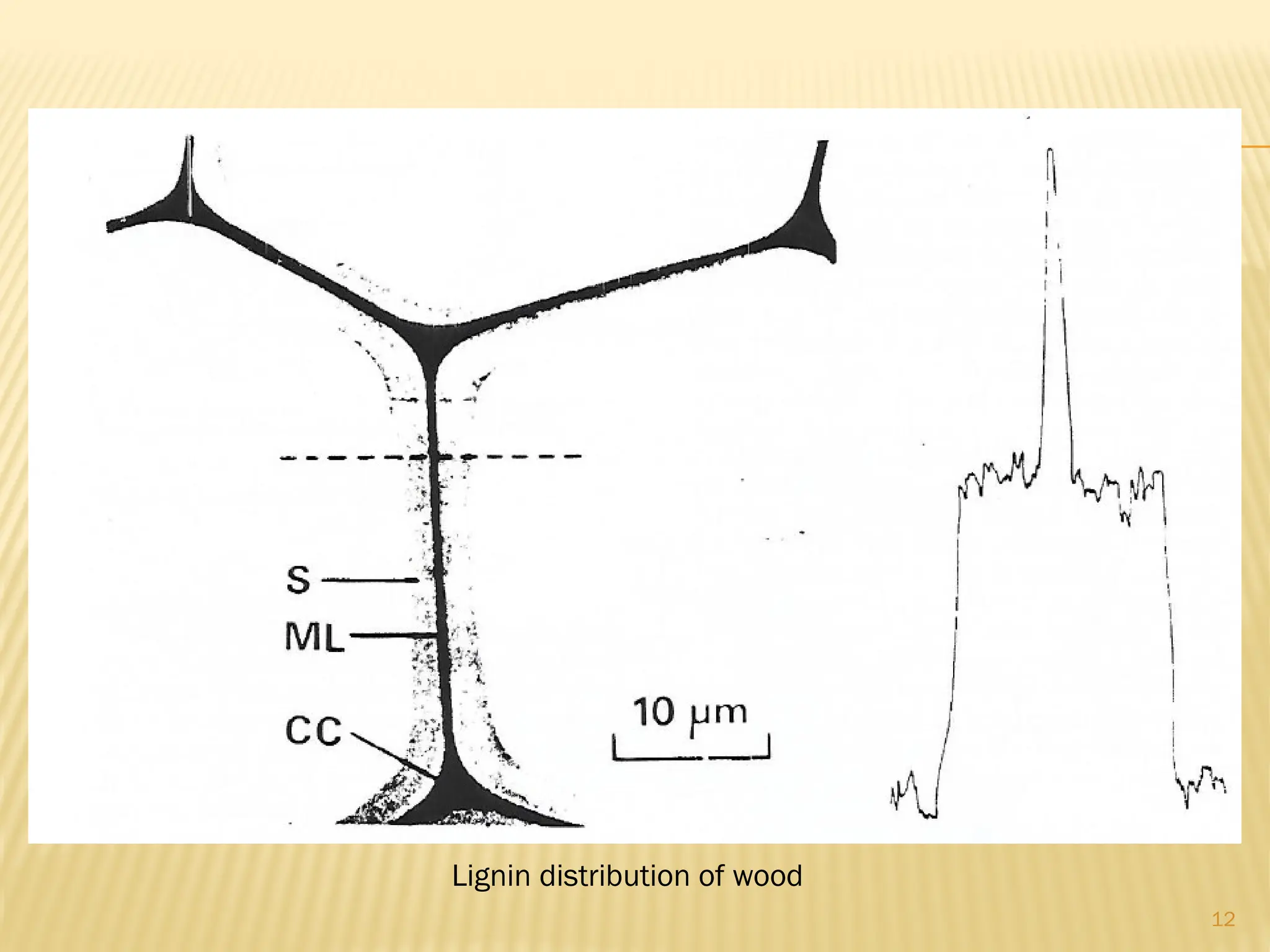
Lignin distribution of wood
13
14
15
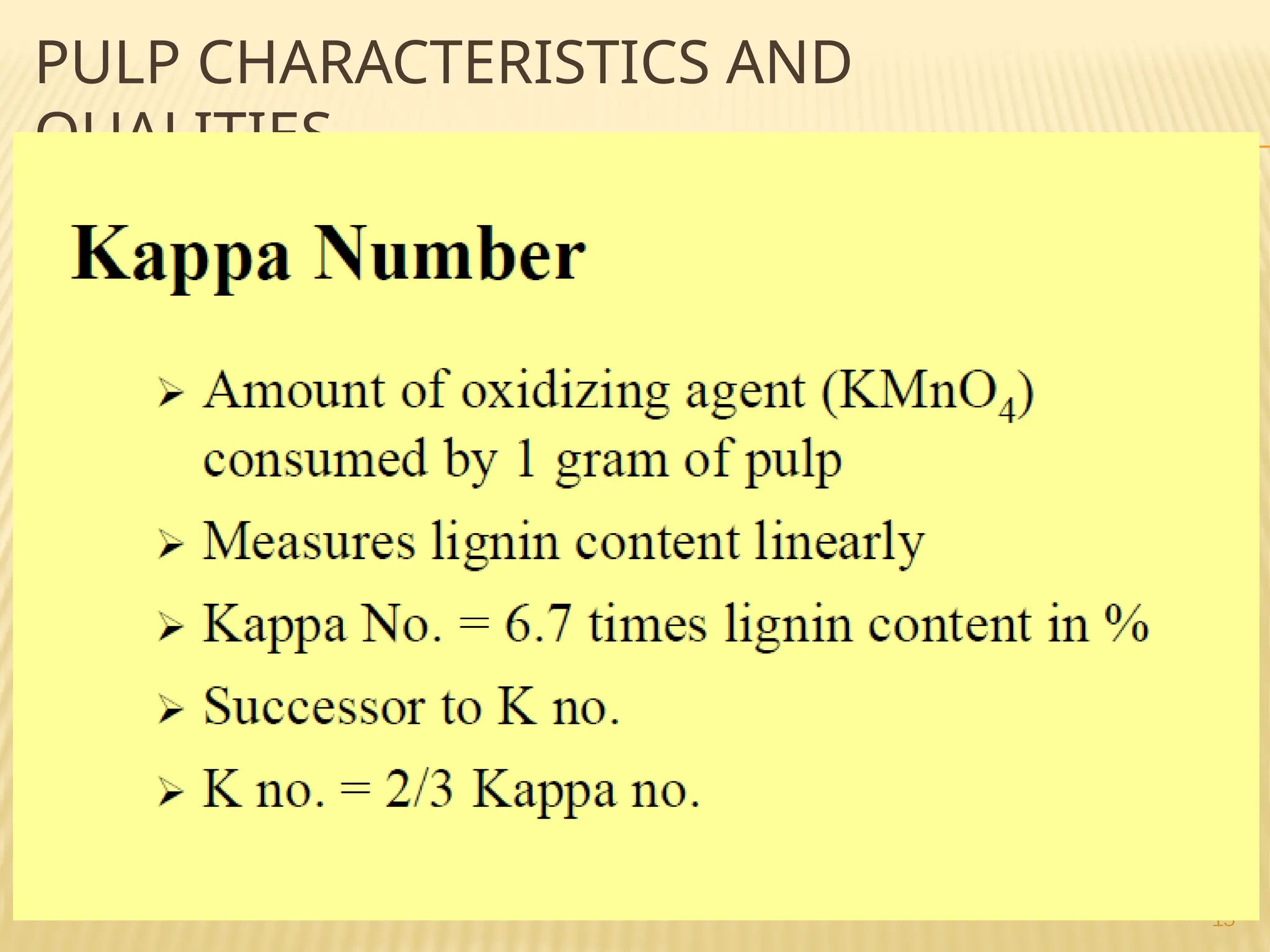
PULP CHARACTERISTICS AND
QUALITIES
16
17
18
19
20
21
22
23
24
25
26
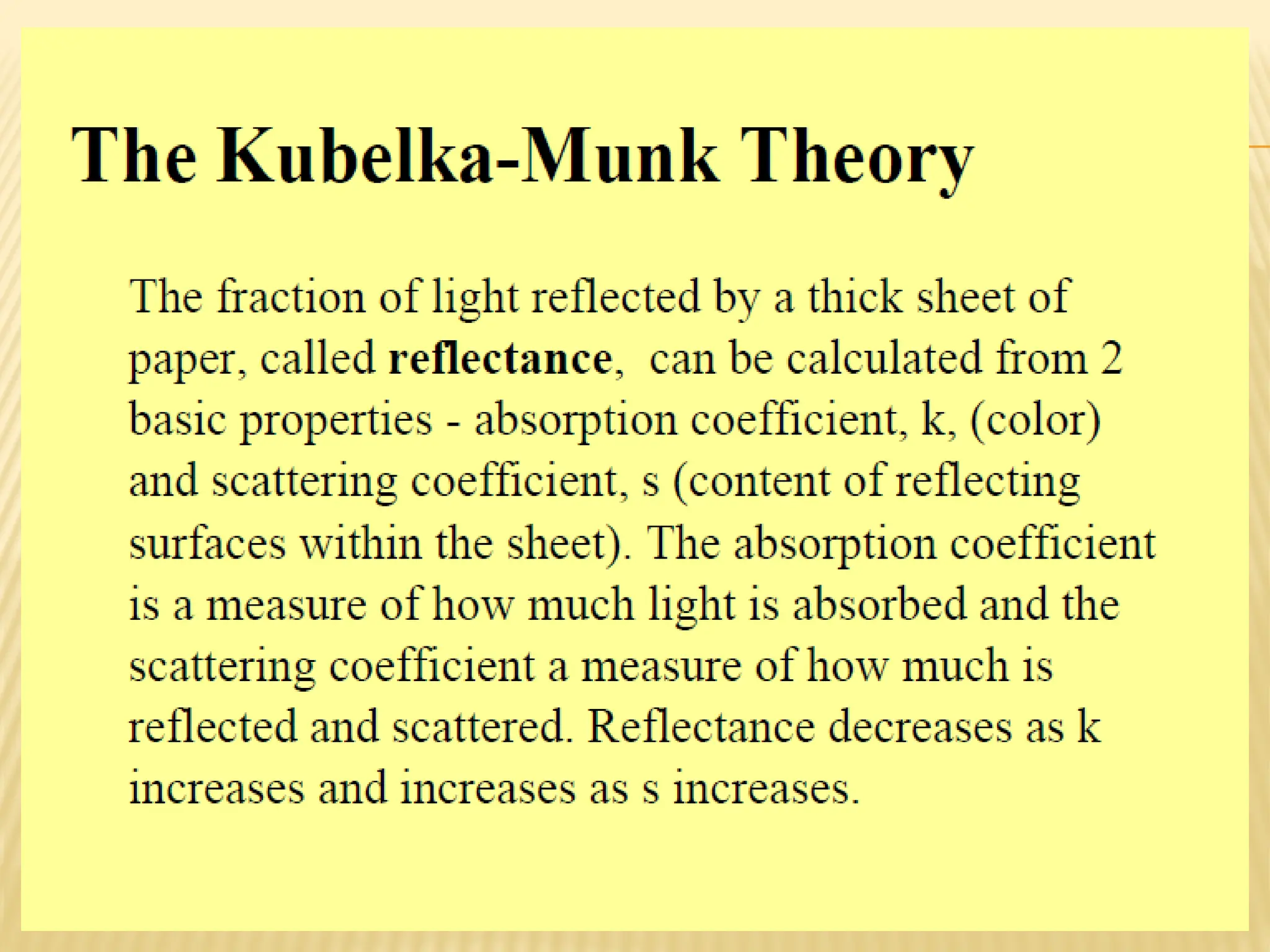
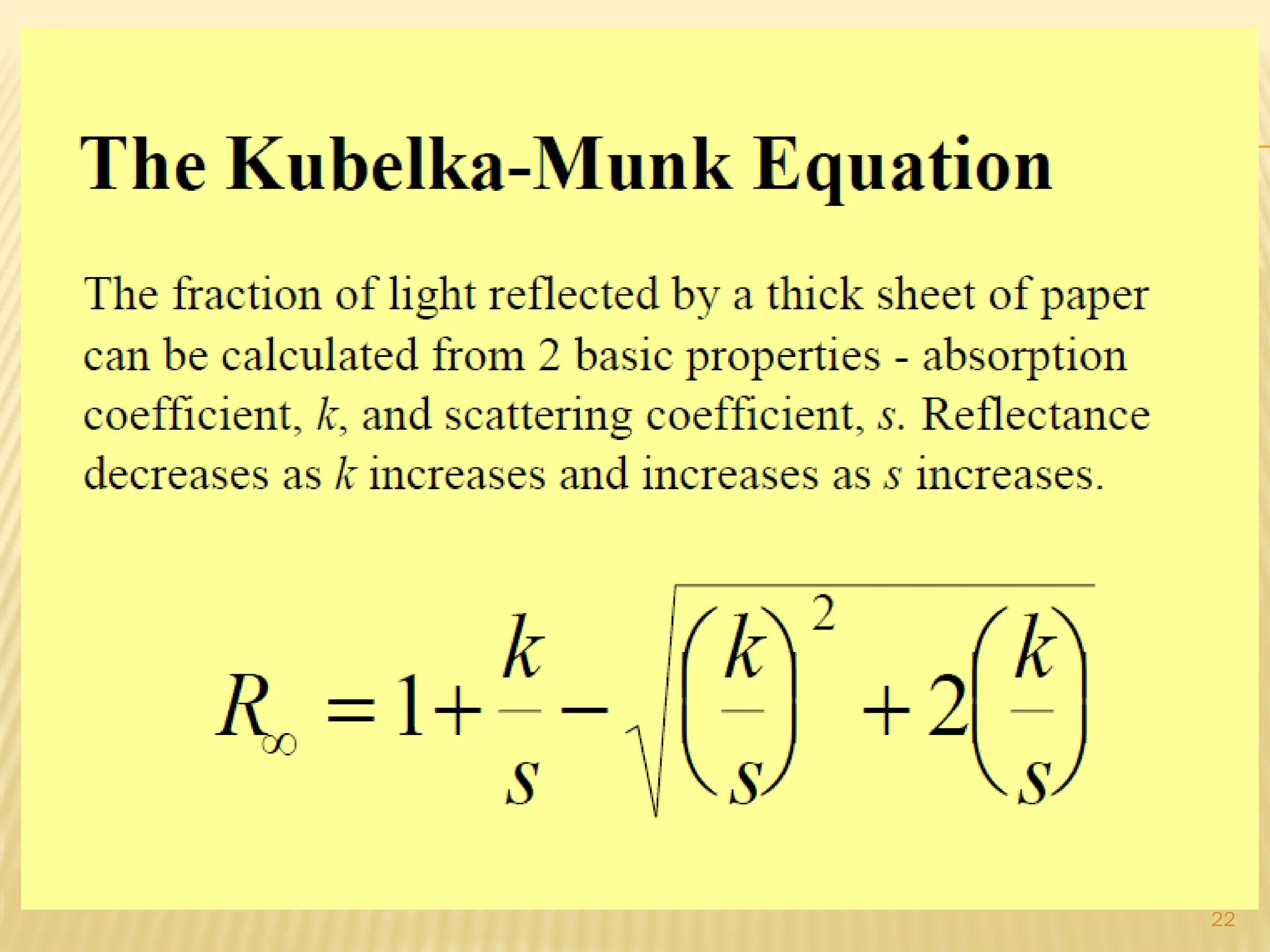
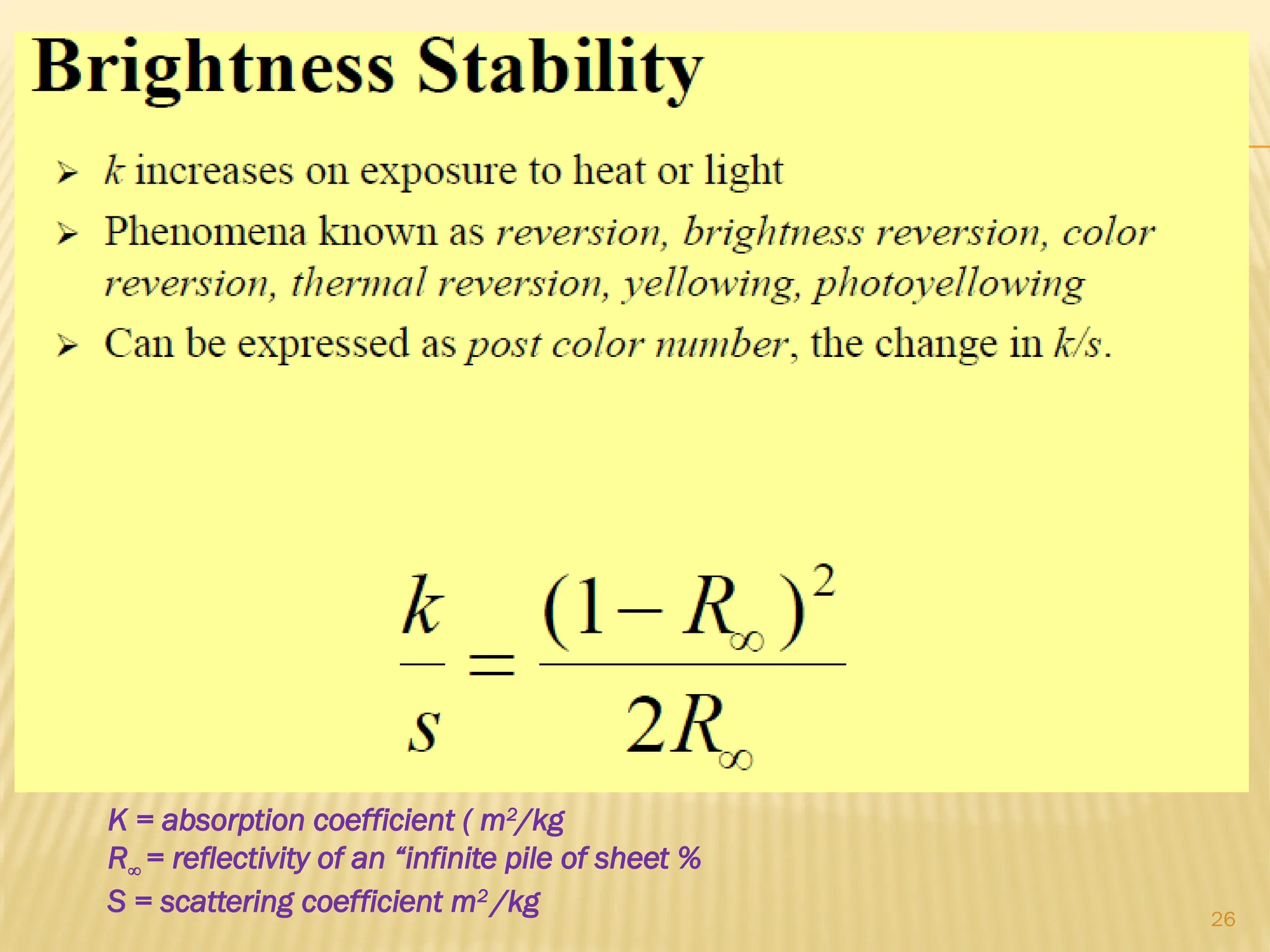
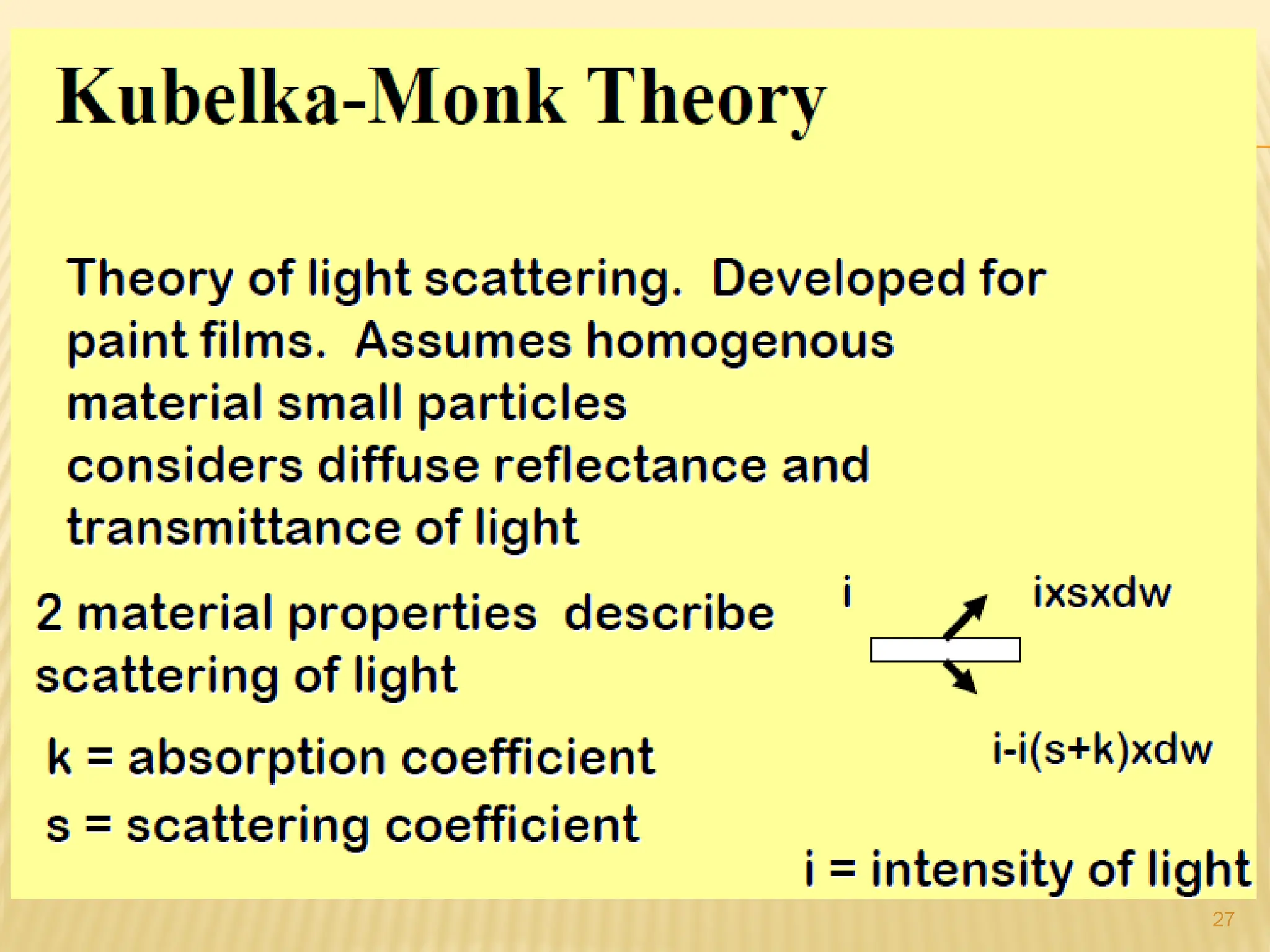
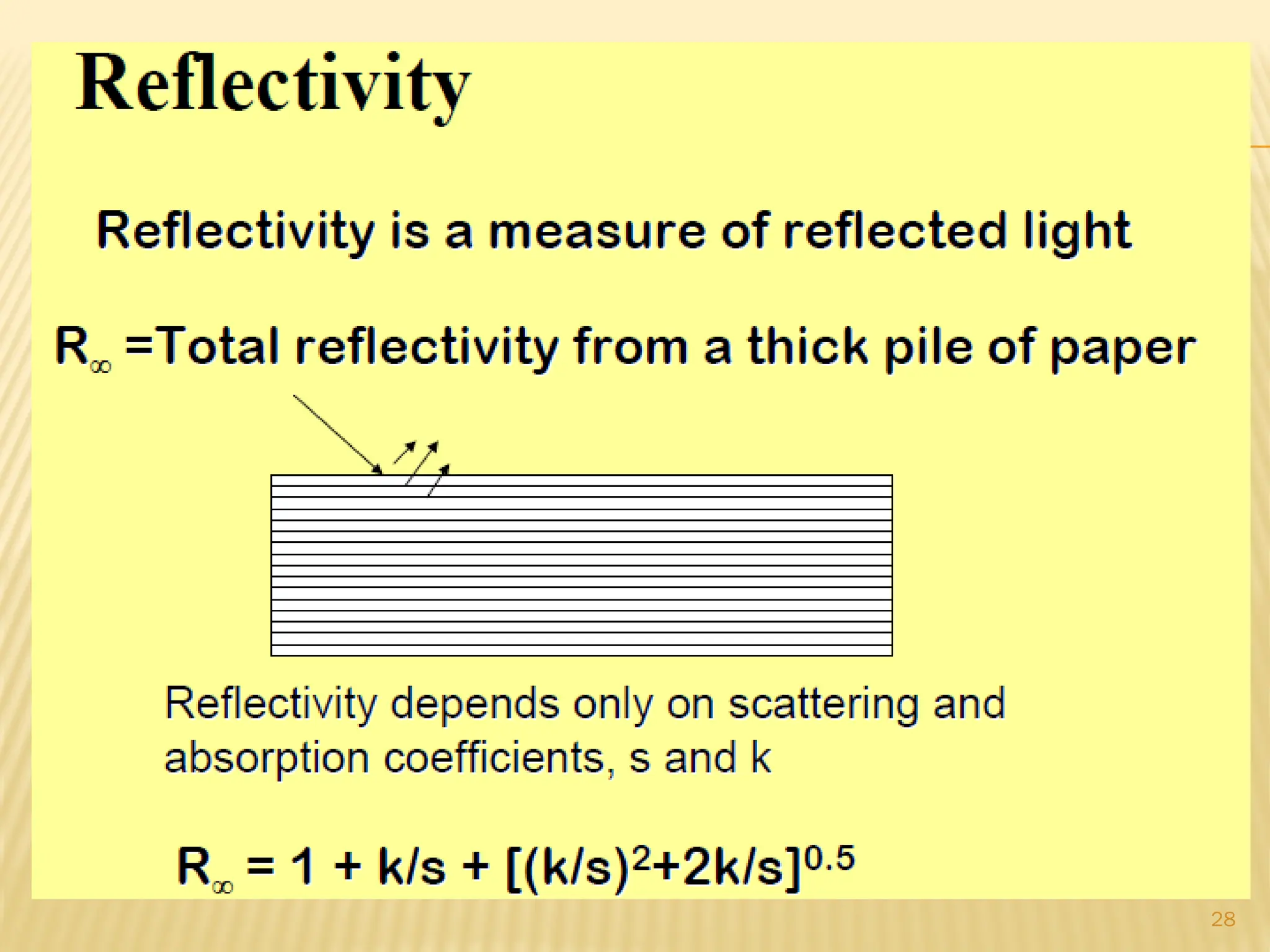
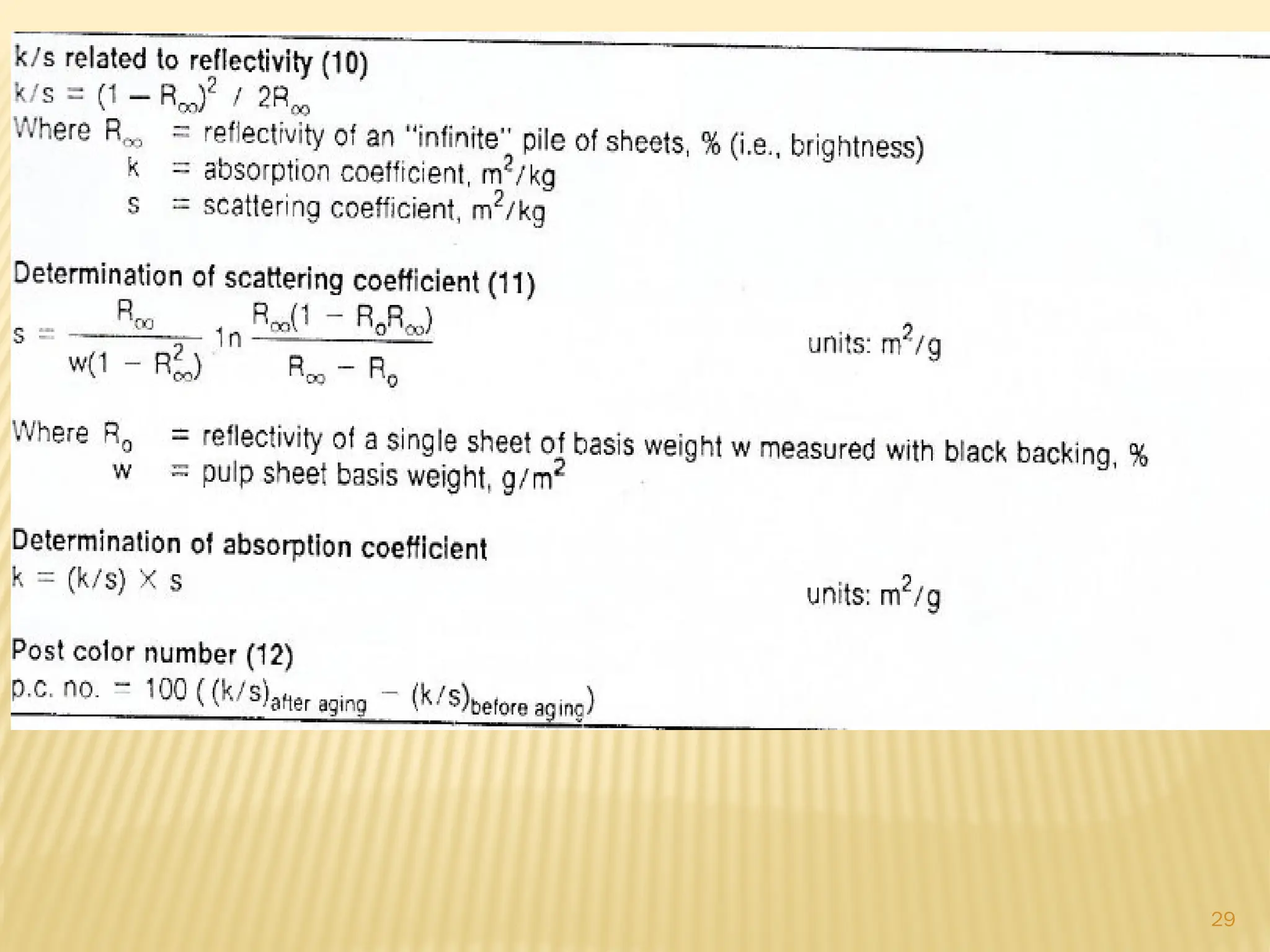
K = absorption coefficient ( m2
/kg
R∞ = reflectivity of an “infinite pile of sheet %
S = scattering coefficient m2
/kg
27
28
29
30
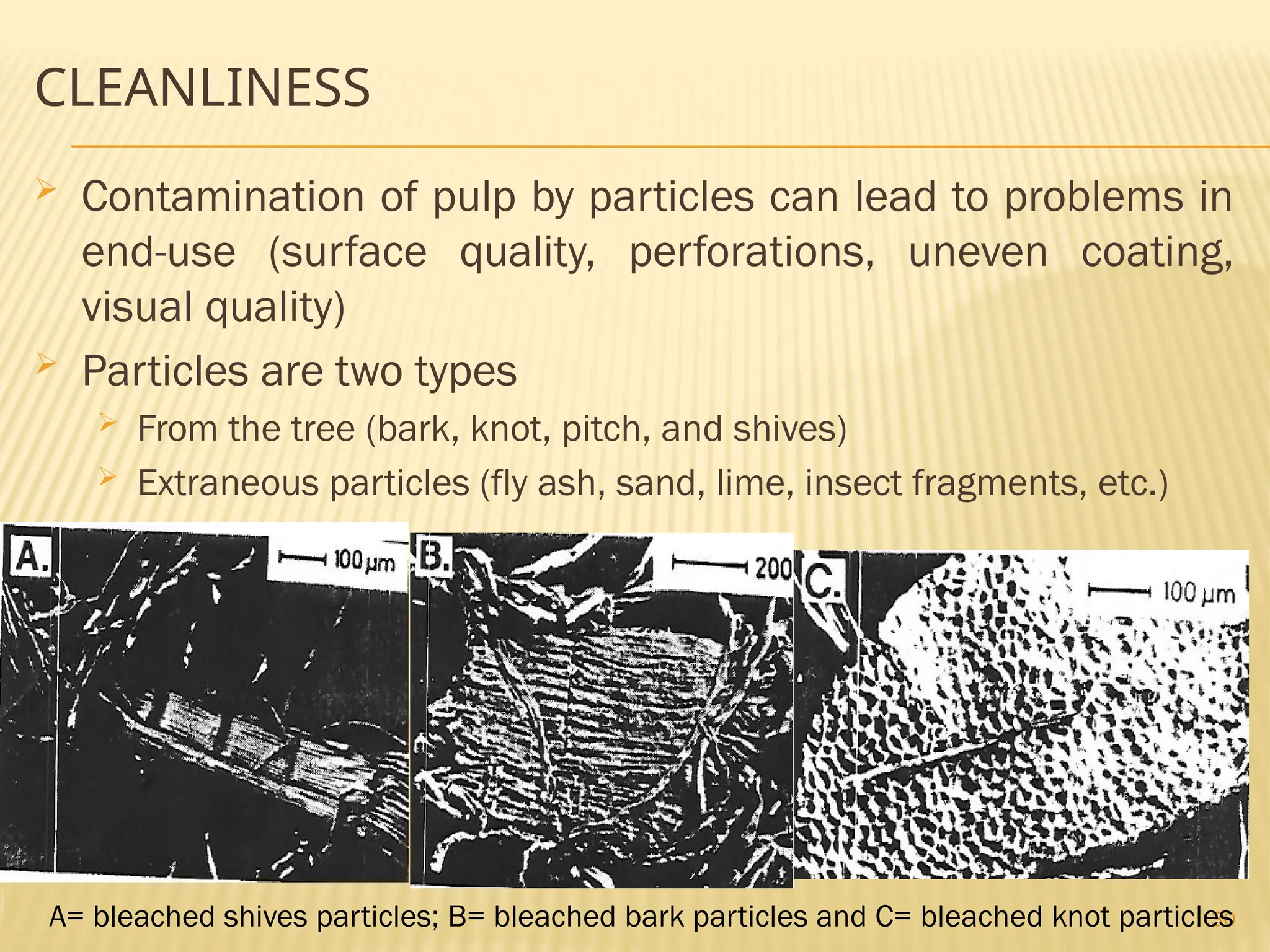
CLEANLINESS
 Contamination of pulp by particles can lead to problems in
end-use (surface quality, perforations, uneven coating,
visual quality)
 Particles are two types
 From the tree (bark, knot, pitch, and shives)
 Extraneous particles (fly ash, sand, lime, insect fragments, etc.)
A= bleached shives particles; B= bleached bark particles and C= bleached knot particles
31
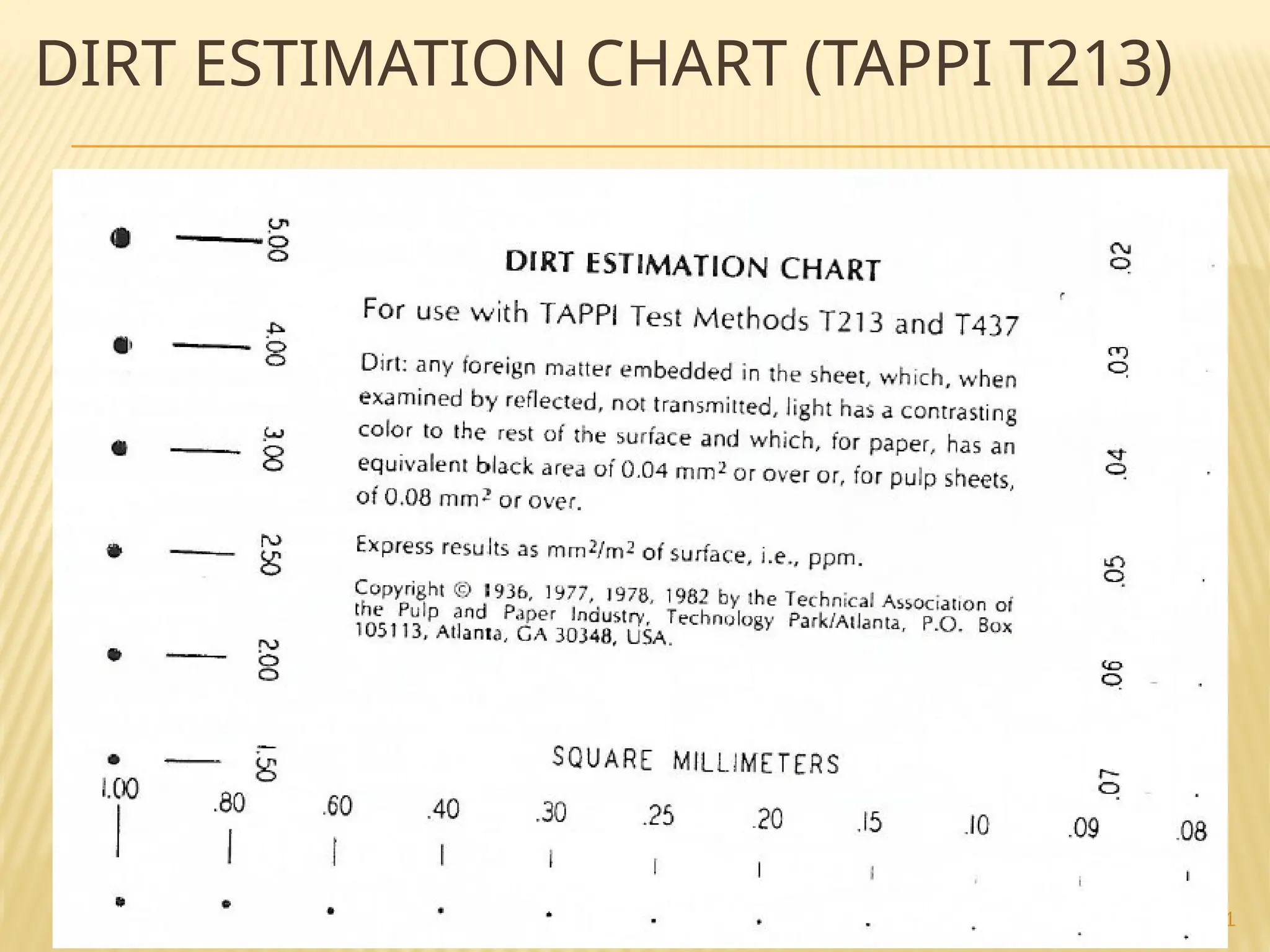
DIRT ESTIMATION CHART (TAPPI T213)
32
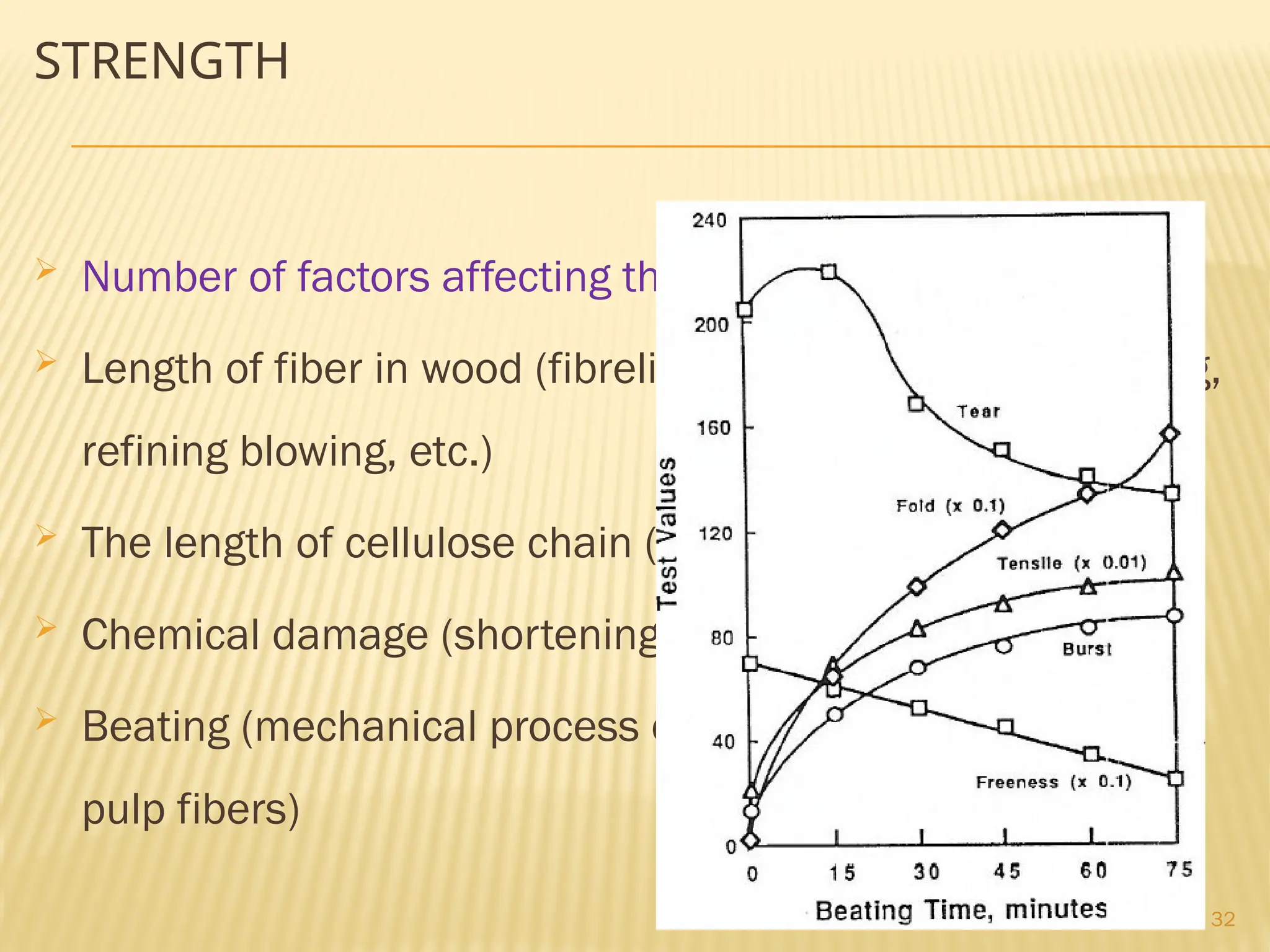
STRENGTH
 Number of factors affecting the strength of paper sheet
 Length of fiber in wood (fibrelization -- chipping, grinding,
refining blowing, etc.)
 The length of cellulose chain (DP)
 Chemical damage (shortening of cellulose chains)
 Beating (mechanical process causing microfibrillation of
pulp fibers)
33
34
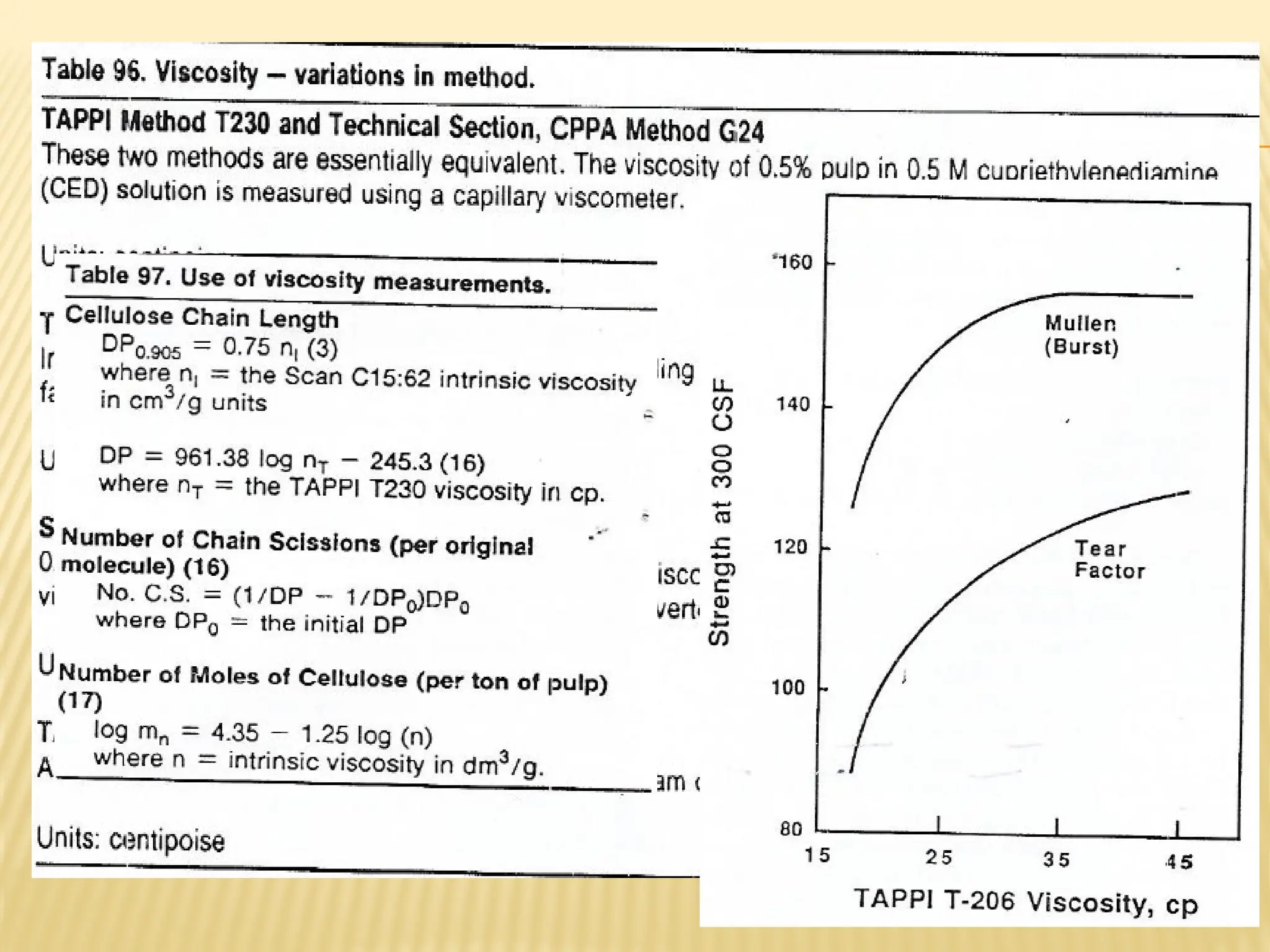
VISCOSITY
 Viscosity test is much simpler than the physical strength
testing
 Unique properties of cellulose: solubility---special solvent
 Viscosity of the solution measure of the cellulose chain
length (DP)
 Test conditions must be controlled (Temp., concentration,
velocity gradient and sometimes exposure of solution to
oxygen)
 Capillary viscometer or falling-ball viscometer has been
used
 Viscosity lies in its relation to pulp srength

35

bleaching of pulp for the production of bleached pulp

  • 2.
    2 BASICS OF BLEACHINGCHEMICAL PULPS Chemical treatment to:  Increase brightness  Improve cleanliness  Improve brightness stability  Remove hemicellulose  Remove extractives
  • 3.
    3 Bleaching: A WorkingDefinition 􀂙 Removal of colored residual lignin from chemical pulp (usually kraft) to increase its brightness, cleanliness and other desirable properties, while preserving the strength (cellulose integrity) and carbohydrate yield (cellulose and hemicellulose) of the unbleached fiber, with due regard for potential effects on the environment Bleaching vs. Pulping 􀂉 Compared to pulping, bleaching 􀂾 is also a delignification process 􀂾 is more selective in terms of yield and d.p. 􀂾 is more expensive per unit of lignin removed 􀂾 removes less lignin 􀂾 produces problematic effluent
  • 4.
  • 5.
    5 RELEVANT STATISTICS  70million tons/year bleached  28 million tons in USA  12 million in Canada  Most used in grades needing strength  Proportion of pulp used on site is  74% in USA  30% in Canada
  • 6.
  • 7.
  • 8.
  • 9.
    9 NATURE AND PROPERTIESOF PULP 1. What is Pulp??  Pulp is an aggregation of random cellulosic fibres  Appropriate modification / physical arrangement of the fibers, Pulp ------- Paper  Pulp can be made from: Wood; waste paper; agriculture by-products (Stalk from rice or wheat) or bagass from sugar cane; etc.  Fibers liberated from softwood:  Length = 3 mm  High length to diameter ratio 100:1  For hardwood fibers:  Length = 1 mm  Length to diameter ratio – 100 : 1 (~ low)
  • 10.
    10 2. PULP CHEMISTRY Cellulose(40-45 %)  Micromalecule  (C6H10O5)n  Cellulose is formed by photosynthesis in plant  Very stable Hemicellulose (20-35 %)  Polymer of sugars, colorless, forms hydrogen bonds  Has great affinity for water  Made up of six carbon sugars: glucose, mannose & galactose  Five carbon sugars of : xylose and arabinose
  • 11.
    11  Lignin  Constitutesof : 20-30% of the dry matter in wood  In softwood: ~ 28 %  Hardwood: ~ 23 %  High molecular weight compound  Lignin formula : C9H8.83O2.23(OCH3)0.96  Insoluble in water /alkali (at normal condition) Lignin building blocks
  • 12.
  • 13.
  • 14.
  • 15.
  • 16.
  • 17.
  • 18.
  • 19.
  • 20.
  • 21.
  • 22.
  • 23.
  • 24.
  • 25.
  • 26.
    26 K = absorptioncoefficient ( m2 /kg R∞ = reflectivity of an “infinite pile of sheet % S = scattering coefficient m2 /kg
  • 27.
  • 28.
  • 29.
  • 30.
    30 CLEANLINESS  Contamination ofpulp by particles can lead to problems in end-use (surface quality, perforations, uneven coating, visual quality)  Particles are two types  From the tree (bark, knot, pitch, and shives)  Extraneous particles (fly ash, sand, lime, insect fragments, etc.) A= bleached shives particles; B= bleached bark particles and C= bleached knot particles
  • 31.
  • 32.
    32 STRENGTH  Number offactors affecting the strength of paper sheet  Length of fiber in wood (fibrelization -- chipping, grinding, refining blowing, etc.)  The length of cellulose chain (DP)  Chemical damage (shortening of cellulose chains)  Beating (mechanical process causing microfibrillation of pulp fibers)
  • 33.
  • 34.
    34 VISCOSITY  Viscosity testis much simpler than the physical strength testing  Unique properties of cellulose: solubility---special solvent  Viscosity of the solution measure of the cellulose chain length (DP)  Test conditions must be controlled (Temp., concentration, velocity gradient and sometimes exposure of solution to oxygen)  Capillary viscometer or falling-ball viscometer has been used  Viscosity lies in its relation to pulp srength
  • 35.