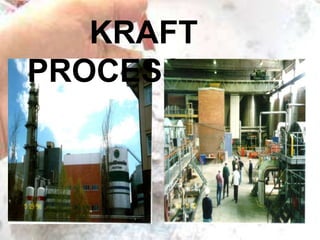
KRAFT
PROCESS
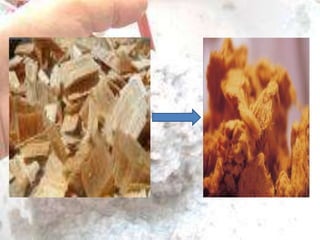
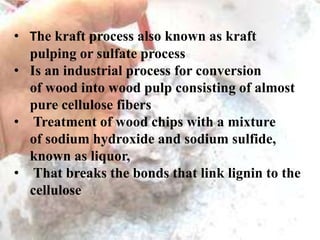
• The kraft process also known as kraft
pulping or sulfate process
• Is an industrial process for conversion
of wood into wood pulp consisting of almost
pure cellulose fibers
• Treatment of wood chips with a mixture
of sodium hydroxide and sodium sulfide,
known as liquor,
• That breaks the bonds that link lignin to the
cellulose
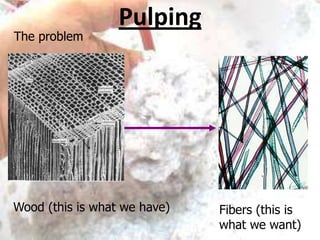
The problem

Pulping

Wood (this is what we have)

Fibers (this is
what we want)
History
• German word Kraft meaning paper
• invented by Carl F. Dahl in 1879
• a pulp mill using this technology started
in Sweden in 1890.
• The invention of the recovery
boiler by G.H. Tomlinson in 1930s.
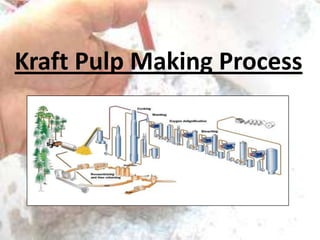
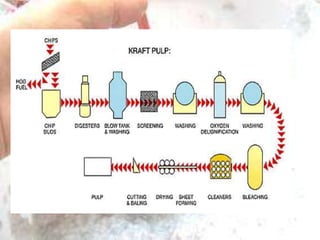
Kraft Pulp Making Process
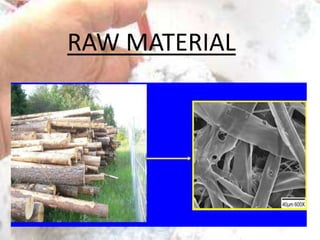
RAW MATERIAL
STEPS INVOLVED IN PROCESS
•
•
•
•
•
•
•
•

Impregnation
Cooking
Recovery process
Blowing
Screening
Washing
Bleaching
Process chemicals
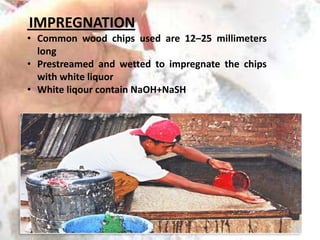
IMPREGNATION
• Common wood chips used are 12–25 millimeters
long
• Prestreamed and wetted to impregnate the chips
with white liquor
• White liqour contain NaOH+NaSH
COOKING
• enters the digester below 100 °C (212 °F).
• Typically delignification requires several
hours at 170 to 176 °C (338 to 349 °F).
• The combined liquids, known as black
liquor
contain
lignin
fragments,
carbohydrates from the breakdown of
hemicellulose, sodium carbonate, sodium
sulfate and other inorganic salts.
13
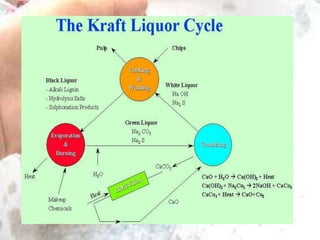
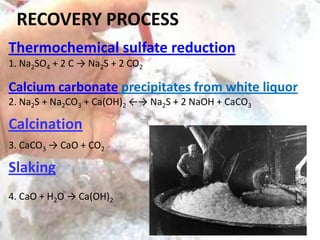
RECOVERY PROCESS
Thermochemical sulfate reduction
1. Na2SO4 + 2 C → Na2S + 2 CO2

Calcium carbonate precipitates from white liquor
2. Na2S + Na2CO3 + Ca(OH)2 ←→ Na2S + 2 NaOH + CaCO3

Calcination
3. CaCO3 → CaO + CO2

Slaking
4. CaO + H2O → Ca(OH)2
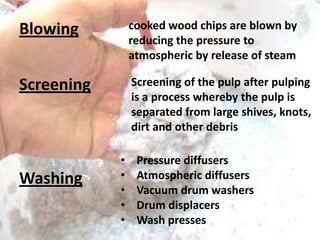
Blowing

cooked wood chips are blown by
reducing the pressure to
atmospheric by release of steam

Screening

Screening of the pulp after pulping
is a process whereby the pulp is
separated from large shives, knots,
dirt and other debris

Washing

•
•
•
•
•

Pressure diffusers
Atmospheric diffusers
Vacuum drum washers
Drum displacers
Wash presses
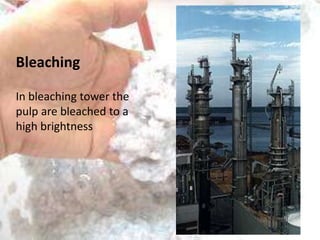
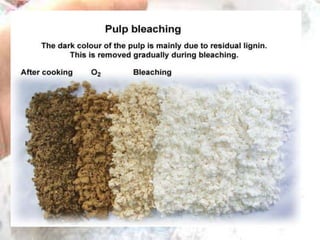
Bleaching
In bleaching tower the
pulp are bleached to a
high brightness
Process chemicals
Process chemicals are added to improve the production
process:
• Surfactants may be used to improve impregnation
• Anthraquinone is used as a digester
• An emulsion breaker can be added in the soap separation
• Defoamers remove foam
• Dispersing agents, detackifiers and complexing agents are
keeping the system cleaner
• Fixation agents are fixating finely dispersed potential
deposits to the fibers
Kraft process
Kraft process
Kraft process
Kraft process

Kraft process

  • 1.
  • 3.
    • The kraftprocess also known as kraft pulping or sulfate process • Is an industrial process for conversion of wood into wood pulp consisting of almost pure cellulose fibers • Treatment of wood chips with a mixture of sodium hydroxide and sodium sulfide, known as liquor, • That breaks the bonds that link lignin to the cellulose
  • 4.
    The problem Pulping Wood (thisis what we have) Fibers (this is what we want)
  • 5.
    History • German wordKraft meaning paper • invented by Carl F. Dahl in 1879 • a pulp mill using this technology started in Sweden in 1890. • The invention of the recovery boiler by G.H. Tomlinson in 1930s.
  • 6.
  • 7.
  • 8.
    STEPS INVOLVED INPROCESS • • • • • • • • Impregnation Cooking Recovery process Blowing Screening Washing Bleaching Process chemicals
  • 10.
    IMPREGNATION • Common woodchips used are 12–25 millimeters long • Prestreamed and wetted to impregnate the chips with white liquor • White liqour contain NaOH+NaSH
  • 11.
    COOKING • enters thedigester below 100 °C (212 °F). • Typically delignification requires several hours at 170 to 176 °C (338 to 349 °F). • The combined liquids, known as black liquor contain lignin fragments, carbohydrates from the breakdown of hemicellulose, sodium carbonate, sodium sulfate and other inorganic salts.
  • 13.
  • 14.
    RECOVERY PROCESS Thermochemical sulfatereduction 1. Na2SO4 + 2 C → Na2S + 2 CO2 Calcium carbonate precipitates from white liquor 2. Na2S + Na2CO3 + Ca(OH)2 ←→ Na2S + 2 NaOH + CaCO3 Calcination 3. CaCO3 → CaO + CO2 Slaking 4. CaO + H2O → Ca(OH)2
  • 16.
    Blowing cooked wood chipsare blown by reducing the pressure to atmospheric by release of steam Screening Screening of the pulp after pulping is a process whereby the pulp is separated from large shives, knots, dirt and other debris Washing • • • • • Pressure diffusers Atmospheric diffusers Vacuum drum washers Drum displacers Wash presses
  • 18.
    Bleaching In bleaching towerthe pulp are bleached to a high brightness
  • 20.
    Process chemicals Process chemicalsare added to improve the production process: • Surfactants may be used to improve impregnation • Anthraquinone is used as a digester • An emulsion breaker can be added in the soap separation • Defoamers remove foam • Dispersing agents, detackifiers and complexing agents are keeping the system cleaner • Fixation agents are fixating finely dispersed potential deposits to the fibers