PAPER AND PULP INDUSTRY
BY
GEET KH SINGH
CONTENTS
1. INTRODUCTION
2. MANUFACTURING STEPS
3. TREATMENT PROCESS
INTRODUCTION
THE PAPER INDUSTRY PLAYS A VERY PROMINENT ROLE IN THE WORLD
ECONOMY.
 THE PULP AND PAPER INDUSTRY CONVERTS WOOD OR RECYCLED FIBRE INTO
PULP AND PRIMARY FORMS OF PAPER.
 IN THE 1800S, THERE WAS A SHIFT AWAY FROM USING COTTON RAGS FOR
PAPER PRODUCTION. BUT LATER WOOD BECAME THE MOST IMPORTANT
SOURCE OF FIBER.
 FIRST MECHANICAL AND THEN CHEMICAL METHODS HAVE BEEN DEVELOPED
TO PRODUCE PULP FROM WOOD.
PULP AND PAPER MILLS
 Pulp mills separate the fibres of wood or from other materials,
such as rags, wastepaper or straw in order to create pulp.
 Paper mills primarily are engaged in manufacturing paper from
wood pulp and other fibre pulp
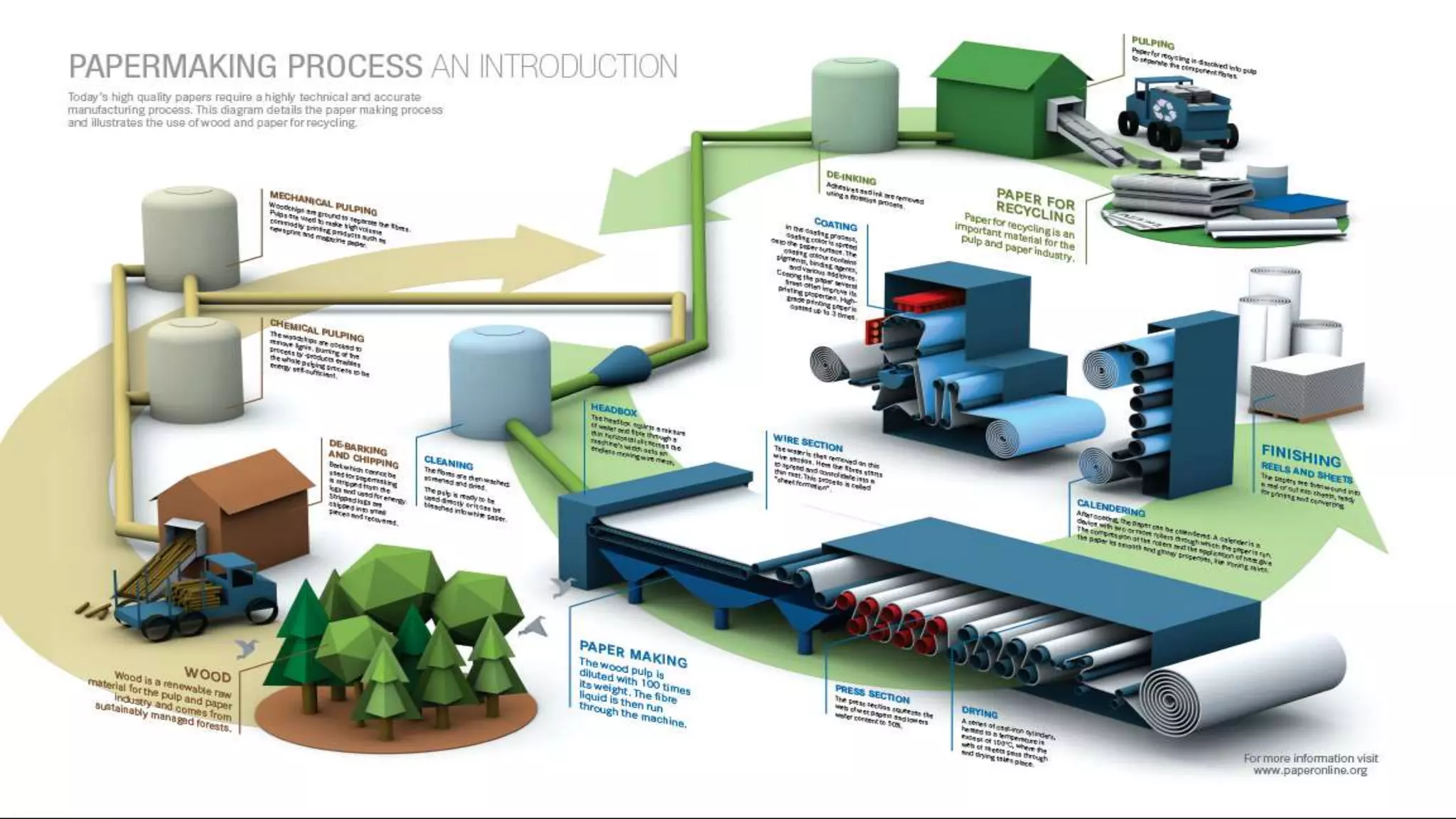
MANUFACTURING STEPS
 TIMBER
 DE –BARKING
 CHIPPING PROCESS
 CHEMICAL PULPING PROCESS
 MECHANICAL PULPING PROCESS
 HYDRAPULPING
 BLEND CHEST
 WASTE PAPER
 DE- INKING
 REFINING
 SCREENING & CLEANING
 PAPERMAKING MACHINE
 CONVERSION & PRINTING
Timber
 Timber used for
papermaking comes from
well managed forests
where more trees are
planted than harvested to
ensure sustainable growth.
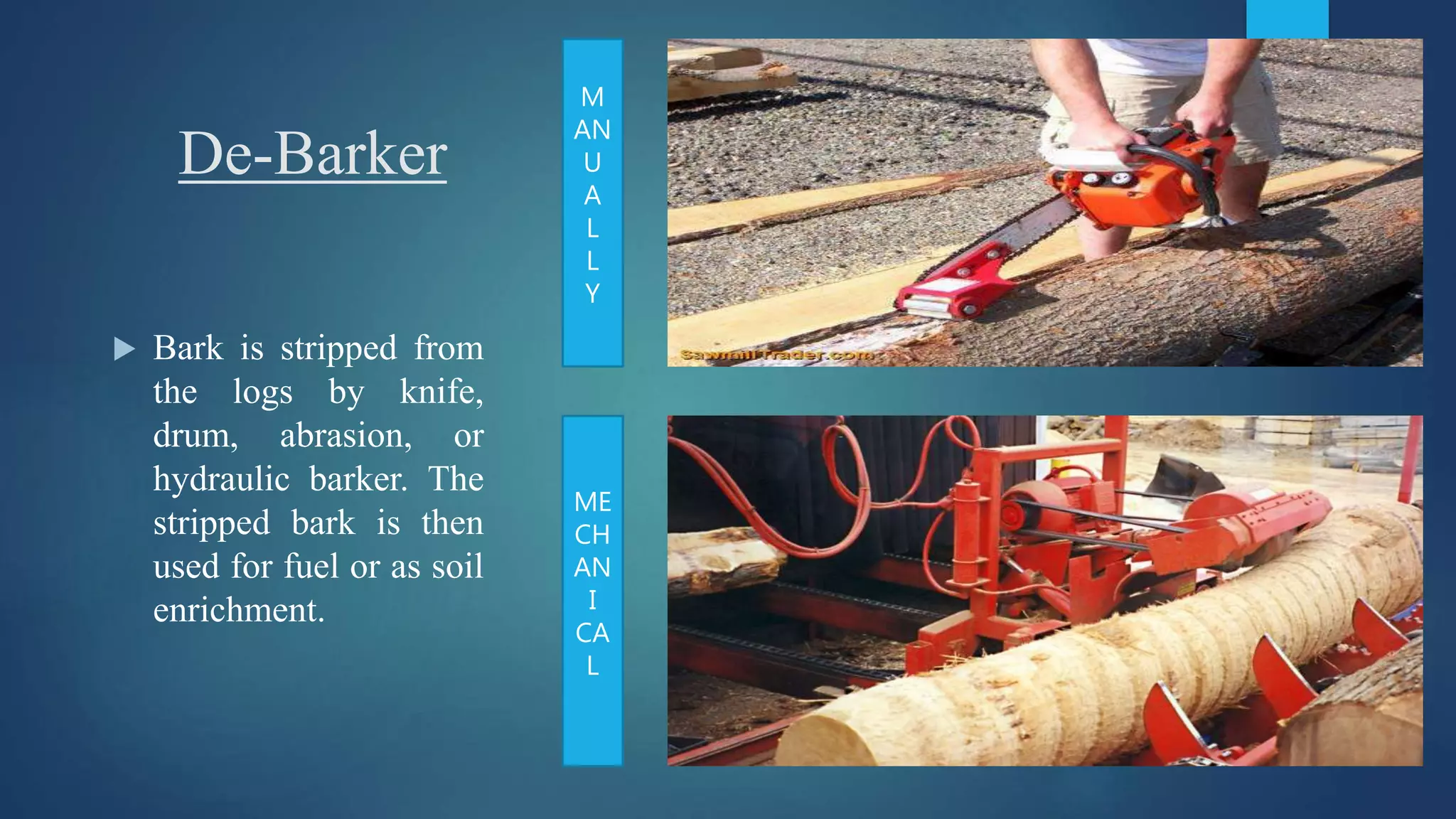
De-Barker
 Bark is stripped from
the logs by knife,
drum, abrasion, or
hydraulic barker. The
stripped bark is then
used for fuel or as soil
enrichment.
M
AN
U
A
L
L
Y
ME
CH
AN
I
CA
L
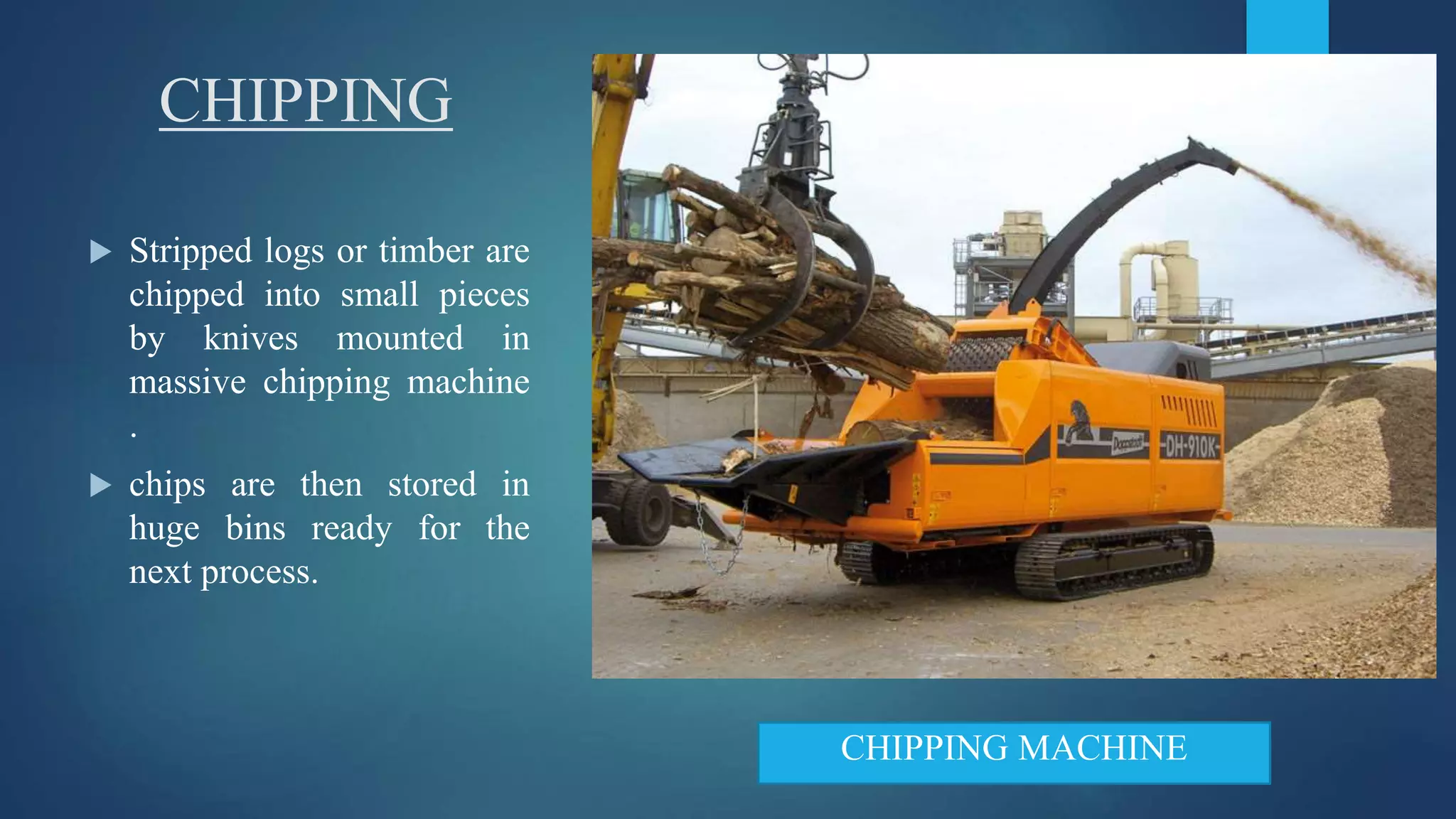
CHIPPING
 Stripped logs or timber are
chipped into small pieces
by knives mounted in
massive chipping machine
.
 chips are then stored in
huge bins ready for the
next process.
CHIPPING MACHINE
CHEMICAL PULPING PROCESS
 Chips from the storage bins are fed
into a digester. The woodchips are
then 'cooked' to remove lignin.
 Lignin is the binding material which
holds the cellulose fibres together.
 The chemical process is energy self-
sufficient as nearly all by-products
can be used to fire the pulp mill
power plant.
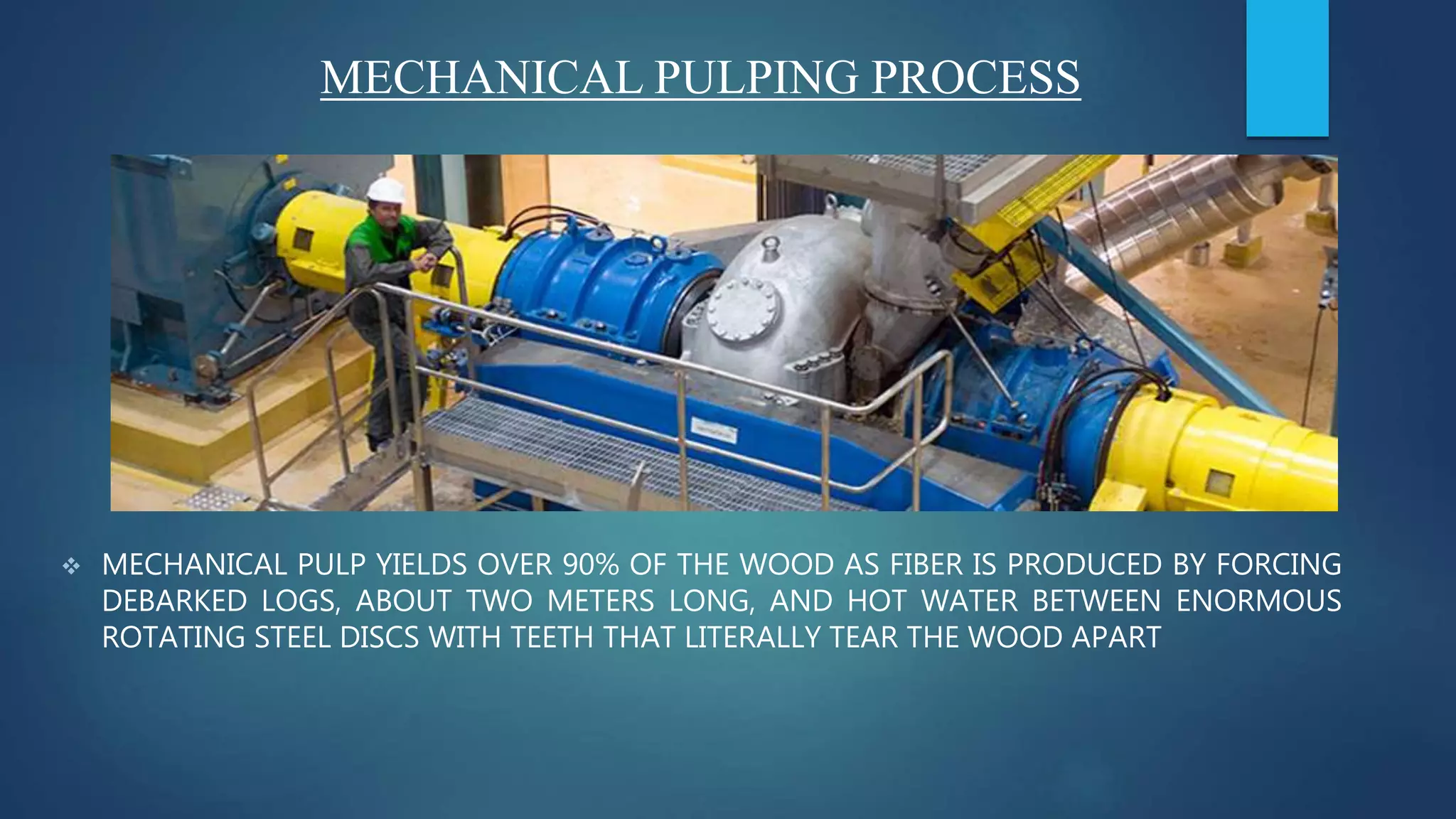
MECHANICAL PULPING PROCESS
 MECHANICAL PULP YIELDS OVER 90% OF THE WOOD AS FIBER IS PRODUCED BY FORCING
DEBARKED LOGS, ABOUT TWO METERS LONG, AND HOT WATER BETWEEN ENORMOUS
ROTATING STEEL DISCS WITH TEETH THAT LITERALLY TEAR THE WOOD APART
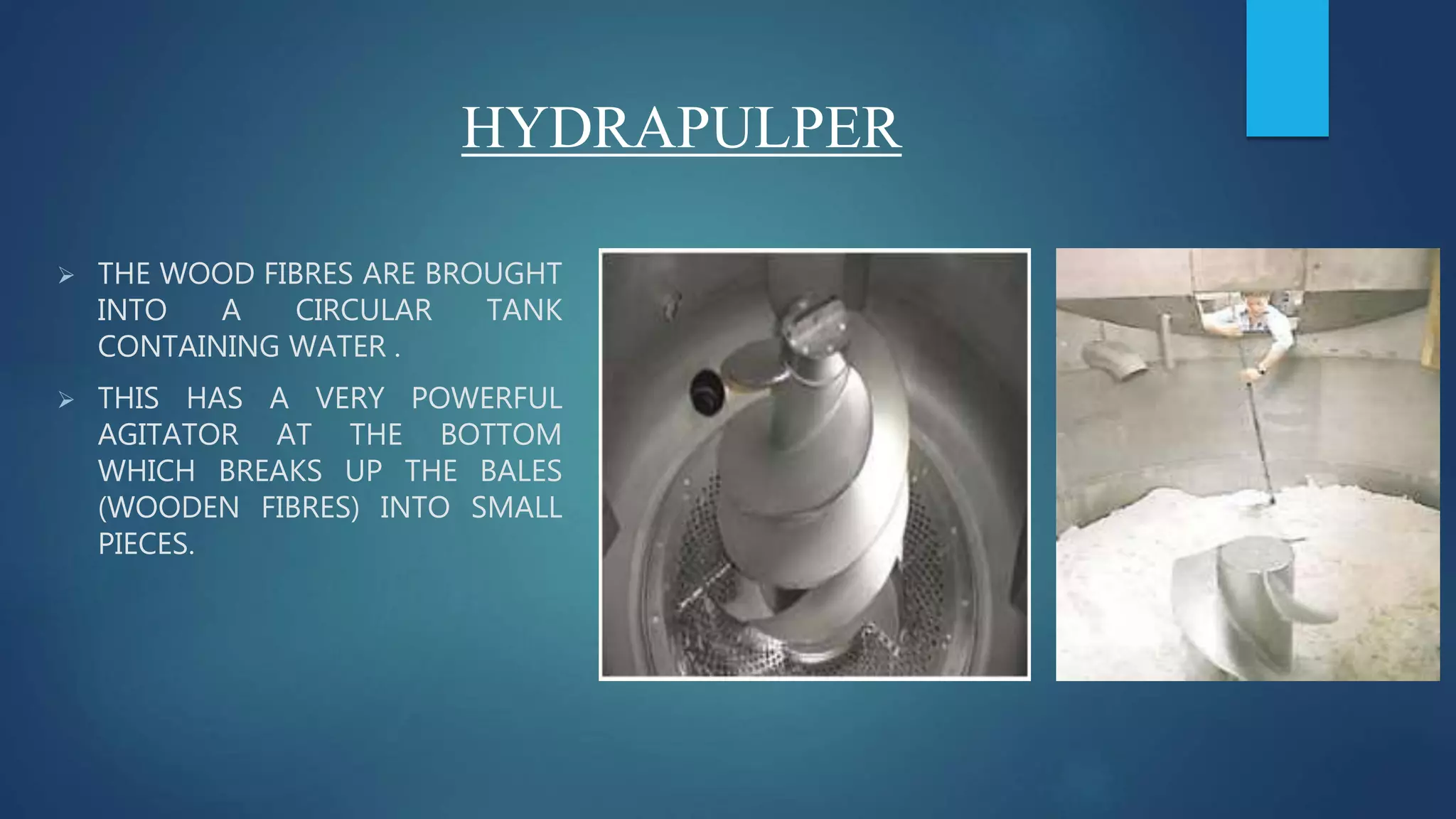
HYDRAPULPER
 THE WOOD FIBRES ARE BROUGHT
INTO A CIRCULAR TANK
CONTAINING WATER .
 THIS HAS A VERY POWERFUL
AGITATOR AT THE BOTTOM
WHICH BREAKS UP THE BALES
(WOODEN FIBRES) INTO SMALL
PIECES.
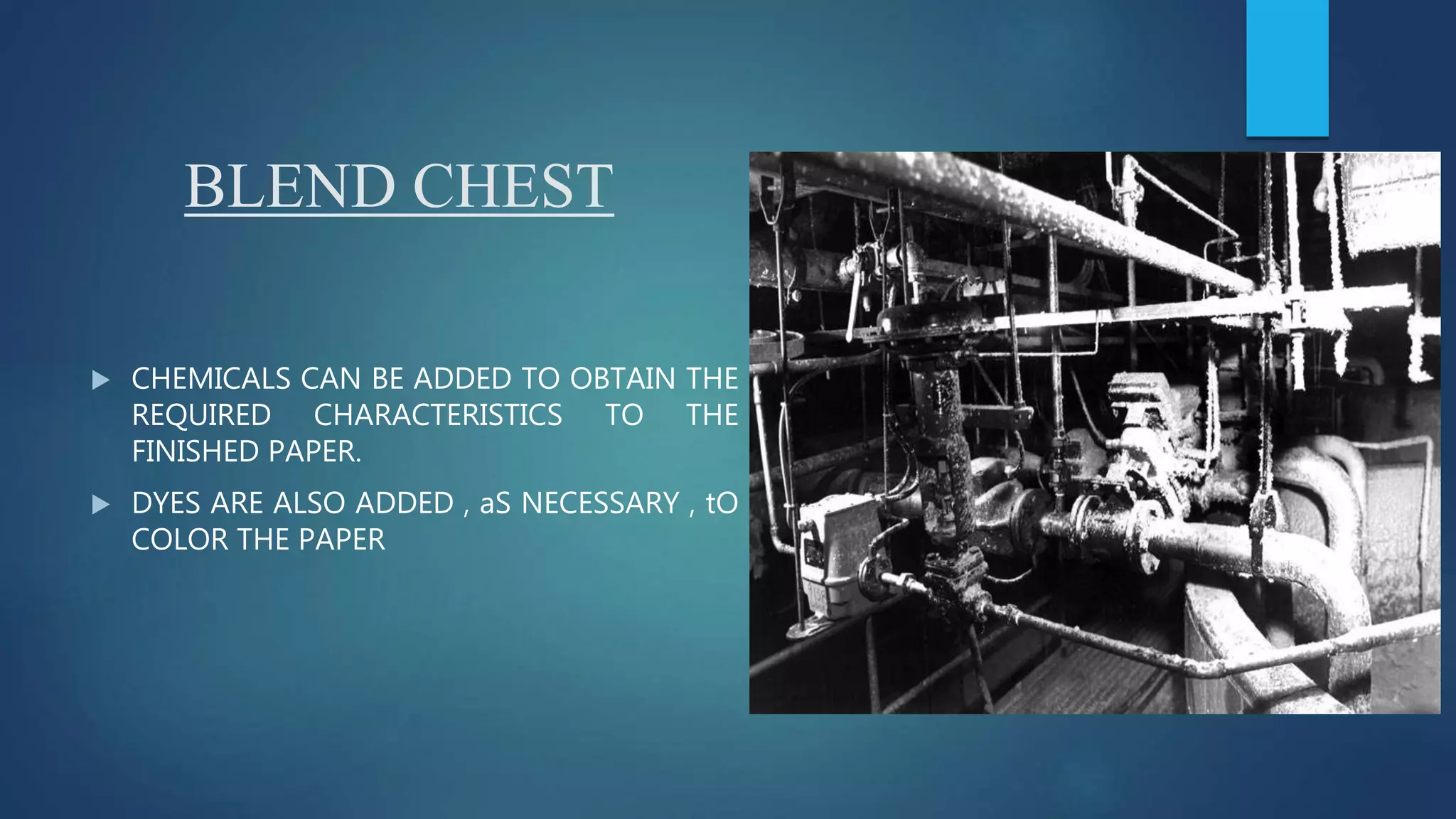
BLEND CHEST
 CHEMICALS CAN BE ADDED TO OBTAIN THE
REQUIRED CHARACTERISTICS TO THE
FINISHED PAPER.
 DYES ARE ALSO ADDED , aS NECESSARY , tO
COLOR THE PAPER
WASTE PAPER
 Waste paper is collected from Waste Paper Banks and Commercial dumps.
 Waste paper currently represents 67% of the raw material in paper industry.
 Paper not suitable for recycling is removed.
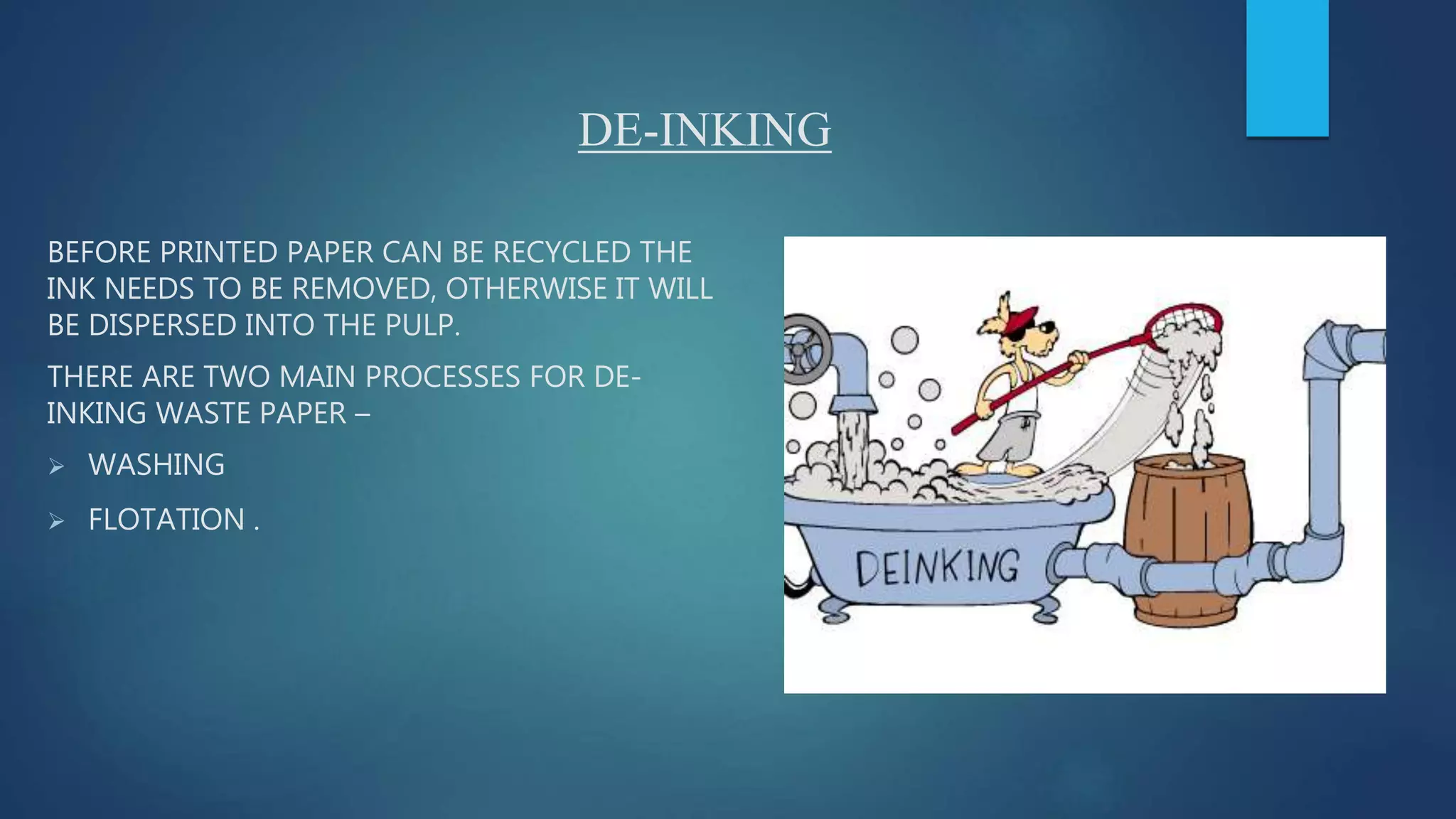
DE-INKING
BEFORE PRINTED PAPER CAN BE RECYCLED THE
INK NEEDS TO BE REMOVED, OTHERWISE IT WILL
BE DISPERSED INTO THE PULP.
THERE ARE TWO MAIN PROCESSES FOR DE-
INKING WASTE PAPER –
 WASHING
 FLOTATION .
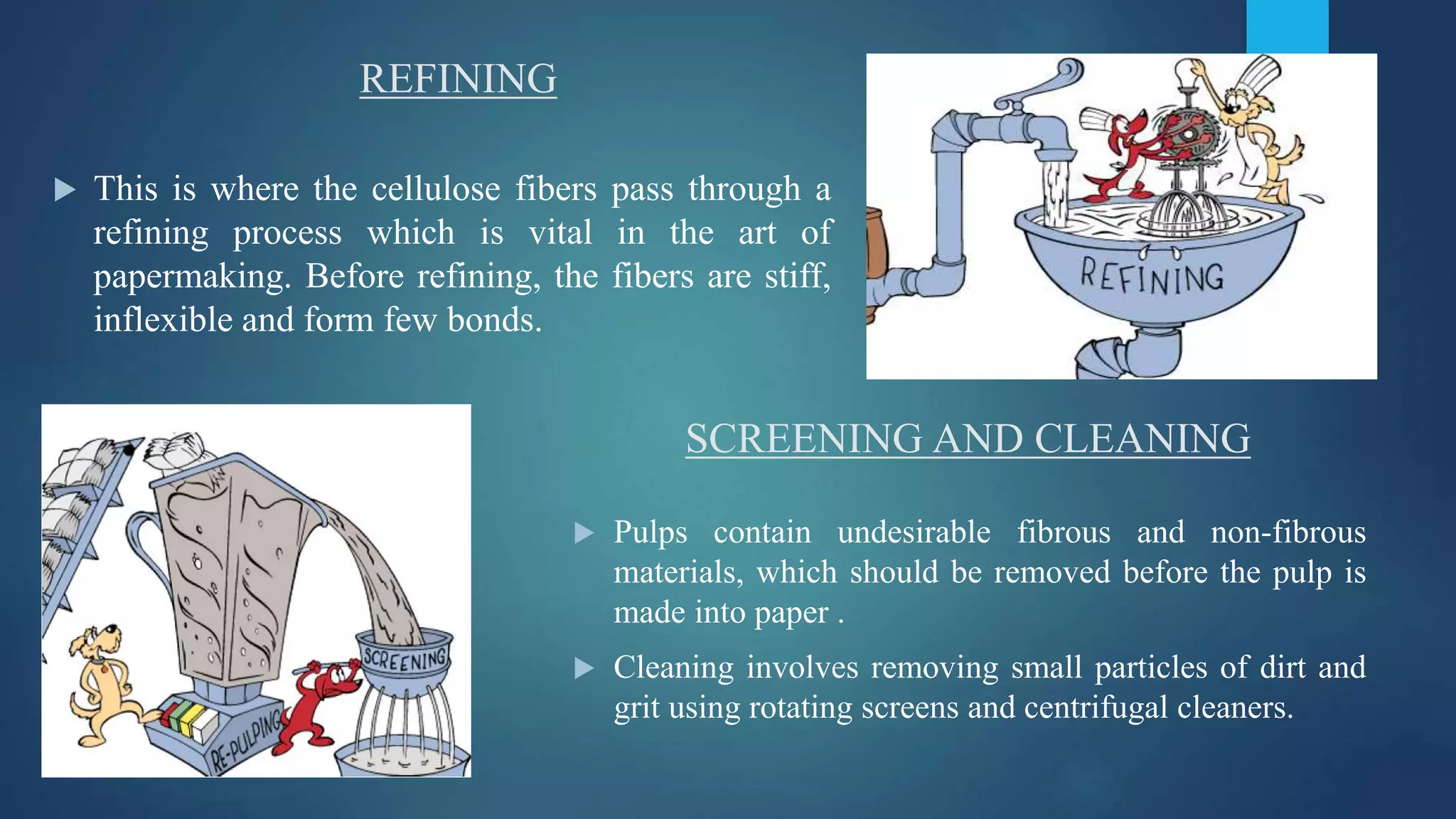
SCREENING AND CLEANING
 Pulps contain undesirable fibrous and non-fibrous
materials, which should be removed before the pulp is
made into paper .
 Cleaning involves removing small particles of dirt and
grit using rotating screens and centrifugal cleaners.
REFINING
 This is where the cellulose fibers pass through a
refining process which is vital in the art of
papermaking. Before refining, the fibers are stiff,
inflexible and form few bonds.
PAPERMAKING MACHINE
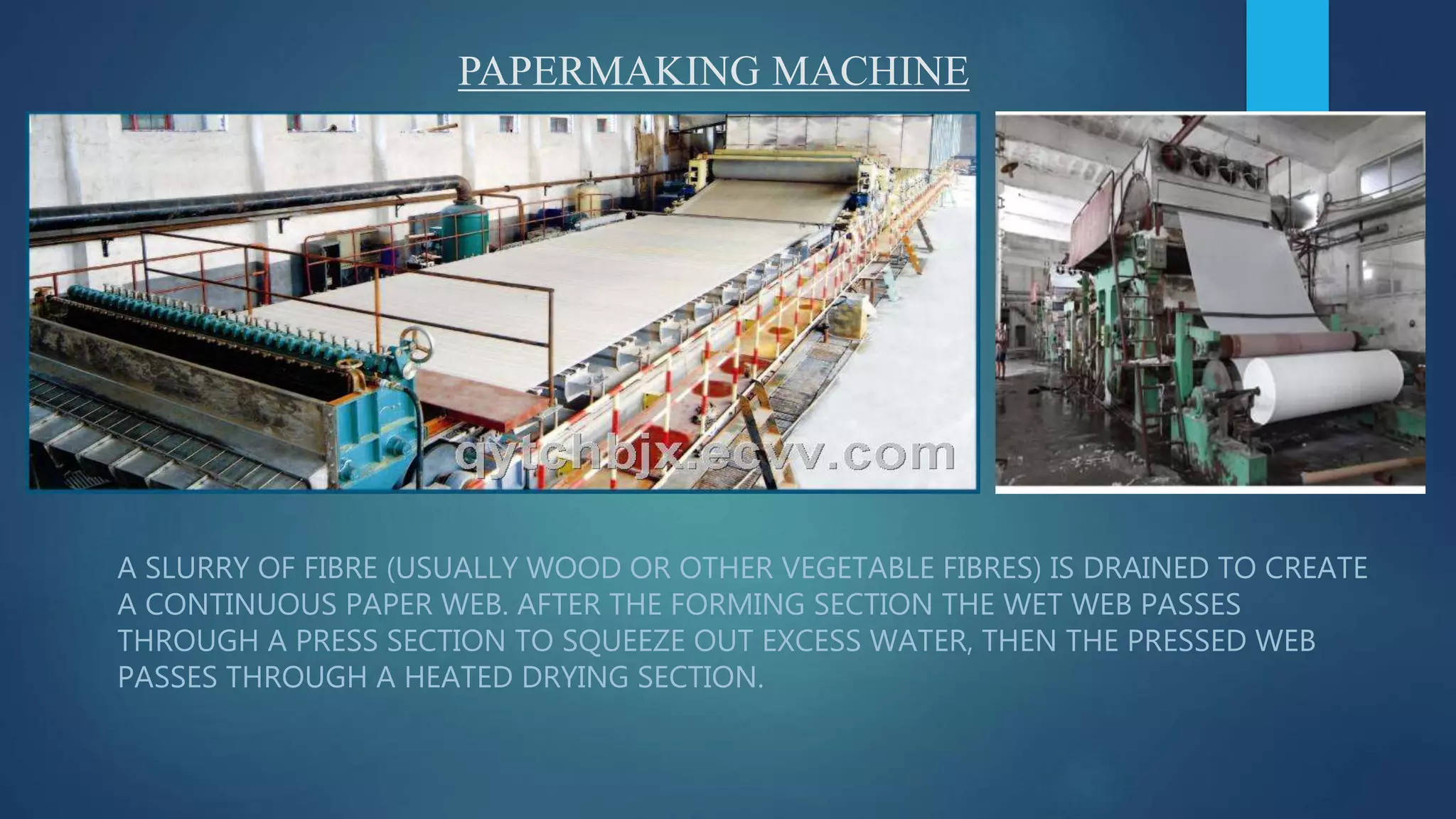
A SLURRY OF FIBRE (USUALLY WOOD OR OTHER VEGETABLE FIBRES) IS DRAINED TO CREATE
A CONTINUOUS PAPER WEB. AFTER THE FORMING SECTION THE WET WEB PASSES
THROUGH A PRESS SECTION TO SQUEEZE OUT EXCESS WATER, THEN THE PRESSED WEB
PASSES THROUGH A HEATED DRYING SECTION.
TREATMENT OF
WASTE FROM
PULP INDUSTRY
PULP AND PAPER INDUSTRY
• Use wood ad raw material to produce paper,
pulp, board and other cellulose based
products.
• Bagase, hemp, straw are also used
• Composition of the pollutants in the effluent
depends on the raw material used.
EFFLUENTS
• Waste water- 60 m³/ tonne of
paper produced
• Contain solids and dissolved
matter.
• Potentially very polluting
• COD as high as 11000mg/l
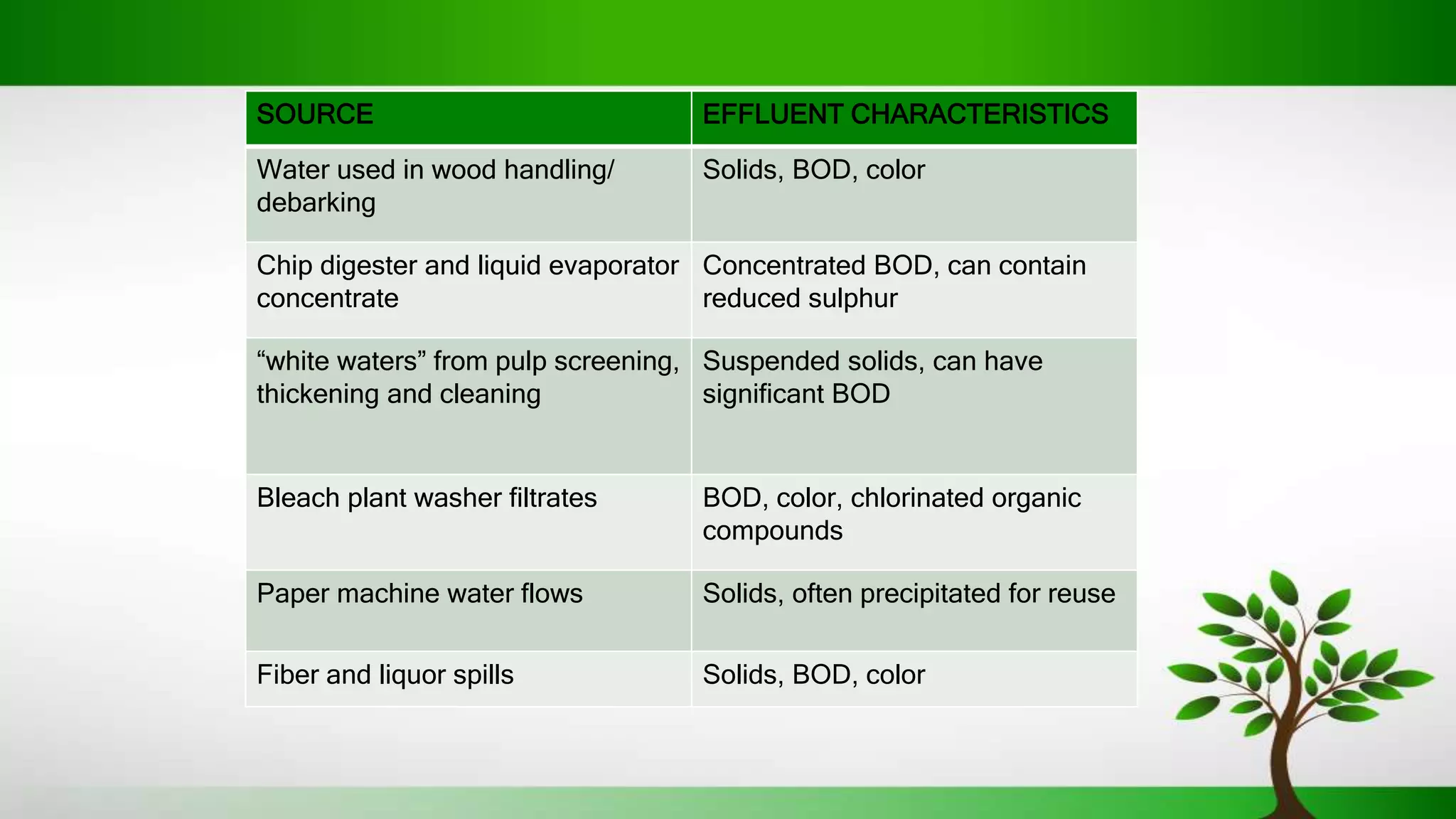
SOURCE EFFLUENT CHARACTERISTICS
Water used in wood handling/
debarking
Solids, BOD, color
Chip digester and liquid evaporator
concentrate
Concentrated BOD, can contain
reduced sulphur
“white waters” from pulp screening,
thickening and cleaning
Suspended solids, can have
significant BOD
Bleach plant washer filtrates BOD, color, chlorinated organic
compounds
Paper machine water flows Solids, often precipitated for reuse
Fiber and liquor spills Solids, BOD, color
CHARACTERISTICS OF COMBINED EFFLUENT OF P & P MILLS
ITEM SMALL MILL LARGE MILL
20 TONS of paper per day 2000 TONS of paper per day
Flow per day 330 m3/tonnes 222m3/tonnes
Colour 7800 units
pH 8.2-8.5 8.5-9.5
Total solids mg/l ---------- 4410
Suspended solid 900-2000 3300
COD 3400-5780 716
BOD 680-1250 155
COD/BOD 3.9-5 4.6
EFFLUENT TREATMENT SCEHME
SCREENING
• Screens- to remove course, bulky and fibrous components
from effluents
• Grid chambers and settling tanks are used
• Efficiency of screening depends on the spacing between
screen bars
- fine screening, spacing < 10mm
-mediun screening, spacing 10-40mm
- coarse screening, spacing > 40mm
SEDIMENTATION
• Using gravity to remove suspended solids from water.
• Removal of suspended particles by sedimentation depends on size and
specific gravity of the particles.
• Sedimentation tanks are used
• Settled sludge is removed
• High efficiency is achieved in the subsequent treatment processes.
BIOLOGICAL TREATMENT
• Degrade pollutants dissolved in effluents by the action of
microorganisms.
• Pollutants are used as nutrients
• Microorganisms use these pollutants to live and reproduce.
ANAEROBIC TENCHNOLOGY
• Effluents originating from recycle paper mills
• Effluents from mechanical pulping (peroxide bleached), semi-chemical
pulping, sulphite and kraft evaporator concentrates
• Bacterial hydrolysis of input materials to break down insoluble
organic polymers

Paper Manufacturing process

  • 1.
    PAPER AND PULPINDUSTRY BY GEET KH SINGH
  • 2.
  • 3.
    INTRODUCTION THE PAPER INDUSTRYPLAYS A VERY PROMINENT ROLE IN THE WORLD ECONOMY.  THE PULP AND PAPER INDUSTRY CONVERTS WOOD OR RECYCLED FIBRE INTO PULP AND PRIMARY FORMS OF PAPER.  IN THE 1800S, THERE WAS A SHIFT AWAY FROM USING COTTON RAGS FOR PAPER PRODUCTION. BUT LATER WOOD BECAME THE MOST IMPORTANT SOURCE OF FIBER.  FIRST MECHANICAL AND THEN CHEMICAL METHODS HAVE BEEN DEVELOPED TO PRODUCE PULP FROM WOOD.
  • 4.
    PULP AND PAPERMILLS  Pulp mills separate the fibres of wood or from other materials, such as rags, wastepaper or straw in order to create pulp.  Paper mills primarily are engaged in manufacturing paper from wood pulp and other fibre pulp
  • 6.
    MANUFACTURING STEPS  TIMBER DE –BARKING  CHIPPING PROCESS  CHEMICAL PULPING PROCESS  MECHANICAL PULPING PROCESS  HYDRAPULPING  BLEND CHEST  WASTE PAPER  DE- INKING  REFINING  SCREENING & CLEANING  PAPERMAKING MACHINE  CONVERSION & PRINTING
  • 7.
    Timber  Timber usedfor papermaking comes from well managed forests where more trees are planted than harvested to ensure sustainable growth.
  • 8.
    De-Barker  Bark isstripped from the logs by knife, drum, abrasion, or hydraulic barker. The stripped bark is then used for fuel or as soil enrichment. M AN U A L L Y ME CH AN I CA L
  • 9.
    CHIPPING  Stripped logsor timber are chipped into small pieces by knives mounted in massive chipping machine .  chips are then stored in huge bins ready for the next process. CHIPPING MACHINE
  • 10.
    CHEMICAL PULPING PROCESS Chips from the storage bins are fed into a digester. The woodchips are then 'cooked' to remove lignin.  Lignin is the binding material which holds the cellulose fibres together.  The chemical process is energy self- sufficient as nearly all by-products can be used to fire the pulp mill power plant.
  • 11.
    MECHANICAL PULPING PROCESS MECHANICAL PULP YIELDS OVER 90% OF THE WOOD AS FIBER IS PRODUCED BY FORCING DEBARKED LOGS, ABOUT TWO METERS LONG, AND HOT WATER BETWEEN ENORMOUS ROTATING STEEL DISCS WITH TEETH THAT LITERALLY TEAR THE WOOD APART
  • 12.
    HYDRAPULPER  THE WOODFIBRES ARE BROUGHT INTO A CIRCULAR TANK CONTAINING WATER .  THIS HAS A VERY POWERFUL AGITATOR AT THE BOTTOM WHICH BREAKS UP THE BALES (WOODEN FIBRES) INTO SMALL PIECES.
  • 13.
    BLEND CHEST  CHEMICALSCAN BE ADDED TO OBTAIN THE REQUIRED CHARACTERISTICS TO THE FINISHED PAPER.  DYES ARE ALSO ADDED , aS NECESSARY , tO COLOR THE PAPER
  • 14.
    WASTE PAPER  Wastepaper is collected from Waste Paper Banks and Commercial dumps.  Waste paper currently represents 67% of the raw material in paper industry.  Paper not suitable for recycling is removed.
  • 15.
    DE-INKING BEFORE PRINTED PAPERCAN BE RECYCLED THE INK NEEDS TO BE REMOVED, OTHERWISE IT WILL BE DISPERSED INTO THE PULP. THERE ARE TWO MAIN PROCESSES FOR DE- INKING WASTE PAPER –  WASHING  FLOTATION .
  • 16.
    SCREENING AND CLEANING Pulps contain undesirable fibrous and non-fibrous materials, which should be removed before the pulp is made into paper .  Cleaning involves removing small particles of dirt and grit using rotating screens and centrifugal cleaners. REFINING  This is where the cellulose fibers pass through a refining process which is vital in the art of papermaking. Before refining, the fibers are stiff, inflexible and form few bonds.
  • 17.
    PAPERMAKING MACHINE A SLURRYOF FIBRE (USUALLY WOOD OR OTHER VEGETABLE FIBRES) IS DRAINED TO CREATE A CONTINUOUS PAPER WEB. AFTER THE FORMING SECTION THE WET WEB PASSES THROUGH A PRESS SECTION TO SQUEEZE OUT EXCESS WATER, THEN THE PRESSED WEB PASSES THROUGH A HEATED DRYING SECTION.
  • 18.
  • 19.
    PULP AND PAPERINDUSTRY • Use wood ad raw material to produce paper, pulp, board and other cellulose based products. • Bagase, hemp, straw are also used • Composition of the pollutants in the effluent depends on the raw material used.
  • 20.
    EFFLUENTS • Waste water-60 m³/ tonne of paper produced • Contain solids and dissolved matter. • Potentially very polluting • COD as high as 11000mg/l
  • 21.
    SOURCE EFFLUENT CHARACTERISTICS Waterused in wood handling/ debarking Solids, BOD, color Chip digester and liquid evaporator concentrate Concentrated BOD, can contain reduced sulphur “white waters” from pulp screening, thickening and cleaning Suspended solids, can have significant BOD Bleach plant washer filtrates BOD, color, chlorinated organic compounds Paper machine water flows Solids, often precipitated for reuse Fiber and liquor spills Solids, BOD, color
  • 22.
    CHARACTERISTICS OF COMBINEDEFFLUENT OF P & P MILLS ITEM SMALL MILL LARGE MILL 20 TONS of paper per day 2000 TONS of paper per day Flow per day 330 m3/tonnes 222m3/tonnes Colour 7800 units pH 8.2-8.5 8.5-9.5 Total solids mg/l ---------- 4410 Suspended solid 900-2000 3300 COD 3400-5780 716 BOD 680-1250 155 COD/BOD 3.9-5 4.6
  • 23.
  • 24.
    SCREENING • Screens- toremove course, bulky and fibrous components from effluents • Grid chambers and settling tanks are used • Efficiency of screening depends on the spacing between screen bars - fine screening, spacing < 10mm -mediun screening, spacing 10-40mm - coarse screening, spacing > 40mm
  • 25.
    SEDIMENTATION • Using gravityto remove suspended solids from water. • Removal of suspended particles by sedimentation depends on size and specific gravity of the particles. • Sedimentation tanks are used • Settled sludge is removed • High efficiency is achieved in the subsequent treatment processes.
  • 26.
    BIOLOGICAL TREATMENT • Degradepollutants dissolved in effluents by the action of microorganisms. • Pollutants are used as nutrients • Microorganisms use these pollutants to live and reproduce.
  • 27.
    ANAEROBIC TENCHNOLOGY • Effluentsoriginating from recycle paper mills • Effluents from mechanical pulping (peroxide bleached), semi-chemical pulping, sulphite and kraft evaporator concentrates • Bacterial hydrolysis of input materials to break down insoluble organic polymers