Paper and Pulp
Industry
What is a Pulp?
 Pulp is a lignocellulosic fibrous material
 Prepared by chemically or mechanically separating cellulose
fibres from wood, fibre crops or waste paper.
 The wood fiber sources required for pulping are,“45%
sawmill residue, 21% logs and chips, and 34% recycled paper
 A mixture of cellulose material, such as wood, paper, and
rags, ground up and moistened to make paper
Pulp Manufacturing
 Kraft or Sulphate Pulp
 Sulfite Pulp
Sulfite Pulp
 The sulfite process produces wood pulp which is
almost pure cellulose fibers by using various salts of
sulfurous acid to extract the lignin from wood chips
in large pressure vessels called digesters.
 The salts used in the pulping process are either
sulfites (SO3
2−), or bisulfites (HSO3
−),depending on
the pH.
 The counter ion can be sodium (Na+),calcium
(Ca2+),potassium (K+),magnesium (Mg2+) or
ammonium (NH4
+).
Kraft Pulp
The kraft process (also known as kraft pulping
or sulfate process) is a process for conversion of
wood into wood pulp consisting of almost pure
cellulose fibers.
It entails treatment of wood chips with a mixture of
sodium hydroxide and sodium sulfide, known as white
liquor, that breaks the bonds that link lignin to the
cellulose
Continue
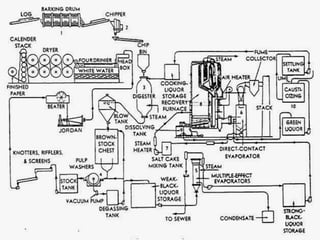
Steps Involved in the Kraft Process are as follows:
Impregnation
Cooking
Blowing
Screening
Washing
bleaching
KRAFT Process
 Impregnation:
Common wood chips used in pulp production are 12–25 millimeters
(0.47–0.98 in) long and 2–10 millimeters (0.079–0.394 in) thick.The
chips normally first enter the presteaming where they are wetted and
preheated with steam. Cavities inside fresh wood chips are partly filled
with liquid and partly with air.The steam treatment causes the air to
expand and about 25% of the air to be expelled from the chips
 Cooking:
The wood chips are then cooked in pressurized vessels called digesters.
Some digesters operate in a batch manner and some in a continuous
process.There are several variations of the cooking processes both for
the batch and the continuous digesters. Digesters producing 1,000 tons
or more of pulp per day are common
 The solid pulp (about 50% by weight of the dry wood chips) is collected and
washed.At this point the pulp is known as brown stock because of its color.The
combined liquids, known as black liquor (because of its color), contain lignin
fragments, carbohydrates from the breakdown of hemicellulose, sodium carbonate,
sodium sulfate and other inorganic salts.
 Blowing:
The finished cooked wood chips are blown by reducing the pressure to atmospheric
pressure.This releases a lot of steam and volatiles
 Screening:
Screening of the pulp after pulping is a process whereby the pulp is separated from
large shives, knots, dirt and other debris.The accept is the pulp.The material
separated from the pulp is called reject.
The screening section consists of different types of sieves (screens) and centrifugal
cleaning.The sieves are normally set up in a multistage cascade operation because
considerable amounts of good fibres can go to the reject stream when trying to
achieve maximum purity in the accept flow
Washing:
The brown stock from the blowing goes to the washing stages
where the used cooking liquors are separated from the cellulose
fibers. Normally a pulp mill has 3-5 washing stages in series. Pulp
washers use counter current flow between the stages such that the
pulp moves in the opposite direction to the flow of washing waters
 Bleaching:
In a modern mill, brown stock (cellulose fibers containing
approximately5% residual lignin) produced by the pulping is first
washed to remove some of the dissolved organic material and then
further delignified by a variety of bleaching stages
PAPER MANUFACTURING
Steps Involved
1.Stock preparation
2.Beating and refining
3.Filling and loading
4.Sizing
5.Colouring
Sheet forming pressing and drying
 Sheet forming
 Sheet pressing
 Sheet drying
Stock preparation
Paper making pulps are conveniently handled as aqueous
slurries so that they can be conveyed, measured, subjected to
desired mechanical treatments and mixed with non fibrous
additive
Beating and refining
This type of treatment is used to improve the strength and
other physical properties
Filling and loading
Filling process is carried out to make the paper making
furnish. For this purpose mostly pigments are used. Fillers
can improve brightness,opacity,softness, smoothness and ink
receptivity.
Sizing
Sizing is the process of adding material to the paper in order
to render the sheet more resistant to penetration by liquids.
Coloring
The color of most papers and paper boards that are made from
pulp is achieved by addition of dyes and other colored
components
Sheet forming
Commonly Cylinder machines are used for sheet forming.
Fourdriniers are used as standards in industry to produce all
grades of paper.They vary 1-10 m in width and may be >200
m long
Sheet pressing
The sheet leaving the wet contains almost 4 parts of water per
part of fiber. For this sheet are pressed between rotary
presses.
Sheet drying
At a water content of 1.2-1.9 parts of water per part of fiber,
mechanical means for drying are not feasible ,for this
evaporation drying process is applied.
Krafts Process Flow Sheet
12_paper_and_pulp_industry.pdf.pdf

12_paper_and_pulp_industry.pdf.pdf

  • 1.
  • 2.
    What is aPulp?  Pulp is a lignocellulosic fibrous material  Prepared by chemically or mechanically separating cellulose fibres from wood, fibre crops or waste paper.  The wood fiber sources required for pulping are,“45% sawmill residue, 21% logs and chips, and 34% recycled paper  A mixture of cellulose material, such as wood, paper, and rags, ground up and moistened to make paper
  • 3.
    Pulp Manufacturing  Kraftor Sulphate Pulp  Sulfite Pulp
  • 4.
    Sulfite Pulp  Thesulfite process produces wood pulp which is almost pure cellulose fibers by using various salts of sulfurous acid to extract the lignin from wood chips in large pressure vessels called digesters.  The salts used in the pulping process are either sulfites (SO3 2−), or bisulfites (HSO3 −),depending on the pH.  The counter ion can be sodium (Na+),calcium (Ca2+),potassium (K+),magnesium (Mg2+) or ammonium (NH4 +).
  • 5.
    Kraft Pulp The kraftprocess (also known as kraft pulping or sulfate process) is a process for conversion of wood into wood pulp consisting of almost pure cellulose fibers. It entails treatment of wood chips with a mixture of sodium hydroxide and sodium sulfide, known as white liquor, that breaks the bonds that link lignin to the cellulose
  • 6.
    Continue Steps Involved inthe Kraft Process are as follows: Impregnation Cooking Blowing Screening Washing bleaching
  • 7.
    KRAFT Process  Impregnation: Commonwood chips used in pulp production are 12–25 millimeters (0.47–0.98 in) long and 2–10 millimeters (0.079–0.394 in) thick.The chips normally first enter the presteaming where they are wetted and preheated with steam. Cavities inside fresh wood chips are partly filled with liquid and partly with air.The steam treatment causes the air to expand and about 25% of the air to be expelled from the chips  Cooking: The wood chips are then cooked in pressurized vessels called digesters. Some digesters operate in a batch manner and some in a continuous process.There are several variations of the cooking processes both for the batch and the continuous digesters. Digesters producing 1,000 tons or more of pulp per day are common
  • 8.
     The solidpulp (about 50% by weight of the dry wood chips) is collected and washed.At this point the pulp is known as brown stock because of its color.The combined liquids, known as black liquor (because of its color), contain lignin fragments, carbohydrates from the breakdown of hemicellulose, sodium carbonate, sodium sulfate and other inorganic salts.  Blowing: The finished cooked wood chips are blown by reducing the pressure to atmospheric pressure.This releases a lot of steam and volatiles  Screening: Screening of the pulp after pulping is a process whereby the pulp is separated from large shives, knots, dirt and other debris.The accept is the pulp.The material separated from the pulp is called reject. The screening section consists of different types of sieves (screens) and centrifugal cleaning.The sieves are normally set up in a multistage cascade operation because considerable amounts of good fibres can go to the reject stream when trying to achieve maximum purity in the accept flow
  • 9.
    Washing: The brown stockfrom the blowing goes to the washing stages where the used cooking liquors are separated from the cellulose fibers. Normally a pulp mill has 3-5 washing stages in series. Pulp washers use counter current flow between the stages such that the pulp moves in the opposite direction to the flow of washing waters
  • 10.
     Bleaching: In amodern mill, brown stock (cellulose fibers containing approximately5% residual lignin) produced by the pulping is first washed to remove some of the dissolved organic material and then further delignified by a variety of bleaching stages
  • 11.
    PAPER MANUFACTURING Steps Involved 1.Stockpreparation 2.Beating and refining 3.Filling and loading 4.Sizing 5.Colouring
  • 12.
    Sheet forming pressingand drying  Sheet forming  Sheet pressing  Sheet drying
  • 13.
    Stock preparation Paper makingpulps are conveniently handled as aqueous slurries so that they can be conveyed, measured, subjected to desired mechanical treatments and mixed with non fibrous additive Beating and refining This type of treatment is used to improve the strength and other physical properties
  • 14.
    Filling and loading Fillingprocess is carried out to make the paper making furnish. For this purpose mostly pigments are used. Fillers can improve brightness,opacity,softness, smoothness and ink receptivity. Sizing Sizing is the process of adding material to the paper in order to render the sheet more resistant to penetration by liquids.
  • 15.
    Coloring The color ofmost papers and paper boards that are made from pulp is achieved by addition of dyes and other colored components Sheet forming Commonly Cylinder machines are used for sheet forming. Fourdriniers are used as standards in industry to produce all grades of paper.They vary 1-10 m in width and may be >200 m long
  • 16.
    Sheet pressing The sheetleaving the wet contains almost 4 parts of water per part of fiber. For this sheet are pressed between rotary presses. Sheet drying At a water content of 1.2-1.9 parts of water per part of fiber, mechanical means for drying are not feasible ,for this evaporation drying process is applied.
  • 17.