Sri Sivani Institute of Technology


PAPER BATTERY
Rajesh Dunna (09MN1A0213)

Department of E.E.E
Constrains of Paper Battery


  Abstract       Working      Applications,
                    &          Advantages
     and                            &
Introduction   Development    Disadvantages


                             PPT on Paper Battery
Abstract
                   A Conventional Battery takes up a
           huge amount of space and contributes to
           a large part of the device's weight.

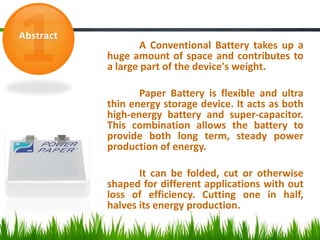
                  Paper Battery is flexible and ultra
           thin energy storage device. It acts as both
           high-energy battery and super-capacitor.
           This combination allows the battery to
           provide both long term, steady power
           production of energy.

                  It can be folded, cut or otherwise
           shaped for different applications with out
           loss of efficiency. Cutting one in half,
           halves its energy production.
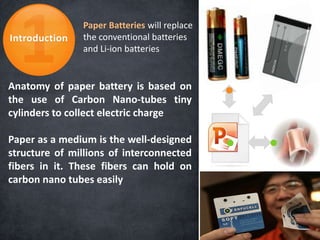
Paper Batteries will replace
Introduction   the conventional batteries
               and Li-ion batteries


Anatomy of paper battery is based on
the use of Carbon Nano-tubes tiny
cylinders to collect electric charge

Paper as a medium is the well-designed
structure of millions of interconnected
fibers in it. These fibers can hold on
carbon nano tubes easily
Cellulose paper + Nano Technology = Paper Battery

Introduction
               Formed by combining carbon nano-tubes with a
               conventional sheet of cellulose-based paper

               Nano-tubes acts as electrodes, allowing the
               storage devices to conduct electricity

                      Paper battery integrates all of the battery
                      components in a single structure, makes
                      it more energy efficient

                      Carbon nano-tubes exhibit extra-ordinary
               strength and unique electrical properties
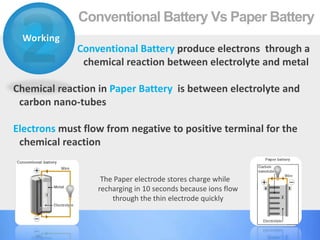
Conventional Battery Vs Paper Battery
 Working
             Conventional Battery produce electrons through a
              chemical reaction between electrolyte and metal

Chemical reaction in Paper Battery is between electrolyte and
 carbon nano-tubes

Electrons must flow from negative to positive terminal for the
 chemical reaction


                   The Paper electrode stores charge while
                  recharging in 10 seconds because ions flow
                      through the thin electrode quickly
Development


Step 1 Carbonate paper and Carbon nano ink is taken

Step 2 Carbon nano ink is spread on one side of the paper

Step 3 Paper is kept inside the oven at 150C temperature. This
      evaporates water content on paper, so that paper and
      nano rods get attached each other

Step 4 After drying, the paper becomes flexible, light weight and
       can withstand from -75C to 150C
Applications


        As alternate to conventional batteries in gadgets

                   Powered smart cards RF id tags

               E-cards, E-greetings and Talking posters

       Pacemakers in the heart (uses blood as electrolyte)
Advantages

             It can be Rolled, twisted, folded or cut into
             numerous shapes

             No loss of integrity/efficiency

             Light weight

             Bio-degradable and Non-toxic

             It can be a Super Capacitor
Disadvantages

                Carbon nano-tubes are very expensive

                Batteries with large enough power are unlikely to
                be cost effective

                For a commercial viabilities, these batteries have
                to be scaled up to sheets of newspaper size

                Replacing the old batteries results wastage of old
                electronic goods
Conclusion
                          The life of battery is an important
                      parameter which decides the area of
                      application of battery.


  Saving energy
                          These paper batteries can further reduce
 is the best way      the weight of the electronic gadgets.
        to
re-cycle the energy
                          The future may allow simply painting the
                      nano-tube ink and active materials onto
                      surfaces such as walls.

                          High storage of energy leads to decrease
                      charging time. Thus energy can be saved
PAPER BATTERY
Rajesh Dunna (09MN1A0213)
Thank You
?   Queries ?


                Paper Battery
Paper Battery

Paper Battery

  • 1.
    Sri Sivani Instituteof Technology PAPER BATTERY Rajesh Dunna (09MN1A0213) Department of E.E.E
  • 2.
    Constrains of PaperBattery Abstract Working Applications, & Advantages and & Introduction Development Disadvantages PPT on Paper Battery
  • 3.
    Abstract A Conventional Battery takes up a huge amount of space and contributes to a large part of the device's weight. Paper Battery is flexible and ultra thin energy storage device. It acts as both high-energy battery and super-capacitor. This combination allows the battery to provide both long term, steady power production of energy. It can be folded, cut or otherwise shaped for different applications with out loss of efficiency. Cutting one in half, halves its energy production.
  • 4.
    Paper Batteries willreplace Introduction the conventional batteries and Li-ion batteries Anatomy of paper battery is based on the use of Carbon Nano-tubes tiny cylinders to collect electric charge Paper as a medium is the well-designed structure of millions of interconnected fibers in it. These fibers can hold on carbon nano tubes easily
  • 5.
    Cellulose paper +Nano Technology = Paper Battery Introduction Formed by combining carbon nano-tubes with a conventional sheet of cellulose-based paper Nano-tubes acts as electrodes, allowing the storage devices to conduct electricity Paper battery integrates all of the battery components in a single structure, makes it more energy efficient Carbon nano-tubes exhibit extra-ordinary strength and unique electrical properties
  • 6.
    Conventional Battery VsPaper Battery Working Conventional Battery produce electrons through a chemical reaction between electrolyte and metal Chemical reaction in Paper Battery is between electrolyte and carbon nano-tubes Electrons must flow from negative to positive terminal for the chemical reaction The Paper electrode stores charge while recharging in 10 seconds because ions flow through the thin electrode quickly
  • 7.
    Development Step 1 Carbonatepaper and Carbon nano ink is taken Step 2 Carbon nano ink is spread on one side of the paper Step 3 Paper is kept inside the oven at 150C temperature. This evaporates water content on paper, so that paper and nano rods get attached each other Step 4 After drying, the paper becomes flexible, light weight and can withstand from -75C to 150C
  • 8.
    Applications As alternate to conventional batteries in gadgets Powered smart cards RF id tags E-cards, E-greetings and Talking posters Pacemakers in the heart (uses blood as electrolyte)
  • 9.
    Advantages It can be Rolled, twisted, folded or cut into numerous shapes No loss of integrity/efficiency Light weight Bio-degradable and Non-toxic It can be a Super Capacitor
  • 10.
    Disadvantages Carbon nano-tubes are very expensive Batteries with large enough power are unlikely to be cost effective For a commercial viabilities, these batteries have to be scaled up to sheets of newspaper size Replacing the old batteries results wastage of old electronic goods
  • 11.
    Conclusion The life of battery is an important parameter which decides the area of application of battery. Saving energy These paper batteries can further reduce is the best way the weight of the electronic gadgets. to re-cycle the energy The future may allow simply painting the nano-tube ink and active materials onto surfaces such as walls. High storage of energy leads to decrease charging time. Thus energy can be saved
  • 12.
    PAPER BATTERY Rajesh Dunna(09MN1A0213) Thank You
  • 13.
    ? Queries ? Paper Battery