a fuel of next generation…..


     Presented by-

     Shalu
     gupta
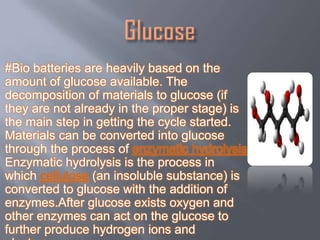
#Bio batteries are heavily based on the
amount of glucose available. The
decomposition of materials to glucose (if
they are not already in the proper stage) is
the main step in getting the cycle started.
Materials can be converted into glucose
through the process of enzymatic hydrolysis.
Enzymatic hydrolysis is the process in
which cellulose (an insoluble substance) is
converted to glucose with the addition of
enzymes.After glucose exists oxygen and
other enzymes can act on the glucose to
further produce hydrogen ions and
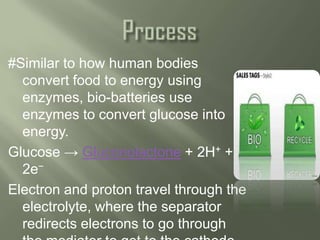
#Similar to how human bodies
  convert food to energy using
  enzymes, bio-batteries use
  enzymes to convert glucose into
  energy.
Glucose → Gluconolactone + 2H+ +
  2e−
Electron and proton travel through the
  electrolyte, where the separator
  redirects electrons to go through
#A significant advantage that bio-
  batteries have in comparison to
  other batteries is their ability to
  allow an instant recharge . In other
  words through a constant supply
  of sugar, or glucose, bio batteries
  are able to continuously keep
  themselves charged without an
  external power supply. Bio
  batteries are also a source of non-
  flammable, and non-toxic fuel.
  This provides a clean alternative
  renewable power source.
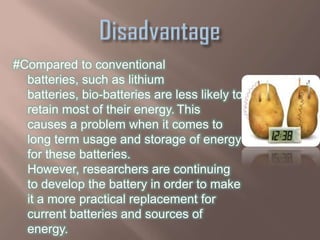
#Compared to conventional
  batteries, such as lithium
  batteries, bio-batteries are less likely to
  retain most of their energy. This
  causes a problem when it comes to
  long term usage and storage of energy
  for these batteries.
  However, researchers are continuing
  to develop the battery in order to make
  it a more practical replacement for
  current batteries and sources of
  energy.
   They serve as a new form of
    energy that is proving to be
    environmentally friendly, as
    well as successful, in
    producing and reserving
    energy. Although the
    batteries are still being
    tested before being
    commercially sold, several
    research teams and
    engineers are working to
    further advance the
    development of these
    batteries.
To see the future of energy…..

Bio battery

  • 1.
    a fuel ofnext generation….. Presented by- Shalu gupta
  • 11.
    #Bio batteries areheavily based on the amount of glucose available. The decomposition of materials to glucose (if they are not already in the proper stage) is the main step in getting the cycle started. Materials can be converted into glucose through the process of enzymatic hydrolysis. Enzymatic hydrolysis is the process in which cellulose (an insoluble substance) is converted to glucose with the addition of enzymes.After glucose exists oxygen and other enzymes can act on the glucose to further produce hydrogen ions and
  • 12.
    #Similar to howhuman bodies convert food to energy using enzymes, bio-batteries use enzymes to convert glucose into energy. Glucose → Gluconolactone + 2H+ + 2e− Electron and proton travel through the electrolyte, where the separator redirects electrons to go through
  • 13.
    #A significant advantagethat bio- batteries have in comparison to other batteries is their ability to allow an instant recharge . In other words through a constant supply of sugar, or glucose, bio batteries are able to continuously keep themselves charged without an external power supply. Bio batteries are also a source of non- flammable, and non-toxic fuel. This provides a clean alternative renewable power source.
  • 14.
    #Compared to conventional batteries, such as lithium batteries, bio-batteries are less likely to retain most of their energy. This causes a problem when it comes to long term usage and storage of energy for these batteries. However, researchers are continuing to develop the battery in order to make it a more practical replacement for current batteries and sources of energy.
  • 15.
    They serve as a new form of energy that is proving to be environmentally friendly, as well as successful, in producing and reserving energy. Although the batteries are still being tested before being commercially sold, several research teams and engineers are working to further advance the development of these batteries.
  • 16.
    To see thefuture of energy…..