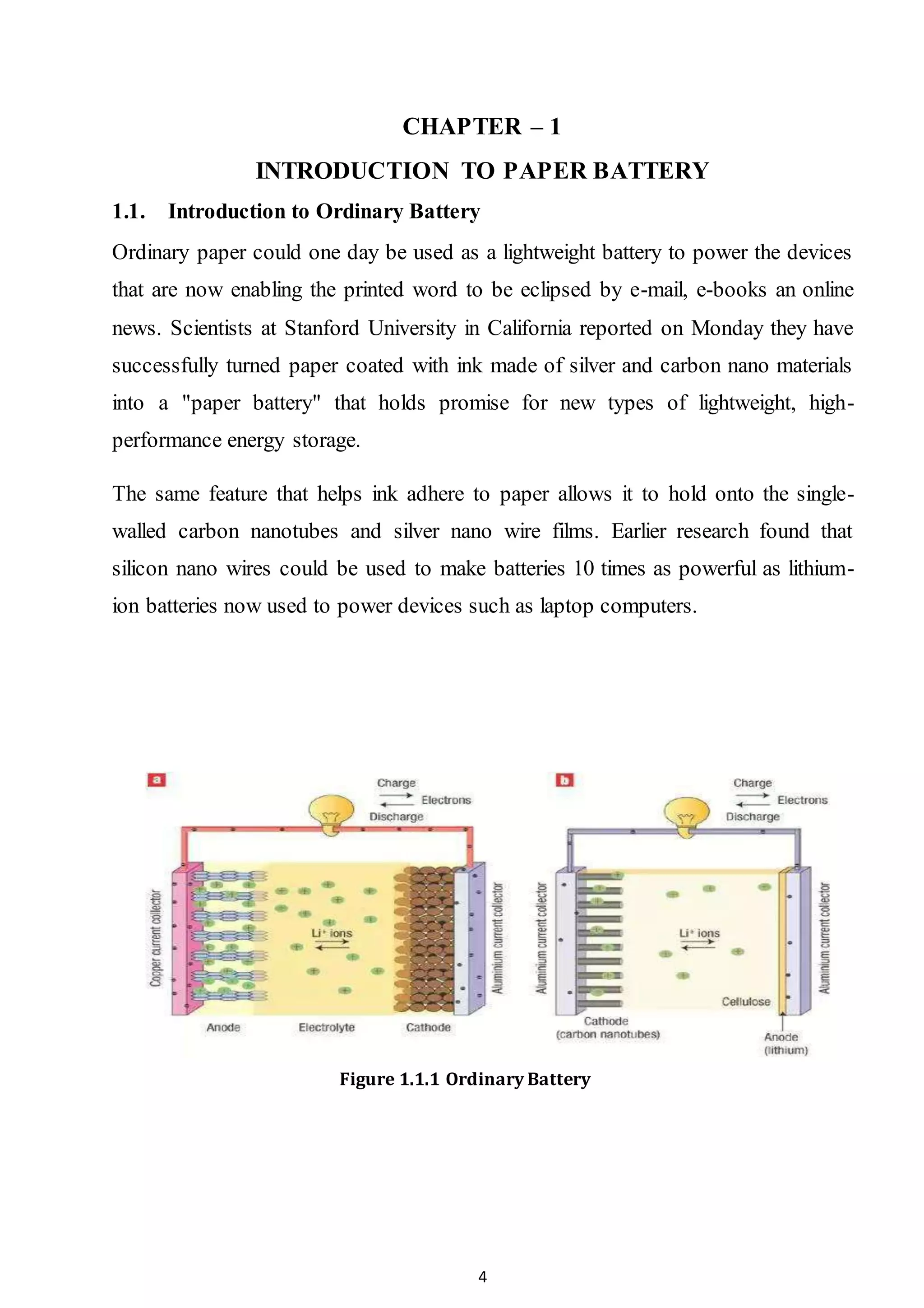
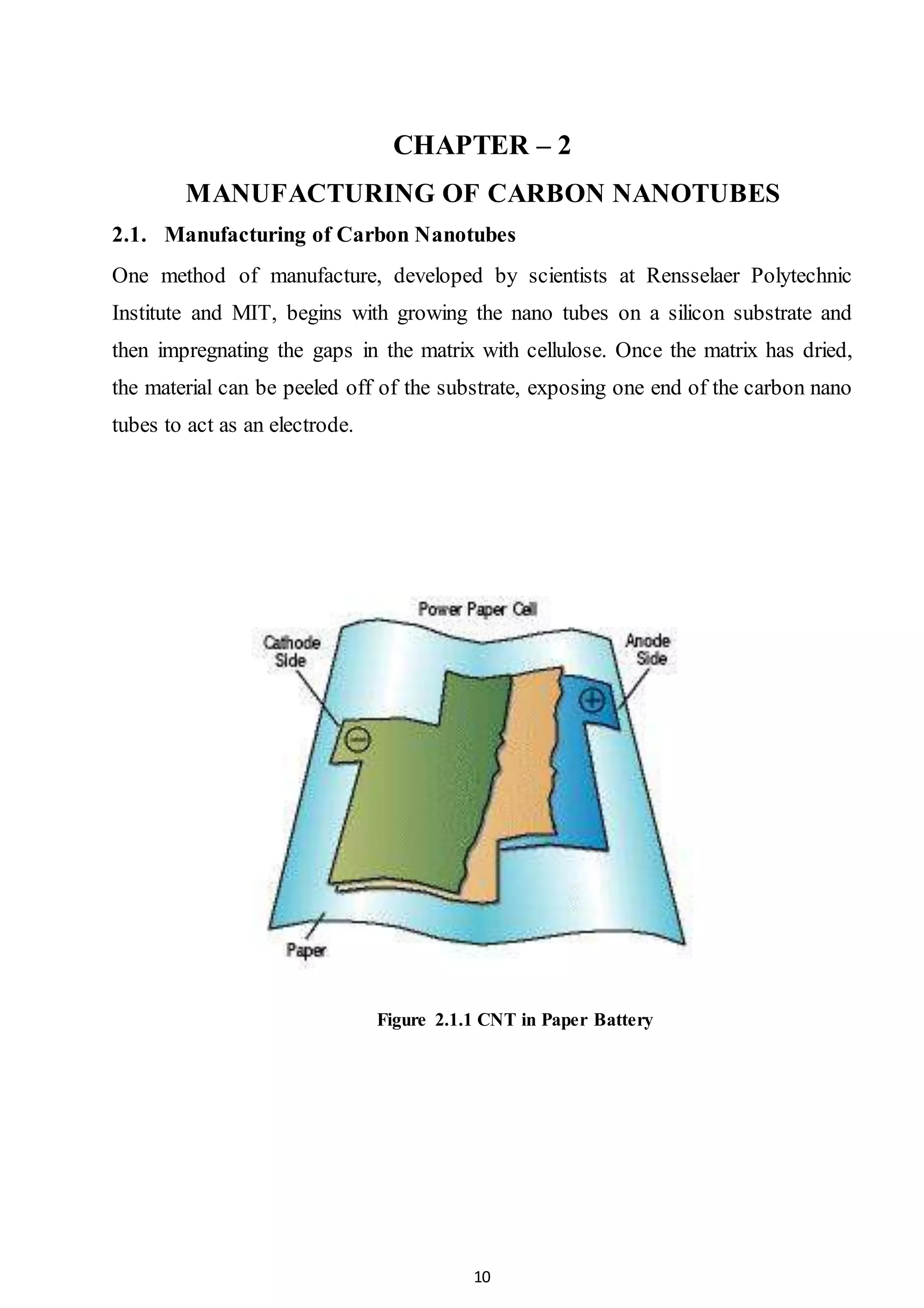
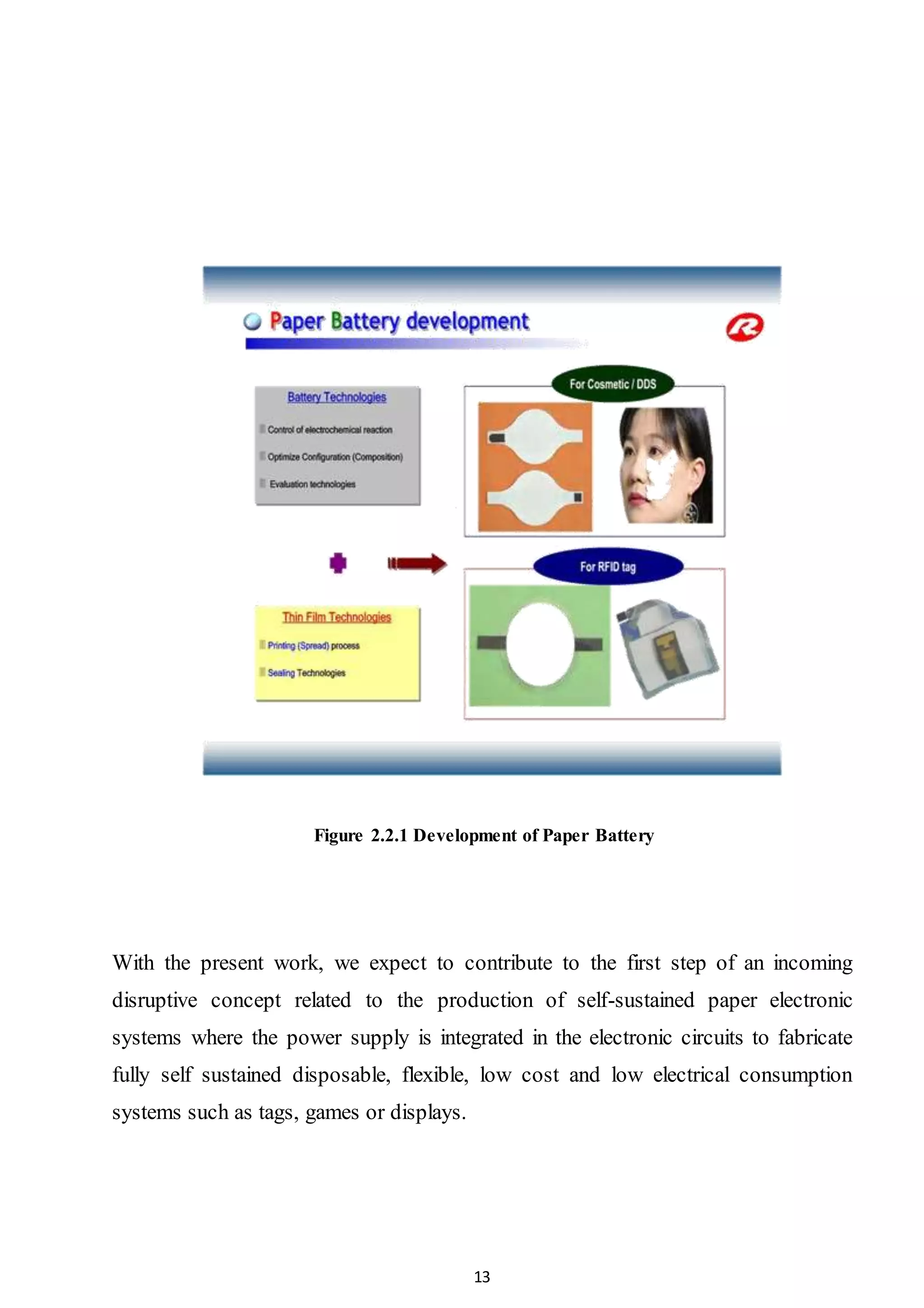
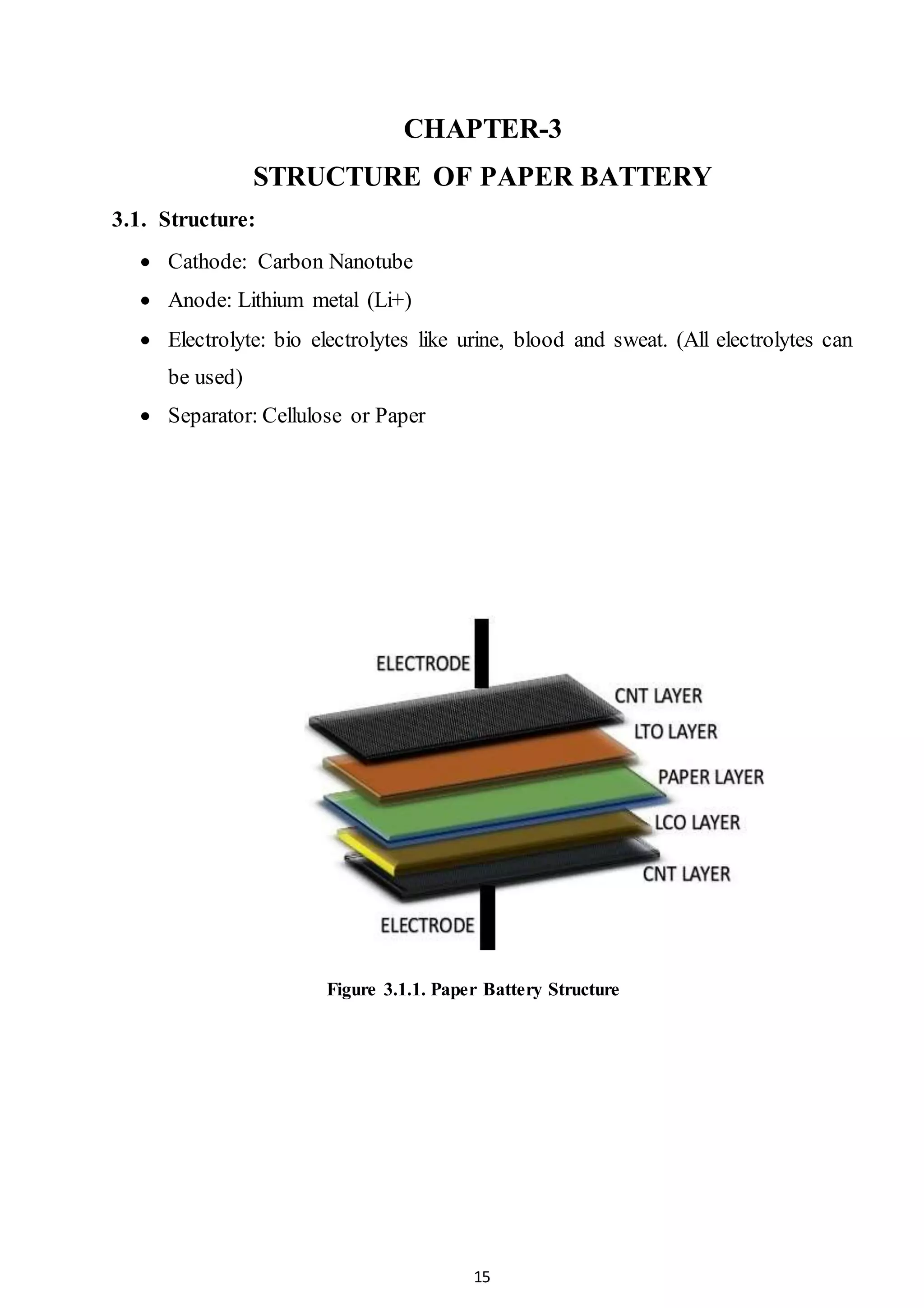
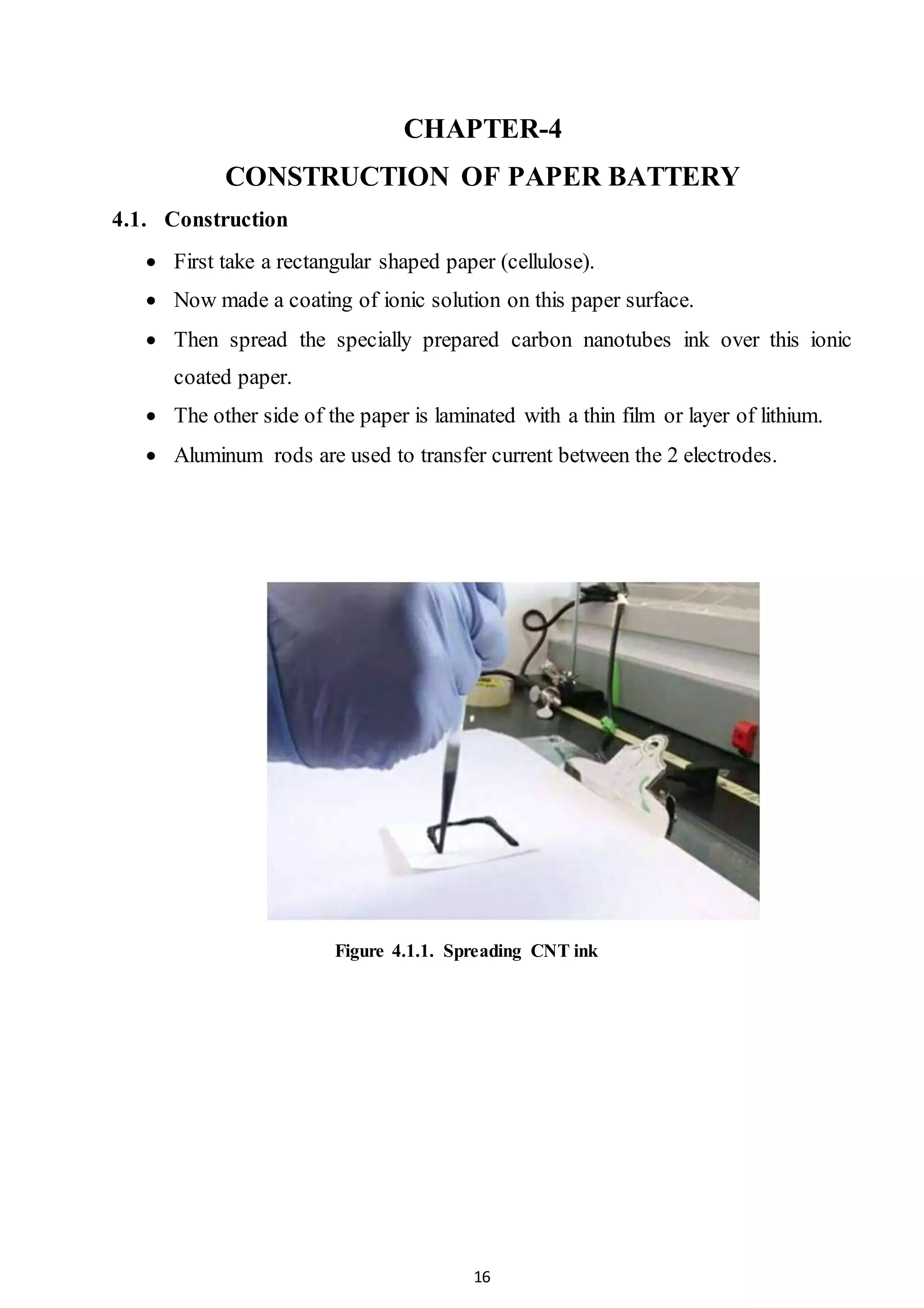
A paper battery is made of cellulose and carbon nanotubes. It acts as both a battery and supercapacitor, providing steady and burst energy. It produces electricity through interactions between electrolytes during charging and discharging. Paper batteries are flexible, lightweight, customizable, and can be mass produced for applications in electronics, vehicles, medicine, and more. They are manufactured by growing carbon nanotubes on a substrate, infusing cellulose, and peeling it off to form electrodes. When combined with an ionic liquid electrolyte between the layers, it forms a biocompatible paper-based energy storage device.
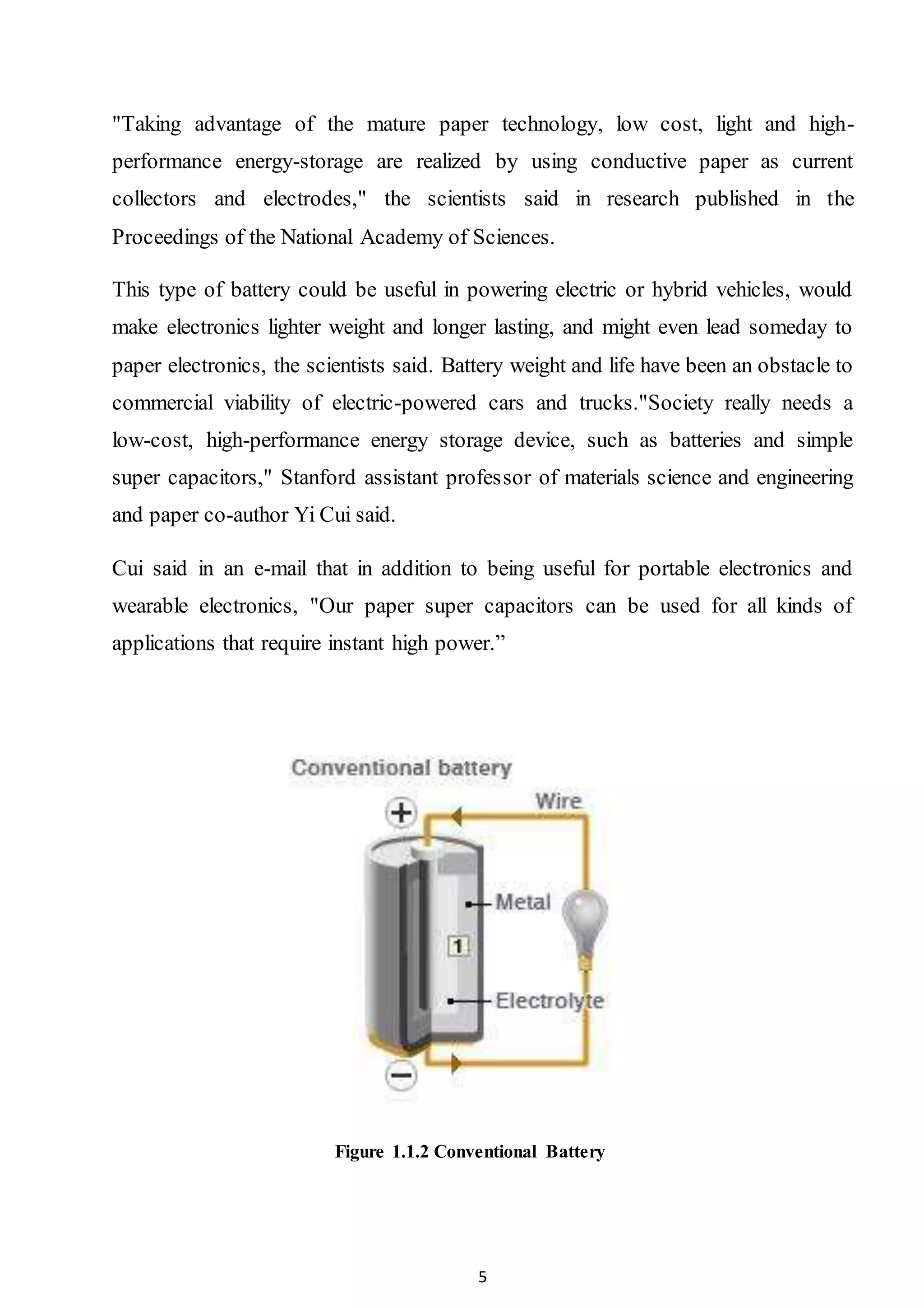
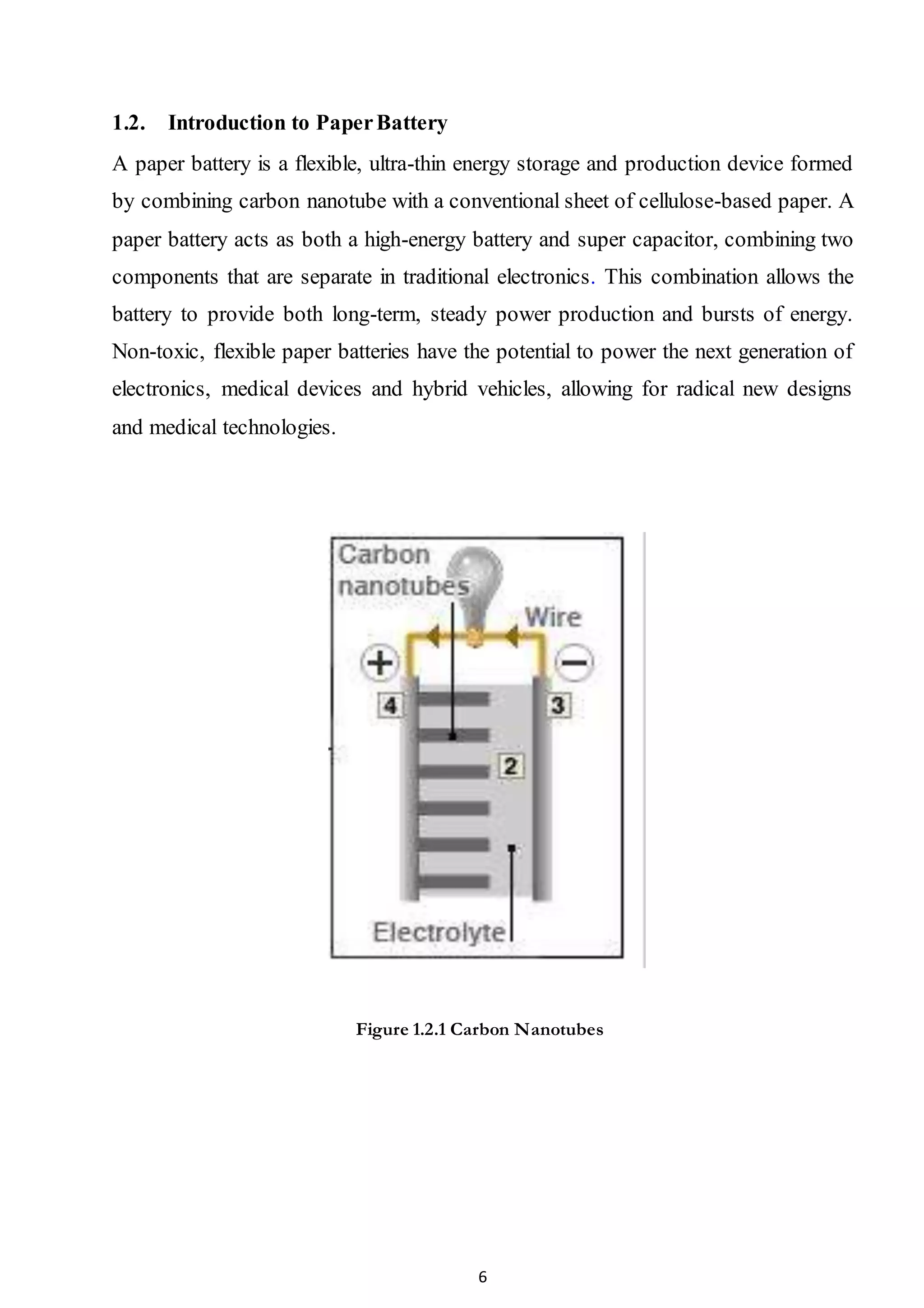
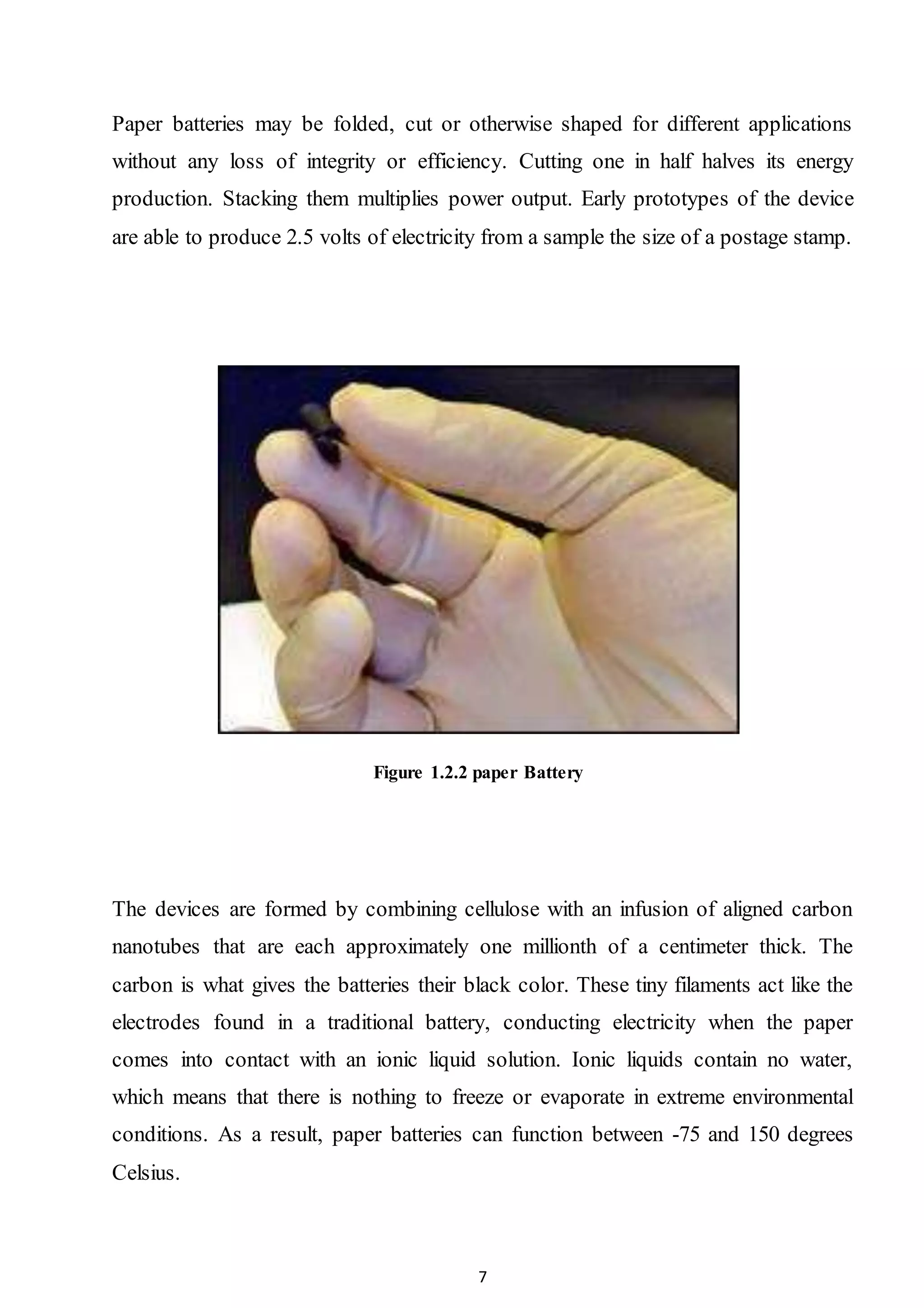

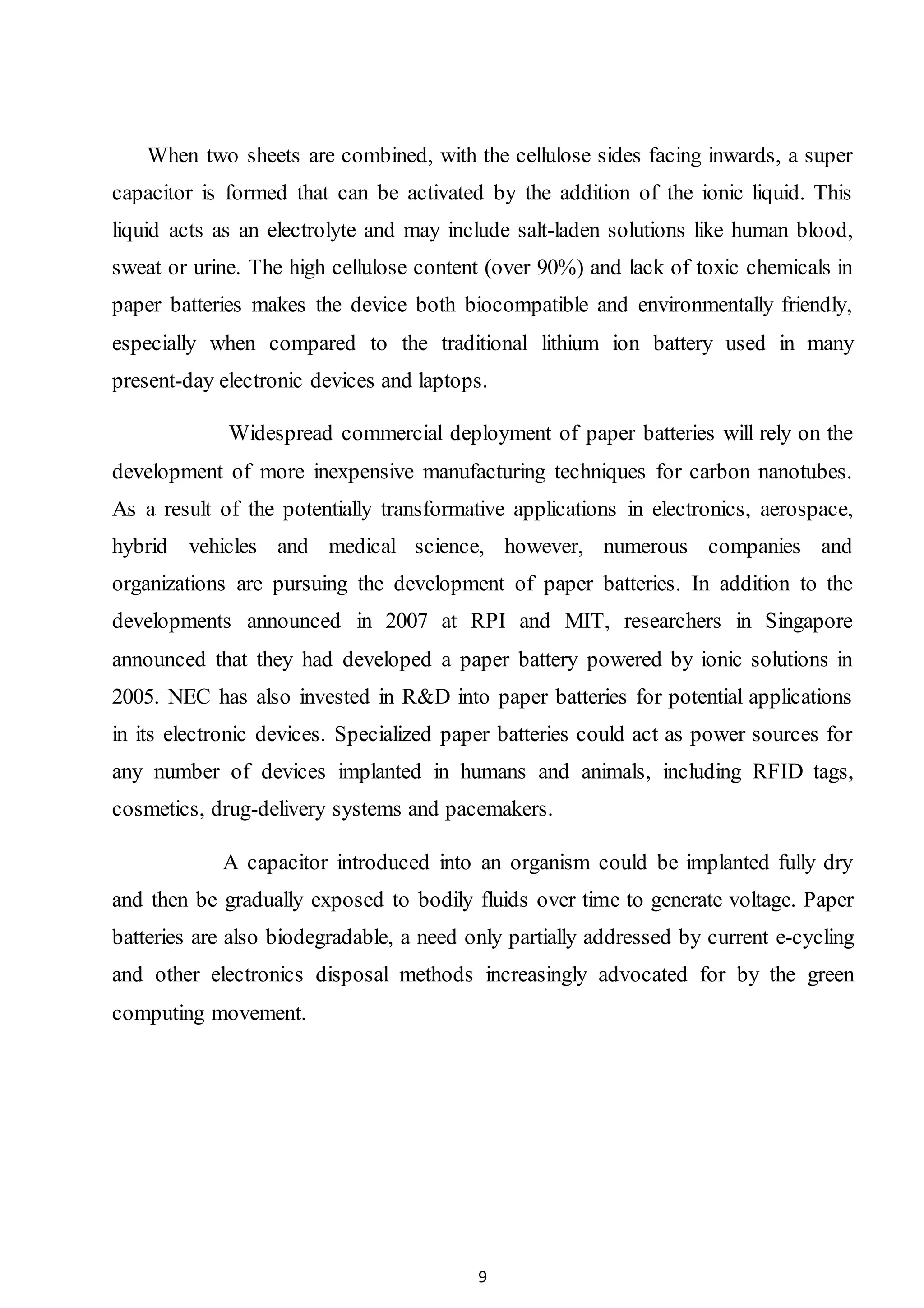
![14
In achieving such goal we have fabricated batteries using commercial paper as
electrolyte and physical support of thin film electrodes. A thin film layer of a metal
or metal oxide is deposited in one side of a commercial paper sheet while in the
opposite face a metal or metal oxide with opposite electrochemical potential is also
deposited. The simplest structure produced is Cu/paper/Al but other structures such
as Al paper WO TCO were also tested, leading to batteries with open circuit
voltages varying between 0.50 and 1.10 V.
On the other hand, the short current density is highly dependent on the relative
humidity (RH), whose presence is important to recharge the battery. The set of
batteries characterized show stable performance after being tested by more than 115
hours, under standard atmospheric conditions [room temperature, RT (22 C) and
60% air humidity, RH]. In this work we also present as a proof of concept a paper
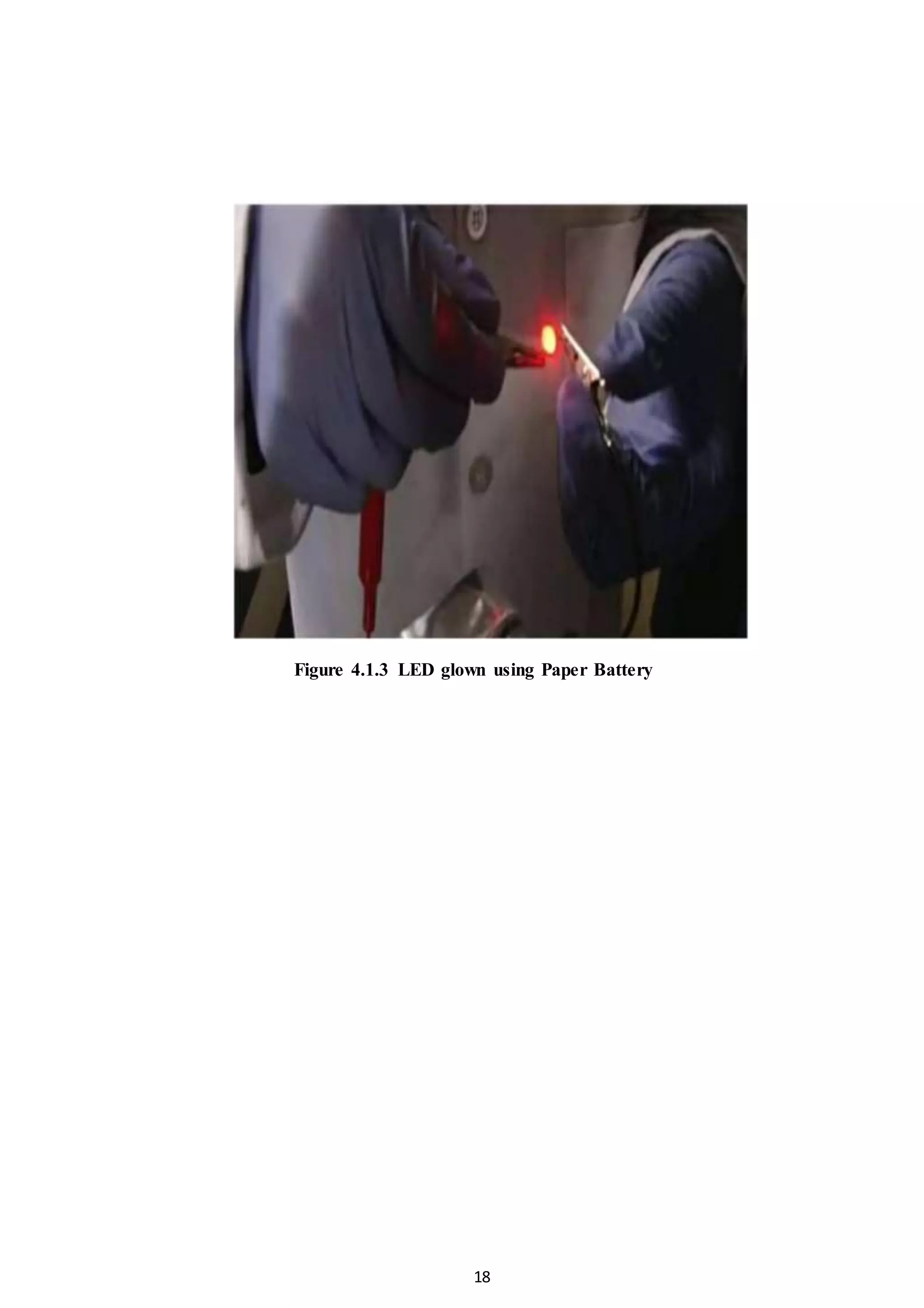
transistor in which the gate ON/OFF state is controlled by a non-encapsulated 3 V
integrated paper battery.](https://image.slidesharecdn.com/paperbatterydocumentandreport-180309062943/75/Paper-battery-document-and-report-14-2048.jpg)
![24
REFERENCES
[1] E. Fortunato, N. Correia, P. Barquinha, L. Pereira, G. Goncalves, and R.
Martins, “High-performance flexible hybrid field-effect transistors based on
cellulose fiber paper,” IEEE Electron Device Lett., vol. 29, no. 9, pp. 988– 990,
Sep. 2008.
[2] E. Fortunato, A. Goncalves, A. Pimentel, P. Barquinha, G. Goncalves, L.
Pereira, I. Ferreira, and R. Martins, “Zinc oxide, a multifunctional material: From
material to device applications,” Appl.Phys.—Materials Science & Processing, vol.
96, pp. 197–206, Jul. 2009.
[3] R. Martins, P. Barquinha, L. Pereira, N. Correia, G. Gonçalves, I. Ferreira,
and E. Fortunato, “Write-erase and read paper memory transistor,” Appl. Phys.
Lett., vol. 93, p. 203501, Nov. 2008.
[4] P. Andersson, D. Nilsson, P.-O. Svensson, M. Chen, A. Malmstrom, T.
Remonen, T. Kugler, and M. Berggren, “Active matrix displays based on all-
organic electrochemical smart pixels printed on paper,” Adv. Mater., vol. 14, no.
20, pp. 1460–1464, Oct. 2002.
[5] J. Sun, Q.Wan, A. Lu, and J. Jiang, “Low-voltage electric-double-layer paper
transistors gated by microporous SiO processed at room temperature,” Appl. Phys.
Lett., vol. 95, pp. 222108-1–222108-3, Nov. 2009.
[6] V. L. Pushparaj, M. M. Shaijumon, A. Kumar, S. Murugesan, L. Ci, R. Vajtai,
R. J. Linhardt, O. Nalamasu, and P. M. Ajayan, “Flexible energy storage devices
based on nanocomposite paper,” PNAS, vol. 104, no. 4, pp. 13574–13577, Aug.
2007.
[7] K. B. Lee, “Two-step activation of paper batteries for high power generation:
Design and fabrication of biofluid- and water-activated paper batteries,” J.
Micromech. Microeng., vol. 16, pp. 2312–2317, Sept. 2006.
[8] B. Bras, “Produção e Caracterização de Bateriais de Filme Fino em Substrato
de Papel,” M.Sc. Thesis, FCT-UNL, Lisbon, Portugal, Oct. 2009, ed. FCT-UNL.](https://image.slidesharecdn.com/paperbatterydocumentandreport-180309062943/75/Paper-battery-document-and-report-24-2048.jpg)


