PAPER BATTERY
T.RAJESH
ROLL NO
:13751A04G6
V.BHANU PRAKASH
ROLL NO:13751A04H7
SREENIVASA INSTITUTE OF TECHNOLOGY AND MANAGEMENT STUDIES
(AUTONOMOUS)
Affiliated to J.N.T.U.A, Ananthapur & NBA, NAAC Accredited
CHITTOOR-517127
POWERPOINT PRESENTATION ON
Dept of ECE
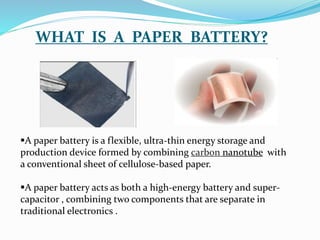
A paper battery is a flexible, ultra-thin energy storage and
production device formed by combining carbon nanotube with
a conventional sheet of cellulose-based paper.
A paper battery acts as both a high-energy battery and super-
capacitor , combining two components that are separate in
traditional electronics .
WHAT IS A PAPER BATTERY?
GENERAL Li-ION BATTERY
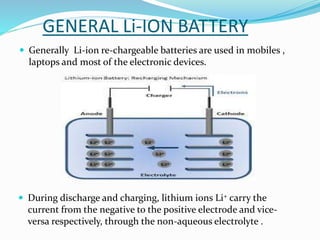
 Generally Li-ion re-chargeable batteries are used in mobiles ,
laptops and most of the electronic devices.
 During discharge and charging, lithium ions Li+ carry the
current from the negative to the positive electrode and vice-
versa respectively, through the non-aqueous electrolyte .
Disadvantages of Li-Ion
• EXPENSIVE
• WEIGHT & SIZE
• COST & CHARGE
• ENVIRONMENTAL HAZARDS
• LOW SPECIFIC POWER
WHY TO USE PAPER BATTERY?
 Ultra-thin size & flexible structure.
 Exhibits property of super-capacitor(22F-36F per gram)
 Operating temper ature(-75 to 100 degree celsius)
 provide both long-term, steady power production and
bursts of energy.
 Cost-effective.
 Carbon nanotube is the main
concept behind paper battery
 Carbon nanotubes (CNTs; also
known as buckytubes) are allotropes
of carbon with a cylindrical
nanostructure.
 CNTs exhibit extraordinary strength
and unique electrical properties, and
are efficient thermal conductors.
CARBON NANOTUBES
Spinning Carbon Nanotube
Graphene structure Rolled at angle CARBON NANOTUBE
•Nanotubes are members of the fullerene structural family. The
diameter of a nanotubes is on the order of a few nanometers and
they are long, hollow structure with the walls formed by one-
atom-thick sheets of carbon, called graphene. These sheets are
rolled at specific and discrete angles, and the combination of the
rolling angle and radius decides the nanotube properties
CONSTRUCTION OF PAPER BATTERY
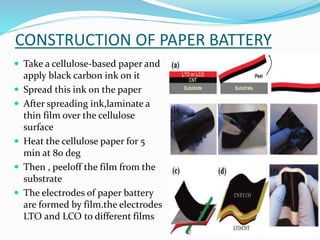
 Take a cellulose-based paper and
apply black carbon ink on it
 Spread this ink on the paper
 After spreading ink,laminate a
thin film over the cellulose
surface
 Heat the cellulose paper for 5
min at 80 deg
 Then , peeloff the film from the
substrate
 The electrodes of paper battery
are formed by film.the electrodes
LTO and LCO to different films
STRUCTURE OF PAPER BATTERY
WORKING
 Traditional Batteries produce electrons through a chemical
reaction between electrolyte and metal.
 paper battery produces electrons due to the interaction of
electrolytes LTO & LCO.
 Electrons collect on the negative terminal of the battery
and flow along a connected wire to the positive terminal
during discharging.
 Electrons must flow from the negative to the positive
terminal for the chemical reaction to continue.
• The flexible battery can function even if it is rolled up,
folded or cut.
•We can get 2.5 volts of electricity from a sample the
size of a postage stamp.
• Biodegradable & Non –toxic
•Reusable & Recyclable
•Easy moldable into desired shapes & Sizes
•Customizable output
•Durable & Rechargeable
ADVANTAGES
APPLICATIONS
Paper battery offers future power
The black piece of paper can power a small light.
 Flexible paper batteries could meet the energy demands of
the next generation of gadgets.
The ambition is to produce reams of paper that could one day
power a car.
The paper battery was a glimpse into the future of power
storage.
5.paper  battery ppt

5.paper battery ppt

  • 1.
    PAPER BATTERY T.RAJESH ROLL NO :13751A04G6 V.BHANUPRAKASH ROLL NO:13751A04H7 SREENIVASA INSTITUTE OF TECHNOLOGY AND MANAGEMENT STUDIES (AUTONOMOUS) Affiliated to J.N.T.U.A, Ananthapur & NBA, NAAC Accredited CHITTOOR-517127 POWERPOINT PRESENTATION ON Dept of ECE
  • 2.
    A paper batteryis a flexible, ultra-thin energy storage and production device formed by combining carbon nanotube with a conventional sheet of cellulose-based paper. A paper battery acts as both a high-energy battery and super- capacitor , combining two components that are separate in traditional electronics . WHAT IS A PAPER BATTERY?
  • 3.
    GENERAL Li-ION BATTERY Generally Li-ion re-chargeable batteries are used in mobiles , laptops and most of the electronic devices.  During discharge and charging, lithium ions Li+ carry the current from the negative to the positive electrode and vice- versa respectively, through the non-aqueous electrolyte .
  • 4.
    Disadvantages of Li-Ion •EXPENSIVE • WEIGHT & SIZE • COST & CHARGE • ENVIRONMENTAL HAZARDS • LOW SPECIFIC POWER
  • 5.
    WHY TO USEPAPER BATTERY?  Ultra-thin size & flexible structure.  Exhibits property of super-capacitor(22F-36F per gram)  Operating temper ature(-75 to 100 degree celsius)  provide both long-term, steady power production and bursts of energy.  Cost-effective.
  • 6.
     Carbon nanotubeis the main concept behind paper battery  Carbon nanotubes (CNTs; also known as buckytubes) are allotropes of carbon with a cylindrical nanostructure.  CNTs exhibit extraordinary strength and unique electrical properties, and are efficient thermal conductors. CARBON NANOTUBES Spinning Carbon Nanotube
  • 7.
    Graphene structure Rolledat angle CARBON NANOTUBE •Nanotubes are members of the fullerene structural family. The diameter of a nanotubes is on the order of a few nanometers and they are long, hollow structure with the walls formed by one- atom-thick sheets of carbon, called graphene. These sheets are rolled at specific and discrete angles, and the combination of the rolling angle and radius decides the nanotube properties
  • 8.
    CONSTRUCTION OF PAPERBATTERY  Take a cellulose-based paper and apply black carbon ink on it  Spread this ink on the paper  After spreading ink,laminate a thin film over the cellulose surface  Heat the cellulose paper for 5 min at 80 deg  Then , peeloff the film from the substrate  The electrodes of paper battery are formed by film.the electrodes LTO and LCO to different films
  • 9.
  • 10.
    WORKING  Traditional Batteriesproduce electrons through a chemical reaction between electrolyte and metal.  paper battery produces electrons due to the interaction of electrolytes LTO & LCO.  Electrons collect on the negative terminal of the battery and flow along a connected wire to the positive terminal during discharging.  Electrons must flow from the negative to the positive terminal for the chemical reaction to continue.
  • 11.
    • The flexiblebattery can function even if it is rolled up, folded or cut. •We can get 2.5 volts of electricity from a sample the size of a postage stamp. • Biodegradable & Non –toxic •Reusable & Recyclable •Easy moldable into desired shapes & Sizes •Customizable output •Durable & Rechargeable ADVANTAGES
  • 12.
  • 13.
    Paper battery offersfuture power The black piece of paper can power a small light.  Flexible paper batteries could meet the energy demands of the next generation of gadgets. The ambition is to produce reams of paper that could one day power a car. The paper battery was a glimpse into the future of power storage.