Introduction
 Making of the battery
 Working of the battery
 Applications
 Advantages
 Conclusions

I. Introduction


The continuously advancing technology of portable electronic devices
asks for more flexible batteries to power them.



Here is an ultra-thin and flexible quick charging battery named ORB, for
Organic Radical Battery, a new energy storage device, that is only
slightly bigger than the size of a stamp and can be bent and twisted,
trimmed with scissors or molded into any needed shape.



More than 90 percent of the device is made up of cellulose,



The same plant cells used in newsprint, lunch bags, and nearly every
other type of paper, making it environmentally safe.



These are flexible and can be recharged in about 30 seconds.
II. Making of the Battery
Power Paper will work exactly like a traditional battery, but it will be
nearly as thin as a piece of paper. A Power Paper cell can generate 1.5 volts of
electricity, which is about the same output as a watch or calculator battery.

Fig1 . Power Paper has developed an ultra-thin battery that can generate
1.5 volts of power




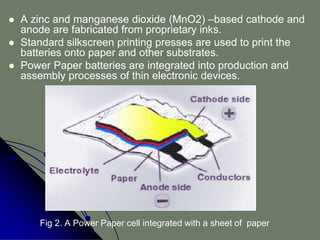
A zinc and manganese dioxide (MnO2) –based cathode and
anode are fabricated from proprietary inks.
Standard silkscreen printing presses are used to print the
batteries onto paper and other substrates.
Power Paper batteries are integrated into production and
assembly processes of thin electronic devices.

Fig 2. A Power Paper cell integrated with a sheet of paper




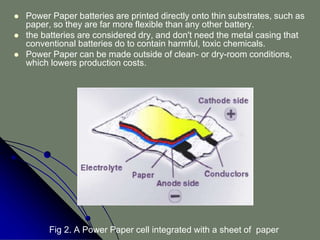
Power Paper batteries are printed directly onto thin substrates, such as
paper, so they are far more flexible than any other battery.
the batteries are considered dry, and don't need the metal casing that
conventional batteries do to contain harmful, toxic chemicals.
Power Paper can be made outside of clean- or dry-room conditions,
which lowers production costs.

Fig 2. A Power Paper cell integrated with a sheet of paper





The paper is infused with aligned carbon nano tubes, which gives the
device its black color.
The tiny carbon filaments or nano tubes substitute for the electrodes
used in a conventional battery
use an ionic liquid solution as an electrolyte - the two components that
conduct electricity.
They use the cellulose or paper as a separator – the third essential
component of a battery.
III. Working of the Battery:
The nano tubes acting as electrodes allow the storage devices to conduct
electricity.
Electricity is the flow of electric power or electrons
 Chemical reaction in the paper battery is between electrolyte and
carbon nano tubes.

 Electrons collect on the negative terminal of the battery and flow
along a connected wire to the positive terminal,
 Batteries produce electrons through a chemical reaction between
electrolyte and metal in the traditional battery.
 Electrons must flow from the negative to the positive terminal for the
chemical reaction to continue. Ionic liquid, essentially a liquid salt, is
used as the battery's electrolyte. Ionic liquid contains no water,
which means there's nothing in the batteries to freeze or evaporate
therefore allowing the paper energy storage devices to withstand


The organic radical materials inside the battery are in an
"electrolyte-permeated gel state," which is about halfway between a
solid and a liquid. This helps ions make a smooth move, reducing
resistance, allowing the batteries to charge faster. 1 square
centimeter will give you about 1 milli watt hour.



You can stack one sheet on top of another to boost the power
output. It's a single, integrated device .The components are
molecularly attached to each other: the carbon nano tube print is
embedded in the paper and the electrolyte is soaked into the paper.
 The end result is a device that looks, feels, and weighs the same paper

.
IV. Applications:
There are several applications for these Power Paper batteries, including:
 Smart cards and tags: power papers can be laminated onto smart cards
and other micro devices and replace ordinary tickets and tags.


Used in Electronic games and entertainment devices


Disposable medical devices - Single-use delivery and
diagnostic devices could have Power Paper incorporated into
their construction to allow for sensors and smart labels.



The paper batteries would be ideal for use in automobiles,
aircraft and even boats because of their light weight.


The paper could also be molded into different shapes, it can
one day be used in IC cards, wearable computers etc…



The organic radical battery could be used in pocket-sized
integrated circuit cards, used for memory storage and
microprocessing. It will also open the way for small wearable
computers.
V. Advantages


The battery’s prime advantage is that it is cheap, thin, and flexible.



It can generate a voltage of 1.5V.



It is disposable with household wastes.



The device can function in temperatures of 300 degrees Fahrenheit and
down to 100 below zero, and is often used for industrial applications.



The batteries are rechargeable.



These have reduced cost and weight, which in itself may give birth to new
applications.



They can be recharged in about 30 seconds.



Thin-film cells can be stored for decades.
VI. Conclusion:





The range of possible applications for these batteries
derives from their important advantages as compared to
conventional battery technologies.
They can be made in virtually any shape and size to
meet the requirements of each application.
The batteries are rechargeable, and have reduced cost
and weight which in itself may give birth to new
applications.
Any questions
paper battery-ranjith

paper battery-ranjith

  • 2.
    Introduction  Making ofthe battery  Working of the battery  Applications  Advantages  Conclusions 
  • 3.
    I. Introduction  The continuouslyadvancing technology of portable electronic devices asks for more flexible batteries to power them.  Here is an ultra-thin and flexible quick charging battery named ORB, for Organic Radical Battery, a new energy storage device, that is only slightly bigger than the size of a stamp and can be bent and twisted, trimmed with scissors or molded into any needed shape.  More than 90 percent of the device is made up of cellulose,  The same plant cells used in newsprint, lunch bags, and nearly every other type of paper, making it environmentally safe.  These are flexible and can be recharged in about 30 seconds.
  • 4.
    II. Making ofthe Battery Power Paper will work exactly like a traditional battery, but it will be nearly as thin as a piece of paper. A Power Paper cell can generate 1.5 volts of electricity, which is about the same output as a watch or calculator battery. Fig1 . Power Paper has developed an ultra-thin battery that can generate 1.5 volts of power
  • 5.
       A zinc andmanganese dioxide (MnO2) –based cathode and anode are fabricated from proprietary inks. Standard silkscreen printing presses are used to print the batteries onto paper and other substrates. Power Paper batteries are integrated into production and assembly processes of thin electronic devices. Fig 2. A Power Paper cell integrated with a sheet of paper
  • 6.
       Power Paper batteriesare printed directly onto thin substrates, such as paper, so they are far more flexible than any other battery. the batteries are considered dry, and don't need the metal casing that conventional batteries do to contain harmful, toxic chemicals. Power Paper can be made outside of clean- or dry-room conditions, which lowers production costs. Fig 2. A Power Paper cell integrated with a sheet of paper
  • 7.
        The paper isinfused with aligned carbon nano tubes, which gives the device its black color. The tiny carbon filaments or nano tubes substitute for the electrodes used in a conventional battery use an ionic liquid solution as an electrolyte - the two components that conduct electricity. They use the cellulose or paper as a separator – the third essential component of a battery.
  • 8.
    III. Working ofthe Battery: The nano tubes acting as electrodes allow the storage devices to conduct electricity.
  • 9.
    Electricity is theflow of electric power or electrons  Chemical reaction in the paper battery is between electrolyte and carbon nano tubes.  Electrons collect on the negative terminal of the battery and flow along a connected wire to the positive terminal,  Batteries produce electrons through a chemical reaction between electrolyte and metal in the traditional battery.  Electrons must flow from the negative to the positive terminal for the chemical reaction to continue. Ionic liquid, essentially a liquid salt, is used as the battery's electrolyte. Ionic liquid contains no water, which means there's nothing in the batteries to freeze or evaporate therefore allowing the paper energy storage devices to withstand
  • 10.
     The organic radicalmaterials inside the battery are in an "electrolyte-permeated gel state," which is about halfway between a solid and a liquid. This helps ions make a smooth move, reducing resistance, allowing the batteries to charge faster. 1 square centimeter will give you about 1 milli watt hour.  You can stack one sheet on top of another to boost the power output. It's a single, integrated device .The components are molecularly attached to each other: the carbon nano tube print is embedded in the paper and the electrolyte is soaked into the paper.
  • 11.
     The endresult is a device that looks, feels, and weighs the same paper .
  • 12.
    IV. Applications: There areseveral applications for these Power Paper batteries, including:  Smart cards and tags: power papers can be laminated onto smart cards and other micro devices and replace ordinary tickets and tags.  Used in Electronic games and entertainment devices
  • 13.
     Disposable medical devices- Single-use delivery and diagnostic devices could have Power Paper incorporated into their construction to allow for sensors and smart labels.  The paper batteries would be ideal for use in automobiles, aircraft and even boats because of their light weight.
  • 14.
     The paper couldalso be molded into different shapes, it can one day be used in IC cards, wearable computers etc…  The organic radical battery could be used in pocket-sized integrated circuit cards, used for memory storage and microprocessing. It will also open the way for small wearable computers.
  • 15.
    V. Advantages  The battery’sprime advantage is that it is cheap, thin, and flexible.  It can generate a voltage of 1.5V.  It is disposable with household wastes.  The device can function in temperatures of 300 degrees Fahrenheit and down to 100 below zero, and is often used for industrial applications.  The batteries are rechargeable.  These have reduced cost and weight, which in itself may give birth to new applications.  They can be recharged in about 30 seconds.  Thin-film cells can be stored for decades.
  • 16.
    VI. Conclusion:    The rangeof possible applications for these batteries derives from their important advantages as compared to conventional battery technologies. They can be made in virtually any shape and size to meet the requirements of each application. The batteries are rechargeable, and have reduced cost and weight which in itself may give birth to new applications.
  • 17.