Seminar on paper
battery
Submitted by:
Kovvada kiran-22815A0217
Content
 Introduction
 Paper Battery
 Principle
 Applications
 Uses
 Construction
 Working
 Limitations
 Needs
 Advantages
 Disadvantages
 Future Scope
 Conclusion
Introduction
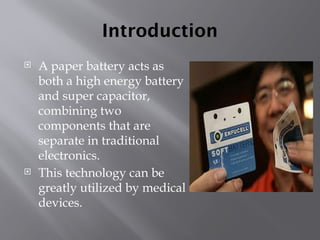
 A paper battery acts as
both a high energy battery
and super capacitor,
combining two
components that are
separate in traditional
electronics.
 This technology can be
greatly utilized by medical
devices.
Paper Battery
 A paper battery is a flexible, ultra-thin energy storage and
production device formed by combining carbon nanotubes
with a conventional sheet of cellulose-based paper.
 The nano materials are a one-dimensional structure with
very small diameters.
 It can be bent and twisted, trimmed with scissors or molded
into any needed shape.
 A paper battery acts as both a high-energy battery and super
capacitor. This combination allows the battery to provide
both long-term, steady power production and bursts of
energy.
 It is non toxic, environment friendly and is everything that a
conventional battery is not.
Principal
 The battery produces electricity in the same way as
the conventional lithium-ion batteries, but all the
components have been incorporated into a
lightweight, flexible sheet of paper.
 The devices are formed by combining cellulose
with an infusion of aligned carbon nanotubes.
 The electrolyte and the ions that carry the charge
can be varied depending the use of the battery.
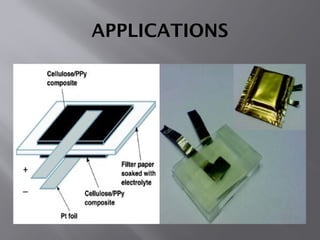
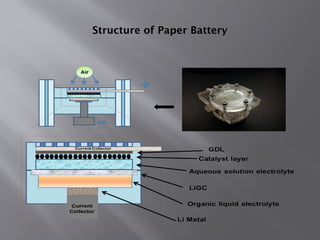
 A conventional Li-ion battery can be incorporated
in cellulose-nanotube composite as shown in the
next slide.
APPLICATIONS
 Power papers can be laminated onto smart
cards and other micro devices and replace
ordinary tickets and tags.
 Single use delivery and diagnostic devices
could have power paper incorporated in to
their construction to allow for sensors and
smart labels.
 Used in electronic games and entertainment
devices.
APPLICATIONS
Uses
 A paper battery is a battery engineered to use a
paper-thin sheet of cellulose infused with
aligned carbon nanotubes. nanotubes act as
electrodes; allowing the storage devices to
conduct electricity.
 Integrates all of the battery components in a
single structure, making it more energy
efficient.
Uses….
 Paper battery extreme flexibility; the sheets can
be rolled, twisted, folded, or cut into numerous
shapes with no loss of integrity or efficiency, or
stacked, like printer paper (or a Voltaic pile), to
boost total output.
 Can be made in a variety of sizes, from postage
stamp to broadsheet.
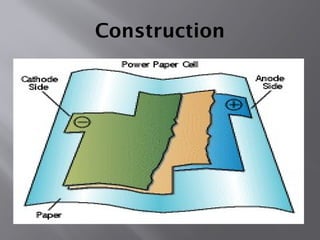
Construction
Structure of Paper Battery
Working
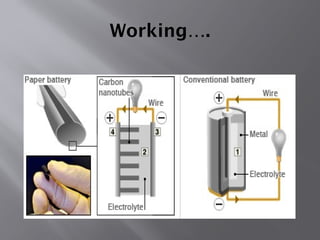
 The nano tubes acting as electrodes allow the
storage device to conduct electricity.
 Chemical reaction in battery is occurs between
electrolyte and carbon nano tubes.
 Battery produce electrons through a chemical
reaction between electrolyte and metal in the
traditional battery.
Working
 Electrons must flow from the negative to the
positive terminal for the chemical reaction to
continue. Ionic liquid, essentially a liquid salt,
is used as the battery electrolyte.
 The organic radical materials inside the battery
are in an “electrolyte-permeated gel state”,
which is about halfway between a solid and a
liquid. This helps ions to smooth move,
reducing resistance, allowing the batteries to
charge faster.
Working….
Limitations
 Paper batteries have low strength they an be
‘torn’ easily.
 The techniques and the set-ups used in the
production of Carbon Nano tubes are very
expensive and very less efficient.
Needs
 Limited Life Time:
Primary batteries ‘irreversibly’ transform
chemical energy to electrical energy. Secondary
batteries can be recharged but they have very
short life time, paper batteries overcome both
problems.
 Leakage:
In case of leakage the chemicals release may be
dangerous but no such toxic chemicals are used
in paper batteries.
Advantages
 Used as both battery and capacitor.
 It is flexible.
 It is ultra thin energy storage device.
 Long lasting.
 Non toxic.
 Steady power production.
Disadvantages
 Prone to tearing.
 Nanotubes made from carbon are expensive
due to use of procedures like electrolysis and
laser ablation.
 Should not be inhaled, as they can damage
lungs.
Future Scope
 It holds great potential to advance capabilities
in portable power design for applications
ranging from bioinstrumentation to consumer
electronics and even large power systems
served by conventional batteries.
 The paper like qualities of the material make it
especially attractive for energy storage in
medically implanted devices (for example, a
pacemaker, insulin pump or the implantable
radio chip).
Conclusion
 A paper battery is a paper like device formed
by the combination of carbon nanotubes and a
conventional sheet of cellulose-based paper
which act as a flexible ultra-thin energy storage
and energy production device.
 As this technology is adapted it will prove to
be extremely useful and could even save not
only cost but lives also.
Reference
 www.studymafia.org
 www.google.com
 www.wikipedia.com
THANKS

important seminar on paper battery electrical

  • 1.
    Seminar on paper battery Submittedby: Kovvada kiran-22815A0217
  • 2.
    Content  Introduction  PaperBattery  Principle  Applications  Uses  Construction  Working  Limitations  Needs  Advantages  Disadvantages  Future Scope  Conclusion
  • 3.
    Introduction  A paperbattery acts as both a high energy battery and super capacitor, combining two components that are separate in traditional electronics.  This technology can be greatly utilized by medical devices.
  • 4.
    Paper Battery  Apaper battery is a flexible, ultra-thin energy storage and production device formed by combining carbon nanotubes with a conventional sheet of cellulose-based paper.  The nano materials are a one-dimensional structure with very small diameters.  It can be bent and twisted, trimmed with scissors or molded into any needed shape.  A paper battery acts as both a high-energy battery and super capacitor. This combination allows the battery to provide both long-term, steady power production and bursts of energy.  It is non toxic, environment friendly and is everything that a conventional battery is not.
  • 5.
    Principal  The batteryproduces electricity in the same way as the conventional lithium-ion batteries, but all the components have been incorporated into a lightweight, flexible sheet of paper.  The devices are formed by combining cellulose with an infusion of aligned carbon nanotubes.  The electrolyte and the ions that carry the charge can be varied depending the use of the battery.  A conventional Li-ion battery can be incorporated in cellulose-nanotube composite as shown in the next slide.
  • 6.
    APPLICATIONS  Power paperscan be laminated onto smart cards and other micro devices and replace ordinary tickets and tags.  Single use delivery and diagnostic devices could have power paper incorporated in to their construction to allow for sensors and smart labels.  Used in electronic games and entertainment devices.
  • 7.
  • 8.
    Uses  A paperbattery is a battery engineered to use a paper-thin sheet of cellulose infused with aligned carbon nanotubes. nanotubes act as electrodes; allowing the storage devices to conduct electricity.  Integrates all of the battery components in a single structure, making it more energy efficient.
  • 9.
    Uses….  Paper batteryextreme flexibility; the sheets can be rolled, twisted, folded, or cut into numerous shapes with no loss of integrity or efficiency, or stacked, like printer paper (or a Voltaic pile), to boost total output.  Can be made in a variety of sizes, from postage stamp to broadsheet.
  • 10.
  • 11.
  • 12.
    Working  The nanotubes acting as electrodes allow the storage device to conduct electricity.  Chemical reaction in battery is occurs between electrolyte and carbon nano tubes.  Battery produce electrons through a chemical reaction between electrolyte and metal in the traditional battery.
  • 13.
    Working  Electrons mustflow from the negative to the positive terminal for the chemical reaction to continue. Ionic liquid, essentially a liquid salt, is used as the battery electrolyte.  The organic radical materials inside the battery are in an “electrolyte-permeated gel state”, which is about halfway between a solid and a liquid. This helps ions to smooth move, reducing resistance, allowing the batteries to charge faster.
  • 14.
  • 15.
    Limitations  Paper batterieshave low strength they an be ‘torn’ easily.  The techniques and the set-ups used in the production of Carbon Nano tubes are very expensive and very less efficient.
  • 16.
    Needs  Limited LifeTime: Primary batteries ‘irreversibly’ transform chemical energy to electrical energy. Secondary batteries can be recharged but they have very short life time, paper batteries overcome both problems.  Leakage: In case of leakage the chemicals release may be dangerous but no such toxic chemicals are used in paper batteries.
  • 17.
    Advantages  Used asboth battery and capacitor.  It is flexible.  It is ultra thin energy storage device.  Long lasting.  Non toxic.  Steady power production.
  • 18.
    Disadvantages  Prone totearing.  Nanotubes made from carbon are expensive due to use of procedures like electrolysis and laser ablation.  Should not be inhaled, as they can damage lungs.
  • 19.
    Future Scope  Itholds great potential to advance capabilities in portable power design for applications ranging from bioinstrumentation to consumer electronics and even large power systems served by conventional batteries.  The paper like qualities of the material make it especially attractive for energy storage in medically implanted devices (for example, a pacemaker, insulin pump or the implantable radio chip).
  • 20.
    Conclusion  A paperbattery is a paper like device formed by the combination of carbon nanotubes and a conventional sheet of cellulose-based paper which act as a flexible ultra-thin energy storage and energy production device.  As this technology is adapted it will prove to be extremely useful and could even save not only cost but lives also.
  • 21.
  • 22.