www.ejpmr.com 262
Belay et al. European Journal of Pharmaceutical and Medical Research
ANALYTICAL MICROEXTRACTIONTECHNIQUES: A REVIEW
Kassa Belay*1
and Zebib Abisa2
1
Department of Chemistry, College of Natural and computational sciences, Adigrat
University
2
Department of Animal Science and technology, College of Agriculture, Adigrat University,
Ethiopia.
Article Received on 27/10/2014 Article Revised on 18/11/2014 Article Accepted on 09/12/2014
ABSTRACT
In recent years, substantial research has been devoted to the
development of new liquid-liquid microextraction methods for sample
preparation. These microextration methods were performed by several
techniques such as: liquid-phase microextraction (LPME) or membrane-
assisted solvent extraction (MASE), hollow fiber liquid phase
microextraction (HF-LPME), single drop-phase microextraction
(SDME), liquid-liquid-liquid-microextraction (LLLME), dispersive
liquid-liquid microextraction (DLLME), and ionic liquid dispersive liquid-liquid
microextraction (IL-DLLM). For performance extraction, increasing the ultrasound field
utilized techniques such as: ultrasound-asisted liquid phase microextraction (ULPME),
ultrasound-asisted ionic liquid dispersive liquid-phase microextraction (UILDLPM),
ultrasound-asisted dispersive liquid-liquid microextraction (UDLLME), and ultrasound-
asisted headspace liquid-phase microextraction (UHS-LPME) for extraction from a complex
matrix. Also, microwave field was used for solid sample preparation improvement. Other
techniques such as solid phase extraction (SPE), solid phase microextraction (SPME,) and stir
bar solvent extraction (SBSE) were frequently used in liquid sample preparation.
KEYWORDS: liquid-liquid extraction, microwave assisted extraction, sample preparation,
solid phase extraction, ultrasound assisted extraction.
Review Article
ISSN 3294-3211
EJPMR
EUROPEAN JOURNAL OF PHARMACEUTICAL
AND MEDICAL RESEARCH
www.ejpmr.com
ejpmr, 2014,2(1),262-276
*Correspondence for
Author
Kassa Belay
Department of Chemistry,
College of Natural and
computational sciences,
Adigrat University
www.ejpmr.com 263
Belay et al. European Journal of Pharmaceutical and Medical Research
1. INTRODUCTION
By definition, ‘‘microextraction’’ is an extraction technique where the volume of the
extracting phase is very small in relation to the volume of the sample. Microextraction is not
intended to be an exhaustive extraction procedure, so only a fraction of the initial analyte is
likely to be extracted for subsequent analysis, in contrast with classical liquid-liquid
extraction (LLE) and the widely applicable solid-phase extraction (SPE), which are
exhaustive processes. In microextraction, the extraction yield hinges on the partition
coefficient of analyte(s) between the bulk (sample or donor) phase and the deprived
(extractant or acceptor) phase. Since partitioning does not depend on analyte concentration,
quantification of sample concentration may be done from the absolute amount extracted.
Besides microextraction methods, issues that need to be addressed for a reliable chemical
analysis comprise matrix effects, clean-up steps required to remove them and limitations of
selectivity and sensitivity of some analytical techniques. Such demands spurred the
development of derivatization and made it into a valuable tool, preparatory to instrumental
analysis (Tor and Aydin,2006).
Liquid–liquid extraction (LLE) and solid-phase extraction (SPE) methods are widely used for
separating drugs from biological samples. However, these techniques have some fundamental
limitations. For example, LLE can produce emulsions, and large amounts of organic solvents
are often needed to extract the drugs. SPE techniques often introduce artifacts in the sample
extracts and require large amounts of organic solvents (Pawliszyn, 1997). The entire analysis
of SPE can be lengthy, with a series of stages including washing, conditioning, eluting and
drying of the process. Furthermore, SPE can also be expensive because the cartridges are
normally disposed after one extraction. LLE and SPE can be cumbersome and can cause
harm to the human body and the surrounding environment. Therefore, developing a relatively
simple, fast and solvent-free extraction method is a relevant task (Arthur, et al., 1990)
Depending on the kind of the extracting phase, microextraction techniques may be divided
into three broad groups:
I. microextraction based on sorbent enrichment;
II. Membrane microextraction; and,
III. liquid-phase microextraction (LPME).
www.ejpmr.com 264
Belay et al. European Journal of Pharmaceutical and Medical Research
In recent years, the development of fast, precise, accurate and sensitive methodologies has
become an important issue. However, despite the advances in the development of highly
efficient analytical instrumentation for the end-point determination of analytes in biological
and environmental samples and pharmaceutical products, sample pre-treatment is usually
necessary in order to extract, to isolate and to concentrate the analytes of interest from
complex matrices because most of the analytical instruments cannot directly handle the
matrix. A sample preparation step is therefore commonly required. Sample preparation can
include cleanup procedures for very complex (dirty) samples. This step must also bring the
analytes to a suitable concentration level ( Arthur, et al 1990).
However, conventional sample-preparation techniques [i.e. liquid-liquid extraction (LLE) and
solid-phase extraction (SPE)] have involved drawbacks (e.g., complicated, time-consuming
procedures, large amounts of sample and organic solvents and difficulty in automation).
Using harmful chemicals and large amounts of solvents causes environmental pollution,
health hazards to laboratory personnel and extra operational costs for waste treatment.
Ideally, sample preparation techniques should be fast, easy to use, inexpensive and
compatible with a range of analytical instruments, so the current trend is towards
simplification and miniaturization of the sample-preparation steps and decrease in the
quantities of organic solvents used (Arthur and Pawliszyn,1990) introduced a new method
termed solid phase microextraction (SPME). Polymer- coated fiber, on which the investigated
compound adsorbs, is placed in the sample or its headspace. SPME has several important
advantages compared to the traditional sample preparation techniques it is a rapid, simple,
solvent free and sensitive method for the extraction of analyte;
 it is a simple, effective adsorption/desorption technique;
 it is compatible with analyte separation and detection by high-performance liquid
chromatography with ultraviolet detection (HPLC-UV);
 it provides linear results for a wide range of concentrations of analytes;
 it has a small size, which is convenient for designing portable devices for field sampling;
 It gives highly consistent, quantifiable results from very low concentrations of analytes.
Although the use of SPME fibers is increasingly popular, they have significant
drawbacks, e.g:
i. Their relatively low recommended operating temperature (generally in the range 240–
2800
C)
www.ejpmr.com 265
Belay et al. European Journal of Pharmaceutical and Medical Research
ii. Their instability and swelling in organic solvents (greatly restricting their use with
HPLC)
iii. Fiber breakage
iv. Stripping of coatings; and
v. The bending of needles and their expense ( Pawliszyn ,1997).
Some disadvantages of LPME using HFMs are as follows:
 existence of a membrane barrier between the source (sample) phase and receiving
(acceptor) phase reduces extraction rate and increases extraction time;
 in two-phase LPME, excess solvent is needed for elution of analytes from the lumen and
pores of fiber, and this process is also time consuming;
 creation of air bubbles on the surface of the HF reduces the transport rate and decreases
the reproducibility of the extraction; and, in real samples (Zanjani et al. .2007)
Classical liquid-liquid extraction (LLE) is one of the most commonly used sample
preparation techniques for standard analytical methods. LLE is popular because the technique
is simple, provides a high degree of sample clean-up, and extraction selectivity is easily
obtained by the use of an adequate organic solvent. Despite its popularity, it is considered a
time-consuming technique and a rather hazardous one, due to the use of large amounts of
toxic organic solvents. Furthermore, emulsion formation obstructs automation of this
technique. The development of faster, simpler, inexpensive, and more environmentally
friendly sample preparation techniques is an important purpose in chromatographic analysis.
The present review is focused on recent approaches regarding sample preparation; liquid-
liquid extraction (LLE), ultrasound assisted extraction (UAE), microwave assisted extraction
(MAE), and solid phase extraction (SPE).
To overcome the above problems, other LPME methods (e.g., DLLME) have been
developed. Compared to other techniques, DLLME is characterized by very short extraction
times, mainly because of the large surface area between the solvent and the aqueous phase.
Other advantages are simplicity of operation, low cost, and high recovery and enrichment
factors, offering potential for ultra-trace analysis (Zanjani et al.,2007).
In order to overcome these problems, simple, inexpensive liquid-phase microextraction
(LPME) was introduced recently. LPME is a solvent-minimized sample pretreatment
procedure of LLE, in which only several lL of solvent are required to concentrate analytes
www.ejpmr.com 266
Belay et al. European Journal of Pharmaceutical and Medical Research
from various samples rather than hundreds of mL needed in traditional LLE. It is compatible
with capillary gas
Chromatography (GC), capillary electrophoresis (CE) and HPLC. In LPME, extraction
normally takes place into a small amount of a water-immiscible solvent (acceptor phase)
from an aqueous sample containing analytes (donor phase). It can be divided into three main
categories: (Lord et al.,2000).
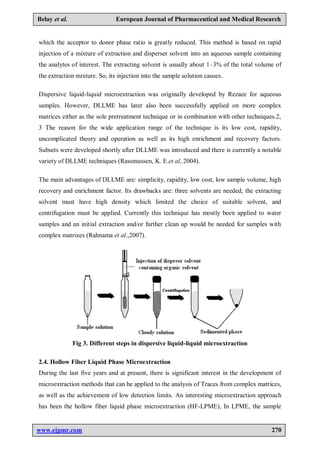
Fig 1. Operation of dynamic liquid-phase microextraction
2. Microextraction Methods
Recently, several microextraction methods were developed.[1–6] These new microextraction
methods can be classified as follow:
 Liquid-phase microextraction (LPME) or membrane-assisted solvent extraction (MASE),
 Hollow fiber liquid phase microextraction (HF-LPME),
 Single drop-phase microextraction (SDME),
 Liquid-liquid-liquid-microextraction (LLLME),
 Dispersive liquid-liquid microextraction (DLLME), and
 Ionic liquid dispersive liquid-liquid microextraction (IL-DLLM).
2.1. Liquid-Phase Microextraction
The liquid phase microextraction is one of the emerging techniques in the area of modern
sample preparation. This new methodology is simple, inexpensive, and provides both
preconcentration and sample clean-up because of membrane selectivity. The final method
provides a lower matrix effect in the analysis of trace compounds. In LPME or MASE, the
www.ejpmr.com 267
Belay et al. European Journal of Pharmaceutical and Medical Research
target analytes are extracted from an aqueous or aqueous biological donor phase, through a
thin layer of organic solvent immobilized within the pores of the wall of a porous membrane
bag, and into a volume of acceptor solutioninside the bag, ranging in the mL domain. The
small pore size prevents large molecules and particles present in the donor solution phase
from entering into the acceptor phase, providing effective matix=analyte separation
(Pedersen-Bjergaard, S. et al,2012).
2.2. Single-drop microextraction (SDME)
The LPME, in which the extraction medium is in the form of a single drop, is termed single
drop microextraction. In SDME a drop of immiscible extracting solvent (about 1–10µL) is
suspended from a syringe into the liquid or gaseous sample medium. After extracting for a set
period of times the organic drop is retracted back into the microsyringe and is injected to the
detector for quantification of analytes. During extraction, the target analytes are extracted
from aqueous sample into hanging drop based on passive diffusion, and extraction recoveries
are essentially determined by the organic solvent to water partition coefficients (Jeannot et
al., 1996).
This method provides a suitable strategy towards preconcentration and matrix separation
prior to the detection and is considered to be the basic liquid–liquid microextraction
technique. The reasons for popularity of this technique is that it is inexpensive, does not need
any complicated equipment, is easy to operate, is nearly solvent free and has the possibility of
in situ complexation or derivatization. Its drawbacks are the instability of the drop, limited
drop surface and consequently slow kinetics. From the introduction of SDME.( Ahmadi et
al.,2006) different mode of SDME such as direct immersion (DI)-SDME, headspace (HS)-
SDME, three phases SDME and continuous flow microextraction have been developed for
various analytical applications. SDME, using typically 1–3 µL of an organic solvent at the tip
of a microsyringe, has evolved from LPME. After extraction, the microdrop is retracted back
into the syringe and transferred for further analysis (Stalikas et al., 2006). In practice, two
main approaches can be used to perform SDME
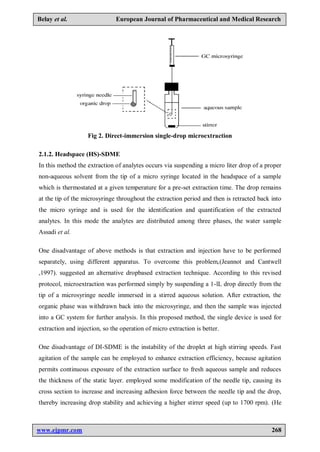
2.1.1. Direct immersion (DI)-SDME
In the early report on DI-SDME, a microdrop of a water immiscible organic solvent was
immersed into a large flowing aqueous drop or the drop was held at the end of a Teflon rod
and suspended in stirred aqueous sample solution to accomplish the extraction process
(Ahmadi et al .,2006)
www.ejpmr.com 268
Belay et al. European Journal of Pharmaceutical and Medical Research
Fig 2. Direct-immersion single-drop microextraction
2.1.2. Headspace (HS)-SDME
In this method the extraction of analytes occurs via suspending a micro liter drop of a proper
non-aqueous solvent from the tip of a micro syringe located in the headspace of a sample
which is thermostated at a given temperature for a pre-set extraction time. The drop remains
at the tip of the microsyringe throughout the extraction period and then is retracted back into
the micro syringe and is used for the identification and quantification of the extracted
analytes. In this mode the analytes are distributed among three phases, the water sample
Assadi et al.
One disadvantage of above methods is that extraction and injection have to be performed
separately, using different apparatus. To overcome this problem,(Jeannot and Cantwell
,1997). suggested an alternative dropbased extraction technique. According to this revised
protocol, microextraction was performed simply by suspending a 1-lL drop directly from the
tip of a microsyringe needle immersed in a stirred aqueous solution. After extraction, the
organic phase was withdrawn back into the microsyringe, and then the sample was injected
into a GC system for further analysis. In this proposed method, the single device is used for
extraction and injection, so the operation of micro extraction is better.
One disadvantage of DI-SDME is the instability of the droplet at high stirring speeds. Fast
agitation of the sample can be employed to enhance extraction efficiency, because agitation
permits continuous exposure of the extraction surface to fresh aqueous sample and reduces
the thickness of the static layer. employed some modification of the needle tip, causing its
cross section to increase and increasing adhesion force between the needle tip and the drop,
thereby increasing drop stability and achieving a higher stirrer speed (up to 1700 rpm). (He
www.ejpmr.com 269
Belay et al. European Journal of Pharmaceutical and Medical Research
and Lee, 1997). In dynamic LPME, extraction occurs by withdrawing aqueous sample into a
microsyringe already containing solvent. The aqueous phase is then pushed out of the syringe
and the process is repeated several times. At the end of this Procedure, the remaining solvent
is injected into the GC instrument for further analysis.
Extraction in dynamic LPME primarily occurs in the thin organic film formed on the inner
side of the microsyringe barrel and needle. Comparison of static LPME with dynamic LPME
for Some chlorinated benzenes showed that the two methods are comparable in terms of
organic solvent consumption (<2 µL). Static LPME provides better reproducibility but suffers
limited enrichment and longer extraction time (Liu eta la.,1996).
2.3. Dispersive Liquid–Liquid Microextraction
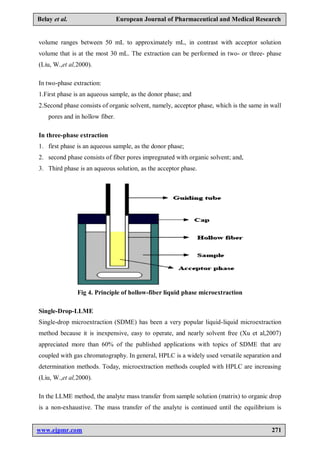
The dispersive liquid-liquid microextraction (DLLME) method involves two immiscible
solvent phases, one aqueous and one organic. Typically, the aqueous solution (matrix) is
mixed rapidly with acetone, which is named the disperser solvent, with a small volume of
tetrachlorethylene as the extraction solvent. Subsequently, under a gentle shaking, a cloudy
solution rapidly forms, consisting of minute droplets of terachlorethylene dispersed within the
aqueous solution that is collected at the bottom of the centrifuge tube after centrifugation.
The role of the dispersive solvent (acetone) is to ensure miscibility between the organic phase
(tetrachlorethylene) and the aqueous phase. This cloudy solution is formed, in fact, of fine
particles (droplets) of extraction solvent (tetrachlorethylene), which is dispersed into the
aqueous phase. Next, the mixture is centrifuged for 1.5 min and the organic extraction solvent
fine droplets are sedimented at the bottom of the centrifuge tube and removed with a
microsyringe.This method is less time consuming than solid-phase microextraction (SPME)
and LPME, which often can require 30 min or more. It is fast, inexpensive, and easy to
operate with a high enrichment factor and with low consumption of organic solvent. This new
method is in continuous progress, theoretical and experimental, as well (Psillakis, E.et
al,2003).
Dispersive liquid–liquid microextraction is based on a ternary solvent system similar to
homogeneous liquid–liquid extraction (HLLE) and cloud point extraction (CPE) ( Pena-
Pereira et al 2009]. The technique was initially used for the determination of organic
compounds such as Polycyclic aromatic hydrocarbons (PAH), organophosphorus pesticides
and chlorobenzenes (Rahnama Kozani et al., 2007). However, soon its application was
extended to inorganic determination. DLLME is a modified Solvent extraction method in
www.ejpmr.com 270
Belay et al. European Journal of Pharmaceutical and Medical Research
which the acceptor to donor phase ratio is greatly reduced. This method is based on rapid
injection of a mixture of extraction and disperser solvent into an aqueous sample containing
the analytes of interest. The extracting solvent is usually about 1–3% of the total volume of
the extraction mixture. So, its injection into the sample solution causes.
Dispersive liquid-liquid microextraction was originally developed by Rezaee for aqueous
samples. However, DLLME has later also been successfully applied on more complex
matrices either as the sole pretreatment technique or in combination with other techniques.2,
3 The reason for the wide application range of the technique is its low cost, rapidity,
uncomplicated theory and operation as well as its high enrichment and recovery factors.
Subsets were developed shortly after DLLME was introduced and there is currently a notable
variety of DLLME techniques (Rassmussen, K. E.et al, 2004).
The main advantages of DLLME are: simplicity, rapidity, low cost, low sample volume, high
recovery and enrichment factor. Its drawbacks are: three solvents are needed, the extracting
solvent must have high density which limited the choice of suitable solvent, and
centrifugation must be applied. Currently this technique has mostly been applied to water
samples and an initial extraction and/or further clean up would be needed for samples with
complex matrixes (Rahnama et al.,2007).
Fig 3. Different steps in dispersive liquid-liquid microextraction
2.4. Hollow Fiber Liquid Phase Microextraction
During the last five years and at present, there is significant interest in the development of
microextraction methods that can be applied to the analysis of Traces from complex matrices,
as well as the achievement of low detection limits. An interesting microextraction approach
has been the hollow fiber liquid phase microextraction (HF-LPME), In LPME, the sample
www.ejpmr.com 271
Belay et al. European Journal of Pharmaceutical and Medical Research
volume ranges between 50 mL to approximately mL, in contrast with acceptor solution
volume that is at the most 30 mL. The extraction can be performed in two- or three- phase
(Liu, W.,et al,2000).
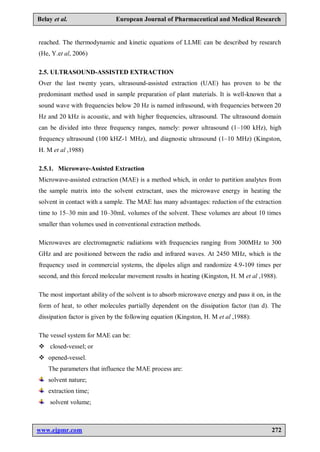
In two-phase extraction:
1.First phase is an aqueous sample, as the donor phase; and
2.Second phase consists of organic solvent, namely, acceptor phase, which is the same in wall
pores and in hollow fiber.
In three-phase extraction
1. first phase is an aqueous sample, as the donor phase;
2. second phase consists of fiber pores impregnated with organic solvent; and,
3. Third phase is an aqueous solution, as the acceptor phase.
Fig 4. Principle of hollow-fiber liquid phase microextraction
Single-Drop-LLME
Single-drop microextraction (SDME) has been a very popular liquid-liquid microextraction
method because it is inexpensive, easy to operate, and nearly solvent free (Xu et al,2007)
appreciated more than 60% of the published applications with topics of SDME that are
coupled with gas chromatography. In general, HPLC is a widely used versatile separation and
determination methods. Today, microextraction methods coupled with HPLC are increasing
(Liu, W.,et al,2000).
In the LLME method, the analyte mass transfer from sample solution (matrix) to organic drop
is a non-exhaustive. The mass transfer of the analyte is continued until the equilibrium is
www.ejpmr.com 272
Belay et al. European Journal of Pharmaceutical and Medical Research
reached. The thermodynamic and kinetic equations of LLME can be described by research
(He, Y.et al, 2006)
2.5. ULTRASOUND-ASSISTED EXTRACTION
Over the last twenty years, ultrasound-assisted extraction (UAE) has proven to be the
predominant method used in sample preparation of plant materials. It is well-known that a
sound wave with frequencies below 20 Hz is named infrasound, with frequencies between 20
Hz and 20 kHz is acoustic, and with higher frequencies, ultrasound. The ultrasound domain
can be divided into three frequency ranges, namely: power ultrasound (1–100 kHz), high
frequency ultrasound (100 kHZ-1 MHz), and diagnostic ultrasound (1–10 MHz) (Kingston,
H. M et al ,1988)
2.5.1. Microwave-Assisted Extraction
Microwave-assisted extraction (MAE) is a method which, in order to partition analytes from
the sample matrix into the solvent extractant, uses the microwave energy in heating the
solvent in contact with a sample. The MAE has many advantages: reduction of the extraction
time to 15–30 min and 10–30mL volumes of the solvent. These volumes are about 10 times
smaller than volumes used in conventional extraction methods.
Microwaves are electromagnetic radiations with frequencies ranging from 300MHz to 300
GHz and are positioned between the radio and infrared waves. At 2450 MHz, which is the
frequency used in commercial systems, the dipoles align and randomize 4.9-109 times per
second, and this forced molecular movement results in heating (Kingston, H. M et al ,1988).
The most important ability of the solvent is to absorb microwave energy and pass it on, in the
form of heat, to other molecules partially dependent on the dissipation factor (tan d). The
dissipation factor is given by the following equation (Kingston, H. M et al ,1988):
The vessel system for MAE can be:
 closed-vessel; or
 opened-vessel.
The parameters that influence the MAE process are:
solvent nature;
extraction time;
solvent volume;
www.ejpmr.com 273
Belay et al. European Journal of Pharmaceutical and Medical Research
temperature; and
matrix.
2.6. Solid Phase Extraction
Sample preparation of liquid samples is required for analyte pre-concentration, solvent
changing, or for removing interfering compounds. Classical liquid-liquid extraction can solve
many cases, with the requirement that the extraction solvent is immiscible with water. From
the beginning of 1970s, the liquid-liquid extraction was challenged by a new technique, solid
phase extraction (SPE). Since then, this technique has improved with new technological
designs such as solid phase microextraction (SPME) and stir bar sorbent extraction (SBSE),
and with new powerful adsorbents such as molecular imprinted polymers (MIP), mixed mode
adsorbents, and carbon nanotubes (CNTs) for preparation of complex samples(Chena, Y. et
al,2008).
The SPE classical hardware design consists of a polyethylene cartridge barrel filled with
different adsorbents in different quantities, immobilized between two frits. One of the ways
of improving the design is related to the cartridge shape, to make it more suitable for
automation. For small biological samples, in the design utilized small pipettes within which
the adsorbent were packed. To increase the speed of SPE for large liquid samples, different
types of disks were developed. Compared with cartridges, the disks show some advantages
such as higher flow rates and less possibility of channeling and plugging. There are two types
of disks: membrane-like and embedded. Adsorbents such as C18, styrenedivinylbenzene
copolymer, activated carbon, and graphitized carbon black (GCB) are available; C18 was the
most used material ( Iglesia, P. D. L et al,2008).
3. APPLICATIONS
Most work published on LPME to date has focused on fundamental aspects, but its
applicability in drug analysis and environmental monitoring has also been discussed in some
detail. Shows the types of analyte and sample studied, along with information on the type of
LPME system used. Among drug-analysis applications, there have been reports of extractions
from human plasma, whole blood, urine, saliva, and breast milk. For plasma samples, fibers
with immobilized organic solvents were directly compatible with the plasma without any
pretreatment (Pedersen and Rasmussen). The organic solvents were strongly held in the pores
of the fibers and were not leaking much into the plasma, although the latter potentially may
emulsify substantial amounts of organic solvents. During extraction, the plasma constituents
www.ejpmr.com 274
Belay et al. European Journal of Pharmaceutical and Medical Research
did not significantly degrade the performance of the fiber, and, to avoid long-term
degradation and carry-over effects, each fiber was used only once.
4. CONCLUSION
Different LPME methods, i.e. SDME, HF-LPME, DLLME and SFODME which have been
applied to extraction and separation of metal and organometallic ions are reviewed. All the
techniques are well established and can be successfully applied to the determination of
various metallic and organometallic ions at different concentration in different matrices,
however, there are only few examples in which these methods have been applied for the
extraction of the same ions in the same matrices and there is no study for the comparative or
validation purpose. Thus, direct comparison is very difficult as it is not possible to find
similar samples or analytes determined by these techniques which bring about rigorous
discussion. However, in general, it can be claimed that LPME can provide high extraction
recoveries, high enrichment, and excellent sample clean-up with short extraction time (1–45
min).
All LPME techniques can be utilized effectively for extraction of target analytes from various
sample solutions. The main advantages of the miniaturized systems are high-speed analysis
with high efficiency, environmentally- friendly operation due to minimal solvent
consumption, and highly selective analysis by systems designed for particular applications.
We have reviewed the current literature on LPME coupled with all analytical instruments.
The combination of microscale sample preparation and microscale liquid-phase separation
promises good applications in various fields of separation science in future, especially for
trace amounts of analytes in complex sample matrices. However, continuous innovations in
extraction materials and integrated analytical systems are also needed to find complete
solutions to many separation Problems.
6. REFERENCE
1. Psillakis, E.; Kalogerakis, N. Development in Liquid-Phase Microextraction. Trends
Anal. Chem, 2003; 22: 565–574.
2. Kraut-Vass, J. Thoma, Hollow fiber-based liquid-liquid-liquid microextraction combined
with high-performance liquid chromatography for the speciation of organomercury” J.
Chromatogr. A, 2007; 1173: 44-51. 233–240.
www.ejpmr.com 275
Belay et al. European Journal of Pharmaceutical and Medical Research
3. Pedersen-Bjergaard, S.; Rassmussen, K. E. Bioanalysis of Drugs by Liquid-Phase
Microextraction Coupled to Separation Techniques. J. Chromatrogr. B 2005; 817: 3–12.
4. Recent Progress of HPLC Sample Preparation 1247 Downloaded by [INASP - Ethiopia ]
at 05:40 28 May 2012
5. C.D. Stalikas, C.N. Konidari, (2006). Head-space liquid-phase microextraction
trihalomethanes in drinking water and gas chromatographic determination. Talanta, 2006;
62: 751-756.
6. C.L. Arthur, J. Pawliszyn, Anal. Chem. Solid-phase microextraction coupled with
microcolumn liquid chromatography for the analysis of amitriptyline in human urine,
1990; 62: 2145.
7. Iglesia, P. D. L.; Gimenez, G.; Diogene, J. Determination of Dissolved Domoic Acid in
Seawater with Reversed-Phase Extraction Disks and Rapid Resolution Liquid
Chromatography Tandem Mass Spectrometry with Head-Column Trapping. J.
Chromatogr, A 2008; 1215: 116–124.
8. F. Ahmadi, Y. Assadi, S.M.R.M. Hosseini, M. Rezaee, J. Practical Aspects of Solvent
Extraction, 2006: 307.
9. F. Pena-Pereira, I. Lavilla, C. Bendicho, Spectrochim. Headspace single-drop
microextraction coupled to microvolume UV-vis spectrophotometry for iodine
determination. 2009; 1–15.
10. H. Liu, P.K. Dasgupta. Liquid-phase microextraction approaches combined with atomic
detection: A critical review, 1996; 1817.
11. H. Lord, J. Pawliszyn, J. Chromatogr., A Headspace Hanging Drop Liquid Phase
Microextraction and Gas Chromatography-Mass Spectrometry for the Analysis of Flavors
from Clove, 2000; 902: 17.
12. He, Y. & Lee, H.K. Liquid-Phase Microextraction in a Single Drop of Organic Solvent by
Using a Conventional Microsyringe. Anal. Chem, 1997; 69: 4634-4640.
13. J. Pawliszyn, Solid Phase Microextraction Theory and Practice, Wiley–VCH, New York,
1997.
14. M.A. Jeannot, F.F. Cantwell, Anal. Chem. Headspace extraction of alcohols into a single
drop, 1997; 69: 235.
15. M.A. Jeannot, F.F. Cantwell, Anal. Chem. Single-drop microextraction followed by in-
drop derivatization for the analysis of organic compounds by gas chromatography, 1996;
68: 2236.
www.ejpmr.com 276
Belay et al. European Journal of Pharmaceutical and Medical Research
16. M.A. Jeannot, F.F. Cantwell, Anal. Chem. Solvent microextraction into a single drop.
Anal. Chem., 1996; 68: 2236-2240.
17. M.R.K. Zanjani, Y. Yamini, S. Shariati, (2007). A new liquid-phase microextraction
method based on solidification of floating organic drop p256.
18. Molnar-Perl, J. Chromatogr., A Application of gas chromatography in food analysis 891
(2000).
19. R. Rahnama Kozani, Y. Assadi, F. Shemirani, M.R. Millani Hosseini, M.R. Jamali,
Headspace single drop microextraction of methylcyclopentadienyl-manganese tricarbonyl
from water samples followed by gas chromatography-mass spectrometry. Talanta 72
(2007) 387–393.
20. S. Pedersen-Bjergaard, K.E. Rasmussen, (2008) . Application of dispersive liquid–liquid
microextraction for the determination of phenylurea herbicides in water samples by
HPLC-diode array detection. 2008; 132–142.
21. S. Pedersen-Bjergaard, K.E. Rasmussen, Anal. Chem. Extraction across supported liquid
membranes by use of electrical fields, 1999; 71: 2650.
22. S. Pedersen-Bjergaard, K.E. Rasmussen, Determination of phenylurea compounds in
drinking water by solid phase extraction and high performance liquid chromatography
with UV, Cincinnati, OH, 2000. (1999) 2650–2656.
23. Tor,A. and ME. Aydin, 2006. Application of liquid- phase microextraction to the
analaysis of trihalomethanes in water.Anal.chem.Acta, 2006; 575:138-143
24. Rassmussen, K. E.; Pedersen-Bjergaard, S. Development in Hollow Fiber-Based, Liquid-
Phase Microextraction. Trends Anal. Chem. 2004; 23: 1–10.
25. Kingston, H. M.; Jassie, L. B., Eds. Introduction to Microwave Sample Preparation, Am.
Chem. Soc.: Washington, DC, 1988.
26. Chena, Y.; Guo, Z.; Wang, X.; Qiu, C. Sample Preparation. J. Chromatogr. A 2008; 1184:
191–219.
27. He, Y.; Lee, H. K. Continuous Flow Microextraction Combined with HPLC for the
Analysis of Pesticides in Natural Waters. J. Chromatogr. A 2006; 1122: 7–12.
28. He, Y.; Lee, H. K. Liquid Phase Microextraction in a Single Drop of Organic Solvent.
Anal. Chem. 1997; 69: 4634–4640.
29. Liu, W.; Lee, H. K. Technical Notes. Continuous-Flow Microextraction Exceeding 1000-
Fold. Anal. Chem. 2000; 72: 4462–4467.
30. Xu, L.; Basheer, C.; Lee, H. K. Review. Development in Single-Drop Microextraction. J.
Chromatogr. A 2007; 1152: 184–192.

paper 1

  • 1.
    www.ejpmr.com 262 Belay etal. European Journal of Pharmaceutical and Medical Research ANALYTICAL MICROEXTRACTIONTECHNIQUES: A REVIEW Kassa Belay*1 and Zebib Abisa2 1 Department of Chemistry, College of Natural and computational sciences, Adigrat University 2 Department of Animal Science and technology, College of Agriculture, Adigrat University, Ethiopia. Article Received on 27/10/2014 Article Revised on 18/11/2014 Article Accepted on 09/12/2014 ABSTRACT In recent years, substantial research has been devoted to the development of new liquid-liquid microextraction methods for sample preparation. These microextration methods were performed by several techniques such as: liquid-phase microextraction (LPME) or membrane- assisted solvent extraction (MASE), hollow fiber liquid phase microextraction (HF-LPME), single drop-phase microextraction (SDME), liquid-liquid-liquid-microextraction (LLLME), dispersive liquid-liquid microextraction (DLLME), and ionic liquid dispersive liquid-liquid microextraction (IL-DLLM). For performance extraction, increasing the ultrasound field utilized techniques such as: ultrasound-asisted liquid phase microextraction (ULPME), ultrasound-asisted ionic liquid dispersive liquid-phase microextraction (UILDLPM), ultrasound-asisted dispersive liquid-liquid microextraction (UDLLME), and ultrasound- asisted headspace liquid-phase microextraction (UHS-LPME) for extraction from a complex matrix. Also, microwave field was used for solid sample preparation improvement. Other techniques such as solid phase extraction (SPE), solid phase microextraction (SPME,) and stir bar solvent extraction (SBSE) were frequently used in liquid sample preparation. KEYWORDS: liquid-liquid extraction, microwave assisted extraction, sample preparation, solid phase extraction, ultrasound assisted extraction. Review Article ISSN 3294-3211 EJPMR EUROPEAN JOURNAL OF PHARMACEUTICAL AND MEDICAL RESEARCH www.ejpmr.com ejpmr, 2014,2(1),262-276 *Correspondence for Author Kassa Belay Department of Chemistry, College of Natural and computational sciences, Adigrat University
  • 2.
    www.ejpmr.com 263 Belay etal. European Journal of Pharmaceutical and Medical Research 1. INTRODUCTION By definition, ‘‘microextraction’’ is an extraction technique where the volume of the extracting phase is very small in relation to the volume of the sample. Microextraction is not intended to be an exhaustive extraction procedure, so only a fraction of the initial analyte is likely to be extracted for subsequent analysis, in contrast with classical liquid-liquid extraction (LLE) and the widely applicable solid-phase extraction (SPE), which are exhaustive processes. In microextraction, the extraction yield hinges on the partition coefficient of analyte(s) between the bulk (sample or donor) phase and the deprived (extractant or acceptor) phase. Since partitioning does not depend on analyte concentration, quantification of sample concentration may be done from the absolute amount extracted. Besides microextraction methods, issues that need to be addressed for a reliable chemical analysis comprise matrix effects, clean-up steps required to remove them and limitations of selectivity and sensitivity of some analytical techniques. Such demands spurred the development of derivatization and made it into a valuable tool, preparatory to instrumental analysis (Tor and Aydin,2006). Liquid–liquid extraction (LLE) and solid-phase extraction (SPE) methods are widely used for separating drugs from biological samples. However, these techniques have some fundamental limitations. For example, LLE can produce emulsions, and large amounts of organic solvents are often needed to extract the drugs. SPE techniques often introduce artifacts in the sample extracts and require large amounts of organic solvents (Pawliszyn, 1997). The entire analysis of SPE can be lengthy, with a series of stages including washing, conditioning, eluting and drying of the process. Furthermore, SPE can also be expensive because the cartridges are normally disposed after one extraction. LLE and SPE can be cumbersome and can cause harm to the human body and the surrounding environment. Therefore, developing a relatively simple, fast and solvent-free extraction method is a relevant task (Arthur, et al., 1990) Depending on the kind of the extracting phase, microextraction techniques may be divided into three broad groups: I. microextraction based on sorbent enrichment; II. Membrane microextraction; and, III. liquid-phase microextraction (LPME).
  • 3.
    www.ejpmr.com 264 Belay etal. European Journal of Pharmaceutical and Medical Research In recent years, the development of fast, precise, accurate and sensitive methodologies has become an important issue. However, despite the advances in the development of highly efficient analytical instrumentation for the end-point determination of analytes in biological and environmental samples and pharmaceutical products, sample pre-treatment is usually necessary in order to extract, to isolate and to concentrate the analytes of interest from complex matrices because most of the analytical instruments cannot directly handle the matrix. A sample preparation step is therefore commonly required. Sample preparation can include cleanup procedures for very complex (dirty) samples. This step must also bring the analytes to a suitable concentration level ( Arthur, et al 1990). However, conventional sample-preparation techniques [i.e. liquid-liquid extraction (LLE) and solid-phase extraction (SPE)] have involved drawbacks (e.g., complicated, time-consuming procedures, large amounts of sample and organic solvents and difficulty in automation). Using harmful chemicals and large amounts of solvents causes environmental pollution, health hazards to laboratory personnel and extra operational costs for waste treatment. Ideally, sample preparation techniques should be fast, easy to use, inexpensive and compatible with a range of analytical instruments, so the current trend is towards simplification and miniaturization of the sample-preparation steps and decrease in the quantities of organic solvents used (Arthur and Pawliszyn,1990) introduced a new method termed solid phase microextraction (SPME). Polymer- coated fiber, on which the investigated compound adsorbs, is placed in the sample or its headspace. SPME has several important advantages compared to the traditional sample preparation techniques it is a rapid, simple, solvent free and sensitive method for the extraction of analyte;  it is a simple, effective adsorption/desorption technique;  it is compatible with analyte separation and detection by high-performance liquid chromatography with ultraviolet detection (HPLC-UV);  it provides linear results for a wide range of concentrations of analytes;  it has a small size, which is convenient for designing portable devices for field sampling;  It gives highly consistent, quantifiable results from very low concentrations of analytes. Although the use of SPME fibers is increasingly popular, they have significant drawbacks, e.g: i. Their relatively low recommended operating temperature (generally in the range 240– 2800 C)
  • 4.
    www.ejpmr.com 265 Belay etal. European Journal of Pharmaceutical and Medical Research ii. Their instability and swelling in organic solvents (greatly restricting their use with HPLC) iii. Fiber breakage iv. Stripping of coatings; and v. The bending of needles and their expense ( Pawliszyn ,1997). Some disadvantages of LPME using HFMs are as follows:  existence of a membrane barrier between the source (sample) phase and receiving (acceptor) phase reduces extraction rate and increases extraction time;  in two-phase LPME, excess solvent is needed for elution of analytes from the lumen and pores of fiber, and this process is also time consuming;  creation of air bubbles on the surface of the HF reduces the transport rate and decreases the reproducibility of the extraction; and, in real samples (Zanjani et al. .2007) Classical liquid-liquid extraction (LLE) is one of the most commonly used sample preparation techniques for standard analytical methods. LLE is popular because the technique is simple, provides a high degree of sample clean-up, and extraction selectivity is easily obtained by the use of an adequate organic solvent. Despite its popularity, it is considered a time-consuming technique and a rather hazardous one, due to the use of large amounts of toxic organic solvents. Furthermore, emulsion formation obstructs automation of this technique. The development of faster, simpler, inexpensive, and more environmentally friendly sample preparation techniques is an important purpose in chromatographic analysis. The present review is focused on recent approaches regarding sample preparation; liquid- liquid extraction (LLE), ultrasound assisted extraction (UAE), microwave assisted extraction (MAE), and solid phase extraction (SPE). To overcome the above problems, other LPME methods (e.g., DLLME) have been developed. Compared to other techniques, DLLME is characterized by very short extraction times, mainly because of the large surface area between the solvent and the aqueous phase. Other advantages are simplicity of operation, low cost, and high recovery and enrichment factors, offering potential for ultra-trace analysis (Zanjani et al.,2007). In order to overcome these problems, simple, inexpensive liquid-phase microextraction (LPME) was introduced recently. LPME is a solvent-minimized sample pretreatment procedure of LLE, in which only several lL of solvent are required to concentrate analytes
  • 5.
    www.ejpmr.com 266 Belay etal. European Journal of Pharmaceutical and Medical Research from various samples rather than hundreds of mL needed in traditional LLE. It is compatible with capillary gas Chromatography (GC), capillary electrophoresis (CE) and HPLC. In LPME, extraction normally takes place into a small amount of a water-immiscible solvent (acceptor phase) from an aqueous sample containing analytes (donor phase). It can be divided into three main categories: (Lord et al.,2000). Fig 1. Operation of dynamic liquid-phase microextraction 2. Microextraction Methods Recently, several microextraction methods were developed.[1–6] These new microextraction methods can be classified as follow:  Liquid-phase microextraction (LPME) or membrane-assisted solvent extraction (MASE),  Hollow fiber liquid phase microextraction (HF-LPME),  Single drop-phase microextraction (SDME),  Liquid-liquid-liquid-microextraction (LLLME),  Dispersive liquid-liquid microextraction (DLLME), and  Ionic liquid dispersive liquid-liquid microextraction (IL-DLLM). 2.1. Liquid-Phase Microextraction The liquid phase microextraction is one of the emerging techniques in the area of modern sample preparation. This new methodology is simple, inexpensive, and provides both preconcentration and sample clean-up because of membrane selectivity. The final method provides a lower matrix effect in the analysis of trace compounds. In LPME or MASE, the
  • 6.
    www.ejpmr.com 267 Belay etal. European Journal of Pharmaceutical and Medical Research target analytes are extracted from an aqueous or aqueous biological donor phase, through a thin layer of organic solvent immobilized within the pores of the wall of a porous membrane bag, and into a volume of acceptor solutioninside the bag, ranging in the mL domain. The small pore size prevents large molecules and particles present in the donor solution phase from entering into the acceptor phase, providing effective matix=analyte separation (Pedersen-Bjergaard, S. et al,2012). 2.2. Single-drop microextraction (SDME) The LPME, in which the extraction medium is in the form of a single drop, is termed single drop microextraction. In SDME a drop of immiscible extracting solvent (about 1–10µL) is suspended from a syringe into the liquid or gaseous sample medium. After extracting for a set period of times the organic drop is retracted back into the microsyringe and is injected to the detector for quantification of analytes. During extraction, the target analytes are extracted from aqueous sample into hanging drop based on passive diffusion, and extraction recoveries are essentially determined by the organic solvent to water partition coefficients (Jeannot et al., 1996). This method provides a suitable strategy towards preconcentration and matrix separation prior to the detection and is considered to be the basic liquid–liquid microextraction technique. The reasons for popularity of this technique is that it is inexpensive, does not need any complicated equipment, is easy to operate, is nearly solvent free and has the possibility of in situ complexation or derivatization. Its drawbacks are the instability of the drop, limited drop surface and consequently slow kinetics. From the introduction of SDME.( Ahmadi et al.,2006) different mode of SDME such as direct immersion (DI)-SDME, headspace (HS)- SDME, three phases SDME and continuous flow microextraction have been developed for various analytical applications. SDME, using typically 1–3 µL of an organic solvent at the tip of a microsyringe, has evolved from LPME. After extraction, the microdrop is retracted back into the syringe and transferred for further analysis (Stalikas et al., 2006). In practice, two main approaches can be used to perform SDME 2.1.1. Direct immersion (DI)-SDME In the early report on DI-SDME, a microdrop of a water immiscible organic solvent was immersed into a large flowing aqueous drop or the drop was held at the end of a Teflon rod and suspended in stirred aqueous sample solution to accomplish the extraction process (Ahmadi et al .,2006)
  • 7.
    www.ejpmr.com 268 Belay etal. European Journal of Pharmaceutical and Medical Research Fig 2. Direct-immersion single-drop microextraction 2.1.2. Headspace (HS)-SDME In this method the extraction of analytes occurs via suspending a micro liter drop of a proper non-aqueous solvent from the tip of a micro syringe located in the headspace of a sample which is thermostated at a given temperature for a pre-set extraction time. The drop remains at the tip of the microsyringe throughout the extraction period and then is retracted back into the micro syringe and is used for the identification and quantification of the extracted analytes. In this mode the analytes are distributed among three phases, the water sample Assadi et al. One disadvantage of above methods is that extraction and injection have to be performed separately, using different apparatus. To overcome this problem,(Jeannot and Cantwell ,1997). suggested an alternative dropbased extraction technique. According to this revised protocol, microextraction was performed simply by suspending a 1-lL drop directly from the tip of a microsyringe needle immersed in a stirred aqueous solution. After extraction, the organic phase was withdrawn back into the microsyringe, and then the sample was injected into a GC system for further analysis. In this proposed method, the single device is used for extraction and injection, so the operation of micro extraction is better. One disadvantage of DI-SDME is the instability of the droplet at high stirring speeds. Fast agitation of the sample can be employed to enhance extraction efficiency, because agitation permits continuous exposure of the extraction surface to fresh aqueous sample and reduces the thickness of the static layer. employed some modification of the needle tip, causing its cross section to increase and increasing adhesion force between the needle tip and the drop, thereby increasing drop stability and achieving a higher stirrer speed (up to 1700 rpm). (He
  • 8.
    www.ejpmr.com 269 Belay etal. European Journal of Pharmaceutical and Medical Research and Lee, 1997). In dynamic LPME, extraction occurs by withdrawing aqueous sample into a microsyringe already containing solvent. The aqueous phase is then pushed out of the syringe and the process is repeated several times. At the end of this Procedure, the remaining solvent is injected into the GC instrument for further analysis. Extraction in dynamic LPME primarily occurs in the thin organic film formed on the inner side of the microsyringe barrel and needle. Comparison of static LPME with dynamic LPME for Some chlorinated benzenes showed that the two methods are comparable in terms of organic solvent consumption (<2 µL). Static LPME provides better reproducibility but suffers limited enrichment and longer extraction time (Liu eta la.,1996). 2.3. Dispersive Liquid–Liquid Microextraction The dispersive liquid-liquid microextraction (DLLME) method involves two immiscible solvent phases, one aqueous and one organic. Typically, the aqueous solution (matrix) is mixed rapidly with acetone, which is named the disperser solvent, with a small volume of tetrachlorethylene as the extraction solvent. Subsequently, under a gentle shaking, a cloudy solution rapidly forms, consisting of minute droplets of terachlorethylene dispersed within the aqueous solution that is collected at the bottom of the centrifuge tube after centrifugation. The role of the dispersive solvent (acetone) is to ensure miscibility between the organic phase (tetrachlorethylene) and the aqueous phase. This cloudy solution is formed, in fact, of fine particles (droplets) of extraction solvent (tetrachlorethylene), which is dispersed into the aqueous phase. Next, the mixture is centrifuged for 1.5 min and the organic extraction solvent fine droplets are sedimented at the bottom of the centrifuge tube and removed with a microsyringe.This method is less time consuming than solid-phase microextraction (SPME) and LPME, which often can require 30 min or more. It is fast, inexpensive, and easy to operate with a high enrichment factor and with low consumption of organic solvent. This new method is in continuous progress, theoretical and experimental, as well (Psillakis, E.et al,2003). Dispersive liquid–liquid microextraction is based on a ternary solvent system similar to homogeneous liquid–liquid extraction (HLLE) and cloud point extraction (CPE) ( Pena- Pereira et al 2009]. The technique was initially used for the determination of organic compounds such as Polycyclic aromatic hydrocarbons (PAH), organophosphorus pesticides and chlorobenzenes (Rahnama Kozani et al., 2007). However, soon its application was extended to inorganic determination. DLLME is a modified Solvent extraction method in
  • 9.
    www.ejpmr.com 270 Belay etal. European Journal of Pharmaceutical and Medical Research which the acceptor to donor phase ratio is greatly reduced. This method is based on rapid injection of a mixture of extraction and disperser solvent into an aqueous sample containing the analytes of interest. The extracting solvent is usually about 1–3% of the total volume of the extraction mixture. So, its injection into the sample solution causes. Dispersive liquid-liquid microextraction was originally developed by Rezaee for aqueous samples. However, DLLME has later also been successfully applied on more complex matrices either as the sole pretreatment technique or in combination with other techniques.2, 3 The reason for the wide application range of the technique is its low cost, rapidity, uncomplicated theory and operation as well as its high enrichment and recovery factors. Subsets were developed shortly after DLLME was introduced and there is currently a notable variety of DLLME techniques (Rassmussen, K. E.et al, 2004). The main advantages of DLLME are: simplicity, rapidity, low cost, low sample volume, high recovery and enrichment factor. Its drawbacks are: three solvents are needed, the extracting solvent must have high density which limited the choice of suitable solvent, and centrifugation must be applied. Currently this technique has mostly been applied to water samples and an initial extraction and/or further clean up would be needed for samples with complex matrixes (Rahnama et al.,2007). Fig 3. Different steps in dispersive liquid-liquid microextraction 2.4. Hollow Fiber Liquid Phase Microextraction During the last five years and at present, there is significant interest in the development of microextraction methods that can be applied to the analysis of Traces from complex matrices, as well as the achievement of low detection limits. An interesting microextraction approach has been the hollow fiber liquid phase microextraction (HF-LPME), In LPME, the sample
  • 10.
    www.ejpmr.com 271 Belay etal. European Journal of Pharmaceutical and Medical Research volume ranges between 50 mL to approximately mL, in contrast with acceptor solution volume that is at the most 30 mL. The extraction can be performed in two- or three- phase (Liu, W.,et al,2000). In two-phase extraction: 1.First phase is an aqueous sample, as the donor phase; and 2.Second phase consists of organic solvent, namely, acceptor phase, which is the same in wall pores and in hollow fiber. In three-phase extraction 1. first phase is an aqueous sample, as the donor phase; 2. second phase consists of fiber pores impregnated with organic solvent; and, 3. Third phase is an aqueous solution, as the acceptor phase. Fig 4. Principle of hollow-fiber liquid phase microextraction Single-Drop-LLME Single-drop microextraction (SDME) has been a very popular liquid-liquid microextraction method because it is inexpensive, easy to operate, and nearly solvent free (Xu et al,2007) appreciated more than 60% of the published applications with topics of SDME that are coupled with gas chromatography. In general, HPLC is a widely used versatile separation and determination methods. Today, microextraction methods coupled with HPLC are increasing (Liu, W.,et al,2000). In the LLME method, the analyte mass transfer from sample solution (matrix) to organic drop is a non-exhaustive. The mass transfer of the analyte is continued until the equilibrium is
  • 11.
    www.ejpmr.com 272 Belay etal. European Journal of Pharmaceutical and Medical Research reached. The thermodynamic and kinetic equations of LLME can be described by research (He, Y.et al, 2006) 2.5. ULTRASOUND-ASSISTED EXTRACTION Over the last twenty years, ultrasound-assisted extraction (UAE) has proven to be the predominant method used in sample preparation of plant materials. It is well-known that a sound wave with frequencies below 20 Hz is named infrasound, with frequencies between 20 Hz and 20 kHz is acoustic, and with higher frequencies, ultrasound. The ultrasound domain can be divided into three frequency ranges, namely: power ultrasound (1–100 kHz), high frequency ultrasound (100 kHZ-1 MHz), and diagnostic ultrasound (1–10 MHz) (Kingston, H. M et al ,1988) 2.5.1. Microwave-Assisted Extraction Microwave-assisted extraction (MAE) is a method which, in order to partition analytes from the sample matrix into the solvent extractant, uses the microwave energy in heating the solvent in contact with a sample. The MAE has many advantages: reduction of the extraction time to 15–30 min and 10–30mL volumes of the solvent. These volumes are about 10 times smaller than volumes used in conventional extraction methods. Microwaves are electromagnetic radiations with frequencies ranging from 300MHz to 300 GHz and are positioned between the radio and infrared waves. At 2450 MHz, which is the frequency used in commercial systems, the dipoles align and randomize 4.9-109 times per second, and this forced molecular movement results in heating (Kingston, H. M et al ,1988). The most important ability of the solvent is to absorb microwave energy and pass it on, in the form of heat, to other molecules partially dependent on the dissipation factor (tan d). The dissipation factor is given by the following equation (Kingston, H. M et al ,1988): The vessel system for MAE can be:  closed-vessel; or  opened-vessel. The parameters that influence the MAE process are: solvent nature; extraction time; solvent volume;
  • 12.
    www.ejpmr.com 273 Belay etal. European Journal of Pharmaceutical and Medical Research temperature; and matrix. 2.6. Solid Phase Extraction Sample preparation of liquid samples is required for analyte pre-concentration, solvent changing, or for removing interfering compounds. Classical liquid-liquid extraction can solve many cases, with the requirement that the extraction solvent is immiscible with water. From the beginning of 1970s, the liquid-liquid extraction was challenged by a new technique, solid phase extraction (SPE). Since then, this technique has improved with new technological designs such as solid phase microextraction (SPME) and stir bar sorbent extraction (SBSE), and with new powerful adsorbents such as molecular imprinted polymers (MIP), mixed mode adsorbents, and carbon nanotubes (CNTs) for preparation of complex samples(Chena, Y. et al,2008). The SPE classical hardware design consists of a polyethylene cartridge barrel filled with different adsorbents in different quantities, immobilized between two frits. One of the ways of improving the design is related to the cartridge shape, to make it more suitable for automation. For small biological samples, in the design utilized small pipettes within which the adsorbent were packed. To increase the speed of SPE for large liquid samples, different types of disks were developed. Compared with cartridges, the disks show some advantages such as higher flow rates and less possibility of channeling and plugging. There are two types of disks: membrane-like and embedded. Adsorbents such as C18, styrenedivinylbenzene copolymer, activated carbon, and graphitized carbon black (GCB) are available; C18 was the most used material ( Iglesia, P. D. L et al,2008). 3. APPLICATIONS Most work published on LPME to date has focused on fundamental aspects, but its applicability in drug analysis and environmental monitoring has also been discussed in some detail. Shows the types of analyte and sample studied, along with information on the type of LPME system used. Among drug-analysis applications, there have been reports of extractions from human plasma, whole blood, urine, saliva, and breast milk. For plasma samples, fibers with immobilized organic solvents were directly compatible with the plasma without any pretreatment (Pedersen and Rasmussen). The organic solvents were strongly held in the pores of the fibers and were not leaking much into the plasma, although the latter potentially may emulsify substantial amounts of organic solvents. During extraction, the plasma constituents
  • 13.
    www.ejpmr.com 274 Belay etal. European Journal of Pharmaceutical and Medical Research did not significantly degrade the performance of the fiber, and, to avoid long-term degradation and carry-over effects, each fiber was used only once. 4. CONCLUSION Different LPME methods, i.e. SDME, HF-LPME, DLLME and SFODME which have been applied to extraction and separation of metal and organometallic ions are reviewed. All the techniques are well established and can be successfully applied to the determination of various metallic and organometallic ions at different concentration in different matrices, however, there are only few examples in which these methods have been applied for the extraction of the same ions in the same matrices and there is no study for the comparative or validation purpose. Thus, direct comparison is very difficult as it is not possible to find similar samples or analytes determined by these techniques which bring about rigorous discussion. However, in general, it can be claimed that LPME can provide high extraction recoveries, high enrichment, and excellent sample clean-up with short extraction time (1–45 min). All LPME techniques can be utilized effectively for extraction of target analytes from various sample solutions. The main advantages of the miniaturized systems are high-speed analysis with high efficiency, environmentally- friendly operation due to minimal solvent consumption, and highly selective analysis by systems designed for particular applications. We have reviewed the current literature on LPME coupled with all analytical instruments. The combination of microscale sample preparation and microscale liquid-phase separation promises good applications in various fields of separation science in future, especially for trace amounts of analytes in complex sample matrices. However, continuous innovations in extraction materials and integrated analytical systems are also needed to find complete solutions to many separation Problems. 6. REFERENCE 1. Psillakis, E.; Kalogerakis, N. Development in Liquid-Phase Microextraction. Trends Anal. Chem, 2003; 22: 565–574. 2. Kraut-Vass, J. Thoma, Hollow fiber-based liquid-liquid-liquid microextraction combined with high-performance liquid chromatography for the speciation of organomercury” J. Chromatogr. A, 2007; 1173: 44-51. 233–240.
  • 14.
    www.ejpmr.com 275 Belay etal. European Journal of Pharmaceutical and Medical Research 3. Pedersen-Bjergaard, S.; Rassmussen, K. E. Bioanalysis of Drugs by Liquid-Phase Microextraction Coupled to Separation Techniques. J. Chromatrogr. B 2005; 817: 3–12. 4. Recent Progress of HPLC Sample Preparation 1247 Downloaded by [INASP - Ethiopia ] at 05:40 28 May 2012 5. C.D. Stalikas, C.N. Konidari, (2006). Head-space liquid-phase microextraction trihalomethanes in drinking water and gas chromatographic determination. Talanta, 2006; 62: 751-756. 6. C.L. Arthur, J. Pawliszyn, Anal. Chem. Solid-phase microextraction coupled with microcolumn liquid chromatography for the analysis of amitriptyline in human urine, 1990; 62: 2145. 7. Iglesia, P. D. L.; Gimenez, G.; Diogene, J. Determination of Dissolved Domoic Acid in Seawater with Reversed-Phase Extraction Disks and Rapid Resolution Liquid Chromatography Tandem Mass Spectrometry with Head-Column Trapping. J. Chromatogr, A 2008; 1215: 116–124. 8. F. Ahmadi, Y. Assadi, S.M.R.M. Hosseini, M. Rezaee, J. Practical Aspects of Solvent Extraction, 2006: 307. 9. F. Pena-Pereira, I. Lavilla, C. Bendicho, Spectrochim. Headspace single-drop microextraction coupled to microvolume UV-vis spectrophotometry for iodine determination. 2009; 1–15. 10. H. Liu, P.K. Dasgupta. Liquid-phase microextraction approaches combined with atomic detection: A critical review, 1996; 1817. 11. H. Lord, J. Pawliszyn, J. Chromatogr., A Headspace Hanging Drop Liquid Phase Microextraction and Gas Chromatography-Mass Spectrometry for the Analysis of Flavors from Clove, 2000; 902: 17. 12. He, Y. & Lee, H.K. Liquid-Phase Microextraction in a Single Drop of Organic Solvent by Using a Conventional Microsyringe. Anal. Chem, 1997; 69: 4634-4640. 13. J. Pawliszyn, Solid Phase Microextraction Theory and Practice, Wiley–VCH, New York, 1997. 14. M.A. Jeannot, F.F. Cantwell, Anal. Chem. Headspace extraction of alcohols into a single drop, 1997; 69: 235. 15. M.A. Jeannot, F.F. Cantwell, Anal. Chem. Single-drop microextraction followed by in- drop derivatization for the analysis of organic compounds by gas chromatography, 1996; 68: 2236.
  • 15.
    www.ejpmr.com 276 Belay etal. European Journal of Pharmaceutical and Medical Research 16. M.A. Jeannot, F.F. Cantwell, Anal. Chem. Solvent microextraction into a single drop. Anal. Chem., 1996; 68: 2236-2240. 17. M.R.K. Zanjani, Y. Yamini, S. Shariati, (2007). A new liquid-phase microextraction method based on solidification of floating organic drop p256. 18. Molnar-Perl, J. Chromatogr., A Application of gas chromatography in food analysis 891 (2000). 19. R. Rahnama Kozani, Y. Assadi, F. Shemirani, M.R. Millani Hosseini, M.R. Jamali, Headspace single drop microextraction of methylcyclopentadienyl-manganese tricarbonyl from water samples followed by gas chromatography-mass spectrometry. Talanta 72 (2007) 387–393. 20. S. Pedersen-Bjergaard, K.E. Rasmussen, (2008) . Application of dispersive liquid–liquid microextraction for the determination of phenylurea herbicides in water samples by HPLC-diode array detection. 2008; 132–142. 21. S. Pedersen-Bjergaard, K.E. Rasmussen, Anal. Chem. Extraction across supported liquid membranes by use of electrical fields, 1999; 71: 2650. 22. S. Pedersen-Bjergaard, K.E. Rasmussen, Determination of phenylurea compounds in drinking water by solid phase extraction and high performance liquid chromatography with UV, Cincinnati, OH, 2000. (1999) 2650–2656. 23. Tor,A. and ME. Aydin, 2006. Application of liquid- phase microextraction to the analaysis of trihalomethanes in water.Anal.chem.Acta, 2006; 575:138-143 24. Rassmussen, K. E.; Pedersen-Bjergaard, S. Development in Hollow Fiber-Based, Liquid- Phase Microextraction. Trends Anal. Chem. 2004; 23: 1–10. 25. Kingston, H. M.; Jassie, L. B., Eds. Introduction to Microwave Sample Preparation, Am. Chem. Soc.: Washington, DC, 1988. 26. Chena, Y.; Guo, Z.; Wang, X.; Qiu, C. Sample Preparation. J. Chromatogr. A 2008; 1184: 191–219. 27. He, Y.; Lee, H. K. Continuous Flow Microextraction Combined with HPLC for the Analysis of Pesticides in Natural Waters. J. Chromatogr. A 2006; 1122: 7–12. 28. He, Y.; Lee, H. K. Liquid Phase Microextraction in a Single Drop of Organic Solvent. Anal. Chem. 1997; 69: 4634–4640. 29. Liu, W.; Lee, H. K. Technical Notes. Continuous-Flow Microextraction Exceeding 1000- Fold. Anal. Chem. 2000; 72: 4462–4467. 30. Xu, L.; Basheer, C.; Lee, H. K. Review. Development in Single-Drop Microextraction. J. Chromatogr. A 2007; 1152: 184–192.