ADVANCED MEDICAL
INSTRUMENTATION
X-RAY PHOTOELECTRON
SPECTROSCOPY
BY – UZMA S. MHATE
BBE - 15007
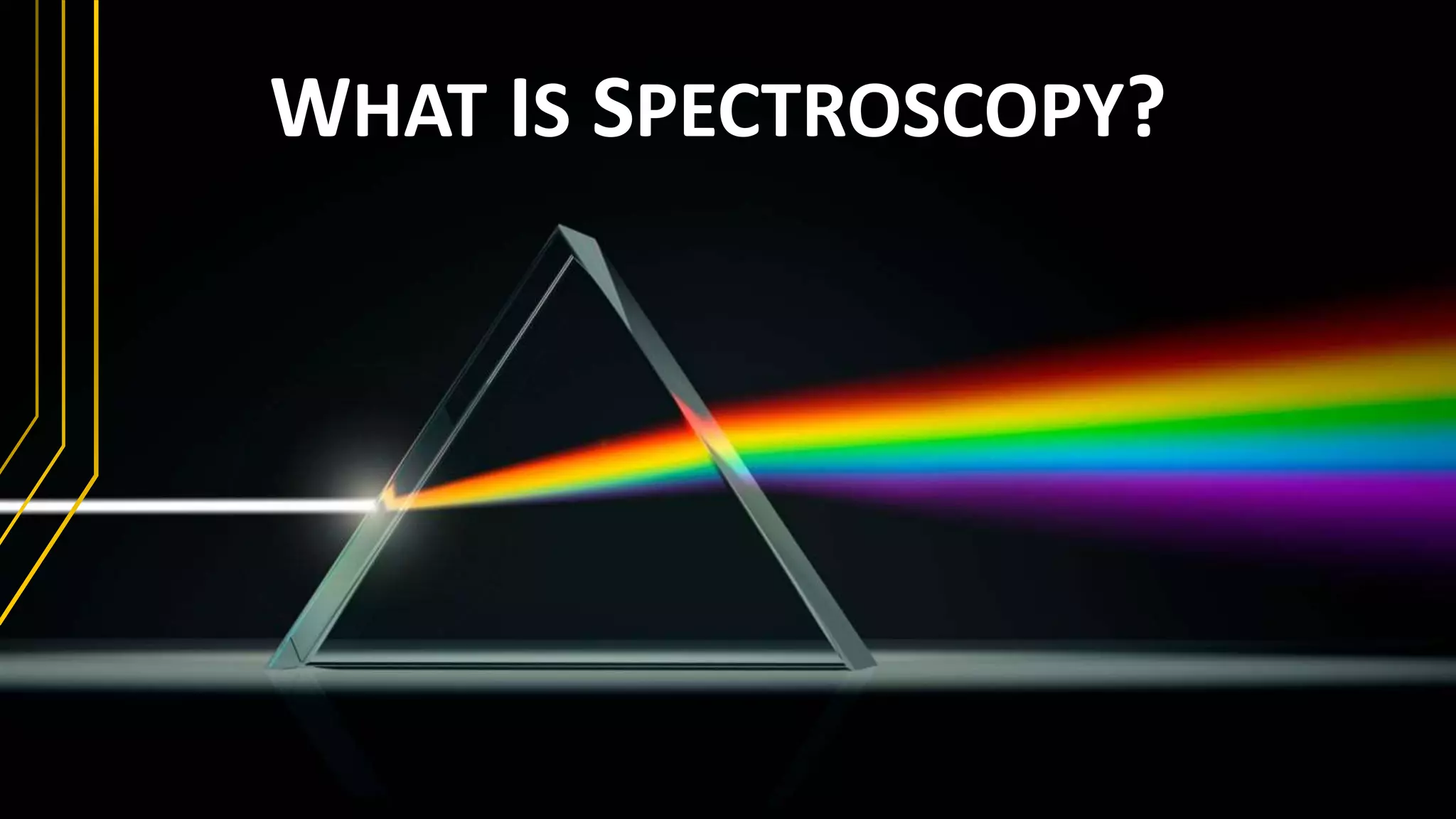
WHAT IS SPECTROSCOPY?
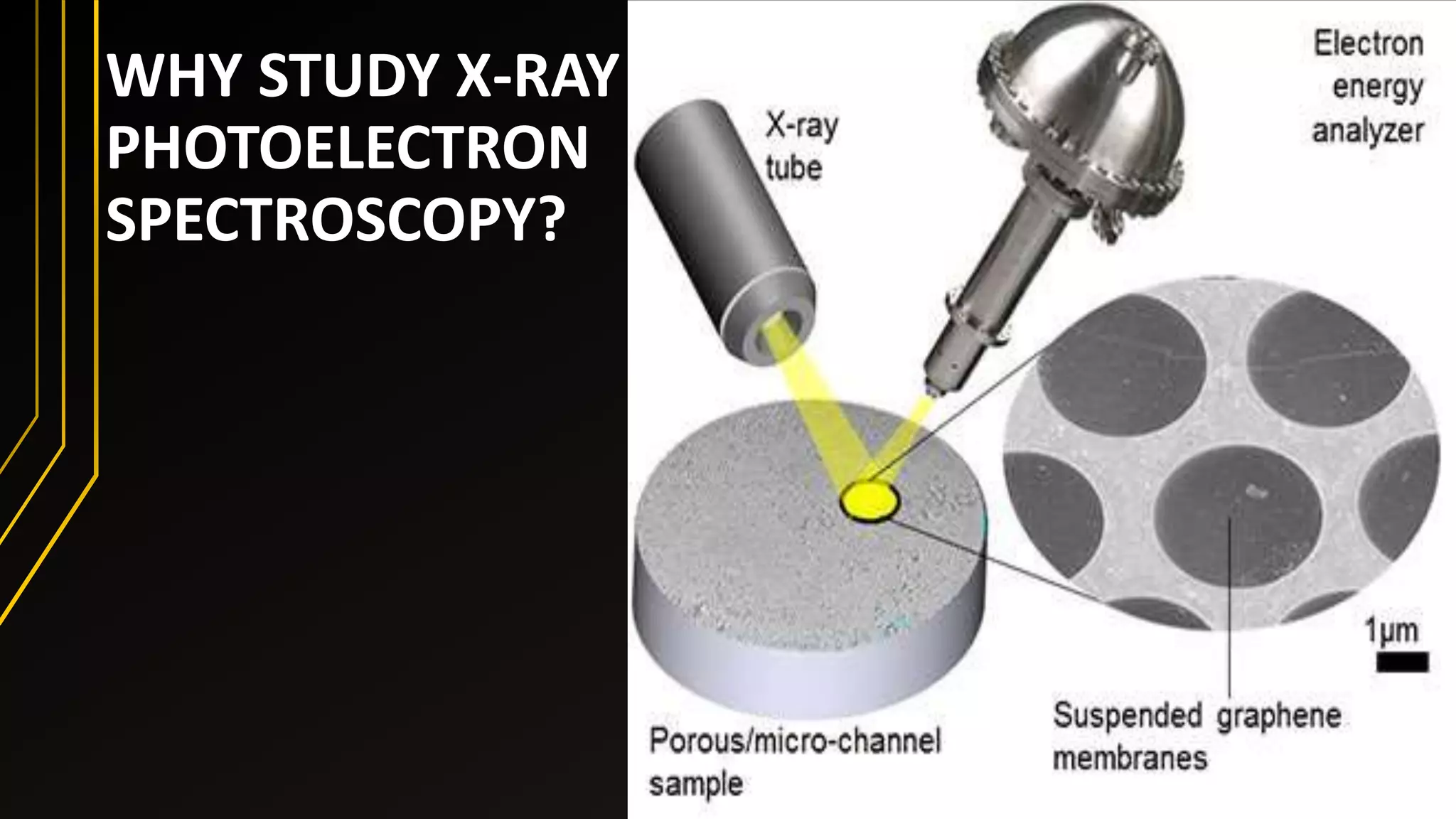
WHY STUDY X-RAY
PHOTOELECTRON
SPECTROSCOPY?
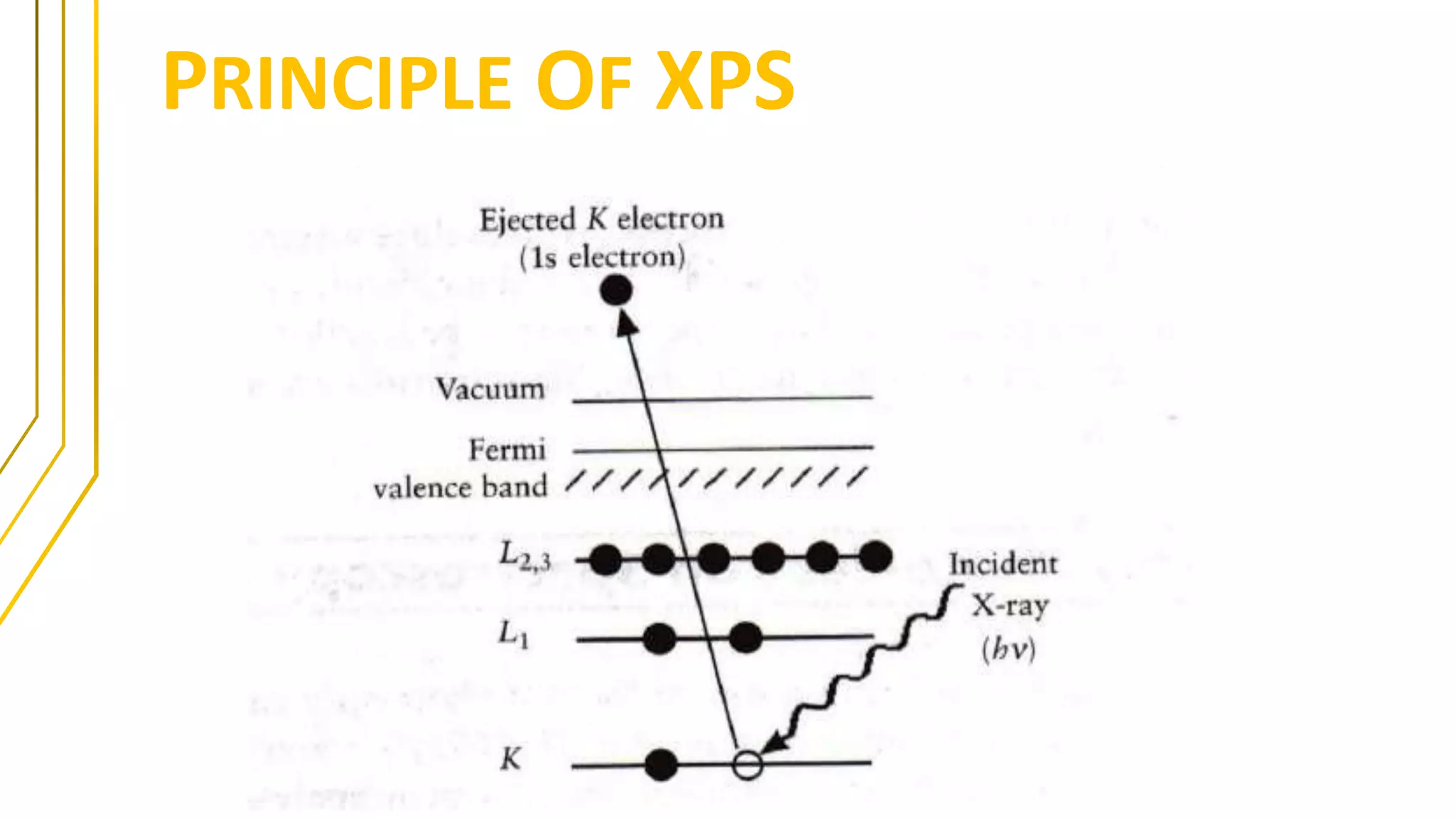
PRINCIPLE OF XPS
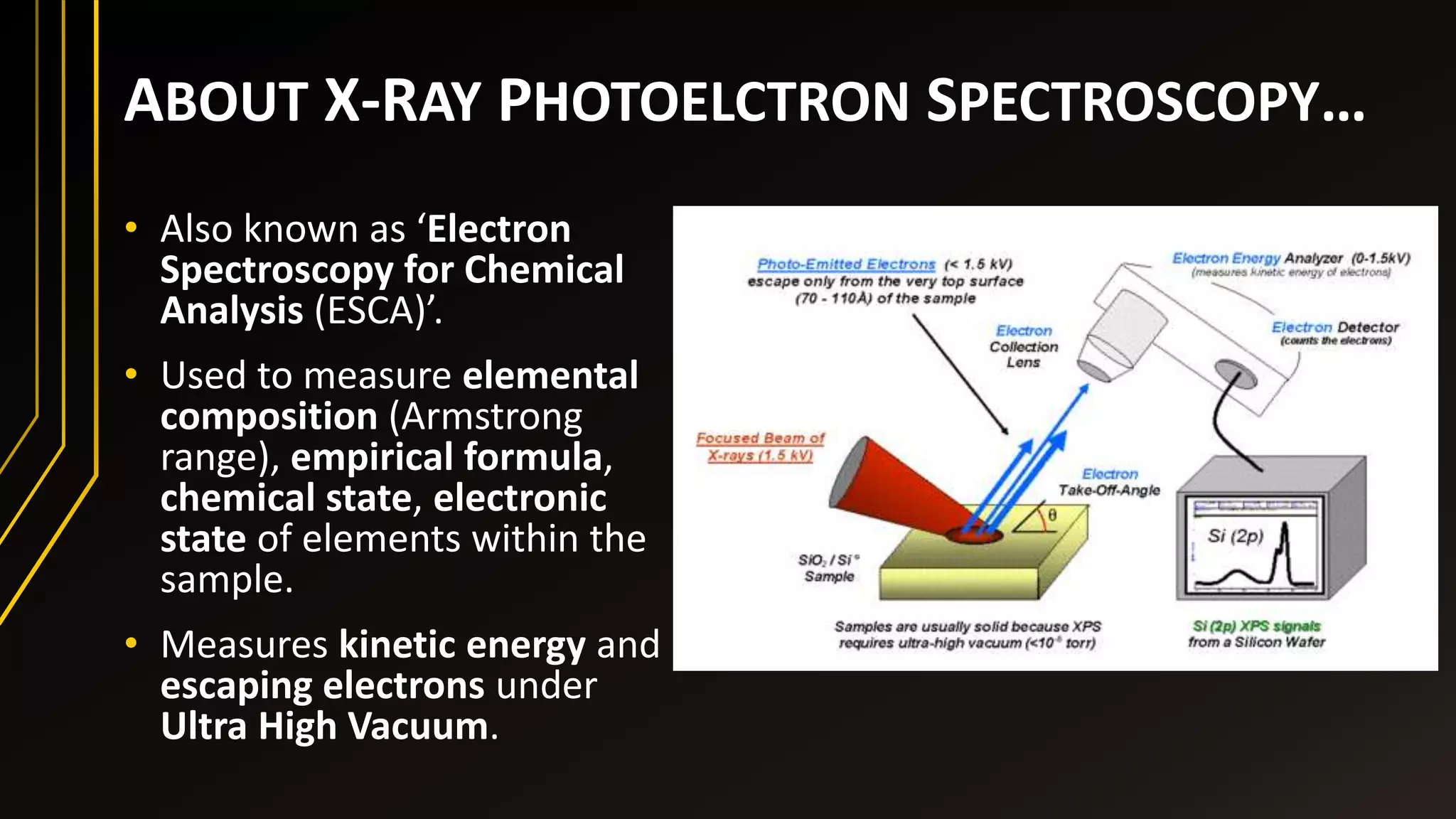
ABOUT X-RAY PHOTOELCTRON SPECTROSCOPY…
• Also known as ‘Electron
Spectroscopy for Chemical
Analysis (ESCA)’.
• Used to measure elemental
composition (Armstrong
range), empirical formula,
chemical state, electronic
state of elements within the
sample.
• Measures kinetic energy and
escaping electrons under
Ultra High Vacuum.
…
• XPS can measure elements
having atomic number of Li (Z =
3) and above.
• Not preferred to measure
hydrated forms due to an ice
layer forming in ultra-high
pressure.
• XPS detects only those electrons
that have actually escaped from
sample to the vacuum of
instrument.
Eb = Ephoton – Ek – W
Eb = Binding Energy
Ephoton = Energy of X-ray
Ek = Kinetic energy
W = Work Function
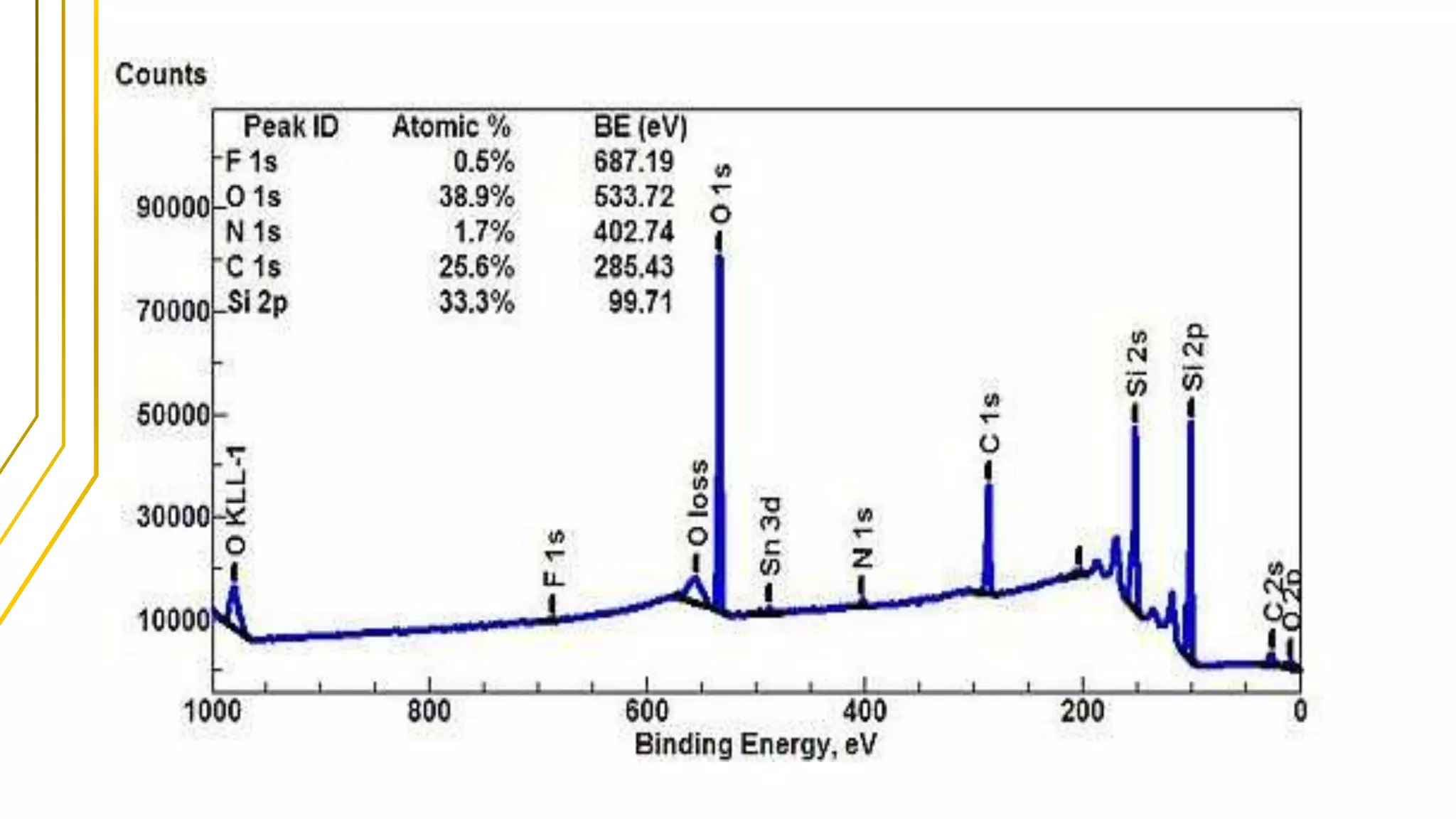
• Different elements have different Binding Energies which are
used to identify the elements, chemical bonds and ligands.
• The curve illustrates quantification of number of electrons (X-
axis) to the Binding Energies (Y-axis).
• Binding energy is in eV.
• Ultra high vacuum is maintain to minimize the errors.
REFERENCE
Khandpur- Handbook of Biomedical Instrumentation
Wikipedia.com
www.researchgate.net
THANK YOU…

X-Ray Photo-electron Spectroscopy

  • 1.
  • 2.
  • 3.
  • 4.
  • 5.
    ABOUT X-RAY PHOTOELCTRONSPECTROSCOPY… • Also known as ‘Electron Spectroscopy for Chemical Analysis (ESCA)’. • Used to measure elemental composition (Armstrong range), empirical formula, chemical state, electronic state of elements within the sample. • Measures kinetic energy and escaping electrons under Ultra High Vacuum.
  • 6.
    … • XPS canmeasure elements having atomic number of Li (Z = 3) and above. • Not preferred to measure hydrated forms due to an ice layer forming in ultra-high pressure. • XPS detects only those electrons that have actually escaped from sample to the vacuum of instrument. Eb = Ephoton – Ek – W Eb = Binding Energy Ephoton = Energy of X-ray Ek = Kinetic energy W = Work Function
  • 9.
    • Different elementshave different Binding Energies which are used to identify the elements, chemical bonds and ligands. • The curve illustrates quantification of number of electrons (X- axis) to the Binding Energies (Y-axis). • Binding energy is in eV. • Ultra high vacuum is maintain to minimize the errors.
  • 11.
    REFERENCE Khandpur- Handbook ofBiomedical Instrumentation Wikipedia.com www.researchgate.net
  • 12.