



CSK / OXFORD ENGINEERING COLLEGE – TRICHIRAPPALLI 
DEPARTMENT OF INFORMATION TECHNOLOGY
 Introduction 
› Overview 
› Process Components 
› Tactical and Strategic Significance 
› Importance of Network Analysis 
› Model for Networking Analysis, Architecture 
and Design
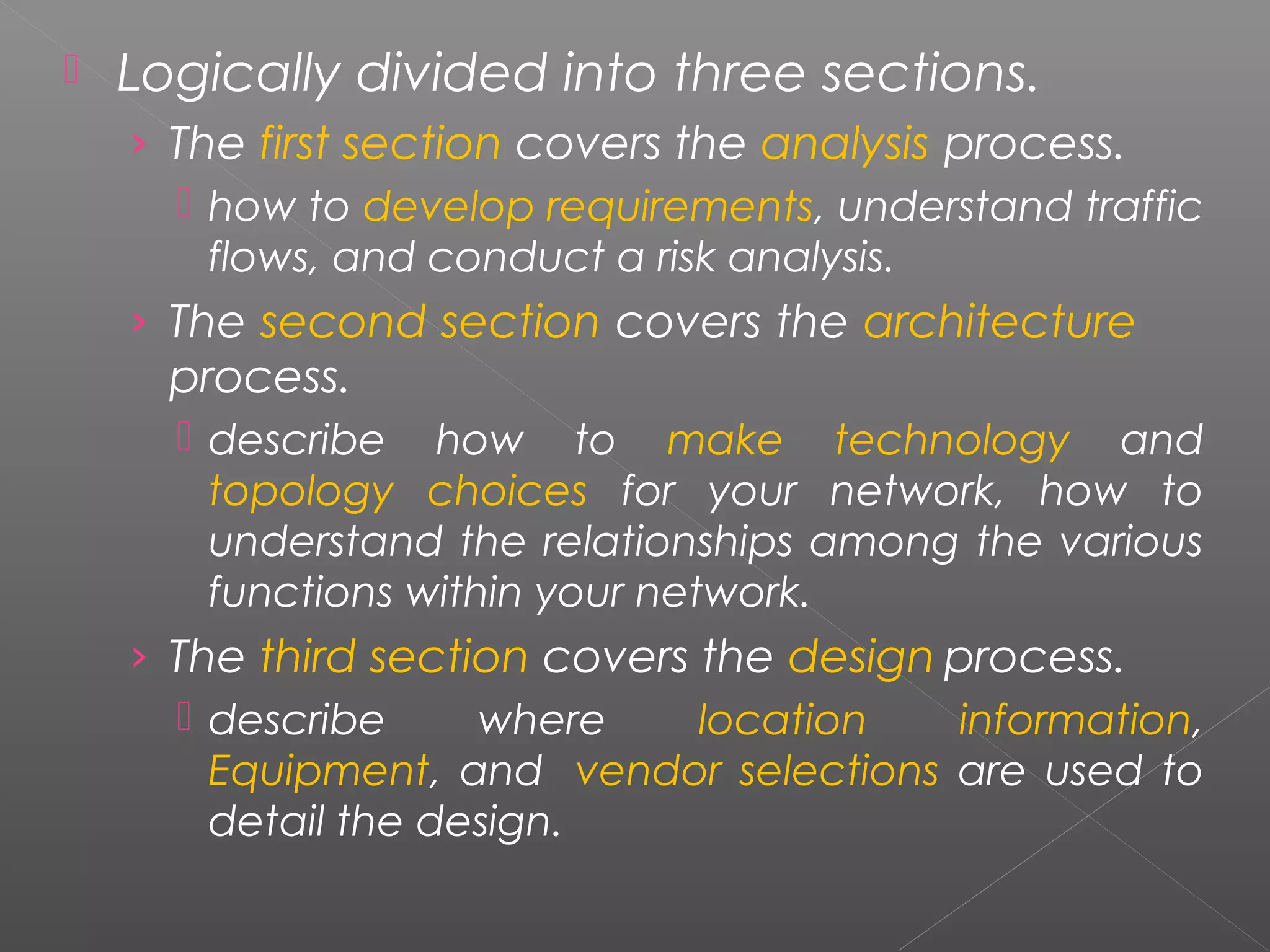
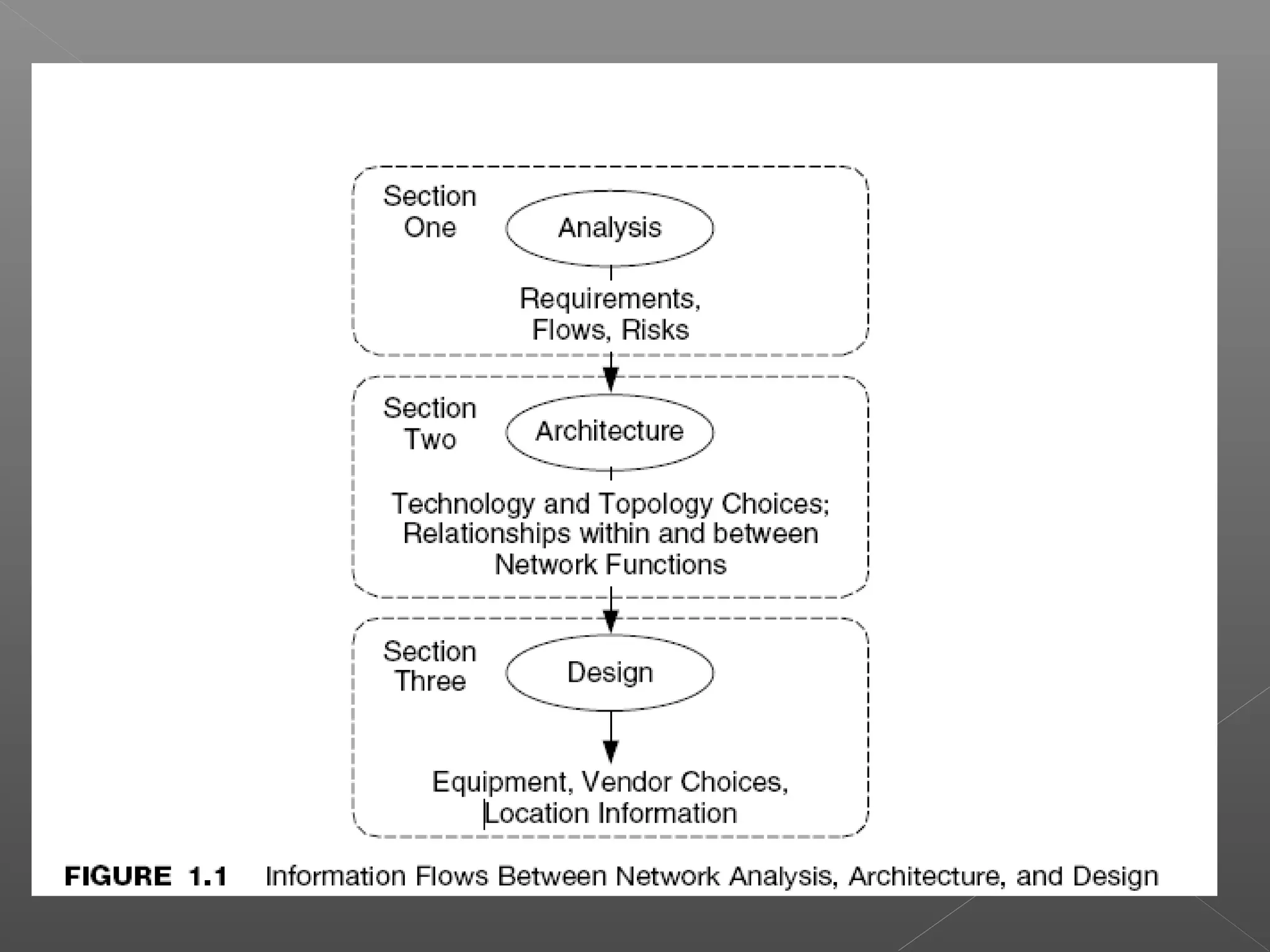
 Logically divided into three sections. 
› The first section covers the analysis process. 
 how to develop requirements, understand traffic 
flows, and conduct a risk analysis. 
› The second section covers the architecture 
process. 
 describe how to make technology and 
topology choices for your network, how to 
understand the relationships among the various 
functions within your network. 
› The third section covers the design process. 
 describe where location information, 
Equipment, and vendor selections are used to 
detail the design.
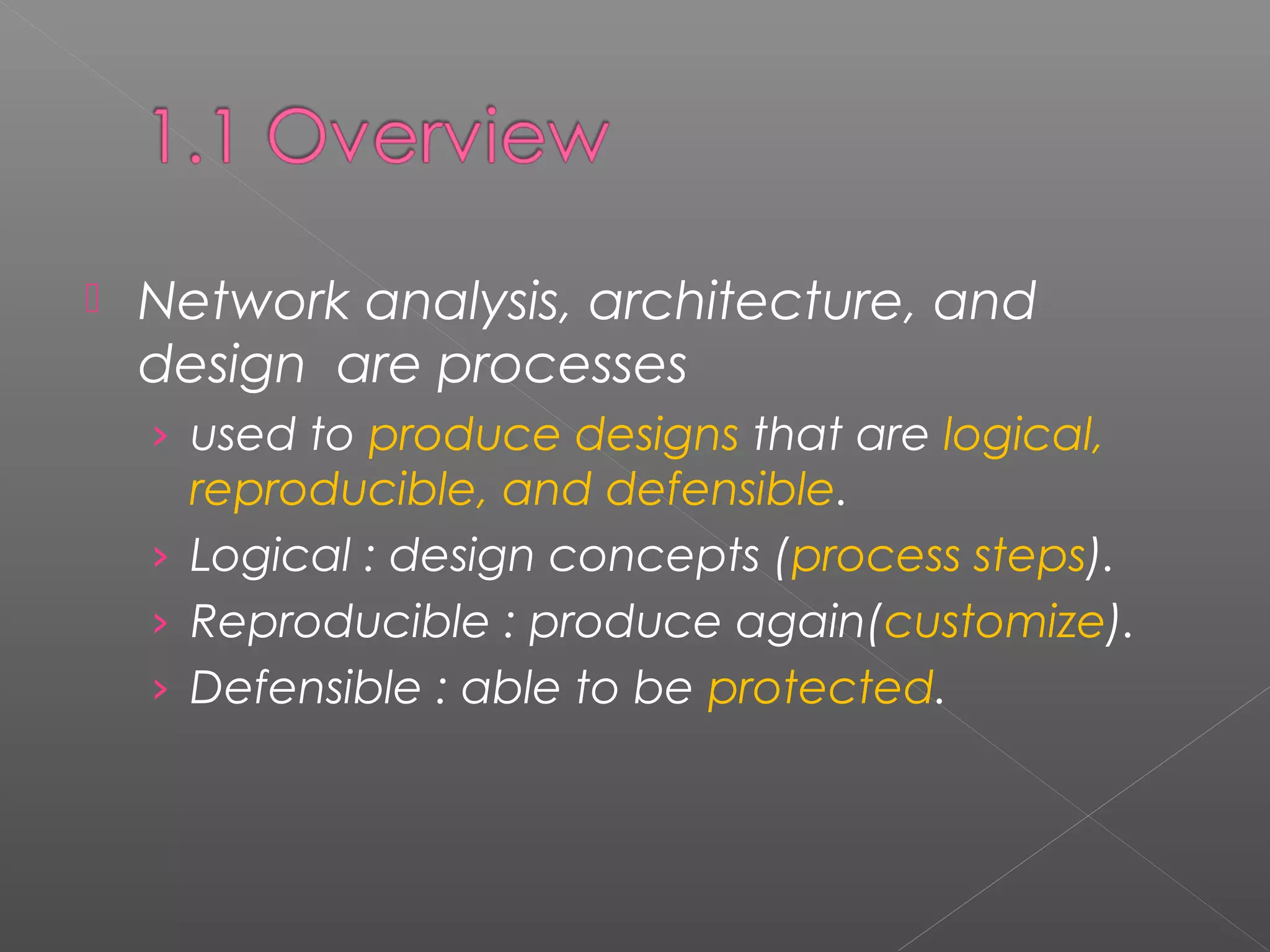
 Network analysis, architecture, and 
design are processes 
› used to produce designs that are logical, 
reproducible, and defensible. 
› Logical : design concepts (process steps). 
› Reproducible : produce again(customize). 
› Defensible : able to be protected.
 Assist the planning and management of complex 
designs. 
 It Involves mapping of relationships(graphical 
representation) between Users/Clients, 
organizations(vendors), devices, applications on 
the networks. 
 It includes: 
› Descriptions about problem with existing network 
› Descriptions of requirements for network 
› Descriptions of traffic flows(interaction bw S/D) 
› Descriptions of potential risks(possibility of loss) 
› (lists of risks: product related ,business related ,customer 
,dvlpmnt , process , technology )
 It is also known as network analyser(tool). 
 Stand alone hardware device and 
designed with a specialized software. 
 Who uses network analyser: 
› System Administrators 
› Network Engineers 
› Security professionals
 Why administrators use network analyser 
› Converts binary data( 0’s and 1’s into 
human readable format(text, images, audio 
and videos). 
› Capturing the network traffic. 
› Troubleshooting problems on network. 
› Discovering a faults/failures on network. 
› Analyzing the operations/the performance. 
› Detecting spyware (gathering information)
 Two aspects: 
 First: 
› To listen to users/clients/customers and 
understand their needs/requirements. 
 Second: 
› understand the users/clients/customer’s 
system. 
 Language independent(.net , java etc.) 
 Platform independent(windows/linux etc.)
 Network architecture uses the information from the 
analysis process 
› to develop a conceptual, high-level structure for the 
network. 
 It is a ‘framework’ such as( functions, operational 
principles, re-usable components, procedures etc.) 
 It may also include a detailed description of 
products/designs and services. 
 It includes: 
› Determines sets of technology and 
› Topology choices for the network. 
› Determine the relationships among the network functions 
such as switches, routers).
 Network design provides physical design to 
the architecture. 
› Aim: To Build/Design the best network for 
organizations(vendors). 
› to composing topological design(based on 
size / area). 
 Physical design includes: 
› blueprints and drawings of the network 
› Vendors selections, and equipment selections 
design boundaries and design validation.
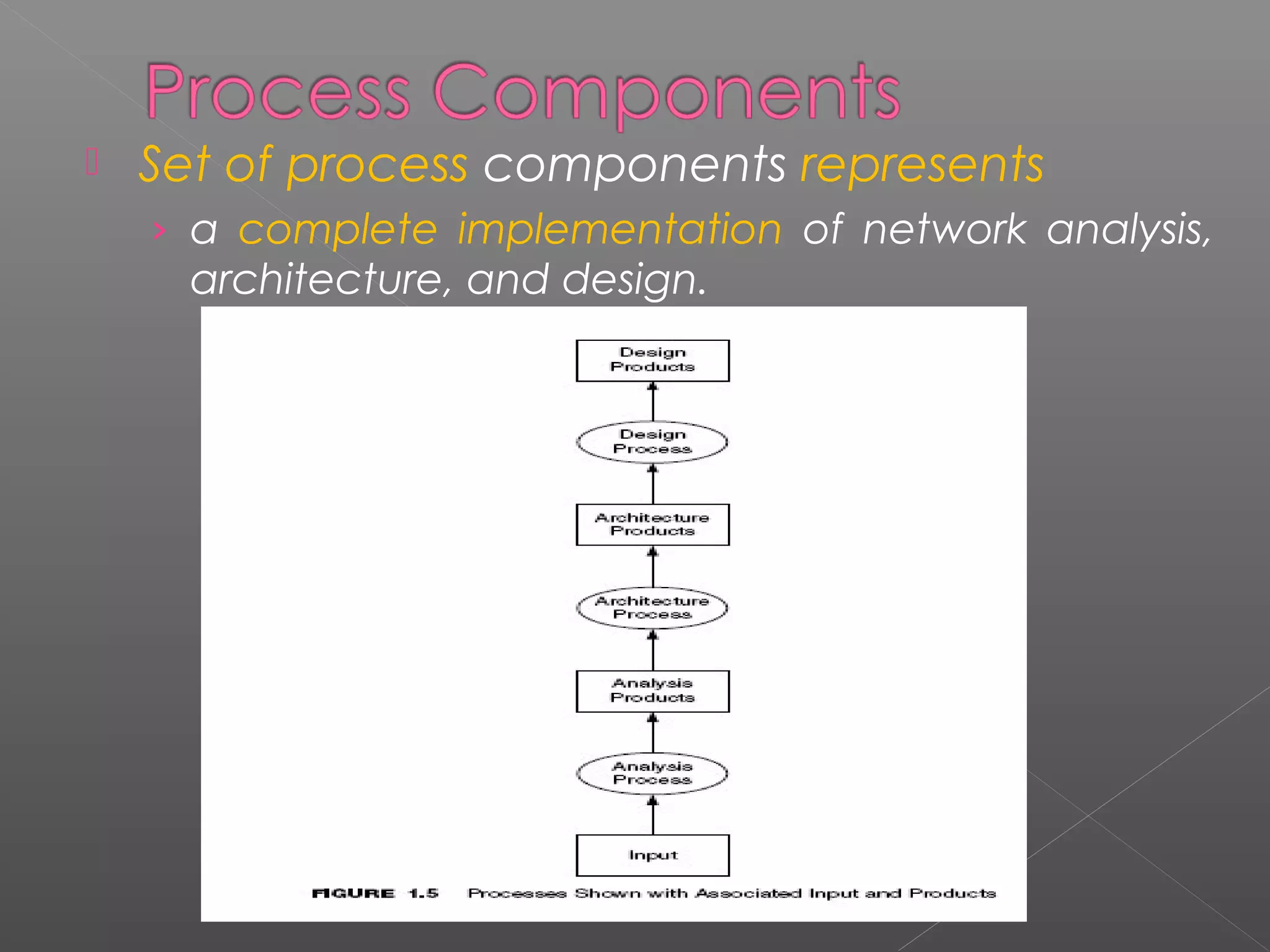
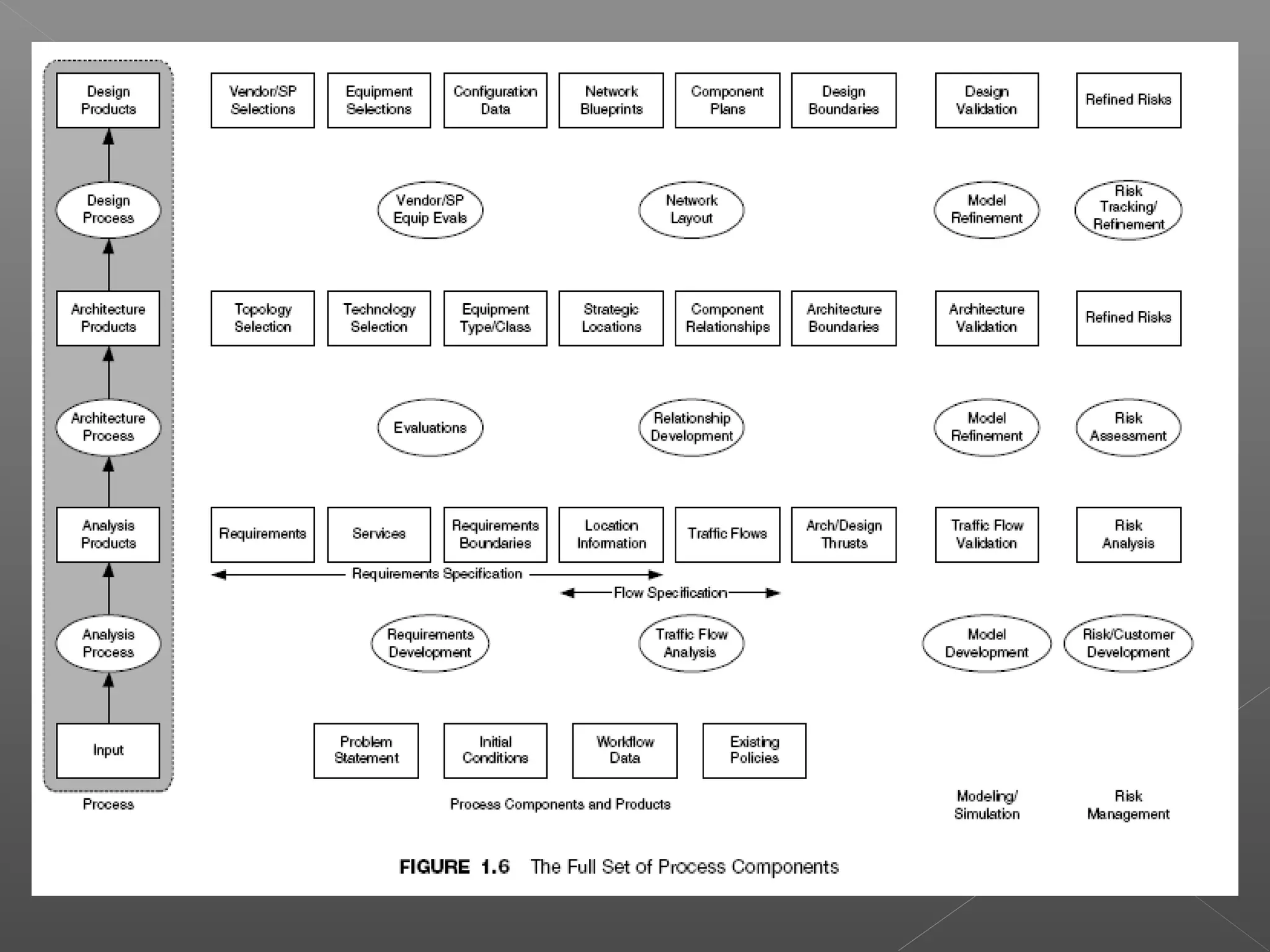
 Set of process components represents 
› a complete implementation of network analysis, 
architecture, and design.
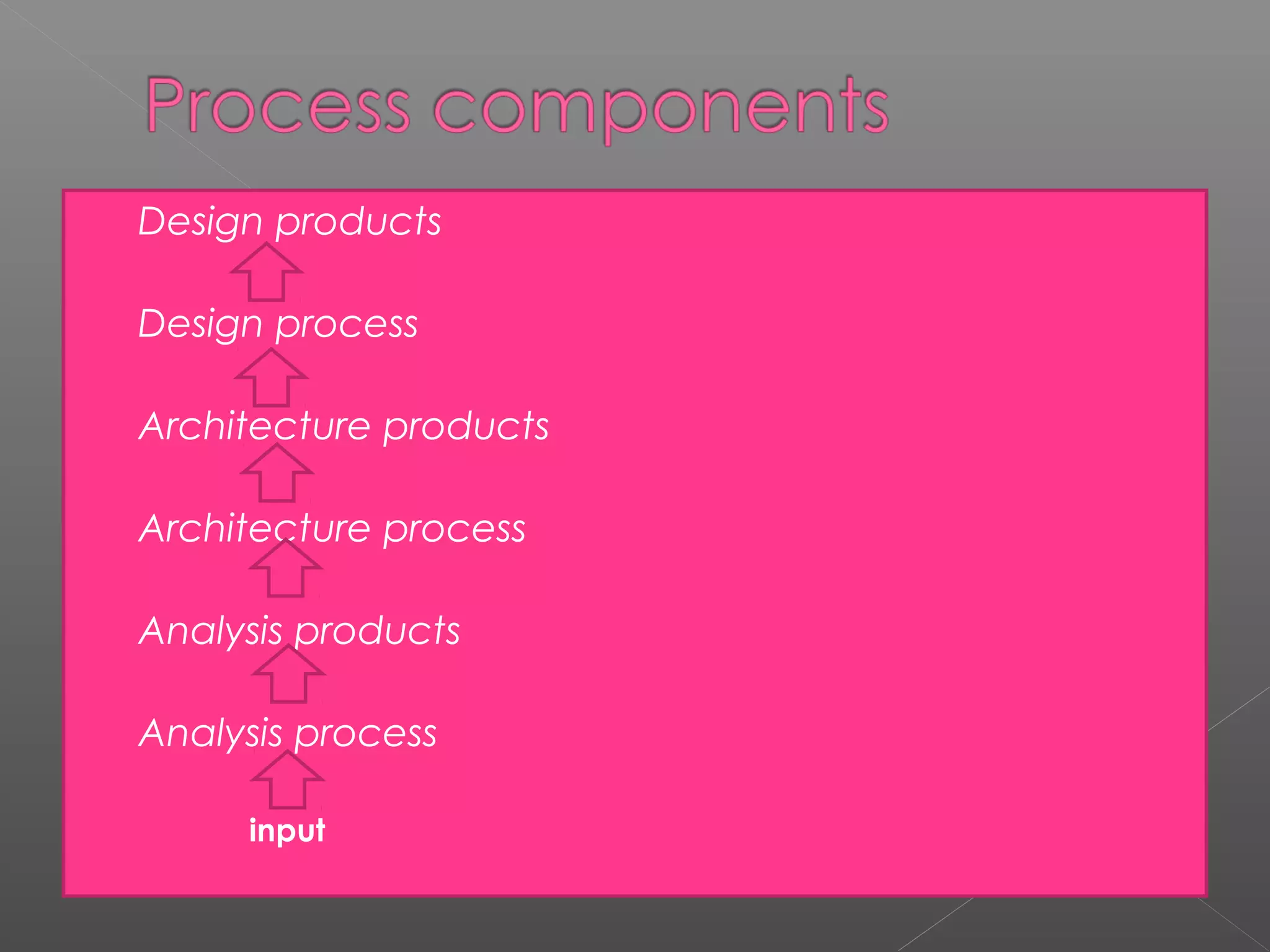
 Design products 
 
 Design process 
 Architecture products 
 Architecture process 
 Analysis products 
 Analysis process 
input
 Analysis product: 
› Enable us to understand the important 
materials, processing, economic(financial) 
and decision making which are required 
before any product can be manufactured. 
 Analysis process : 
› A step by step breakdown of the phases of a 
process, 
 used to convey the inputs, outputs and 
perform the operations that take during the 
each phase.
 Architecture product: 
› Begin sketching or making diagrams. 
› The process by which a customer need is 
developed into a product design. 
 Architecture process: 
› Architectural design of general process 
systems applies to fields such as (networks, 
s/w, h/w, etc.)
› How platforms are structured. 
› How functions are incorporated. 
› How development work is divided up. 
› What are the model boundaries/Limitations.
 Design products: 
› It is the process of creating a new product. 
 Interior design/ exterior design. 
 Design process : it is the formulation of a plan to help an 
engineer build a product with a specified performance 
goal. 
› It involves a number of steps, Multi – step process (series of steps) 
includes : 
 Identify the problem 
 Collect information 
 Develop solutions 
 Generate ideas 
 Select an approach 
 Build a model / design 
 Improve on your design
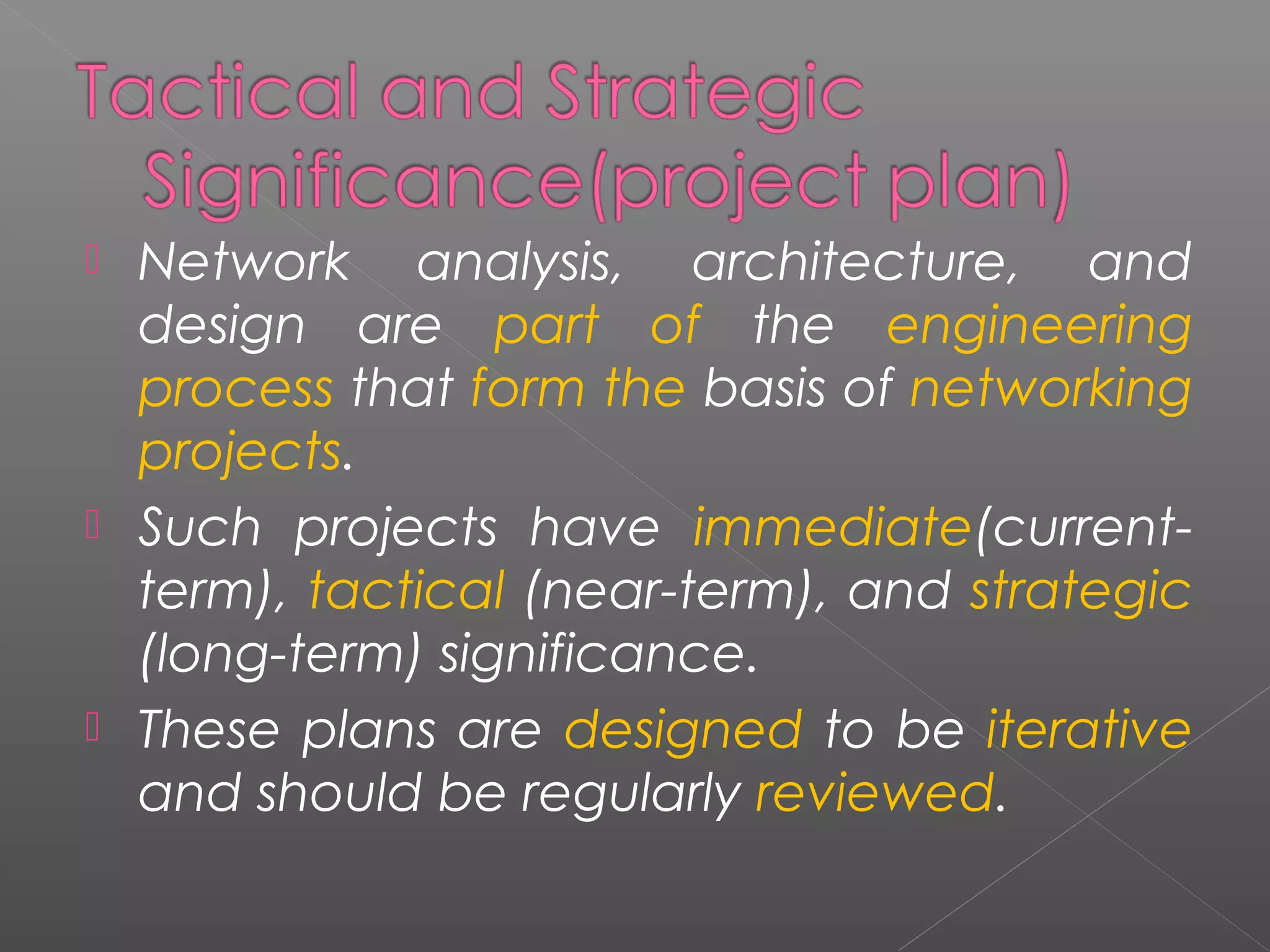
 Network analysis, architecture, and 
design are part of the engineering 
process that form the basis of networking 
projects. 
 Such projects have immediate(current-term), 
tactical (near-term), and strategic 
(long-term) significance. 
 These plans are designed to be iterative 
and should be regularly reviewed.
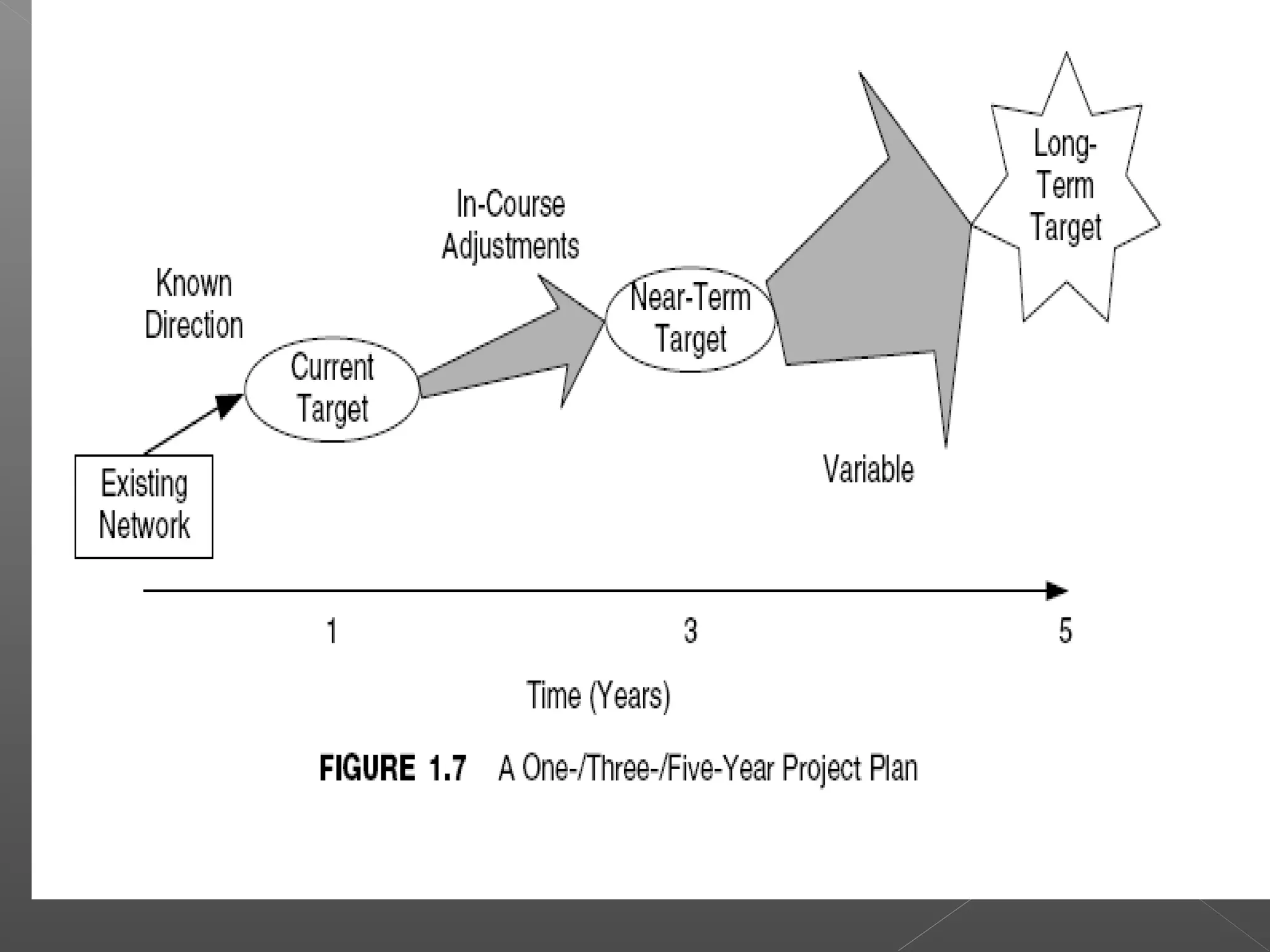
 While the current target will be a network 
design, the near-term and long-term targets 
can be proposed enhancements to the 
current target. 
 The idea behind this plan is to develop a 
network design that will be implemented 
within one year, it will prepare us for any 
changes we might need to make to the 
network within three years, and will keep us in 
the direction of what is planned for five years 
in the future.
 The long-term (five-year) target is a rough 
estimate. 
 We will likely not know what new 
networking technologies, services, or 
levels of performance will be available 
five years out, nor 
 will we know how our customers’ business 
plans will change, nor 
 what network problems will arise during 
that time.
 The current (one-year) target should be well 
understood and is the focus of our analysis, 
architecture, and design effort. 
 Experience shows that one-/three-/five-year 
plans are very good starting points, but 
depending on your customers, you may 
rapidly evolve your network with a longer-term 
view with a one-year/five-year/ten-year 
plan.
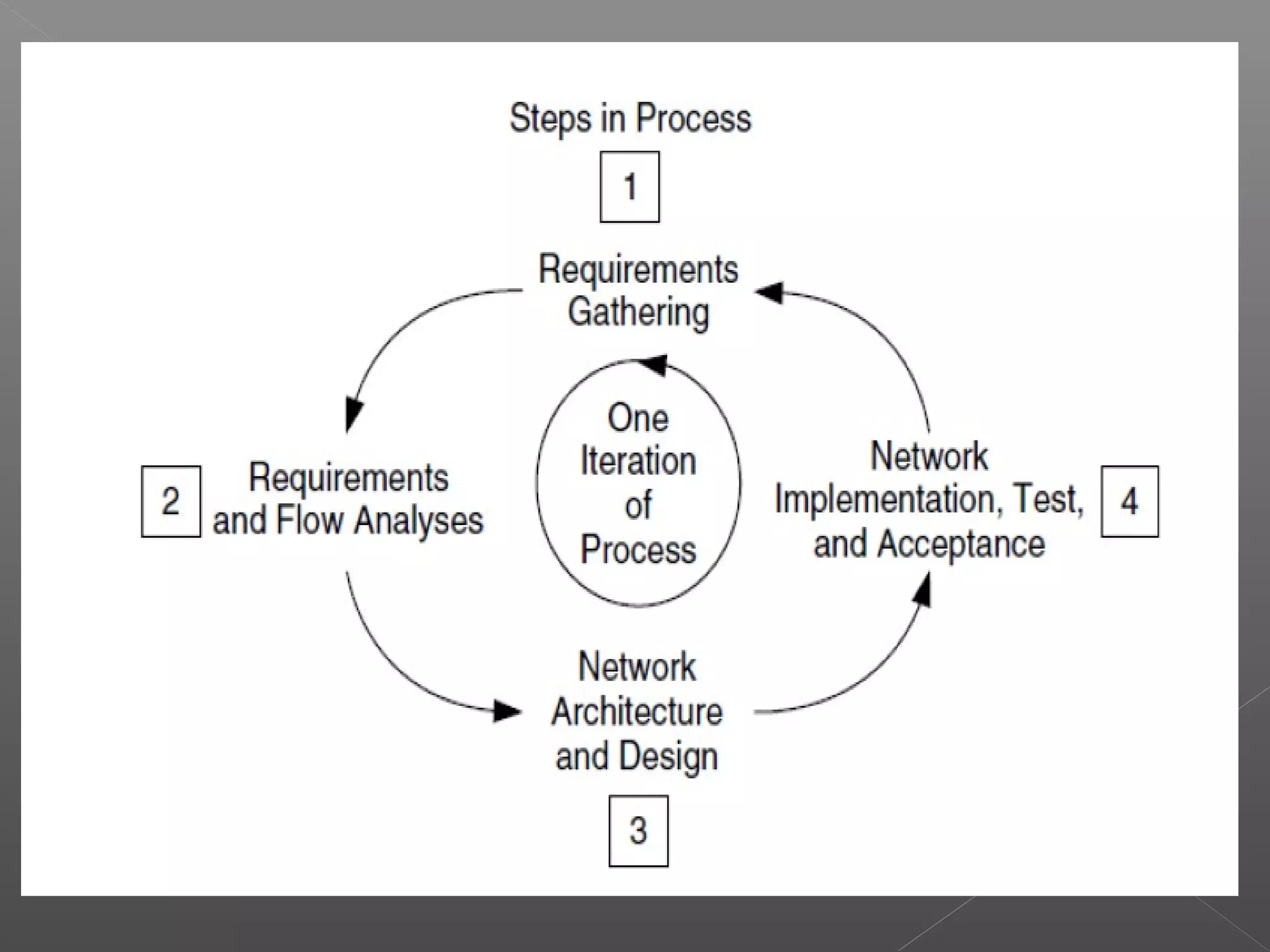
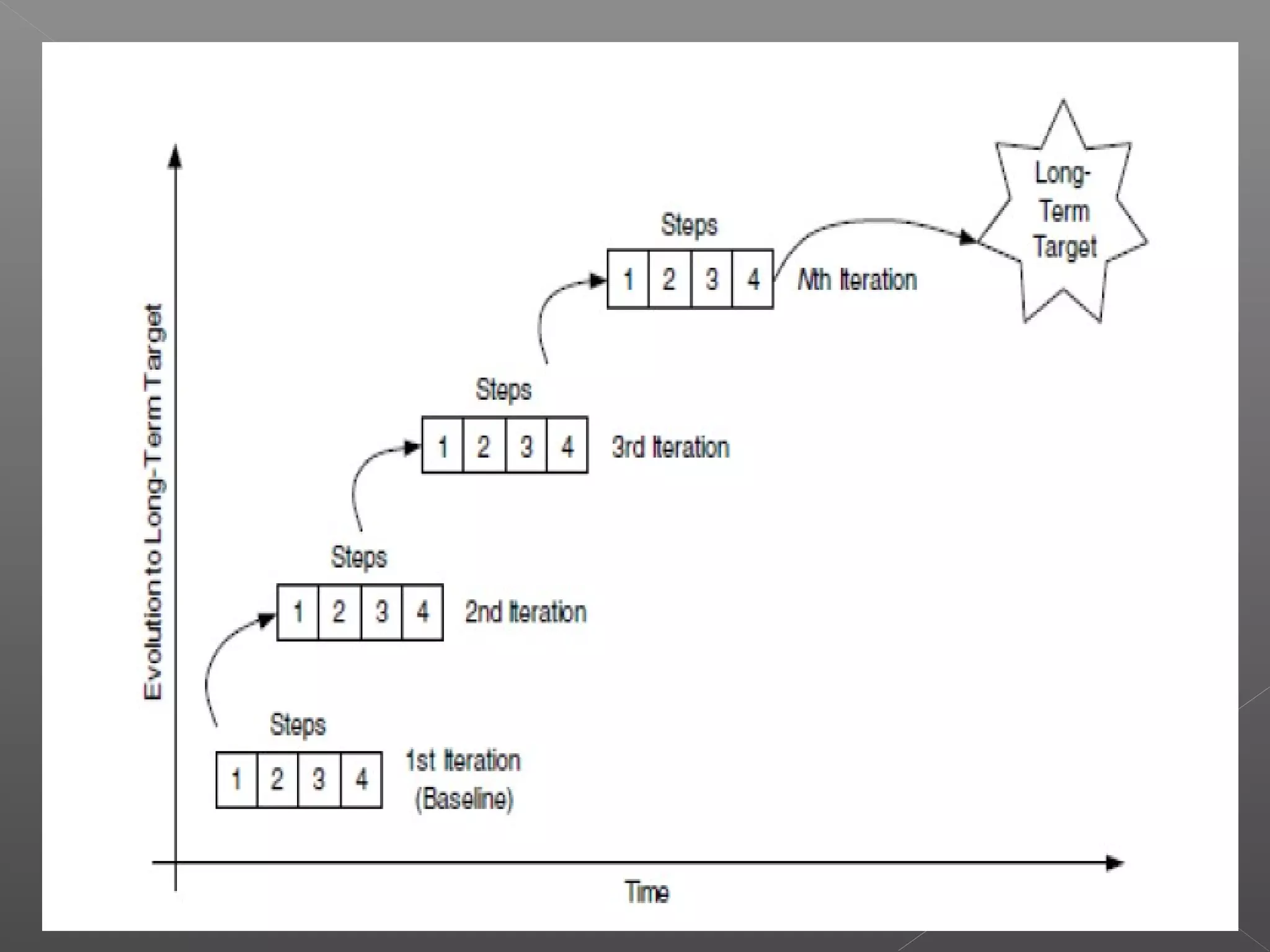
 These plans are intended to be iterative and 
should be regularly reviewed, on the order of 
twice yearly, once per year, depending on 
your plan. 
 At each iteration the current, near-term, and 
long-term targets are reviewed and 
checked against the ongoing sets of 
problem statements, objectives, and 
requirements developed during the analysis, 
architecture, and design processes.
 Understanding Network and the System Complexity. 
 Analysis helps us understand how technologies 
influence / incorporate with networks, users, 
applications, and devices. 
 It allows planning & co-ordination of resources. 
 It also reduces waste by efficient planning and 
coordination of resources. 
 how services can be incorporated into a 
current state-of-the-art network.
 Composition of concepts address the 
following areas: 
› Checking the levels of difficulties in the 
technologies, potential architectures and designs. 
› Establishing and managing the customer 
expectations. 
› Monitoring the existing network and the system. 
› Developing a set of options to solve problems. 
› Selecting one or more options. 
› Planning the implementation.
 The study of methods by which we pursue 
network design. 
 Systems methodology means viewing the 
network that you are architecting and 
designing, along with a subset of its 
environment.
 System methodology used for describing 
important characteristics &capabilities of 
your network. 
 Provides basic connectivity and packet-forwarding 
performance for various 
services.
THANK YOU

overview of analysis, architecture and design process

  • 1.
    CSK / OXFORDENGINEERING COLLEGE – TRICHIRAPPALLI DEPARTMENT OF INFORMATION TECHNOLOGY
  • 2.
     Introduction ›Overview › Process Components › Tactical and Strategic Significance › Importance of Network Analysis › Model for Networking Analysis, Architecture and Design
  • 3.
     Logically dividedinto three sections. › The first section covers the analysis process.  how to develop requirements, understand traffic flows, and conduct a risk analysis. › The second section covers the architecture process.  describe how to make technology and topology choices for your network, how to understand the relationships among the various functions within your network. › The third section covers the design process.  describe where location information, Equipment, and vendor selections are used to detail the design.
  • 5.
     Network analysis,architecture, and design are processes › used to produce designs that are logical, reproducible, and defensible. › Logical : design concepts (process steps). › Reproducible : produce again(customize). › Defensible : able to be protected.
  • 6.
     Assist theplanning and management of complex designs.  It Involves mapping of relationships(graphical representation) between Users/Clients, organizations(vendors), devices, applications on the networks.  It includes: › Descriptions about problem with existing network › Descriptions of requirements for network › Descriptions of traffic flows(interaction bw S/D) › Descriptions of potential risks(possibility of loss) › (lists of risks: product related ,business related ,customer ,dvlpmnt , process , technology )
  • 7.
     It isalso known as network analyser(tool).  Stand alone hardware device and designed with a specialized software.  Who uses network analyser: › System Administrators › Network Engineers › Security professionals
  • 8.
     Why administratorsuse network analyser › Converts binary data( 0’s and 1’s into human readable format(text, images, audio and videos). › Capturing the network traffic. › Troubleshooting problems on network. › Discovering a faults/failures on network. › Analyzing the operations/the performance. › Detecting spyware (gathering information)
  • 9.
     Two aspects:  First: › To listen to users/clients/customers and understand their needs/requirements.  Second: › understand the users/clients/customer’s system.  Language independent(.net , java etc.)  Platform independent(windows/linux etc.)
  • 10.
     Network architectureuses the information from the analysis process › to develop a conceptual, high-level structure for the network.  It is a ‘framework’ such as( functions, operational principles, re-usable components, procedures etc.)  It may also include a detailed description of products/designs and services.  It includes: › Determines sets of technology and › Topology choices for the network. › Determine the relationships among the network functions such as switches, routers).
  • 11.
     Network designprovides physical design to the architecture. › Aim: To Build/Design the best network for organizations(vendors). › to composing topological design(based on size / area).  Physical design includes: › blueprints and drawings of the network › Vendors selections, and equipment selections design boundaries and design validation.
  • 12.
     Set ofprocess components represents › a complete implementation of network analysis, architecture, and design.
  • 13.
     Design products   Design process  Architecture products  Architecture process  Analysis products  Analysis process input
  • 15.
     Analysis product: › Enable us to understand the important materials, processing, economic(financial) and decision making which are required before any product can be manufactured.  Analysis process : › A step by step breakdown of the phases of a process,  used to convey the inputs, outputs and perform the operations that take during the each phase.
  • 16.
     Architecture product: › Begin sketching or making diagrams. › The process by which a customer need is developed into a product design.  Architecture process: › Architectural design of general process systems applies to fields such as (networks, s/w, h/w, etc.)
  • 17.
    › How platformsare structured. › How functions are incorporated. › How development work is divided up. › What are the model boundaries/Limitations.
  • 18.
     Design products: › It is the process of creating a new product.  Interior design/ exterior design.  Design process : it is the formulation of a plan to help an engineer build a product with a specified performance goal. › It involves a number of steps, Multi – step process (series of steps) includes :  Identify the problem  Collect information  Develop solutions  Generate ideas  Select an approach  Build a model / design  Improve on your design
  • 19.
     Network analysis,architecture, and design are part of the engineering process that form the basis of networking projects.  Such projects have immediate(current-term), tactical (near-term), and strategic (long-term) significance.  These plans are designed to be iterative and should be regularly reviewed.
  • 23.
     While thecurrent target will be a network design, the near-term and long-term targets can be proposed enhancements to the current target.  The idea behind this plan is to develop a network design that will be implemented within one year, it will prepare us for any changes we might need to make to the network within three years, and will keep us in the direction of what is planned for five years in the future.
  • 24.
     The long-term(five-year) target is a rough estimate.  We will likely not know what new networking technologies, services, or levels of performance will be available five years out, nor  will we know how our customers’ business plans will change, nor  what network problems will arise during that time.
  • 25.
     The current(one-year) target should be well understood and is the focus of our analysis, architecture, and design effort.  Experience shows that one-/three-/five-year plans are very good starting points, but depending on your customers, you may rapidly evolve your network with a longer-term view with a one-year/five-year/ten-year plan.
  • 26.
     These plansare intended to be iterative and should be regularly reviewed, on the order of twice yearly, once per year, depending on your plan.  At each iteration the current, near-term, and long-term targets are reviewed and checked against the ongoing sets of problem statements, objectives, and requirements developed during the analysis, architecture, and design processes.
  • 27.
     Understanding Networkand the System Complexity.  Analysis helps us understand how technologies influence / incorporate with networks, users, applications, and devices.  It allows planning & co-ordination of resources.  It also reduces waste by efficient planning and coordination of resources.  how services can be incorporated into a current state-of-the-art network.
  • 28.
     Composition ofconcepts address the following areas: › Checking the levels of difficulties in the technologies, potential architectures and designs. › Establishing and managing the customer expectations. › Monitoring the existing network and the system. › Developing a set of options to solve problems. › Selecting one or more options. › Planning the implementation.
  • 29.
     The studyof methods by which we pursue network design.  Systems methodology means viewing the network that you are architecting and designing, along with a subset of its environment.
  • 30.
     System methodologyused for describing important characteristics &capabilities of your network.  Provides basic connectivity and packet-forwarding performance for various services.
  • 31.