Ovarian and Menstrual Cycle Dr. Sadaf Mumtaz 4/2/11
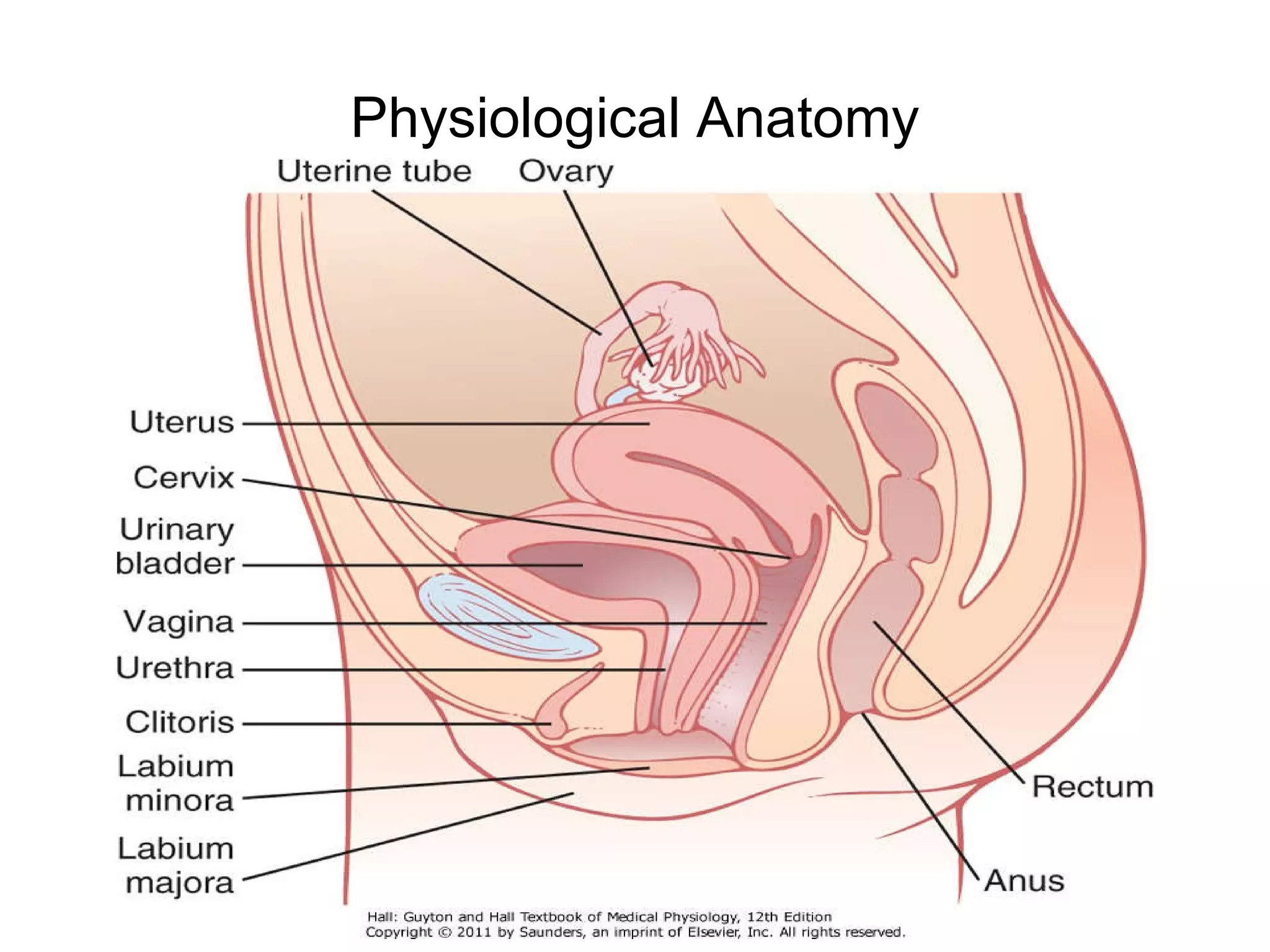
Physiological Anatomy
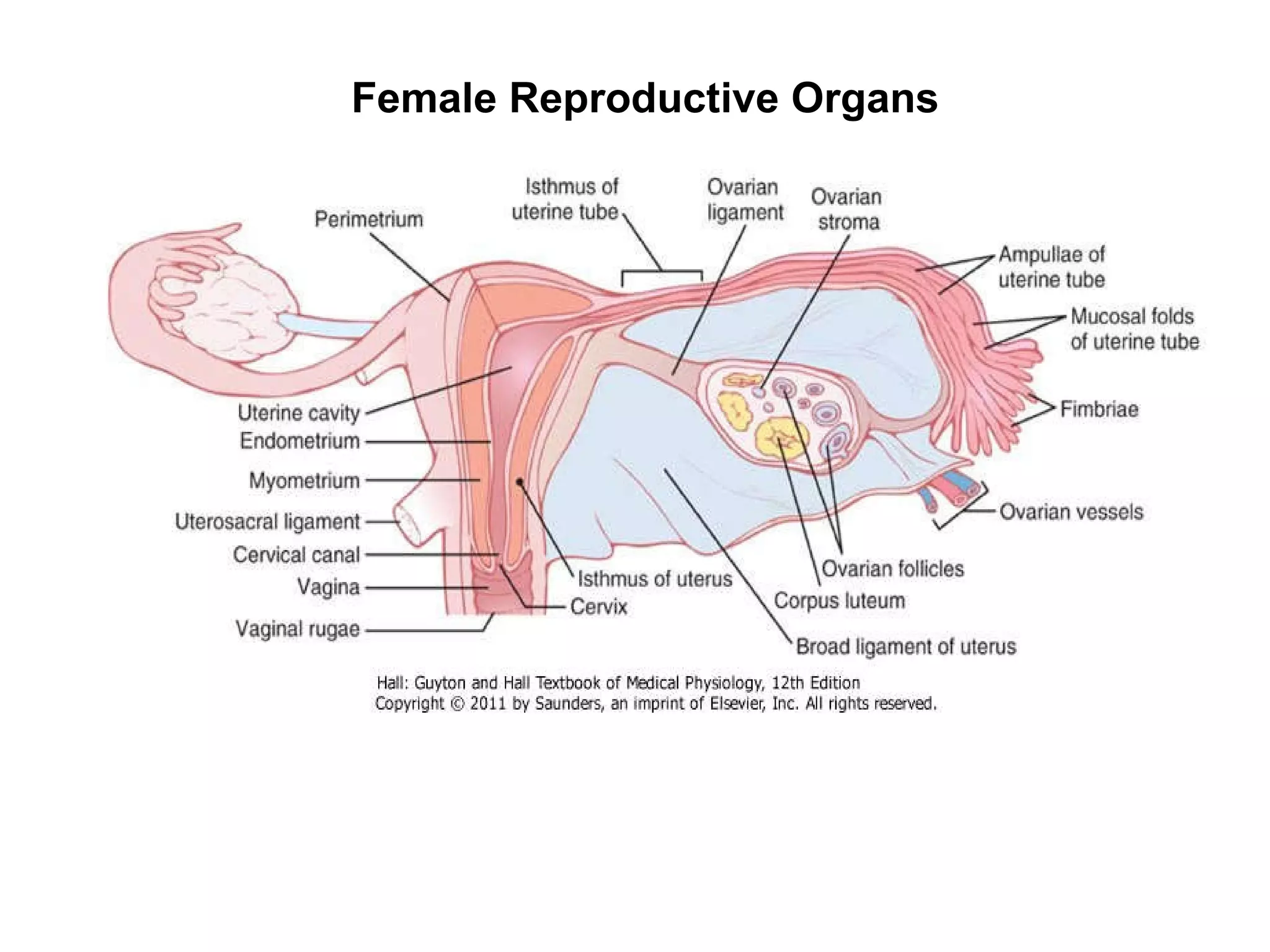
Female Reproductive Organs
Female Hormones GnRH LH FSH Estrogen Progesterone
Female monthly sexual cycle Duration Significance Difference in production of hormones between the two sexes
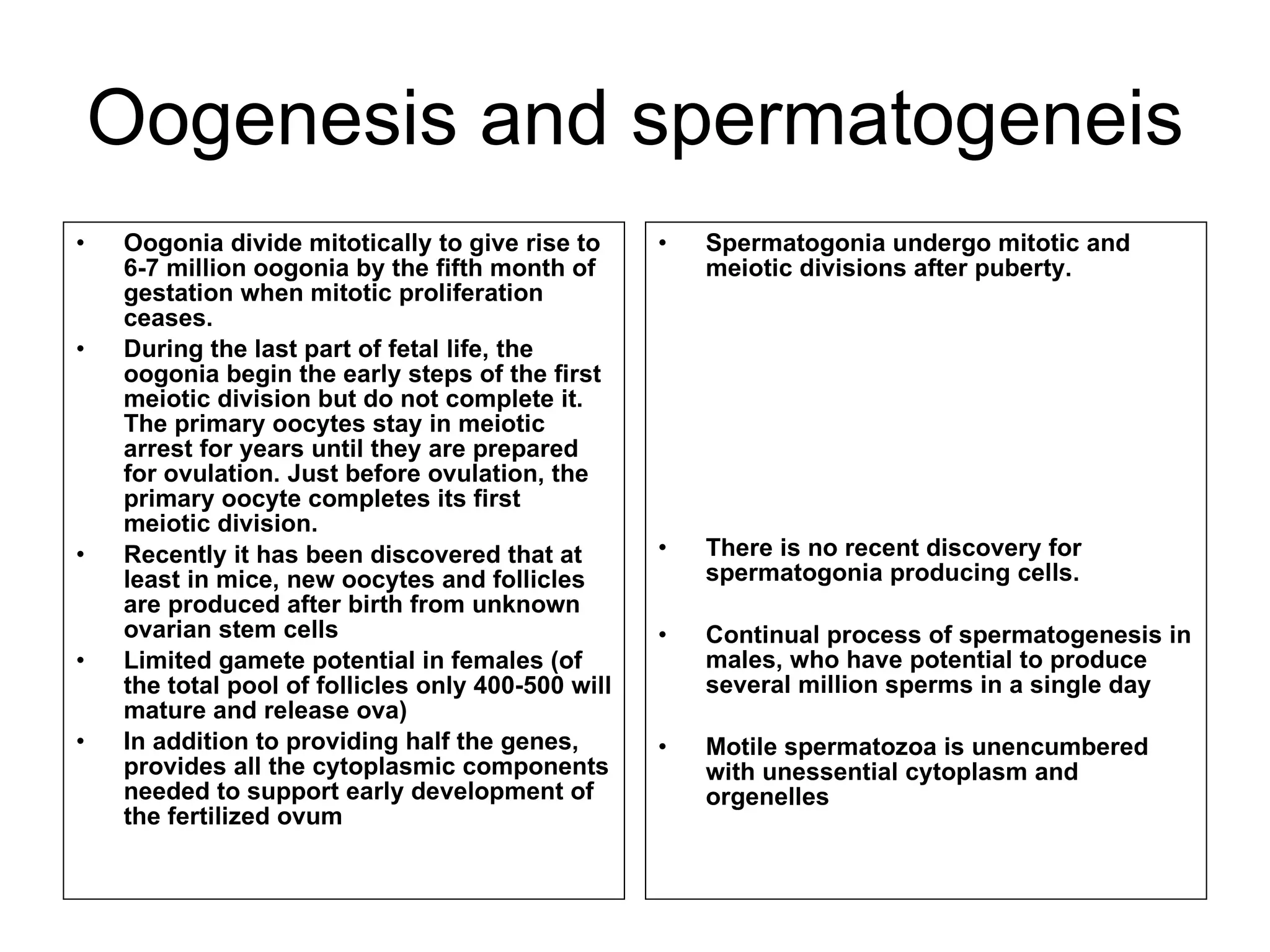
Oogenesis and spermatogeneis Oogonia divide mitotically to give rise to 6-7 million oogonia by the fifth month of gestation when mitotic proliferation ceases. During the last part of fetal life, the oogonia begin the early steps of the first meiotic division but do not complete it. The primary oocytes stay in meiotic arrest for years until they are prepared for ovulation. Just before ovulation, the primary oocyte completes its first meiotic division. Recently it has been discovered that at least in mice, new oocytes and follicles are produced after birth from unknown ovarian stem cells Limited gamete potential in females (of the total pool of follicles only 400-500 will mature and release ova) In addition to providing half the genes, provides all the cytoplasmic components needed to support early development of the fertilized ovum Spermatogonia undergo mitotic and meiotic divisions after puberty. There is no recent discovery for spermatogonia producing cells. Continual process of spermatogenesis in males, who have potential to produce several million sperms in a single day Motile spermatozoa is unencumbered with unessential cytoplasm and orgenelles
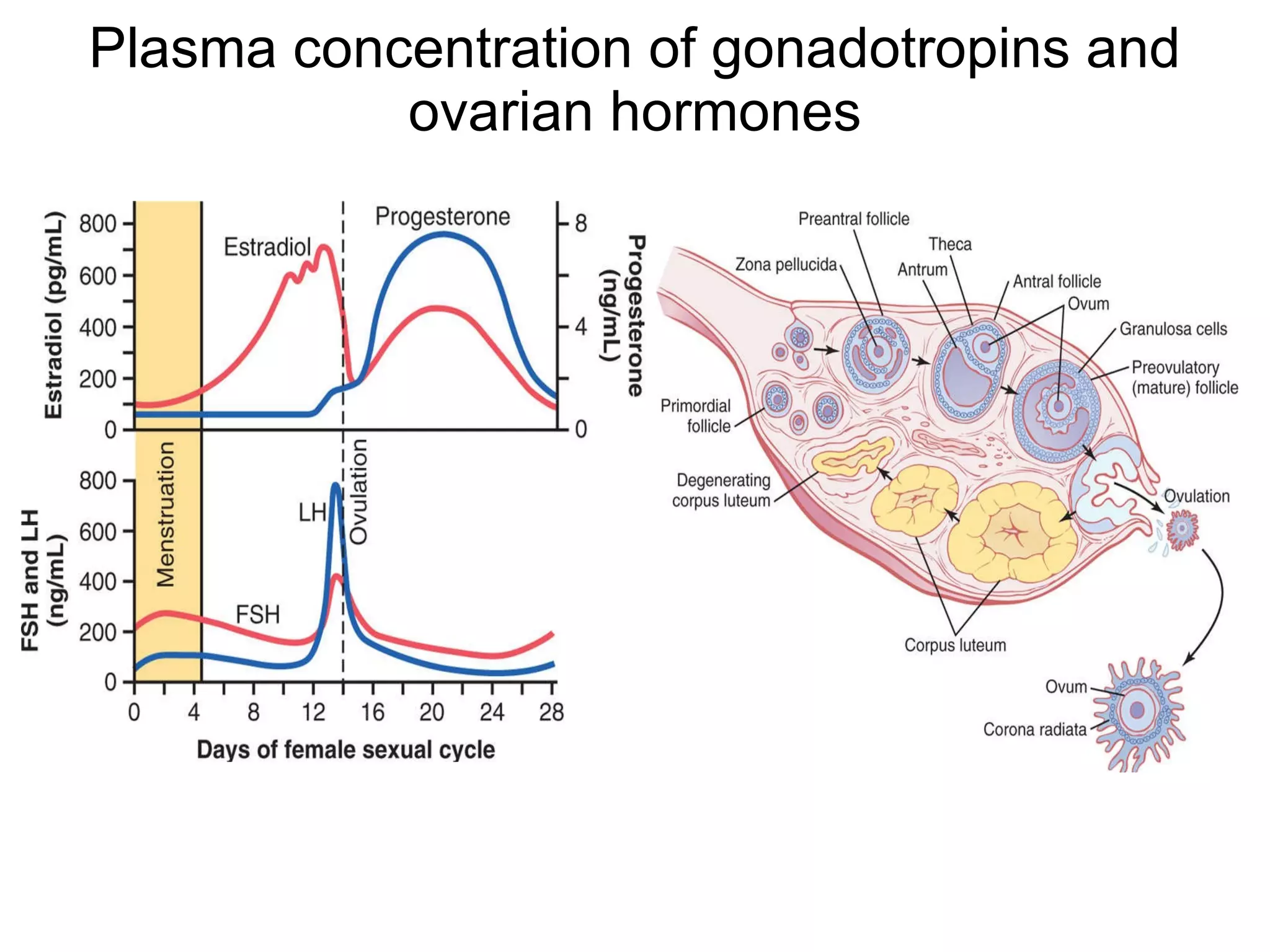
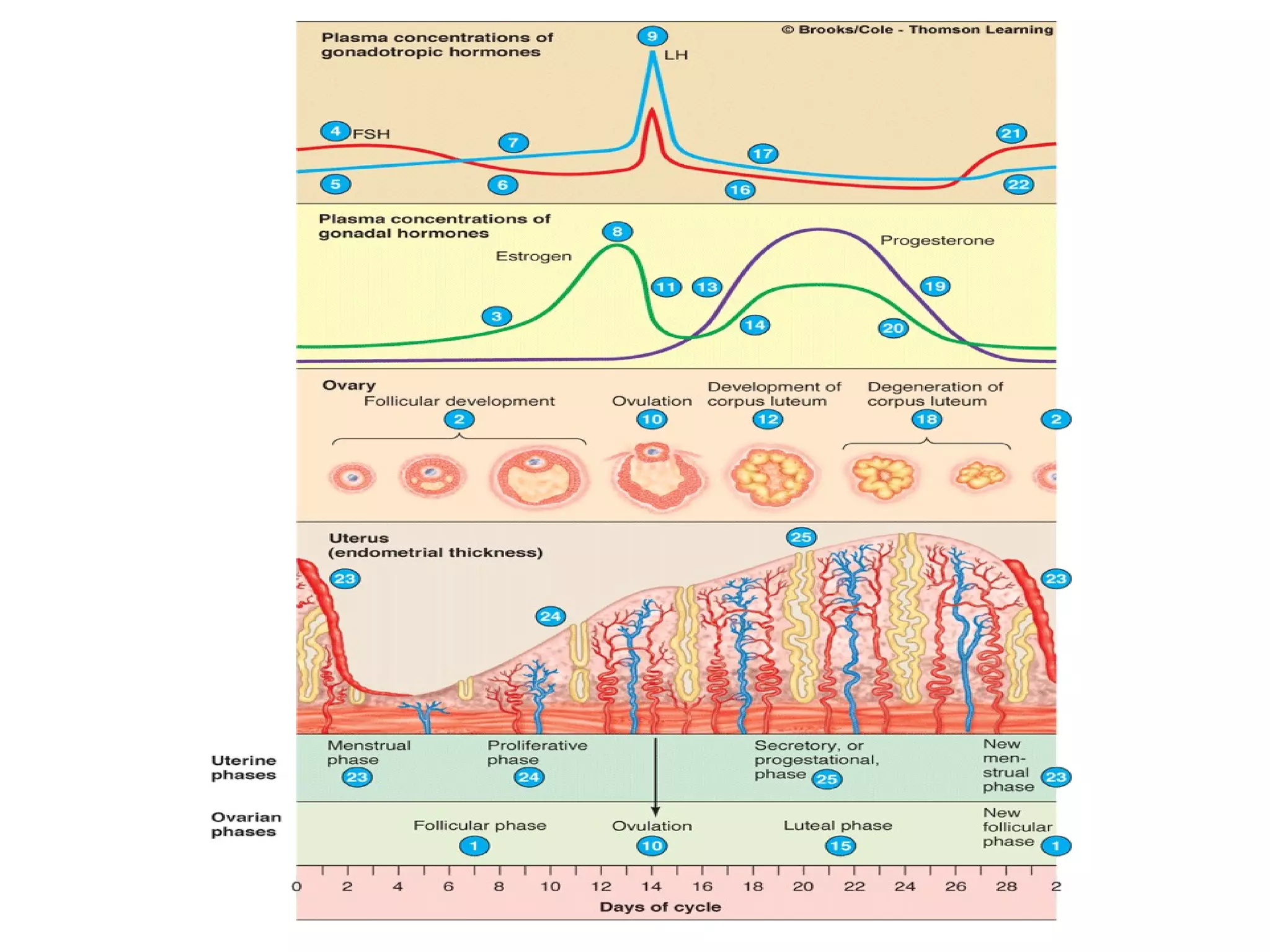
Plasma concentration of gonadotropins and ovarian hormones
 
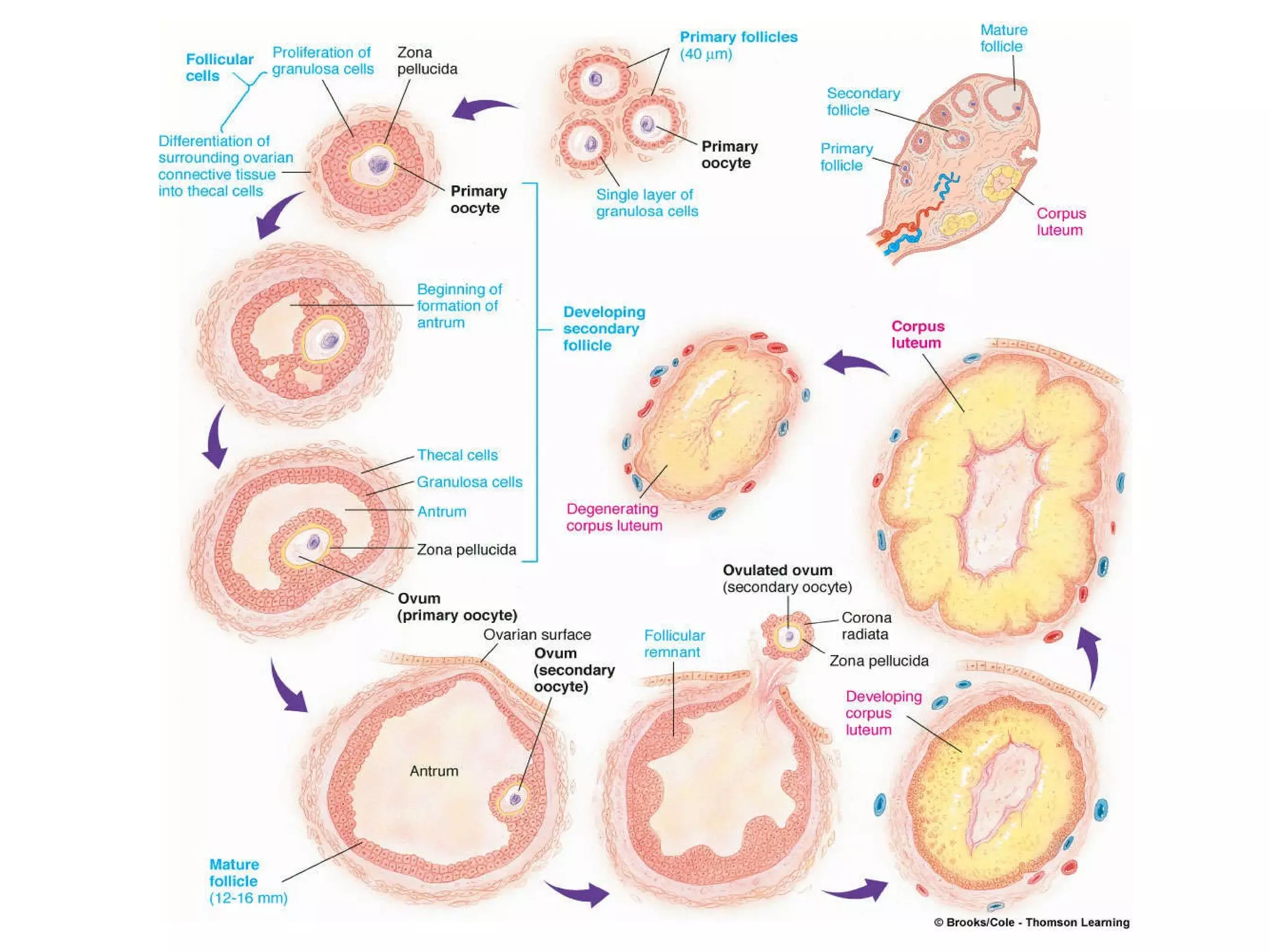
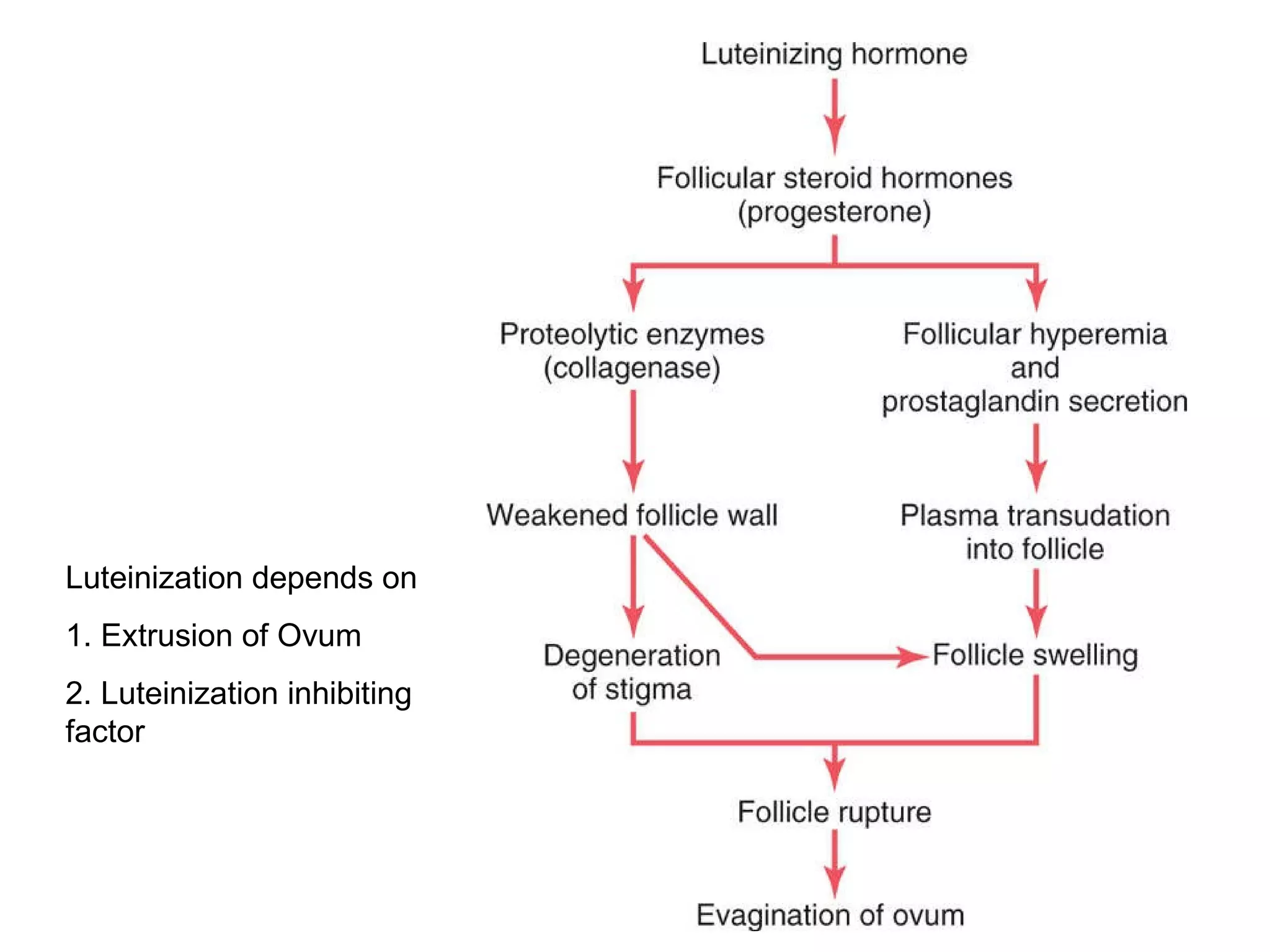
Luteinization depends on 1. Extrusion of Ovum 2. Luteinization inhibiting factor
 
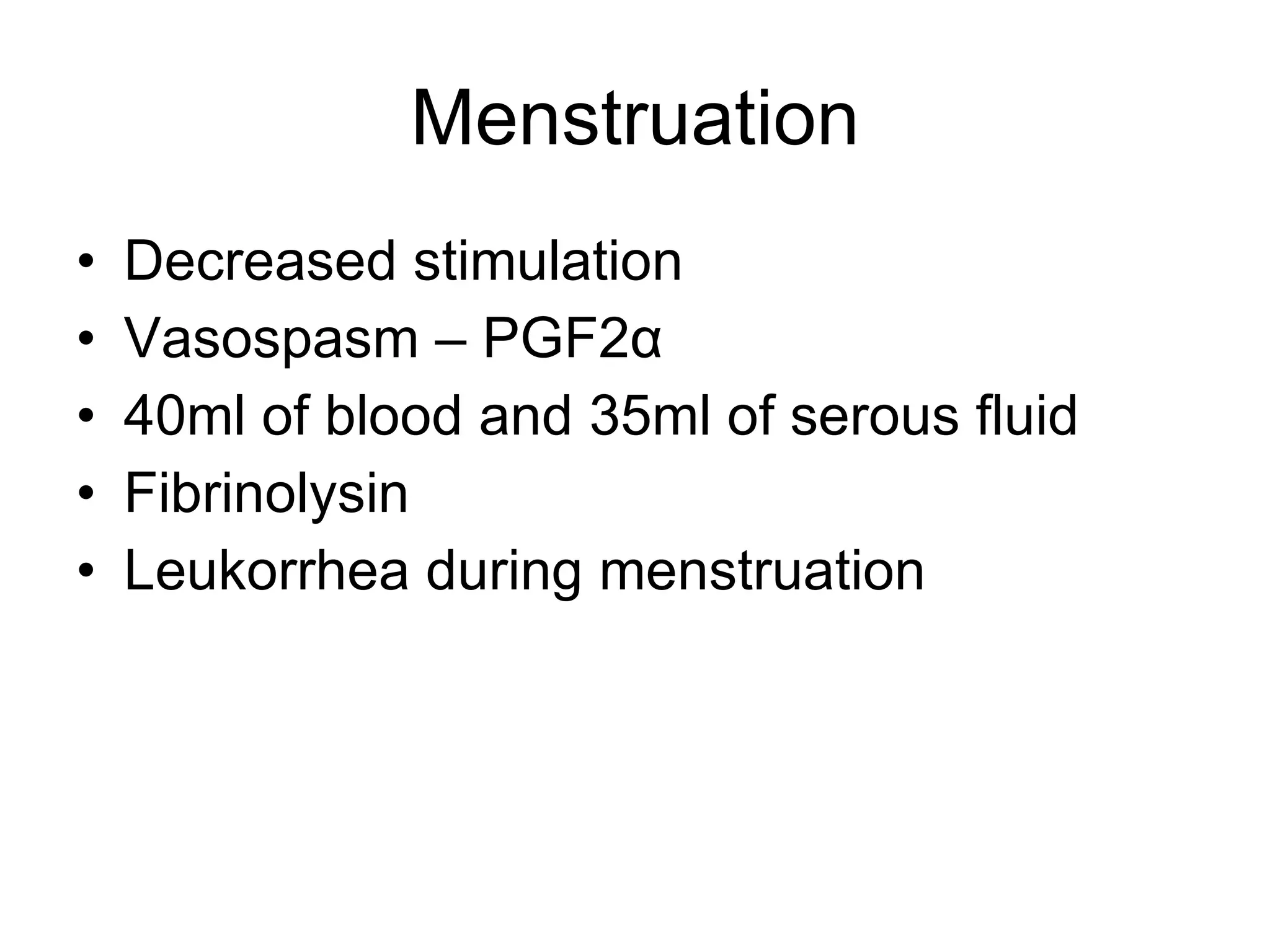
Menstruation Decreased stimulation Vasospasm – PGF2 α 40ml of blood and 35ml of serous fluid Fibrinolysin Leukorrhea during menstruation
Synthesis of steroid hormones
Thankyou

Ovarian and menstrual cycle

  • 1.
    Ovarian and MenstrualCycle Dr. Sadaf Mumtaz 4/2/11
  • 2.
  • 3.
  • 4.
    Female Hormones GnRHLH FSH Estrogen Progesterone
  • 5.
    Female monthly sexualcycle Duration Significance Difference in production of hormones between the two sexes
  • 6.
    Oogenesis and spermatogeneisOogonia divide mitotically to give rise to 6-7 million oogonia by the fifth month of gestation when mitotic proliferation ceases. During the last part of fetal life, the oogonia begin the early steps of the first meiotic division but do not complete it. The primary oocytes stay in meiotic arrest for years until they are prepared for ovulation. Just before ovulation, the primary oocyte completes its first meiotic division. Recently it has been discovered that at least in mice, new oocytes and follicles are produced after birth from unknown ovarian stem cells Limited gamete potential in females (of the total pool of follicles only 400-500 will mature and release ova) In addition to providing half the genes, provides all the cytoplasmic components needed to support early development of the fertilized ovum Spermatogonia undergo mitotic and meiotic divisions after puberty. There is no recent discovery for spermatogonia producing cells. Continual process of spermatogenesis in males, who have potential to produce several million sperms in a single day Motile spermatozoa is unencumbered with unessential cytoplasm and orgenelles
  • 7.
    Plasma concentration ofgonadotropins and ovarian hormones
  • 8.
  • 9.
    Luteinization depends on1. Extrusion of Ovum 2. Luteinization inhibiting factor
  • 10.
  • 11.
    Menstruation Decreased stimulationVasospasm – PGF2 α 40ml of blood and 35ml of serous fluid Fibrinolysin Leukorrhea during menstruation
  • 12.
  • 13.