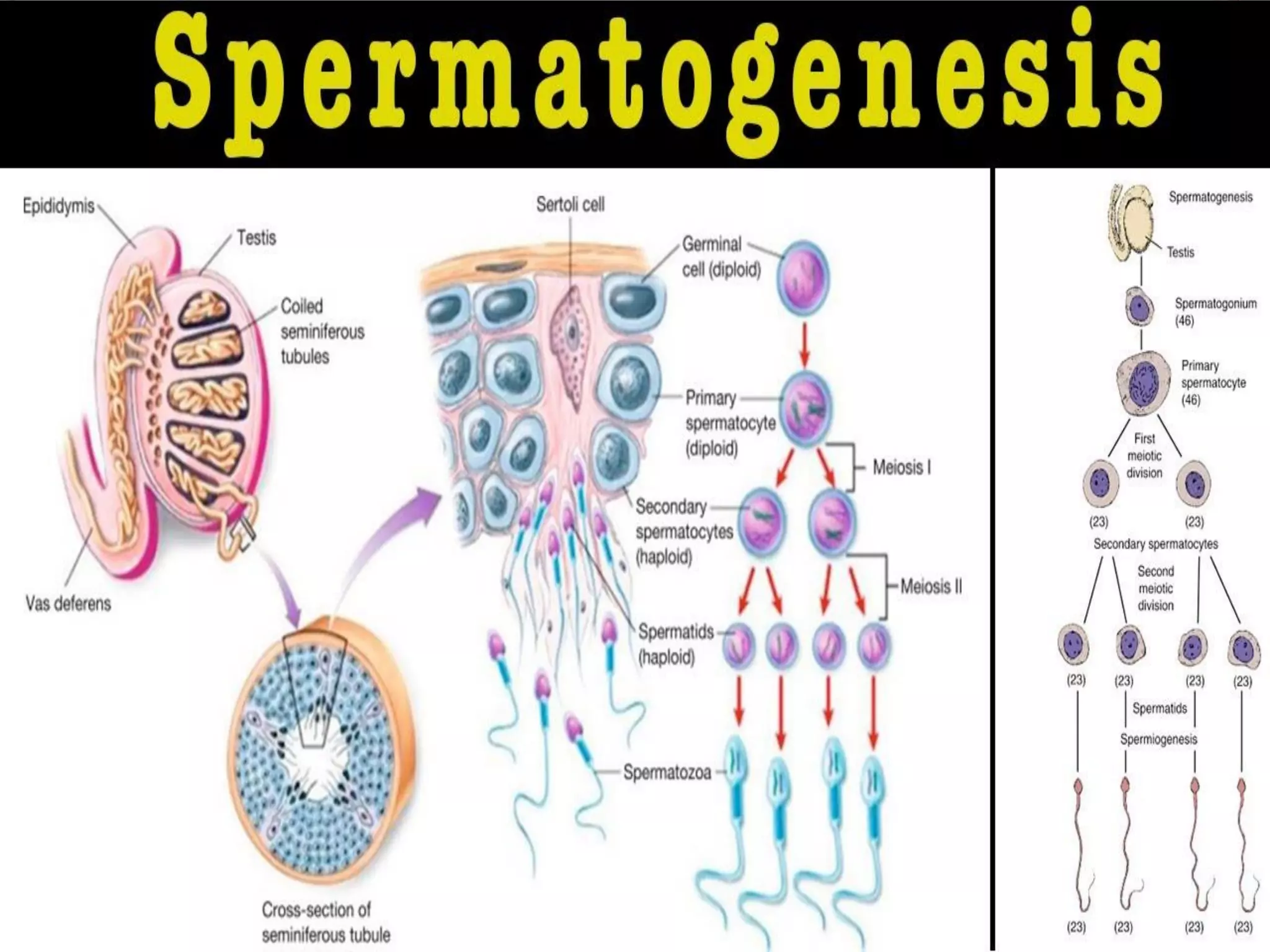
SPERMATOGENESIS
Spermatogenes is the formation of
sperm cells. It takes place in the
semniferous tubules.
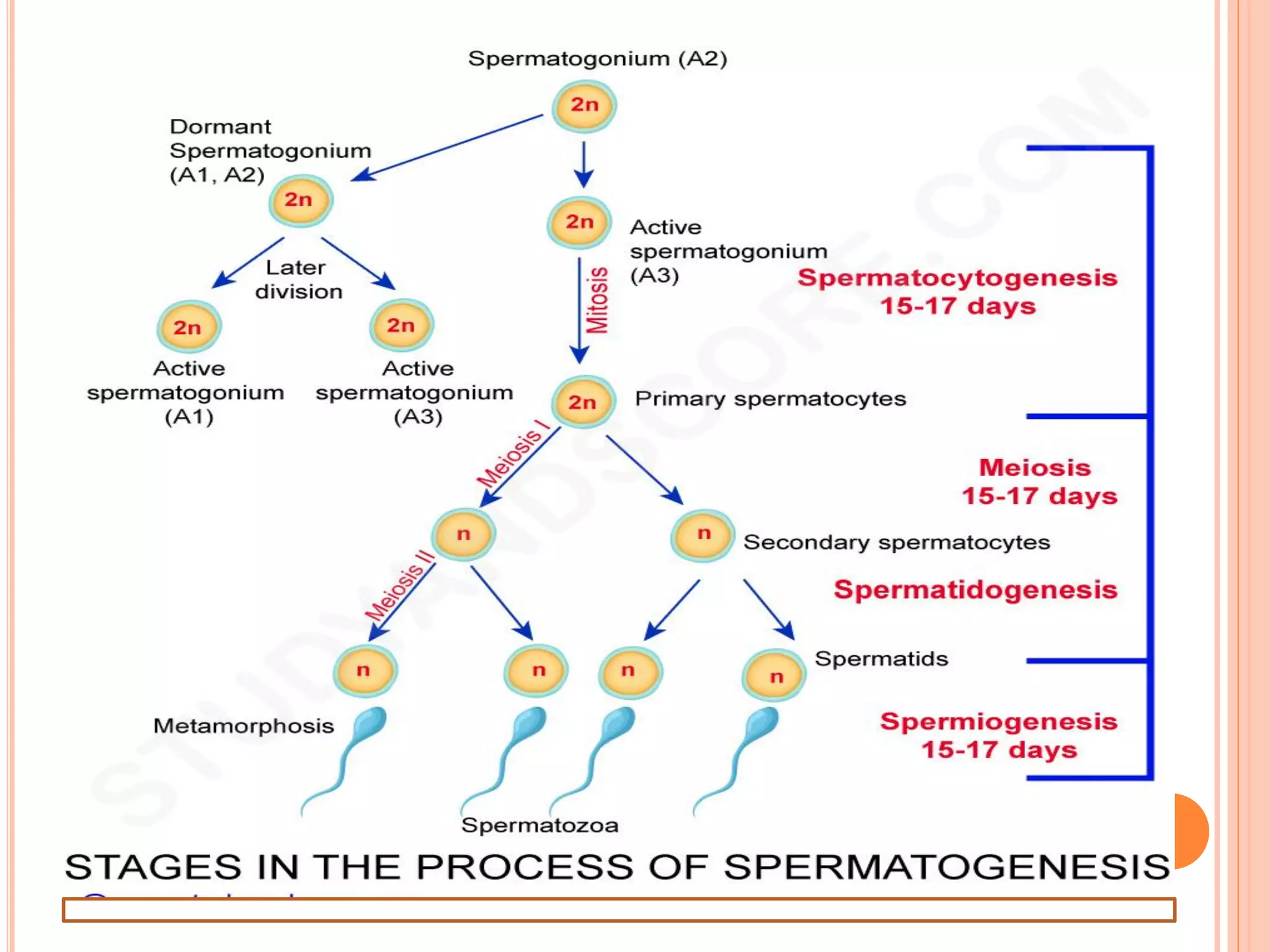
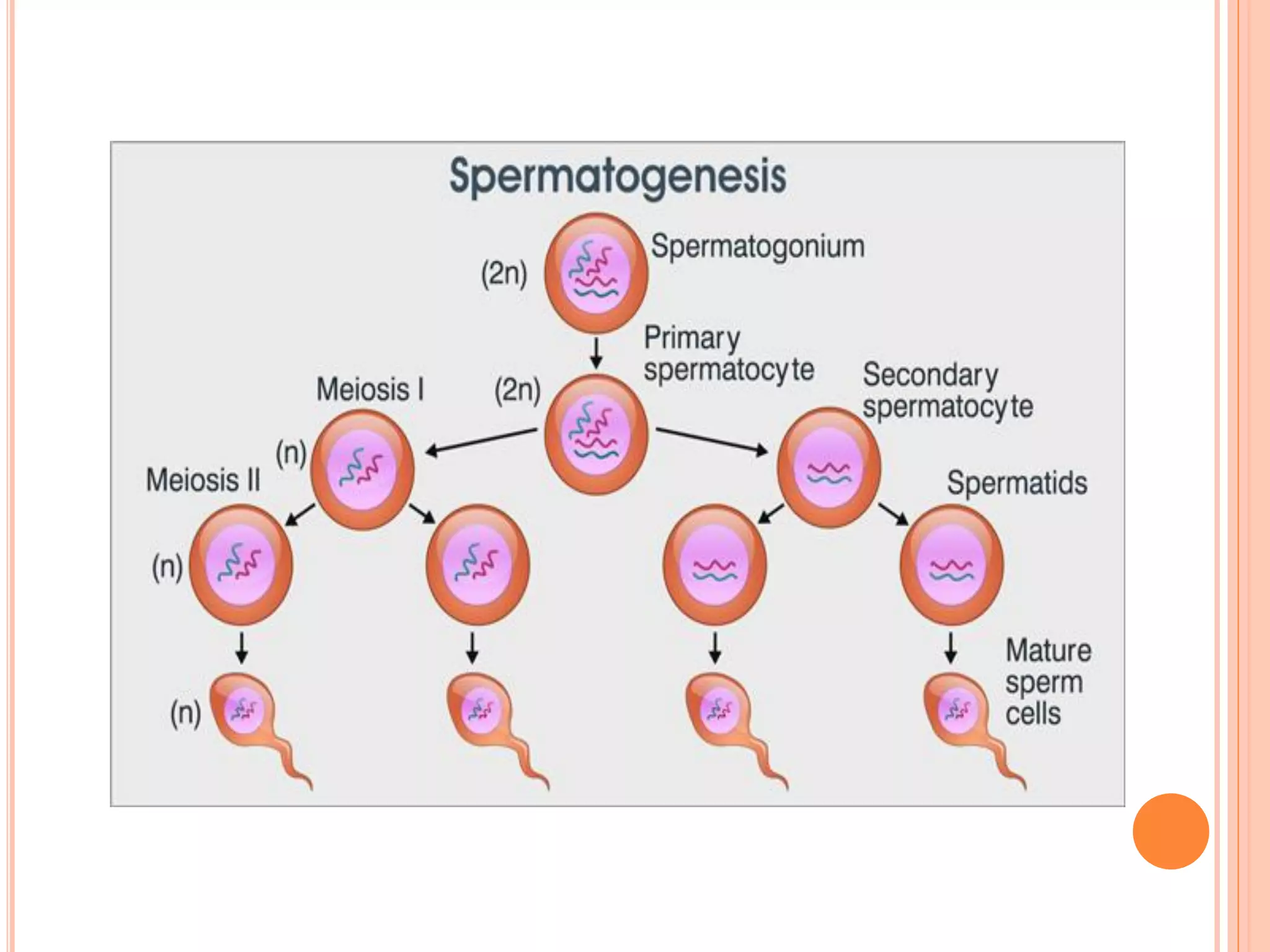
 Diploid cells that begin the process are located near the
outer wall of the tubules.
 These cells multiply constantly by mitosis, and each
day about 3 million of them differentiate into primary
spermatocytes, the cells that will undergo meiosis
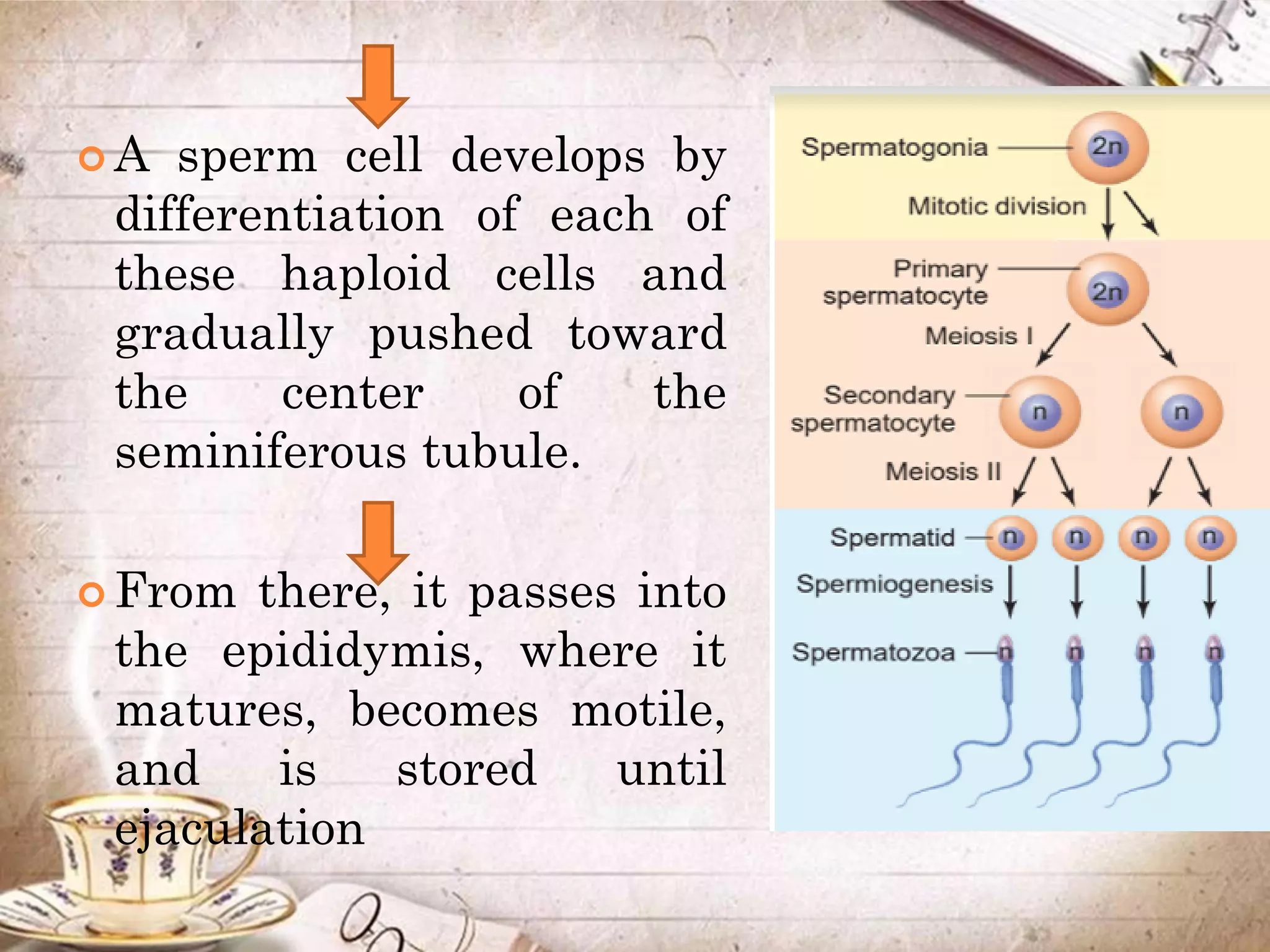
 Meiosis I of a primary spermatocyte produces
secondary spermatocytes, each with the haploid
number of chromosomes (n=23).
 Meiosis II then forms four cells, each with the haploid
number of single-chromatid chromosomes (spermatids).
 A sperm cell develops by
differentiation of each of
these haploid cells and
gradually pushed toward
the center of the
seminiferous tubule.
 From there, it passes into
the epididymis, where it
matures, becomes motile,
and is stored until
ejaculation
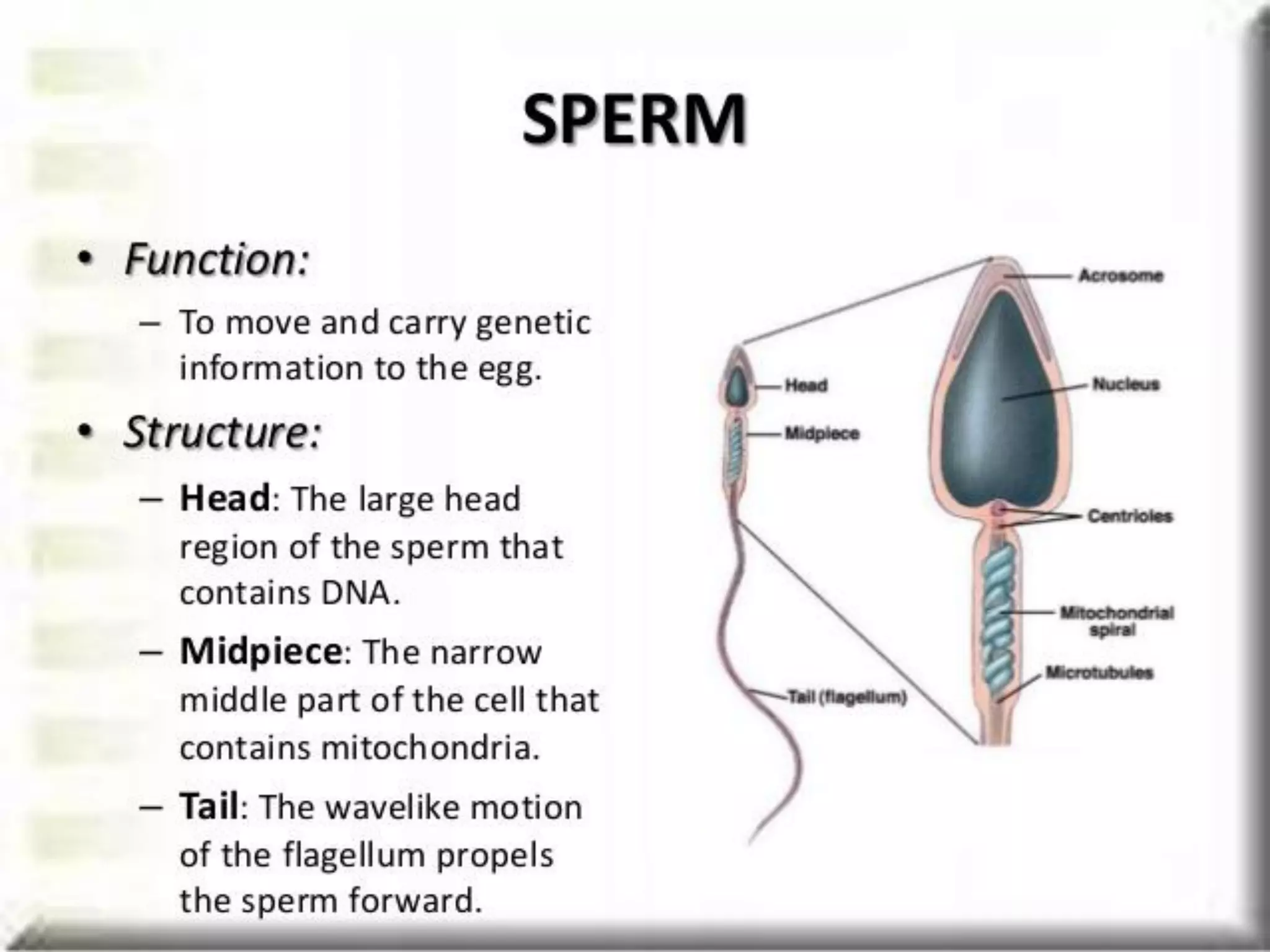
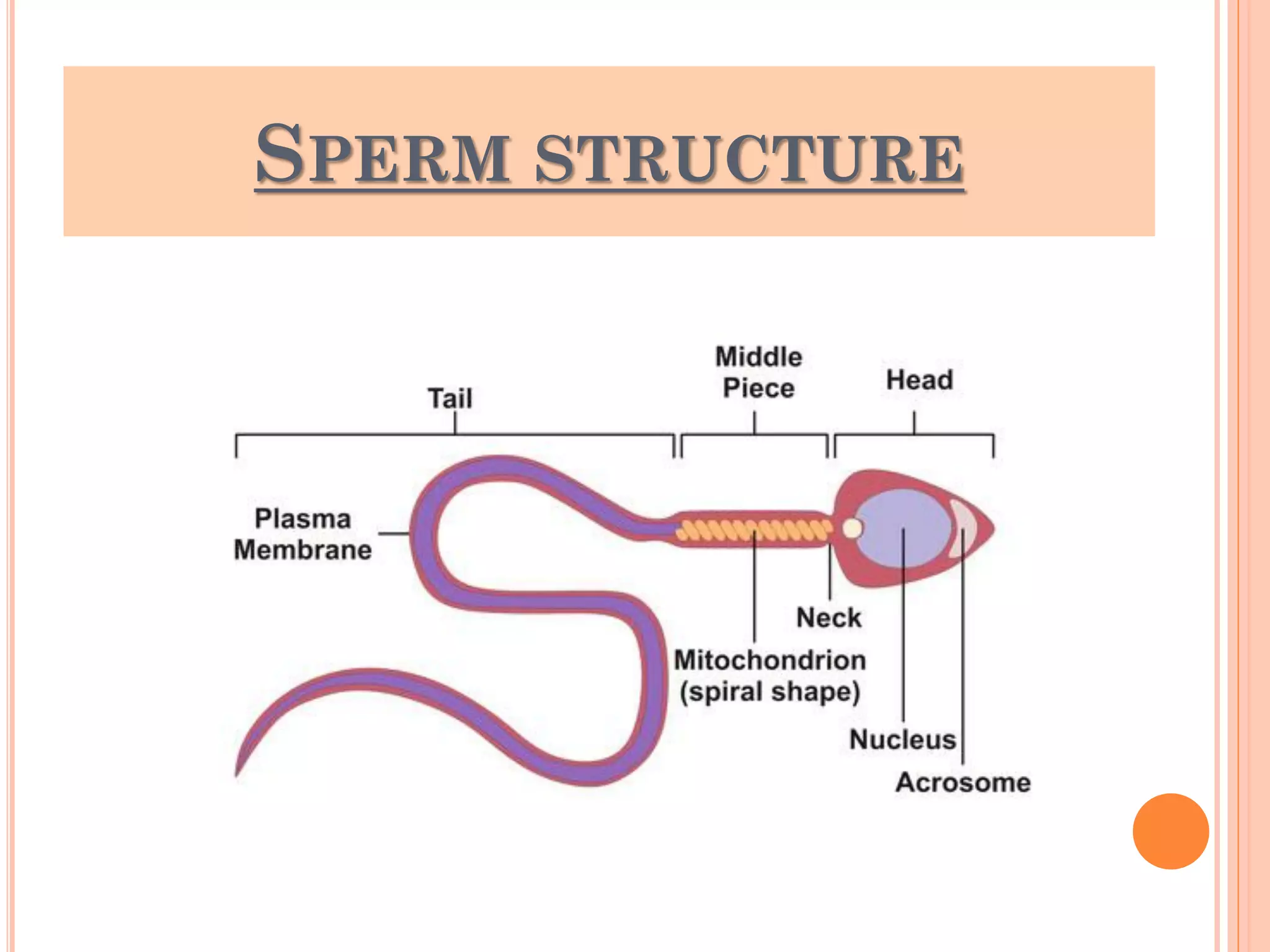
SPERM STRUCTURE
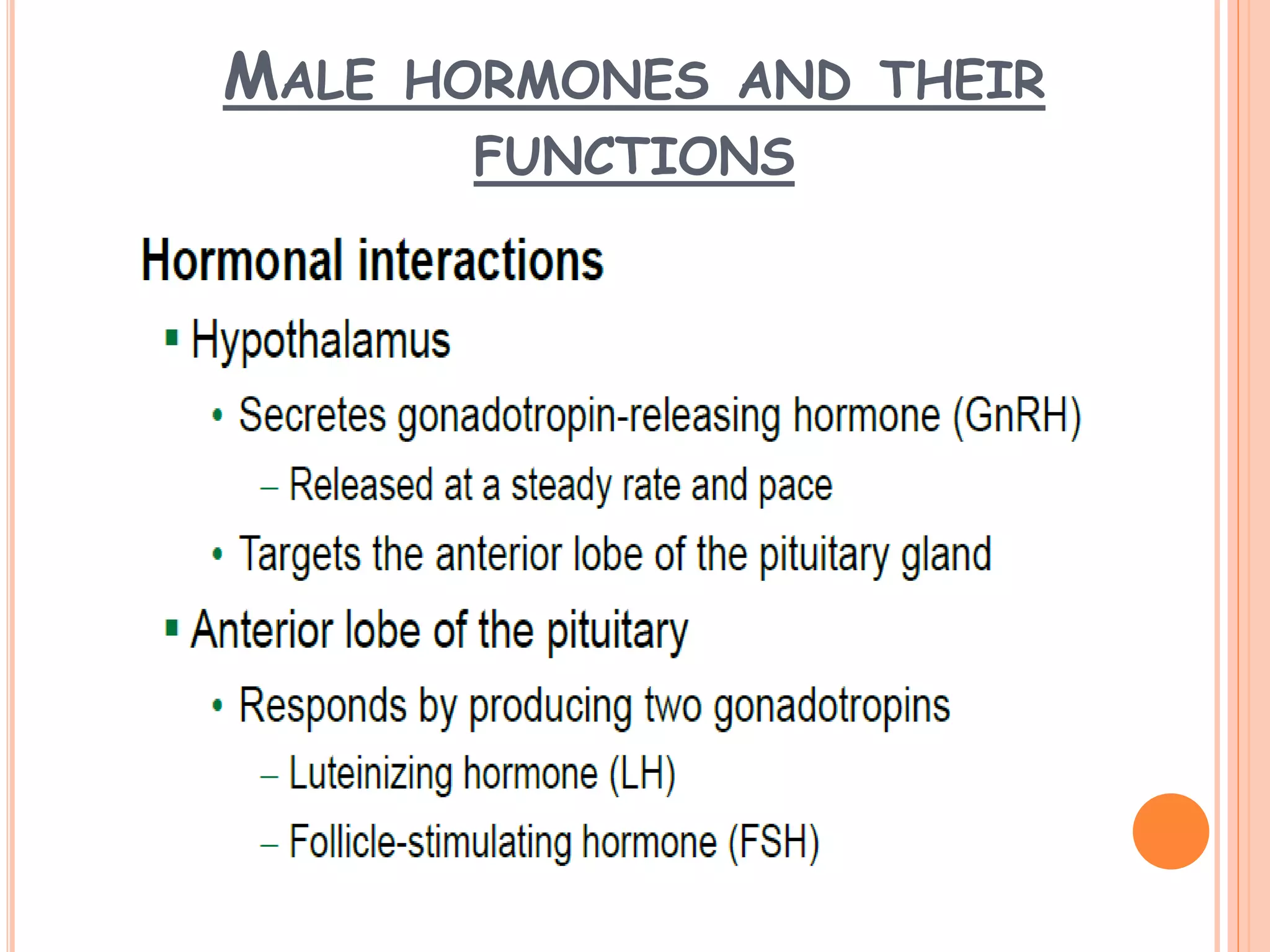
MALE HORMONES AND THEIR
FUNCTIONS
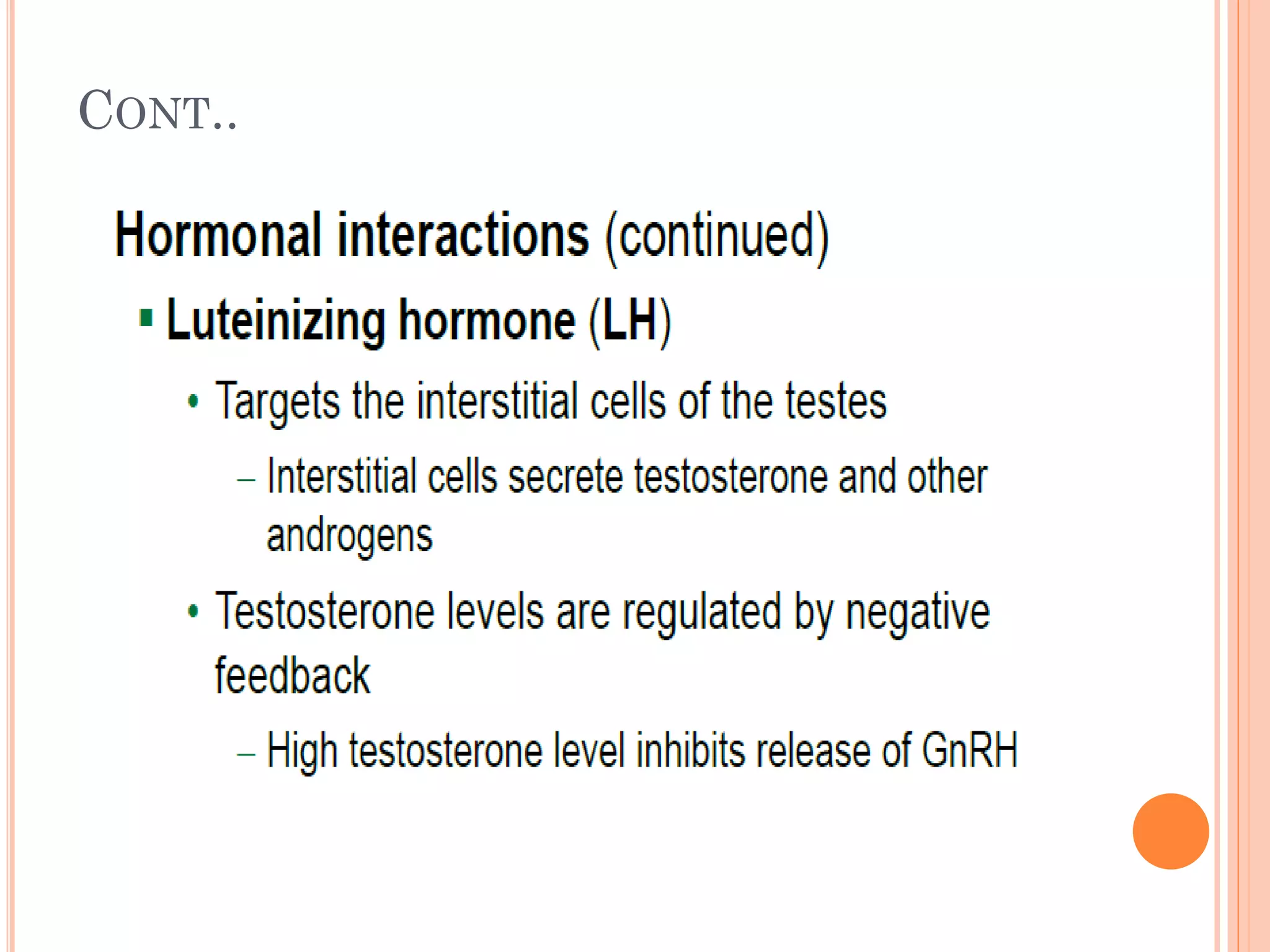
CONT..
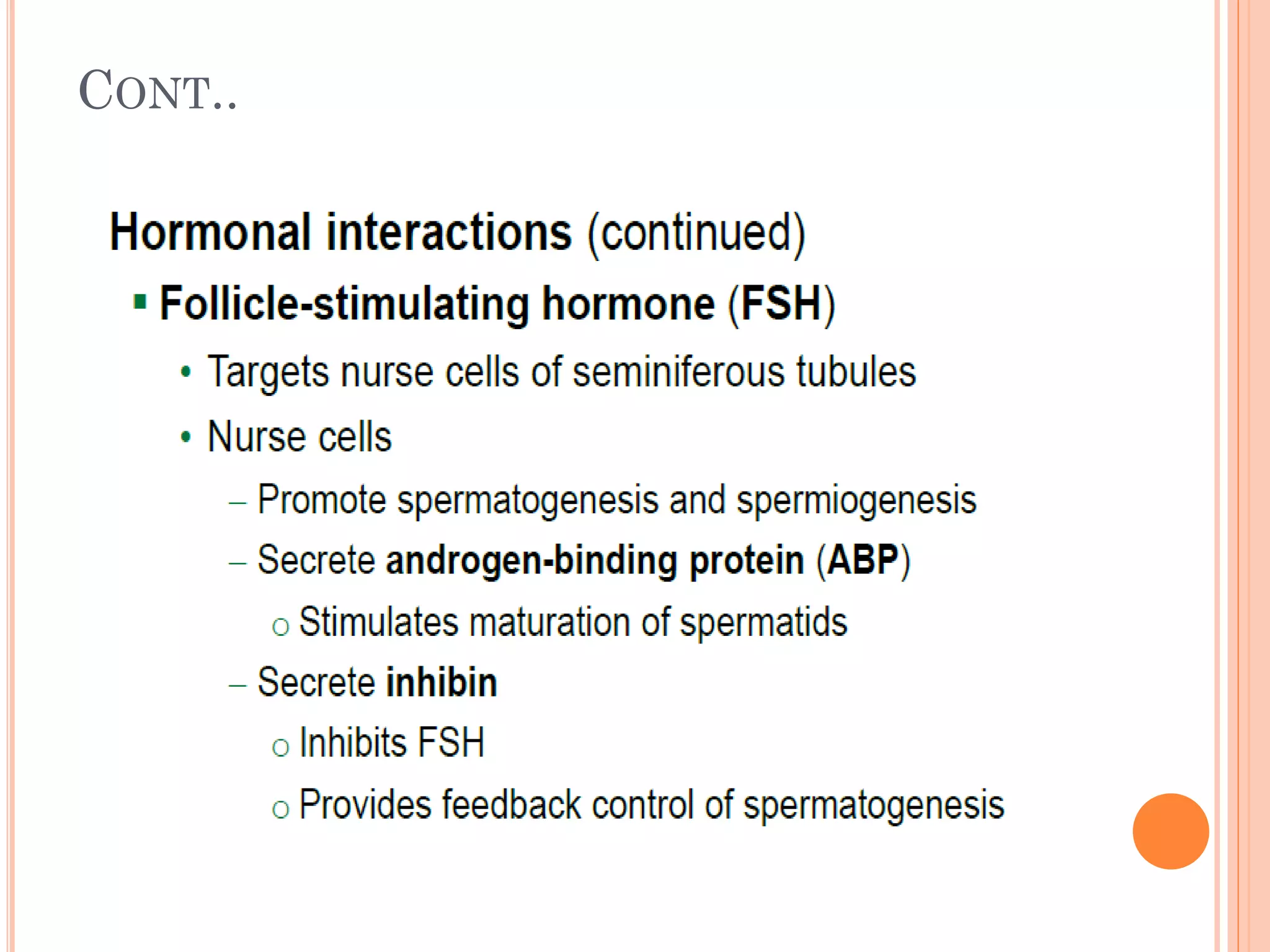
CONT..
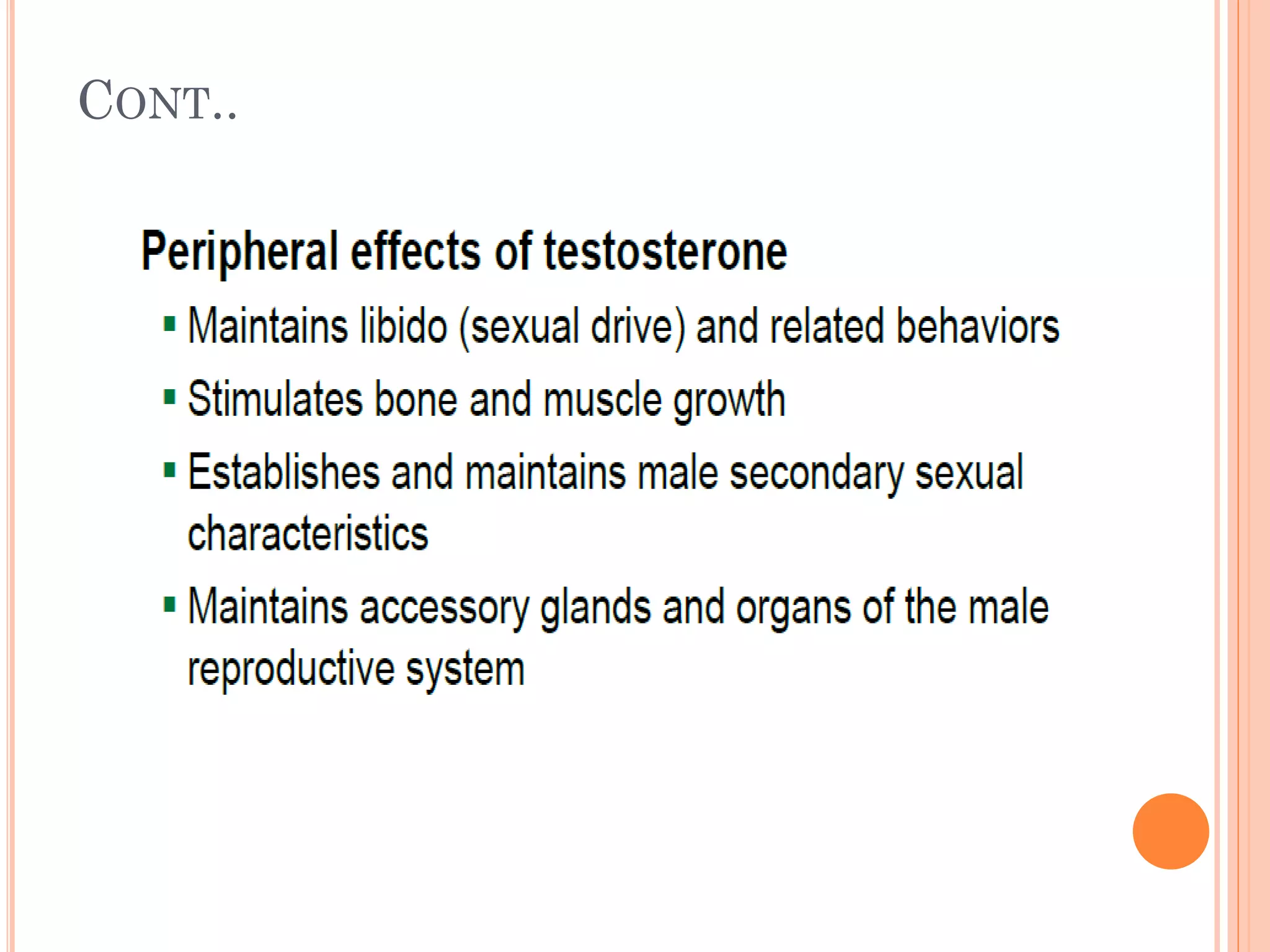
CONT..
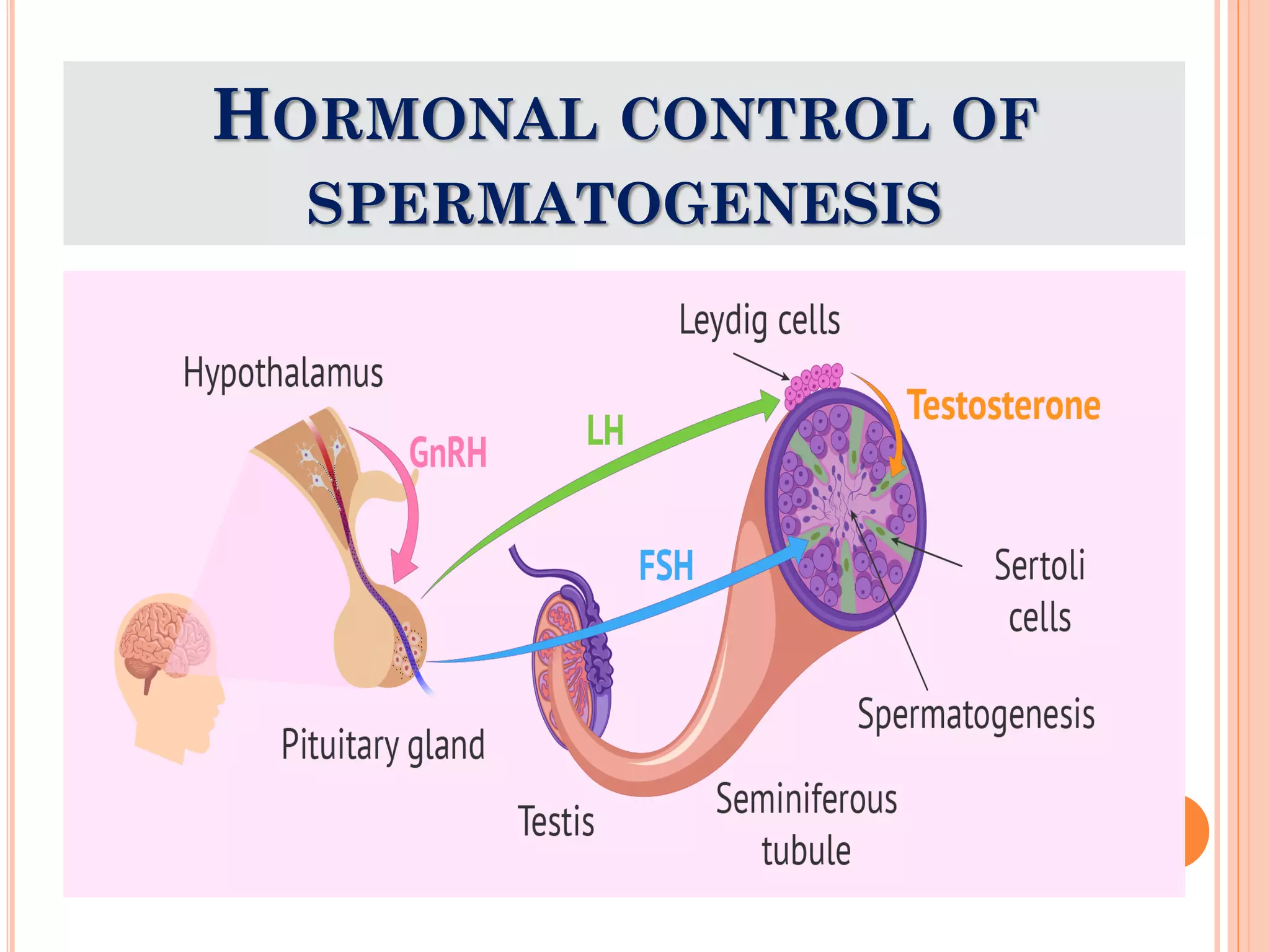
HORMONAL CONTROL OF
SPERMATOGENESIS
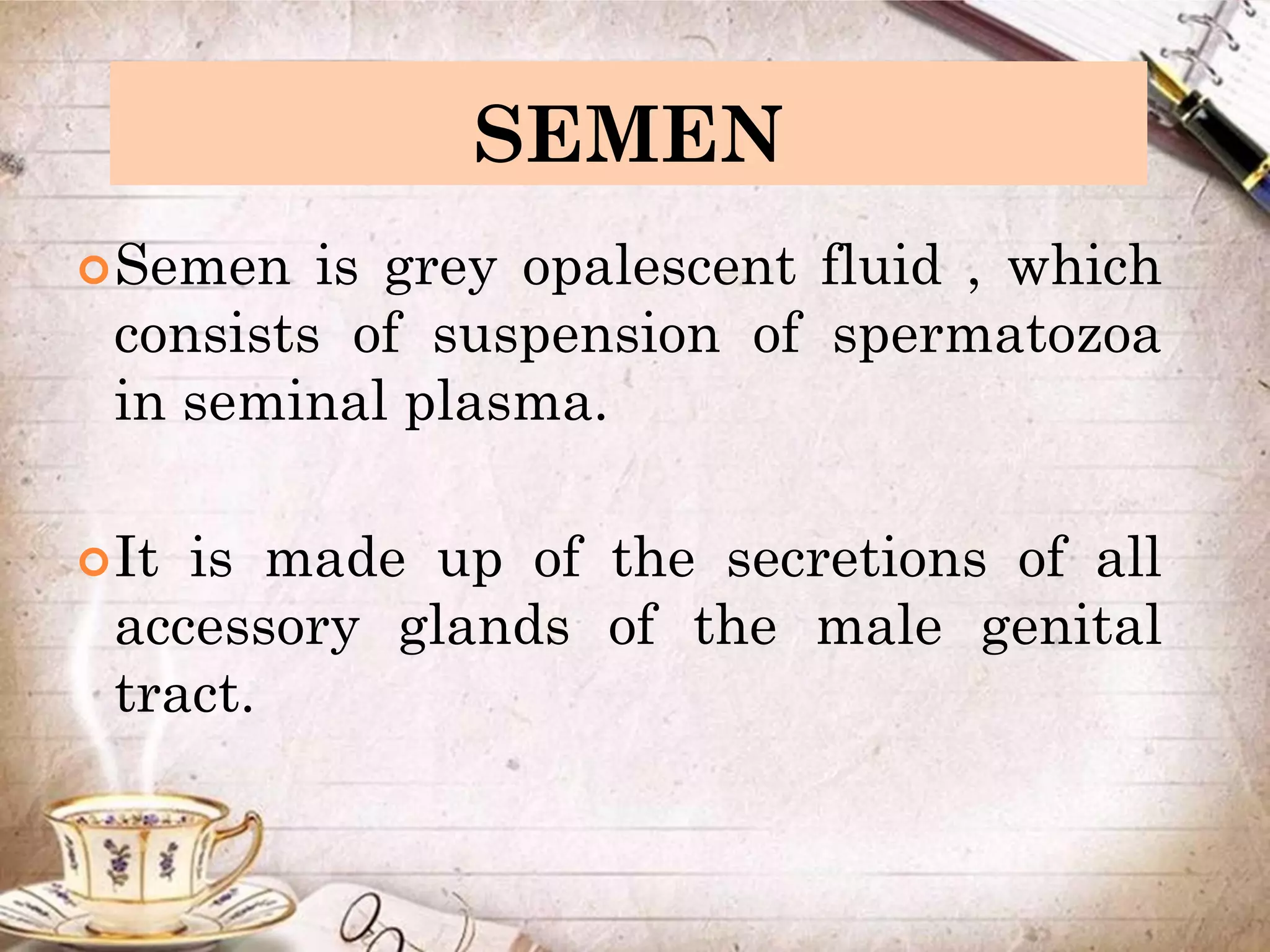
SEMEN
Semen is grey opalescent fluid , which
consists of suspension of spermatozoa
in seminal plasma.
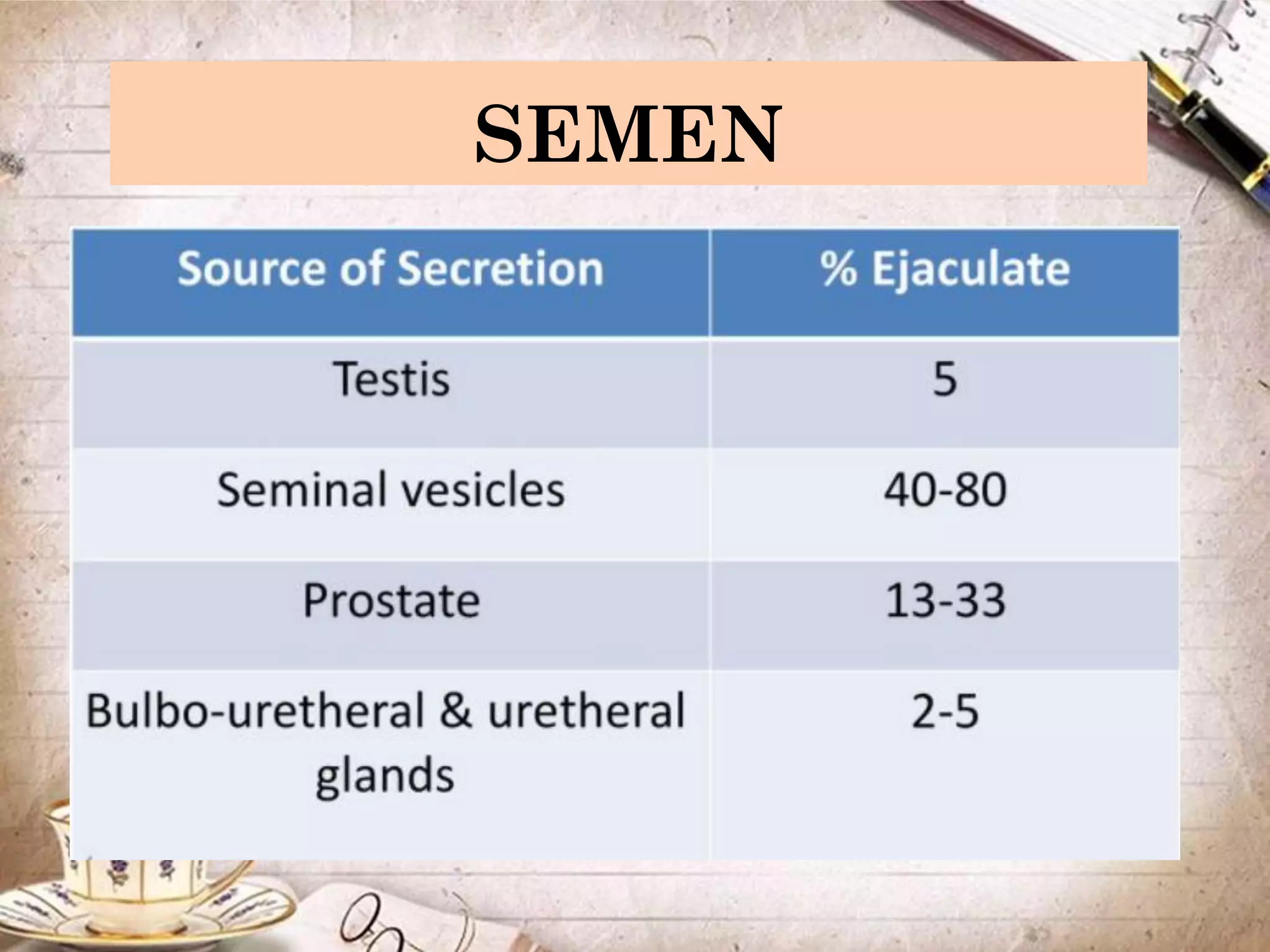
It is made up of the secretions of all
accessory glands of the male genital
tract.
SEMEN
SEMEN
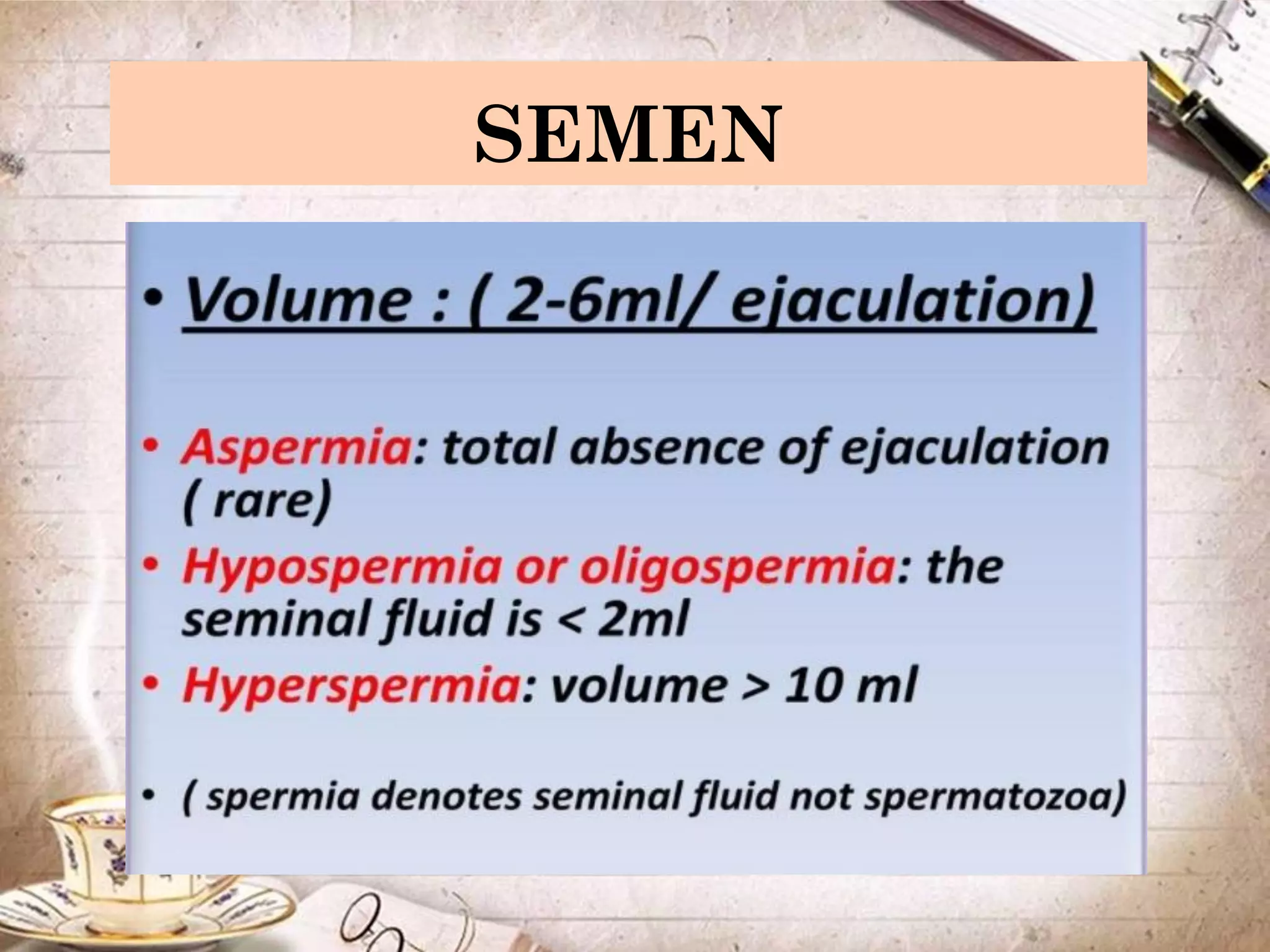
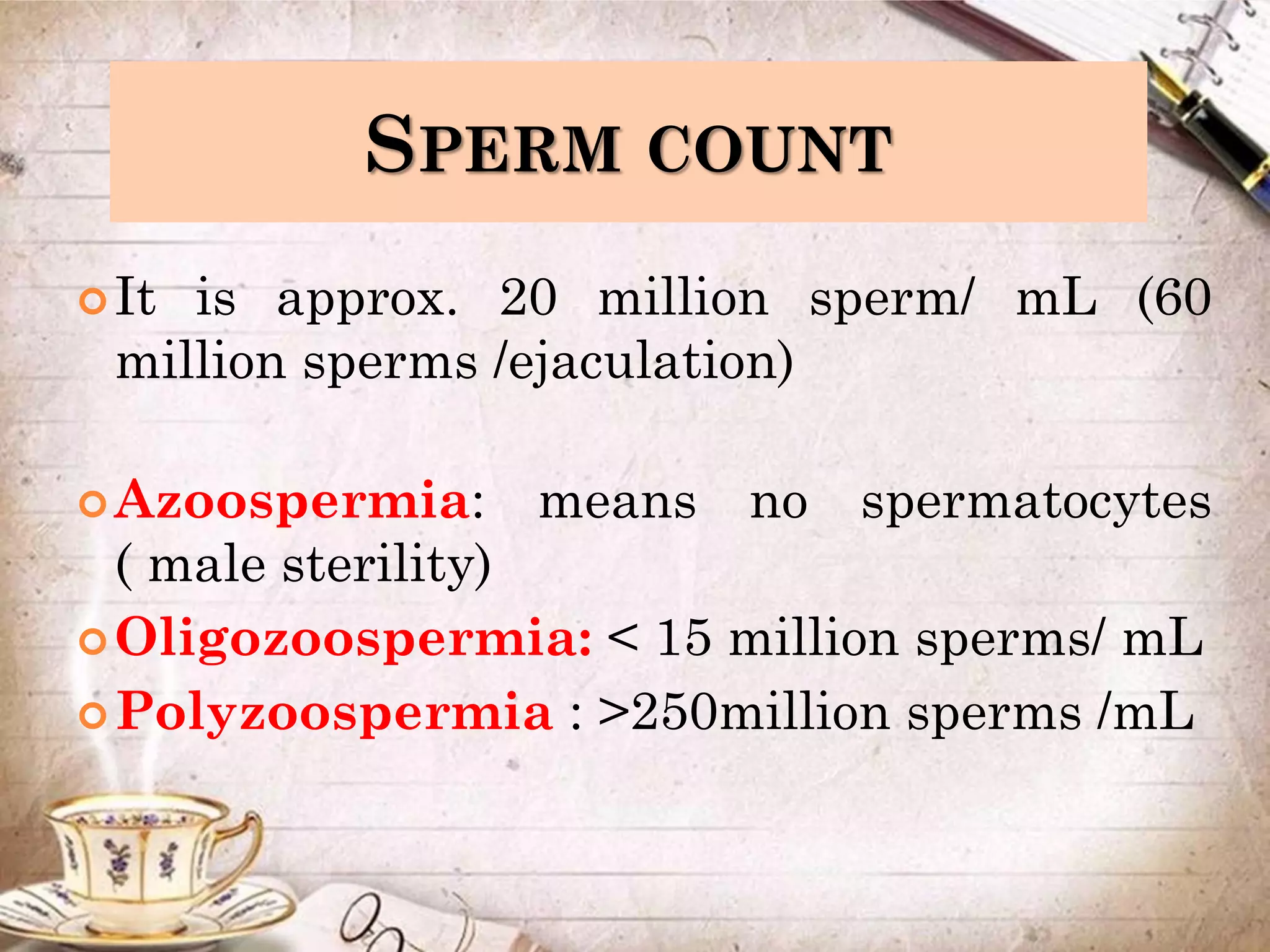
SPERM COUNT
It is approx. 20 million sperm/ mL (60
million sperms /ejaculation)
Azoospermia: means no spermatocytes
( male sterility)
Oligozoospermia: < 15 million sperms/ mL
Polyzoospermia : >250million sperms /mL
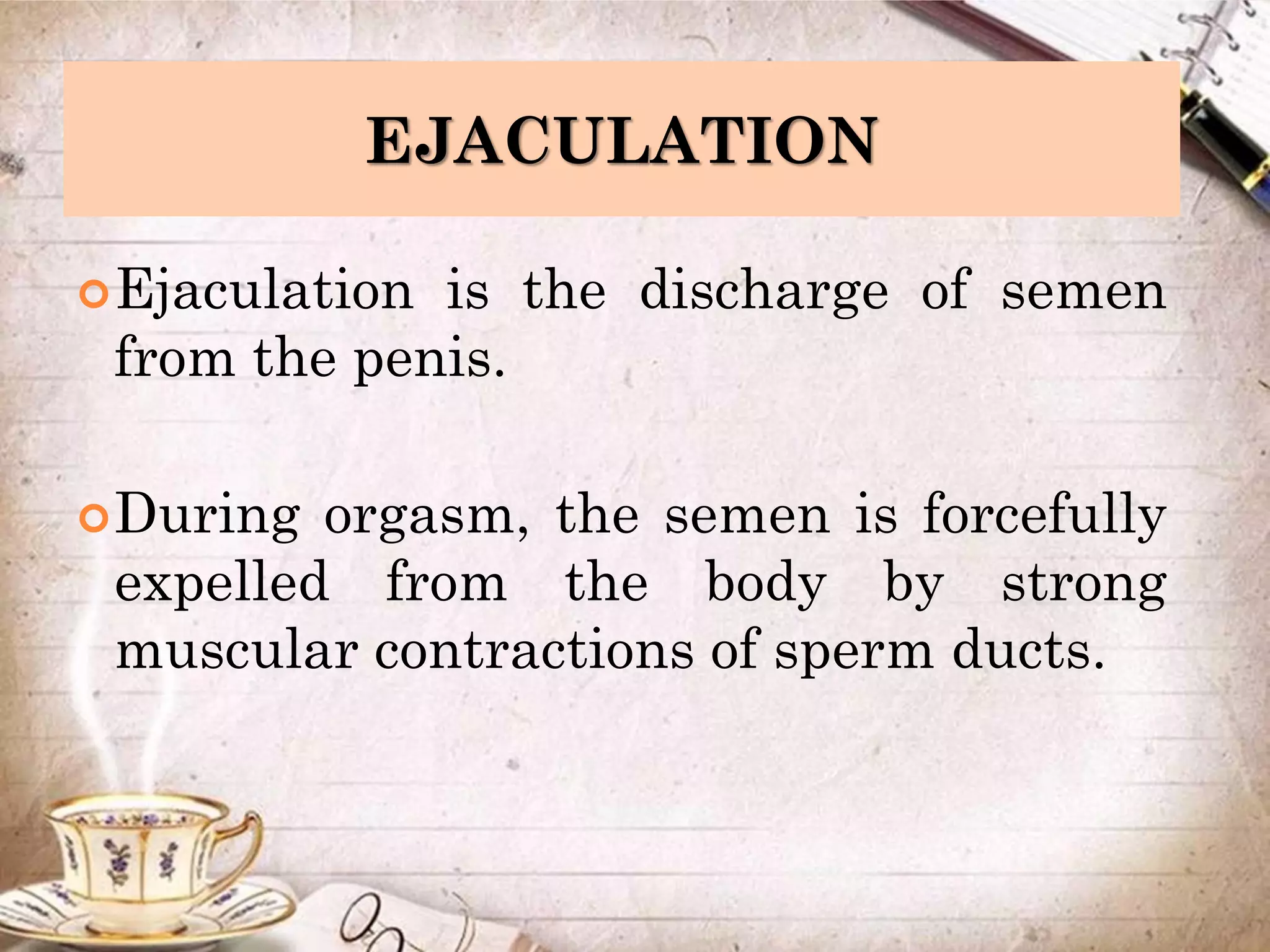
EJACULATION
Ejaculation is the discharge of semen
from the penis.
During orgasm, the semen is forcefully
expelled from the body by strong
muscular contractions of sperm ducts.
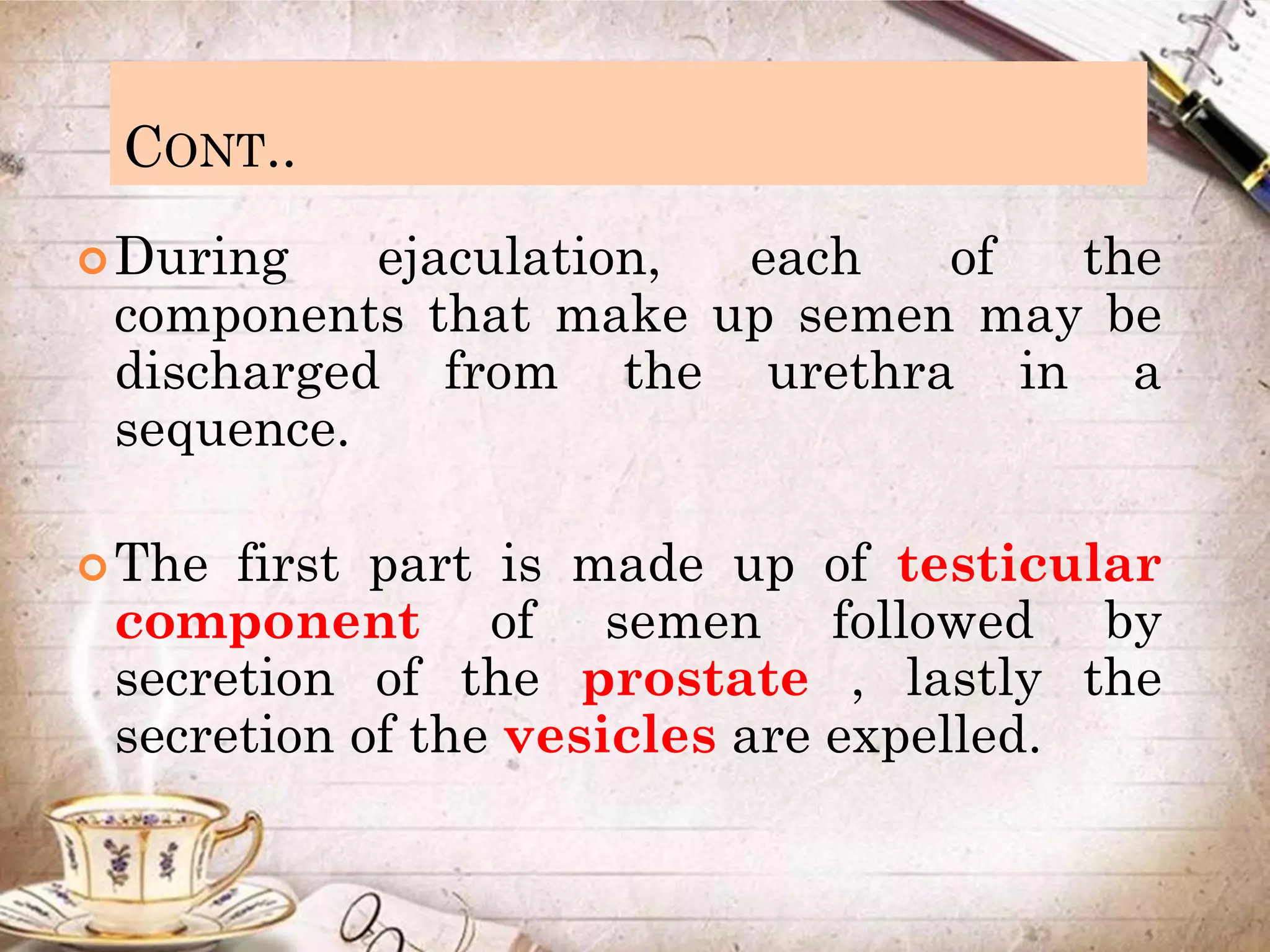
CONT..
During ejaculation, each of the
components that make up semen may be
discharged from the urethra in a
sequence.
The first part is made up of testicular
component of semen followed by
secretion of the prostate , lastly the
secretion of the vesicles are expelled.
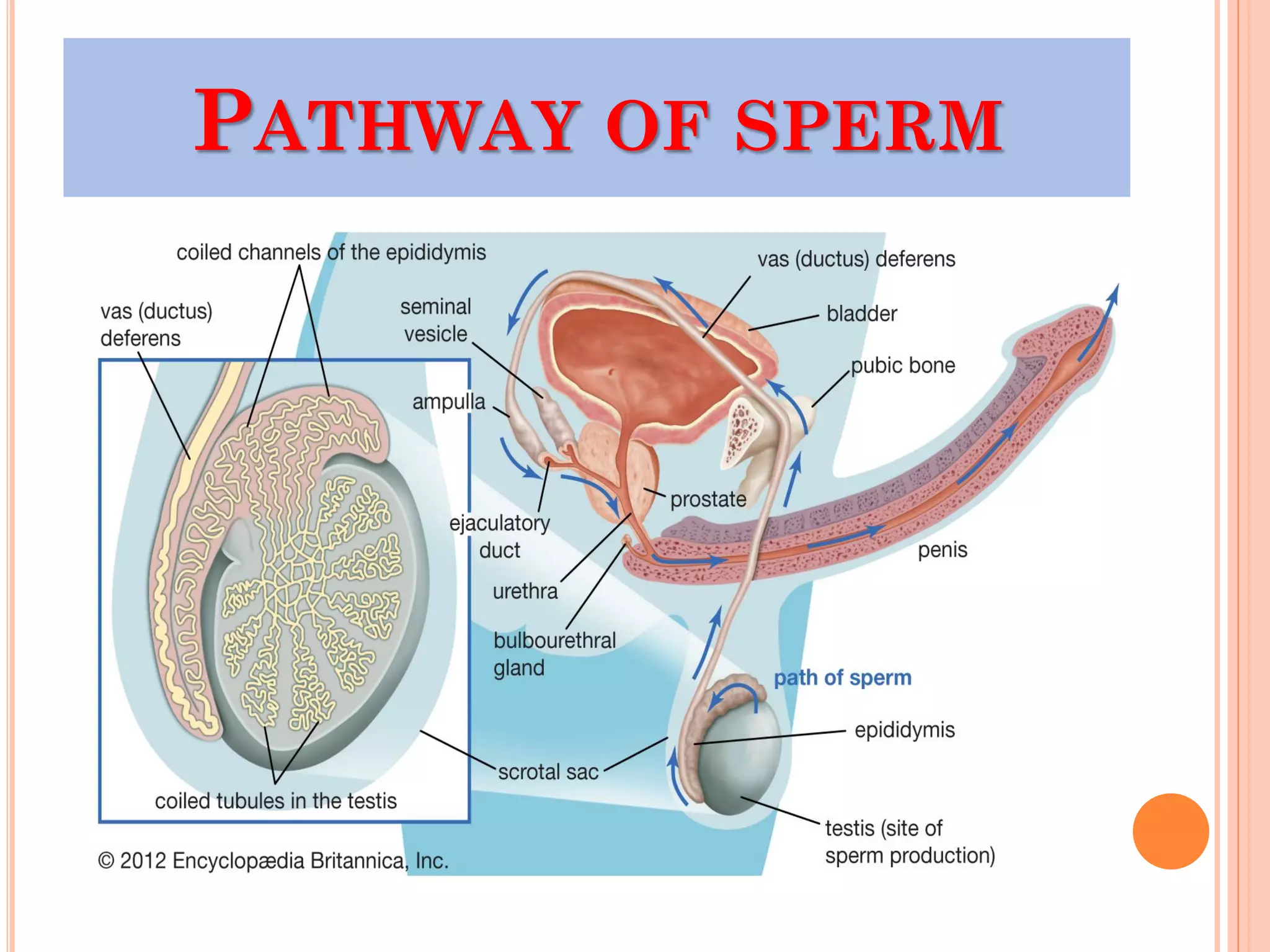
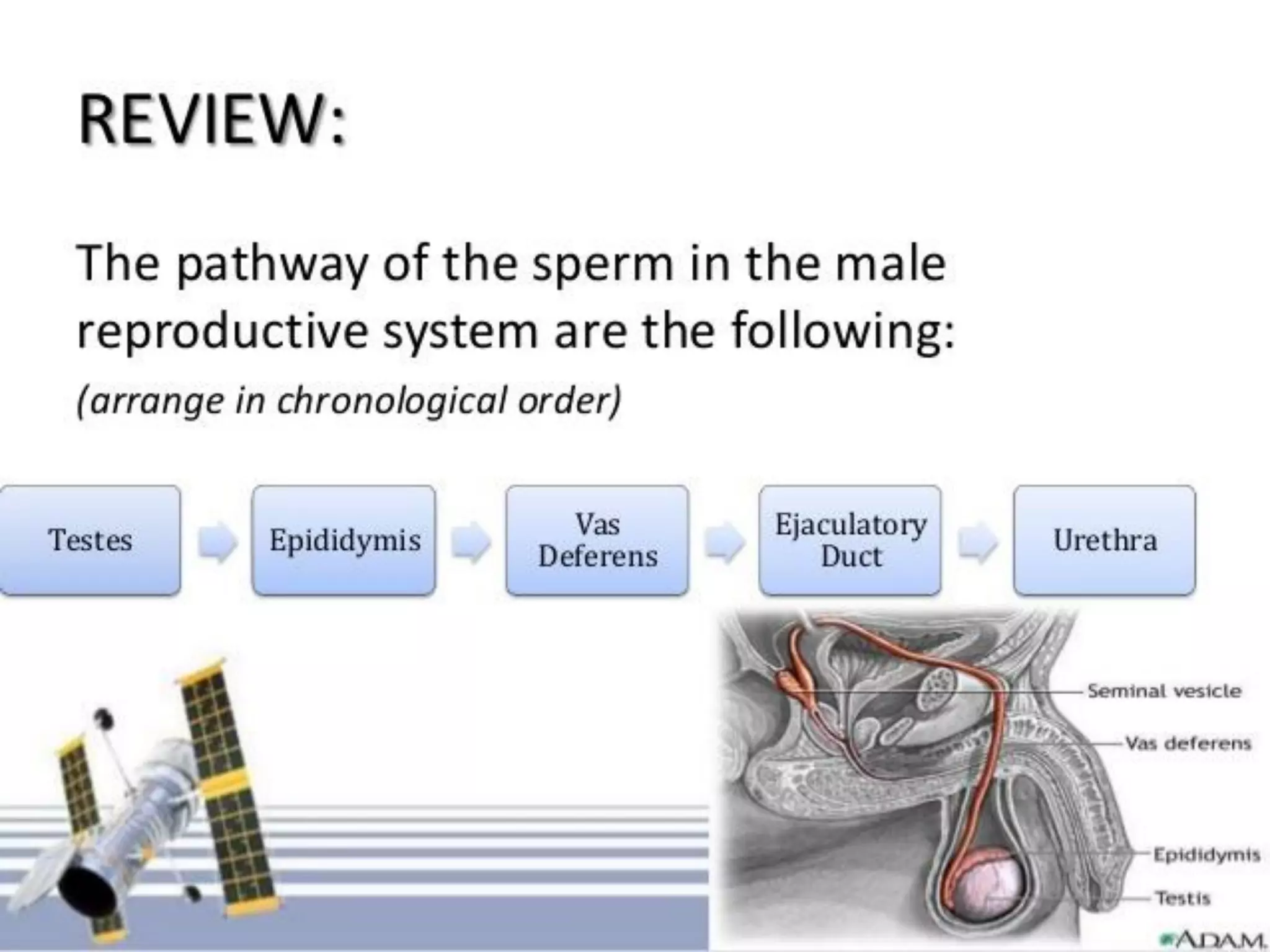
PATHWAY OF SPERM
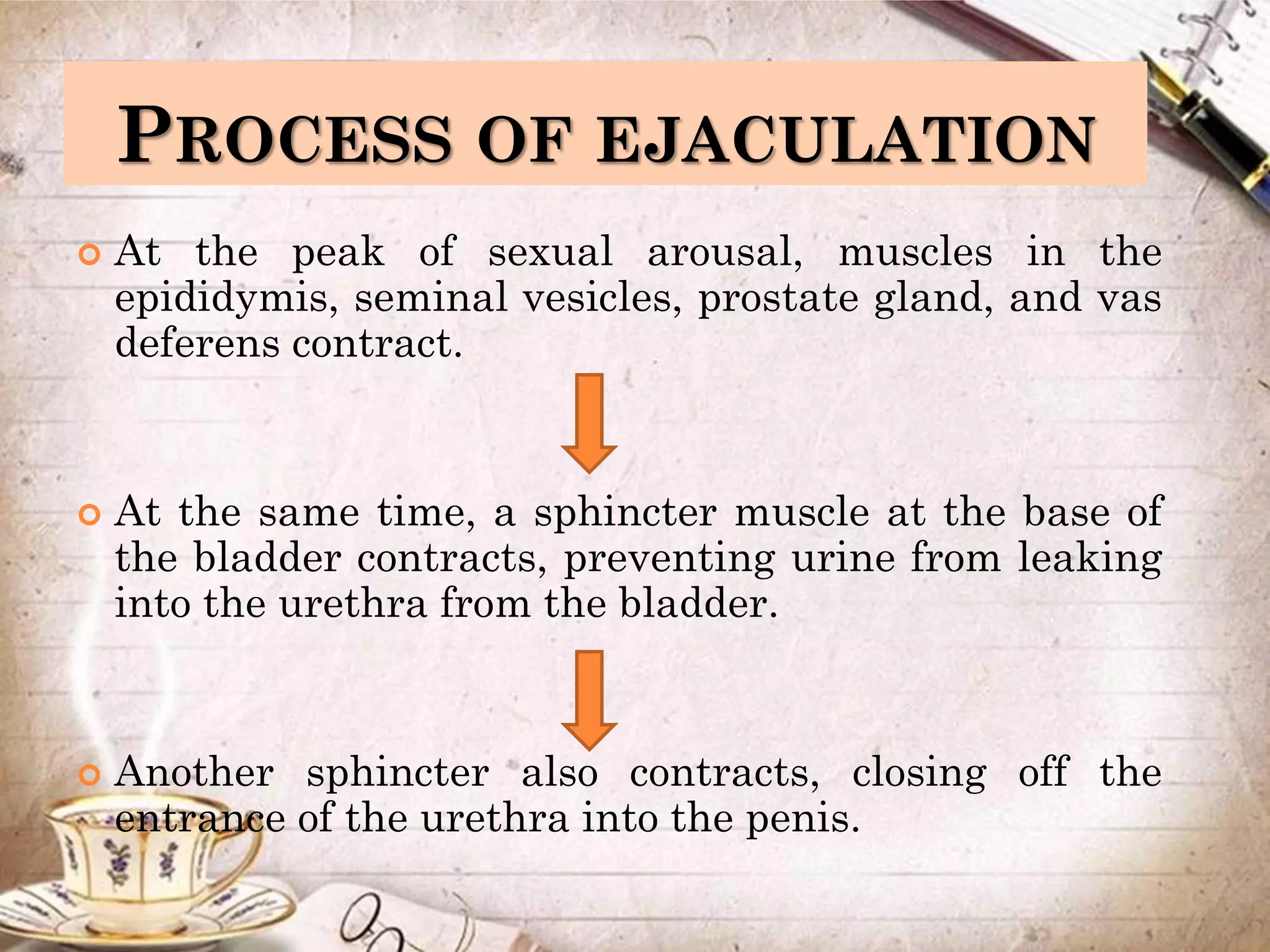
PROCESS OF EJACULATION
 At the peak of sexual arousal, muscles in the
epididymis, seminal vesicles, prostate gland, and vas
deferens contract.
 At the same time, a sphincter muscle at the base of
the bladder contracts, preventing urine from leaking
into the urethra from the bladder.
 Another sphincter also contracts, closing off the
entrance of the urethra into the penis.
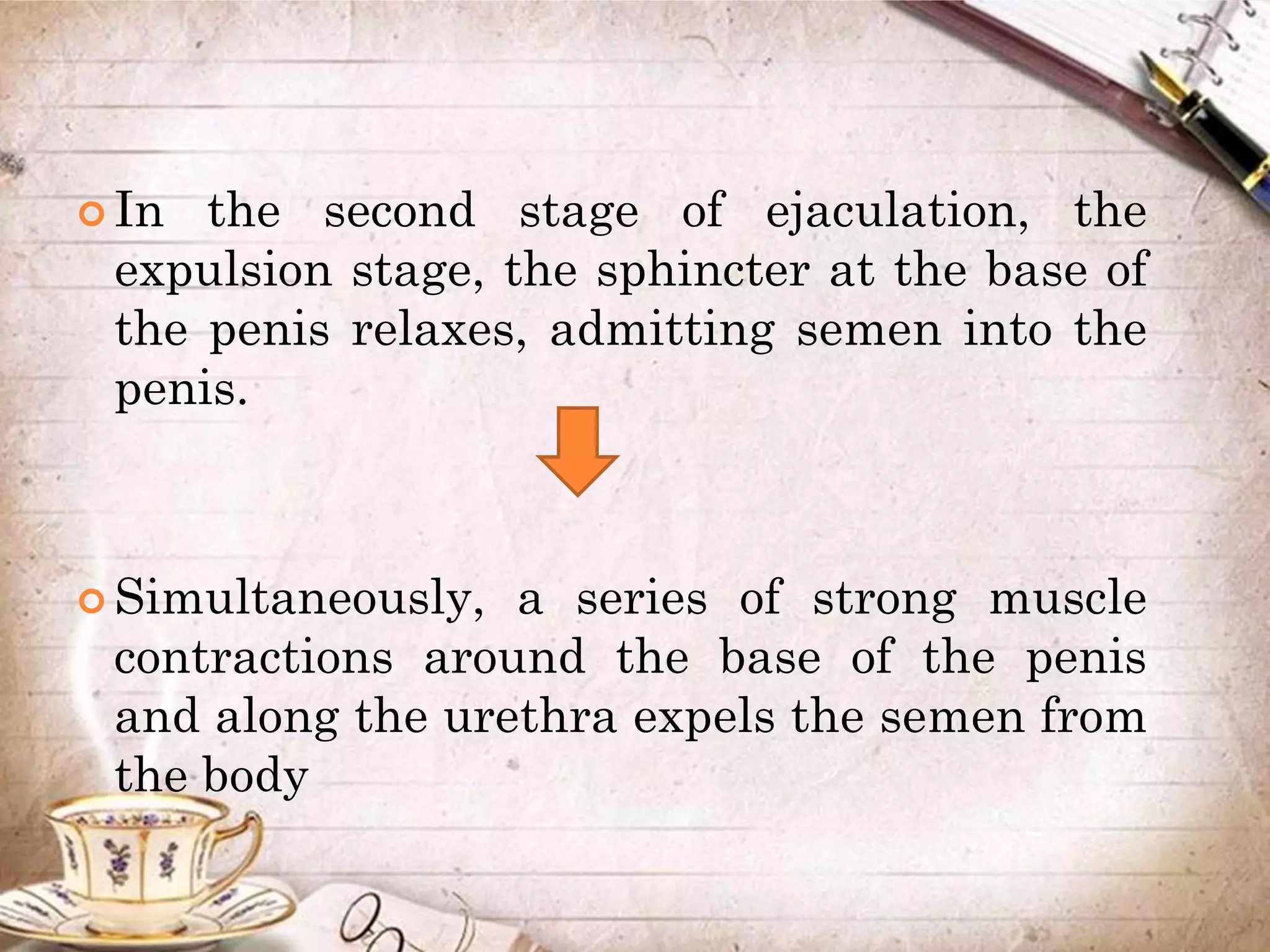
 In the second stage of ejaculation, the
expulsion stage, the sphincter at the base of
the penis relaxes, admitting semen into the
penis.
 Simultaneously, a series of strong muscle
contractions around the base of the penis
and along the urethra expels the semen from
the body
Spermatogenesis-converted.pdf

Spermatogenesis-converted.pdf

  • 2.
    SPERMATOGENESIS Spermatogenes is theformation of sperm cells. It takes place in the semniferous tubules.
  • 4.
     Diploid cellsthat begin the process are located near the outer wall of the tubules.  These cells multiply constantly by mitosis, and each day about 3 million of them differentiate into primary spermatocytes, the cells that will undergo meiosis  Meiosis I of a primary spermatocyte produces secondary spermatocytes, each with the haploid number of chromosomes (n=23).  Meiosis II then forms four cells, each with the haploid number of single-chromatid chromosomes (spermatids).
  • 5.
     A spermcell develops by differentiation of each of these haploid cells and gradually pushed toward the center of the seminiferous tubule.  From there, it passes into the epididymis, where it matures, becomes motile, and is stored until ejaculation
  • 8.
  • 9.
    MALE HORMONES ANDTHEIR FUNCTIONS
  • 10.
  • 11.
  • 12.
  • 13.
  • 14.
    SEMEN Semen is greyopalescent fluid , which consists of suspension of spermatozoa in seminal plasma. It is made up of the secretions of all accessory glands of the male genital tract.
  • 15.
  • 16.
  • 17.
    SPERM COUNT It isapprox. 20 million sperm/ mL (60 million sperms /ejaculation) Azoospermia: means no spermatocytes ( male sterility) Oligozoospermia: < 15 million sperms/ mL Polyzoospermia : >250million sperms /mL
  • 19.
    EJACULATION Ejaculation is thedischarge of semen from the penis. During orgasm, the semen is forcefully expelled from the body by strong muscular contractions of sperm ducts.
  • 20.
    CONT.. During ejaculation, eachof the components that make up semen may be discharged from the urethra in a sequence. The first part is made up of testicular component of semen followed by secretion of the prostate , lastly the secretion of the vesicles are expelled.
  • 21.
  • 22.
    PROCESS OF EJACULATION At the peak of sexual arousal, muscles in the epididymis, seminal vesicles, prostate gland, and vas deferens contract.  At the same time, a sphincter muscle at the base of the bladder contracts, preventing urine from leaking into the urethra from the bladder.  Another sphincter also contracts, closing off the entrance of the urethra into the penis.
  • 23.
     In thesecond stage of ejaculation, the expulsion stage, the sphincter at the base of the penis relaxes, admitting semen into the penis.  Simultaneously, a series of strong muscle contractions around the base of the penis and along the urethra expels the semen from the body