Presented by:
Fasahat Ahmed Butt (36
Group: C1
• What is osteomyelitis?
• Predisposing factors of osteomyelitis?
• Classification
Clinical features
Radiographic features
• Management of osteomyelitis
• What is Alveolar osteitis?
• Pathogenesis
Clinical features
• Treatment
• Osteon: Bone
• Myelitis: Inflammation of the bone marrow
• Acute or chronic inflammatory process in the
medullary spaces or cortical surfaces of the bone
that extends away from the initial site of
involvement
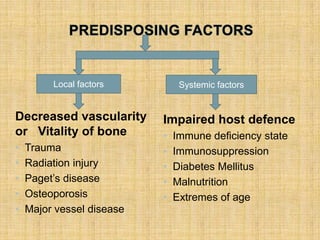
Decreased vascularity
or Vitality of bone
• Trauma
• Radiation injury
• Paget’s disease
• Osteoporosis
• Major vessel disease
Impaired host defence
• Immune deficiency state
• Immunosuppression
• Diabetes Mellitus
• Malnutrition
• Extremes of age
Local factors Systemic factors
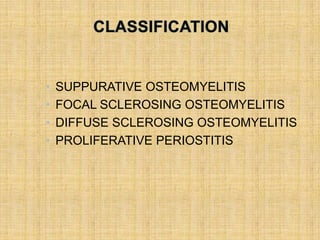
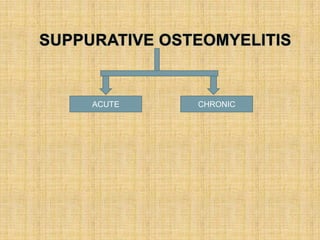
• SUPPURATIVE OSTEOMYELITIS
• FOCAL SCLEROSING OSTEOMYELITIS
• DIFFUSE SCLEROSING OSTEOMYELITIS
• PROLIFERATIVE PERIOSTITIS
ACUTE CHRONIC
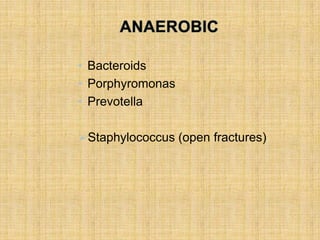
• Bacteroids
• Porphyromonas
• Prevotella
Staphylococcus (open fractures)
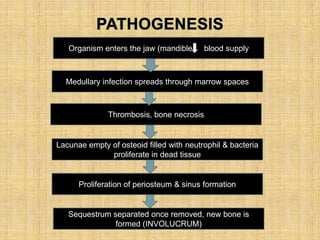
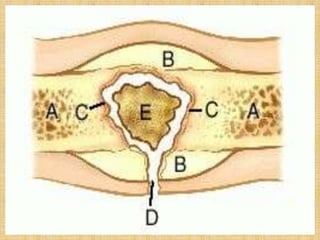
Organism enters the jaw (mandible) blood supply
Medullary infection spreads through marrow spaces
Thrombosis, bone necrosis
Lacunae empty of osteoid filled with neutrophil & bacteria
proliferate in dead tissue
Proliferation of periosteum & sinus formation
Sequestrum separated once removed, new bone is
formed (INVOLUCRUM)
• Location: Mandible
• Male: Adult males
• Pain
• Soft tissue swelling
• Fever
• Lymphadenopathy
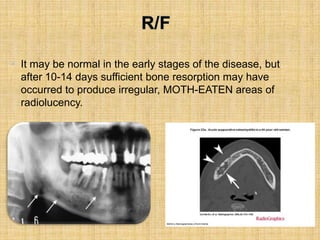
• It may be normal in the early stages of the disease, but
after 10-14 days sufficient bone resorption may have
occurred to produce irregular, MOTH-EATEN areas of
radiolucency.
C/F
• Swelling
• Pain
• Sinus formation
• Tooth loss
• Sequestrum formation
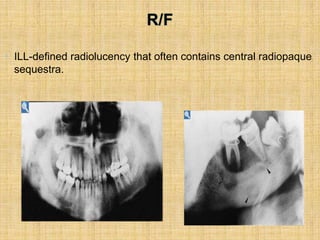
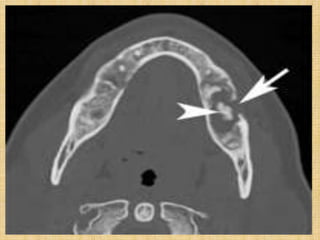
• ILL-defined radiolucency that often contains central radiopaque
sequestra.
C/F
• Age: Children and young adults
• Location: Mandibular premolar and molar
• Bone sclerozing associated with non vital
pulpitic tooth
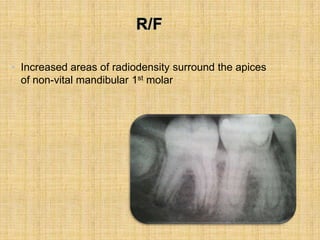
• Increased areas of radiodensity surround the apices
of non-vital mandibular 1st molar
C/F
• Age: Adults
• No sex predilection
• Location: Mandible
• Sclerosing around the site of periapical/PD inflammation
• Persistent pain
• No swelling
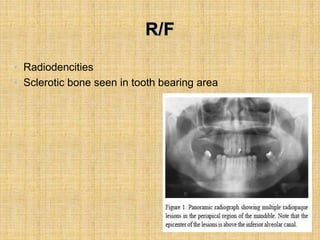
• Radiodencities
• Sclerotic bone seen in tooth bearing area
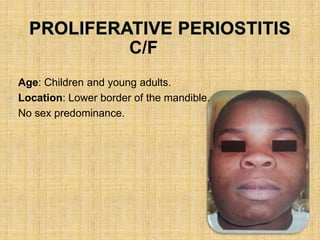
C/F
• Age: Children and young adults.
• Location: Lower border of the mandible.
• No sex predominance.
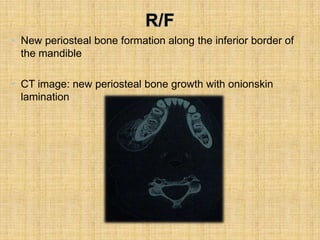
• New periosteal bone formation along the inferior border of
the mandible
• CT image: new periosteal bone growth with onionskin
lamination
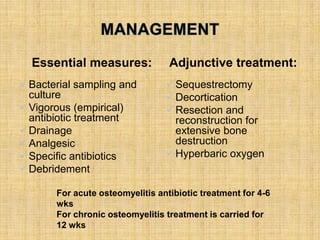
Essential measures:
Bacterial sampling and
culture
Vigorous (empirical)
antibiotic treatment
Drainage
Analgesic
Specific antibiotics
Debridement
Adjunctive treatment:
Sequestrectomy
Decortication
Resection and
reconstruction for
extensive bone
destruction
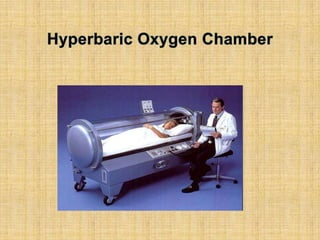
Hyperbaric oxygen
For acute osteomyelitis antibiotic treatment for 4-6
wks
For chronic osteomyelitis treatment is carried for
12 wks
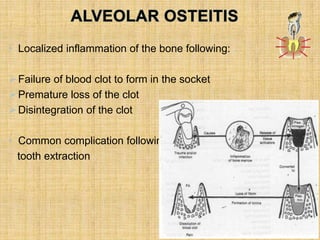
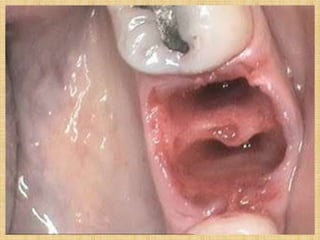
• Localized inflammation of the bone following:
Failure of blood clot to form in the socket
Premature loss of the clot
Disintegration of the clot
• Common complication following
tooth extraction
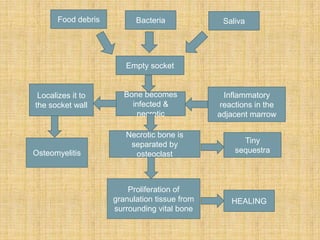
Food debris Bacteria Saliva
Empty socket
Bone becomes
infected &
necrotic
Inflammatory
reactions in the
adjacent marrow
Localizes it to
the socket wall
Osteomyelitis
Necrotic bone is
separated by
osteoclast
Tiny
sequestra
Proliferation of
granulation tissue from
surrounding vital bone
HEALING
• Location: Mandible in posterior areas.
• No sex predilection
• Severe pain
• Radiates to ear and neck
• Foul odor
• Lymphadenopathy
• Trismus
• Administration of regional local anesthesia
• Debridement of socket wall
• Irrigate with normal saline
• Antiseptic/analgesic
Alvogel
Zinc oxide/eugenol pack
Chlorhexidine gel
Tetracycline pack
NO drainage.
• Chlorhexidine mouth rinses should be done gently.
• Patient should not smoke minimum for 48 hours after
extraction.
• Patient should avoid sucking, spitting or drinking through
the straw.
• Patient should try to maintain good oral hygiene
• CAWSON
• J.V. SOAMES & J.C. SOUTHAM
• NEVILLE & DAMM
• GOOGLE for images
Osteomyelitis

Osteomyelitis

  • 1.
    Presented by: Fasahat AhmedButt (36 Group: C1
  • 2.
    • What isosteomyelitis? • Predisposing factors of osteomyelitis? • Classification Clinical features Radiographic features • Management of osteomyelitis • What is Alveolar osteitis? • Pathogenesis Clinical features • Treatment
  • 3.
    • Osteon: Bone •Myelitis: Inflammation of the bone marrow • Acute or chronic inflammatory process in the medullary spaces or cortical surfaces of the bone that extends away from the initial site of involvement
  • 4.
    Decreased vascularity or Vitalityof bone • Trauma • Radiation injury • Paget’s disease • Osteoporosis • Major vessel disease Impaired host defence • Immune deficiency state • Immunosuppression • Diabetes Mellitus • Malnutrition • Extremes of age Local factors Systemic factors
  • 5.
    • SUPPURATIVE OSTEOMYELITIS •FOCAL SCLEROSING OSTEOMYELITIS • DIFFUSE SCLEROSING OSTEOMYELITIS • PROLIFERATIVE PERIOSTITIS
  • 6.
  • 7.
    • Bacteroids • Porphyromonas •Prevotella Staphylococcus (open fractures)
  • 8.
    Organism enters thejaw (mandible) blood supply Medullary infection spreads through marrow spaces Thrombosis, bone necrosis Lacunae empty of osteoid filled with neutrophil & bacteria proliferate in dead tissue Proliferation of periosteum & sinus formation Sequestrum separated once removed, new bone is formed (INVOLUCRUM)
  • 10.
    • Location: Mandible •Male: Adult males • Pain • Soft tissue swelling • Fever • Lymphadenopathy
  • 11.
    • It maybe normal in the early stages of the disease, but after 10-14 days sufficient bone resorption may have occurred to produce irregular, MOTH-EATEN areas of radiolucency.
  • 12.
    C/F • Swelling • Pain •Sinus formation • Tooth loss • Sequestrum formation
  • 13.
    • ILL-defined radiolucencythat often contains central radiopaque sequestra.
  • 15.
    C/F • Age: Childrenand young adults • Location: Mandibular premolar and molar • Bone sclerozing associated with non vital pulpitic tooth
  • 16.
    • Increased areasof radiodensity surround the apices of non-vital mandibular 1st molar
  • 17.
    C/F • Age: Adults •No sex predilection • Location: Mandible • Sclerosing around the site of periapical/PD inflammation • Persistent pain • No swelling
  • 18.
    • Radiodencities • Scleroticbone seen in tooth bearing area
  • 19.
    C/F • Age: Childrenand young adults. • Location: Lower border of the mandible. • No sex predominance.
  • 20.
    • New periostealbone formation along the inferior border of the mandible • CT image: new periosteal bone growth with onionskin lamination
  • 21.
    Essential measures: Bacterial samplingand culture Vigorous (empirical) antibiotic treatment Drainage Analgesic Specific antibiotics Debridement Adjunctive treatment: Sequestrectomy Decortication Resection and reconstruction for extensive bone destruction Hyperbaric oxygen For acute osteomyelitis antibiotic treatment for 4-6 wks For chronic osteomyelitis treatment is carried for 12 wks
  • 23.
    • Localized inflammationof the bone following: Failure of blood clot to form in the socket Premature loss of the clot Disintegration of the clot • Common complication following tooth extraction
  • 24.
    Food debris BacteriaSaliva Empty socket Bone becomes infected & necrotic Inflammatory reactions in the adjacent marrow Localizes it to the socket wall Osteomyelitis Necrotic bone is separated by osteoclast Tiny sequestra Proliferation of granulation tissue from surrounding vital bone HEALING
  • 25.
    • Location: Mandiblein posterior areas. • No sex predilection • Severe pain • Radiates to ear and neck • Foul odor • Lymphadenopathy • Trismus
  • 27.
    • Administration ofregional local anesthesia • Debridement of socket wall • Irrigate with normal saline • Antiseptic/analgesic Alvogel Zinc oxide/eugenol pack Chlorhexidine gel Tetracycline pack NO drainage.
  • 28.
    • Chlorhexidine mouthrinses should be done gently. • Patient should not smoke minimum for 48 hours after extraction. • Patient should avoid sucking, spitting or drinking through the straw. • Patient should try to maintain good oral hygiene
  • 29.
    • CAWSON • J.V.SOAMES & J.C. SOUTHAM • NEVILLE & DAMM • GOOGLE for images

Editor's Notes

  • #12 (a) CT scan (bone windowing) demonstrates a nonexpansile, osteolytic lesion (arrow) within the right mandible. Perimandibular soft-tissue inflammatory change (arrowheads) is also present.
  • #14 Chronic suppurative osteomyelitis with three sequestra (arrows). Osteolytic as well as sclerotic areas are present.
  • #15 CT scan reveals an osteolytic lesion (arrow) containing a bony sequestrum (arrowhead) within the left mandibular body.
  • #24  It is suggested that trauma and infection causes inflammation of the bone marrow which causes release of tissue activators. Plasminogen which is present in the clot is converted into plasmin by the action of tissue activators. Plasmin is a fibrinolytic agent and will dissolve the blood clot. It will also release kinins which will cause severe pain to the patient.