DEBONDING PROCEDURES
IN ORTHODONTICS

PRESENTED BY:
FASAHAT AHMED BUTT
ROLL# 36
GROUP: C
OBJECTIVE
 To remove the attachment and all the

adhesive resin from the tooth and restore
the surface as closely as possible to its
pretreatment condition without inducing
iatrogenic damage
PROCEDURES
Bracket removal

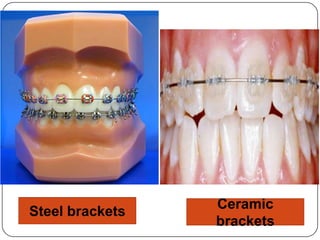
Steel bracket
Ceramic bracket

Removal of residual adhesive
Steel brackets

Ceramic
brackets
REMOVAL OF STEEL
BRACKETS
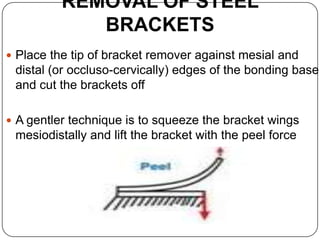
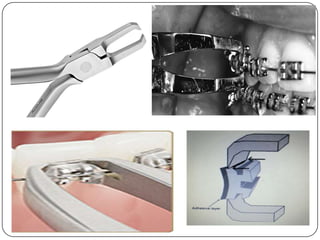
 Place the tip of bracket remover against mesial and

distal (or occluso-cervically) edges of the bonding base
and cut the brackets off
 A gentler technique is to squeeze the bracket wings

mesiodistally and lift the bracket with the peel force
REMOVAL OF CERAMIC
BRACKETS
 With the introduction of ceramic brackets, a new

concern over enamel fracture and loss from
debonding has arisen.
 Because of differences in bracket chemistry and

bonding mechanism, various ceramic brackets
behave differently on debonding
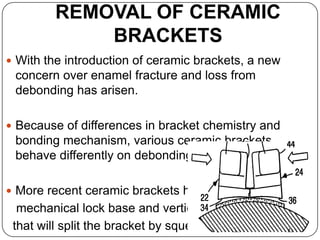
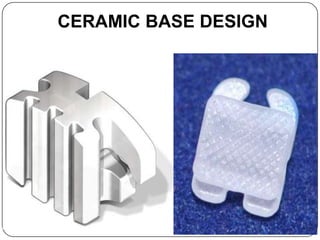
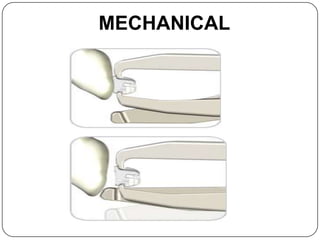
 More recent ceramic brackets have

mechanical lock base and vertical slot
that will split the bracket by squeezing
CERAMIC BASE DESIGN
MEANS OF REMOVAL
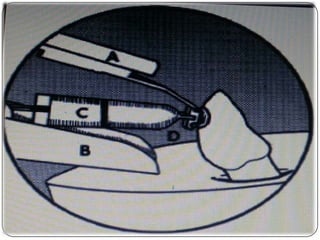
 Mechanical
 Thermal debonding
 Lasers
 Ultrasonic
MECHANICAL
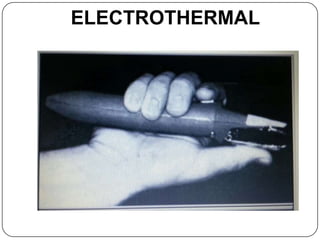
ELECTROTHERMAL
 Takla and Shivapuja (1995) study in which 30 teeth were

schduled for orthodontic extractions
 15 extracted 24 days after ETD
 7 extracted 28-32 days after ETD
 8 were control teeth and debonded by conventional
method, with pliers
 In control group pulp was normal
 Significant hyperemia in teeth extracted after 24 day
 In case of teeth extracted after 28-32 day variation was seen
from complete recovery to persistent inflammation
 Jost-Brinkmann et al (1997) did an in vivo study in which 12

human premolars scheduled for extraction were bonded with
ceramic brackets which were subsequently debonded using
ETD. After 4 weeks, teeth were extracted and histologically
examined . No signs of pulpal inflammation were seen
LASERS
 The use of laser eliminates problems like enamel tear

outs, bracket failures and pain.
 Lasers decreases debonding force and less time

consuming.
 Strobl et al (1993) Removal of ceramic brackets from

enamel surface by means of laser heating was investigated
with the use of C02 and YAG laser
 Polycrystalline alumina
 Monocrystalline alumina
 Laser-aided debonding significantly reduced debonding

force by thermal softening of adhesive resin.
 In 69-75% incident light reached enamel surface when

Nd:YAG laser was used which has the potential to cause
pain or damage to tooth surface
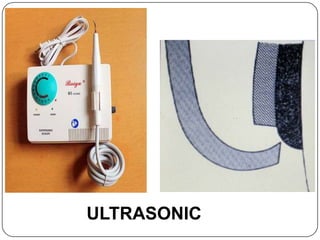
ULTRASONIC
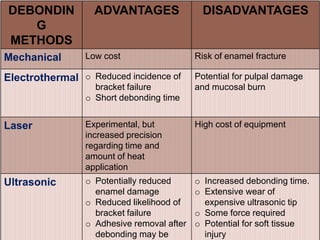
DEBONDIN
G
METHODS
Mechanical

ADVANTAGES

Low cost

Electrothermal o Reduced incidence of
bracket failure
o Short debonding time

DISADVANTAGES

Risk of enamel fracture
Potential for pulpal damage
and mucosal burn

Laser

Experimental, but
increased precision
regarding time and
amount of heat
application

High cost of equipment

Ultrasonic

o Potentially reduced
enamel damage
o Reduced likelihood of
bracket failure
o Adhesive removal after
debonding may be

o Increased debonding time.
o Extensive wear of
expensive ultrasonic tip
o Some force required
o Potential for soft tissue
injury
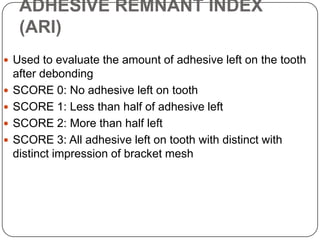
ADHESIVE REMNANT INDEX
(ARI)
 Used to evaluate the amount of adhesive left on the tooth






after debonding
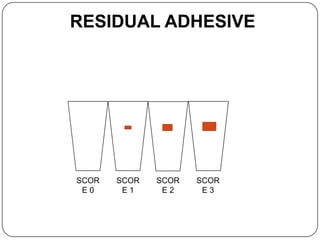
SCORE 0: No adhesive left on tooth
SCORE 1: Less than half of adhesive left
SCORE 2: More than half left
SCORE 3: All adhesive left on tooth with distinct with
distinct impression of bracket mesh
RESIDUAL ADHESIVE

SCOR
E0

SCOR
E1

SCOR
E2

SCOR
E3
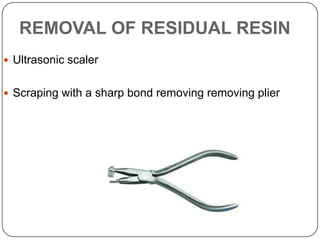
REMOVAL OF RESIDUAL RESIN
 Ultrasonic scaler
 Scraping with a sharp bond removing removing plier
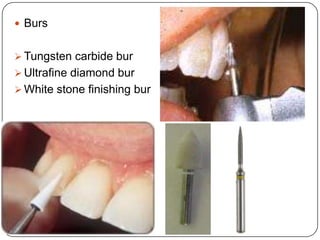
 Burs
 Tungsten carbide bur
 Ultrafine diamond bur
 White stone finishing bur
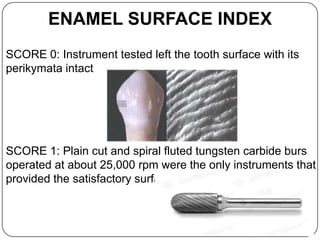
ENAMEL SURFACE INDEX
SCORE 0: Instrument tested left the tooth surface with its
perikymata intact

SCORE 1: Plain cut and spiral fluted tungsten carbide burs
operated at about 25,000 rpm were the only instruments that
provided the satisfactory surface appearance
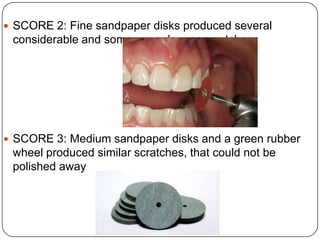
 SCORE 2: Fine sandpaper disks produced several

considerable and some even deeper scratches

 SCORE 3: Medium sandpaper disks and a green rubber

wheel produced similar scratches, that could not be
polished away
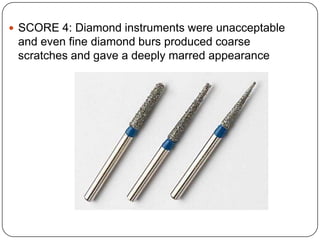
 SCORE 4: Diamond instruments were unacceptable

and even fine diamond burs produced coarse
scratches and gave a deeply marred appearance
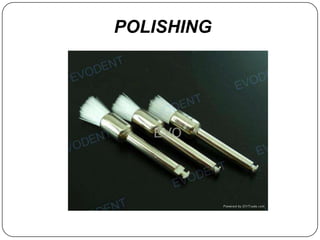
POLISHING
Debonding procedures in orthodontics

Debonding procedures in orthodontics

  • 1.
    DEBONDING PROCEDURES IN ORTHODONTICS PRESENTEDBY: FASAHAT AHMED BUTT ROLL# 36 GROUP: C
  • 2.
    OBJECTIVE  To removethe attachment and all the adhesive resin from the tooth and restore the surface as closely as possible to its pretreatment condition without inducing iatrogenic damage
  • 3.
    PROCEDURES Bracket removal Steel bracket Ceramicbracket Removal of residual adhesive
  • 4.
  • 5.
    REMOVAL OF STEEL BRACKETS Place the tip of bracket remover against mesial and distal (or occluso-cervically) edges of the bonding base and cut the brackets off  A gentler technique is to squeeze the bracket wings mesiodistally and lift the bracket with the peel force
  • 7.
    REMOVAL OF CERAMIC BRACKETS With the introduction of ceramic brackets, a new concern over enamel fracture and loss from debonding has arisen.  Because of differences in bracket chemistry and bonding mechanism, various ceramic brackets behave differently on debonding  More recent ceramic brackets have mechanical lock base and vertical slot that will split the bracket by squeezing
  • 8.
  • 9.
    MEANS OF REMOVAL Mechanical  Thermal debonding  Lasers  Ultrasonic
  • 10.
  • 11.
  • 13.
     Takla andShivapuja (1995) study in which 30 teeth were schduled for orthodontic extractions  15 extracted 24 days after ETD  7 extracted 28-32 days after ETD  8 were control teeth and debonded by conventional method, with pliers  In control group pulp was normal  Significant hyperemia in teeth extracted after 24 day  In case of teeth extracted after 28-32 day variation was seen from complete recovery to persistent inflammation  Jost-Brinkmann et al (1997) did an in vivo study in which 12 human premolars scheduled for extraction were bonded with ceramic brackets which were subsequently debonded using ETD. After 4 weeks, teeth were extracted and histologically examined . No signs of pulpal inflammation were seen
  • 14.
    LASERS  The useof laser eliminates problems like enamel tear outs, bracket failures and pain.  Lasers decreases debonding force and less time consuming.  Strobl et al (1993) Removal of ceramic brackets from enamel surface by means of laser heating was investigated with the use of C02 and YAG laser  Polycrystalline alumina  Monocrystalline alumina
  • 15.
     Laser-aided debondingsignificantly reduced debonding force by thermal softening of adhesive resin.  In 69-75% incident light reached enamel surface when Nd:YAG laser was used which has the potential to cause pain or damage to tooth surface
  • 16.
  • 17.
    DEBONDIN G METHODS Mechanical ADVANTAGES Low cost Electrothermal oReduced incidence of bracket failure o Short debonding time DISADVANTAGES Risk of enamel fracture Potential for pulpal damage and mucosal burn Laser Experimental, but increased precision regarding time and amount of heat application High cost of equipment Ultrasonic o Potentially reduced enamel damage o Reduced likelihood of bracket failure o Adhesive removal after debonding may be o Increased debonding time. o Extensive wear of expensive ultrasonic tip o Some force required o Potential for soft tissue injury
  • 18.
    ADHESIVE REMNANT INDEX (ARI) Used to evaluate the amount of adhesive left on the tooth     after debonding SCORE 0: No adhesive left on tooth SCORE 1: Less than half of adhesive left SCORE 2: More than half left SCORE 3: All adhesive left on tooth with distinct with distinct impression of bracket mesh
  • 19.
  • 20.
    REMOVAL OF RESIDUALRESIN  Ultrasonic scaler  Scraping with a sharp bond removing removing plier
  • 21.
     Burs  Tungstencarbide bur  Ultrafine diamond bur  White stone finishing bur
  • 22.
    ENAMEL SURFACE INDEX SCORE0: Instrument tested left the tooth surface with its perikymata intact SCORE 1: Plain cut and spiral fluted tungsten carbide burs operated at about 25,000 rpm were the only instruments that provided the satisfactory surface appearance
  • 23.
     SCORE 2:Fine sandpaper disks produced several considerable and some even deeper scratches  SCORE 3: Medium sandpaper disks and a green rubber wheel produced similar scratches, that could not be polished away
  • 24.
     SCORE 4:Diamond instruments were unacceptable and even fine diamond burs produced coarse scratches and gave a deeply marred appearance
  • 25.