





Michael E. Graham, DPM, FACFAS, FAENS
        Macomb, Michigan USA
•   Biomechanical principals
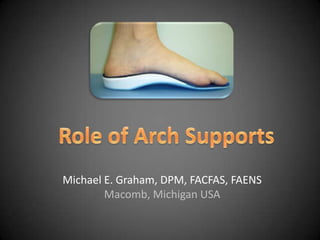
•   What is an arch support/orthosis?
•   What is its function?
•   What can it accomplish?
•   What role does it play in the treatment of
    flatfoot/talotarsal displacement?
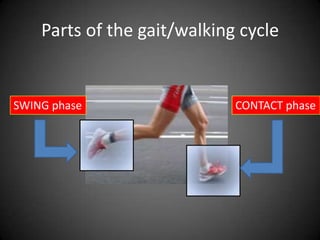
Parts of the gait/walking cycle


SWING phase                  CONTACT phase
We don’t care too much about
     the swing phase.
We need to focus very much on the
         contact phase.


         Let’s take a close look.
It’s not that complicated!
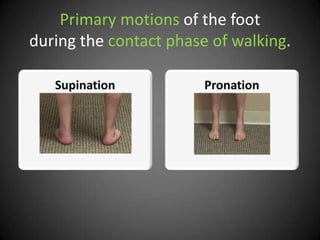
Primary motions of the foot
during the contact phase of walking.
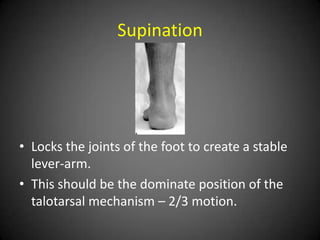
Supination


• Locks the joints of the foot to create a stable
  lever-arm.
• This should be the dominate position of the
  talotarsal mechanism – 2/3 motion.
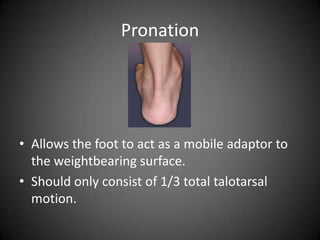
Pronation


• Allows the foot to act as a mobile adaptor to
  the weightbearing surface.
• Should only consist of 1/3 total talotarsal
  motion.
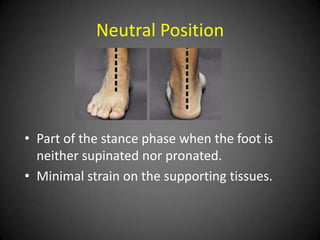
Neutral Position


• Part of the stance phase when the foot is
  neither supinated nor pronated.
• Minimal strain on the supporting tissues.
During the
                  Contact Phase
• There are certain times when the talotarsal joint needs
  to be supinating, in neutral position, or pronating.
• This is very important for proper biomechanical foot
  function.
• If pronation/supination occur at the wrong time during
  the walking cycle, compensation of the pathologic
  strain/forces will be acting on the tissues.
• Eventually, critical point is reach where the tissues can
  no longer handle those forces. The tissues begins to
  become inflamed and send a warning signal (PAIN) that
  something is wrong.
Unfortunately, the majority of the
    medical community is only
concerned with covering up the pain
without eliminating what has caused
     that pain in the first place.
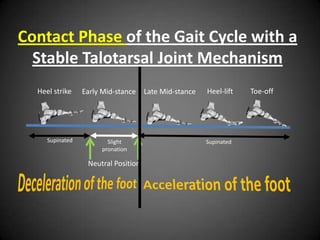
Contact Phase of the Gait Cycle with a
  Stable Talotarsal Joint Mechanism
  Heel strike    Early Mid-stance    Late Mid-stance   Heel-lift   Toe-off


     Supinated          Slight                         Supinated
                      pronation

                  Neutral Position
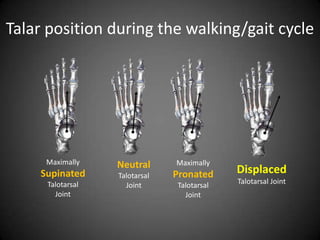
Talar position during the walking/gait cycle


     Maximally    Neutral      Maximally
    Supinated     Talotarsal   Pronated     Displaced
     Talotarsal     Joint      Talotarsal   Talotarsal Joint
       Joint                     Joint
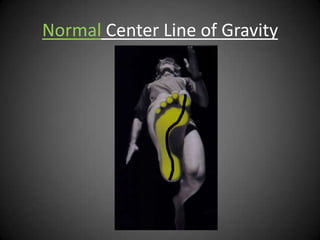
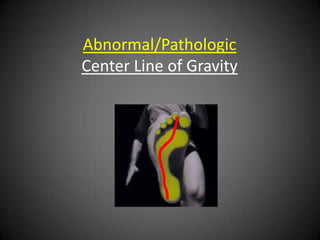
Center Line of Gravity

       This is the
     center of forces
passing through the foot.
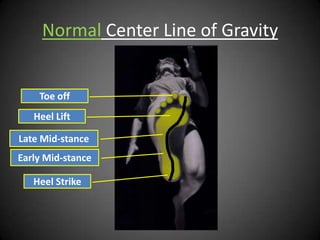
Normal Center Line of Gravity


    Toe off
   Heel Lift

Late Mid-stance
Early Mid-stance

   Heel Strike
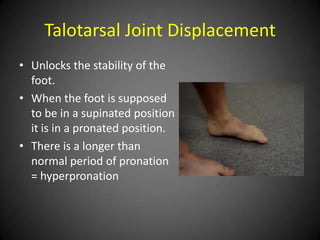
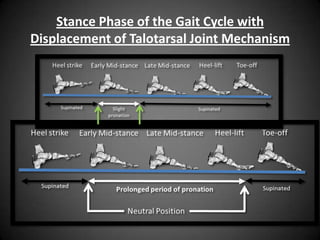
Talotarsal Joint Displacement

• Unlocks the stability of the foot.
• When the foot is supposed to be in a
  supinated position it is in a pronated
  position.
• There is a longer than normal period of
  pronation = hyperpronation
Stance Phase of the Gait Cycle with
Displacement of Talotarsal Joint Mechanism
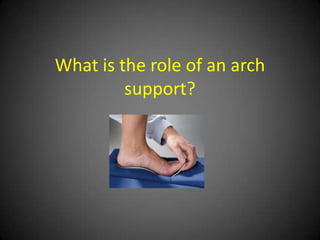
What is the role of an arch
         support?
What is an orthosis?
• It is an external appliance/device
• Used to provide support
• Attempts to prevent or correct for a plantar
  foot deformity
• Tries to improve foot function
What is their function?
•   Support “fallen” arches
•   Align- biomechanical defects
•   Correct- alignment issues
•   Cushion- bony prominences
•   Protect-remove pressure from callused/ulcer
    areas.
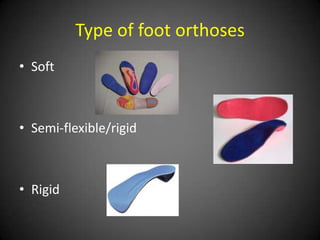
Type of foot orthoses
• Soft


• Semi-flexible/rigid


• Rigid
Made of many different materials
       •   Foam
       •   Thermoplastic
       •   Carbon fiber
       •   Hard plastics
       •   Soft plastics
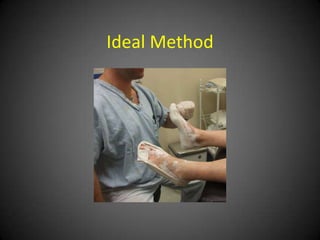
How are they made?
Ideal Method
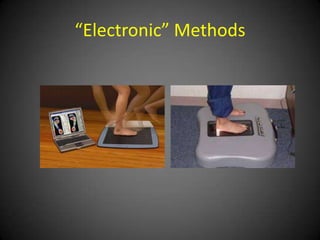
“Electronic” Methods
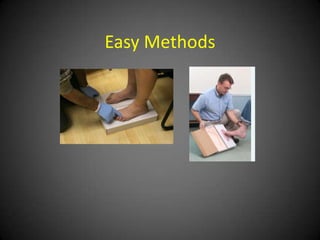
“Easy” Method
“Commercial” Method
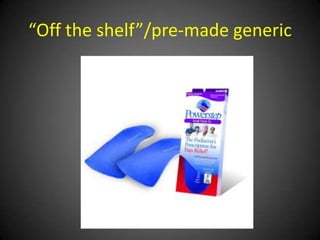
“Off the shelf”/pre-made generic
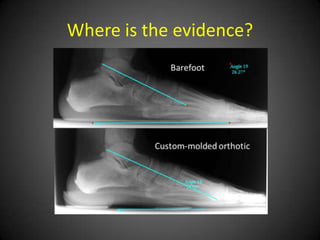
Where is the evidence?
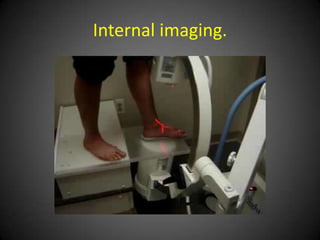
Internal imaging.
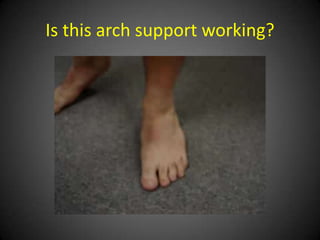
Is this arch support working?
An arch support, even if custom-
made, cannot prevent/stabilize a
    talotarsal displacement.
They can cushion the plantar
     aspect of the foot.
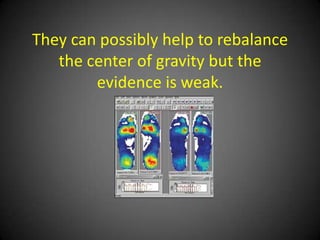
They can possibly help to rebalance
   the center of gravity but the
        evidence is weak.
Not all patients are surgical
candidates and something is better
          than nothing.
Limitations of arch supports
• Cannot control talotarsal joint mechanism and
  therefore have a difficult time realigning foot
  structure.
• Only function when being used, if the patient
  is not wearing them in their shoes or going
  barefoot there is not correction.
• Have to wear bigger/limited shoe style
• Method to make them still isn’t perfected.
The worst of it is that an arch
 support may give the individual a
false sense of correction- the arch
support really isn’t fixing anything.
Advantages of Arch Supports
• Non-surgical option
• Can help to off-weight prominent areas to the
  bottom of the foot.
• Can help to re-align the center of gravity
  through the bottom of the foot.
• May give the patient enough correction to
  alleviate their pain.
Doesn’t an internal deformity
demand internal correction?
Refuse to ignore or cover-up your
         misaligned feet.


 www.alignmyfeet.com
There is an internal option with
           exploring.
Questions?

Orthotics Biomechanics

  • 1.
    Michael E. Graham,DPM, FACFAS, FAENS Macomb, Michigan USA
  • 2.
    Biomechanical principals • What is an arch support/orthosis? • What is its function? • What can it accomplish? • What role does it play in the treatment of flatfoot/talotarsal displacement?
  • 4.
    Parts of thegait/walking cycle SWING phase CONTACT phase
  • 5.
    We don’t caretoo much about the swing phase.
  • 6.
    We need tofocus very much on the contact phase. Let’s take a close look.
  • 7.
    It’s not thatcomplicated!
  • 8.
    Primary motions ofthe foot during the contact phase of walking.
  • 9.
    Supination • Locks thejoints of the foot to create a stable lever-arm. • This should be the dominate position of the talotarsal mechanism – 2/3 motion.
  • 10.
    Pronation • Allows thefoot to act as a mobile adaptor to the weightbearing surface. • Should only consist of 1/3 total talotarsal motion.
  • 11.
    Neutral Position • Partof the stance phase when the foot is neither supinated nor pronated. • Minimal strain on the supporting tissues.
  • 12.
    During the Contact Phase • There are certain times when the talotarsal joint needs to be supinating, in neutral position, or pronating. • This is very important for proper biomechanical foot function. • If pronation/supination occur at the wrong time during the walking cycle, compensation of the pathologic strain/forces will be acting on the tissues. • Eventually, critical point is reach where the tissues can no longer handle those forces. The tissues begins to become inflamed and send a warning signal (PAIN) that something is wrong.
  • 13.
    Unfortunately, the majorityof the medical community is only concerned with covering up the pain without eliminating what has caused that pain in the first place.
  • 14.
    Contact Phase ofthe Gait Cycle with a Stable Talotarsal Joint Mechanism Heel strike Early Mid-stance Late Mid-stance Heel-lift Toe-off Supinated Slight Supinated pronation Neutral Position
  • 15.
    Talar position duringthe walking/gait cycle Maximally Neutral Maximally Supinated Talotarsal Pronated Displaced Talotarsal Joint Talotarsal Talotarsal Joint Joint Joint
  • 16.
    Center Line ofGravity This is the center of forces passing through the foot.
  • 17.
  • 18.
    Normal Center Lineof Gravity Toe off Heel Lift Late Mid-stance Early Mid-stance Heel Strike
  • 19.
    Talotarsal Joint Displacement •Unlocks the stability of the foot. • When the foot is supposed to be in a supinated position it is in a pronated position. • There is a longer than normal period of pronation = hyperpronation
  • 20.
    Stance Phase ofthe Gait Cycle with Displacement of Talotarsal Joint Mechanism
  • 21.
    What is therole of an arch support?
  • 22.
    What is anorthosis? • It is an external appliance/device • Used to provide support • Attempts to prevent or correct for a plantar foot deformity • Tries to improve foot function
  • 23.
    What is theirfunction? • Support “fallen” arches • Align- biomechanical defects • Correct- alignment issues • Cushion- bony prominences • Protect-remove pressure from callused/ulcer areas.
  • 24.
    Type of footorthoses • Soft • Semi-flexible/rigid • Rigid
  • 25.
    Made of manydifferent materials • Foam • Thermoplastic • Carbon fiber • Hard plastics • Soft plastics
  • 26.
  • 27.
  • 28.
  • 29.
  • 30.
  • 31.
  • 32.
    Where is theevidence?
  • 33.
  • 34.
    Is this archsupport working?
  • 35.
    An arch support,even if custom- made, cannot prevent/stabilize a talotarsal displacement.
  • 36.
    They can cushionthe plantar aspect of the foot.
  • 37.
    They can possiblyhelp to rebalance the center of gravity but the evidence is weak.
  • 38.
    Not all patientsare surgical candidates and something is better than nothing.
  • 39.
    Limitations of archsupports • Cannot control talotarsal joint mechanism and therefore have a difficult time realigning foot structure. • Only function when being used, if the patient is not wearing them in their shoes or going barefoot there is not correction. • Have to wear bigger/limited shoe style • Method to make them still isn’t perfected.
  • 40.
    The worst ofit is that an arch support may give the individual a false sense of correction- the arch support really isn’t fixing anything.
  • 41.
    Advantages of ArchSupports • Non-surgical option • Can help to off-weight prominent areas to the bottom of the foot. • Can help to re-align the center of gravity through the bottom of the foot. • May give the patient enough correction to alleviate their pain.
  • 42.
    Doesn’t an internaldeformity demand internal correction?
  • 44.
    Refuse to ignoreor cover-up your misaligned feet. www.alignmyfeet.com
  • 45.
    There is aninternal option with exploring.
  • 46.