ORGANIZATIONAL
STRUCTURE
Organization is when
two or more person
work together with a
common goal.
ORGANIZING
 to achieve coordinated effort by
defining task and authority
relationships
 determining who does what and who
reports to whom
 that involves developing an
organizational structure
ORGANIZATIONAL
STRUCTURE
 refers to the division of labor as well as
the patterns of coordination,
communication, work flow, and formal
power that direct organizational
activities
 Organizational design- process of
creating and modifying organizational
structures.
ORGANIZATIONAL
STRUCTURE (cont’d)
TWO FUNDAMENTAL PROCESSES
 Division of Labor
 Coordination

FOUR MAIN ELEMENTS





Span of Control
Centralization
Formalization
Departmentalization
TWO FUNDAMENTAL
PROCESSES
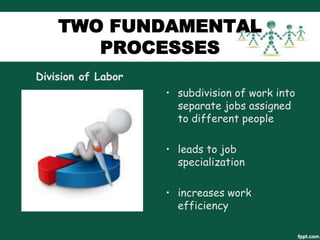
Division of Labor
• subdivision of work into
separate jobs assigned
to different people
• leads to job
specialization
• increases work
efficiency
TWO FUNDAMENTAL
PROCESSES (cont’d)
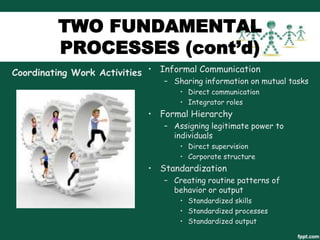
Coordinating Work Activities • Informal Communication

– Sharing information on mutual tasks
• Direct communication
• Integrator roles

• Formal Hierarchy
– Assigning legitimate power to
individuals
• Direct supervision
• Corporate structure

• Standardization
– Creating routine patterns of
behavior or output
• Standardized skills
• Standardized processes
• Standardized output
FOUR MAIN ELEMENTS:
SPAN OF CONTROL

 The number of people directly reporting
to the next level in the organizational
hierarchy.
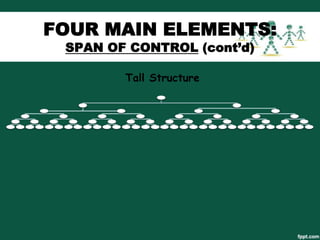
 Tall Structure
 Flat Structure
FOUR MAIN ELEMENTS:
SPAN OF CONTROL (cont’d)
Tall Structure
FOUR MAIN ELEMENTS:
DEPARTMENTALIZATION

• The organizational chart represents the fourth
element in the structuring of organizations
• Specifies how employees and their activities are
grouped together
• It is a fundamental strategy for coordinating
organizational activities
• Establishes the chain of command
• Creates common measures of performance
• Encourages coordination through informal
communication among people and sub units.
FOUR MAIN ELEMENTS:
DEPARTMENTALIZATION (cont’d)

Five Types:
• Simple Structure
•
•
•
•

Functional Structure
Divisional Structure
Matrix Structure
Team-Based (Lateral) Structure
FOUR MAIN ELEMENTS:
DEPARTMENTALIZATION (cont’d)

Simple Structure
• Most companies/
organizations begin with
simple structure
• There is minimal hierarchy
• Flexible but they usually
depend on the owner’s
direct supervision to
coordinate work activities.
• Difficult to operate under
complex conditions

Functional Structure
• Organizes employees
around specific knowledge
or other resources
• Foster professional
identity and clarify
career paths
• Tend to have higher
dysfunctional conflict and
poorer coordination with
other work units
FOUR MAIN ELEMENTS:
DEPARTMENTALIZATION (cont’d)

Divisional Structure
• Groups employees around
geographic areas, clients,
or outputs.
• Accommodates growth
and focuses employee
attention on services or
customers rather than
tasks.
• This structure creates
silos of knowledge and
duplication of resources.

Matrix Structure
• Overlays two
organizational forms in
order to leverage the
benefits of both
• Requires more
coordination than
functional or pure
divisional, may dilute
accountability and
increases conflict.
FOUR MAIN ELEMENTS:
DEPARTMENTALIZATION (cont’d)
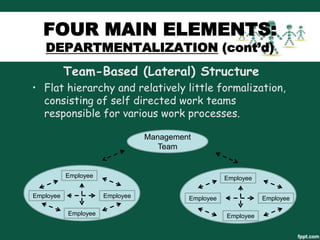
Team-Based (Lateral) Structure
• Flat hierarchy and relatively little formalization,
consisting of self directed work teams
responsible for various work processes.
Management
Team

Employee
Employee

Employee
Employee

Employee

Employee

Employee
Employee
Thank You!
Reference:
Organizational Behavior by McShane and Von Glinow
Third Edition

Organizational Structure

  • 1.
  • 2.
    Organization is when twoor more person work together with a common goal.
  • 3.
    ORGANIZING  to achievecoordinated effort by defining task and authority relationships  determining who does what and who reports to whom  that involves developing an organizational structure
  • 4.
    ORGANIZATIONAL STRUCTURE  refers tothe division of labor as well as the patterns of coordination, communication, work flow, and formal power that direct organizational activities  Organizational design- process of creating and modifying organizational structures.
  • 5.
    ORGANIZATIONAL STRUCTURE (cont’d) TWO FUNDAMENTALPROCESSES  Division of Labor  Coordination FOUR MAIN ELEMENTS     Span of Control Centralization Formalization Departmentalization
  • 6.
    TWO FUNDAMENTAL PROCESSES Division ofLabor • subdivision of work into separate jobs assigned to different people • leads to job specialization • increases work efficiency
  • 7.
    TWO FUNDAMENTAL PROCESSES (cont’d) CoordinatingWork Activities • Informal Communication – Sharing information on mutual tasks • Direct communication • Integrator roles • Formal Hierarchy – Assigning legitimate power to individuals • Direct supervision • Corporate structure • Standardization – Creating routine patterns of behavior or output • Standardized skills • Standardized processes • Standardized output
  • 9.
    FOUR MAIN ELEMENTS: SPANOF CONTROL  The number of people directly reporting to the next level in the organizational hierarchy.  Tall Structure  Flat Structure
  • 10.
    FOUR MAIN ELEMENTS: SPANOF CONTROL (cont’d) Tall Structure
  • 14.
    FOUR MAIN ELEMENTS: DEPARTMENTALIZATION •The organizational chart represents the fourth element in the structuring of organizations • Specifies how employees and their activities are grouped together • It is a fundamental strategy for coordinating organizational activities • Establishes the chain of command • Creates common measures of performance • Encourages coordination through informal communication among people and sub units.
  • 15.
    FOUR MAIN ELEMENTS: DEPARTMENTALIZATION(cont’d) Five Types: • Simple Structure • • • • Functional Structure Divisional Structure Matrix Structure Team-Based (Lateral) Structure
  • 16.
    FOUR MAIN ELEMENTS: DEPARTMENTALIZATION(cont’d) Simple Structure • Most companies/ organizations begin with simple structure • There is minimal hierarchy • Flexible but they usually depend on the owner’s direct supervision to coordinate work activities. • Difficult to operate under complex conditions Functional Structure • Organizes employees around specific knowledge or other resources • Foster professional identity and clarify career paths • Tend to have higher dysfunctional conflict and poorer coordination with other work units
  • 17.
    FOUR MAIN ELEMENTS: DEPARTMENTALIZATION(cont’d) Divisional Structure • Groups employees around geographic areas, clients, or outputs. • Accommodates growth and focuses employee attention on services or customers rather than tasks. • This structure creates silos of knowledge and duplication of resources. Matrix Structure • Overlays two organizational forms in order to leverage the benefits of both • Requires more coordination than functional or pure divisional, may dilute accountability and increases conflict.
  • 18.
    FOUR MAIN ELEMENTS: DEPARTMENTALIZATION(cont’d) Team-Based (Lateral) Structure • Flat hierarchy and relatively little formalization, consisting of self directed work teams responsible for various work processes. Management Team Employee Employee Employee Employee Employee Employee Employee Employee
  • 19.
    Thank You! Reference: Organizational Behaviorby McShane and Von Glinow Third Edition