
PowerPoint by
                      OPTIMISTIC GROUP
                 DIVYANSH,MANAN,SHIVENDRA
                     SANIL,GAURAV,SYED
© 2006 Prentice Hall                        8-1
© 2006 Prentice Hall   8-2
CONTROLLING is a very important function .it
      is concerned with taking necessary measures or
      preventive actions to ensure achievement of
      organisational goal.

      Controlling in simple words,
      Determine the behaviour or supervise the running
      of .


© 2006 Prentice Hall                                     8-3
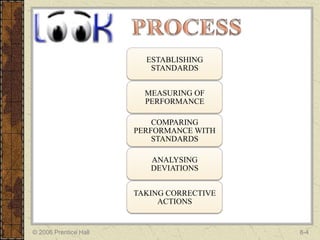
ESTABLISHING
                          STANDARDS


                         MEASURING OF
                         PERFORMANCE

                           COMPARING
                       PERFORMANCE WITH
                           STANDARDS

                          ANALYSING
                          DEVIATIONS


                       TAKING CORRECTIVE
                            ACTIONS


© 2006 Prentice Hall                       8-4
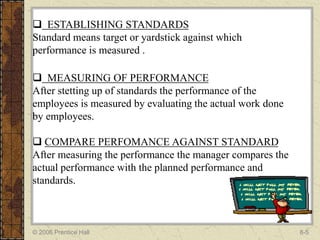
 ESTABLISHING STANDARDS
Standard means target or yardstick against which
performance is measured .

 MEASURING OF PERFORMANCE
After stetting up of standards the performance of the
employees is measured by evaluating the actual work done
by employees.

 COMPARE PERFOMANCE AGAINST STANDARD
After measuring the performance the manager compares the
actual performance with the planned performance and
standards.


© 2006 Prentice Hall                                       8-5
ANALYSING DEVIATION
 All deviations need not be brought to the noticed to
   top management.
 TAKING CORRECTIVE MEASURES
 On comparing the actual performance with the
   planned performance, the manager will come to
   know about the deviations between the plan and
   actual performance.


© 2006 Prentice Hall                                    8-6
© 2006 Prentice Hall   8-7
ORGANISING can be defined as “identifying and
   grouping different activities in organisation and
   bringing together the physical, financial resources
   to establish most productive relation for the
   achievement of specific goal organisation”.


© 2006 Prentice Hall                                 8-8
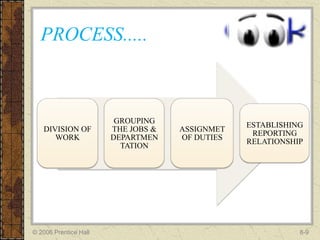
PROCESS.....


                        GROUPING
                                                ESTABLISHING
   DIVISION OF         THE JOBS &   ASSIGNMET
                                                 REPORTING
      WORK             DEPARTMEN    OF DUTIES
                                                RELATIONSHIP
                         TATION


© 2006 Prentice Hall                                       8-9
 DIVISION OF WORK
  THE organising function being with the division of
   total work into smaller units.

   GROUPING THE JOBS &
    DEPARTMENTALISATION
  After dividing the work in smaller jobs, related &
    similar jobs are grouped together & put under one
    department.


© 2006 Prentice Hall                                8-10
ASSINGMENT OF DUTIES
  The work is assigned according to their
   ability.


© 2006 Prentice Hall                        8-11
© 2006 Prentice Hall   8-12
 HELPS IN ACIEVING ORGANISATIONAL
   GOALS
  When all the activities are going according to plan
   then automatically these will direct towards
   achievement of organisational goal.
   JUDGING ACCURACY OF STANDARDS
  An accurate control system revises standards from
   time to time to match them with environmental
   changes.


© 2006 Prentice Hall                                    8-13
 MAKING EFFICIENT USE OF RESOURCES
  Each activity is performed according to
    predetermined standards , as a result there is most
    and effective use of resources.

   IMPROVING EMPLOYEE MOTIVATION
  An effective control system communicates the goals
   and standards of appraisal for employees to
   subordinates well in advance.


© 2006 Prentice Hall                                  8-14
 ENSURES ORDER AND DISCIPLINE
  Sharp control can have a check over dishonesty and
    fraud of employees.
   FACILITATE COORDINATION IN ACTION
  Control help to maintain equilibrium between means
    and ends.
   CONTROLLING HELPS IN IMPROVING THE
    PERFORMANCE OF THE EMPLOYEES
  Under controlling it is made sure that employees are
    aware of these duties and responsibilities very
    clearly.


© 2006 Prentice Hall                                8-15
 CONTROLLING HELPS IN MINIMISING THE
      ERRORS
    Small errors or small mistakes may not seriously
      affects the organisation.


© 2006 Prentice Hall                             8-16
© 2006 Prentice Hall   8-17

importance of controlling

  • 1.
    PowerPoint by OPTIMISTIC GROUP DIVYANSH,MANAN,SHIVENDRA SANIL,GAURAV,SYED © 2006 Prentice Hall 8-1
  • 2.
  • 3.
    CONTROLLING is avery important function .it is concerned with taking necessary measures or preventive actions to ensure achievement of organisational goal. Controlling in simple words, Determine the behaviour or supervise the running of . © 2006 Prentice Hall 8-3
  • 4.
    ESTABLISHING STANDARDS MEASURING OF PERFORMANCE COMPARING PERFORMANCE WITH STANDARDS ANALYSING DEVIATIONS TAKING CORRECTIVE ACTIONS © 2006 Prentice Hall 8-4
  • 5.
     ESTABLISHING STANDARDS Standardmeans target or yardstick against which performance is measured .  MEASURING OF PERFORMANCE After stetting up of standards the performance of the employees is measured by evaluating the actual work done by employees.  COMPARE PERFOMANCE AGAINST STANDARD After measuring the performance the manager compares the actual performance with the planned performance and standards. © 2006 Prentice Hall 8-5
  • 6.
    ANALYSING DEVIATION Alldeviations need not be brought to the noticed to top management. TAKING CORRECTIVE MEASURES On comparing the actual performance with the planned performance, the manager will come to know about the deviations between the plan and actual performance. © 2006 Prentice Hall 8-6
  • 7.
  • 8.
    ORGANISING can bedefined as “identifying and grouping different activities in organisation and bringing together the physical, financial resources to establish most productive relation for the achievement of specific goal organisation”. © 2006 Prentice Hall 8-8
  • 9.
    PROCESS..... GROUPING ESTABLISHING DIVISION OF THE JOBS & ASSIGNMET REPORTING WORK DEPARTMEN OF DUTIES RELATIONSHIP TATION © 2006 Prentice Hall 8-9
  • 10.
     DIVISION OFWORK THE organising function being with the division of total work into smaller units.  GROUPING THE JOBS & DEPARTMENTALISATION After dividing the work in smaller jobs, related & similar jobs are grouped together & put under one department. © 2006 Prentice Hall 8-10
  • 11.
    ASSINGMENT OF DUTIES The work is assigned according to their ability. © 2006 Prentice Hall 8-11
  • 12.
  • 13.
     HELPS INACIEVING ORGANISATIONAL GOALS When all the activities are going according to plan then automatically these will direct towards achievement of organisational goal.  JUDGING ACCURACY OF STANDARDS An accurate control system revises standards from time to time to match them with environmental changes. © 2006 Prentice Hall 8-13
  • 14.
     MAKING EFFICIENTUSE OF RESOURCES Each activity is performed according to predetermined standards , as a result there is most and effective use of resources.  IMPROVING EMPLOYEE MOTIVATION An effective control system communicates the goals and standards of appraisal for employees to subordinates well in advance. © 2006 Prentice Hall 8-14
  • 15.
     ENSURES ORDERAND DISCIPLINE Sharp control can have a check over dishonesty and fraud of employees.  FACILITATE COORDINATION IN ACTION Control help to maintain equilibrium between means and ends.  CONTROLLING HELPS IN IMPROVING THE PERFORMANCE OF THE EMPLOYEES Under controlling it is made sure that employees are aware of these duties and responsibilities very clearly. © 2006 Prentice Hall 8-15
  • 16.
     CONTROLLING HELPSIN MINIMISING THE ERRORS Small errors or small mistakes may not seriously affects the organisation. © 2006 Prentice Hall 8-16
  • 17.