ORGANIZATIONAL
STRUCTURE
and DESIGN
DES MAGLATANG
Report Outline
• Elements and Importance of Organizational Structure
• Designing the Proper Structure
• Common Organizational Design
• Why Do Structures Differ?
• Organizational Design and Employee Behavior
• Summary and Conclusion
ORGANIZATIONAL STRUCTURE and DESIGN
LEARNING OBJECTIVE
 Identify the six elements of an organization’s
structure
 Identify the characteristics of bureaucracy
 Describe a matrix organization
 Show why managers want to create
boundaryless organizations
 Demonstrate how organizational structures
differ, and contrast mechanistic and organic
structural models
 Analyze the behavioral implications of
different organizational design
Organizational Structure:
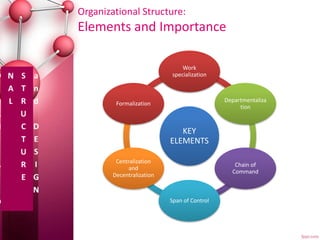
Elements and Importance
KEY
ELEMENTS
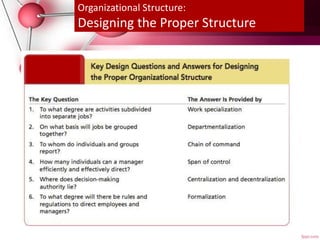
Work
specialization
Departmentaliza
tion
Chain of
Command
Span of Control
Centralization
and
Decentralization
Formalization
Organizational Structure:
Designing the Proper Structure
Organizational Structure:
Common Organizational Design
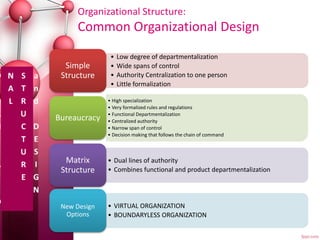
• Low degree of departmentalization
• Wide spans of control
• Authority Centralization to one person
• Little formalization
Simple
Structure
• High specialization
• Very formalized rules and regulations
• Functional Departmentalization
• Centralized authority
• Narrow span of control
• Decision making that follows the chain of command
Bureaucracy
• Dual lines of authority
• Combines functional and product departmentalization
Matrix
Structure
• VIRTUAL ORGANIZATION
• BOUNDARYLESS ORGANIZATION
New Design
Options
How willing are you to work in a bureaucratic
organization?
Every revolution evaporates and leaves behind only the
slime of a new bureaucracy. —Franz Kafka
Organizational Structure:
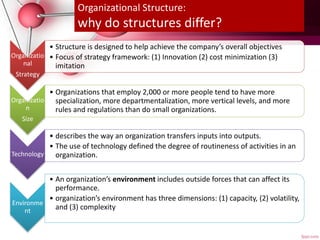
why do structures differ?
Organizatio
nal
Strategy
• Structure is designed to help achieve the company’s overall objectives
• Focus of strategy framework: (1) Innovation (2) cost minimization (3)
imitation
Organizatio
n
Size
• Organizations that employ 2,000 or more people tend to have more
specialization, more departmentalization, more vertical levels, and more
rules and regulations than do small organizations.
Technology
• describes the way an organization transfers inputs into outputs.
• The use of technology defined the degree of routineness of activities in an
organization.
Environme
nt
• An organization’s environment includes outside forces that can affect its
performance.
• organization’s environment has three dimensions: (1) capacity, (2) volatility,
and (3) complexity
Organizational Structure:
Organizational Design and Employee Behavior
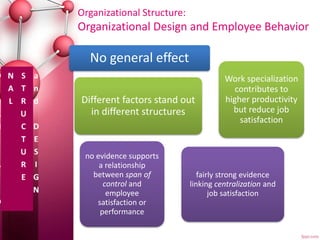
No general effect
Different factors stand out
in different structures
no evidence supports
a relationship
between span of
control and
employee
satisfaction or
performance
fairly strong evidence
linking centralization and
job satisfaction
Work specialization
contributes to
higher productivity
but reduce job
satisfaction
Organizational Structure:
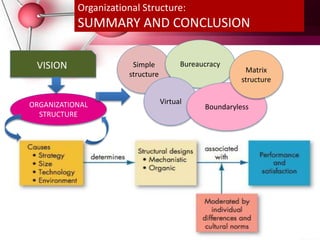
SUMMARY AND CONCLUSION
VISION
ORGANIZATIONAL
STRUCTURE
Simple
structure
Bureaucracy
Virtual
Boundaryless
Matrix
structure
Acknowledgement
Stephen Robins and Timothy Judge, “Organizational
Behavior (Fifth Edition)”, pp. 479-502
Alanis Business Academy, “Weber’s Bureaucratic
Management”,
https://www.youtube.com/watch?v=4yI1gytXQGs
Thank you and have a great day!

Organizational Structure and Design

  • 1.
  • 2.
    Report Outline • Elementsand Importance of Organizational Structure • Designing the Proper Structure • Common Organizational Design • Why Do Structures Differ? • Organizational Design and Employee Behavior • Summary and Conclusion ORGANIZATIONAL STRUCTURE and DESIGN
  • 3.
    LEARNING OBJECTIVE  Identifythe six elements of an organization’s structure  Identify the characteristics of bureaucracy  Describe a matrix organization  Show why managers want to create boundaryless organizations  Demonstrate how organizational structures differ, and contrast mechanistic and organic structural models  Analyze the behavioral implications of different organizational design
  • 4.
    Organizational Structure: Elements andImportance KEY ELEMENTS Work specialization Departmentaliza tion Chain of Command Span of Control Centralization and Decentralization Formalization
  • 5.
  • 6.
    Organizational Structure: Common OrganizationalDesign • Low degree of departmentalization • Wide spans of control • Authority Centralization to one person • Little formalization Simple Structure • High specialization • Very formalized rules and regulations • Functional Departmentalization • Centralized authority • Narrow span of control • Decision making that follows the chain of command Bureaucracy • Dual lines of authority • Combines functional and product departmentalization Matrix Structure • VIRTUAL ORGANIZATION • BOUNDARYLESS ORGANIZATION New Design Options
  • 7.
    How willing areyou to work in a bureaucratic organization? Every revolution evaporates and leaves behind only the slime of a new bureaucracy. —Franz Kafka
  • 8.
    Organizational Structure: why dostructures differ? Organizatio nal Strategy • Structure is designed to help achieve the company’s overall objectives • Focus of strategy framework: (1) Innovation (2) cost minimization (3) imitation Organizatio n Size • Organizations that employ 2,000 or more people tend to have more specialization, more departmentalization, more vertical levels, and more rules and regulations than do small organizations. Technology • describes the way an organization transfers inputs into outputs. • The use of technology defined the degree of routineness of activities in an organization. Environme nt • An organization’s environment includes outside forces that can affect its performance. • organization’s environment has three dimensions: (1) capacity, (2) volatility, and (3) complexity
  • 9.
    Organizational Structure: Organizational Designand Employee Behavior No general effect Different factors stand out in different structures no evidence supports a relationship between span of control and employee satisfaction or performance fairly strong evidence linking centralization and job satisfaction Work specialization contributes to higher productivity but reduce job satisfaction
  • 10.
    Organizational Structure: SUMMARY ANDCONCLUSION VISION ORGANIZATIONAL STRUCTURE Simple structure Bureaucracy Virtual Boundaryless Matrix structure
  • 11.
    Acknowledgement Stephen Robins andTimothy Judge, “Organizational Behavior (Fifth Edition)”, pp. 479-502 Alanis Business Academy, “Weber’s Bureaucratic Management”, https://www.youtube.com/watch?v=4yI1gytXQGs
  • 12.
    Thank you andhave a great day!

Editor's Notes

  • #4 At the end of the discussion we should be able to: --------- But before that, let’s have a little exchange of opinion about bureaucracy
  • #6 So.. After watching the video, who among us now, is willing to work in a bureaucratic organization?
  • #7 Simple – flat virtual – small, core organization that outsources business functions Bureaucracy – Standardization boundaryless – an organization that seeks to eliminate the chain of command, have limitless spans of control and replace Matrix – complex / combination departments with empowered teams The goal of the new organizational forms we’ve described is to improve agility by creating a lean, focused, and flexible organization. Downsizing is a systematic effort to make an organization leaner by closing locations, reducing staff, or selling off business units that don’t add value.
  • #8 So.. After watching the video, who among us now, is willing to work in a bureaucratic organization?