NAME:-GAUTAM KUMAR
ROLL NO:- 55
SEC:- 3-E
 Values (such as freedom, honesty, self-respect,
equity… etc)are perception about what is good
or bad, right or wrong.
 It influence by parents , teachers, peer-groups
and associates. In fact peoples values develop as
a product of the learning and experience.
 They face in the cultural setting in which they
live differ from one person to another.
 Values lays the foundation for the understanding
of attitude and motivation.
 Personal value system influences the perception
of individuals.
 Value system influences the manager’s
perception of the different situations.
 Personal value system influence the way in
which a manager views the other individuals and
the group of individuals in the organistaion.
 Values system also influence a manager’s
decision and his solution to the various
problems.
An extensive research conducted by the noted
psychologist Milton Rokeach, identifies two
basic types of values.
 TERMINAL VALUES
 INSTRUMENTAL VALUES
Terminal value are the ultimate goals or end-states that a person or
society aim to achieve. They represent the desired outcomes or
ends that we strive for in our lives. Some common examples of
terminal values include happiness, love, freedom, knowledge and
health.
Terminal values are often seen as more important and desirable
than instrumental values, as they represent the ultimate goals that
we want to achieve. They are often the driving force behind our
actions and decisions.
However, it’s important to note that terminal values can very
greatly between individuals and culture. For ex- one person may
value wealth and success as terminal values, while another may
value spiritual fulfillment and inner peace.
 These are values that we think are most important or most
desirable.
 These refers to desirable and end-states of existence, the
goals a person would like to achieve during his or her
lifetimes.
 They include happiness, self-respect, recognition, inner
harmony, leading a prosperous life, and professional
excellence.
 They are the goals individuals would like to achieve during
their life time.
Instrumental values, on the other hand, are the means or
methods that we use to achieve our terminals values. They
represent the behavior, attitude and qualities that we
believe are necessary to achieve our goals. Some common
examples of instrumental values include honesty,
responsibility, respect and discipline.
Instrumental values are important because they help us
achieve our terminal values. For ex- if our terminal value is
happiness, then we may believe that being honest,
responsible and respectful are instrumental values that will
help us to achieve that goal.
 Instrumental values can be defined as
specific methods of behavior. They are not
an end goal but provides the means by which
an end goal can be accomplished.
 These include being honest, sincere, ethical,
imaginative, independent and being
ambitious. These values are more focused on
personality traits and character.
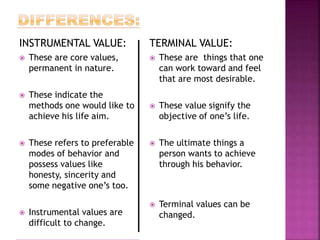
INSTRUMENTAL VALUE:
 These are core values,
permanent in nature.
 These indicate the
methods one would like to
achieve his life aim.
 These refers to preferable
modes of behavior and
possess values like
honesty, sincerity and
some negative one’s too.
 Instrumental values are
difficult to change.
TERMINAL VALUE:
 These are things that one
can work toward and feel
that are most desirable.
 These value signify the
objective of one’s life.
 The ultimate things a
person wants to achieve
through his behavior.
 Terminal values can be
changed.
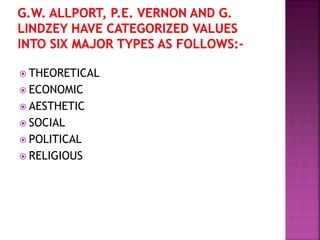
 THEORETICAL
 ECONOMIC
 AESTHETIC
 SOCIAL
 POLITICAL
 RELIGIOUS
Peoples need some sort of a moral guide
through life. Many may think that they can get
by without one but chances are that they are
egoist and do have a principle which is guiding
them. If it make me feel good, if it make me
happy, if I like it and can live with it is all right
for me to do it.
TYPES of value.pptx

TYPES of value.pptx

  • 1.
  • 2.
     Values (suchas freedom, honesty, self-respect, equity… etc)are perception about what is good or bad, right or wrong.  It influence by parents , teachers, peer-groups and associates. In fact peoples values develop as a product of the learning and experience.  They face in the cultural setting in which they live differ from one person to another.
  • 3.
     Values laysthe foundation for the understanding of attitude and motivation.  Personal value system influences the perception of individuals.  Value system influences the manager’s perception of the different situations.  Personal value system influence the way in which a manager views the other individuals and the group of individuals in the organistaion.  Values system also influence a manager’s decision and his solution to the various problems.
  • 4.
    An extensive researchconducted by the noted psychologist Milton Rokeach, identifies two basic types of values.  TERMINAL VALUES  INSTRUMENTAL VALUES
  • 5.
    Terminal value arethe ultimate goals or end-states that a person or society aim to achieve. They represent the desired outcomes or ends that we strive for in our lives. Some common examples of terminal values include happiness, love, freedom, knowledge and health. Terminal values are often seen as more important and desirable than instrumental values, as they represent the ultimate goals that we want to achieve. They are often the driving force behind our actions and decisions. However, it’s important to note that terminal values can very greatly between individuals and culture. For ex- one person may value wealth and success as terminal values, while another may value spiritual fulfillment and inner peace.
  • 6.
     These arevalues that we think are most important or most desirable.  These refers to desirable and end-states of existence, the goals a person would like to achieve during his or her lifetimes.  They include happiness, self-respect, recognition, inner harmony, leading a prosperous life, and professional excellence.  They are the goals individuals would like to achieve during their life time.
  • 7.
    Instrumental values, onthe other hand, are the means or methods that we use to achieve our terminals values. They represent the behavior, attitude and qualities that we believe are necessary to achieve our goals. Some common examples of instrumental values include honesty, responsibility, respect and discipline. Instrumental values are important because they help us achieve our terminal values. For ex- if our terminal value is happiness, then we may believe that being honest, responsible and respectful are instrumental values that will help us to achieve that goal.
  • 8.
     Instrumental valuescan be defined as specific methods of behavior. They are not an end goal but provides the means by which an end goal can be accomplished.  These include being honest, sincere, ethical, imaginative, independent and being ambitious. These values are more focused on personality traits and character.
  • 9.
    INSTRUMENTAL VALUE:  Theseare core values, permanent in nature.  These indicate the methods one would like to achieve his life aim.  These refers to preferable modes of behavior and possess values like honesty, sincerity and some negative one’s too.  Instrumental values are difficult to change. TERMINAL VALUE:  These are things that one can work toward and feel that are most desirable.  These value signify the objective of one’s life.  The ultimate things a person wants to achieve through his behavior.  Terminal values can be changed.
  • 10.
     THEORETICAL  ECONOMIC AESTHETIC  SOCIAL  POLITICAL  RELIGIOUS
  • 11.
    Peoples need somesort of a moral guide through life. Many may think that they can get by without one but chances are that they are egoist and do have a principle which is guiding them. If it make me feel good, if it make me happy, if I like it and can live with it is all right for me to do it.