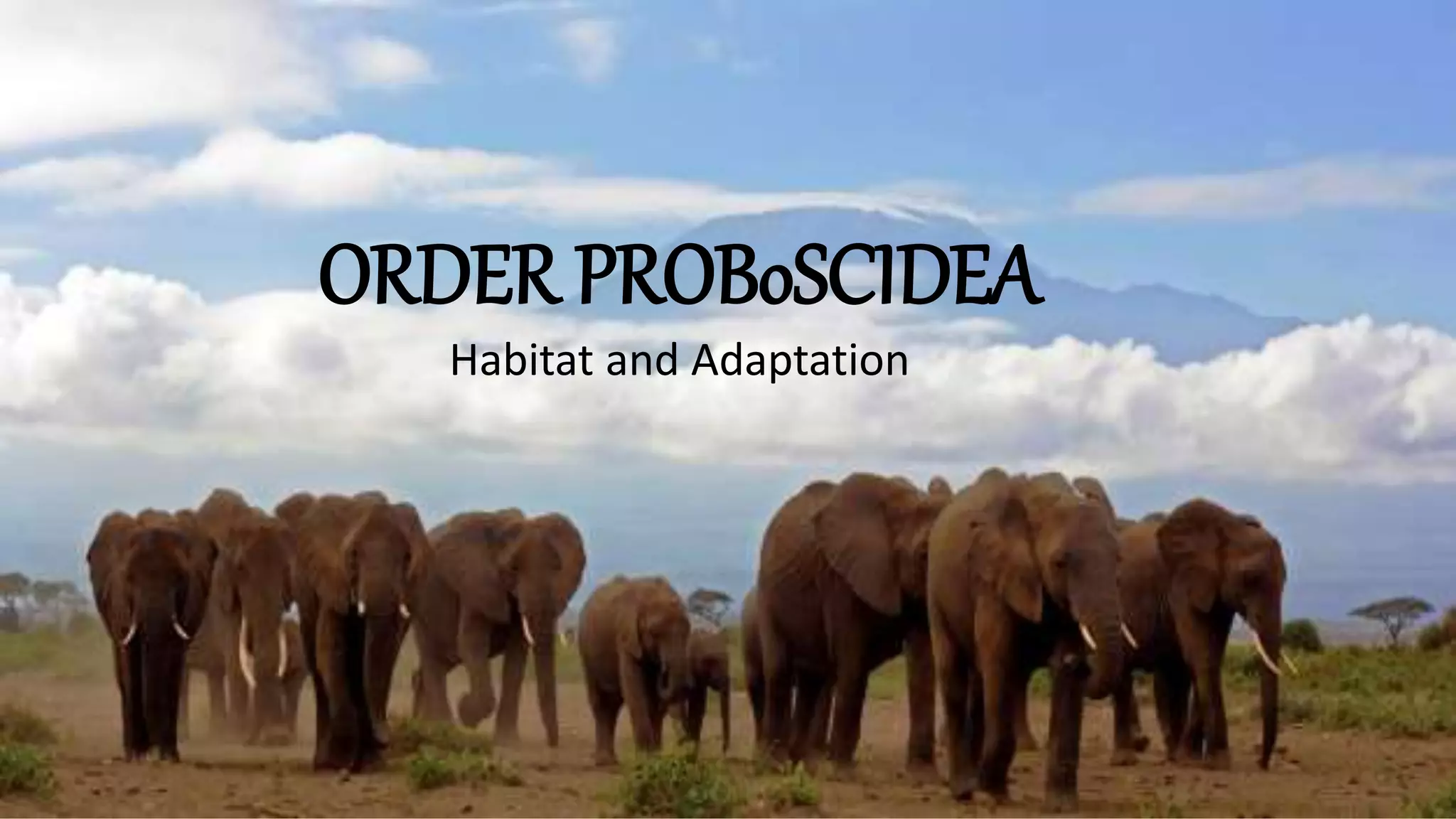
ORDER PROBoSCIDEA
Habitat and Adaptation
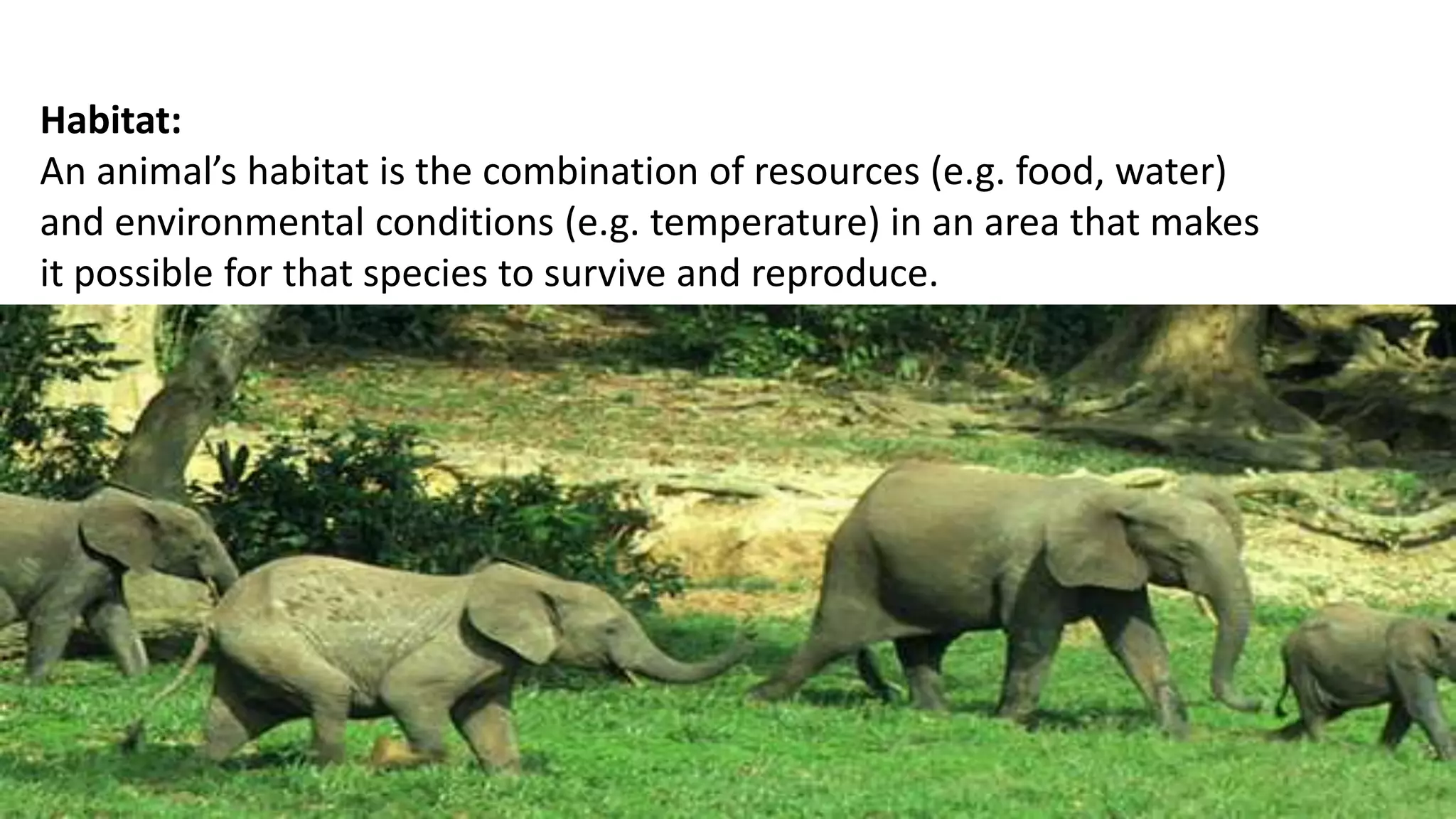
Habitat:
An animal’s habitat is the combination of resources (e.g. food, water)
and environmental conditions (e.g. temperature) in an area that makes
it possible for that species to survive and reproduce.
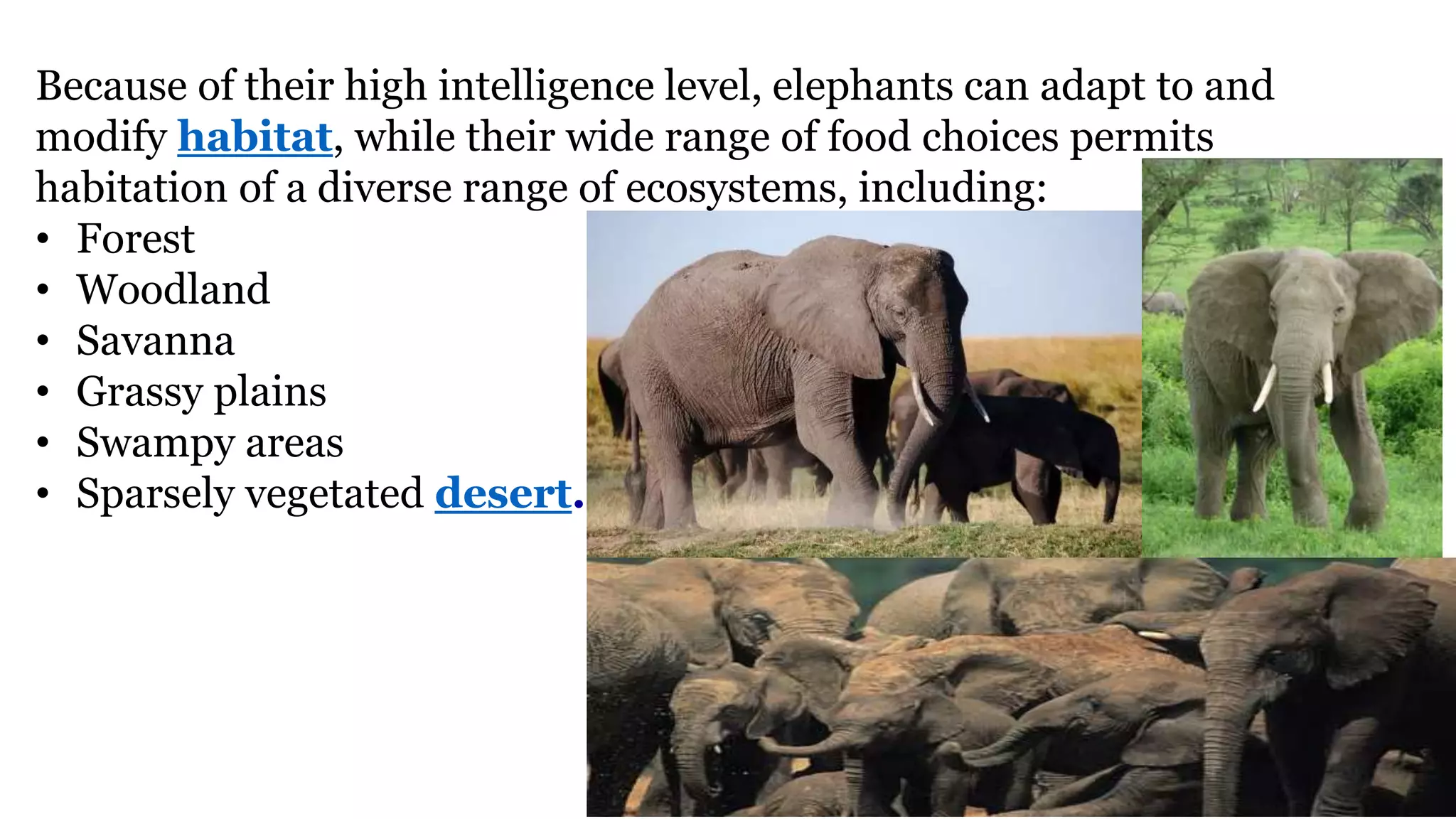
Because of their high intelligence level, elephants can adapt to and
modify habitat, while their wide range of food choices permits
habitation of a diverse range of ecosystems, including:
• Forest
• Woodland
• Savanna
• Grassy plains
• Swampy areas
• Sparsely vegetated desert.
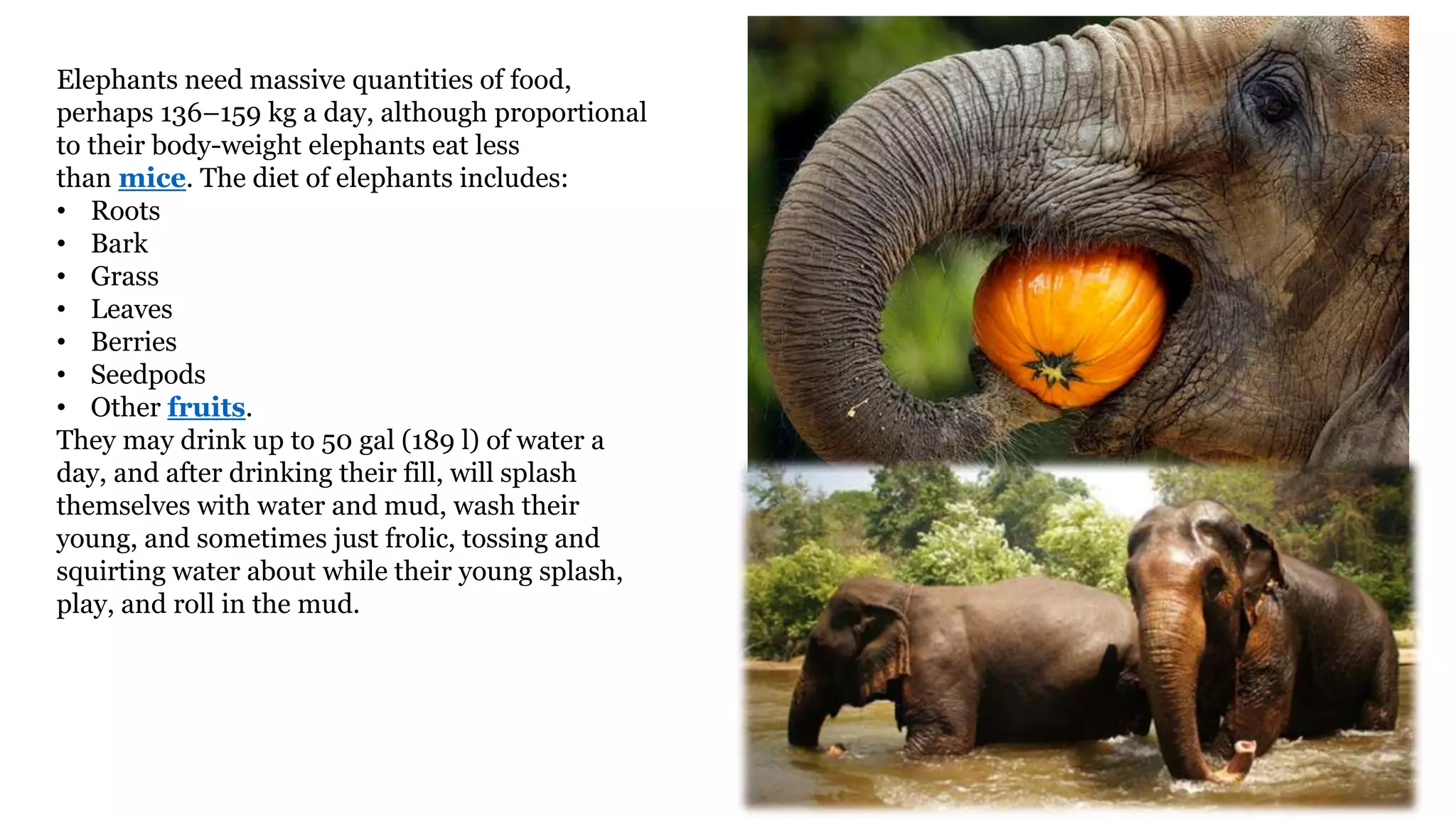
Elephants need massive quantities of food,
perhaps 136–159 kg a day, although proportional
to their body-weight elephants eat less
than mice. The diet of elephants includes:
• Roots
• Bark
• Grass
• Leaves
• Berries
• Seedpods
• Other fruits.
They may drink up to 50 gal (189 l) of water a
day, and after drinking their fill, will splash
themselves with water and mud, wash their
young, and sometimes just frolic, tossing and
squirting water about while their young splash,
play, and roll in the mud.
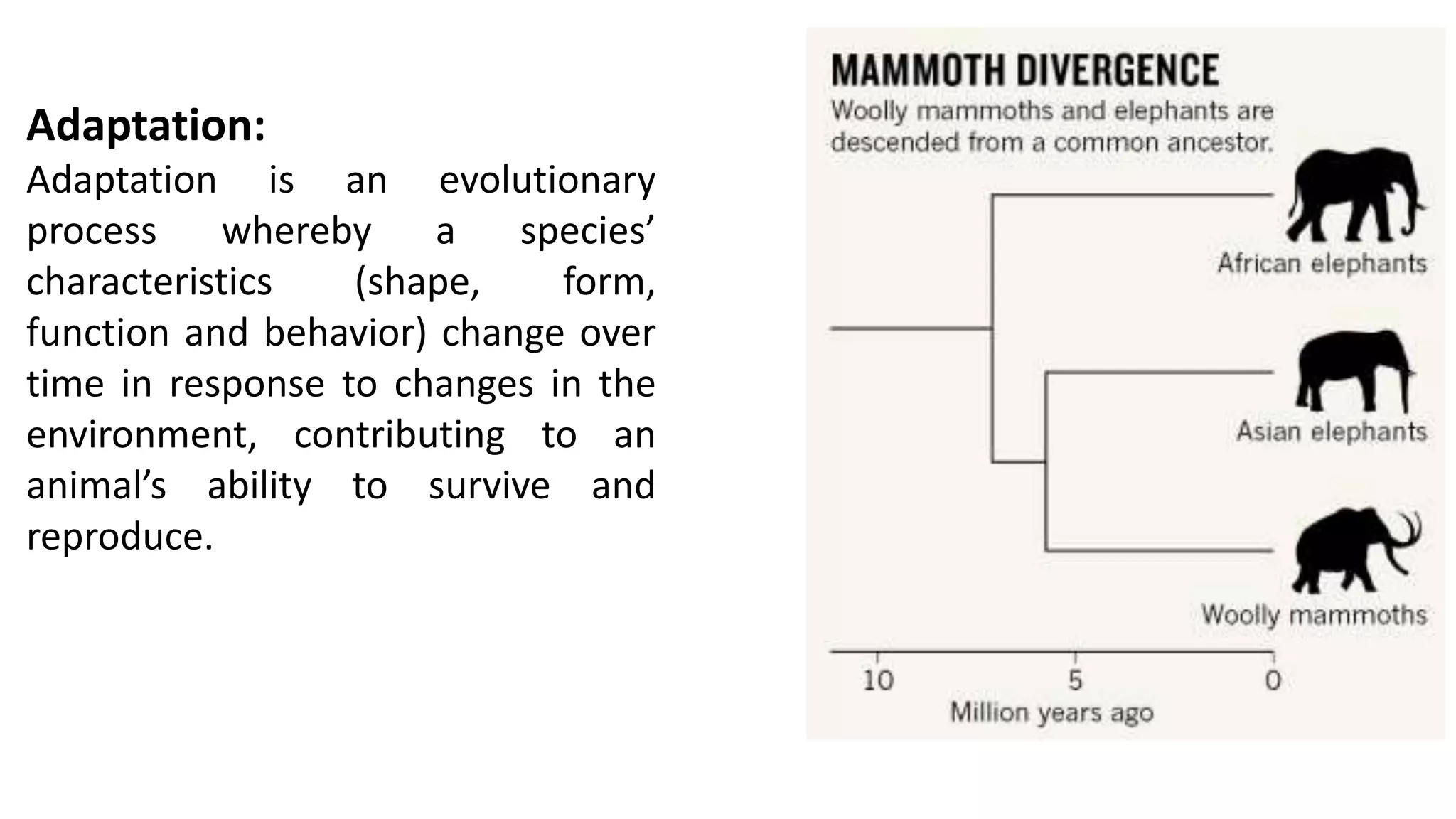
Adaptation:
Adaptation is an evolutionary
process whereby a species’
characteristics (shape, form,
function and behavior) change over
time in response to changes in the
environment, contributing to an
animal’s ability to survive and
reproduce.
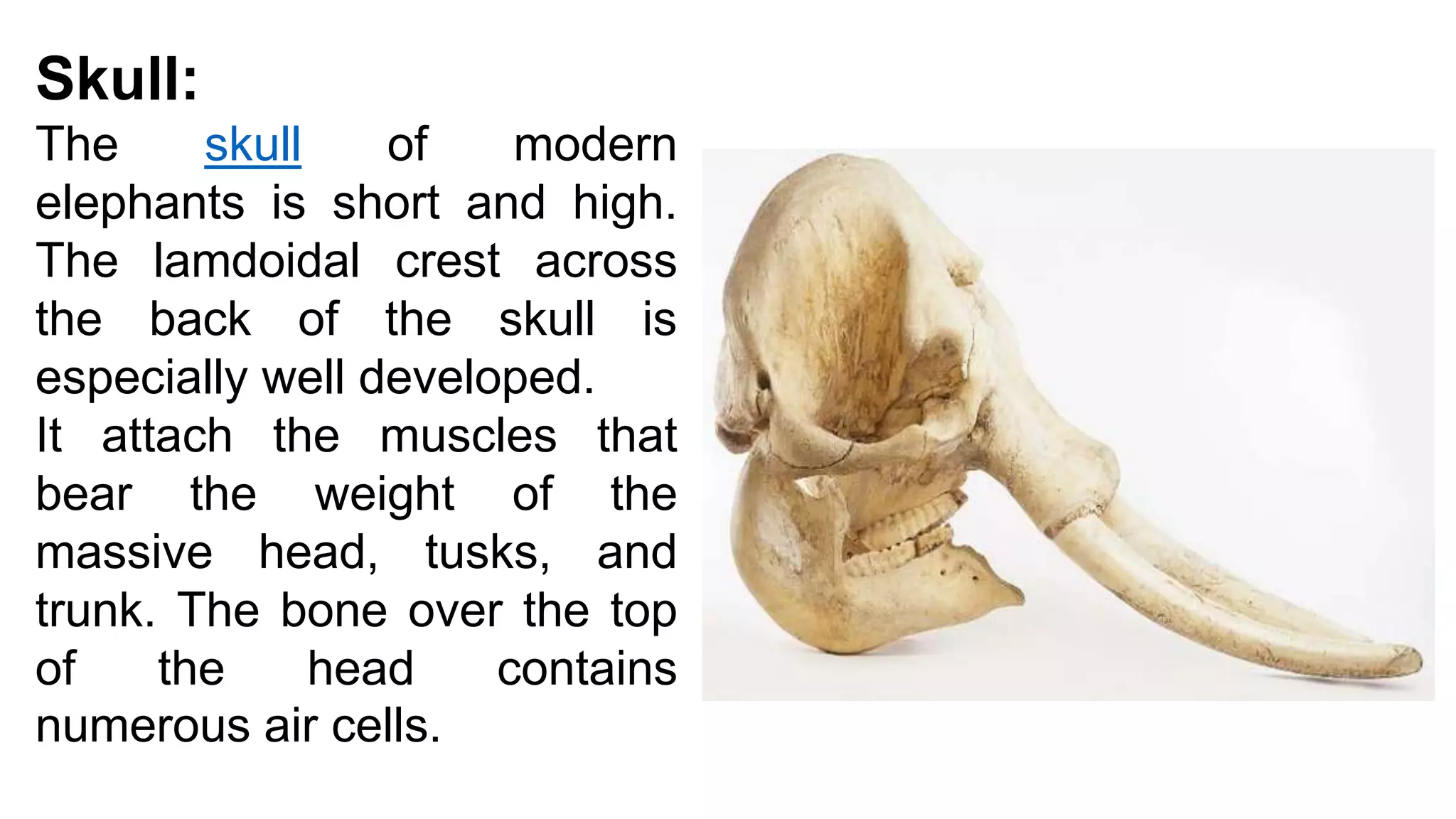
Skull:
The skull of modern
elephants is short and high.
The lamdoidal crest across
the back of the skull is
especially well developed.
It attach the muscles that
bear the weight of the
massive head, tusks, and
trunk. The bone over the top
of the head contains
numerous air cells.
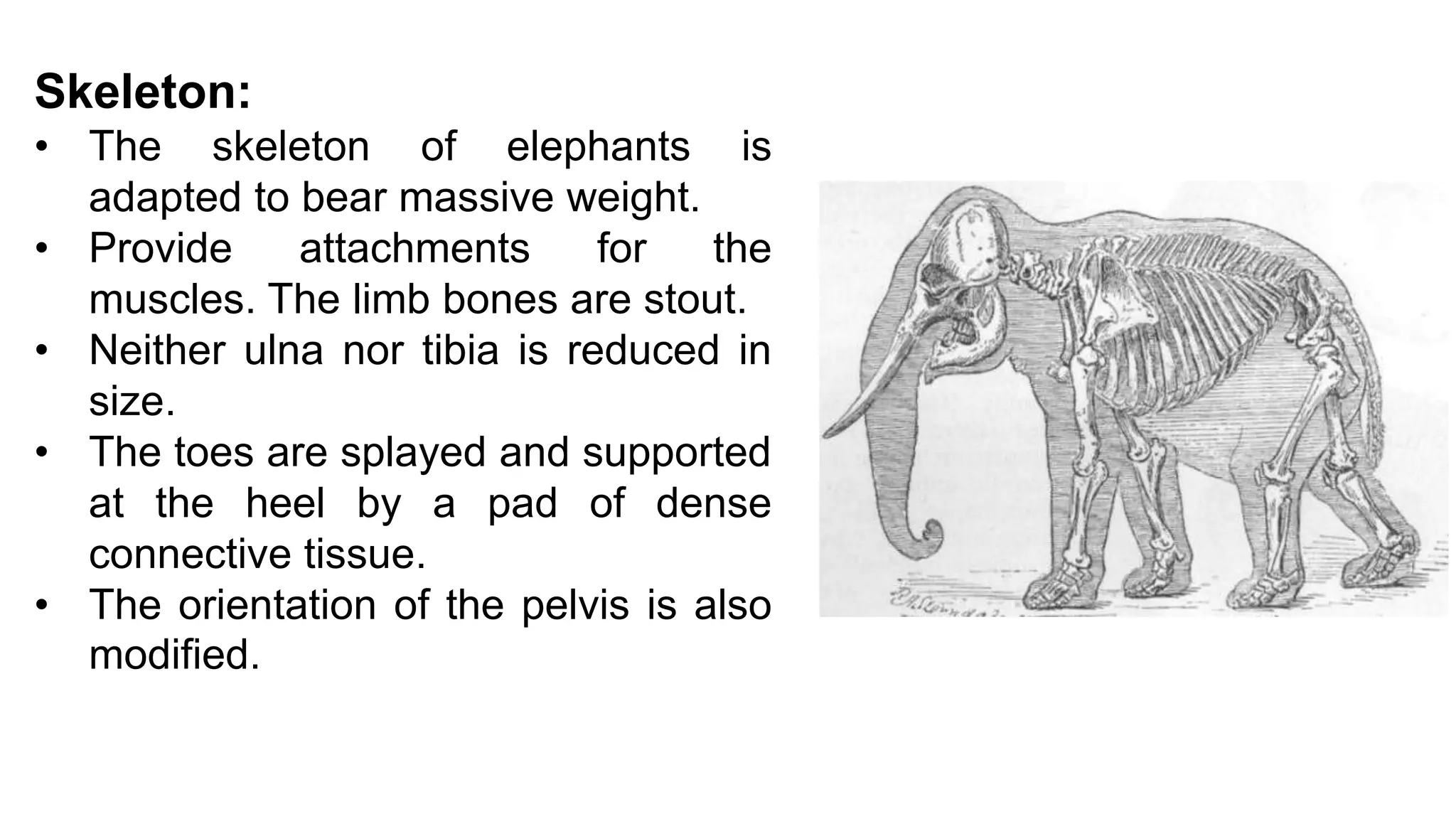
Skeleton:
• The skeleton of elephants is
adapted to bear massive weight.
• Provide attachments for the
muscles. The limb bones are stout.
• Neither ulna nor tibia is reduced in
size.
• The toes are splayed and supported
at the heel by a pad of dense
connective tissue.
• The orientation of the pelvis is also
modified.
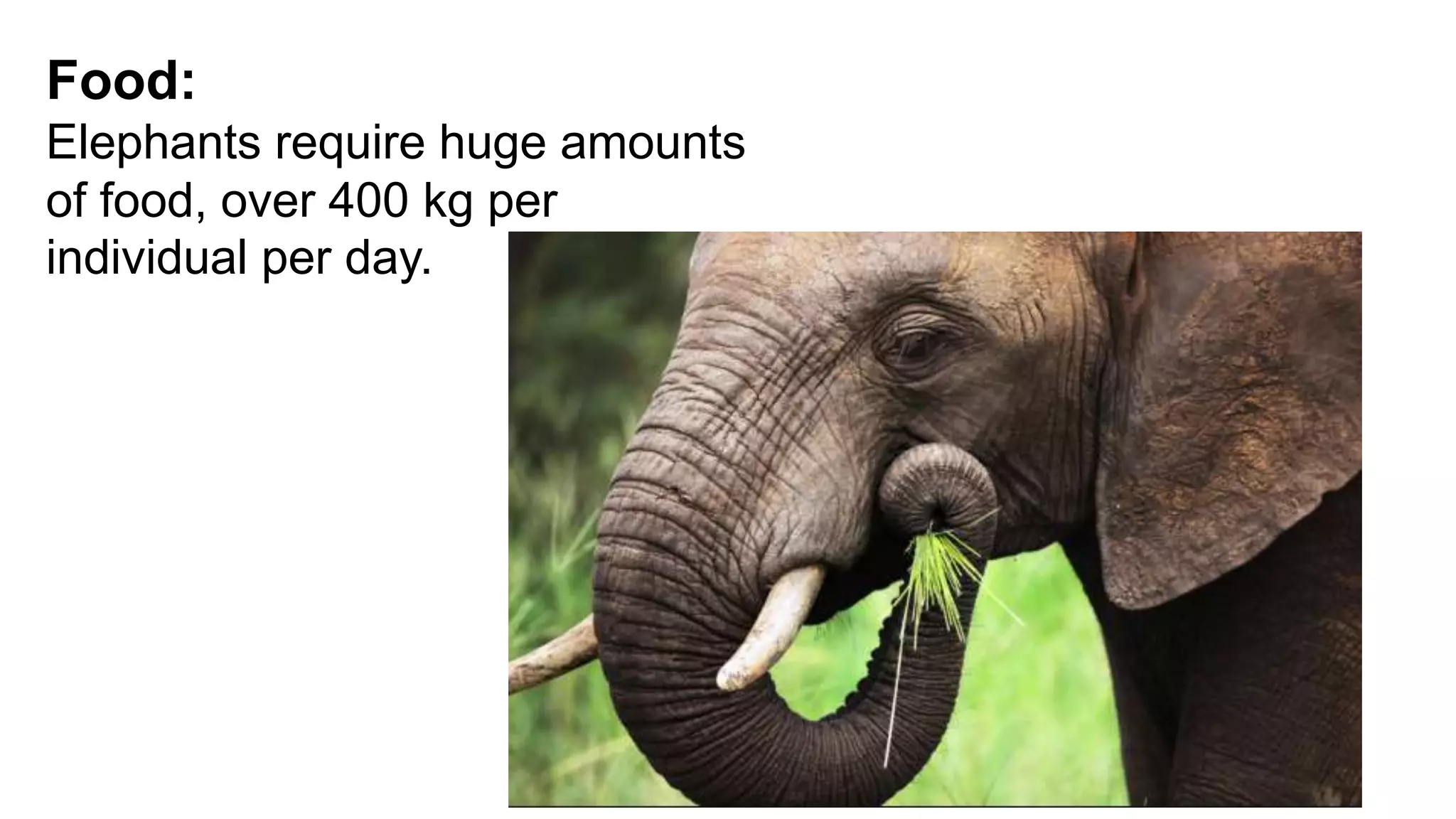
Food:
Elephants require huge amounts
of food, over 400 kg per
individual per day.
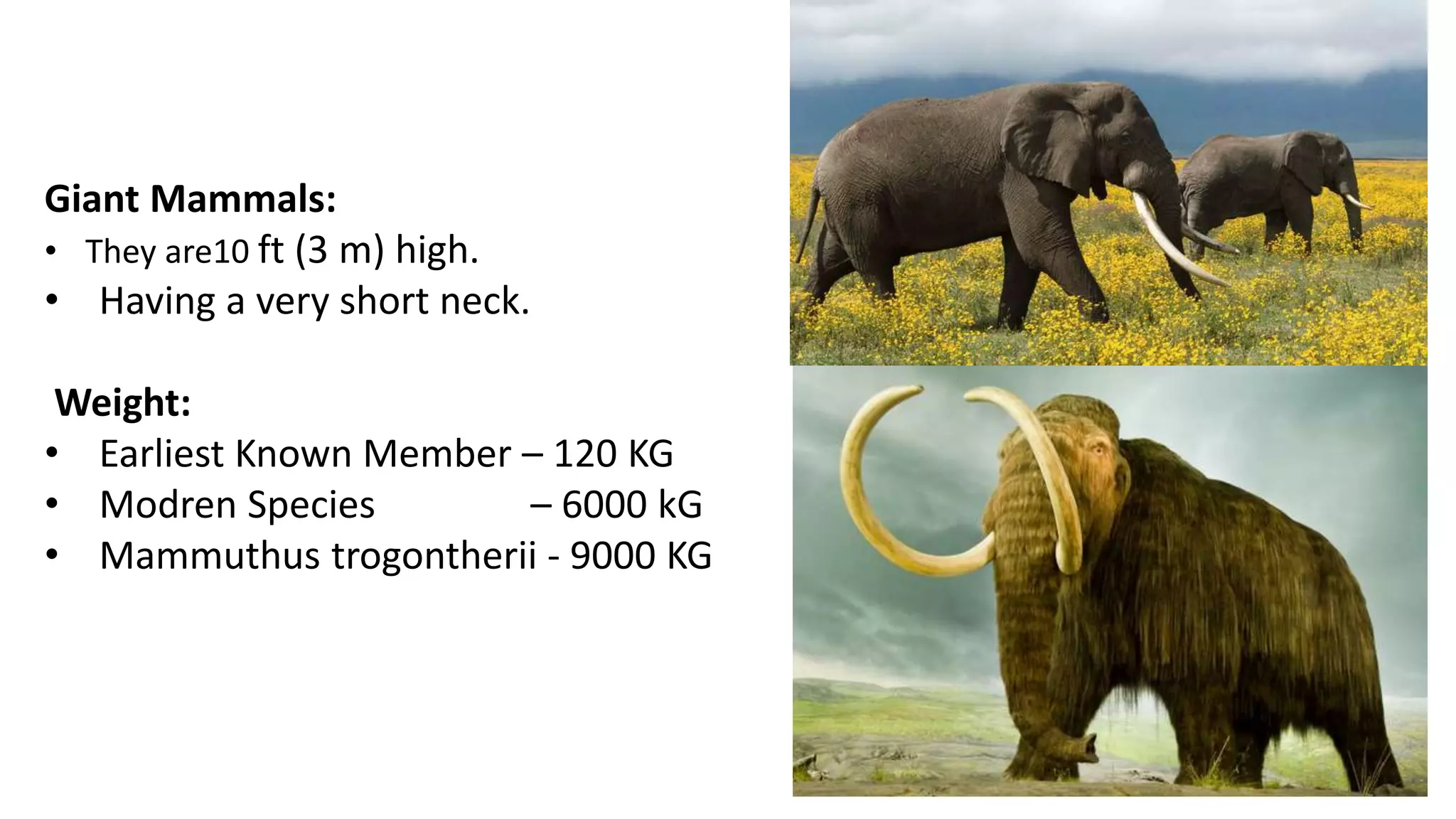
Giant Mammals:
• They are10 ft (3 m) high.
• Having a very short neck.
Weight:
• Earliest Known Member – 120 KG
• Modren Species – 6000 kG
• Mammuthus trogontherii - 9000 KG
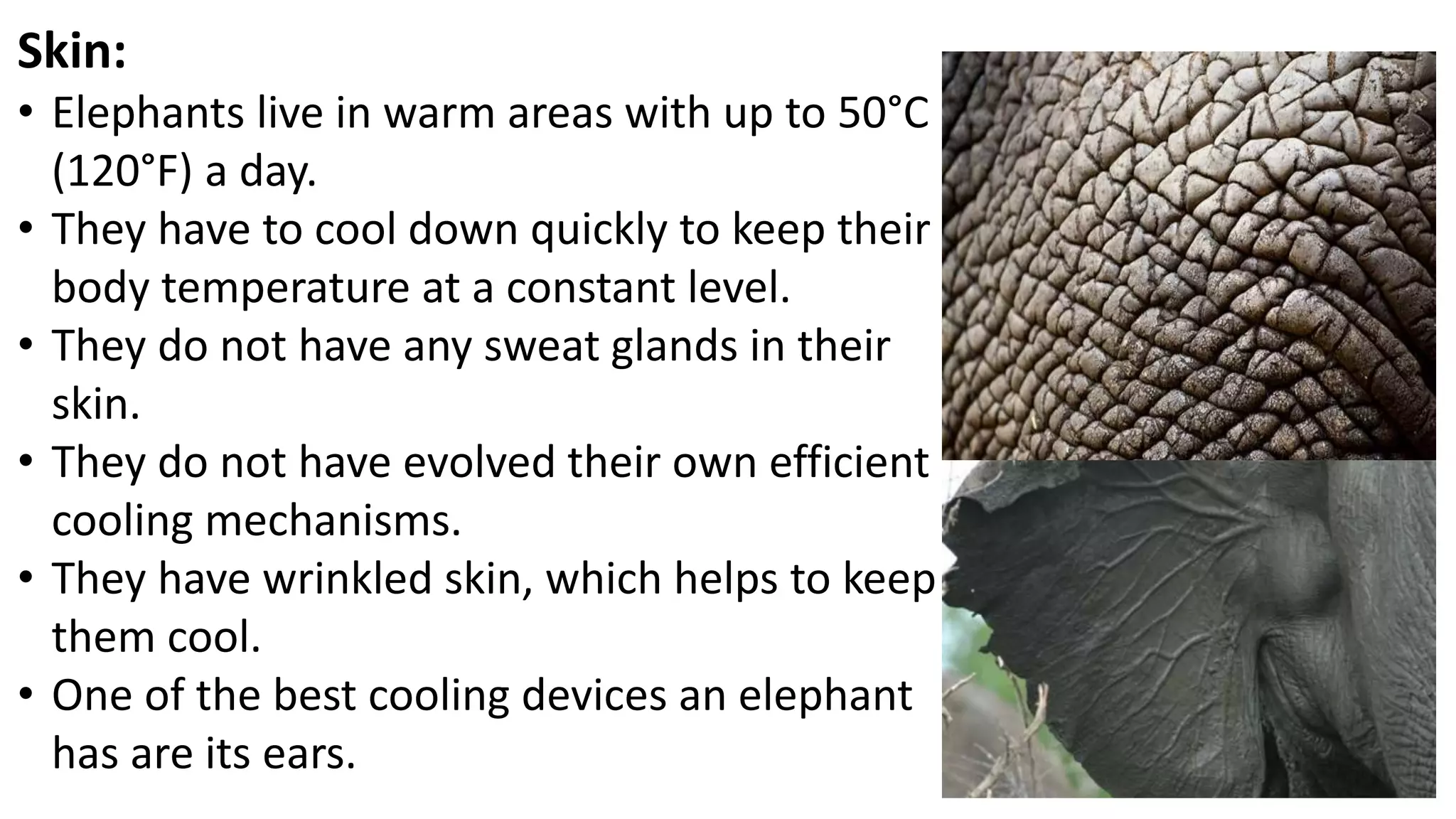
Skin:
• Elephants live in warm areas with up to 50°C
(120°F) a day.
• They have to cool down quickly to keep their
body temperature at a constant level.
• They do not have any sweat glands in their
skin.
• They do not have evolved their own efficient
cooling mechanisms.
• They have wrinkled skin, which helps to keep
them cool.
• One of the best cooling devices an elephant
has are its ears.
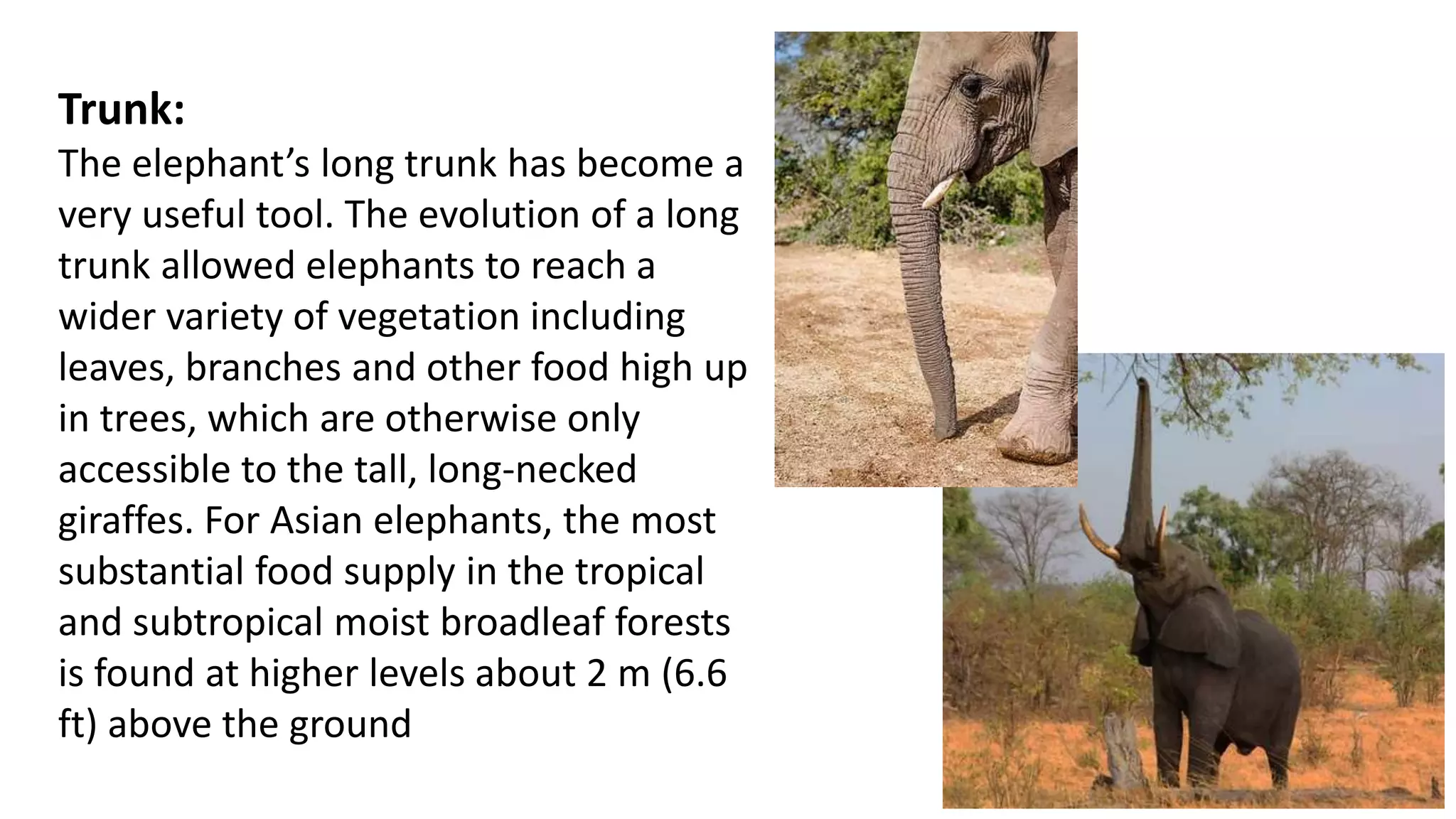
Trunk:
The elephant’s long trunk has become a
very useful tool. The evolution of a long
trunk allowed elephants to reach a
wider variety of vegetation including
leaves, branches and other food high up
in trees, which are otherwise only
accessible to the tall, long-necked
giraffes. For Asian elephants, the most
substantial food supply in the tropical
and subtropical moist broadleaf forests
is found at higher levels about 2 m (6.6
ft) above the ground
Tusks:
• The evolution of long tusks.
• Tusks are a great tool for obtaining
> Food
> Water
> Salt.
• Elephants use their tusks like a crowbar to
peel and cut down soft wood.
• Asian elephants have access to more water
resources all year round than elephants in
Africa. This might be one reason that Asian
elephants have smaller or no tusks.
Order pro bo scidea  (ORDER PROBoSCIDEA)

Order pro bo scidea (ORDER PROBoSCIDEA)

  • 1.
  • 2.
    Habitat: An animal’s habitatis the combination of resources (e.g. food, water) and environmental conditions (e.g. temperature) in an area that makes it possible for that species to survive and reproduce.
  • 3.
    Because of theirhigh intelligence level, elephants can adapt to and modify habitat, while their wide range of food choices permits habitation of a diverse range of ecosystems, including: • Forest • Woodland • Savanna • Grassy plains • Swampy areas • Sparsely vegetated desert.
  • 4.
    Elephants need massivequantities of food, perhaps 136–159 kg a day, although proportional to their body-weight elephants eat less than mice. The diet of elephants includes: • Roots • Bark • Grass • Leaves • Berries • Seedpods • Other fruits. They may drink up to 50 gal (189 l) of water a day, and after drinking their fill, will splash themselves with water and mud, wash their young, and sometimes just frolic, tossing and squirting water about while their young splash, play, and roll in the mud.
  • 5.
    Adaptation: Adaptation is anevolutionary process whereby a species’ characteristics (shape, form, function and behavior) change over time in response to changes in the environment, contributing to an animal’s ability to survive and reproduce.
  • 6.
    Skull: The skull ofmodern elephants is short and high. The lamdoidal crest across the back of the skull is especially well developed. It attach the muscles that bear the weight of the massive head, tusks, and trunk. The bone over the top of the head contains numerous air cells.
  • 7.
    Skeleton: • The skeletonof elephants is adapted to bear massive weight. • Provide attachments for the muscles. The limb bones are stout. • Neither ulna nor tibia is reduced in size. • The toes are splayed and supported at the heel by a pad of dense connective tissue. • The orientation of the pelvis is also modified.
  • 8.
    Food: Elephants require hugeamounts of food, over 400 kg per individual per day.
  • 9.
    Giant Mammals: • Theyare10 ft (3 m) high. • Having a very short neck. Weight: • Earliest Known Member – 120 KG • Modren Species – 6000 kG • Mammuthus trogontherii - 9000 KG
  • 10.
    Skin: • Elephants livein warm areas with up to 50°C (120°F) a day. • They have to cool down quickly to keep their body temperature at a constant level. • They do not have any sweat glands in their skin. • They do not have evolved their own efficient cooling mechanisms. • They have wrinkled skin, which helps to keep them cool. • One of the best cooling devices an elephant has are its ears.
  • 11.
    Trunk: The elephant’s longtrunk has become a very useful tool. The evolution of a long trunk allowed elephants to reach a wider variety of vegetation including leaves, branches and other food high up in trees, which are otherwise only accessible to the tall, long-necked giraffes. For Asian elephants, the most substantial food supply in the tropical and subtropical moist broadleaf forests is found at higher levels about 2 m (6.6 ft) above the ground
  • 12.
    Tusks: • The evolutionof long tusks. • Tusks are a great tool for obtaining > Food > Water > Salt. • Elephants use their tusks like a crowbar to peel and cut down soft wood. • Asian elephants have access to more water resources all year round than elephants in Africa. This might be one reason that Asian elephants have smaller or no tusks.