ELEPHANT
by: Gul Muhammad
FVAS Gomal University DI Khan Pk
Classification
ELEPHANT
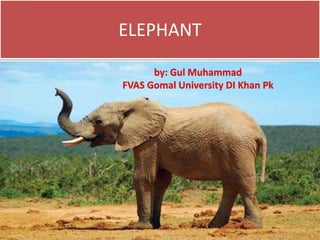
Largest living land mammals.
At birth calf weigh about 100 kg (225 pounds).
Gestation period 20 to 22 months (640__660 days).
Longest gestation period among land animals.
Conti….
Male elephants are called bulls.
 Females are called cows.
A Baby elephant is called calf.
Group of elephants is called herd.
The oldest mother in group is called
matriarch.
Conti…
In the wild, elephants have
strong family relationship
They "talk" to each other with very
low sounds.
Most elephants sounds are so low, people
cannot hear them. But elephants can hear
these sounds far away.
Elephants have strong, leathery skin to protect
themselves.
Species of Elephants
 African bush elephant
 African forest elephant
 Asian elephant.
Mass
Asian elephant: 12,000 lbs,
African bush elephant: 13,000 lbs,
 African forest elephant: 6,000 lbs
Life span
: Asian elephant: 48 years
 African bush elephant: 60 – 70 years
African forest elephant: 60 – 70 years
Height
Asian elephant: 8.9 ft
 African bush elephant: 11 ft
African forest elephant: 8.2 ft
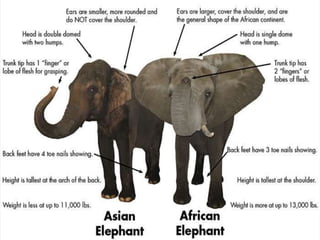
Comparison of African and Asiatic elephant
Facts about elephant
 Elephants live in family groups called HERDS.
 Male elephant called bulls and females are
called cows
 Herds are made up of all the mother
elephants and their babies.
 The oldest mother is called the MATRIARCH
who is the leader of the herd.
 Female elephants stay in their herds for life,
but the male elephants leave between the
ages of 7 and 12.
Elephants love and support their families just as
we do.
A baby elephant is called a calf.
When born stand only 3 ft tall.
Stay very close to their mothers for the first few
months.
Start to eat plants from about four months.
Drink mother milk for about 2 years
 At first, baby elephants do not know how to
use their trunks and can even step on them.
From 6-8 months, they learn to use their
trunk to eat and drink and by the time
they are a year old, they can use their
trunks very well.
Food and water
 Plant eaters or HERBIVORES.
 Eat leaves, roots, grasses, bark and fruits.
 Spend 16-20 hours a day eating.
 Use their trunks to get fruit and leaves.
 They use their trunks to pull down trees .
 An adult can eat 300 lbs. (136 kg) of food in a
day, according to the National Geographic
Elephants drink water only once or twice
a day.
Elephants drink 25-50 gallons of water a
day so they depend on available water
sources in their habitat.
Dung of elephant
Elephants can leave behind almost 300
pounds of dung every day!
Elephant legs are Graviportal
Elephant walks on 5 toes & heel pad.
Elephants move long distances for food,
for water, for sex, maybe for fun.
Elephants don’t run mostly.
Typical elephant walk is like brisk human
walk.
Fastest walk is like top human sprint.
Trunk
The trunk, or proboscis, is a fusion of the nose
and upper lip.
The trunk is elongated and specialized to
become the elephant's most important
appendage.
 It contains up to 150,000 separate muscle
fascicles, with no bone and little fat.
Uses of trunk
 As a tool
 Grazing & browsing
 Manipulating objects
 Moving water
 As a sense organ
 Touch
 Smell
 As a social-signaling organ
 A trumpet that amplifies vocalizations
 A bearer of visual signals
 A touch-communicator
Tusks
Tusks are elongated, continuously growing
front teeth.
They are most commonly canine teeth
Male tusks are larger than female
Weight of tusks is about 50 kg.
Function of tusks
Use in defense against attackers.
For digging
For boring
A group of
elephants is called a herd or parade

Elephant

  • 1.
    ELEPHANT by: Gul Muhammad FVASGomal University DI Khan Pk
  • 2.
  • 3.
    ELEPHANT Largest living landmammals. At birth calf weigh about 100 kg (225 pounds). Gestation period 20 to 22 months (640__660 days). Longest gestation period among land animals.
  • 4.
    Conti…. Male elephants arecalled bulls.  Females are called cows. A Baby elephant is called calf. Group of elephants is called herd. The oldest mother in group is called matriarch.
  • 5.
    Conti… In the wild,elephants have strong family relationship They "talk" to each other with very low sounds. Most elephants sounds are so low, people cannot hear them. But elephants can hear these sounds far away. Elephants have strong, leathery skin to protect themselves.
  • 6.
    Species of Elephants African bush elephant  African forest elephant  Asian elephant.
  • 7.
    Mass Asian elephant: 12,000lbs, African bush elephant: 13,000 lbs,  African forest elephant: 6,000 lbs
  • 8.
    Life span : Asianelephant: 48 years  African bush elephant: 60 – 70 years African forest elephant: 60 – 70 years
  • 9.
    Height Asian elephant: 8.9ft  African bush elephant: 11 ft African forest elephant: 8.2 ft
  • 10.
    Comparison of Africanand Asiatic elephant
  • 12.
    Facts about elephant Elephants live in family groups called HERDS.  Male elephant called bulls and females are called cows  Herds are made up of all the mother elephants and their babies.  The oldest mother is called the MATRIARCH who is the leader of the herd.  Female elephants stay in their herds for life, but the male elephants leave between the ages of 7 and 12.
  • 13.
    Elephants love andsupport their families just as we do. A baby elephant is called a calf. When born stand only 3 ft tall. Stay very close to their mothers for the first few months. Start to eat plants from about four months. Drink mother milk for about 2 years  At first, baby elephants do not know how to use their trunks and can even step on them.
  • 14.
    From 6-8 months,they learn to use their trunk to eat and drink and by the time they are a year old, they can use their trunks very well.
  • 15.
    Food and water Plant eaters or HERBIVORES.  Eat leaves, roots, grasses, bark and fruits.  Spend 16-20 hours a day eating.  Use their trunks to get fruit and leaves.  They use their trunks to pull down trees .  An adult can eat 300 lbs. (136 kg) of food in a day, according to the National Geographic
  • 16.
    Elephants drink wateronly once or twice a day. Elephants drink 25-50 gallons of water a day so they depend on available water sources in their habitat.
  • 17.
    Dung of elephant Elephantscan leave behind almost 300 pounds of dung every day!
  • 18.
    Elephant legs areGraviportal Elephant walks on 5 toes & heel pad. Elephants move long distances for food, for water, for sex, maybe for fun. Elephants don’t run mostly. Typical elephant walk is like brisk human walk. Fastest walk is like top human sprint.
  • 19.
    Trunk The trunk, orproboscis, is a fusion of the nose and upper lip. The trunk is elongated and specialized to become the elephant's most important appendage.  It contains up to 150,000 separate muscle fascicles, with no bone and little fat.
  • 20.
    Uses of trunk As a tool  Grazing & browsing  Manipulating objects  Moving water  As a sense organ  Touch  Smell  As a social-signaling organ  A trumpet that amplifies vocalizations  A bearer of visual signals  A touch-communicator
  • 21.
    Tusks Tusks are elongated,continuously growing front teeth. They are most commonly canine teeth Male tusks are larger than female Weight of tusks is about 50 kg.
  • 22.
    Function of tusks Usein defense against attackers. For digging For boring
  • 23.
    A group of elephantsis called a herd or parade