KEYSTONE SPECIES
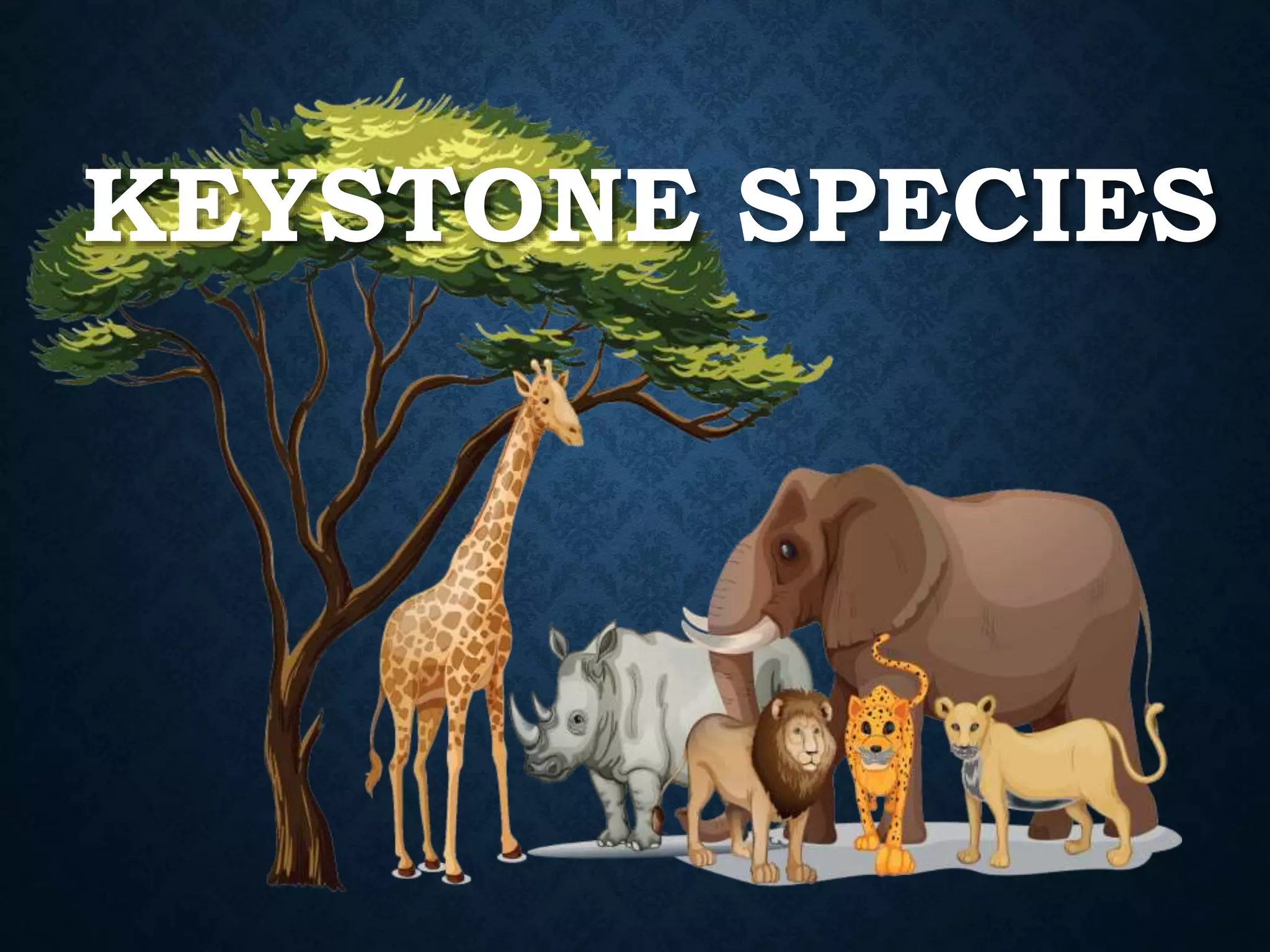
KEYSTONE SPECIES
Species that have a large effect on an ecosystem
Take them away and the system collapses
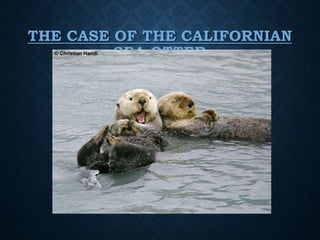
THE CASE OF THE CALIFORNIAN
SEA OTTER
KELP FORESTS
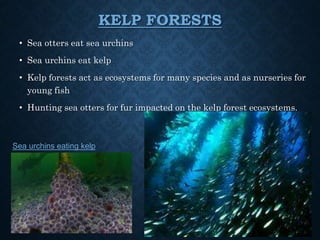
• Sea otters eat sea urchins
• Sea urchins eat kelp
• Kelp forests act as ecosystems for many species and as nurseries for
young fish
• Hunting sea otters for fur impacted on the kelp forest ecosystems.
Sea urchins eating kelp
THE WOLVES OF YELLOWSTONE
PARK
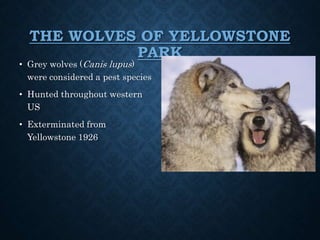
• Grey wolves (Canis lupus)
were considered a pest species
• Hunted throughout western
US
• Exterminated from
Yellowstone 1926
THE
CONSEQUENCES
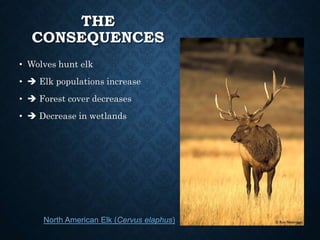
• Wolves hunt elk
•  Elk populations increase
•  Forest cover decreases
•  Decrease in wetlands
North American Elk (Cervus elaphus)
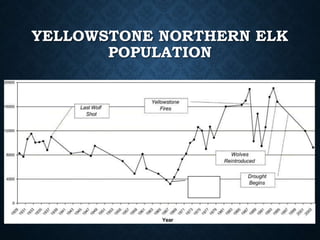
YELLOWSTONE NORTHERN ELK
POPULATION
Culling
of elk
stops
NOT SO SIMPLE
• Though wolves are important predators on elk they are not
the only factors
• Disease
• Drought
• Fire
• Other predators (e.g. grizzly bears)

Keystone species ( Zoology)

  • 1.
  • 2.
    KEYSTONE SPECIES Species thathave a large effect on an ecosystem Take them away and the system collapses
  • 3.
    THE CASE OFTHE CALIFORNIAN SEA OTTER
  • 4.
    KELP FORESTS • Seaotters eat sea urchins • Sea urchins eat kelp • Kelp forests act as ecosystems for many species and as nurseries for young fish • Hunting sea otters for fur impacted on the kelp forest ecosystems. Sea urchins eating kelp
  • 5.
    THE WOLVES OFYELLOWSTONE PARK • Grey wolves (Canis lupus) were considered a pest species • Hunted throughout western US • Exterminated from Yellowstone 1926
  • 6.
    THE CONSEQUENCES • Wolves huntelk •  Elk populations increase •  Forest cover decreases •  Decrease in wetlands North American Elk (Cervus elaphus)
  • 7.
  • 8.
    NOT SO SIMPLE •Though wolves are important predators on elk they are not the only factors • Disease • Drought • Fire • Other predators (e.g. grizzly bears)