Opioid Analgesics-1
By Dr. Chintan Doshi
INTRODUCTION
• Algesia: is ill-defined, unpleasant sensation, usually
evoked by an external or internal noxious stimulus
• Analgesic: A drug that selectively relieves pain by
acting in the CNS or on peripheral pain mechanisms,
without significantly altering consciousness
Opioid Receptors
 opioid receptor types:-
• μ-receptor
• δ-receptor
• κ-receptor
• NOP (Nociceptin Opioid Peptide) receptor
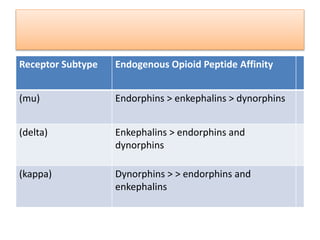
Receptor Subtype Endogenous Opioid Peptide Affinity
(mu) Endorphins > enkephalins > dynorphins
(delta) Enkephalins > endorphins and
dynorphins
(kappa) Dynorphins > > endorphins and
enkephalins
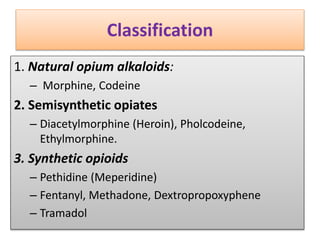
Classification
1. Natural opium alkaloids:
– Morphine, Codeine
2. Semisynthetic opiates
– Diacetylmorphine (Heroin), Pholcodeine,
Ethylmorphine.
3. Synthetic opioids
– Pethidine (Meperidine)
– Fentanyl, Methadone, Dextropropoxyphene
– Tramadol
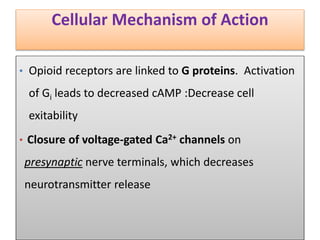
Cellular Mechanism of Action
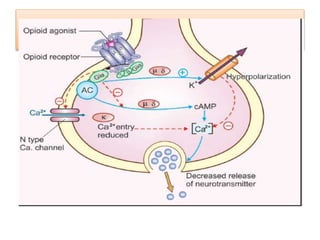
• Opioid receptors are linked to G proteins. Activation
of Gi leads to decreased cAMP :Decrease cell
exitability
• Closure of voltage-gated Ca2+ channels on
presynaptic nerve terminals, which decreases
neurotransmitter release
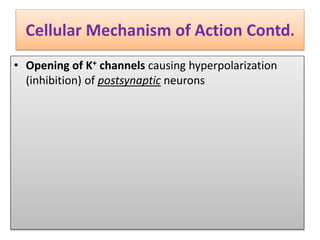
Cellular Mechanism of Action Contd.
• Opening of K+ channels causing hyperpolarization
(inhibition) of postsynaptic neurons
•Morphine
Pharmacological effects
CNS:
 Analgesia: most powerful drug available for relief of
pain
 Euphoria: addict experiences a pleasant floating
sensation and freedom from anxiety and distress.
 Sedation
 Respiratory depression:
• Cough suppression: suppression of cough centre in
nucleus of tractus solitarius
• Miosis: results from stimulation of Edinger- Westphal
nucleus causing pin-point pupils.
• Emesis: due to stimulation of brainstem
chemoreceptor trigger zone results in nausea and
vomiting
 CVS: No significant direct effect on CVS
 Hypotension may occur if CVS is already stressed.
Due to the peripheral arterial and venous dilation
resulting from histamine release.
 GIT: Decrease intestinal propulsive peristalsis and
stomach motility leads to constipation
 Biliary tract: Constriction of biliary smooth muscles
leads to biliary colic
• Uterus: decrease uterine tone lead to prolong labor
• Skin: flushing and warming ,sweating, itching due to
histamine release
Clinical uses
• Analgesia for
a. MI
b. Terminal illness
c. surgery
d. obstetrical procedures
e. cancer
f. Burn
• Prevent neurogenic shock and other autonomic
effects of excruciating pain such as that of crush
injuries
Contd.
• Preanaesthetic medication
Morphine and pethidine are used in few
selected patients
Produce pre- and postoperative analgesia
smoothen induction
Reduce the dose of anaesthetic required
supplement poor analgesics (thiopentone,
halothane)
• Balanced anaesthesia and surgical analgesia
• Relief of anxiety and apprehension
• MI
• Internal bleeding
• Hematemesis
Clinical uses Contd.
• Acute pulmonary edema
(a) Reducing preload on heart due to vasodilatation
and peripheral pooling of blood.
(b) Tending to shift blood from pulmonary to
systemic circuit
(c) Allays air hunger by depressing respiratory
centre
Clinical uses Contd.
d) Cuts down sympathetic stimulation by
calming the patient, reduces cardiac
work.
• Cough: codeine for dry cough
• Diarrhoea:
– Loperamide & diphenoxylate are used
Contraindications
• Infants and the elderly
• Respiratory insufficiency (emphysema, pulmonary
fibrosis, cor pulmonale) sudden deaths have occurred
• Bronchial asthma
• Head injury
– By retaining CO2, it increases intracranial tension which will add
to that caused by head injury itself.
– Even therapeutic doses can cause marked respiratory
depression in these patients.
– Vomiting, miosis and altered mentation produced by morphine
interfere with assessment of progress in head injury cases
Contd.
• Hypotensive states and hypovolaemia
• Undiagnosed acute abdominal pain
– Morphine can aggravate certain conditions, e.g.
diverticulitis, biliary colic, pancreatitis.
– Inflamed appendix may rupture.
• Elderly male:urinary retention
• Hypothyroidism, liver and kidney disease
• Unstable personalities
Adverse Effects
Side effects
• Sedation
• mental clouding
• Lethargy
• vomiting
• constipation
• Respiratory depression
• blurring vision
• urinary retention
Adverse Effects Contd.
• Idiosyncrasy and allergy
– urticaria, swelling of lips occur infrequently
• Apnea of new born:may occur when morphine
is given to the mother during labour.
Acute morphine poisoning
• may be accidental, suicidal or seen in drug
abusers
• human lethal dose :250 mg
Symptoms
• Coma
• Flaccidity,
• Shallow and occasional breathing
• Cyanosis
• Pinpoint pupil
• Fall in BP and shock
• Death: due to respi. failure
Acute morphine poisoning
Treatment:
• Maintain respiration, BP
• Gastric lavage should be done with Pot.
Permanganate to remove unabsorbed drug
• Opioid antagonist, preferably iv naloxone
0.4-0.8 mg repeated every 2-3 min
Tolerance and Dependence
Tolerance
• partly pharmacokinetic (enhanced rate of
metabolism) but mainly pharmacodynamic
(cellular tolerance)
• Exhibited to most actions, but not to
constipating and miotic actions.
Dependence
• Psychological and physical dependence,
• Its abuse liability is rated high
• Withdrawal symtoms:
– Lacrimation, sweating, yawning
– Anxiety, fear, restlessness
– Mydriasis, tremor, insomnia
– Abdominal colic, diarrhoea, dehydration,
– Rise in BP, palpitation and rapid weight loss
• Treatment of opioid
dependence
• withdrawal of morphine and substitution with
oral methadone (long-acting, orally effective)
• followed by gradual withdrawal of methadone
THANK YOU
“ Every form of addiction is bad , no matter whether the
narcotics, be alcoholic or idealism ”

Opoids analgesic 1

  • 1.
  • 2.
    INTRODUCTION • Algesia: isill-defined, unpleasant sensation, usually evoked by an external or internal noxious stimulus • Analgesic: A drug that selectively relieves pain by acting in the CNS or on peripheral pain mechanisms, without significantly altering consciousness
  • 3.
    Opioid Receptors  opioidreceptor types:- • μ-receptor • δ-receptor • κ-receptor • NOP (Nociceptin Opioid Peptide) receptor
  • 4.
    Receptor Subtype EndogenousOpioid Peptide Affinity (mu) Endorphins > enkephalins > dynorphins (delta) Enkephalins > endorphins and dynorphins (kappa) Dynorphins > > endorphins and enkephalins
  • 5.
    Classification 1. Natural opiumalkaloids: – Morphine, Codeine 2. Semisynthetic opiates – Diacetylmorphine (Heroin), Pholcodeine, Ethylmorphine. 3. Synthetic opioids – Pethidine (Meperidine) – Fentanyl, Methadone, Dextropropoxyphene – Tramadol
  • 6.
    Cellular Mechanism ofAction • Opioid receptors are linked to G proteins. Activation of Gi leads to decreased cAMP :Decrease cell exitability • Closure of voltage-gated Ca2+ channels on presynaptic nerve terminals, which decreases neurotransmitter release
  • 7.
    Cellular Mechanism ofAction Contd. • Opening of K+ channels causing hyperpolarization (inhibition) of postsynaptic neurons
  • 9.
  • 10.
    Pharmacological effects CNS:  Analgesia:most powerful drug available for relief of pain  Euphoria: addict experiences a pleasant floating sensation and freedom from anxiety and distress.  Sedation  Respiratory depression:
  • 11.
    • Cough suppression:suppression of cough centre in nucleus of tractus solitarius • Miosis: results from stimulation of Edinger- Westphal nucleus causing pin-point pupils. • Emesis: due to stimulation of brainstem chemoreceptor trigger zone results in nausea and vomiting
  • 12.
     CVS: Nosignificant direct effect on CVS  Hypotension may occur if CVS is already stressed. Due to the peripheral arterial and venous dilation resulting from histamine release.  GIT: Decrease intestinal propulsive peristalsis and stomach motility leads to constipation  Biliary tract: Constriction of biliary smooth muscles leads to biliary colic
  • 13.
    • Uterus: decreaseuterine tone lead to prolong labor • Skin: flushing and warming ,sweating, itching due to histamine release
  • 14.
    Clinical uses • Analgesiafor a. MI b. Terminal illness c. surgery d. obstetrical procedures e. cancer f. Burn • Prevent neurogenic shock and other autonomic effects of excruciating pain such as that of crush injuries
  • 15.
    Contd. • Preanaesthetic medication Morphineand pethidine are used in few selected patients Produce pre- and postoperative analgesia smoothen induction Reduce the dose of anaesthetic required supplement poor analgesics (thiopentone, halothane)
  • 16.
    • Balanced anaesthesiaand surgical analgesia • Relief of anxiety and apprehension • MI • Internal bleeding • Hematemesis
  • 17.
    Clinical uses Contd. •Acute pulmonary edema (a) Reducing preload on heart due to vasodilatation and peripheral pooling of blood. (b) Tending to shift blood from pulmonary to systemic circuit (c) Allays air hunger by depressing respiratory centre
  • 18.
    Clinical uses Contd. d)Cuts down sympathetic stimulation by calming the patient, reduces cardiac work. • Cough: codeine for dry cough • Diarrhoea: – Loperamide & diphenoxylate are used
  • 19.
    Contraindications • Infants andthe elderly • Respiratory insufficiency (emphysema, pulmonary fibrosis, cor pulmonale) sudden deaths have occurred • Bronchial asthma • Head injury – By retaining CO2, it increases intracranial tension which will add to that caused by head injury itself. – Even therapeutic doses can cause marked respiratory depression in these patients. – Vomiting, miosis and altered mentation produced by morphine interfere with assessment of progress in head injury cases
  • 20.
    Contd. • Hypotensive statesand hypovolaemia • Undiagnosed acute abdominal pain – Morphine can aggravate certain conditions, e.g. diverticulitis, biliary colic, pancreatitis. – Inflamed appendix may rupture. • Elderly male:urinary retention • Hypothyroidism, liver and kidney disease • Unstable personalities
  • 21.
    Adverse Effects Side effects •Sedation • mental clouding • Lethargy • vomiting • constipation • Respiratory depression • blurring vision • urinary retention
  • 22.
    Adverse Effects Contd. •Idiosyncrasy and allergy – urticaria, swelling of lips occur infrequently • Apnea of new born:may occur when morphine is given to the mother during labour.
  • 23.
    Acute morphine poisoning •may be accidental, suicidal or seen in drug abusers • human lethal dose :250 mg
  • 24.
    Symptoms • Coma • Flaccidity, •Shallow and occasional breathing • Cyanosis • Pinpoint pupil • Fall in BP and shock • Death: due to respi. failure
  • 25.
    Acute morphine poisoning Treatment: •Maintain respiration, BP • Gastric lavage should be done with Pot. Permanganate to remove unabsorbed drug • Opioid antagonist, preferably iv naloxone 0.4-0.8 mg repeated every 2-3 min
  • 26.
  • 27.
    Tolerance • partly pharmacokinetic(enhanced rate of metabolism) but mainly pharmacodynamic (cellular tolerance) • Exhibited to most actions, but not to constipating and miotic actions.
  • 28.
    Dependence • Psychological andphysical dependence, • Its abuse liability is rated high • Withdrawal symtoms: – Lacrimation, sweating, yawning – Anxiety, fear, restlessness – Mydriasis, tremor, insomnia – Abdominal colic, diarrhoea, dehydration, – Rise in BP, palpitation and rapid weight loss
  • 29.
    • Treatment ofopioid dependence
  • 30.
    • withdrawal ofmorphine and substitution with oral methadone (long-acting, orally effective) • followed by gradual withdrawal of methadone
  • 31.
    THANK YOU “ Everyform of addiction is bad , no matter whether the narcotics, be alcoholic or idealism ”