Downloaded 125 times

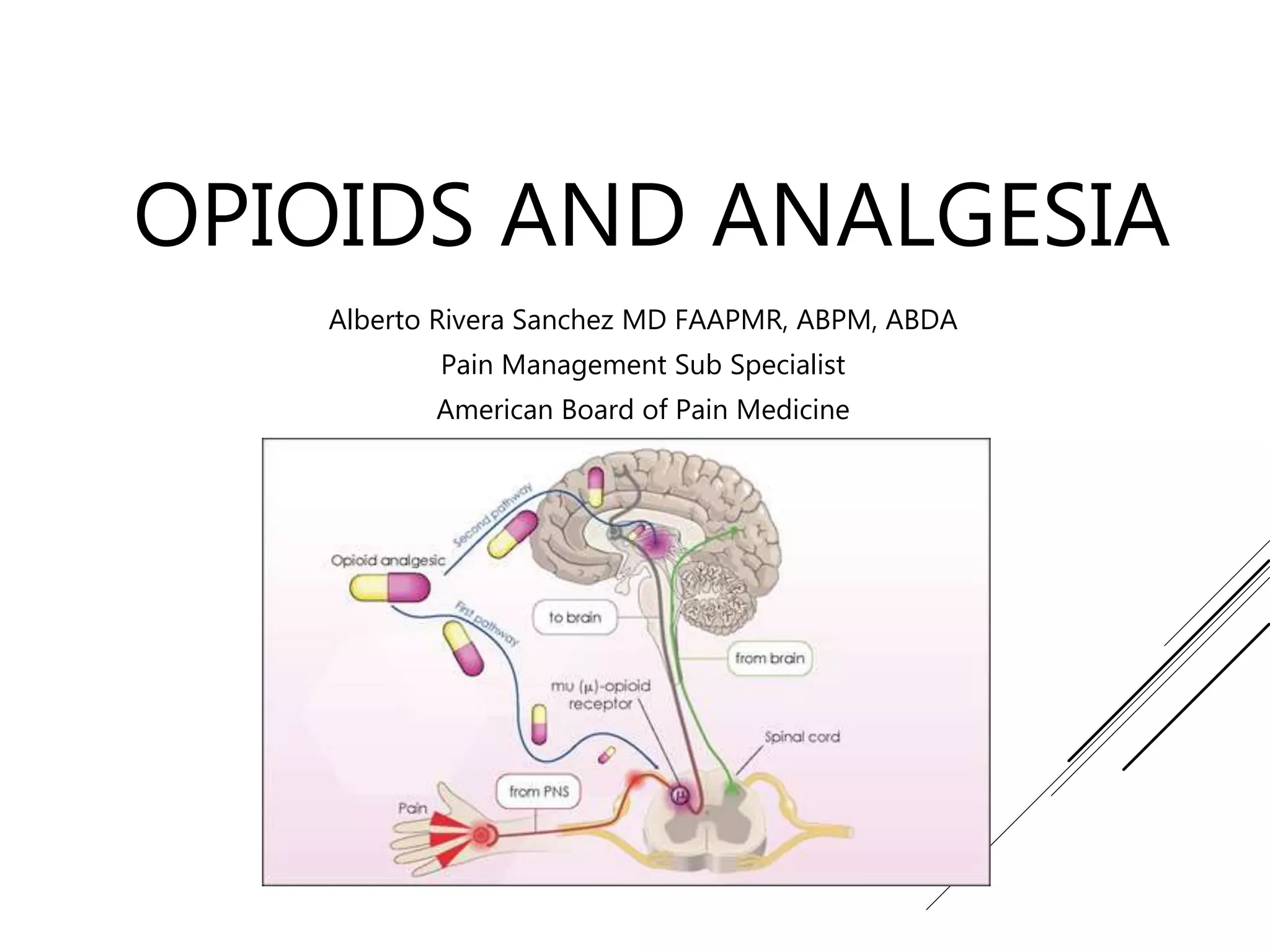

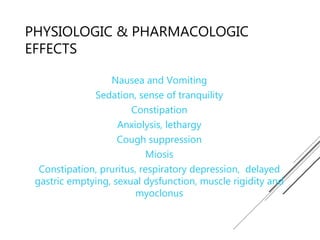

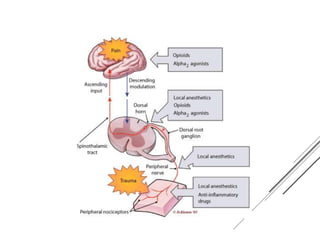
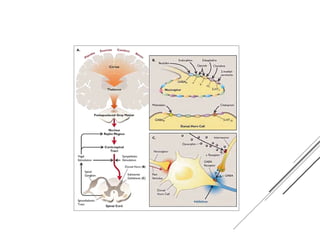
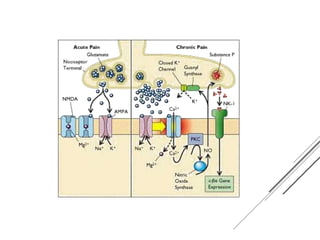
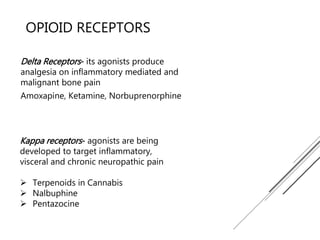
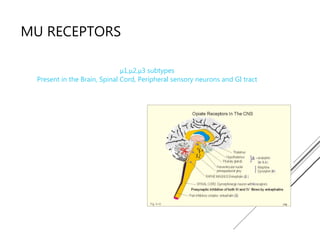


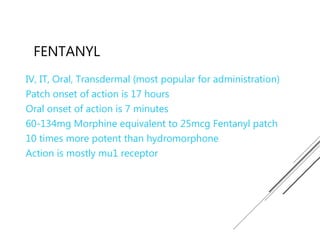
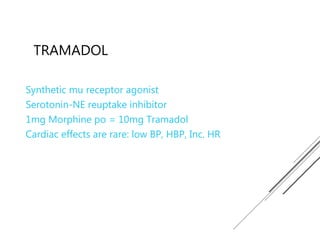
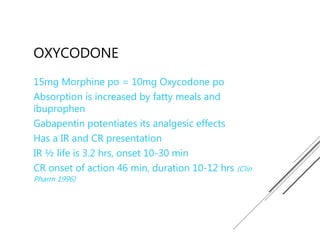
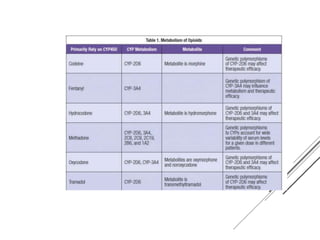




This document discusses opioids and analgesia. It provides information on the physiologic effects of opioids like nausea, vomiting, sedation, and constipation. It explains the mechanisms of action of opioids like presynaptic inhibition and hyperpolarization. It describes the different opioid receptors like mu, delta, and kappa receptors. It then discusses various opioid agonists used for pain management like morphine, hydromorphone, codeine, fentanyl, heroin, oxycodone, and tramadol. It also mentions alternatives to opioids for pain like antidepressants, gabapentin, benzodiazepines, muscle relaxants, and NSAIDs.


![CASE_PRESENTATION_ON_subdural_hematoma(SDH)[1 FINAL PPT]-1.pptx](https://cdn.slidesharecdn.com/ss_thumbnails/casepresentationonsubduralhematomasdh1finalppt-1-260129172522-d405d375-thumbnail.jpg?width=640&height=640&fit=bounds)


