Topics
Definitions
Feature extraction
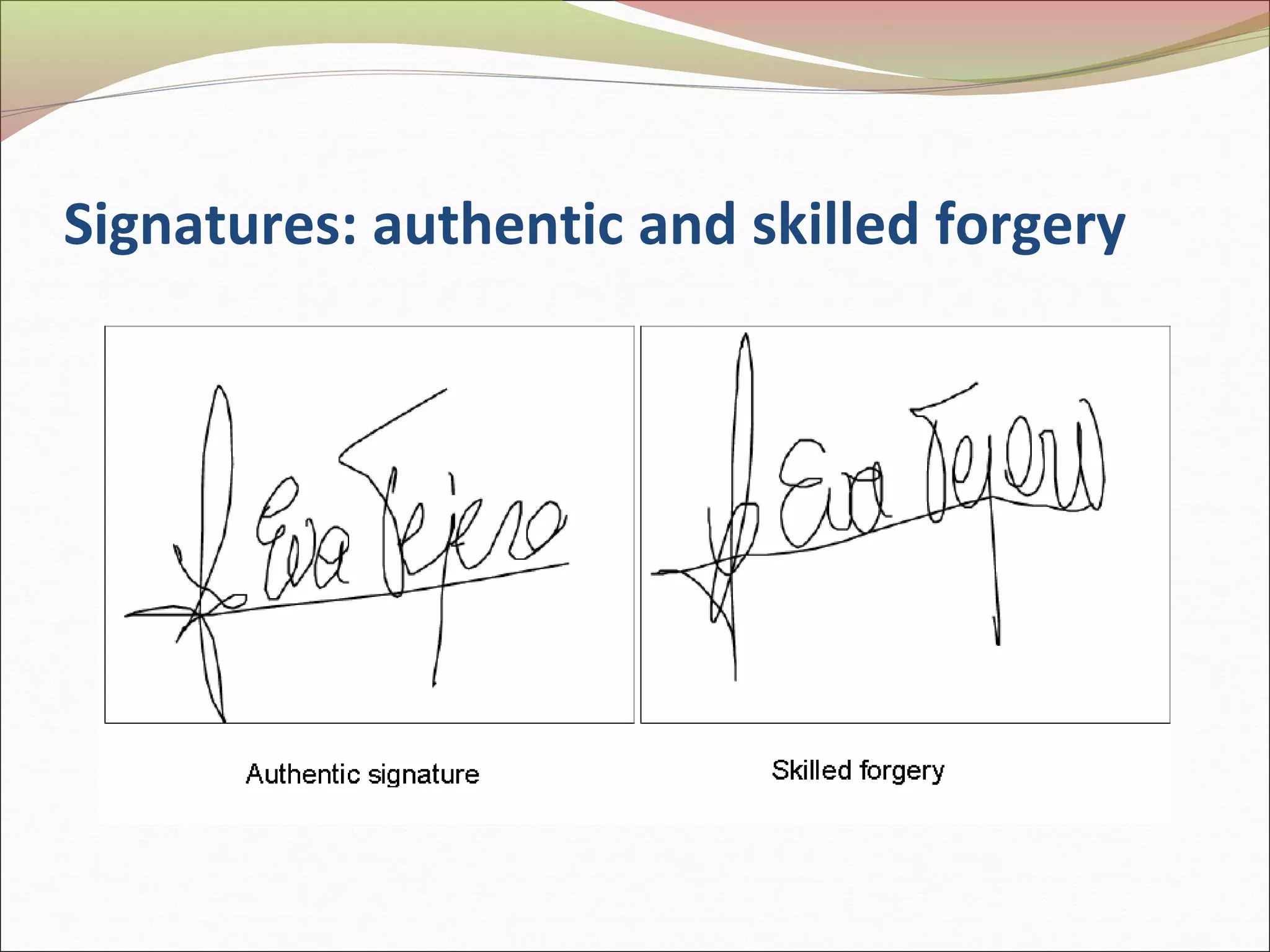
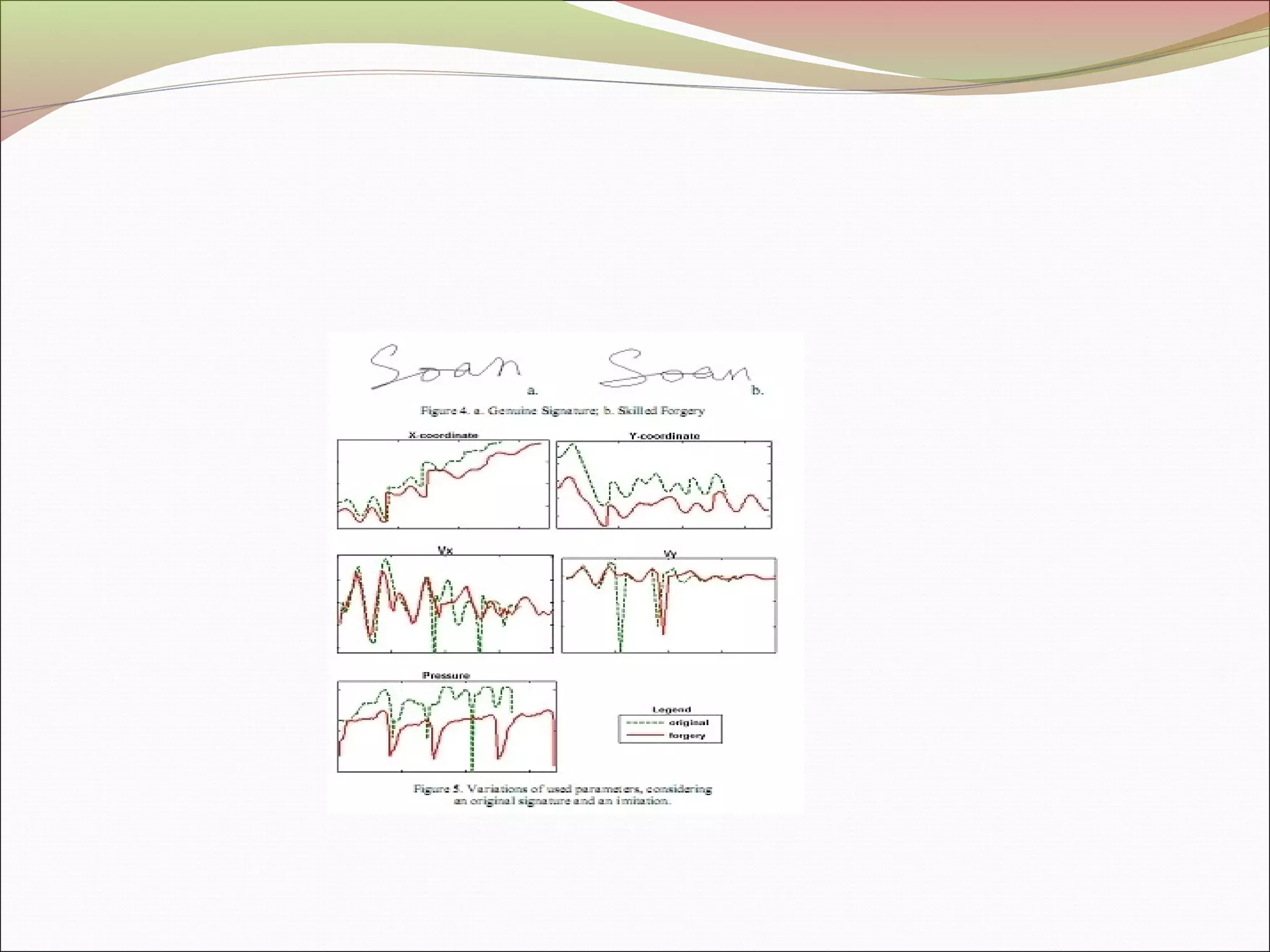
Signature Forgery
Signature models
Advantages and disadvantages of signature as
 biometrics
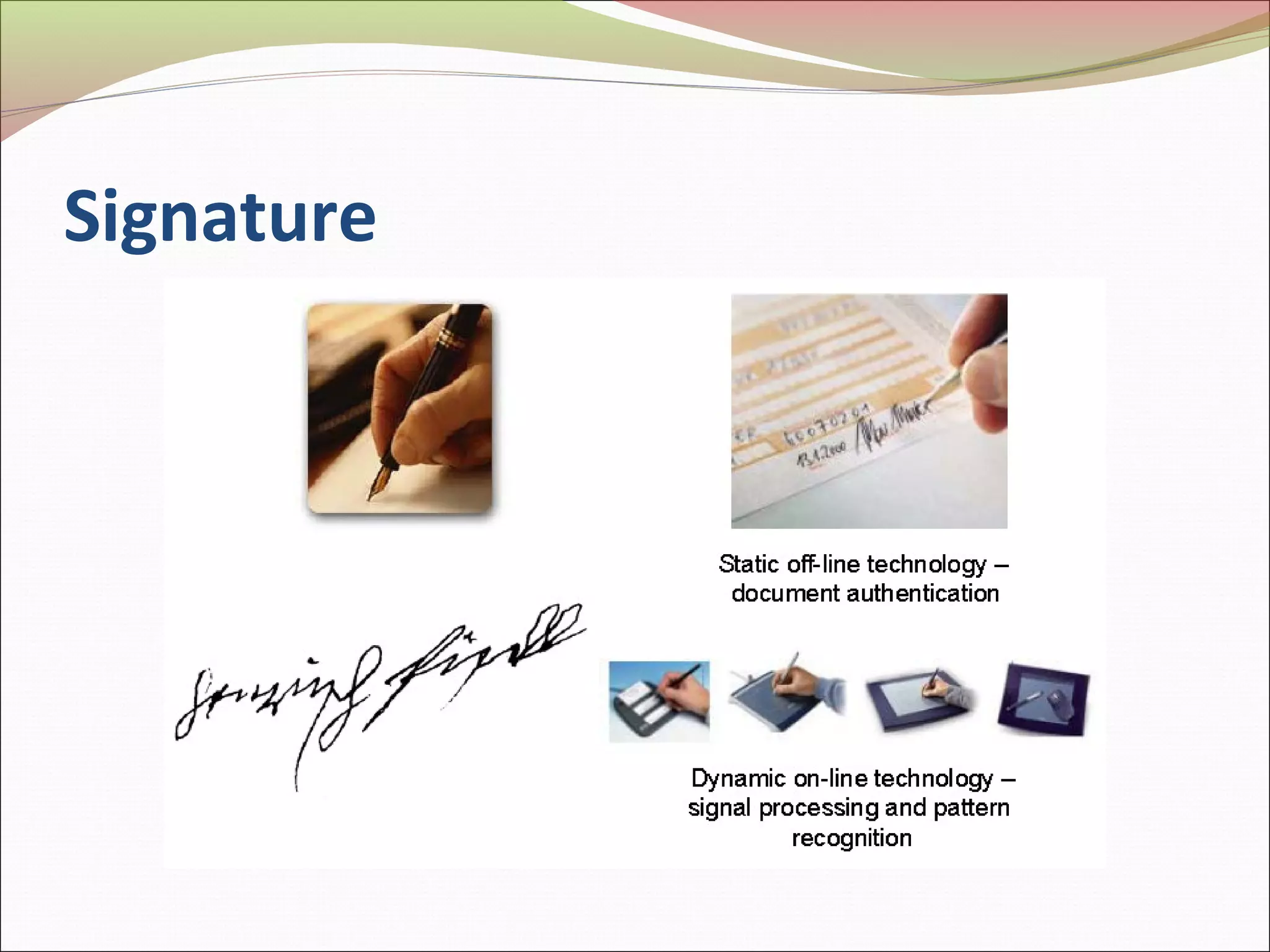
Signature
Signatures
Off-line or static signatures are scanned from paper
 documents, where they were written in conventional way.
 Off-line signature analysis can be carried out with a
 scanned image of the signature using a standard camera or
 scanner.
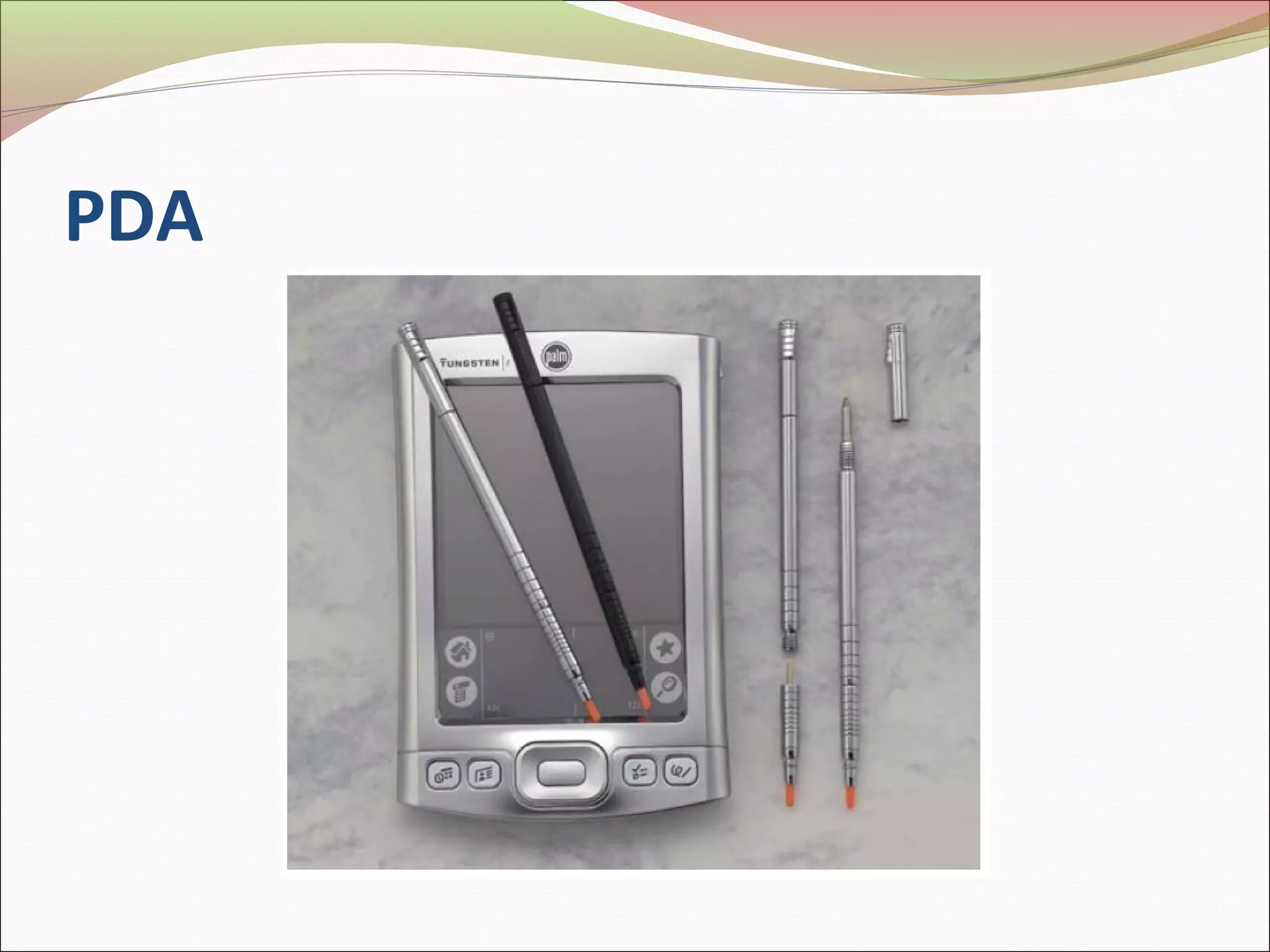
On-line or dynamic signatures are written with an
 electronically instrumented device and the dynamic
 information (pen tip location through time) is usually
 available at high resolution, even when the pen is not in
 contact with the paper.
PDA
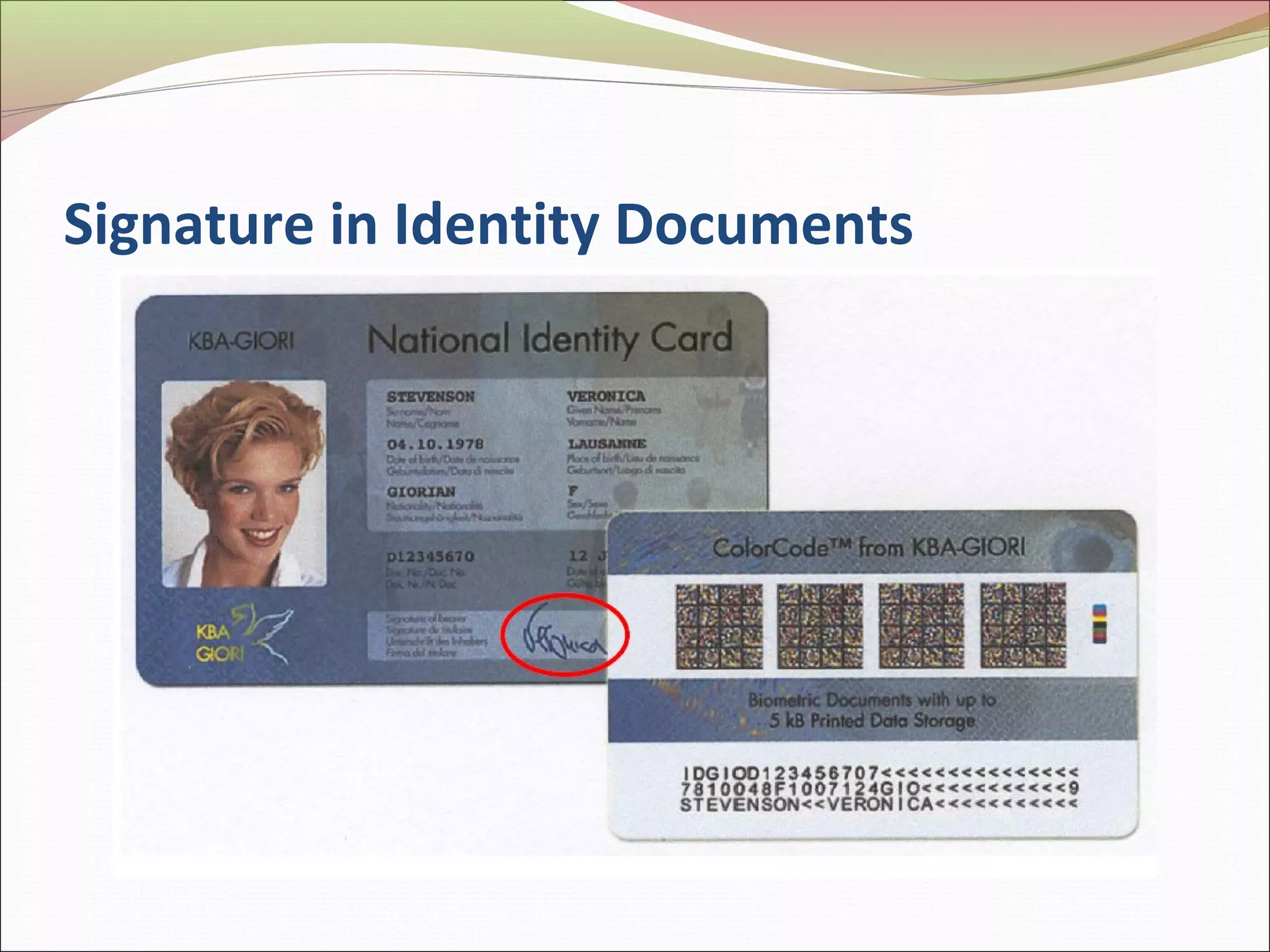
Signature in Identity Documents
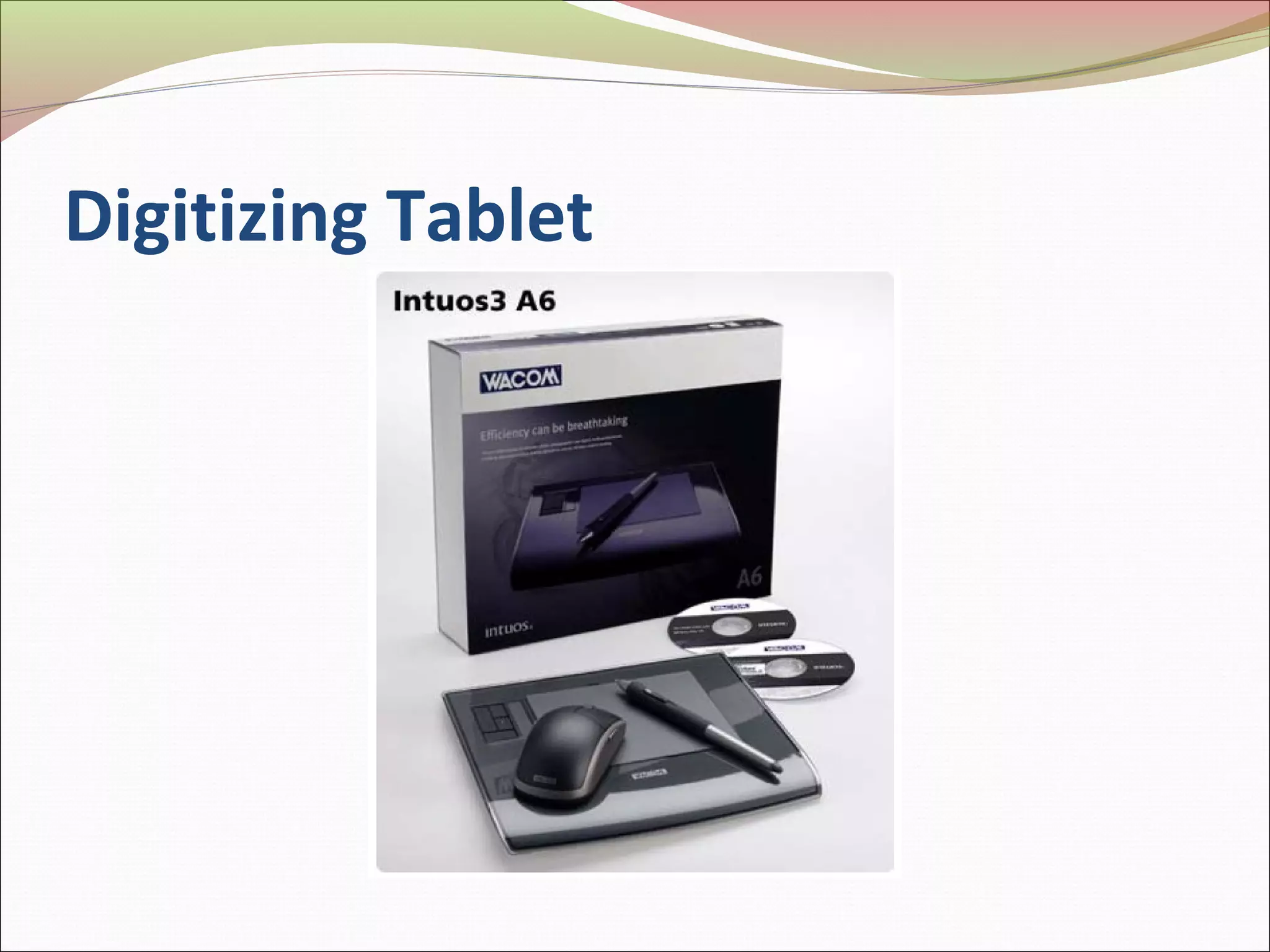
Digitizing Tablet
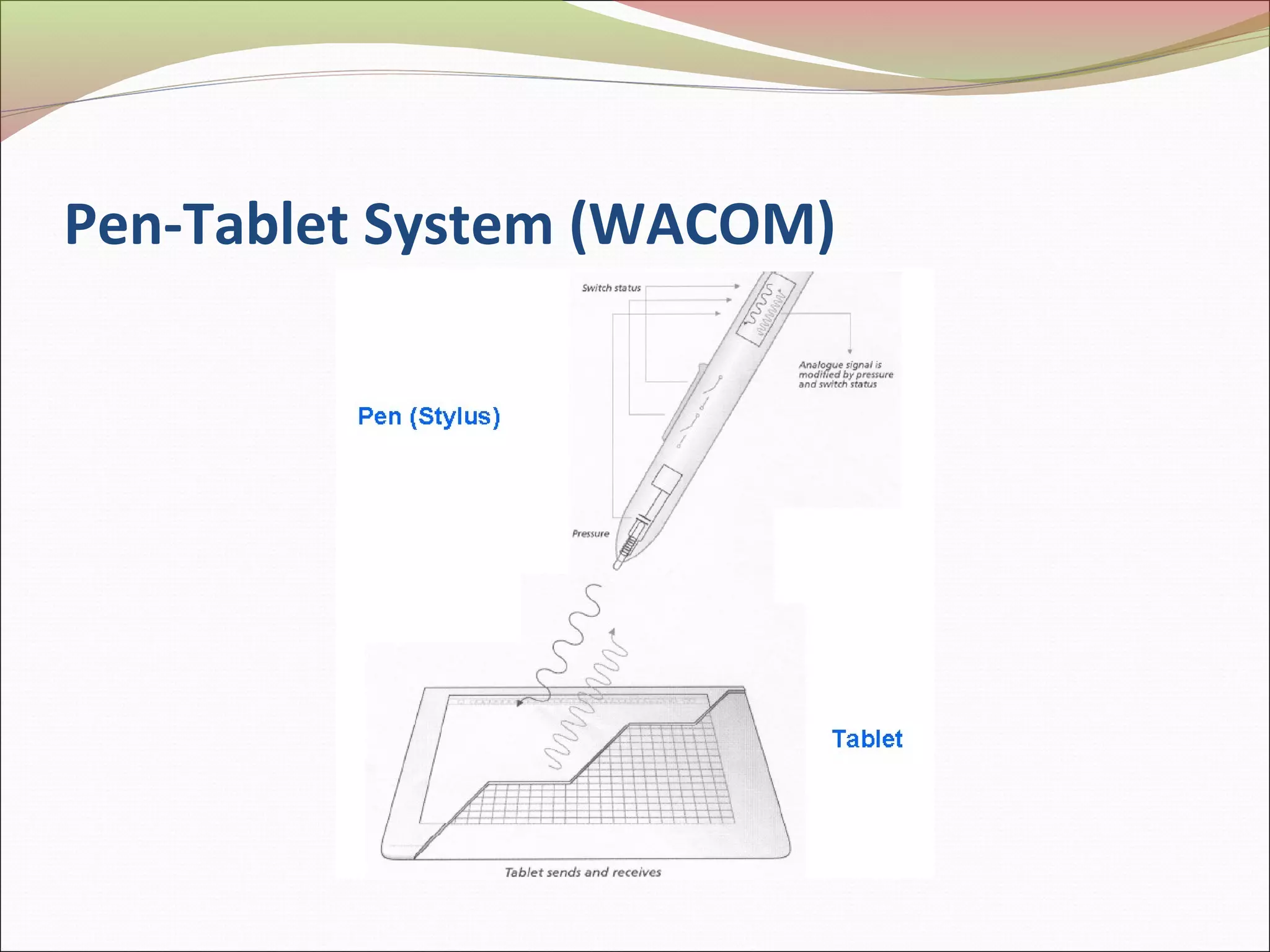
Pen-Tablet System (WACOM)
Pen-Tablet System –How It Works?
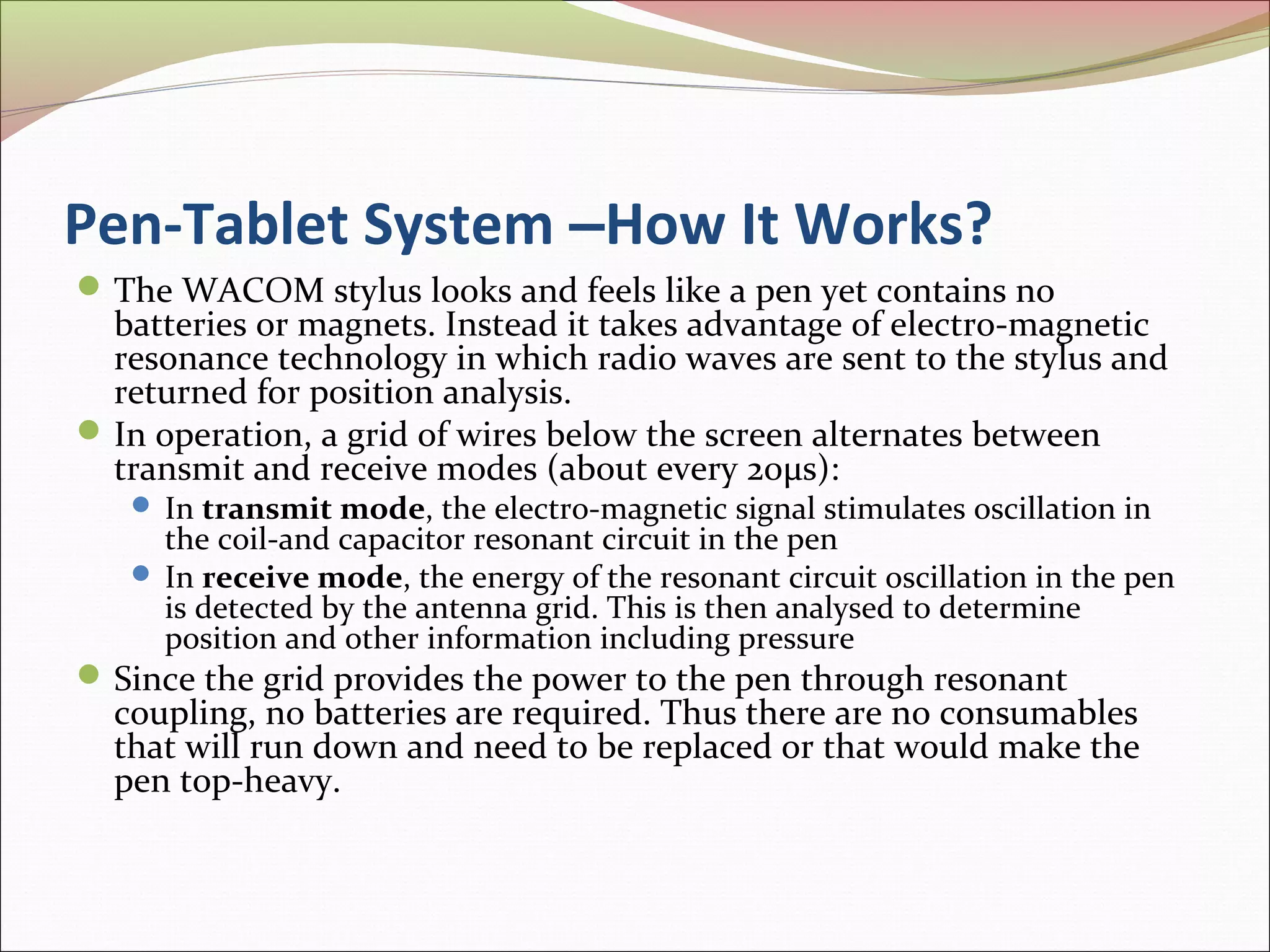
 The WACOM stylus looks and feels like a pen yet contains no
  batteries or magnets. Instead it takes advantage of electro-magnetic
  resonance technology in which radio waves are sent to the stylus and
  returned for position analysis.
 In operation, a grid of wires below the screen alternates between
  transmit and receive modes (about every 20μs):
    In transmit mode, the electro-magnetic signal stimulates oscillation in
     the coil-and capacitor resonant circuit in the pen
    In receive mode, the energy of the resonant circuit oscillation in the pen
     is detected by the antenna grid. This is then analysed to determine
     position and other information including pressure
 Since the grid provides the power to the pen through resonant
  coupling, no batteries are required. Thus there are no consumables
  that will run down and need to be replaced or that would make the
  pen top-heavy.
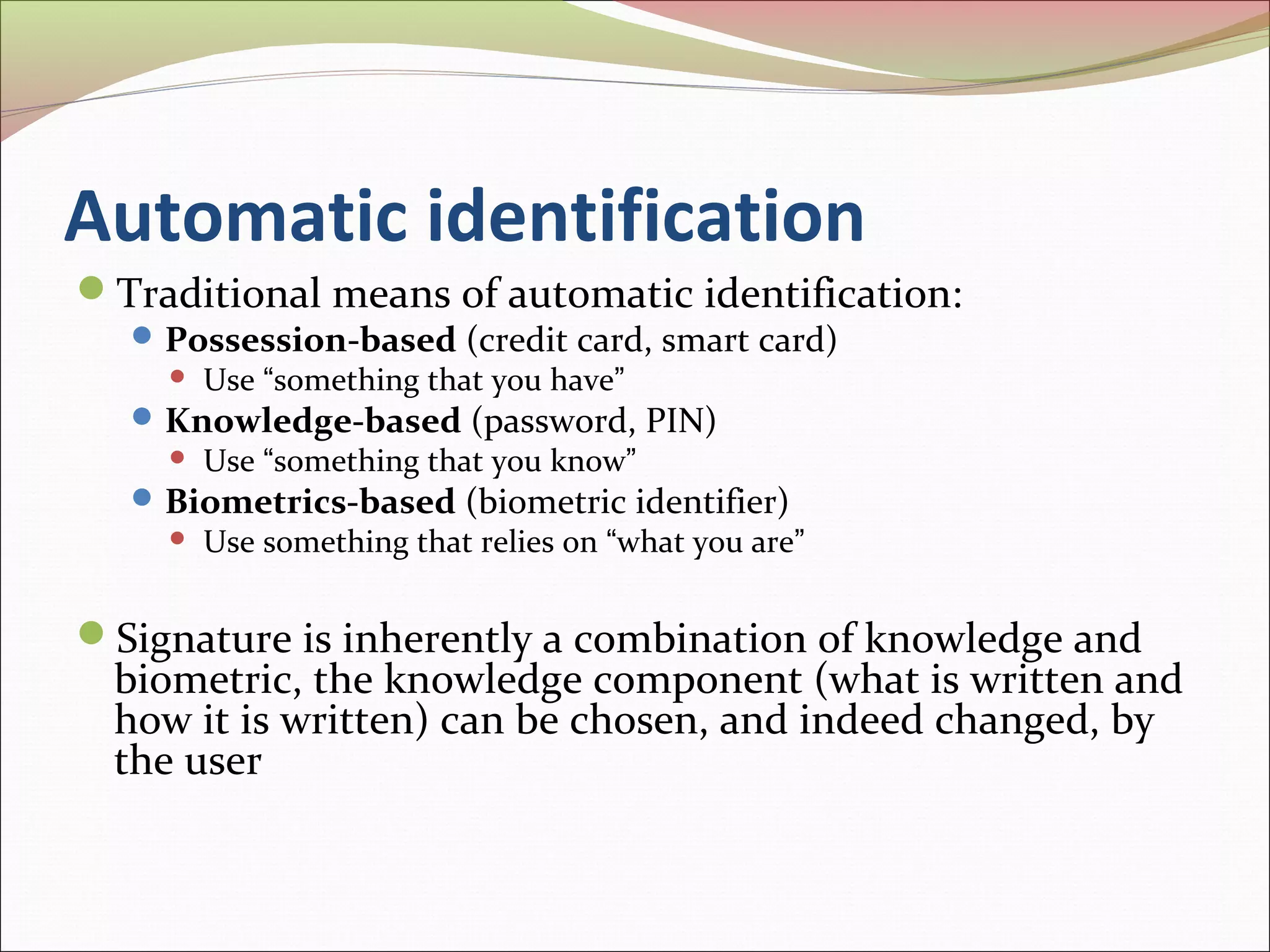
Automatic identification
Traditional means of automatic identification:
   Possession-based (credit card, smart card)
       Use “something that you have”
   Knowledge-based (password, PIN)
       Use “something that you know”
   Biometrics-based (biometric identifier)
       Use something that relies on “what you are”


Signature is inherently a combination of knowledge and
  biometric, the knowledge component (what is written and
  how it is written) can be chosen, and indeed changed, by
  the user
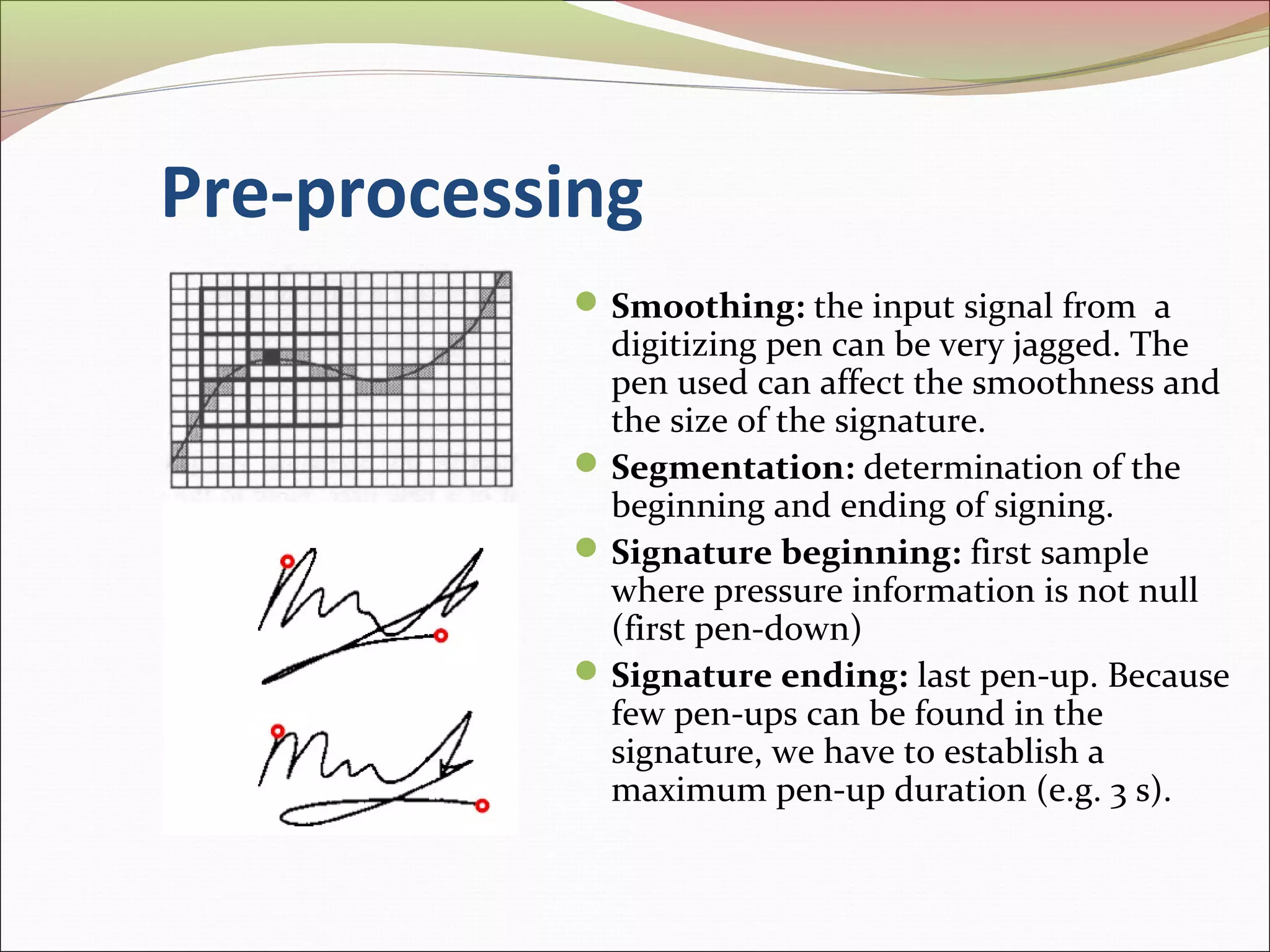
Pre-processing
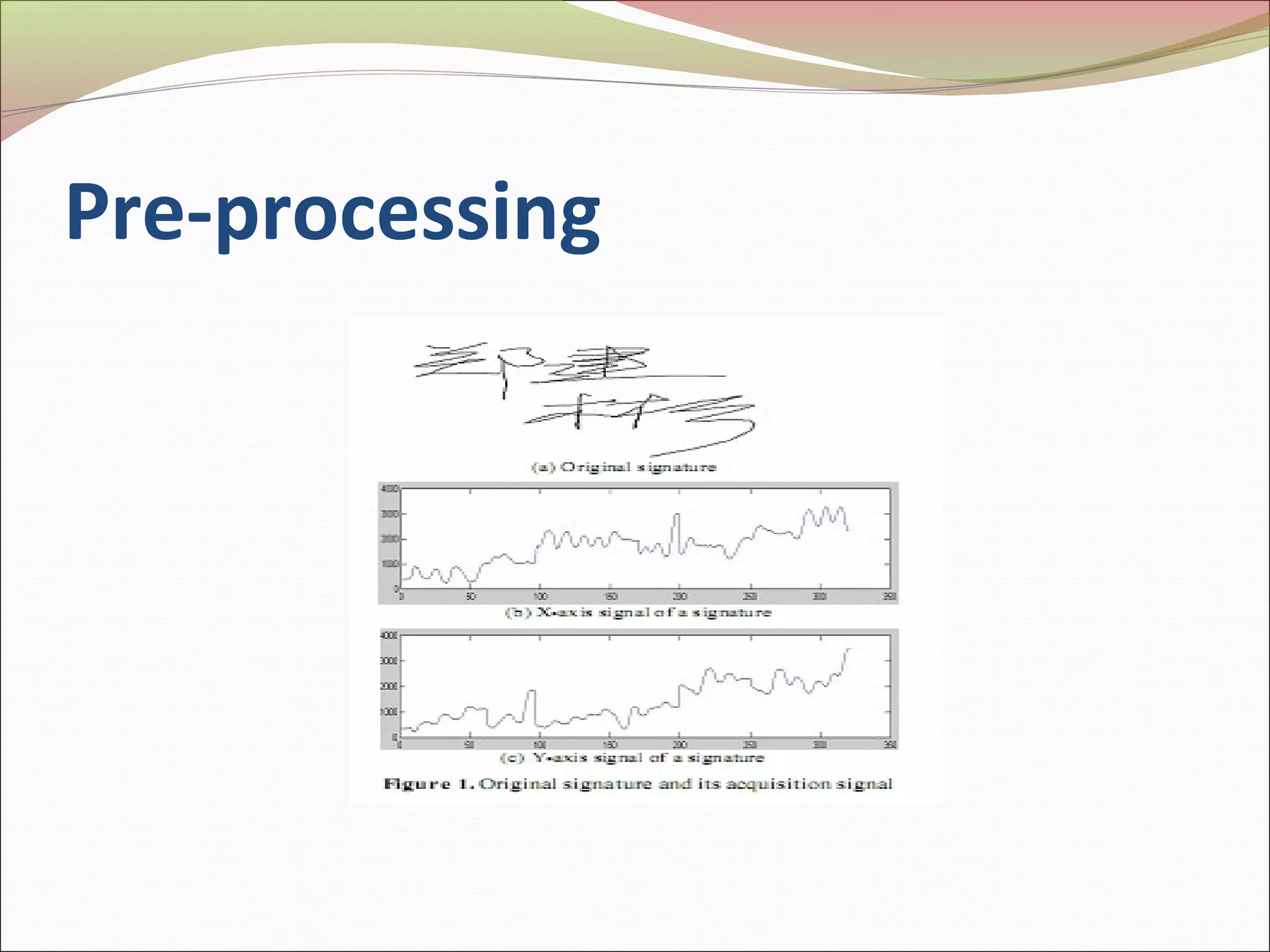
            Smoothing: the input signal from a
             digitizing pen can be very jagged. The
             pen used can affect the smoothness and
             the size of the signature.
            Segmentation: determination of the
             beginning and ending of signing.
            Signature beginning: first sample
             where pressure information is not null
             (first pen-down)
            Signature ending: last pen-up. Because
             few pen-ups can be found in the
             signature, we have to establish a
             maximum pen-up duration (e.g. 3 s).
Pre-processing
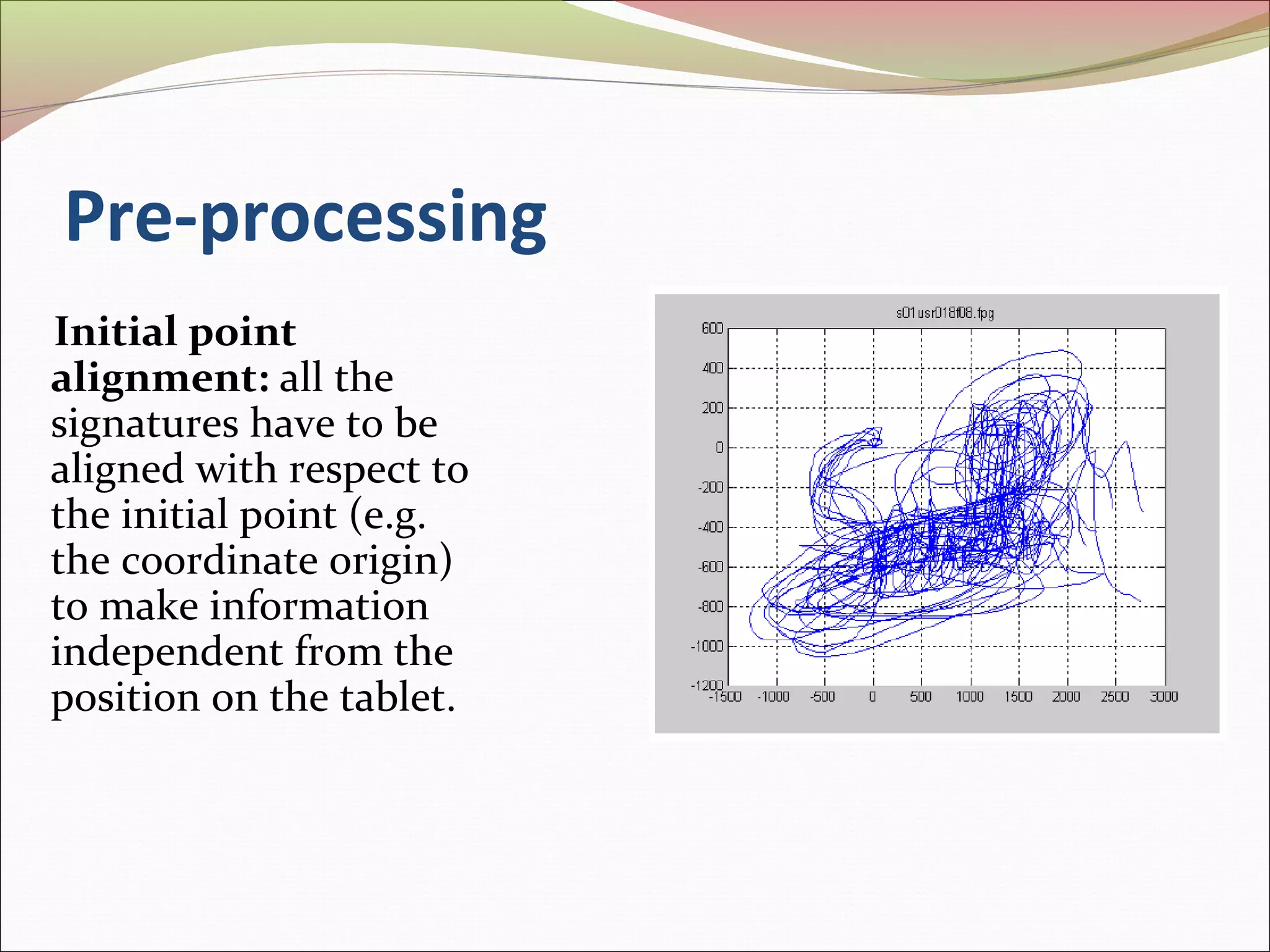
Initial point
alignment: all the
signatures have to be
aligned with respect to
the initial point (e.g.
the coordinate origin)
to make information
independent from the
position on the tablet.
Pre-processing
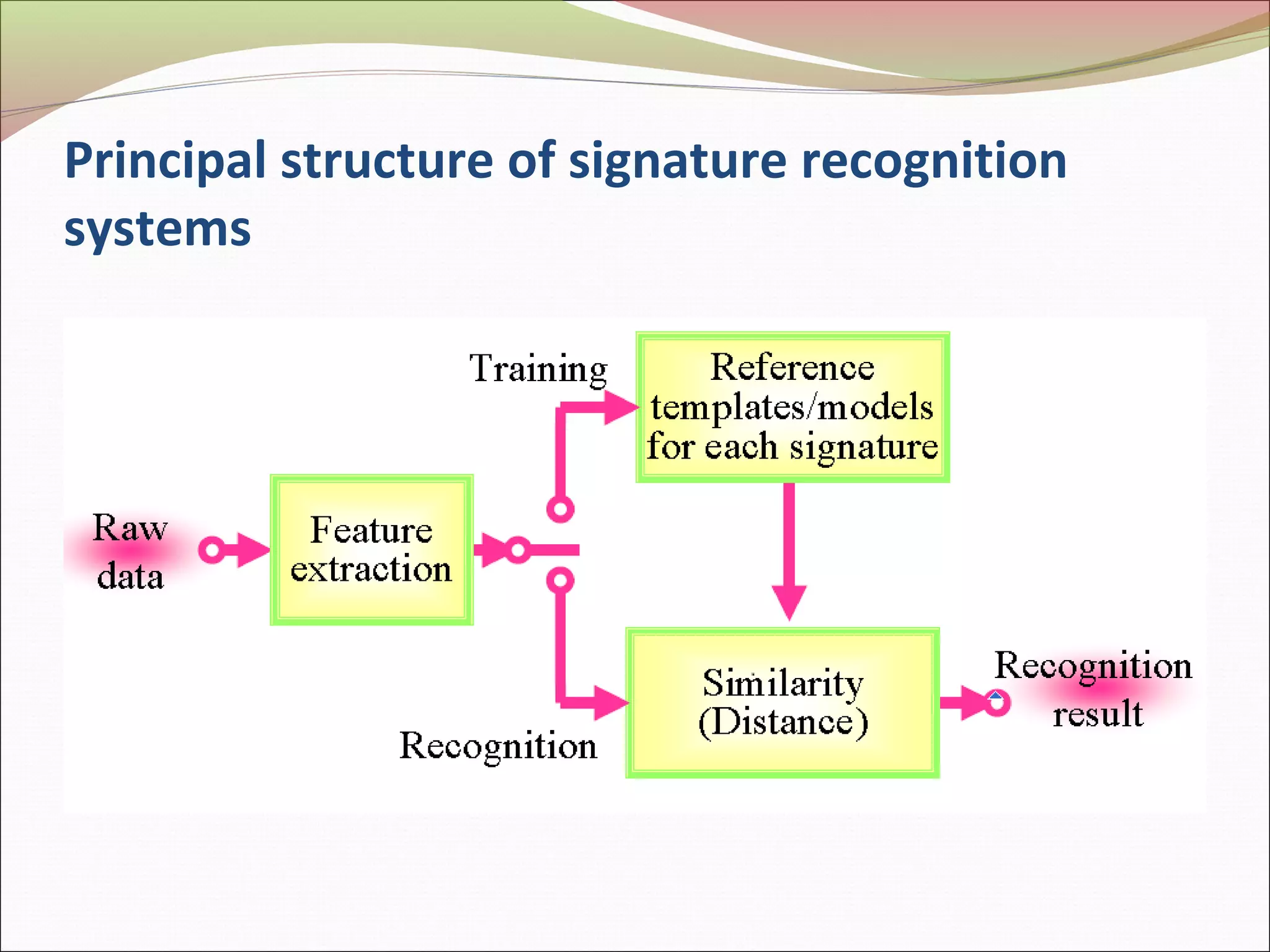
Principal structure of signature recognition
systems
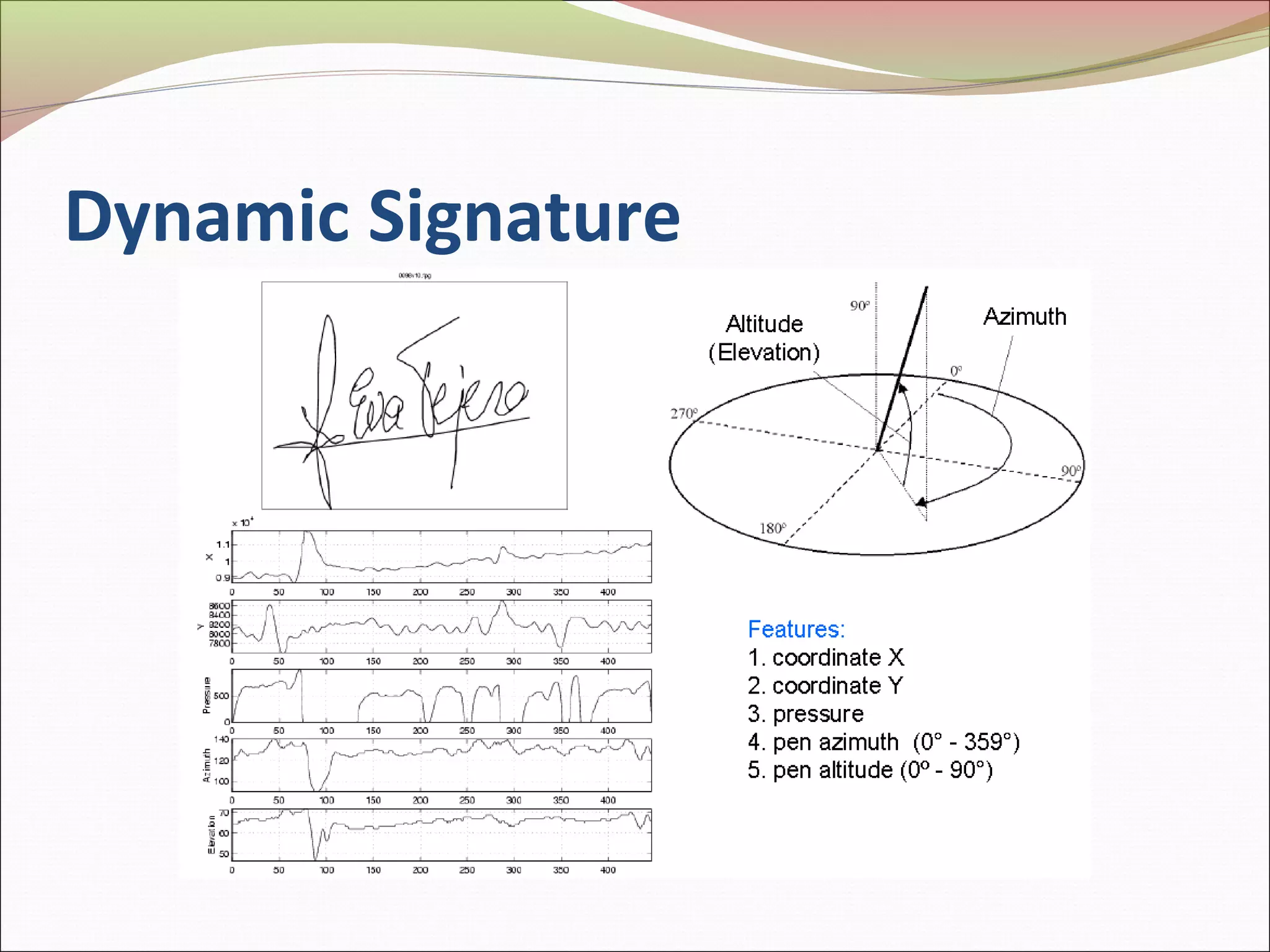
Dynamic Signature
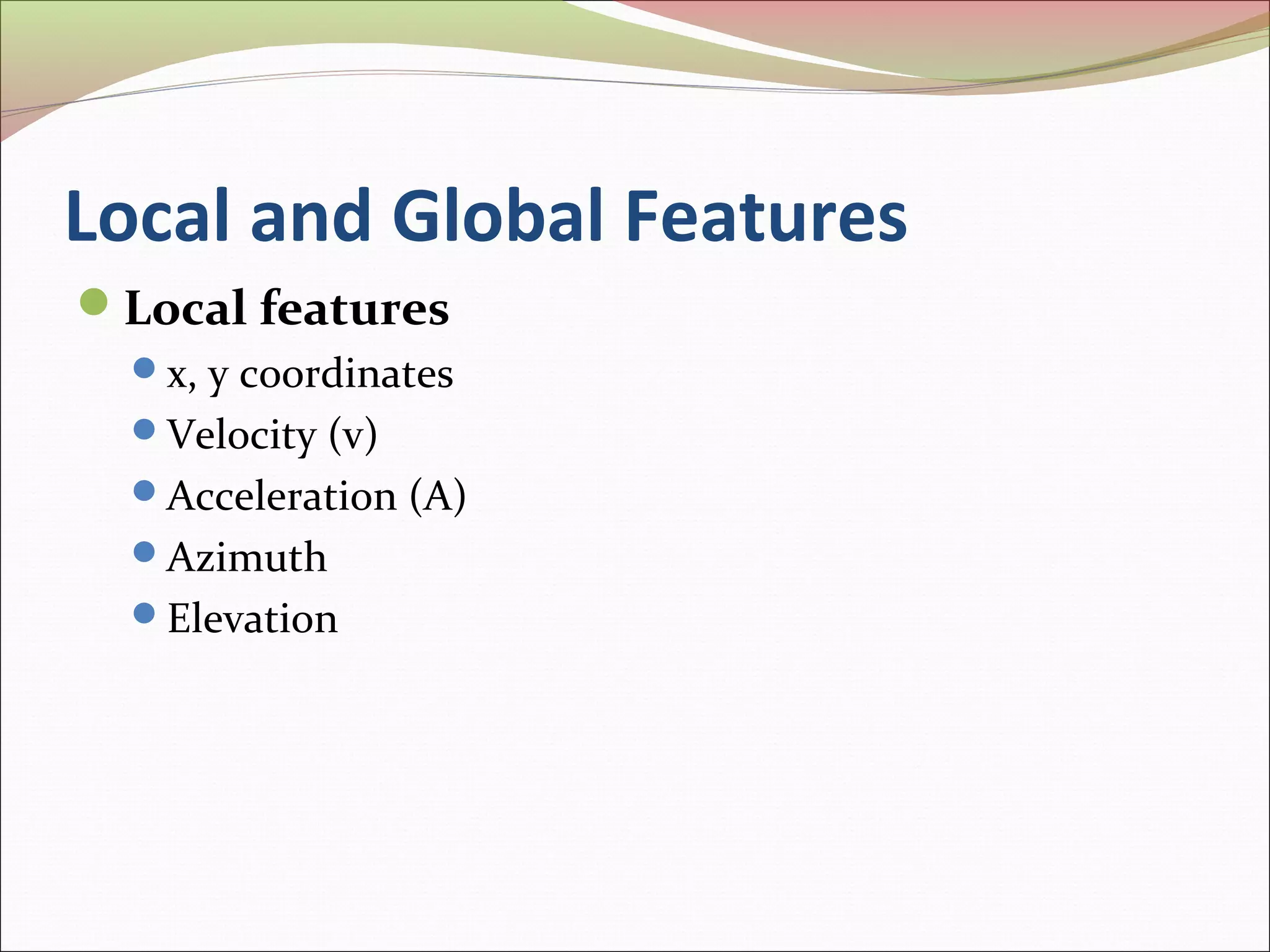
Local and Global Features
Local features
  x, y coordinates
  Velocity (v)
  Acceleration (A)
  Azimuth
  Elevation
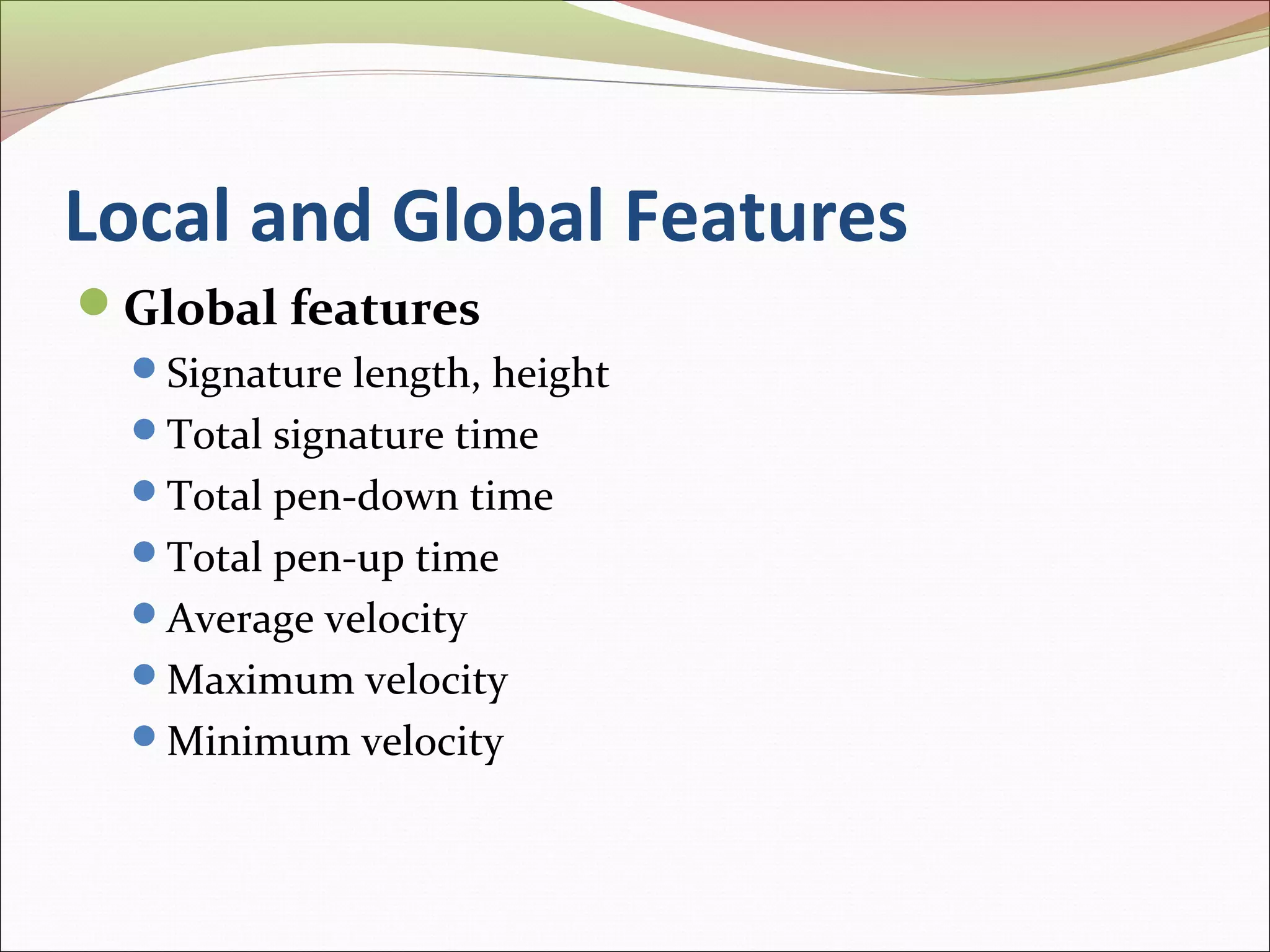
Local and Global Features
Global features
  Signature length, height
  Total signature time
  Total pen-down time
  Total pen-up time
  Average velocity
  Maximum velocity
  Minimum velocity
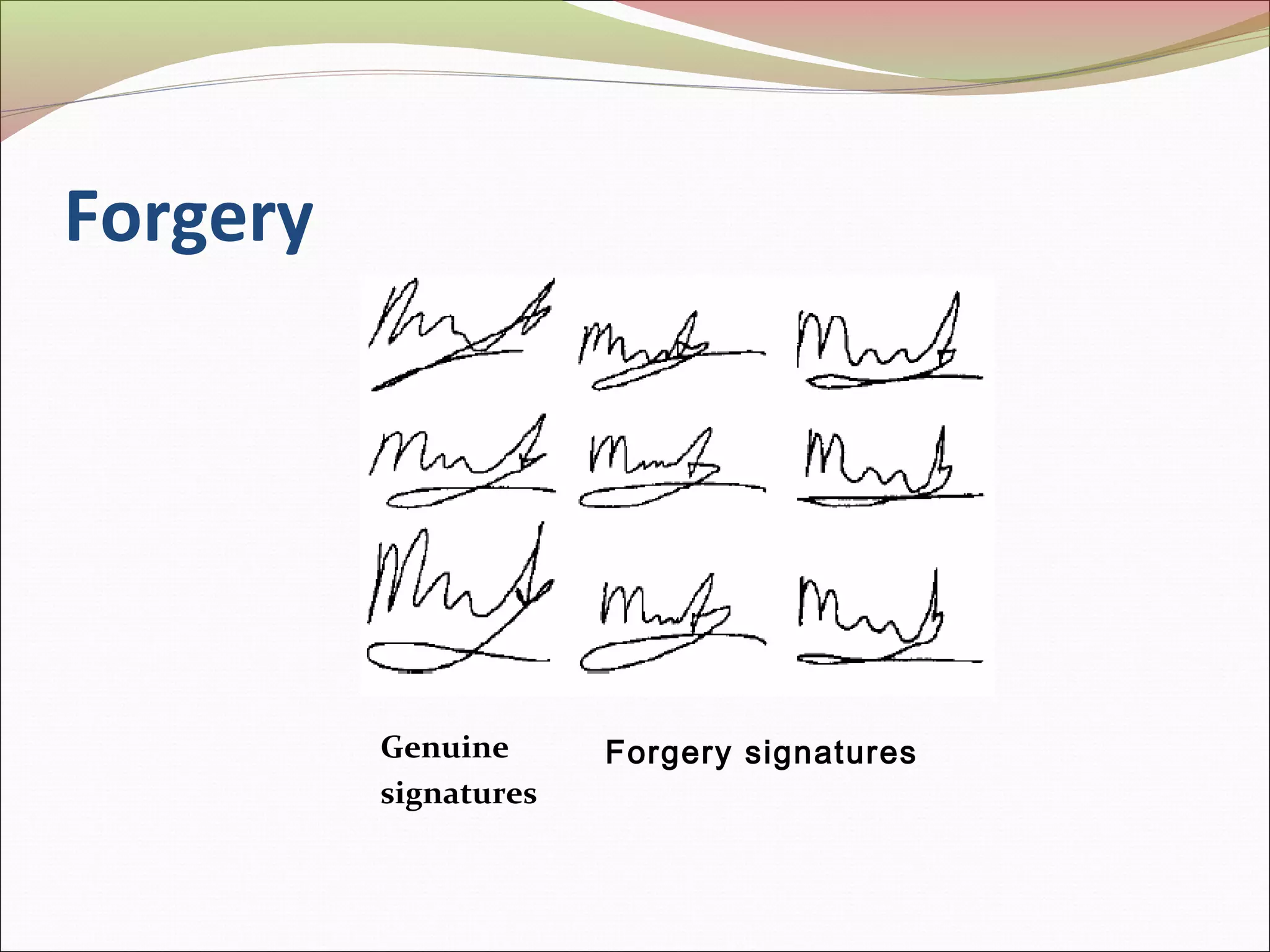
Forgery


          Genuine      Forgery signatures
          signatures
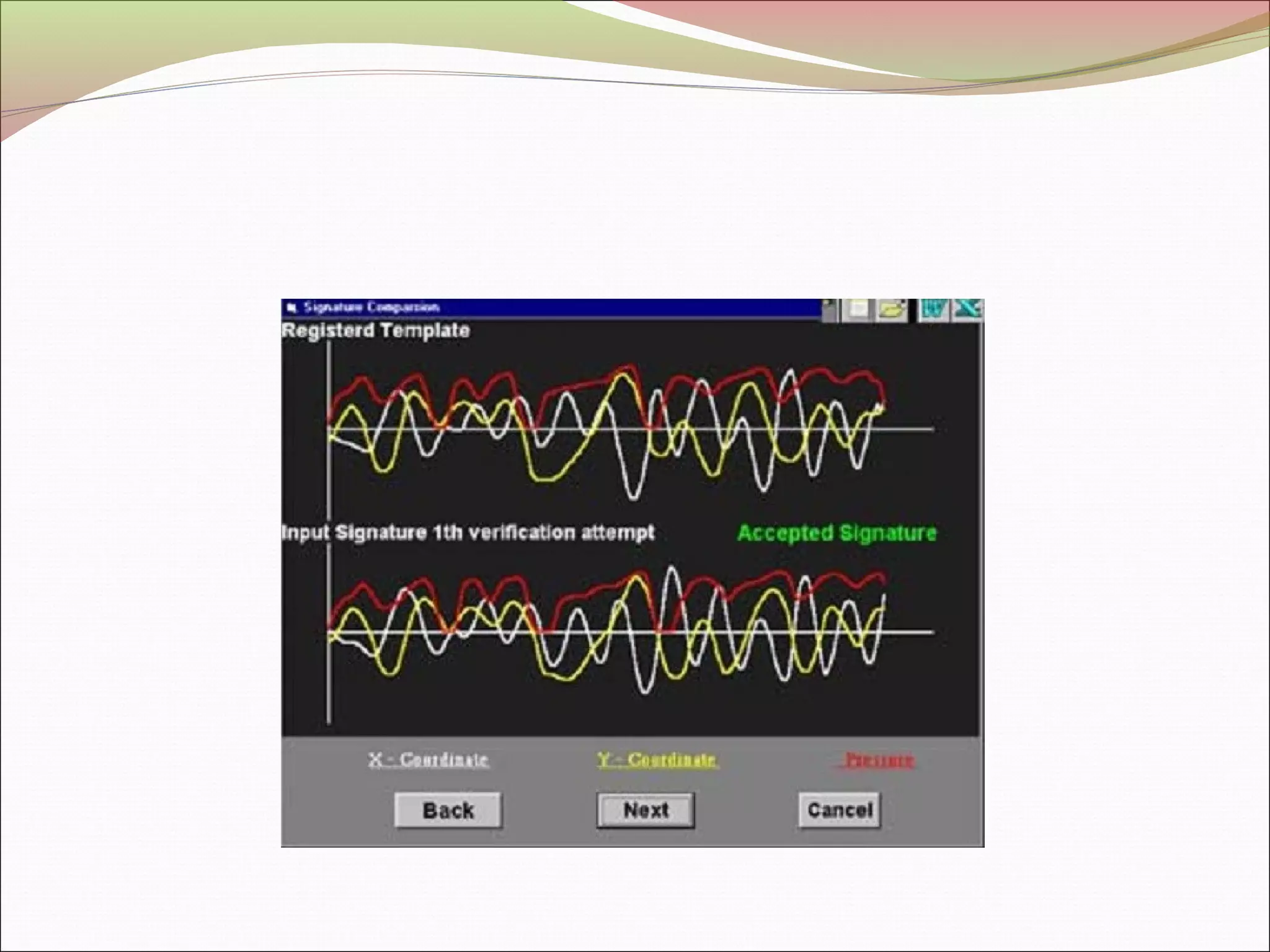
Signatures: authentic and skilled forgery
Signature Recognition Advantages
Signature is a man-made biometric where forgery
 has been studied extensively
Enrollment (training) is intuitive and fast
Signature verification in general has a fast
 response and low storage requirements
A signature verification is “independent” of the
 native language user
Very high compression rates do not affect shape
 of the signature (100-150 bytes)
Signature Recognition Disadvantages
There is much precedence for using signature to
 authenticate documents and not for security
 applications
A five-dimensional pen may be needed to arrive
 at the desired accuracy. This makes the hardware
 costly.
Some people have palsies, while others do not
 have enough fine motor coordination to write
 consistently
References
Dynamic Signatures developed by NSTC subcomittee
 on Biometrics:: www.biometrics.gov
Simina Emerich, Eugen Lupu, Corneliu Rusu, “On-
 line Signature Recognition Approach Based on
 Wavelets and Support Vector Machines”
Jinxu Guo, Jianbin Zheng, Bo Lu, “Research of Online
 Signature Recognition Based on Energy Feature”

Online signature recognition

  • 2.
    Topics Definitions Feature extraction Signature Forgery Signaturemodels Advantages and disadvantages of signature as biometrics
  • 3.
  • 4.
    Signatures Off-line or staticsignatures are scanned from paper documents, where they were written in conventional way. Off-line signature analysis can be carried out with a scanned image of the signature using a standard camera or scanner. On-line or dynamic signatures are written with an electronically instrumented device and the dynamic information (pen tip location through time) is usually available at high resolution, even when the pen is not in contact with the paper.
  • 5.
  • 6.
  • 8.
  • 9.
  • 10.
    Pen-Tablet System –HowIt Works?  The WACOM stylus looks and feels like a pen yet contains no batteries or magnets. Instead it takes advantage of electro-magnetic resonance technology in which radio waves are sent to the stylus and returned for position analysis.  In operation, a grid of wires below the screen alternates between transmit and receive modes (about every 20μs):  In transmit mode, the electro-magnetic signal stimulates oscillation in the coil-and capacitor resonant circuit in the pen  In receive mode, the energy of the resonant circuit oscillation in the pen is detected by the antenna grid. This is then analysed to determine position and other information including pressure  Since the grid provides the power to the pen through resonant coupling, no batteries are required. Thus there are no consumables that will run down and need to be replaced or that would make the pen top-heavy.
  • 11.
    Automatic identification Traditional meansof automatic identification:  Possession-based (credit card, smart card)  Use “something that you have”  Knowledge-based (password, PIN)  Use “something that you know”  Biometrics-based (biometric identifier)  Use something that relies on “what you are” Signature is inherently a combination of knowledge and biometric, the knowledge component (what is written and how it is written) can be chosen, and indeed changed, by the user
  • 12.
    Pre-processing  Smoothing: the input signal from a digitizing pen can be very jagged. The pen used can affect the smoothness and the size of the signature.  Segmentation: determination of the beginning and ending of signing.  Signature beginning: first sample where pressure information is not null (first pen-down)  Signature ending: last pen-up. Because few pen-ups can be found in the signature, we have to establish a maximum pen-up duration (e.g. 3 s).
  • 13.
    Pre-processing Initial point alignment: allthe signatures have to be aligned with respect to the initial point (e.g. the coordinate origin) to make information independent from the position on the tablet.
  • 14.
  • 15.
    Principal structure ofsignature recognition systems
  • 16.
  • 18.
    Local and GlobalFeatures Local features x, y coordinates Velocity (v) Acceleration (A) Azimuth Elevation
  • 19.
    Local and GlobalFeatures Global features Signature length, height Total signature time Total pen-down time Total pen-up time Average velocity Maximum velocity Minimum velocity
  • 20.
    Forgery Genuine Forgery signatures signatures
  • 21.
  • 23.
    Signature Recognition Advantages Signatureis a man-made biometric where forgery has been studied extensively Enrollment (training) is intuitive and fast Signature verification in general has a fast response and low storage requirements A signature verification is “independent” of the native language user Very high compression rates do not affect shape of the signature (100-150 bytes)
  • 24.
    Signature Recognition Disadvantages Thereis much precedence for using signature to authenticate documents and not for security applications A five-dimensional pen may be needed to arrive at the desired accuracy. This makes the hardware costly. Some people have palsies, while others do not have enough fine motor coordination to write consistently
  • 25.
    References Dynamic Signatures developedby NSTC subcomittee on Biometrics:: www.biometrics.gov Simina Emerich, Eugen Lupu, Corneliu Rusu, “On- line Signature Recognition Approach Based on Wavelets and Support Vector Machines” Jinxu Guo, Jianbin Zheng, Bo Lu, “Research of Online Signature Recognition Based on Energy Feature”